
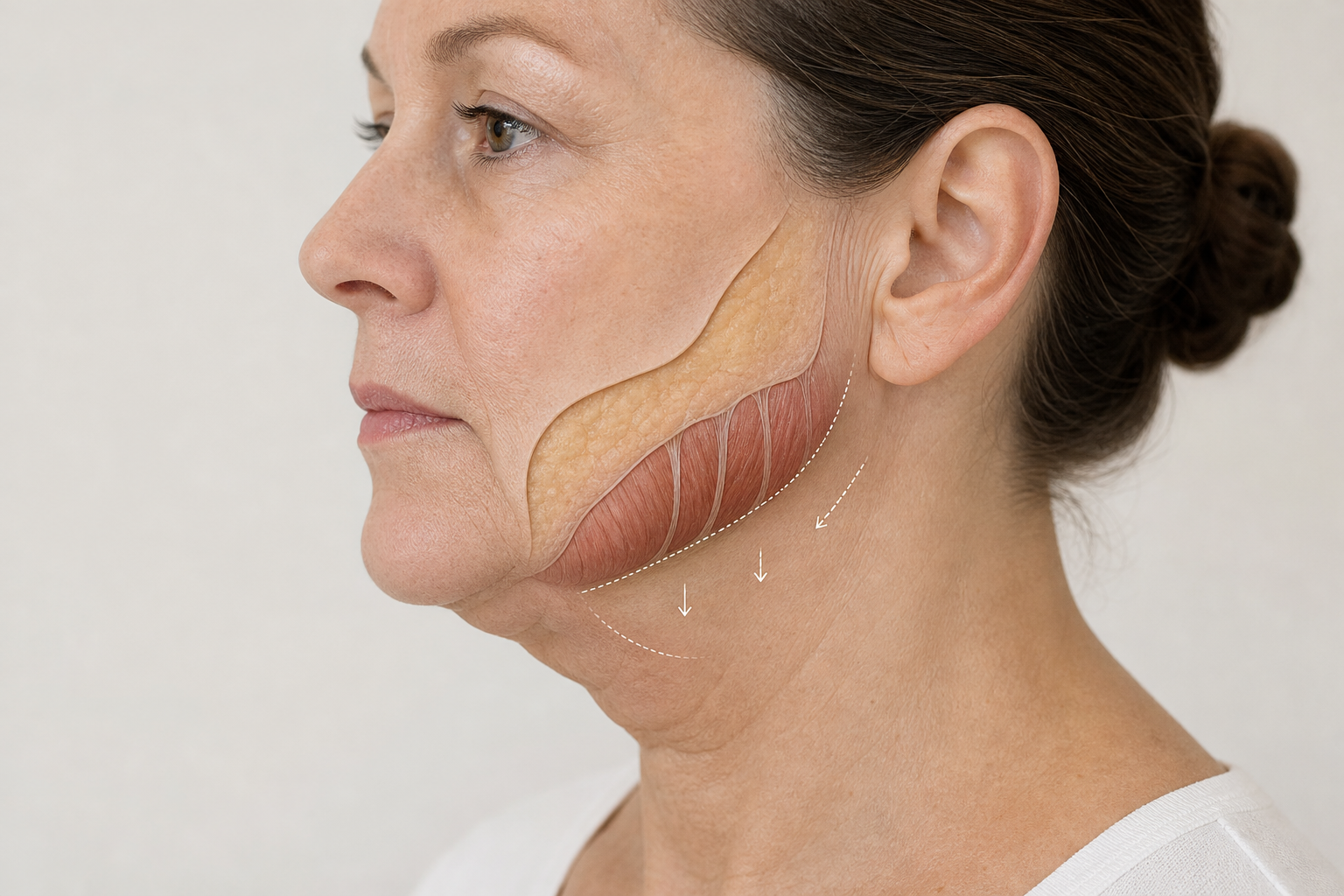

A softening jawline is one of the most common aesthetic concerns that patients raise in clinic, and it tends to appear earlier than many people expect. Skin laxity, fat redistribution, and gradual bone changes all contribute to the loss of jaw definition over time — but surgery is not the only path to improvement. A growing range of non-surgical jaw firming treatments can meaningfully restore structure and firmness for patients with mild to moderate sagging, with little to no downtime and results that can last from several months to a couple of years depending on the approach chosen.
Key Takeaways
- Non-surgical jaw tightening works best for mild to moderate skin laxity; severe sagging may require surgical assessment.
- Energy-based treatments such as radiofrequency microneedling and HIFU stimulate collagen remodeling deep within the skin, producing gradual but lasting improvements.
- Injectables — including dermal fillers, biostimulators, and neuromodulators — address volume loss, structural definition, and muscle-related concerns.
- A combination treatment approach often delivers more comprehensive results than any single modality alone.
- Realistic expectations and a qualified clinical assessment are essential before choosing any treatment.
Why the Jawline Loses Firmness With Age
Understanding what causes jaw laxity helps clarify which treatments are likely to be effective. The jawline is shaped by the interaction of bone, fat, muscle, and skin — and all four change with age. Collagen and elastin production declines steadily from the mid-twenties onward, reducing the skin’s ability to spring back and maintain tension. The underlying bone also undergoes gradual resorption, particularly along the mandible, which reduces the structural scaffold that keeps soft tissue lifted. Fat pads that once sat high on the cheeks descend over time, pooling along the lower face and contributing to sagging jowls. Ligaments that anchor skin to deeper structures weaken, allowing further descent.
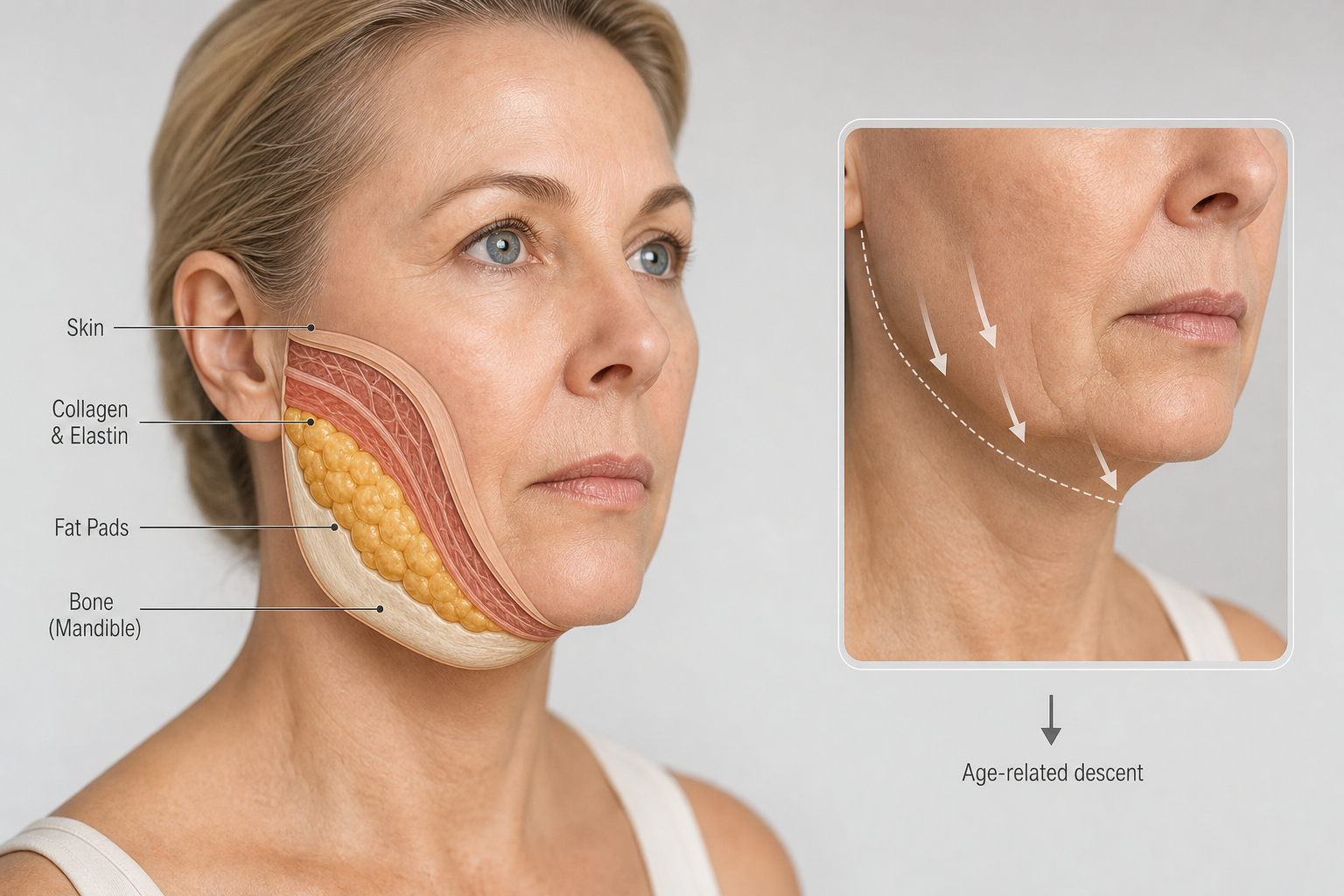
External factors accelerate this process. Chronic UV exposure degrades collagen fibres and thins the dermis. Smoking impairs circulation and collagen synthesis. Significant weight loss can leave the skin without sufficient elasticity to contract, and genetics determine how quickly and severely these changes appear. Recognising which of these mechanisms is most prominent in a given patient helps a practitioner select the most appropriate treatment — or combination of treatments.
Energy-Based Skin Tightening Treatments
Energy-based devices are among the most clinically studied non-surgical options for jaw tightening. They work by delivering controlled thermal energy to specific depths within the skin and underlying tissue, triggering a wound-healing response that stimulates collagen remodeling and the production of new collagen and elastin fibres. Results develop gradually over weeks to months as the tissue remodels.
Radiofrequency Microneedling
Radiofrequency microneedling — delivered by devices such as Morpheus8 and Potenza — combines the collagen-induction effect of microneedling with the deeper thermal stimulation of radiofrequency energy. Fine insulated needles penetrate the dermis and deliver RF energy at a controlled depth, heating the subdermal tissue without damaging the skin surface. This dual mechanism makes it particularly effective for skin laxity along the lower face and jaw, where both dermal thinning and subdermal fat changes are present. Most patients require two to four sessions spaced four to six weeks apart, with peak results visible around three to six months after the final treatment. Mild redness and swelling typically resolve within a few days. Patients with darker skin tones should discuss hyperpigmentation risk with their practitioner, as RF energy settings may need adjustment.
Ultherapy and HIFU
Ultherapy uses microfocused ultrasound to deliver energy to the SMAS layer — the same fibromuscular layer addressed in surgical facelifts — as well as to the deep dermis. High-Intensity Focused Ultrasound (HIFU) works on a similar principle, creating precise thermal injury points that stimulate neocollagenesis without affecting surrounding tissue. Clinical studies, including peer-reviewed research published in 2024 and 2025, support the use of focused ultrasound for improving skin laxity along the lower face and neck, with results typically lasting 12 to 18 months. A single treatment session is often sufficient, though some patients benefit from a repeat session at 12 months. The treatment can be uncomfortable, and practitioners may offer topical anaesthesia or oral pain relief. It is not suitable for patients with active skin infections, certain implanted devices, or open wounds in the treatment area.
Monopolar Radiofrequency (Thermage)
Thermage uses monopolar radiofrequency to heat the deeper dermis and stimulate collagen contraction and remodeling across a broad treatment area. Unlike RF microneedling, it does not use needles, making it a fully non-invasive option. It is particularly suited to patients who want skin tightening with no downtime and no recovery period. Results are generally more subtle than those achieved with RF microneedling or HIFU, and are best suited to patients with early laxity rather than established sagging. Interest in monopolar RF has grown in recent years as patients seek natural-looking, gradual improvements rather than dramatic changes.
Injectable Treatments for Jaw Definition
Injectables address jaw laxity through different mechanisms than energy-based devices — they restore volume, reposition soft tissue, relax overactive muscles, or dissolve localised fat. Many patients benefit from combining injectables with energy-based treatments for a more comprehensive result.
Dermal Fillers for the Jawline
Dermal fillers for the jawline — typically hyaluronic acid products such as Juvederm Volux, Restylane Defyne, or similar high-viscosity formulations — can restore structural definition along the mandibular border and chin. By adding volume at strategic points, a skilled injector can create the appearance of a sharper, more defined jawline and reduce the visual impact of mild jowling. Results are immediate and typically last 12 to 18 months, though this varies by product and individual metabolism. Hyaluronic acid fillers carry the advantage of reversibility — the enzyme hyaluronidase can dissolve them if needed. Risks include bruising, swelling, asymmetry, and in rare cases vascular complications, which is why treatment should only be performed by a qualified and experienced practitioner.
Biostimulators
Biostimulators such as Sculptra (poly-L-lactic acid) and Radiesse (calcium hydroxylapatite) work differently from standard hyaluronic acid fillers. Rather than providing immediate volume, they stimulate the body’s own collagen production over several months, gradually improving skin thickness, firmness, and structural support. Sculptra is typically administered in a series of two to three sessions, with results developing over three to six months and lasting up to two years or more. Radiesse provides some immediate volumising effect alongside its collagen-stimulating properties. Biostimulators are particularly well-suited to patients who want a natural, progressive improvement rather than an immediate change, and they are increasingly used as part of a layered combination treatment approach for moderate jaw laxity.
Botulinum Toxin for Jaw and Neck Concerns
Botulinum toxin (commonly known by brand names such as Botox or Dysport) has several relevant applications in the lower face. Injecting the masseter muscle — the large chewing muscle at the angle of the jaw — can reduce its bulk over time, creating a slimmer, more tapered jaw profile. This is sometimes called masseter reduction or masseter slimming, and it is particularly relevant for patients whose jaw appears wide or square due to muscle hypertrophy rather than bone structure. Separately, small doses of botulinum toxin can be used to relax the depressor anguli oris (DAO) muscle, which pulls the corners of the mouth downward, and to address platysmal bands — the vertical neck cords sometimes called turkey neck — by relaxing the platysma muscle. Results from botulinum toxin treatments typically last three to six months, after which maintenance sessions are needed to sustain the effect.
Kybella and Fat-Dissolving Injections
Submental fullness — commonly called a double chin — can blur the transition between the jaw and neck, making the jawline appear less defined. Kybella (deoxycholic acid) is an injectable treatment that permanently destroys fat cells in the submental area. A series of two to four treatment sessions is typically required, spaced at least four weeks apart. Swelling after each session can be significant and may last one to two weeks. Once the fat cells are destroyed, they do not return, though weight gain can affect surrounding tissue. Fat-dissolving injections are not a treatment for skin laxity — if the overlying skin lacks elasticity, removing submental fat without addressing the skin may worsen the appearance of looseness. A thorough assessment is essential before proceeding.
Thread Lifts
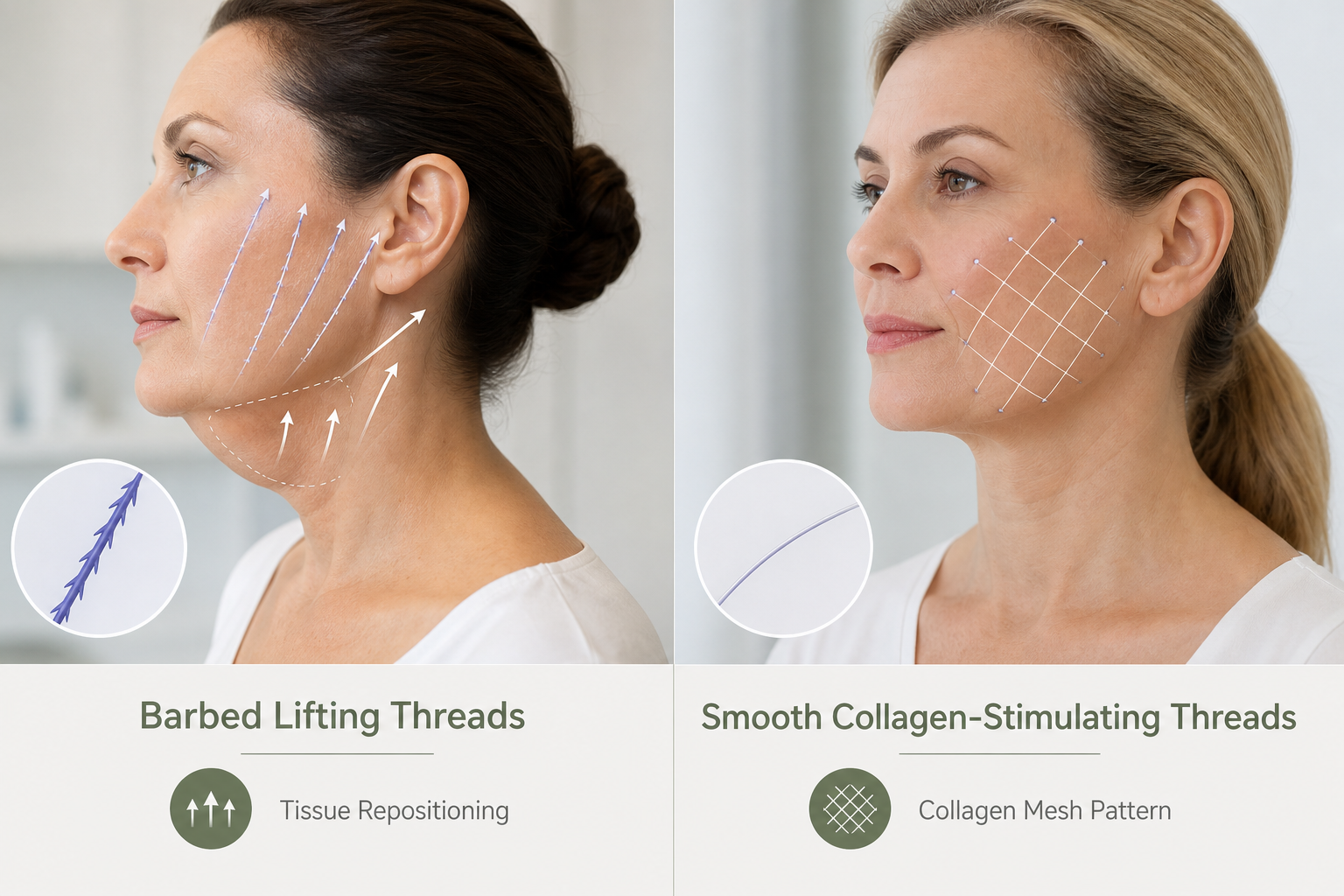
Thread lifts occupy a position between non-surgical and minimally invasive treatment. PDO (polydioxanone) threads are fine dissolvable sutures inserted beneath the skin using a needle or cannula. Some threads are designed to physically lift and reposition tissue, while others — known as smooth or twisted threads — are placed in a mesh pattern to stimulate collagen production without a mechanical lift. For jaw tightening, barbed lifting threads can provide an immediate improvement in jowl position, while collagen-stimulating threads contribute to longer-term skin quality improvement. Results typically last 12 to 15 months as the threads dissolve. Thread lifts carry a higher risk profile than most non-surgical treatments, including the possibility of thread migration, puckering, infection, and asymmetry. They should only be performed by practitioners with specific training in thread placement.
At-Home Methods: What They Can and Cannot Do
A range of at-home approaches are promoted for jaw firming, from face yoga and facial exercises to gua sha massage, facial cupping, jade rollers, and microcurrent devices. These methods are unlikely to produce the structural changes achievable with in-office treatments, but some may offer modest supportive benefits when used consistently.
Facial exercises — including neck curl-ups, chin lifts, and jaw extension movements — may help maintain muscle tone in the lower face and neck, though clinical evidence for their effect on skin laxity is limited. Gua sha and facial massage tools may temporarily improve lymphatic drainage and circulation, reducing puffiness and giving the face a more defined appearance, but these effects are transient. At-home microcurrent devices such as NuFACE deliver low-level electrical current to stimulate facial muscles and may provide a mild toning effect with regular use, though results are considerably more modest than professional-grade treatments.
Skincare also plays a supporting role. Retinoids stimulate collagen synthesis and improve skin texture over time. Peptide-rich firming creams may support dermal hydration and elasticity. Daily broad-spectrum SPF use is one of the most evidence-supported ways to slow photoaging and preserve existing collagen. These measures are best understood as maintenance and prevention rather than correction of established laxity.
Combination Treatment Protocols
A combination treatment approach is increasingly recognised as the most effective strategy for non-surgical jaw firming, particularly for patients with moderate laxity. Rather than relying on a single modality, a layered protocol addresses multiple contributing factors simultaneously. A common example for moderate jaw laxity might include radiofrequency microneedling to improve skin quality and stimulate collagen remodeling, a biostimulator such as Sculptra to rebuild structural support over time, and a small amount of hyaluronic acid filler along the mandibular border to restore definition. If submental fat is present, a fat-dissolving treatment may be added. If masseter hypertrophy contributes to jaw width, botulinum toxin can refine the profile.
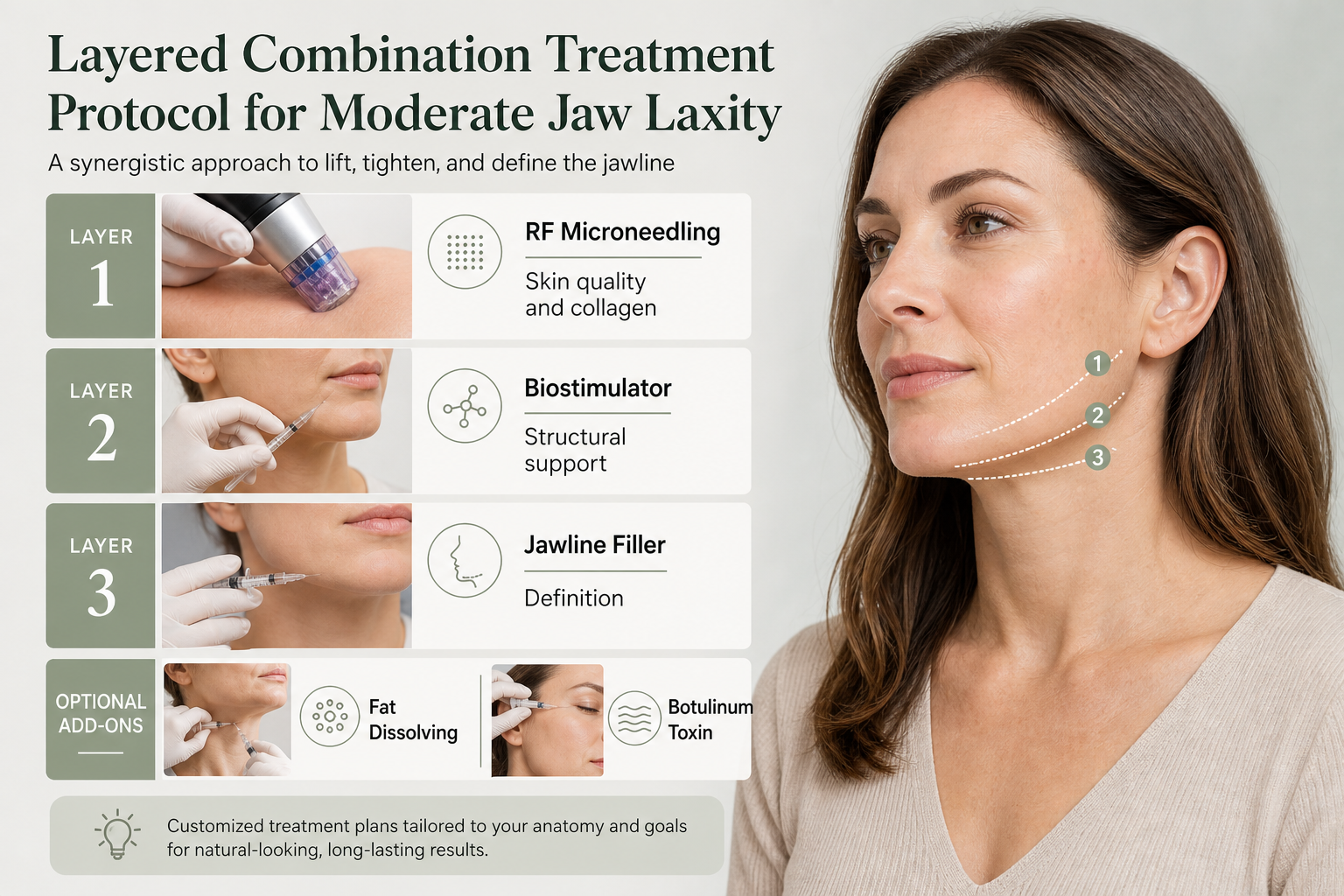
The sequencing and spacing of combination treatments matters. Energy-based treatments are often performed first to improve skin quality before injectables are placed. A practitioner experienced in combination protocols can design a treatment plan that avoids overloading the tissue and allows each modality to work effectively. Patients should be aware that combination approaches involve higher overall cost and a longer treatment timeline than single treatments.
Treatment Comparison at a Glance
| Treatment | Best For | Sessions Needed | Results Duration | Downtime |
|---|---|---|---|---|
| RF Microneedling | Skin laxity, texture, mild–moderate sagging | 2–4 | Up to 12–18 months | 2–5 days (redness) |
| Ultherapy / HIFU | Deeper tissue tightening, SMAS stimulation | 1–2 | 12–18 months | Minimal |
| Thermage (Monopolar RF) | Early laxity, no-downtime tightening | 1 | 12–18 months | None |
| Dermal Fillers | Jawline definition, volume restoration | 1 | 12–18 months | Minimal (bruising possible) |
| Biostimulators | Gradual collagen rebuilding, moderate laxity | 2–3 | Up to 24 months | Minimal |
| Botulinum Toxin | Masseter slimming, neck bands, DAO relaxation | 1 (repeat every 3–6 months) | 3–6 months | None |
| Kybella / Fat Dissolving | Submental fat, double chin | 2–4 | Permanent fat reduction | 1–2 weeks swelling |
| Thread Lift (PDO) | Mild–moderate jowling, immediate lift | 1 | 12–15 months | 3–7 days |
Who Is a Good Candidate for Non-Surgical Jaw Firming?
Non-surgical jaw tightening treatments are generally most effective for patients with mild to moderate skin laxity and good baseline skin quality. Patients in their thirties to mid-fifties often respond well, though age alone is not the determining factor — skin thickness, tissue quality, and the degree of structural change matter more than chronological age. Patients who are significantly overweight, have very thin or sun-damaged skin, or have experienced major weight loss may find that non-surgical options provide limited improvement.
Men considering jaw tightening should be aware that male anatomy differs in relevant ways. Thicker skin and a stronger masseter muscle mean that energy-based treatments may require higher settings, and that masseter reduction with botulinum toxin may require higher doses to achieve a visible effect. Results timelines and treatment protocols may differ from those used for female patients, and a practitioner experienced in treating male facial anatomy is advisable.
Patients with darker skin tones (Fitzpatrick types IV–VI) should discuss treatment selection carefully with their practitioner. Some energy-based devices carry a higher risk of post-inflammatory hyperpigmentation in darker skin, and settings should be adjusted accordingly. Not all devices are equally suitable across all skin tones.
Honest Limitations: What Non-Surgical Treatments Cannot Do
Non-surgical jaw firming treatments can produce meaningful improvements in skin quality, definition, and firmness, but they have real limitations that patients should understand before committing to treatment. They cannot address significant bone resorption — the structural scaffold loss that occurs with age is not reversible without surgical intervention. They cannot replicate the degree of lift achievable with a surgical facelift or neck lift in patients with severe sagging. They cannot permanently tighten skin that has lost most of its elasticity, and they cannot correct anatomical concerns such as a recessed chin or prominent jowls caused primarily by skeletal structure.
For patients with severe laxity, a consultation with a plastic surgeon or maxillofacial surgeon may be more appropriate than pursuing multiple rounds of non-surgical treatment. A good practitioner will be honest about when non-surgical options are unlikely to meet a patient’s goals, rather than recommending repeated treatments that will not achieve the desired outcome.
Maintaining Results After Treatment
The longevity of non-surgical jaw tightening results depends on the treatment chosen, the patient’s skin quality, lifestyle factors, and whether maintenance sessions are undertaken. Energy-based treatments typically require a repeat session every 12 to 18 months to sustain collagen remodeling. Botulinum toxin requires maintenance every three to six months. Dermal fillers may need topping up at 12 to 18 months. Biostimulators, once a full course is completed, may not require retreatment for two years or more.
Post-treatment skincare supports and prolongs results. Daily SPF use is essential — UV exposure degrades newly formed collagen and accelerates the return of laxity. Retinoids, used consistently, continue to support collagen synthesis between treatments. Staying well hydrated, avoiding smoking, and maintaining a stable weight all contribute to longer-lasting outcomes. Patients who invest in a consistent skincare routine alongside in-office treatments tend to maintain their results for longer than those who rely on treatment alone.
Frequently Asked Questions
What is the difference between jaw tightening and jaw slimming?
Jaw tightening refers to improving skin firmness and reducing laxity along the jawline, typically through energy-based treatments or collagen-stimulating injectables. Jaw slimming refers to reducing the width or bulk of the jaw, usually by injecting botulinum toxin into the masseter muscle to reduce its size over time. The two concerns are distinct, though some patients benefit from addressing both simultaneously.
Can jaw tightening help after significant weight loss?
Weight loss can leave the skin without sufficient elasticity to contract fully, resulting in loose skin along the jaw and neck. Non-surgical treatments may provide modest improvement in mild cases, but significant skin excess following major weight loss often requires surgical assessment. A clinical evaluation is needed to determine whether non-surgical options are likely to be effective for a given patient.
Does jaw tightening work for teeth grinding effects on the jaw?
Teeth grinding (bruxism) can enlarge the masseter muscle over time, creating a wider, squarer jaw profile. Botulinum toxin injected into the masseter can reduce muscle bulk and may also reduce grinding-related discomfort, though it is not a treatment for bruxism itself. Patients with bruxism should discuss this with both their aesthetic practitioner and their dentist.
How many sessions will I need?
The number of sessions depends entirely on the treatment chosen and the degree of laxity being addressed. A single Ultherapy or Thermage session may be sufficient for early laxity. RF microneedling typically requires two to four sessions. Biostimulators are usually administered in a series of two to three sessions. A practitioner will recommend a treatment plan based on a clinical assessment of your specific concerns.
Are non-surgical jaw treatments painful?
Comfort levels vary by treatment. Ultherapy and HIFU can be uncomfortable, particularly over bony areas, and practitioners often offer topical anaesthesia or oral pain relief. RF microneedling involves needles and may cause mild discomfort, though topical numbing cream is routinely applied beforehand. Dermal filler and botulinum toxin injections involve brief needle discomfort. Thread lifts are performed under local anaesthesia. Most patients find treatments tolerable with appropriate preparation.
Can I combine jaw tightening with other facial treatments?
Yes — combination treatment approaches are common and often more effective than single treatments. Many patients combine energy-based skin tightening with injectables such as fillers or biostimulators for a more comprehensive result. The sequencing and timing of treatments matters, and a practitioner experienced in combination protocols can advise on the most appropriate plan for your goals and anatomy.
Choosing the Right Jaw Tightening Approach for Your Goals
Non-surgical jaw firming is not a one-size-fits-all category. The most appropriate treatment — or combination of treatments — depends on the specific cause of laxity, the degree of change present, the patient’s skin type and anatomy, and their tolerance for downtime, cost, and treatment frequency. A patient with early skin laxity and good skin quality may achieve a satisfying result from a single session of monopolar RF or HIFU with no downtime. A patient with moderate jowling, volume loss, and submental fullness may benefit most from a layered protocol combining RF microneedling, a biostimulator, jawline filler, and a fat-dissolving treatment over several months.
What matters most before choosing any treatment is a thorough consultation with a qualified practitioner who can assess your anatomy honestly, explain what each option can and cannot achieve, and help you set realistic expectations. Non-surgical jaw tightening can produce genuinely meaningful improvements for the right patient — but the best outcomes come from informed decisions, not from choosing the most heavily marketed treatment. If you are considering any of the options discussed here, a clinical assessment is the essential first step.
