
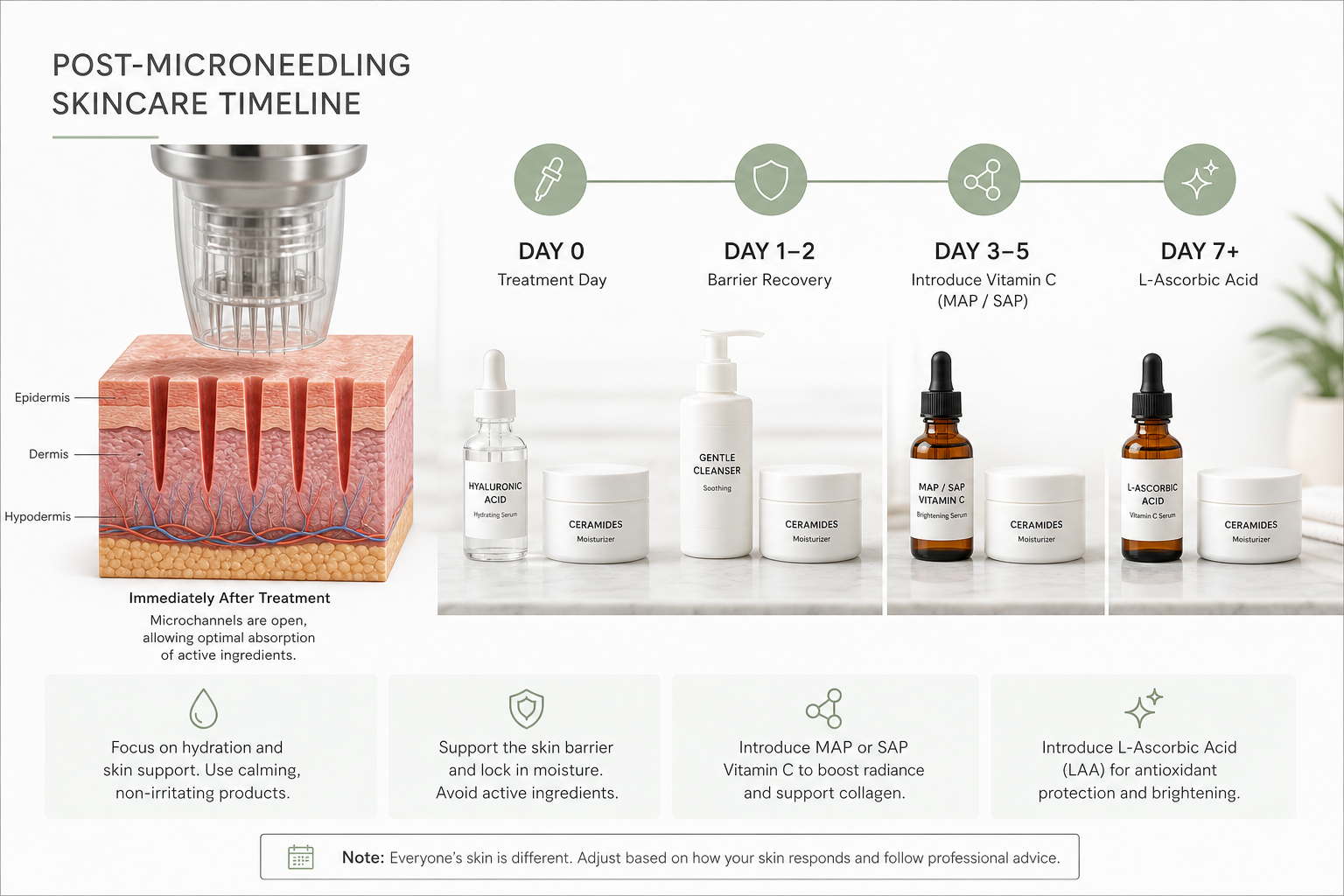

Microneedling and vitamin C are both well-regarded tools for improving skin quality, but using them together at the wrong moment can cause irritation, slow healing, and potentially increase the risk of complications. Understanding exactly when and how to reintroduce vitamin C after a microneedling session helps you protect your skin during recovery while still making the most of the treatment’s collagen-stimulating effects.
Key Takeaways
- Most practitioners recommend waiting at least 48–72 hours before applying topical vitamin C after microneedling, with deeper professional treatments often requiring a longer pause of five to seven days.
- During the first 48–72 hours, open microchannels and a disrupted skin barrier make the skin highly permeable and reactive — applying L-ascorbic acid too soon can cause stinging, inflammation, and slower healing.
- Stable, pH-neutral vitamin C derivatives such as magnesium ascorbyl phosphate (MAP) and sodium ascorbyl phosphate (SAP) are generally better tolerated when reintroducing vitamin C, particularly at lower concentrations.
- Oral vitamin C supplementation is a safe way to support collagen synthesis systemically in the days immediately after treatment, without any risk of topical irritation.
- Always patch test any active ingredient before reintroducing it to post-microneedling skin, and follow your treating practitioner’s specific aftercare guidance.
Why Timing Matters: What Microneedling Does to Your Skin
Microneedling — also called collagen induction therapy — works by creating controlled micro-injuries in the skin using fine needles. These micro-injuries trigger the skin’s natural wound-healing cascade, which unfolds in overlapping phases. The inflammatory phase begins immediately after treatment, bringing increased blood flow, redness, and swelling as the body mobilises repair cells. This is followed by the proliferation phase, during which fibroblasts produce new collagen and elastin fibres — a process known as neocollagenesis. The result, over several weeks, is improved skin texture, firmness, and tone.
The same open microchannels that make microneedling effective also make the skin temporarily vulnerable. Immediately after treatment, the skin barrier is disrupted, permeability is dramatically increased, and the surface is more reactive than usual. Anything applied to the skin in this window — including active ingredients that are normally well tolerated — can penetrate far more deeply than intended and provoke an exaggerated response. This is why microneedling aftercare focuses on gentle, barrier-supportive products in the first few days, and why the timing of reintroducing actives like vitamin C matters considerably.
Can You Use Vitamin C Right After Microneedling?
Applying topical vitamin C — particularly in its most potent form, L-ascorbic acid — immediately after microneedling is not recommended. L-ascorbic acid is formulated at a low pH (typically between 2.5 and 3.5) to remain stable and bioavailable. On intact skin, this acidity is manageable for most people. On freshly needled skin with open microchannels and a compromised skin barrier, the same low pH can cause significant stinging, burning, and inflammation. Rather than accelerating healing, early application of a strong vitamin C serum may prolong the inflammatory phase and interfere with the skin’s recovery process.
There is also a less commonly discussed but clinically documented risk worth noting: granulomatous reaction. A granuloma is a localised inflammatory response in which immune cells cluster around a foreign substance the body cannot clear. Case reports in the dermatological literature have described granulomatous reactions following microneedling when certain topical products — including some vitamin C formulations — were applied to freshly needled skin. These reactions are rare, but they underscore why the choice and timing of post-treatment products should not be taken lightly. Applying only practitioner-approved, fragrance-free, and minimally formulated products in the immediate post-treatment period is the safest approach.
How Long Should You Wait? A Needle Depth Guide
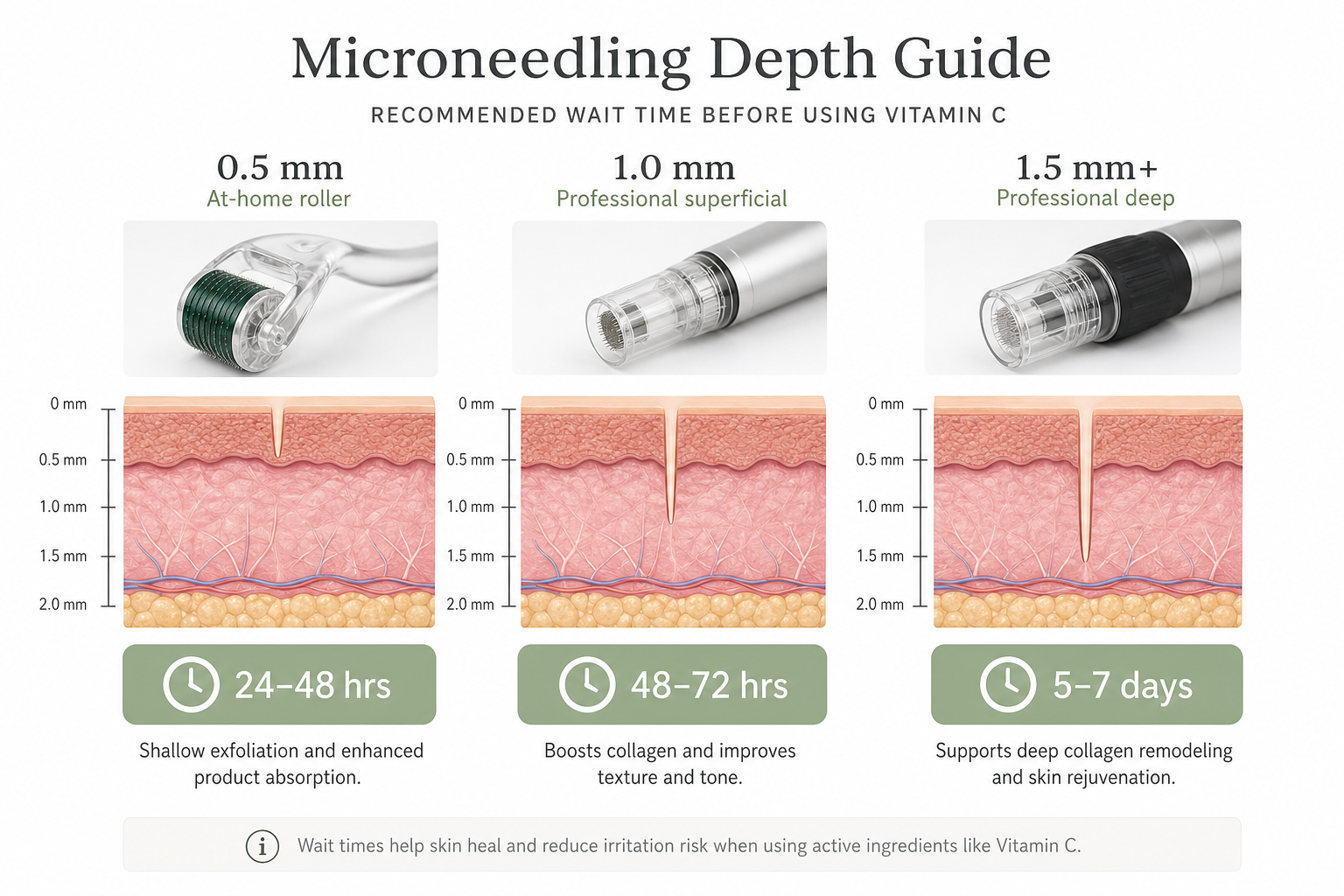
Most published aftercare guidance recommends waiting a minimum of 48–72 hours before reintroducing topical vitamin C. However, this single timeline does not account for one of the most important variables: needle depth. Deeper treatments create more significant skin barrier disruption and require longer recovery before actives can be safely reintroduced.
| Treatment Type | Typical Needle Depth | Recommended Wait Before Vitamin C | Notes |
|---|---|---|---|
| At-home derma roller | 0.2–0.5 mm | 24–48 hours | Shallower depth; less barrier disruption |
| Professional microneedling (superficial) | 0.5–1.0 mm | 48–72 hours | Standard recommendation for most clinic treatments |
| Professional microneedling (deeper) | 1.0–1.5 mm+ | 5–7 days | Greater barrier disruption; allow full skin barrier recovery |
At-home microneedling devices typically use shorter needles (0.2–0.5 mm) that create superficial channels and cause less disruption overall. A 24–48 hour pause before reintroducing vitamin C is often sufficient in this context, provided the skin shows no ongoing redness or sensitivity. Professional treatments at 1.0 mm or deeper cause more substantial controlled micro-injuries and may leave the skin reactive for several days. In these cases, waiting five to seven days before reintroducing any active ingredient — including vitamin C — is a more conservative and appropriate approach. Your treating practitioner is best placed to advise on the specific wait time based on the depth and intensity of your individual treatment.
Signs Your Skin Is Ready for Vitamin C
Rather than relying solely on a fixed number of days, it is also useful to assess your skin’s actual state before reintroducing any active ingredient. Observable cues that suggest skin barrier recovery is progressing well include:
- Visible redness has resolved or reduced significantly
- The skin no longer feels tight, raw, or tender to the touch
- There is no stinging or burning sensation when applying plain water or a gentle moisturiser
- Peeling or flaking, if it occurred, has largely settled
- The skin feels calm rather than reactive or inflamed
If any of these signs are still present, it is worth waiting another day or two before attempting to reintroduce vitamin C. Rushing the process is unlikely to produce better results and may set back your recovery.
Which Form of Vitamin C Is Best After Microneedling?
Not all vitamin C formulations carry the same risk of irritation on post-treatment skin. Understanding the differences between the main forms helps you choose a product that supports healing rather than compromising it.
| Vitamin C Form | pH | Stability | Irritation Potential | Suitability Post-Microneedling |
|---|---|---|---|---|
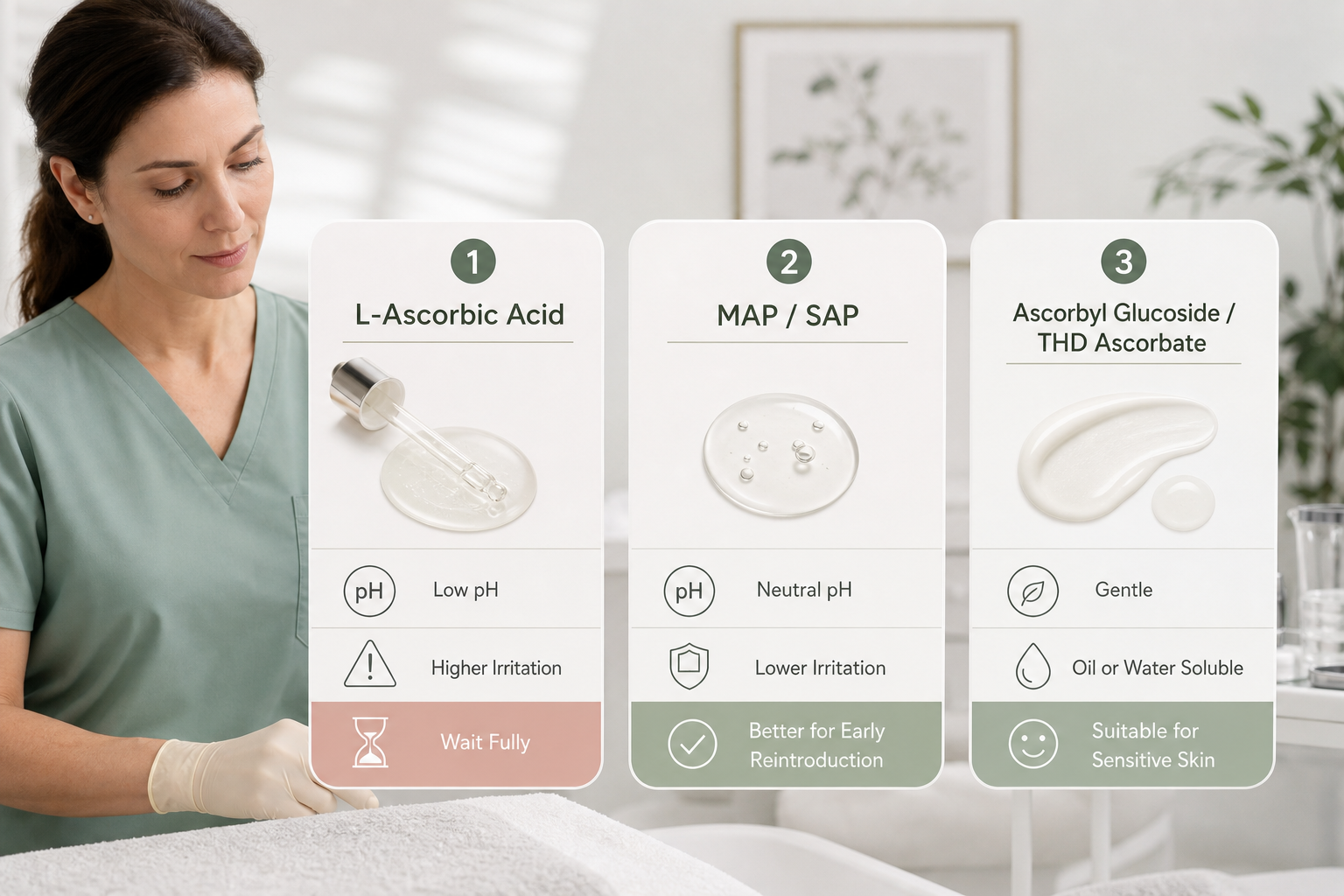
| L-ascorbic acid (LAA) | 2.5–3.5 | Low (oxidises quickly) | Higher | Wait until skin is fully calm; start at 5–10% |
| Magnesium ascorbyl phosphate (MAP) | Near neutral | High | Low | Better tolerated earlier in recovery |
| Sodium ascorbyl phosphate (SAP) | Near neutral | High | Low | Better tolerated earlier in recovery |
| Ascorbyl glucoside | Near neutral | High | Low | Gentle option; suitable for sensitive skin |
| Tetrahexyldecyl ascorbate | Oil-soluble | High | Low | Lipid-soluble; generally well tolerated |
L-ascorbic acid is the most extensively studied form of vitamin C in relation to collagen synthesis and antioxidant activity. Its low pH, however, makes it the most likely to cause stinging and irritation on skin that is still recovering from microneedling. If you prefer to use L-ascorbic acid, waiting until the skin is fully calm and starting with a low-concentration serum (around 5–10%) is advisable before gradually increasing to higher concentrations over subsequent weeks.
Stable vitamin C derivatives such as magnesium ascorbyl phosphate (MAP) and sodium ascorbyl phosphate (SAP) are formulated at a near-neutral pH, making them considerably gentler on sensitised skin. These forms are converted to active ascorbic acid within the skin and can still support antioxidant protection and collagen production, though the evidence base for their efficacy is somewhat less extensive than for L-ascorbic acid. For post-microneedling use, particularly in the earlier part of the reintroduction window, MAP and SAP are often the more practical choice. All products used on post-treatment skin should be fragrance-free and free from unnecessary irritants such as alcohol, essential oils, and synthetic dyes.
How to Reintroduce Vitamin C Safely: A Step-by-Step Approach
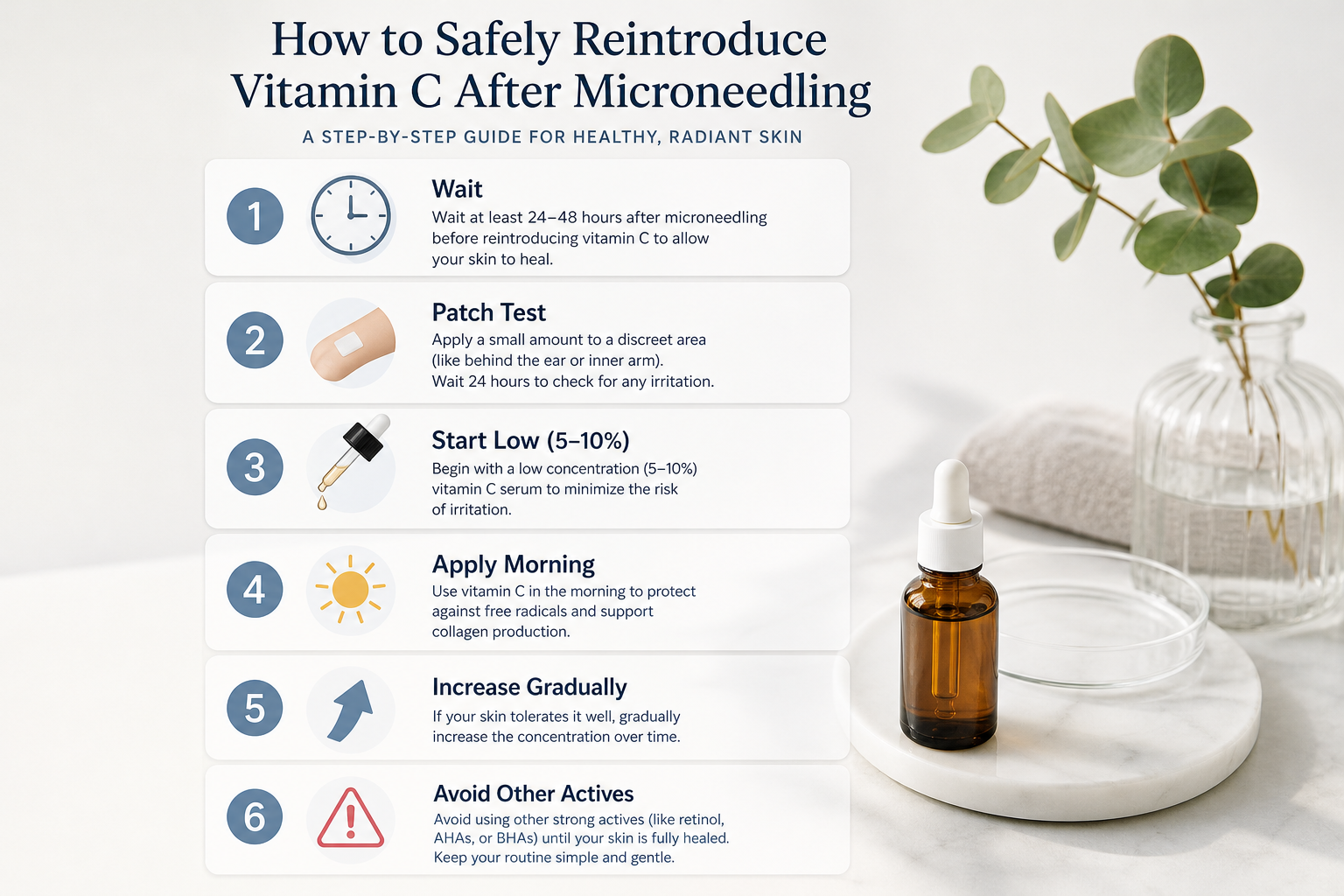
Reintroducing vitamin C after microneedling is best done gradually, particularly if you are using a potent L-ascorbic acid formulation or if your skin tends toward sensitivity.
- Confirm the minimum wait time has passed — at least 48–72 hours for standard professional treatments, or five to seven days for deeper sessions. Check that the observable signs of recovery described above are present.
- Perform a patch test — apply a small amount of the vitamin C product to a discreet area of skin (such as behind the ear or on the inner forearm) and wait 24 hours before applying it to the treated area. This is especially important if you are trying a new product or a higher concentration than you have used before.
- Start with a low-concentration serum — begin with a 5% or 10% vitamin C product rather than jumping straight to 15–20%. This allows the skin to adjust without being overwhelmed.
- Apply in the morning — vitamin C functions as an antioxidant that helps neutralise free radicals generated by UV exposure. Applying it in the morning, followed by a broad-spectrum sunscreen with SPF 30 or higher, maximises this protective effect. Morning application also means the skin has the evening hours for barrier-focused recovery products such as ceramide moisturisers and peptide serums.
- Increase concentration gradually — once the skin has tolerated the lower concentration for one to two weeks, you can consider stepping up to 15% and eventually to 20% if your skin responds well. There is no clinical benefit to using the highest concentration immediately.
- Continue to avoid other actives until fully healed — retinol, retinoids, AHAs, and BHAs should also be paused after microneedling and reintroduced separately, not simultaneously with vitamin C.
What to Use Instead of Vitamin C in the First 48–72 Hours
The immediate post-microneedling period calls for products that support skin barrier recovery without introducing any risk of irritation. The following ingredients are generally considered safe and appropriate during this window:
- Hyaluronic acid serum — a humectant that attracts and retains moisture, supporting hydration without any active ingredient risk. This is the most widely recommended immediate post-treatment serum.
- Ceramide-based moisturiser — ceramides are lipid molecules that form part of the skin barrier. A ceramide-rich moisturiser helps restore barrier integrity during the recovery period.
- Peptide serum — peptides, including copper peptides, can support the skin’s natural repair processes and are generally well tolerated on post-treatment skin.
- Gentle, fragrance-free cleanser — cleansing should be minimal and gentle in the first 24–48 hours. Avoid foaming cleansers with sulphates or any product containing active exfoliants.
- Broad-spectrum sunscreen — once the skin is no longer raw (usually from day two onwards), a mineral-based broad-spectrum sunscreen with SPF 30 or higher is essential. Post-microneedling skin is more vulnerable to UV-induced damage and hyperpigmentation.
Oral Vitamin C: A Safe Immediate Alternative
One practical strategy that is often overlooked in standard aftercare guidance is oral vitamin C supplementation. While topical application carries the risks described above in the immediate post-treatment period, taking vitamin C orally is safe from the day of treatment onwards and may provide meaningful systemic support for the healing process.
Vitamin C is an essential cofactor for the enzymes prolyl hydroxylase and lysyl hydroxylase, which are required for the formation of stable collagen triple-helix structures. Adequate systemic vitamin C levels support the proliferation phase of wound healing, during which fibroblasts are actively producing new collagen. Oral supplementation does not carry the risk of topical irritation, granulomatous reaction, or barrier disruption. Standard supplementation doses (typically 500–1000 mg daily, though individual needs vary) are generally well tolerated, but it is worth discussing any supplementation with your GP or treating practitioner, particularly if you take other medications or have relevant health conditions.
Vitamin C Before Microneedling: What the Guidance Says
Guidance on whether to stop vitamin C before microneedling is less consistent than post-treatment advice. Some clinics recommend discontinuing topical vitamin C — particularly L-ascorbic acid — 24 to 48 hours before treatment to avoid applying an acidic product to skin that is about to be needled. Others suggest stopping up to seven days before, particularly for patients with sensitive skin or those using high-concentration formulations. A small number of practitioners do not require any pre-treatment pause.
The rationale for stopping beforehand is that pre-sensitised skin may respond more intensely to the microneedling procedure itself, and that residual product in the skin could interact unpredictably with the treatment. In the absence of a strong consensus, following your treating practitioner’s specific pre-treatment instructions is the most appropriate course of action. If you are unsure, erring on the side of stopping topical vitamin C 24–48 hours before your appointment is a reasonable precaution.
What to Do If You Applied Vitamin C Too Soon
If you applied a vitamin C product before the recommended wait time had passed and your skin has reacted — with stinging, increased redness, or a burning sensation — the first step is to rinse the product off gently with cool water. Do not apply further active ingredients. Return to the gentle, barrier-supportive routine described above: a fragrance-free cleanser, hyaluronic acid serum, ceramide moisturiser, and mineral sunscreen during the day.
In most cases, mild irritation from premature vitamin C application will settle within 24–48 hours with appropriate care. If redness, swelling, or discomfort persists beyond 48 hours, or if you notice any unusual skin changes such as persistent raised areas or nodules, contact your treating practitioner promptly. These could indicate a more significant inflammatory response that warrants professional assessment.
Clinical Evidence: Vitamin C Combined With Microneedling
The rationale for combining vitamin C with microneedling is supported by the biology of collagen synthesis. Vitamin C acts as a cofactor for the enzymes responsible for stabilising the collagen triple helix, and it also inhibits matrix metalloproteinase-1 (MMP-1), an enzyme that degrades existing collagen. Additionally, vitamin C’s tyrosinase inhibition activity may help address post-inflammatory hyperpigmentation, which can occasionally occur after microneedling in susceptible individuals.
A 2026 double-blinded split-face clinical trial examined the combination of a vitamin C, vitamin E, and ferulic acid formulation applied alongside microneedling for photoaging. The study found that the combination approach produced measurable improvements in skin texture and tone compared to microneedling alone, suggesting that appropriately timed topical antioxidant application can enhance outcomes. Importantly, the timing and formulation of the vitamin C product used in such protocols matters considerably — the enhanced transdermal absorption that open microchannels provide is a double-edged effect, amplifying both the potential benefit and the potential for irritation if the wrong product or timing is chosen.
Frequently Asked Questions
Can I use vitamin C the same day as microneedling?
No. Applying topical vitamin C — especially L-ascorbic acid — on the same day as microneedling is not recommended. The skin barrier is disrupted and microchannels are open, making the skin highly reactive. Even products that are normally well tolerated can cause significant stinging, inflammation, and potentially slow the healing process if applied immediately after treatment.
Is MAP or SAP safer than L-ascorbic acid after microneedling?
Magnesium ascorbyl phosphate (MAP) and sodium ascorbyl phosphate (SAP) are formulated at a near-neutral pH, which makes them considerably less likely to cause irritation on post-treatment skin compared to L-ascorbic acid. They are generally considered more appropriate choices when reintroducing vitamin C in the earlier part of the recovery window, though the standard minimum wait time still applies.
Can I take vitamin C supplements after microneedling?
Yes. Oral vitamin C supplementation is safe immediately after microneedling and may support the skin’s healing process by providing systemic support for collagen synthesis. It does not carry the risks associated with topical application on freshly needled skin. Discuss appropriate dosing with your GP or practitioner.
What concentration of vitamin C should I start with after microneedling?
Starting with a low-concentration serum — around 5% to 10% — is advisable when reintroducing vitamin C after microneedling. This allows the skin to adjust without being overwhelmed. You can gradually increase the concentration over subsequent weeks as the skin demonstrates tolerance.
Should I stop vitamin C before microneedling as well?
Many practitioners recommend stopping topical vitamin C at least 24–48 hours before a microneedling session to avoid pre-sensitising the skin. Some advise a longer pause of up to seven days. Follow your treating practitioner’s specific pre-treatment instructions, as guidance can vary depending on the formulation you use and your skin type.
What if my skin is still red after 72 hours — should I still reintroduce vitamin C?
No. Persistent redness after 72 hours is a sign that skin barrier recovery is still in progress. Wait until the redness has resolved and the skin feels calm before reintroducing any active ingredient. If redness persists beyond five to seven days, contact your treating practitioner for advice.
Is it safe to use vitamin C with microneedling at home?
At-home microneedling devices use shorter needles (typically 0.2–0.5 mm) and cause less disruption than professional treatments, so the required wait time before reintroducing vitamin C may be shorter — often 24–48 hours. However, the same principles apply: wait until the skin is calm, perform a patch test, and start with a gentle, low-concentration, fragrance-free formulation.
Getting the Timing Right for Better Results
The relationship between vitamin C and microneedling is genuinely complementary when managed correctly. Microneedling stimulates the skin’s collagen-producing machinery, and vitamin C provides the biochemical support that collagen synthesis depends on — but only when the skin is ready to receive it. Applying vitamin C too soon risks irritation, inflammation, and potentially more serious reactions; waiting the appropriate time and choosing the right formulation allows you to support your results without compromising your recovery.
As a practical guide: wait at least 48–72 hours for standard professional treatments (and up to five to seven days for deeper sessions), look for observable signs that the skin barrier has recovered, perform a patch test, and begin with a gentle, fragrance-free, low-concentration vitamin C derivative before gradually reintroducing stronger L-ascorbic acid formulations. In the meantime, oral vitamin C supplementation offers a safe way to support healing from within. If you are unsure about any aspect of your post-treatment routine, your treating practitioner is the most reliable source of personalised aftercare guidance.
