

Enlarged pores are one of the most common skin texture concerns, yet they are also one of the most misunderstood. Pores cannot be permanently closed or erased, but their visible size can be meaningfully reduced when the right treatment targets the underlying cause. Microneedling — more precisely described as collagen induction therapy — has become one of the most widely used professional treatments for texture refinement, and published clinical data suggests it can produce a measurable reduction in pore appearance. This guide explains how microneedling works for pores, what the evidence actually shows, how many sessions are typically needed, and how it compares to alternative treatments, so you can approach a consultation with realistic expectations.
Key Takeaways
- Microneedling stimulates collagen and elastin production through controlled micro-injuries, which can tighten the tissue surrounding pores and reduce their visible size over time.
- Most people require a series of three to six sessions spaced four to six weeks apart; pore improvement is progressive and continues for several months after the final session.
- Radiofrequency microneedling (RF microneedling) delivers additional thermal energy into the dermis and may produce more pronounced results for pores driven by skin laxity or significant collagen loss.
- Microneedling is generally safe across a wide range of skin tones because it does not rely on light or heat absorbed by pigment, unlike many laser treatments.
- Results are not permanent; maintenance sessions every three to six months, combined with a consistent at-home skincare routine, help sustain improvement.
What Causes Enlarged Pores?
Understanding why pores become more visible is important for choosing the most appropriate treatment. Pore size is partly determined by genetics — the baseline diameter of each pilosebaceous unit (the follicle and its associated sebaceous gland) is inherited and cannot be fundamentally altered. However, several factors cause pores to appear larger than their structural baseline.
Excess sebum production is one of the most common contributors. When sebaceous glands produce more oil than the skin can clear, sebum accumulates inside the follicle, stretching the pore walls outward. This is particularly common in oily and combination skin types and is most visible across the T-zone, nose, and cheeks. Acne and post-acne texture compound this effect: repeated inflammation damages the surrounding tissue, leaving pore walls weakened and permanently stretched in some cases.
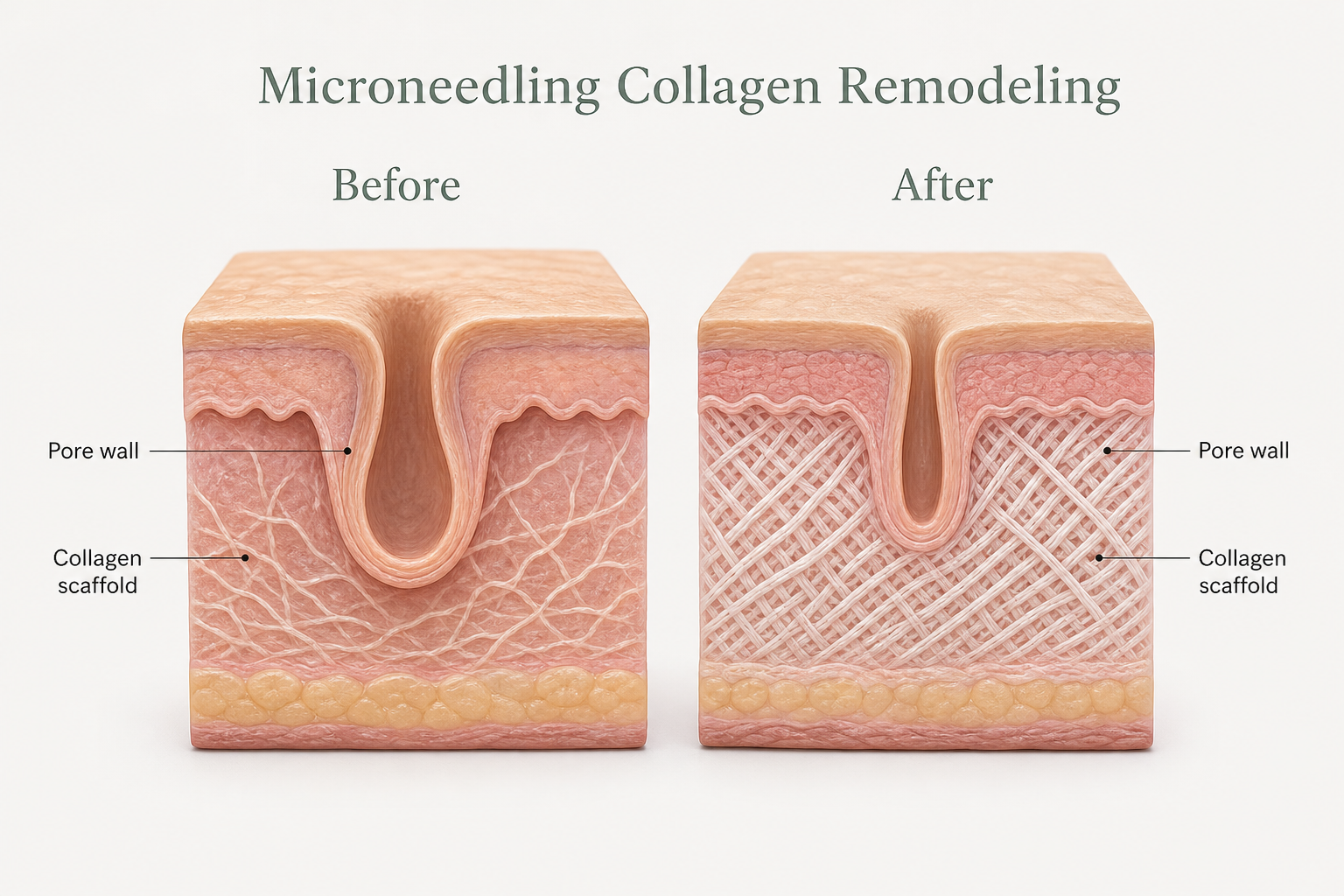
Collagen loss with aging is another significant driver. Collagen and elastin fibres form a structural scaffold around each follicle. As this scaffold thins with age and UV exposure, the surrounding tissue loses its ability to hold the pore walls taut, and pores appear wider and more open. Sun damage accelerates this process by degrading dermal collagen faster than the skin can replace it. This means that for older patients, or those with significant photoaging, skin laxity is often the primary reason pores look enlarged — and this distinction matters when selecting a treatment.
How Microneedling Works for Pore Appearance
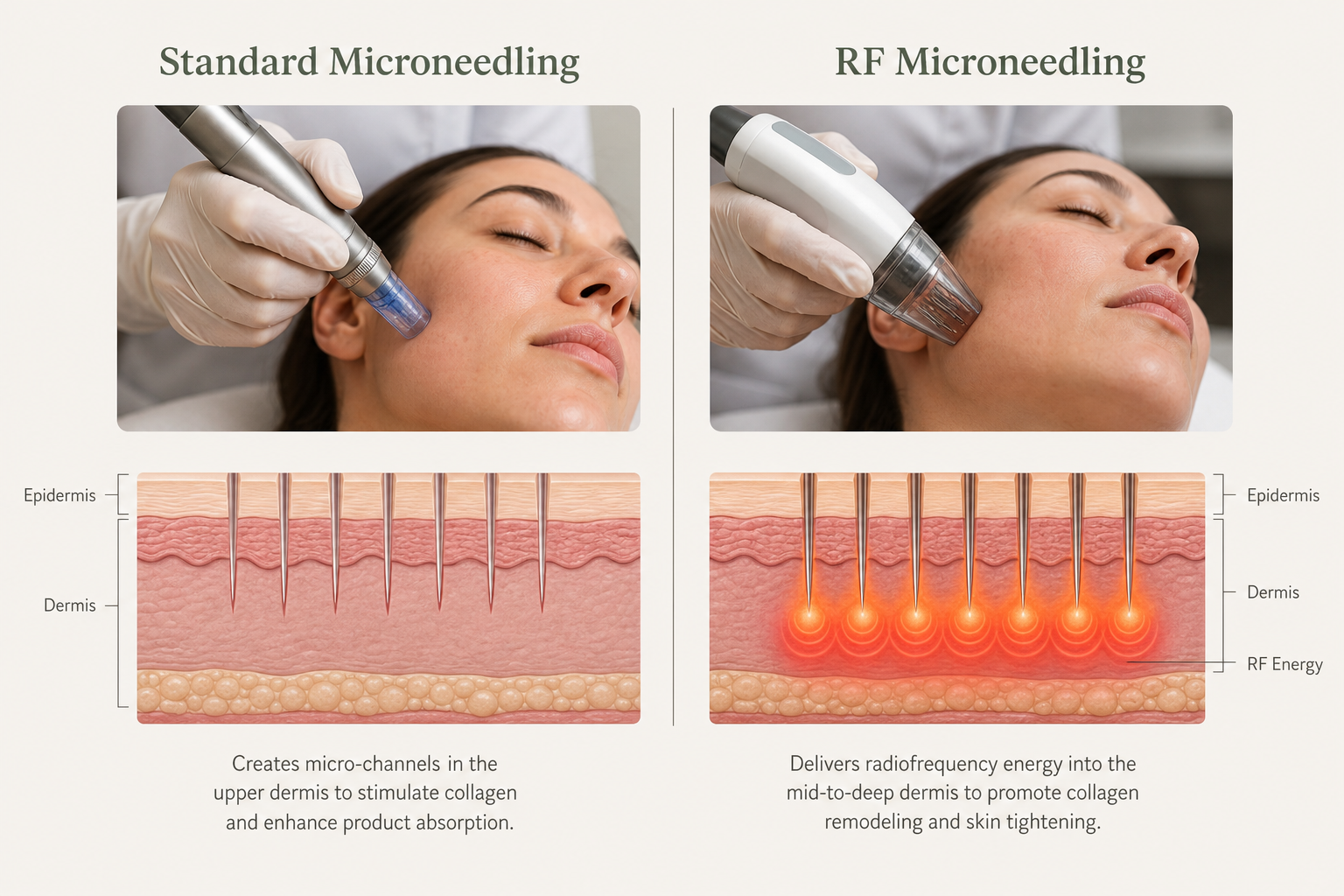
Microneedling creates thousands of controlled micro-injuries in the skin using fine needles mounted on a motorised device. These micro-channels penetrate the epidermis and upper dermis without removing tissue. The skin interprets each channel as a wound and initiates a wound healing response: inflammatory mediators are released, fibroblasts are recruited, and new collagen and elastin are synthesised to repair the treated area.
For pore appearance specifically, this skin remodeling process works in two ways. First, the new collagen deposited around each pilosebaceous unit provides structural support to the pore walls, gradually tightening the surrounding tissue and reducing the visible diameter of the pore. Second, the overall improvement in skin firmness and dermal density makes the skin surface appear smoother and more refined, which reduces the shadow effect that makes pores look darker and more prominent under certain lighting conditions.
Needle depth is an important variable in this process. For pore-focused texture refinement, practitioners typically work in the range of 0.5 to 1.5 mm, targeting the papillary and upper reticular dermis where the collagen scaffold surrounding follicles is located. Deeper settings (up to 2 mm) may be used for acne scarring or more significant skin laxity, but are not always necessary for pore concerns alone. The appropriate depth depends on the individual’s skin thickness, concern severity, and treatment area, and should be determined during a clinical assessment.
What Does the Clinical Evidence Show?
The evidence base for microneedling as a treatment for enlarged pores has grown steadily over the past decade. Several controlled studies have reported measurable reductions in pore size following a course of professional microneedling sessions. Some published data cites reductions in pore visibility in the range of 25 to 40 percent after a full treatment course, though results vary considerably between individuals depending on age, skin type, pore severity, and the number of sessions completed.
It is worth being transparent about the limitations of this evidence. Many studies are small, use varying outcome measures, and assess results at different time points. Photographic before-and-after comparisons — including those used in clinical studies — can be influenced by lighting conditions, camera angle, and skin hydration on the day of photography. This does not mean the results are not real, but it does mean that the most reliable indicator of your likely outcome is a consultation with a qualified practitioner who can assess your specific skin concerns and review realistic examples from their own clinical practice.
Microneedling has received regulatory clearance in several countries for skin texture improvement. The SkinPen, for example, is an FDA-cleared microneedling device. Regulatory clearance confirms a device meets safety standards but does not constitute a guarantee of specific clinical outcomes.
Standard Microneedling vs. RF Microneedling for Pores
Radiofrequency microneedling combines the collagen induction mechanism of standard microneedling with the delivery of radiofrequency energy through the needle tips into the dermis. The thermal effect of the radiofrequency energy causes immediate tissue contraction and stimulates a more intense collagen remodeling response at greater depth than standard microneedling alone.
| Feature | Standard Microneedling | RF Microneedling |
|---|---|---|
| Mechanism | Controlled micro-injuries triggering wound healing response | Micro-injuries plus radiofrequency thermal energy in the dermis |
| Primary target | Superficial to mid-dermis collagen remodeling | Mid to deep dermis; immediate tissue contraction |
| Best suited for | Texture refinement, mild pore enlargement, post-acne texture, early collagen loss | Pores driven by skin laxity, moderate to significant collagen loss, skin tightening |
| Downtime | 24–72 hours redness and mild swelling | 2–5 days redness, swelling, possible pinpoint bruising |
| Sessions typically needed | 3–6 sessions, 4–6 weeks apart | 3–4 sessions, 4–6 weeks apart |
| Skin tone safety | Generally safe across Fitzpatrick types I–VI | Generally safe across Fitzpatrick types I–VI |
| Common devices | SkinPen, Dermapen | Morpheus8, Vivace, Infini, Potenza |
| Cost | Lower per session | Higher per session |
For patients whose enlarged pores are primarily driven by excess sebum production or post-acne texture, standard microneedling is often a well-matched and cost-effective option. For patients where skin laxity and significant collagen loss are the dominant factors — typically those in their forties and beyond, or those with notable skin looseness — radiofrequency microneedling may produce more pronounced and longer-lasting improvement. A practitioner can help determine which approach is more appropriate after assessing your skin in person.
One meaningful advantage that both standard and RF microneedling share over many laser treatments is their safety profile across different skin tones. Because microneedling does not rely on light energy absorbed by melanin, it does not carry the same risk of post-inflammatory hyperpigmentation that can occur with certain laser resurfacing treatments in patients with darker skin tones (Fitzpatrick types IV–VI). This makes microneedling a particularly relevant option for patients who may not be suitable candidates for laser-based pore treatments.
How Many Sessions Are Needed and What to Expect
Most patients require between three and six microneedling sessions to achieve meaningful improvement in pore appearance, with sessions spaced four to six weeks apart to allow the skin’s wound healing response to complete between appointments. For mild pore enlargement with good baseline skin quality, two to three sessions may produce satisfactory results. For more significant pore visibility, post-acne texture, or moderate collagen loss, a longer course is typically recommended.
Results from microneedling are progressive rather than immediate. After the first session, some patients notice a subtle improvement in skin texture within two to three weeks as initial collagen remodeling begins. More visible changes in pore appearance typically become apparent after the second or third session. Peak results are generally reached three to six months after completing the full course, as collagen synthesis and skin remodeling continue well beyond the final appointment.
The following gives a general sense of what to expect at each stage, though individual timelines vary:
- Session 1: Skin may appear slightly smoother within two to three weeks; pore changes are subtle at this stage.
- Sessions 2–3: Cumulative collagen remodeling becomes more visible; skin texture and firmness begin to improve noticeably.
- Sessions 4–6 (if recommended): Progressive refinement continues; pore appearance and overall skin quality improve further.
- 1–3 months post-course: Collagen synthesis reaches its peak; the most significant improvement in pore visibility is typically seen during this window.
- Maintenance phase: Maintenance sessions every three to six months help sustain results as natural collagen turnover continues.
Serum Pairing During Treatment: An Underused Strategy
One aspect of professional microneedling that is often underemphasised is the enhanced absorption window created by the micro-channels immediately after needling. With the skin’s surface barrier temporarily open, topical serums applied during or immediately after treatment can penetrate significantly more deeply than they would through intact skin. For pore-focused outcomes, practitioners may apply serums containing hyaluronic acid (for hydration and plumping of the surrounding tissue), growth factors or exosomes (to support collagen synthesis), or niacinamide (which has evidence for reducing sebum production and improving skin texture). The specific serums used will depend on the practitioner’s protocol and your individual skin concerns, but this pairing strategy can meaningfully complement the collagen induction effect of the treatment itself.
Microneedling vs. Other Pore Treatments
Microneedling is not the only professional option for enlarged pores, and for some patients a different treatment — or a combination approach — may be more appropriate.
- Chemical peels: Superficial and medium-depth peels exfoliate the skin surface, reduce congestion, and can improve the appearance of pores by clearing sebum and dead skin cells from the follicle opening. Salicylic acid peels are particularly effective for oily, congested skin. Peels address the surface layer more directly than microneedling but do not stimulate the same depth of collagen remodeling. For patients with both congestion and collagen-related pore enlargement, a chemical peel before a course of microneedling can be a useful combination: the peel clears the surface, and microneedling addresses the structural support beneath.
- Laser resurfacing: Fractional laser treatments can produce significant improvements in skin texture, pore appearance, and sun damage, often with fewer sessions than microneedling. However, they typically involve more downtime, carry a higher risk of post-inflammatory hyperpigmentation in darker skin tones, and are generally more expensive. Laser resurfacing may be more appropriate for patients with deeper wrinkles, significant photoaging, or more severe textural concerns.
- HydraFacial: A HydraFacial uses suction and a hydrating serum infusion to cleanse pores and remove surface congestion. It is an effective maintenance treatment for keeping pores clear but does not stimulate collagen remodeling and is unlikely to produce the same structural improvement in pore appearance as microneedling.
- Microdermabrasion: Mechanical exfoliation of the skin surface can temporarily improve texture and reduce the appearance of congested pores, but the effect is superficial and does not address the dermal collagen loss that contributes to pore enlargement in many patients.
The most appropriate treatment depends on the primary cause of your enlarged pores, your skin type and tone, your tolerance for downtime, and your budget. A thorough skin assessment — ideally using a tool such as VISIA skin analysis to objectively evaluate pore size, sebum distribution, and skin quality — can help guide this decision.
Aftercare and At-Home Maintenance
Post-treatment care directly affects both the comfort of recovery and the quality of results. In the first 24 to 48 hours after microneedling, the skin is more sensitive and the surface barrier is temporarily compromised. During this window, a gentle cleanser and a hydrating serum — typically hyaluronic acid — are recommended. Active ingredients including retinoids, AHAs, BHAs, and vitamin C should be avoided for at least 48 to 72 hours, as they can cause irritation on freshly treated skin.
Mineral sunscreen with SPF 30 or higher is essential from the day after treatment and should be applied consistently throughout the course of sessions and beyond. UV exposure after microneedling can increase the risk of post-inflammatory pigmentation and will counteract the collagen-building benefits of the treatment by accelerating dermal collagen breakdown.
Strenuous exercise, saunas, steam rooms, and swimming should be avoided for approximately 72 hours post-treatment to reduce the risk of infection and excessive inflammation while the micro-channels are closing.
From around day seven, active ingredients can typically be reintroduced gradually. For long-term maintenance of pore refinement results, a consistent at-home routine that includes a retinol or retinoid (to support ongoing collagen turnover), a niacinamide serum (to regulate sebum production and refine texture), and daily broad-spectrum SPF will help sustain and extend the improvements achieved through professional treatment.
Who May Be Suitable for Microneedling for Pores
Microneedling for pore refinement may be appropriate for adults who have enlarged pores related to excess sebum production, post-acne texture, early to moderate collagen loss, or photoaging. It is generally well-tolerated across a wide range of skin types and tones, making it a relevant option for patients who are not suitable candidates for laser-based treatments.
Microneedling is generally not recommended for individuals with active skin infections, open acne lesions, or inflammatory skin conditions in the treatment area. A history of keloid scarring is a relative contraindication, as the wound healing response stimulated by microneedling could theoretically trigger abnormal scarring in susceptible individuals. Pregnancy and breastfeeding are standard contraindications for most aesthetic treatments. Patients taking certain blood-thinning medications or with coagulation disorders should discuss this with their practitioner before proceeding. Those who have undergone laser resurfacing or a medium-to-deep chemical peel within the preceding six months should allow adequate healing time before starting microneedling.
A clinical consultation is the appropriate setting to assess individual suitability, review medical history, and discuss realistic expectations based on your specific skin concerns.
At-Home Microneedling vs. Professional Treatment
At-home microneedling rollers and devices are widely available, but they are not equivalent to professional treatment for pore-level collagen remodeling. Consumer devices are limited to needle depths of approximately 0.1 to 0.3 mm — sufficient to enhance the absorption of topical serums but not deep enough to reach the dermal layer where the collagen scaffold surrounding pores is located. Professional devices operate at depths of 0.5 to 2 mm under controlled, sterile conditions, with adjustable settings calibrated to the individual’s skin thickness and concern. The collagen induction response that produces meaningful improvement in pore appearance requires this level of dermal penetration. At-home devices can complement a professional treatment programme as part of a maintenance routine, but they are unlikely to replicate the structural results of clinical microneedling.
Frequently Asked Questions
Can microneedling permanently shrink pores?
Microneedling can produce lasting improvement in pore appearance, but the results are not permanent in the strict sense. The collagen remodeling stimulated by treatment gradually diminishes over time as natural ageing continues. Most patients find that maintenance sessions every three to six months, combined with a consistent skincare routine, help sustain the improvement achieved during the initial course of treatment.
How soon will I see results after microneedling for pores?
Initial improvements in skin texture may become noticeable within two to three weeks of the first session. More significant changes in pore appearance typically develop progressively over the course of a treatment series, with peak results often visible three to six months after completing the full course as collagen synthesis reaches its maximum.
Is microneedling painful?
A topical numbing cream is applied to the skin before treatment, which significantly reduces discomfort. Most patients describe the sensation during microneedling as mild pressure or a light scratching feeling rather than sharp pain. Sensitivity varies between individuals and treatment areas; the nose and forehead tend to be more sensitive than the cheeks.
How long is the recovery after microneedling?
Most patients experience redness and mild swelling for 24 to 72 hours after standard microneedling, similar in appearance to a moderate sunburn. Skin may feel slightly tight or dry for a few days. RF microneedling typically involves slightly more downtime, with redness and swelling lasting two to five days. Most people are comfortable returning to work and social activities within two to three days of standard microneedling.
Is microneedling safe for darker skin tones?
Microneedling is generally considered safe across all Fitzpatrick skin types, including darker skin tones (types IV–VI). Because the treatment does not use light or heat energy absorbed by melanin, it does not carry the same risk of post-inflammatory hyperpigmentation associated with certain laser treatments. This makes it a particularly relevant option for patients with medium to dark skin tones who are seeking pore refinement.
How does microneedling compare to a chemical peel for pores?
Chemical peels and microneedling work at different levels of the skin and address different aspects of pore enlargement. Peels exfoliate the surface and clear congestion from the follicle opening, which is particularly effective for oily or congested skin. Microneedling stimulates collagen remodeling in the dermis, tightening the structural support around pores. For patients with both congestion and collagen-related pore enlargement, a combination approach — using a peel to clear the surface before a course of microneedling — may produce better overall results than either treatment alone.
Will microneedling help if my pores are large due to genetics?
Genetically large pores cannot be permanently reduced to a smaller baseline size. However, microneedling can still improve their appearance by tightening the surrounding tissue, improving skin firmness, and refining overall skin texture. The improvement may be more modest than in patients whose pore enlargement is primarily driven by collagen loss or post-acne damage, and realistic expectations should be discussed during a consultation.
Is Microneedling the Right Approach for Your Pore Concerns?
Microneedling is a well-evidenced, versatile treatment for texture refinement and pore appearance, with a strong safety profile across skin types and a mechanism that addresses the structural causes of pore enlargement rather than simply clearing the surface. For patients with oily or combination skin, post-acne texture, or early to moderate collagen loss, a course of professional microneedling sessions is a reasonable and clinically supported option to discuss with a qualified practitioner.
The treatment is not a single-session fix, and it will not permanently alter the genetic baseline of your pore size. Progressive results over a series of sessions, followed by maintenance treatments and a consistent at-home routine, represent the most realistic pathway to sustained improvement. For patients with more significant skin laxity, radiofrequency microneedling may offer a more targeted approach, while those with primarily surface congestion may benefit from incorporating a chemical peel into their treatment plan.
If you are considering microneedling for enlarged pores, a thorough consultation with an experienced aesthetic practitioner — including a skin assessment to identify the primary cause of your pore concerns — is the most important first step toward choosing the treatment most likely to deliver meaningful, realistic results for your skin.
