

Acne vulgaris is one of the most common skin conditions worldwide, affecting people of all ages — not just teenagers. Whether you are dealing with occasional breakouts or persistent nodulocystic acne, understanding the full range of treatment options available can help you make more informed decisions and set realistic expectations before speaking with a dermatologist. This guide covers everything from over-the-counter products to prescription therapies, in-clinic procedures, and emerging treatments, organized by how they work and who they may suit.
Key Takeaways
- Acne treatment should be matched to your acne type and severity — what works for mild comedonal acne may be ineffective for moderate or severe inflammatory acne.
- Most treatments require consistent use for 4–16 weeks before meaningful improvement becomes visible; stopping too early is one of the most common reasons treatments appear to fail.
- Combination therapy — using two or more treatments with complementary mechanisms — is often more effective than any single product alone, and is recommended in current AAD guidelines.
- Prescription options including topical retinoids, oral antibiotics, isotretinoin, and hormonal therapies can significantly improve moderate to severe acne, but each carries specific risks and suitability considerations.
- A dermatologist or qualified clinician can provide a personalized acne treatment plan that accounts for your skin type, acne severity, medical history, and treatment goals.
Understanding Acne: Types and Causes
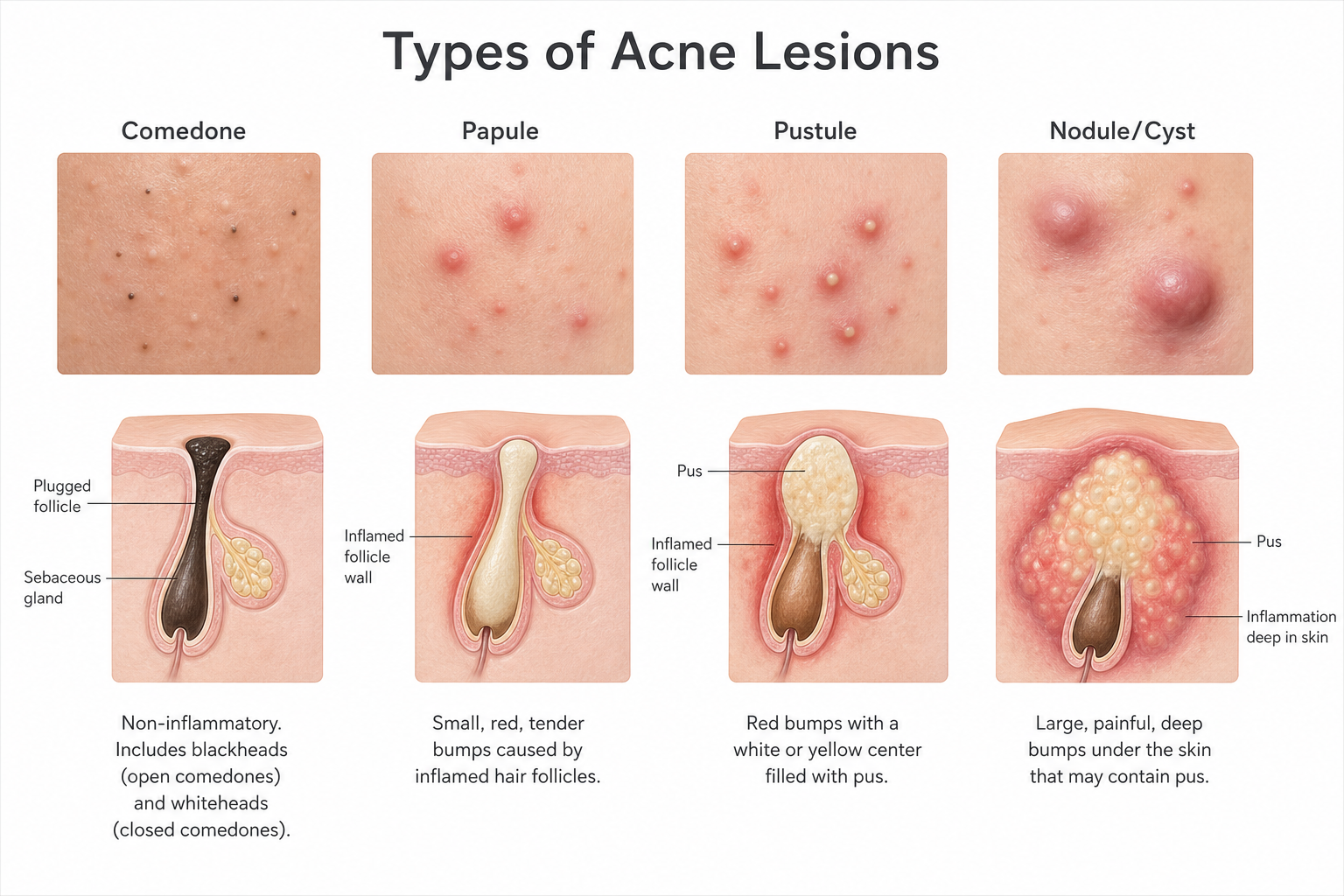
Acne develops within the pilosebaceous unit — the hair follicle and its attached sebaceous gland. When excess sebum production combines with dead skin cells, the follicle becomes blocked, creating the environment in which Cutibacterium acnes (formerly known as Propionibacterium acnes) bacteria proliferate and trigger inflammation. The result can range from non-inflammatory comedones to painful, deep inflammatory lesions.
Acne is broadly classified by lesion type and acne severity. Mild acne typically involves blackheads and whiteheads (comedones) with few papules or pustules. Moderate acne features more widespread papules and pustules, sometimes with early nodules. Severe acne — including nodulocystic acne — involves deep, painful nodules and cysts that carry a significant risk of acne scarring. Accurate classification matters because it directly guides which treatments are appropriate.
Hormonal fluctuations, particularly androgens, drive increased sebum production and are a key factor in hormonal acne — a pattern common in adult women that often presents along the jawline and chin. Genetic predisposition, certain medications, and dietary factors including high-glycaemic foods and dairy may also contribute, though the evidence for dietary triggers varies between individuals.
Over-the-Counter Acne Treatments
For mild acne, over-the-counter (OTC) products containing well-studied active ingredients are often the appropriate starting point. These are available without a prescription and can be effective when used consistently and correctly.
Benzoyl Peroxide
Benzoyl peroxide is one of the most evidence-backed OTC acne treatment ingredients available. It works by releasing oxygen into the follicle, which kills C. acnes bacteria, and it also has mild comedolytic properties — meaning it helps to loosen clogged pores. Available in concentrations ranging from 2.5% to 10%, lower concentrations (2.5%–5%) are generally as effective as higher ones for most people while causing less dryness and irritation. Benzoyl peroxide is particularly useful in combination therapy because it does not contribute to antibiotic resistance, unlike topical antibiotics used alone.
Salicylic Acid
Salicylic acid is a beta hydroxy acid (BHA) that penetrates oil-filled pores and exfoliates the lining of the follicle, making it effective for comedonal acne — blackheads and whiteheads. Available in concentrations of 0.5%–2% in cleansers, toners, and spot treatments, salicylic acid is generally well tolerated and suitable for daily use. It is less effective against inflammatory lesions than benzoyl peroxide but can be a useful part of a broader skincare routine for acne-prone skin.
Adapalene 0.1% (OTC Retinoid)
Adapalene 0.1% gel, available over the counter in many countries, is a topical retinoid that normalizes skin cell turnover within the follicle, preventing the formation of new comedones. It also has anti-inflammatory properties. Adapalene is one of the few OTC ingredients with strong clinical evidence for both comedonal and mild inflammatory acne. It requires consistent use over several weeks before results become apparent, and initial dryness or peeling is common during the first few weeks of use.
Azelaic Acid and Niacinamide
Azelaic acid (available OTC at lower concentrations and by prescription at 15%–20%) has antibacterial, comedolytic, and anti-inflammatory properties. It is also one of the few acne treatments considered relatively safe during pregnancy and is particularly useful for reducing post-inflammatory hyperpigmentation (PIH) — the dark marks that remain after spots heal, which are more pronounced in darker skin tones. Niacinamide, a form of vitamin B3, helps regulate sebum production and reduce redness, and is well tolerated across skin types, though its evidence base for acne is less robust than that of benzoyl peroxide or retinoids.
Pimple Patches and Spot Treatments
Hydrocolloid pimple patches absorb fluid from active pustules and protect the area from picking, which can worsen inflammation and increase the risk of scarring. They are a useful adjunct for individual blemishes but are not a substitute for a consistent treatment routine addressing the underlying causes of breakouts.
Prescription Acne Treatments
When OTC options are insufficient — or when acne is moderate to severe — prescription treatments offer more potent and targeted options. A dermatologist or qualified prescriber can assess which prescription acne treatment is most appropriate based on your acne type, severity, skin tone, and medical history.
Prescription Topical Retinoids
Prescription-strength topical retinoids — including tretinoin, tazarotene, and trifarotene — are among the most effective treatments for both comedonal and inflammatory acne. They work by accelerating skin cell turnover, preventing follicular plugging, and reducing inflammation. Tretinoin has decades of clinical evidence supporting its use. Trifarotene is a newer, fourth-generation retinoid with a more targeted mechanism and evidence for use on both the face and body acne. All topical retinoids can cause initial dryness, peeling, and photosensitivity, so sun protection is essential. Results typically take 8–12 weeks to become visible.
Topical Antibiotics
Topical antibiotics such as clindamycin reduce C. acnes populations and suppress inflammation. They are effective for inflammatory acne but should not be used as monotherapy due to the growing concern of antibiotic resistance. Current AAD guidelines recommend combining topical antibiotics with benzoyl peroxide to reduce the risk of resistance developing. Dapsone gel is another topical anti-inflammatory option, particularly studied in adult women with acne.
Oral Antibiotics
Oral antibiotics — most commonly doxycycline and minocycline — are prescribed for moderate to severe inflammatory acne that has not responded adequately to topical treatments. They reduce bacterial load and inflammation systemically. Oral antibiotics are generally recommended for the shortest effective course, typically 3–6 months, and should be combined with a topical retinoid and benzoyl peroxide to maximize effectiveness and minimize antibiotic resistance. Long-term use carries risks including gastrointestinal side effects, photosensitivity, and the development of resistant bacterial strains.
Isotretinoin
Isotretinoin (commonly known by the former brand name Accutane) is an oral vitamin A derivative and the most effective treatment available for severe, scarring, or treatment-resistant acne. It works by dramatically reducing sebum production, normalizing follicular keratinization, reducing bacterial colonization, and suppressing inflammation — addressing all four major pathways involved in acne development. A standard course typically lasts 4–6 months, and many patients experience long-term remission or significant reduction in acne after a single course. However, isotretinoin carries serious potential side effects including severe birth defects (it is absolutely contraindicated in pregnancy), elevated liver enzymes, raised blood lipids, dry skin and mucous membranes, and in some patients, mood changes. Strict monitoring protocols are required throughout treatment. Isotretinoin is prescribed and supervised by dermatologists and is not suitable for everyone.
Hormonal Therapies
For women with hormonal acne — particularly adult acne that worsens around the menstrual cycle or presents along the lower face and jawline — hormonal therapies can be highly effective. Spironolactone is an anti-androgen medication that reduces the hormonal stimulation of sebaceous glands, lowering sebum production. It is used off-label for acne in women and is generally well tolerated, though it is not suitable during pregnancy. Combined oral contraceptives containing certain progestins are also approved for acne treatment in women and can significantly reduce breakouts by stabilizing hormonal fluctuations. Clascoterone (WINLEVI) is a newer topical anti-androgen approved for acne in both males and females, offering a targeted hormonal approach without systemic effects.
Combination Therapy: Why Dermatologists Use Multiple Treatments Together
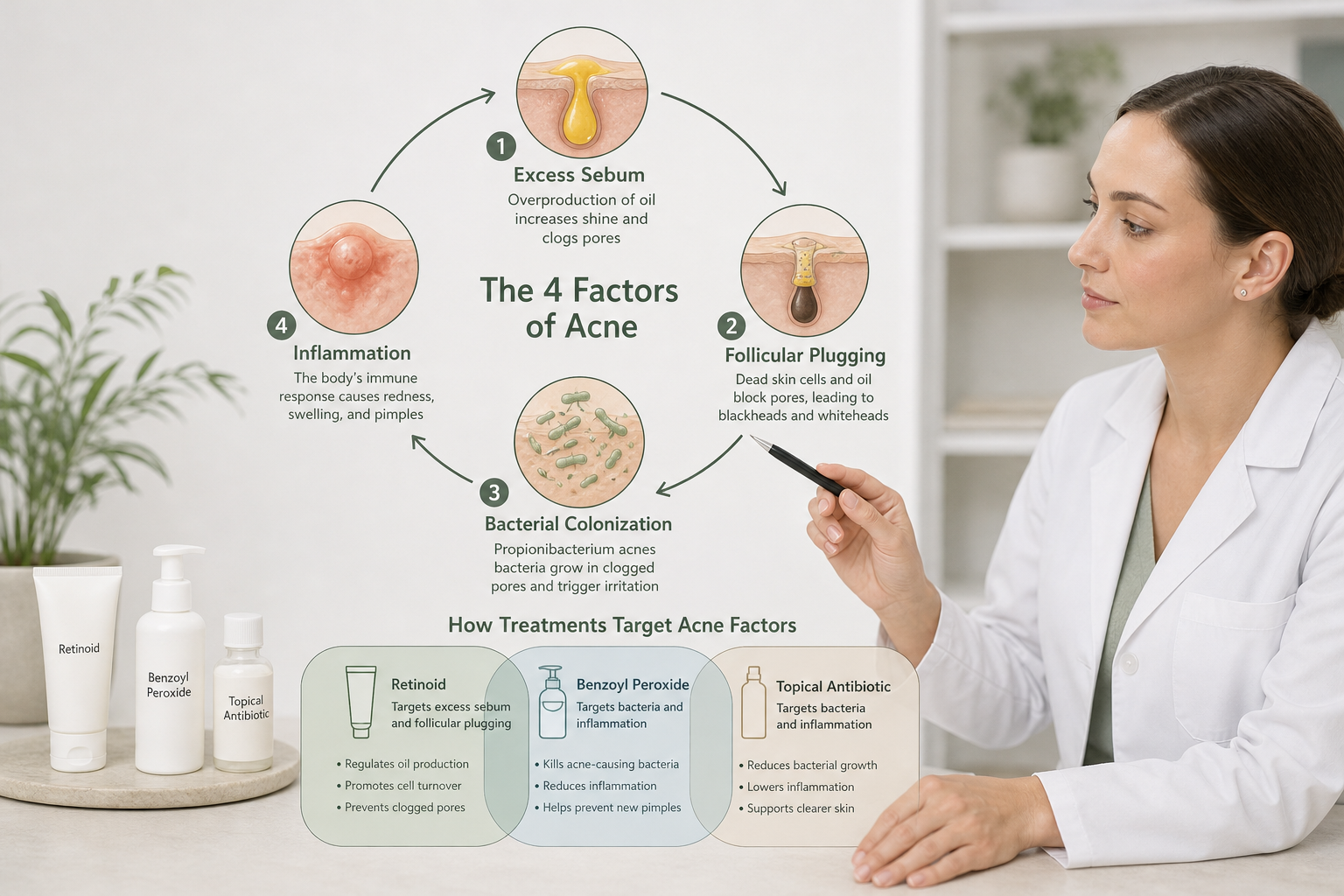
Acne has four main contributing factors: excess sebum, follicular plugging, bacterial colonization, and inflammation. No single ingredient addresses all four simultaneously, which is why combination therapy is a cornerstone of evidence-based acne management. For example, a topical retinoid addresses follicular plugging and inflammation; benzoyl peroxide targets bacteria without promoting resistance; and a topical antibiotic provides additional anti-inflammatory benefit. Used together, these agents work synergistically and produce better outcomes than any one treatment alone. The 2024 AAD guidelines reinforce this approach, recommending combination regimens for moderate acne and above, and emphasizing the importance of including benzoyl peroxide whenever antibiotics are prescribed to reduce antibiotic resistance risk.
In-Clinic and Procedural Acne Treatments
For patients who want faster results, have not responded adequately to topical or oral treatments, or are dealing with acne scarring, a range of in-clinic procedures may be appropriate. These are typically performed by dermatologists, aesthetic doctors, or trained clinicians.
Chemical Peels
Chemical peels using alpha hydroxy acids (AHAs) such as glycolic acid, or salicylic acid peels, exfoliate the skin surface, reduce comedones, and can improve mild to moderate inflammatory acne. A course of peels is usually required, and results vary depending on peel depth, skin type, and acne severity. Chemical peels also help reduce post-inflammatory hyperpigmentation, making them particularly useful for patients with darker skin tones who are prone to PIH after breakouts.
Laser and Light Therapy
Blue light therapy targets C. acnes bacteria, which produce porphyrins that are activated by specific wavelengths of light, leading to bacterial destruction. Photodynamic therapy (PDT) combines a photosensitizing agent applied to the skin with light activation, producing a more intensive effect on sebaceous glands and bacteria. Laser treatments including certain pulsed-dye lasers and infrared devices can reduce inflammation and sebum production. These treatments may suit patients who cannot tolerate or are not candidates for systemic medications, though multiple sessions are typically required and evidence for long-term efficacy varies.
Microneedling and Acne Scar Treatment
Active acne and acne scarring are distinct concerns requiring different approaches. Once acne is controlled, atrophic (depressed) scars — the most common type — can be addressed with microneedling, resurfacing lasers, subcision, or dermal fillers depending on scar type and depth. Microneedling stimulates collagen remodelling and can improve rolling and boxcar scars over a course of treatments. Resurfacing lasers offer more significant improvement for deeper scars but involve more downtime and require careful patient selection, particularly in darker skin tones where there is a risk of post-inflammatory hyperpigmentation or pigmentation changes.
Acne Treatment for Specific Groups
Acne in Darker Skin Tones
Patients with darker skin tones face an additional concern beyond acne itself: post-inflammatory hyperpigmentation, which can persist for months after spots resolve and may be more distressing than the acne lesions themselves. Treatment selection should account for this. Azelaic acid, niacinamide, and certain chemical peels are generally well tolerated and can help address PIH alongside acne. Aggressive treatments that cause significant irritation or inflammation may worsen PIH and should be introduced gradually. A clinician experienced in treating diverse skin tones can guide appropriate product selection and procedure choice.
Acne During Pregnancy
Many standard acne treatments are contraindicated during pregnancy. Isotretinoin, oral tetracyclines (including doxycycline and minocycline), spironolactone, and topical retinoids are all avoided during pregnancy due to potential risks to the developing baby. Options considered relatively safer under medical supervision include topical azelaic acid, topical clindamycin (with caution), and benzoyl peroxide at lower concentrations. Any acne treatment during pregnancy should be discussed with both a dermatologist and an obstetrician to weigh individual risks and benefits.
Body Acne
Acne on the chest, back, and shoulders — sometimes called truncal acne — is common and often undertreated. The skin in these areas is thicker and has larger sebaceous glands, which can make body acne more resistant to treatment. Benzoyl peroxide washes, salicylic acid body washes, and topical retinoids can be effective for mild to moderate body acne. Trifarotene is one of the few topical retinoids with clinical evidence specifically for truncal acne. Severe body acne may require oral antibiotics or isotretinoin.
How Long Does Acne Treatment Take?
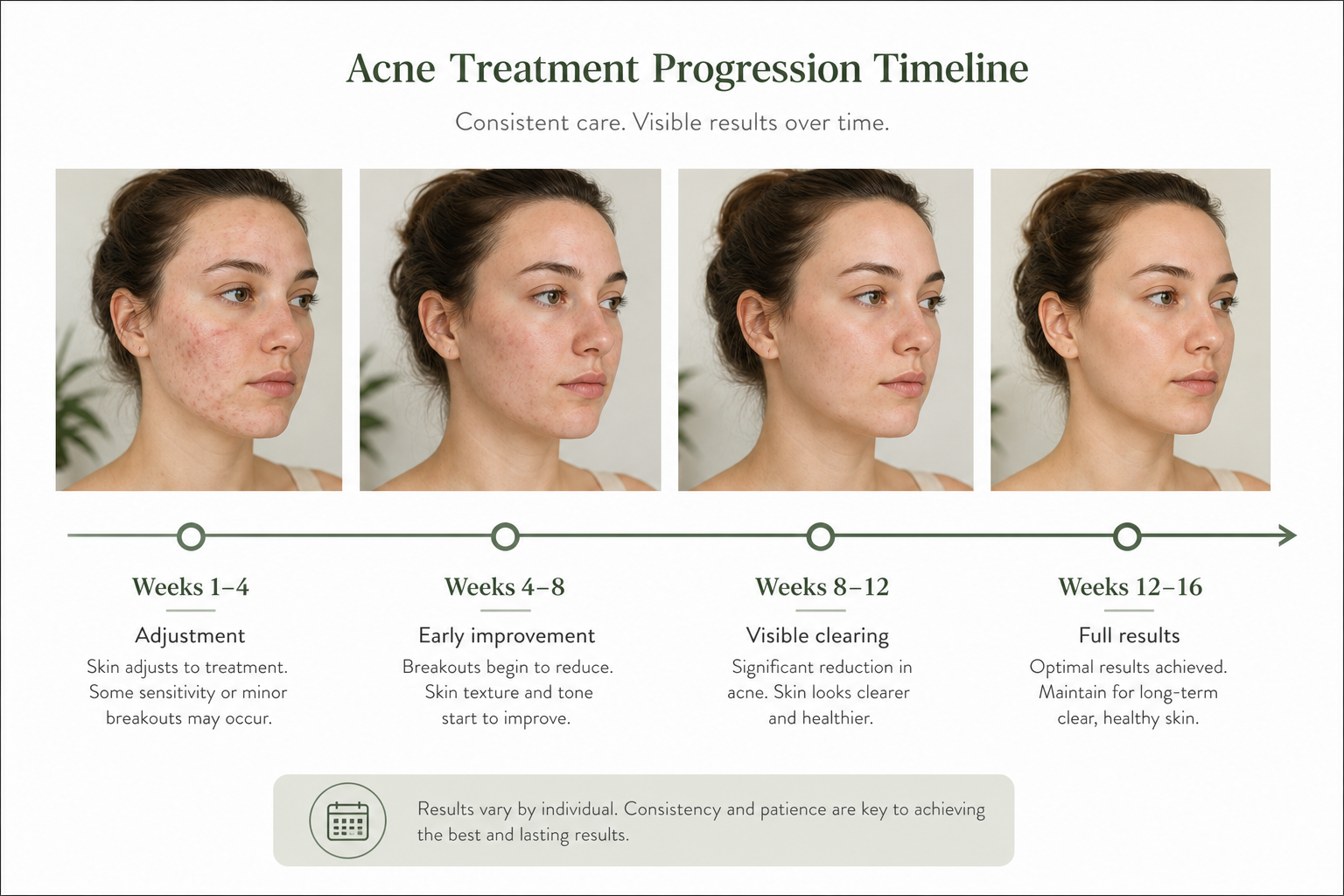
One of the most important expectations to set is around treatment timelines. Most topical acne treatments require a minimum of 4–8 weeks of consistent use before any meaningful reduction in breakouts becomes visible, and full results may take 12–16 weeks or longer. This is because the treatments work by interrupting the acne cycle at the follicular level — a process that takes time. Stopping treatment prematurely because results are not immediately apparent is one of the most common reasons acne treatments appear to fail. Oral antibiotics and isotretinoin may produce faster visible improvement, but still require weeks to months for full effect.
Maintenance Therapy After Acne Clears
Clearing acne is only part of the challenge — preventing relapse is equally important. Once active acne is under control, maintenance therapy using a topical retinoid (with or without benzoyl peroxide) is typically recommended to keep pores clear and prevent new lesions from forming. Maintenance therapy is usually applied less frequently than during the active treatment phase and is continued for as long as the patient remains prone to breakouts. Stopping all treatment abruptly after clearance often leads to recurrence, particularly in patients with persistent hormonal or genetic drivers of acne.
Diet, Lifestyle, and the Gut-Skin Axis
The relationship between diet and acne is an area of growing research interest. Evidence suggests that a high-glycaemic diet — one rich in refined carbohydrates and sugary foods — may worsen acne by elevating insulin and IGF-1 levels, which in turn stimulate sebum production and keratinocyte proliferation. Some studies have also found associations between dairy consumption and acne severity, though the evidence is not consistent across all populations. A low-glycaemic diet rich in vegetables, whole grains, and omega-3 fatty acids may support skin health as part of a broader acne management strategy, though dietary changes alone are unlikely to clear moderate or severe acne.
The gut-skin axis — the bidirectional relationship between gut microbiome health and skin inflammation — is an emerging area of research. Oral and topical probiotics have been explored as adjuncts to acne treatment, with some early evidence suggesting benefit, but the evidence base remains limited and this is not yet a standard recommendation in clinical guidelines. Maintaining a consistent, non-comedogenic skincare routine, using SPF daily (particularly when on retinoids or antibiotics), and avoiding picking or squeezing lesions are practical lifestyle measures that support any acne treatment plan.
Emerging and Future Acne Therapies
Research into new acne treatments is active. Bacteriophage therapy — using viruses that selectively target C. acnes bacteria — is being investigated as a way to reduce bacterial load without contributing to antibiotic resistance. Microbiome-targeted treatments aim to restore a healthy balance of skin bacteria rather than simply eliminating C. acnes. Biologics targeting specific inflammatory pathways (such as interleukin-targeted therapies) are in early-stage research for severe or treatment-resistant acne. Selective retinoids such as trifarotene represent a more recent generation of topical retinoids with improved tolerability profiles. While these developments are promising, most are not yet widely available in routine clinical practice, and evidence from large-scale clinical trials is still developing.
Frequently Asked Questions
What is the most effective acne treatment?
There is no single most effective treatment for all acne types. Isotretinoin produces the most significant and durable results for severe or treatment-resistant acne, but it is not appropriate for everyone. For mild to moderate acne, combination therapy using a topical retinoid, benzoyl peroxide, and where needed a topical antibiotic is considered highly effective and is supported by current AAD guidelines. The best approach depends on your acne type, severity, skin tone, and medical history.
How long before I see results from acne treatment?
Most topical treatments require 4–8 weeks of consistent use before visible improvement occurs, with full results often taking 12–16 weeks. Oral antibiotics may produce faster improvement, typically within 4–6 weeks. Isotretinoin often shows significant clearing within 2–3 months, though the full course usually lasts 4–6 months. Patience and consistency are essential — stopping treatment early is a common reason results are not achieved.
Is hormonal acne treated differently from other acne?
Yes. Hormonal acne — particularly in adult women — often responds better to hormonal therapies such as spironolactone or combined oral contraceptives than to antibiotics alone. A dermatologist can assess whether hormonal factors are driving your acne and recommend appropriate treatment. Topical retinoids and benzoyl peroxide remain useful components of treatment regardless of the underlying cause.
Can acne scars be treated?
Many types of acne scars can be improved with appropriate treatment. Atrophic (depressed) scars may respond to microneedling, resurfacing lasers, subcision, or dermal fillers depending on their type and depth. Post-inflammatory hyperpigmentation — the flat dark marks left after spots heal — is not true scarring and often fades over time, though treatments such as azelaic acid, chemical peels, and topical vitamin C can accelerate improvement. A dermatologist can assess your scar type and recommend the most suitable approach.
Are there acne treatments safe to use during pregnancy?
Many common acne treatments are not safe during pregnancy. Isotretinoin, oral tetracyclines, topical retinoids, and spironolactone are all contraindicated. Options that may be considered under medical supervision include topical azelaic acid and topical clindamycin. Always consult both a dermatologist and your obstetrician before starting or continuing any acne treatment during pregnancy.
What does antibiotic resistance mean for acne treatment?
Antibiotic resistance occurs when C. acnes bacteria become less responsive to antibiotic treatment, reducing its effectiveness. This is a growing clinical concern. To minimize resistance risk, current guidelines recommend always combining topical or oral antibiotics with benzoyl peroxide, limiting antibiotic courses to the shortest effective duration, and transitioning to non-antibiotic maintenance therapy once acne is controlled.
Choosing the Right Acne Treatment for Your Skin
Acne treatment is not one-size-fits-all. The most appropriate approach depends on your acne type, severity, skin tone, age, hormonal profile, and how your skin has responded to previous treatments. Mild acne may respond well to consistent OTC use of benzoyl peroxide, salicylic acid, or adapalene. Moderate acne often benefits from prescription combination therapy. Severe or treatment-resistant acne may require isotretinoin or hormonal therapies under specialist supervision. Acne scarring and post-inflammatory hyperpigmentation are separate concerns that can be addressed once active acne is controlled.
A personalized acne treatment plan developed with a dermatologist or qualified clinician gives you the best chance of achieving lasting clearance while minimizing side effects and the risk of scarring. If over-the-counter treatments have not produced adequate improvement after 8–12 weeks of consistent use, or if your acne is causing significant distress or scarring, seeking a professional assessment is a worthwhile next step.
