
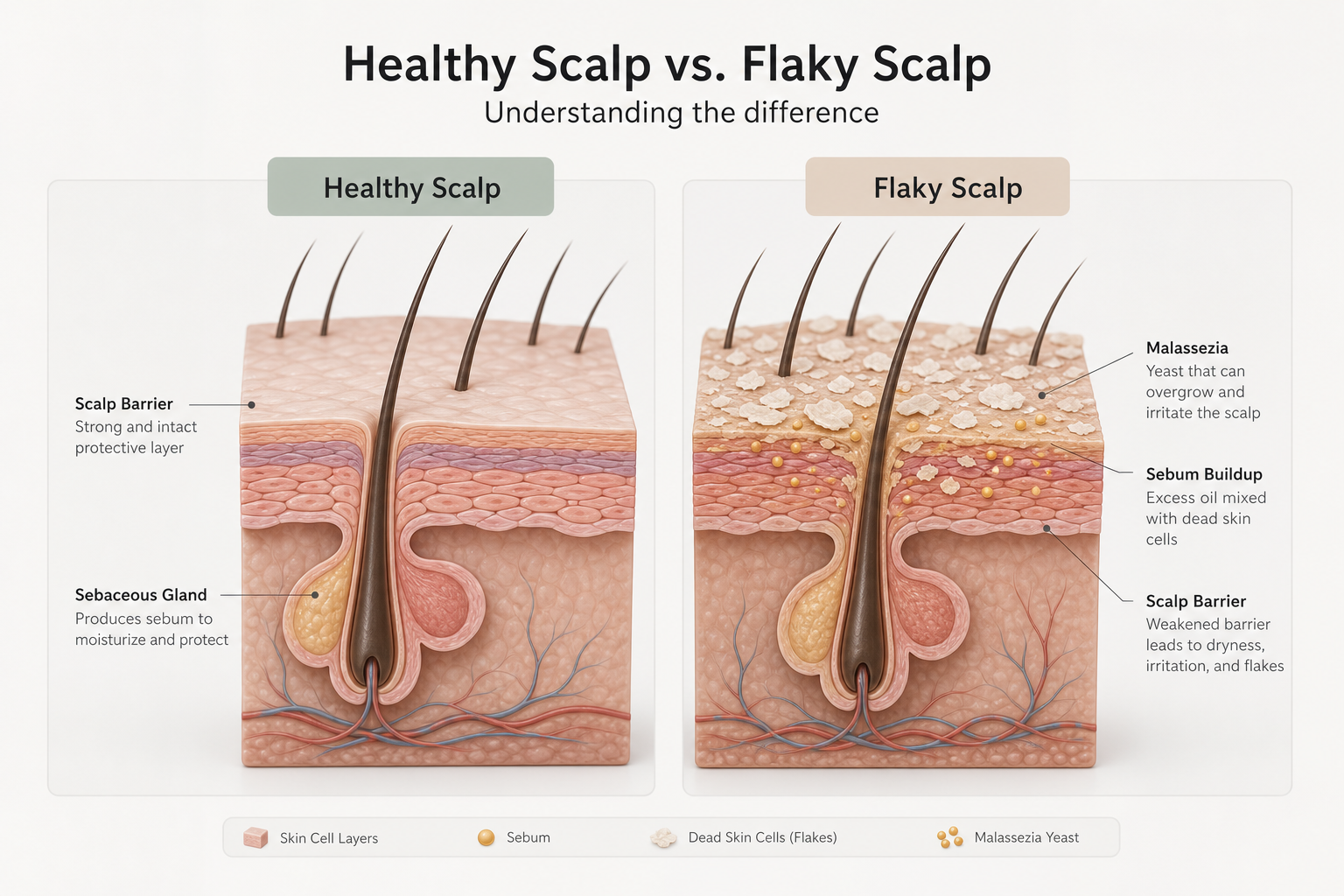

A flaky scalp is one of the most common scalp concerns, yet it is frequently misunderstood. Many people assume any scalp flaking is simply dandruff, but the underlying cause can range from straightforward dryness to a chronic inflammatory skin condition — and identifying the correct cause matters because the right approach differs significantly depending on what is actually driving the flaking.
Key Takeaways
- Flaky scalp has multiple distinct causes, including dry scalp, dandruff, seborrheic dermatitis, scalp psoriasis, contact dermatitis, and fungal infection — each with different characteristics and treatments.
- The appearance of flakes (size, colour, oiliness) can help distinguish between causes, though a professional assessment is recommended for persistent or severe symptoms.
- Malassezia yeast plays a central role in dandruff and seborrheic dermatitis by breaking down scalp oils and producing oleic acid, which irritates the scalp barrier.
- Lifestyle factors including stress, diet, hard water, and hair product use can trigger or worsen scalp flaking even in people without an underlying skin condition.
- Most causes of a flaky scalp are manageable with appropriate treatment, but symptoms that do not respond to over-the-counter measures warrant a dermatological assessment.
Dry Scalp vs. Dandruff: Understanding the Difference
Dry scalp and dandruff are often used interchangeably, but they are distinct conditions with different mechanisms. Dry scalp occurs when the scalp does not retain sufficient moisture, causing the skin to become tight, itchy, and prone to shedding small, fine, white flakes. These flakes tend to fall easily from the hair and are not associated with oiliness. Dry scalp is commonly triggered by cold weather, low humidity, indoor heating, overwashing, or the use of harsh shampoos that strip the scalp’s natural oils.
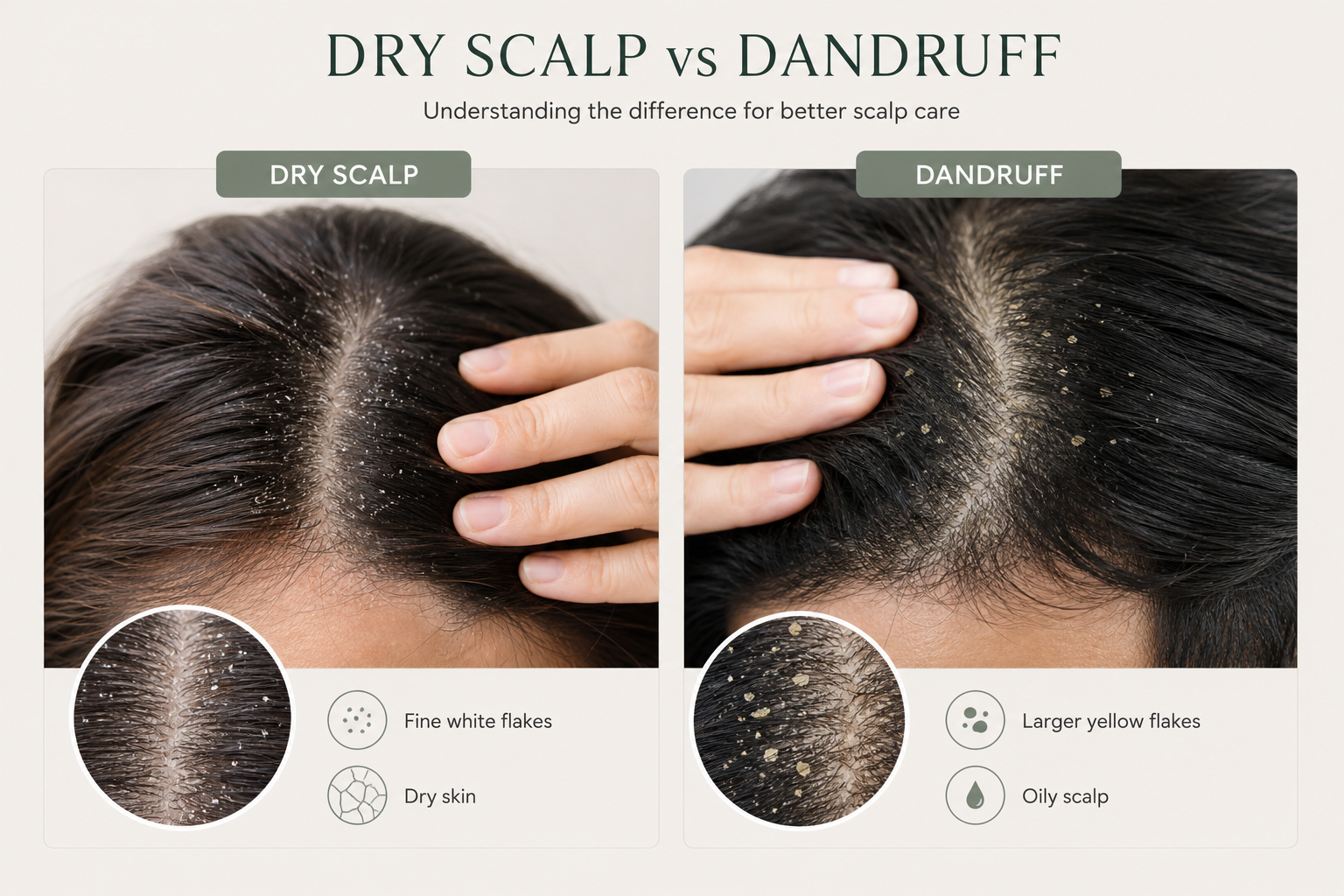
Dandruff, by contrast, is linked to an overproduction of scalp oils (sebum) and the activity of Malassezia yeast on the scalp surface. The flakes associated with dandruff are typically larger, sometimes yellowish or greasy in appearance, and may cling to the hair shaft rather than falling freely. The scalp may appear slightly red or irritated. A simple practical distinction: if applying a gentle moisturiser to the scalp overnight reduces flaking, the cause is more likely dryness. If the scalp remains oily and flaky despite moisturising, Malassezia-related dandruff is a more probable explanation.
| Feature | Dry Scalp | Dandruff | Seborrheic Dermatitis | Scalp Psoriasis |
|---|---|---|---|---|
| Flake size | Small, fine | Medium, variable | Large, greasy | Large, thick, silvery |
| Flake colour | White | White to yellow | Yellow to white | Silvery-white |
| Scalp oiliness | Dry | Oily | Oily | Variable |
| Redness | Minimal | Mild | Moderate | Moderate to marked |
| Itch level | Mild to moderate | Moderate | Moderate to severe | Moderate to severe |
| Beyond hairline? | No | Rarely | Sometimes | Often |
| Primary trigger | Moisture loss | Malassezia yeast | Malassezia + immune response | Autoimmune |
| Common treatment | Gentle moisturising shampoo | Anti-dandruff shampoo | Ketoconazole, medicated shampoo | Prescription topicals, specialist care |
The Role of Malassezia Yeast in Scalp Flaking
Malassezia yeast — specifically the species Malassezia globosa and Malassezia furfur — is a naturally occurring organism on virtually every adult scalp. Under normal conditions, it coexists with the scalp microbiome without causing problems. However, when sebum production increases or the scalp’s microbial balance shifts, Malassezia can proliferate and begin breaking down scalp oils into oleic acid. This oleic acid penetrates the scalp barrier and triggers an inflammatory response in susceptible individuals, accelerating skin cell turnover and causing the characteristic shedding of visible flakes.
This mechanism explains why dandruff and seborrheic dermatitis are more common in people with oilier scalps, and why anti-dandruff shampoos containing active ingredients such as pyrithione zinc, ketoconazole, selenium sulfide, or coal tar are effective — they work by reducing Malassezia populations on the scalp surface. It also explains why simply washing more frequently does not always resolve the problem; if the underlying yeast activity is not addressed, flaking tends to return.
Seborrheic Dermatitis: A Chronic Inflammatory Cause
Seborrheic dermatitis is a chronic, relapsing inflammatory skin condition that affects sebum-rich areas of the body, with the scalp being the most commonly involved site. It is considered a more severe form of dandruff, involving a more pronounced immune response to Malassezia and its metabolic byproducts. The condition produces larger, greasier flakes — often yellow or white — alongside visible scalp redness and persistent itchy scalp symptoms. In some cases, seborrheic dermatitis extends beyond the hairline to affect the eyebrows, sides of the nose, ears, and chest.
Seborrheic dermatitis tends to follow a pattern of flare-ups and remissions. Stress, illness, fatigue, and seasonal changes — particularly cold, dry winters — are well-recognised triggers. The condition is more prevalent in people with certain neurological conditions, those with weakened immune systems, and in individuals taking particular medications. While seborrheic dermatitis is not curable, it is manageable. Medicated shampoos containing ketoconazole or pyrithione zinc are commonly recommended, and a dermatologist may prescribe short courses of topical corticosteroids during flare-ups. It is worth acknowledging that living with a visible, recurring scalp condition can affect confidence and wellbeing — this is a legitimate concern that a dermatologist can help address alongside the physical symptoms.
Scalp Psoriasis: When Flaking Has an Autoimmune Cause
Scalp psoriasis is an autoimmune condition in which the immune system mistakenly accelerates skin cell turnover, causing cells to build up on the scalp surface far faster than they can be shed. The result is the formation of thick, raised scalp psoriasis plaques covered with silvery-white scales. Unlike dandruff or seborrheic dermatitis, scalp psoriasis plaques often extend beyond the hairline onto the forehead, back of the neck, or around the ears, and the scalp may feel tight or sore rather than simply itchy.
Scalp psoriasis requires a different treatment approach from fungal-related flaking. Anti-dandruff shampoos containing salicylic acid may help soften plaques, but most people with scalp psoriasis require prescription treatments — including topical corticosteroids, vitamin D analogues, or in more severe cases, systemic or biologic therapies prescribed by a dermatologist. If scalp flaking is accompanied by thick, adherent plaques, skin changes beyond the hairline, or joint pain, a medical assessment is important.
Contact Dermatitis and Hair Product Reactions
Contact dermatitis of the scalp occurs when the skin reacts to an irritant or allergen present in a hair care product. Irritant contact dermatitis develops when a substance — such as a sulfate-heavy shampoo, bleach, or chemical relaxer — directly damages the scalp barrier, causing dryness, redness, and flaking. Allergic contact dermatitis involves an immune-mediated reaction, most commonly to para-phenylenediamine (PPD), a compound found in many permanent hair dyes, or to fragrances and preservatives in shampoos and conditioners.
Product buildup is a related but distinct issue. Conditioners, styling products, and dry shampoos can accumulate on the scalp over time, creating a residue that blocks follicles, disrupts the scalp microbiome, and contributes to scalp irritation and flaking. Identifying and removing the offending product is the first step in managing contact dermatitis; patch testing by a dermatologist can help pinpoint specific allergens when the cause is unclear.
Scalp Microbiome Dysbiosis: A Broader Perspective
The scalp hosts a complex community of bacteria, fungi, and other microorganisms that together form the scalp microbiome. When this microbial balance is disrupted — a state known as scalp dysbiosis — the conditions that favour Malassezia overgrowth or inflammatory responses become more likely. Scalp dysbiosis can be triggered by a range of factors: prolonged antibiotic use (which reduces bacterial diversity), frequent overwashing with antibacterial or harsh shampoos, under-washing that allows sebum and microbial populations to accumulate unchecked, and dietary patterns that alter the body’s internal environment.
This broader microbiome perspective helps explain why some people experience persistent flaking despite using anti-dandruff shampoos — the underlying microbial imbalance may not be fully addressed by targeting Malassezia alone. Supporting scalp microbiome health through gentle, pH-balanced cleansing, avoiding unnecessary antibiotic use, and maintaining a varied diet may contribute to long-term scalp stability, though research in this specific area is still developing.
Environmental and Lifestyle Triggers
Environmental conditions play a meaningful role in scalp flaking, particularly for people who already have a tendency toward dry scalp or dandruff. Cold weather and low humidity reduce the moisture content of the scalp skin, weakening the scalp barrier and increasing the likelihood of flaking. Indoor heating during winter months compounds this effect. Conversely, excessive sun exposure can cause scalp sunburn — an underappreciated cause of temporary but significant scalp peeling and irritation.
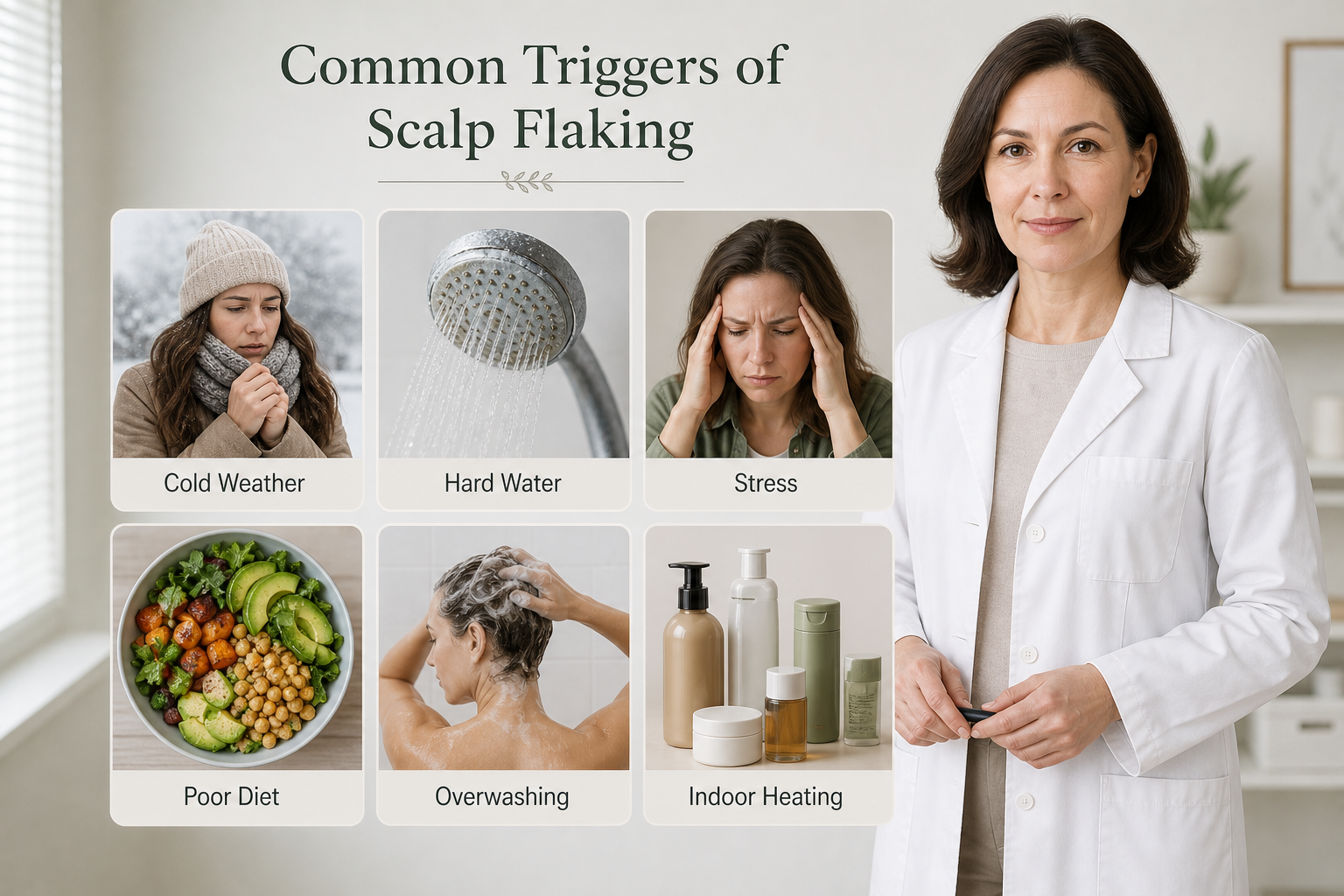
Hard water is another environmental factor that receives relatively little attention. Water with a high mineral content — particularly calcium and magnesium — can leave hard water mineral residue on the scalp after washing, disrupting the scalp’s natural oil balance and contributing to dryness and irritation. People who notice that their scalp condition worsens after moving to a new area or travelling may find that water hardness is a contributing factor.
Stress is a well-established trigger for seborrheic dermatitis and dandruff flare-ups. Elevated cortisol and sebum production are linked: stress hormones can stimulate the sebaceous glands to produce more oil, creating a more favourable environment for Malassezia activity. Managing stress through regular physical activity, adequate sleep, and appropriate support may help reduce the frequency of scalp flare-ups, though it is rarely sufficient as a standalone measure for established conditions.
Diet, Nutrition, and Scalp Health
The relationship between diet and scalp flaking is an area that deserves more attention than it typically receives. Nutritional deficiencies — particularly in zinc, biotin, and omega-3 fatty acids — have been associated with scalp dryness, impaired skin barrier function, and increased susceptibility to inflammatory scalp conditions. Zinc plays a role in regulating sebum production and supporting immune function; biotin and B vitamins contribute to healthy skin cell turnover; and omega-3 fatty acids help maintain the integrity of the scalp barrier.
Diet composition may also influence Malassezia activity indirectly. A diet high in refined sugars and processed foods can promote systemic inflammation and may create conditions that favour yeast overgrowth, though the direct evidence linking specific dietary patterns to scalp flaking in humans remains limited and should not be overstated. Dehydration can contribute to dry scalp by reducing overall skin moisture levels. Addressing nutritional deficiencies through diet or supplementation — ideally guided by a healthcare professional — may support scalp health as part of a broader management approach.
Hormonal Changes and Scalp Flaking
Hormonal fluctuations at different life stages can significantly influence scalp oil production and, consequently, the likelihood of flaking. During puberty, rising androgen levels stimulate the sebaceous glands to produce more sebum, which is one reason dandruff most commonly first appears in adolescence and early adulthood. Pregnancy brings its own hormonal shifts that can either improve or worsen scalp conditions depending on the individual.
Menopause represents a particularly underappreciated hormonal flare-up trigger for scalp concerns. Declining oestrogen levels during and after menopause reduce the scalp’s ability to retain moisture, making dry scalp and associated flaking more common in older women. At the same time, the relative increase in androgen activity can paradoxically increase sebum production in some individuals, creating a mixed picture. Recognising that scalp changes during menopause have a hormonal basis can help women seek appropriate support rather than attributing the changes solely to hair care habits.
Tinea Capitis and Other Fungal Infections
Tinea capitis — commonly known as scalp ringworm — is a fungal infection of the scalp caused by dermatophyte fungi rather than Malassezia. It is more common in children than adults and presents with patchy hair loss, scalp scaling, and sometimes inflamed, boggy areas on the scalp. Unlike dandruff or seborrheic dermatitis, tinea capitis is contagious and requires antifungal treatment prescribed by a doctor — typically oral antifungal medication, as topical treatments alone are generally insufficient to clear the infection.
It is worth addressing a common concern directly: most causes of a flaky scalp, including dandruff and seborrheic dermatitis, are not contagious. Malassezia yeast is a normal part of the scalp flora in virtually all adults, and dandruff reflects an individual’s response to it rather than an infection that can be passed between people. Tinea capitis is the notable exception, and any child with patchy scalp scaling and hair loss should be assessed by a doctor promptly.
Medication Side Effects and Scalp Dryness
Certain medications can contribute to scalp dryness or flaking as a side effect, yet this cause is rarely discussed in patient-facing information. Retinoids — used for acne and other skin conditions — can cause generalised skin dryness including the scalp. Some antihypertensive medications, diuretics, and chemotherapy agents have also been associated with scalp dryness or changes in sebum production. If scalp flaking began or worsened after starting a new medication, it is worth discussing this with the prescribing clinician, who can advise on whether the medication may be contributing and what options are available.
Age-Specific Considerations
Scalp flaking presents differently across age groups. In infants, a condition known as cradle cap (infantile seborrheic dermatitis) causes thick, yellowish, greasy scales on the scalp. It is common, generally harmless, and usually resolves on its own within the first year of life, though gentle cleansing and emollient application can help manage it. Dandruff is rare in young children but becomes more common from puberty onward as sebum production increases. In older adults, particularly postmenopausal women, dry scalp becomes increasingly prevalent as skin moisture retention declines with age. Recognising these age-related patterns helps ensure that the right cause is identified and the appropriate management approach is taken.
When to See a Dermatologist
Many cases of scalp flaking respond well to appropriate over-the-counter measures, including anti-dandruff shampoos containing pyrithione zinc, ketoconazole, selenium sulfide, salicylic acid, or coal tar. However, professional assessment is advisable in the following situations:
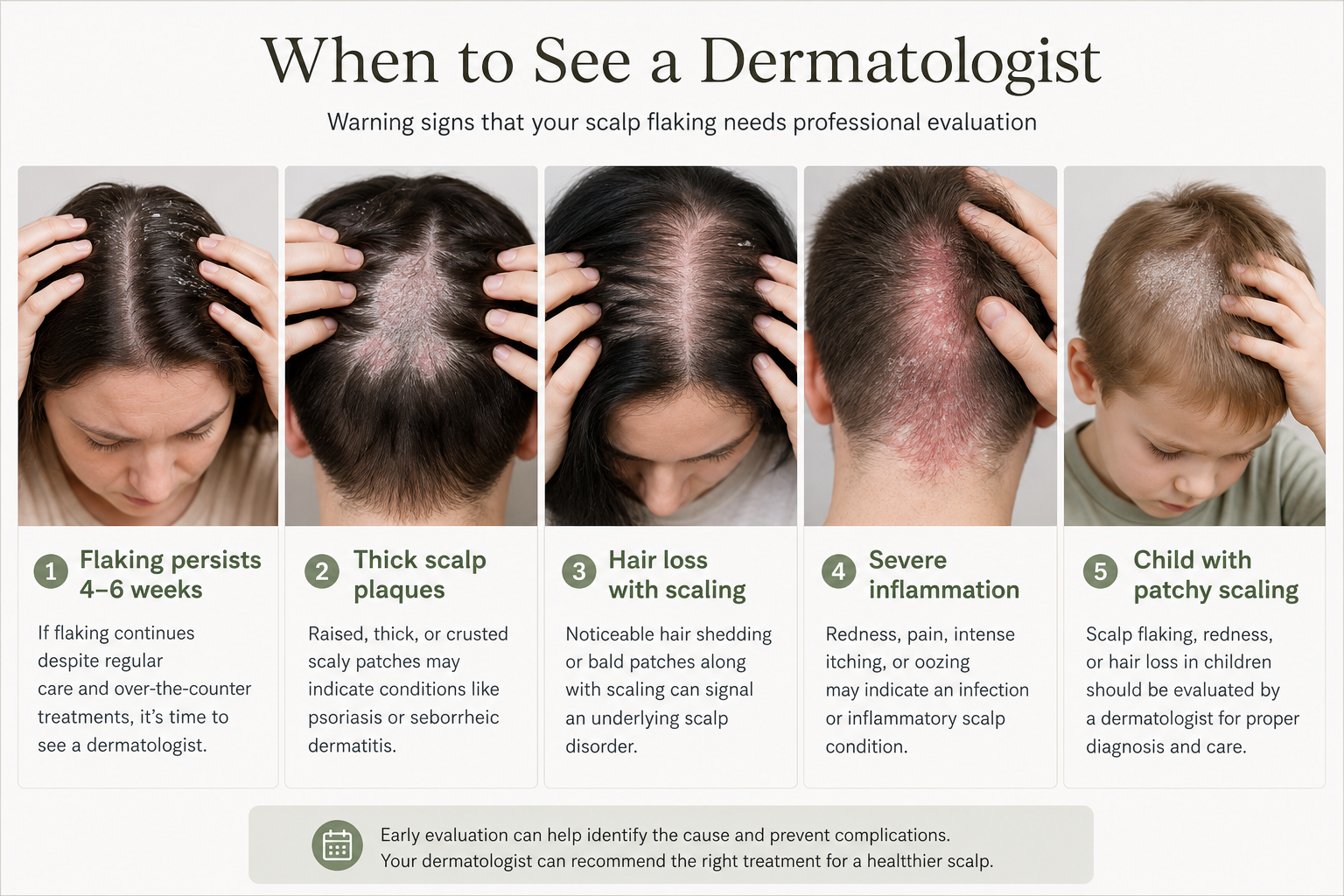
- Flaking persists or worsens despite consistent use of anti-dandruff shampoos for four to six weeks.
- Scalp plaques are thick, adherent, or extend beyond the hairline — which may suggest scalp psoriasis.
- There is significant hair loss alongside scalp scaling.
- The scalp is severely inflamed, painful, or weeping.
- Symptoms began or worsened after starting a new medication or hair product.
- A child develops patchy scalp scaling with hair loss (possible tinea capitis).
- The condition is significantly affecting quality of life or confidence.
A dermatologist can examine the scalp, confirm the diagnosis, and recommend prescription treatments where necessary. In some cases, a scalp biopsy or fungal culture may be needed to distinguish between conditions that look similar on examination.
Frequently Asked Questions
Is a flaky scalp always dandruff?
No. While dandruff is the most common cause of scalp flaking, other conditions including dry scalp, seborrheic dermatitis, scalp psoriasis, contact dermatitis, and tinea capitis can all produce visible flakes. The appearance of the flakes, the presence of oiliness or redness, and whether symptoms extend beyond the hairline can help distinguish between causes.
Can stress cause a flaky scalp?
Stress can trigger or worsen scalp flaking, particularly in people with seborrheic dermatitis or dandruff. Elevated cortisol and sebum production associated with stress may increase Malassezia activity on the scalp. Stress management can support overall scalp health but is unlikely to resolve an established scalp condition on its own.
Does washing my hair more often help with flaking?
It depends on the cause. For oily scalp conditions like dandruff or seborrheic dermatitis, regular washing with an appropriate medicated shampoo can help control flaking. For dry scalp, overwashing — especially with harsh shampoos — can strip natural oils and worsen the condition. Matching washing frequency to scalp type and using a suitable shampoo is more important than frequency alone.
Can diet affect scalp flaking?
Diet may play a supporting role. Nutritional deficiencies in zinc, biotin, and omega-3 fatty acids have been associated with impaired scalp barrier function and increased susceptibility to inflammatory scalp conditions. A diet high in refined sugars may also influence systemic inflammation. However, diet alone is unlikely to resolve an established scalp condition, and any supplementation should be discussed with a healthcare professional.
Is a flaky scalp contagious?
Most causes of scalp flaking — including dandruff and seborrheic dermatitis — are not contagious. Malassezia yeast is a normal part of the scalp flora in virtually all adults, and flaking reflects an individual’s response to it rather than a transmissible infection. Tinea capitis (scalp ringworm) is the exception and is contagious, particularly among children.
Can hard water cause scalp flaking?
Hard water mineral residue can disrupt the scalp’s natural oil balance and contribute to dryness and irritation, potentially worsening scalp flaking in susceptible individuals. Using a clarifying shampoo periodically or installing a water softener may help if hard water is suspected as a contributing factor.
Finding the Right Approach for Your Flaky Scalp
A flaky scalp is rarely a single, simple problem — it reflects an interaction between individual scalp biology, microbial activity, environmental conditions, and lifestyle factors. Understanding which cause or combination of causes is driving the flaking is the most important step toward effective management. For many people, identifying the correct cause and using an appropriately targeted shampoo or scalp care routine will produce meaningful improvement within a few weeks.
Where symptoms are persistent, severe, or accompanied by hair loss, significant inflammation, or plaques extending beyond the hairline, a dermatological assessment is the most reliable path to an accurate diagnosis and an effective treatment plan. Scalp conditions are well understood and, in most cases, highly manageable — the key is matching the treatment to the actual cause rather than assuming all flaking has the same origin.
