

Stubborn back fat — whether it appears as a bra bulge, back rolls, or soft deposits along the flanks — is one of the most common concerns that brings patients to body contouring clinics. Fat freezing, the consumer-friendly term for cryolipolysis, has become one of the most requested non-surgical options for reducing these localised deposits. This article explains how the treatment works on back fat specifically, what results are realistic, who is likely to benefit, and what the procedure cannot do — so you can make an informed decision before booking a consultation.
Key Takeaways
- Cryolipolysis uses controlled cooling to target and destroy subcutaneous fat cells in the back without surgery or significant downtime.
- Clinical studies suggest an average fat reduction of around 20–25% per session in treated areas, with full results visible within 3–6 months.
- The treatment works on pinchable subcutaneous fat only — it cannot reduce deep visceral fat or address loose, sagging skin.
- Most patients require one to three treatment sessions spaced 6–8 weeks apart to achieve their desired outcome.
- Paradoxical adipose hyperplasia (PAH) is a rare but recognised complication that prospective patients should understand before proceeding.
What Is Fat Freezing for Back Fat?
Fat freezing — clinically known as cryolipolysis — is an FDA-cleared non-invasive treatment designed to reduce localised fat deposits by exposing them to precisely controlled low temperatures. The most widely recognised device used to deliver cryolipolysis is CoolSculpting, developed by Allergan Aesthetics. The technology was originally developed at Harvard University after researchers observed that children who ate ice lollies sometimes developed temporary dimpling in their cheeks — a phenomenon that pointed to fat cells being more vulnerable to cold than surrounding tissue.
When applied to the back, cryolipolysis targets the subcutaneous fat layer — the soft, pinchable fat that sits just beneath the skin. This is distinct from visceral fat, which surrounds internal organs and lies too deep beneath the muscle wall to be reached by surface cooling. This distinction matters for setting realistic expectations: if your back fat feels firm and cannot be pinched, it is likely visceral or intramuscular in nature and will not respond to fat freezing.
How Does Cryolipolysis Work?
During a cryolipolysis session, a suction applicator is placed against the target area of the back. The applicator draws the tissue into a cup-shaped chamber and applies controlled cooling to a precise temperature — typically between -9°C and -11°C — for a set duration, usually 35 to 60 minutes per cycle. Subcutaneous fat cells are selectively sensitive to this temperature range; the surrounding skin, nerves, and muscle tissue are not damaged at these temperatures.
The cold triggers a process called apoptosis — the natural, programmed death of fat cells. Over the following weeks, the body’s immune system recognises the damaged fat cells and gradually clears them through the lymphatic system. This elimination process is gradual and natural-looking, which is why results do not appear immediately after treatment. The fat cells that are destroyed do not regenerate; however, the remaining fat cells in the area can still enlarge if significant weight is gained after treatment.
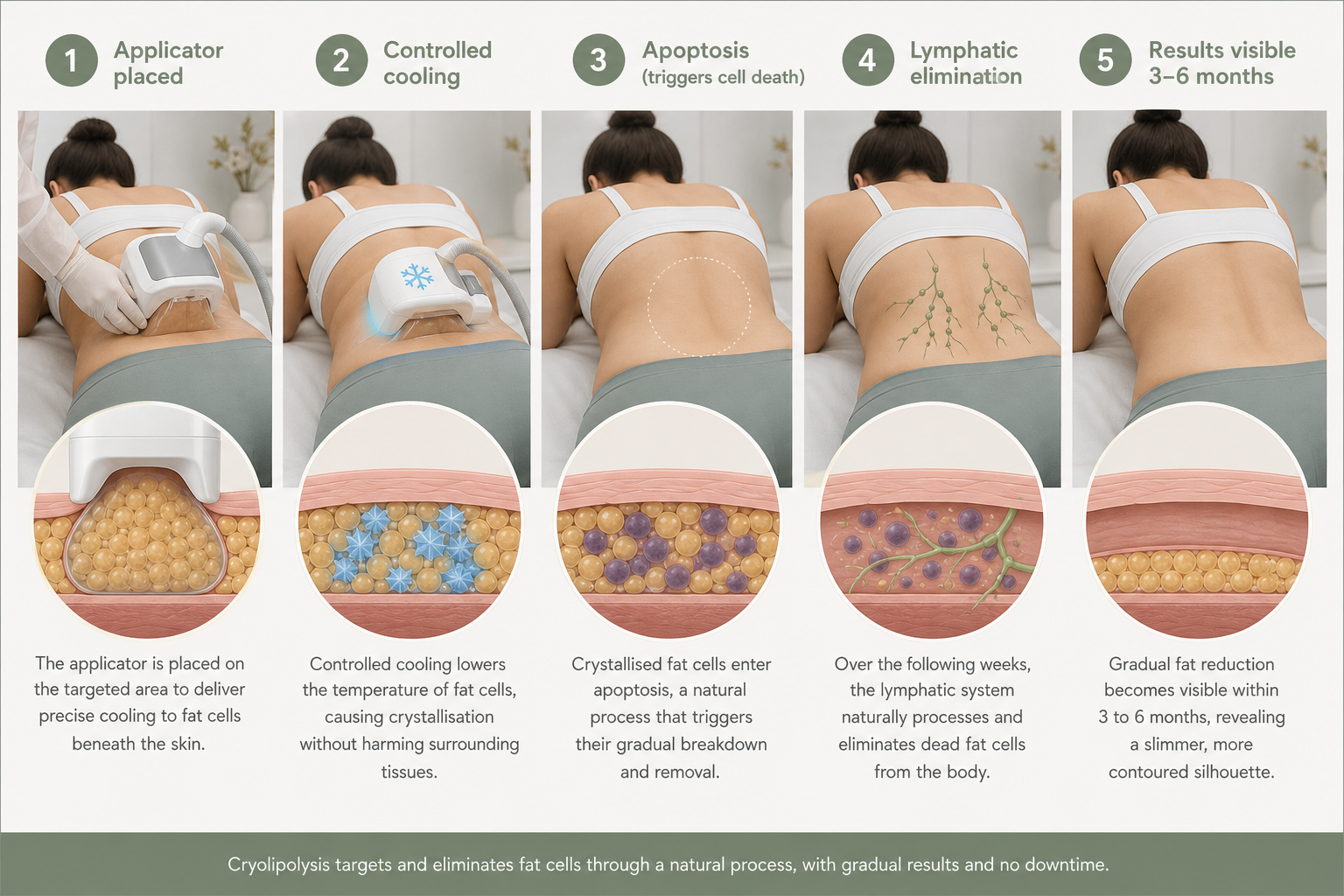
Immediately after the applicator is removed, the treated tissue is typically firm and may appear temporarily raised. A post-treatment massage is performed at this point — usually for two to three minutes — to break up the crystallised fat cells and improve the uniformity of results. Research suggests this massage step meaningfully improves the degree of fat reduction achieved, which is why it is considered a standard part of the protocol rather than an optional add-on.
Which Areas of the Back Can Be Treated?
The back offers several distinct zones where subcutaneous fat commonly accumulates, and different applicator sizes are used depending on the specific area being targeted.
- Bra fat and bra bulge: The soft tissue that spills over the back strap of a bra, typically along the mid-back. This is one of the most frequently treated back areas and responds well to cryolipolysis when the fat is soft and pinchable.
- Upper back fat: Fat deposits near the shoulder blade area and upper back. Smaller applicators such as the CoolMini or CoolPetite may be used here depending on the volume of tissue available.
- Mid-back rolls: Horizontal rolls of fat across the mid-back, sometimes called back rolls. These can often be addressed with standard or curved applicators.
- Lower back fat: Deposits along the lower back, which may blend into the flanks or love handles. The flanks themselves are among the most commonly treated areas with cryolipolysis overall.
- Armpit and underarm fat: The small pocket of fat near the armpit and the side of the chest wall. Smaller applicators are typically required for this zone.
The choice of applicator — whether a CoolAdvantage, CoolMini, or CoolPetite — depends on the size and shape of the tissue being treated. A qualified practitioner will assess which applicator is appropriate for each zone during a consultation, as using the wrong applicator size can affect both comfort and results.
Male and Female Back Fat Patterns
Back fat distribution differs between men and women in ways that are relevant to treatment planning. Women more commonly accumulate fat along the bra line, mid-back, and flanks, often in a pattern that creates visible horizontal rolls when wearing fitted clothing. Men tend to accumulate back fat more diffusely across the upper and lower back, and may also carry more fat in the flanks and waistline. Men’s skin is generally thicker, which can affect how tissue responds to the suction applicator. Both men and women can be suitable candidates for cryolipolysis on the back, but the number of applicators needed and the specific zones targeted may differ significantly between individuals.
What Results Can You Realistically Expect?
Clinical data on cryolipolysis consistently shows an average fat layer reduction of approximately 20–25% per session in treated areas. One study involving 518 patients reported an average reduction of around 23% in the treated fat layer. These figures refer to the thickness of the subcutaneous fat in the specific area treated — not overall body weight or total back fat. Results are gradual: most patients notice initial changes at three to four weeks, with full results visible within 3–6 months as the body completes the natural elimination process.
It is important to understand that cryolipolysis is a fat reduction treatment, not a weight-loss solution. The number of fat cells destroyed is relatively small in the context of total body fat, so the scale is unlikely to change significantly. The visible improvement is a change in shape and contour rather than a reduction in body weight. Patients who are close to their target weight and have specific, localised deposits tend to see the most satisfying outcomes. Those with larger volumes of fat across the back may find that multiple sessions are needed, or that a surgical option such as liposuction offers a more substantial change.
How Many Sessions Are Needed?
Most patients require one to three treatment sessions per area to achieve their desired result, with treatment sessions spaced 6–8 weeks apart to allow the body time to clear the destroyed fat cells before the next cycle. Some patients with smaller, well-defined deposits are satisfied after a single session. Others with more extensive back fat or multiple zones to address may need a more comprehensive treatment plan involving several applicator placements across multiple visits.
During a consultation, a practitioner will assess the volume and distribution of fat across the back and recommend a realistic treatment plan. It is worth asking specifically how many applicators will be used per session and how many sessions are anticipated, as this directly affects the overall cost.
What Happens During a Treatment Session?
A cryolipolysis session for back fat is performed in a clinic setting and does not require anaesthesia or sedation. The practitioner applies a gel pad to the skin to protect it, then positions the suction applicator over the target area. When the applicator activates, most patients feel a strong pulling or suction sensation followed by intense cold. Within five to ten minutes, the area typically becomes numb as the cold takes effect, and most patients find the remainder of the session comfortable enough to read, use a phone, or rest.
Each applicator cycle lasts approximately 35 to 60 minutes. If multiple areas of the back are being treated in the same session, the total appointment time will be longer. After the applicator is removed, the practitioner performs a firm manual massage of the treated area for two to three minutes. This step can be briefly uncomfortable as sensation returns to the numbed tissue, but it is an important part of the protocol. Patients can typically return to normal activities immediately after the appointment — there is no requirement for rest or recovery time.
Side Effects and Risks
Cryolipolysis is generally well tolerated, but side effects are common in the days following treatment. The most frequently reported effects include redness, swelling, bruising, numbness, tingling, and temporary tenderness in the treated area. The skin may feel firm or slightly raised for several days. These effects typically resolve within one to two weeks without intervention.
A less common but more significant risk is paradoxical adipose hyperplasia (PAH). PAH is a condition in which the treated fat tissue grows larger rather than shrinking — the opposite of the intended effect. It typically becomes visible two to five months after treatment and presents as a firm, painless enlargement of the treated area that follows the shape of the applicator. PAH is rare, with estimates in the published literature ranging from approximately 0.025% to 0.39% of treated cycles, though some practitioners believe it may be underreported. It appears to occur more frequently in male patients and with certain applicator types. PAH does not resolve on its own and typically requires surgical liposuction to correct. Any patient considering cryolipolysis should be made aware of this risk during their consultation.
Other rare risks include freeze burns (cold panniculitis) and, in very rare cases, prolonged or permanent changes in skin sensation. Patients with conditions such as cryoglobulinemia, cold urticaria, or Raynaud’s disease should not undergo cryolipolysis, as cold exposure can trigger serious reactions in these individuals. The treatment is also not appropriate during pregnancy or breastfeeding, or for patients with implanted devices such as defibrillators in or near the treatment area.
Who Is a Good Candidate for Freezing Back Fat?
Cryolipolysis for the back tends to produce the most satisfying results in patients who meet the following criteria:
- Within approximately 15–30 pounds of their target weight
- Have soft, pinchable subcutaneous fat in specific back zones
- Have reasonable skin elasticity — the skin should be able to contract somewhat as the fat layer reduces
- Are seeking improvement in contour rather than significant weight loss
- Have realistic expectations about the degree of change achievable
- Are in generally good health with no relevant contraindications
Cryolipolysis is not appropriate for patients with obesity, those seeking a primary weight-loss intervention, or those whose back fat is predominantly visceral rather than subcutaneous. It is also not the right choice for patients with significant skin laxity — loose or sagging skin will not tighten in response to fat reduction and may become more visible after the underlying fat layer is reduced. In these cases, a surgical option such as a bra line back lift may be more appropriate, and a consultation with a plastic surgeon would be advisable.
What Happens If You Gain Weight After Treatment?
The fat cells destroyed by cryolipolysis are permanently eliminated — they do not return. However, the remaining fat cells in the treated area, and fat cells elsewhere in the body, can still enlarge if caloric intake consistently exceeds expenditure. Significant weight gain after treatment can therefore diminish or reverse the visible improvement in contour. Maintaining a stable weight through a balanced diet and regular physical activity is the most reliable way to preserve the results of fat freezing over the long term. Cryolipolysis is best understood as a tool for refining contour in patients who are already managing their weight, not as a substitute for lifestyle habits.
Combining Fat Freezing with Other Treatments
Some patients benefit from combining cryolipolysis with complementary treatments to address concerns that fat freezing alone cannot resolve. For patients with mild skin laxity in the back area, radiofrequency (RF) skin tightening treatments may be used alongside or after fat freezing to encourage collagen remodelling and improve skin firmness. For patients who want both fat reduction and improved muscle definition in the back and flanks, Emsculpt Neo — which combines radiofrequency fat reduction with high-intensity electromagnetic muscle stimulation — may be worth discussing as an alternative or adjunct. A practitioner experienced in body contouring can help determine whether a combined approach is appropriate based on individual anatomy and goals.
How to Choose a Qualified Provider
The quality of cryolipolysis results depends significantly on the experience of the practitioner and the standard of the clinic. When evaluating providers, consider the following:
- Confirm that the device being used is a genuine, FDA-cleared cryolipolysis system — not an unregulated imitation device, which carries higher risks of burns and uneven results.
- Ask about the practitioner’s specific experience with back fat treatments and which applicators they use for different back zones.
- Ensure the clinic conducts a thorough consultation that includes a physical assessment of the fat, a discussion of your medical history, and a clear explanation of realistic outcomes.
- Ask directly about the risk of paradoxical adipose hyperplasia and how the clinic manages this complication if it occurs.
- Be cautious of clinics that guarantee specific results or pressure you to book multiple sessions before assessing your response to an initial treatment.
Cost of Freezing Back Fat
The cost of cryolipolysis for back fat varies depending on the number of areas treated, the number of applicator placements per session, the number of sessions required, and the geographic location of the clinic. In the United Kingdom and comparable markets, individual treatment sessions targeting back areas typically range from approximately £600 to £1,500 per session, with full treatment plans for multiple back zones potentially reaching £2,000 to £4,000 or more. In the United States, per-session costs for back-specific treatments are commonly cited in the range of $1,500 to $2,500, with comprehensive plans potentially higher.
Cryolipolysis is a cosmetic procedure and is not covered by health insurance. Many clinics offer payment plans or financing options to spread the cost. It is worth obtaining a detailed written quote that specifies the number of applicator placements included, so that comparisons between clinics are made on a like-for-like basis.
Fat Freezing vs. Other Back Fat Treatments
| Treatment | Type | Mechanism | Downtime | Fat Reduction | Skin Tightening | Best For |
|---|---|---|---|---|---|---|
| Cryolipolysis (e.g. CoolSculpting) | Non-surgical | Controlled cooling destroys fat cells | Minimal | ~20–25% per session | No | Localised pinchable back fat, good skin elasticity |
| Liposuction | Surgical | Mechanical removal of fat | 1–3 weeks | Significant (larger volumes) | Some (compression garment) | Larger fat volumes, faster results |
| SculpSure | Non-surgical | Laser heats and destroys fat cells | Minimal | ~24% per session | Mild | Flatter areas, patients who prefer heat to cold |
| Emsculpt Neo | Non-surgical | RF fat reduction + electromagnetic muscle stimulation | None | ~30% fat reduction (combined) | Mild | Fat reduction plus muscle definition |
| Bra line back lift | Surgical | Excision of excess skin and fat | 2–4 weeks | Significant | Yes (primary goal) | Significant skin laxity, larger fat volumes |
Frequently Asked Questions
Is fat freezing on the back painful?
Most patients experience an intense cold and suction sensation when the applicator is first applied, which typically subsides within five to ten minutes as the area becomes numb. The post-treatment massage can be briefly uncomfortable. Overall, the procedure is generally well tolerated without anaesthesia.
How long do the results of back fat freezing last?
The fat cells destroyed by cryolipolysis are permanently eliminated. However, results can be affected by significant weight gain after treatment, which can cause remaining fat cells to enlarge. Maintaining a stable weight is the most important factor in preserving long-term results.
Can fat freezing tighten loose skin on the back?
No. Cryolipolysis reduces the subcutaneous fat layer but does not stimulate significant collagen production or skin tightening. Patients with loose or sagging skin may find that reducing the underlying fat makes skin laxity more noticeable. A surgical procedure such as a bra line back lift may be more appropriate in these cases.
How many sessions will I need for my back?
This depends on the number of areas being treated and the volume of fat in each zone. One to three sessions per area is typical, with sessions spaced 6–8 weeks apart. A practitioner can give a more specific estimate after a physical assessment.
What is paradoxical adipose hyperplasia and how common is it?
Paradoxical adipose hyperplasia (PAH) is a rare complication in which the treated fat tissue enlarges rather than shrinks, typically becoming visible two to five months after treatment. It does not resolve without intervention and usually requires surgical liposuction to correct. Published estimates of its incidence range from approximately 0.025% to 0.39% of treated cycles. It appears to occur more often in male patients. Any reputable clinic should discuss this risk before treatment.
Can I combine fat freezing with exercise to improve results?
Regular exercise and a balanced diet support overall weight management and help maintain the results of cryolipolysis, but exercise does not accelerate the fat cell elimination process after treatment. The body clears destroyed fat cells through the lymphatic system over weeks to months regardless of activity level.
Is there a difference between branded CoolSculpting and other fat freezing devices?
CoolSculpting and CoolSculpting Elite are FDA-cleared devices with a substantial body of clinical evidence. Some clinics use alternative cryolipolysis devices that may not have the same level of regulatory clearance or clinical data. It is worth confirming the specific device being used and its regulatory status before proceeding.
Is Freezing Back Fat the Right Approach for You?
Cryolipolysis is a well-established, FDA-cleared non-surgical option for reducing localised subcutaneous fat on the back. For patients who are close to their target weight, have soft pinchable fat in specific back zones, and have realistic expectations about the degree of improvement achievable, it can produce meaningful and lasting changes in contour with minimal disruption to daily life. The gradual nature of the results — with full improvement visible within 3–6 months — suits patients who prefer a subtle, natural-looking outcome over the more dramatic but recovery-intensive results of liposuction.
The treatment is not suitable for everyone. Patients with significant skin laxity, predominantly visceral back fat, or larger volumes of fat across the back may find that cryolipolysis delivers limited benefit, and a surgical consultation may be more appropriate. The rare but real risk of paradoxical adipose hyperplasia is also worth weighing carefully, particularly for male patients.
If you are considering fat freezing for back fat, a thorough in-person consultation with a qualified and experienced practitioner is the essential first step. A good consultation will include a physical assessment of the fat, an honest discussion of what the treatment can and cannot achieve for your specific anatomy, and a clear treatment plan with realistic cost and timeline expectations.
