
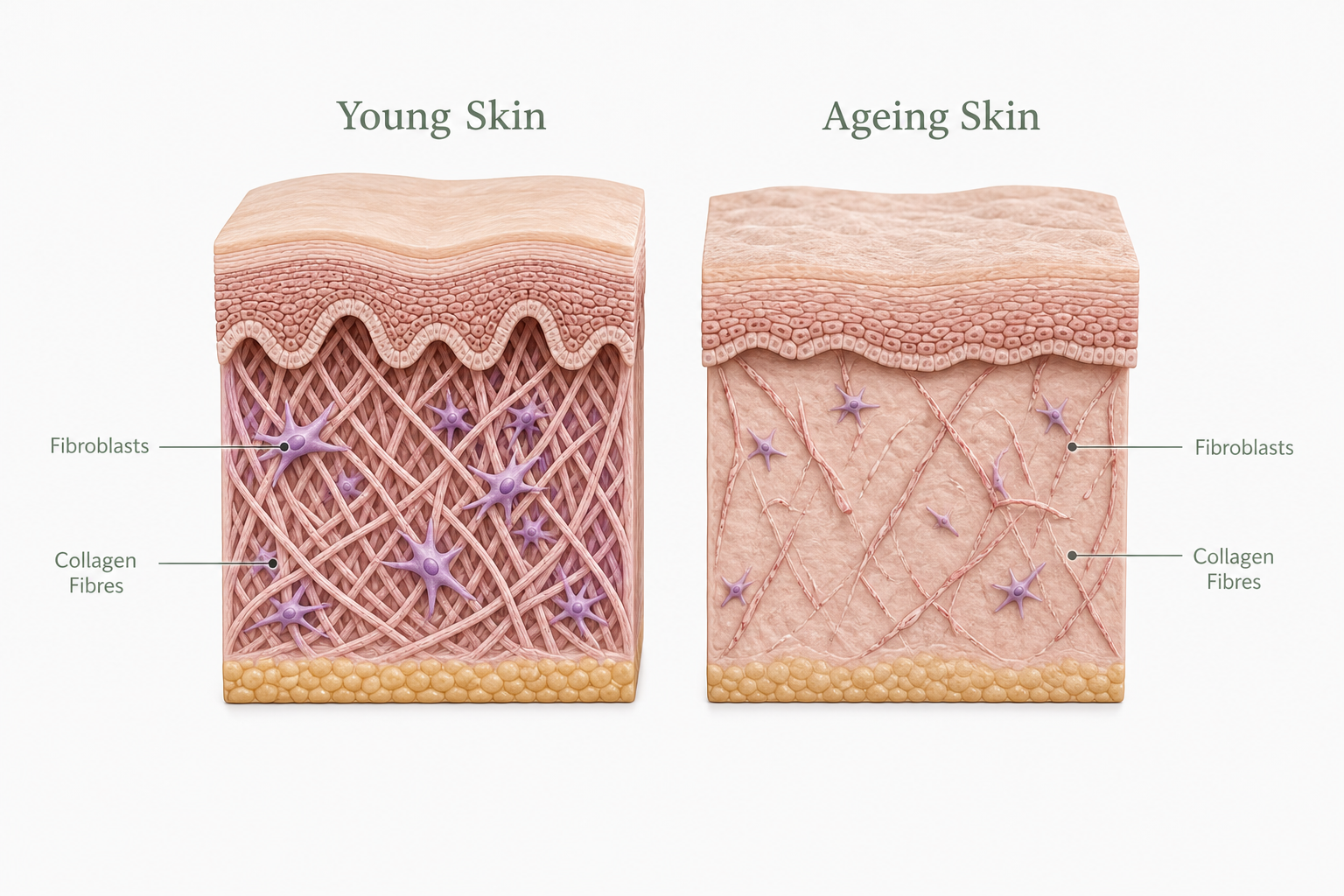

Collagen banking is one of the most discussed concepts in modern preventive skincare — but the term is often misunderstood. It does not mean storing collagen in a literal biological sense. Instead, it describes a proactive, evidence-based approach to protecting and stimulating the skin’s collagen reserves before significant loss occurs, so that the visible signs of ageing develop more slowly and less severely over time. Understanding what actually drives collagen decline, and which interventions have meaningful clinical support, helps you make informed decisions about your skin at any age.
Key Takeaways
- Collagen loss begins gradually from the mid-20s and accelerates sharply around menopause — making early, consistent action more effective than late correction.
- Sunscreen, retinoids, and vitamin C are the most evidence-supported topical strategies for slowing collagen degradation and stimulating new collagen synthesis.
- Professional treatments such as RF microneedling, fractional laser resurfacing, and biostimulatory injectables can trigger meaningful neocollagenesis, particularly from the 30s onwards.
- Collagen supplements show some promise in recent research but are not a substitute for proven topical and lifestyle strategies, and evidence remains mixed.
- Lifestyle factors — UV exposure, smoking, high sugar intake, poor sleep, and chronic stress — accelerate collagen breakdown and undermine any skincare investment.
What Is Collagen Banking?
Collagen is the most abundant structural protein in the skin. It is produced by cells called fibroblasts and forms a dense network within the extracellular matrix (ECM) that gives skin its firmness, elasticity, and plumpness. Type I collagen is the primary structural form in adult skin; Type III collagen, more abundant in younger skin, contributes to its softer, more supple quality. Together, these collagen types maintain dermal thickness and resilience.
From approximately the mid-20s, fibroblast activity begins to slow and collagen synthesis gradually declines. Research suggests the skin loses roughly 1–1.5% of its collagen per year under normal conditions. This rate accelerates significantly around menopause, when falling oestrogen levels can result in up to 30% collagen loss within the first five years post-menopause. The cumulative effect is progressive skin laxity, thinning, and the development of fine lines and wrinkles.
Collagen banking, as a concept, draws on the idea that building and protecting collagen reserves during the years when production is still relatively robust will leave the skin in a stronger position as natural decline accelerates. The term is partly a marketing construct — you cannot literally deposit collagen into a biological savings account — but the underlying principle reflects real preventive biology. Stimulating collagen synthesis and reducing collagen degradation earlier in life produces measurably better long-term outcomes than attempting to reverse established loss.
The Biology of Collagen Loss
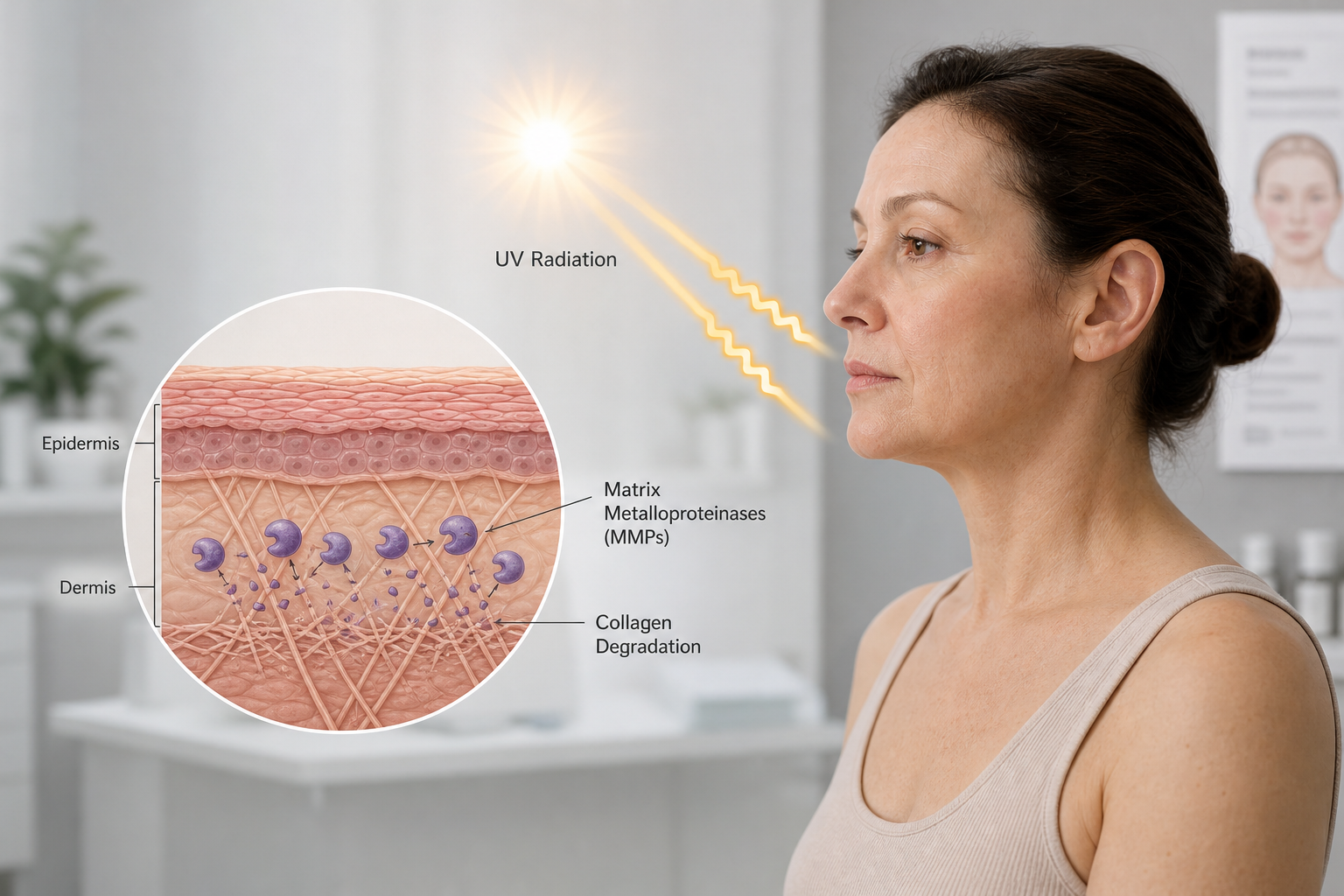
Collagen loss occurs through two overlapping processes: intrinsic aging and extrinsic aging. Intrinsic aging is the chronological, genetically programmed decline in fibroblast activity and collagen turnover that occurs regardless of lifestyle. Extrinsic aging — most significantly photoaging caused by UV radiation — dramatically accelerates this process through distinct biological mechanisms.
UV radiation triggers the production of matrix metalloproteinases (MMPs), enzymes that actively degrade collagen fibres within the dermis. Repeated UV exposure creates a cycle of collagen breakdown that outpaces the skin’s capacity for repair, leading to cumulative collagen denaturation and the characteristic features of photoaged skin: coarsened texture, uneven tone, and deeper wrinkles. This is why broad-spectrum SPF is consistently identified as the single most impactful external intervention for long-term collagen preservation.
A less commonly discussed mechanism is glycation — the process by which excess glucose molecules bind to collagen fibres, forming advanced glycation end-products (AGEs). Glycated collagen becomes stiff, brittle, and resistant to normal remodelling, contributing to a loss of skin elasticity that is distinct from simple collagen quantity loss. Diets high in refined sugars and processed carbohydrates accelerate glycation, making dietary choices a meaningful factor in long-term collagen health.
Oxidative stress from sources including UV radiation, pollution, cigarette smoke, and alcohol generates free radicals that damage fibroblasts and degrade the extracellular matrix. Chronic elevation of cortisol — the primary stress hormone — also suppresses fibroblast activity and impairs overnight collagen repair, which is one reason that poor sleep and chronic psychological stress are associated with accelerated skin ageing.
What Accelerates Collagen Loss?
Several modifiable factors significantly increase the rate of collagen degradation beyond what intrinsic aging alone would produce. Identifying and addressing these is a foundational part of any collagen banking strategy.
- UV radiation: The dominant driver of extrinsic collagen loss. Unprotected sun exposure stimulates MMP activity and causes cumulative photoaging even on cloudy days and through windows.
- Smoking: Reduces fibroblast activity, increases oxidative stress, and impairs the microcirculation that delivers nutrients to skin cells. Smokers consistently show greater collagen loss and earlier skin laxity than non-smokers of the same age.
- High sugar intake: Promotes glycation, stiffening collagen fibres and reducing their capacity for normal remodelling.
- Chronic stress: Elevated cortisol suppresses collagen synthesis and disrupts the overnight repair processes that maintain dermal integrity.
- Poor sleep: Much of the skin’s collagen repair and regeneration occurs during deep sleep. Consistently inadequate sleep impairs this process.
- Alcohol: Contributes to dehydration and generates oxidative stress that damages collagen-producing fibroblasts.
- Environmental pollution: Particulate matter and airborne toxins generate free radicals that degrade the extracellular matrix.
Evidence-Based Topical Ingredients for Collagen Banking
Topical skincare forms the accessible, daily foundation of any collagen banking routine. Not all ingredients marketed as collagen-boosting have meaningful clinical evidence behind them. The following have the strongest support from peer-reviewed research.

Retinoids
Retinoids — including over-the-counter retinol, retinaldehyde, and prescription tretinoin — are the most extensively studied topical agents for stimulating collagen synthesis and reducing collagen degradation. Retinoids work by binding to nuclear receptors in fibroblasts, upregulating collagen gene expression and simultaneously inhibiting MMP activity. Clinical trials have demonstrated measurable increases in dermal collagen density with consistent retinoid use over months to years. Tretinoin, the prescription-strength form, has the most robust evidence base. Retinol and retinaldehyde are effective alternatives for those who cannot tolerate tretinoin, though they require conversion to the active form in the skin and are generally less potent. Bakuchiol, a plant-derived compound, has shown retinol-comparable effects in some studies and may suit those with sensitive skin, though the evidence base is smaller.
Vitamin C (L-Ascorbic Acid)
L-ascorbic acid is an essential cofactor in collagen synthesis — without adequate vitamin C, fibroblasts cannot produce stable, functional collagen fibres. Topically applied vitamin C also functions as a potent antioxidant, neutralising free radicals generated by UV exposure and pollution before they can trigger MMP activity. Clinical research supports the use of stabilised L-ascorbic acid formulations (typically at concentrations of 10–20%) for improving skin firmness and reducing the appearance of fine lines over time. Vitamin C is frequently combined with ferulic acid, which enhances its stability and antioxidant potency.
Signal Peptides
Signal peptides are short chains of amino acids that communicate with fibroblasts to stimulate collagen and elastin production. Well-studied examples include palmitoyl pentapeptide-4 (marketed as Matrixyl) and copper peptides. Signal peptides are generally well tolerated and can be layered with other actives, making them a useful addition to a collagen-focused routine, particularly for those who cannot use retinoids. The evidence base is less extensive than for retinoids or vitamin C, but several controlled trials support their ability to improve skin texture and firmness with consistent use.
Niacinamide and Hyaluronic Acid
Niacinamide (vitamin B3) supports the skin barrier, reduces inflammation, and has been shown to modestly support collagen production while improving overall skin texture and tone. Hyaluronic acid does not directly stimulate collagen synthesis but maintains the hydrated environment within the extracellular matrix that fibroblasts require to function optimally. Both ingredients are well tolerated across skin types and complement the more active collagen-stimulating ingredients in a routine.
Professional Treatments That Stimulate Neocollagenesis
Topical skincare can slow collagen loss and provide modest stimulation of new collagen, but professional in-clinic treatments are capable of triggering more substantial neocollagenesis — the formation of genuinely new collagen within the dermis. These treatments are particularly relevant from the 30s onwards, when topical strategies alone may be insufficient to offset accelerating collagen decline.
Microneedling and RF Microneedling
Microneedling, also known as collagen induction therapy, uses fine needles to create controlled micro-injuries in the dermis. This triggers a wound-healing response in which fibroblasts are recruited to the area and stimulated to produce new collagen and elastin. A comprehensive review published in a peer-reviewed dermatology journal confirmed that microneedling produces measurable improvements in skin texture, firmness, and fine lines with a favourable safety profile across skin tones. RF microneedling combines this mechanical stimulus with radiofrequency energy delivered directly into the dermis, generating additional thermal stimulation of fibroblasts. The combination is considered more effective than standard microneedling alone for skin laxity and dermal thickening, and it is generally suitable for a wider range of skin phototypes than ablative laser treatments.
Fractional Laser Resurfacing
Fractional CO2 and erbium laser treatments deliver controlled thermal energy to columns of skin tissue, stimulating significant collagen remodelling over the following weeks and months. These treatments produce more dramatic results than microneedling for established skin laxity and textural concerns, but they involve greater downtime (typically 5–10 days for fractional CO2) and carry a higher risk of post-inflammatory hyperpigmentation in darker skin tones. Careful patient selection and practitioner experience are essential. Individuals with Fitzpatrick skin types IV–VI should discuss the hyperpigmentation risk explicitly with their practitioner before proceeding.
Biostimulatory Injectables
Biostimulatory fillers such as poly-L-lactic acid (Sculptra) and calcium hydroxylapatite (Radiesse) work differently from hyaluronic acid fillers. Rather than simply adding volume, they stimulate the body’s own fibroblasts to produce new collagen over a period of weeks to months. Results develop gradually and can last considerably longer than standard hyaluronic acid fillers, making them a useful option for patients seeking sustained improvement in skin quality and dermal thickness rather than immediate volumisation.
Chemical Peels and IPL
Medium-depth chemical peels stimulate collagen remodelling by inducing controlled exfoliation and mild dermal injury. Intense pulsed light (IPL) targets pigmentation and vascular irregularities while also delivering a degree of collagen stimulation. Both are useful adjuncts to a collagen banking programme, particularly for addressing photoaging-related texture and tone concerns alongside structural collagen support.
At-Home Devices
LED light therapy masks (red light, 630–660 nm) have some evidence supporting modest collagen stimulation through photobiomodulation. Microcurrent devices and at-home radiofrequency tools are also available, though the evidence for consumer-grade versions is considerably weaker than for professional devices. At-home devices may offer a useful supplementary role but should not be expected to replicate clinical treatment outcomes.
Collagen Banking by Decade
The most effective collagen banking strategy is one that evolves with age, matching the level of intervention to the current rate of collagen loss and the degree of existing change.

In Your 20s: Build the Foundation
Collagen loss in the 20s is gradual, but the habits established during this decade have a compounding effect over time. The priorities are daily broad-spectrum SPF (minimum SPF 30, ideally SPF 50), a stabilised vitamin C serum in the morning, and consistent antioxidant protection. Introducing a low-strength retinol in the evening two to three nights per week towards the late 20s is a reasonable step. Lifestyle habits — not smoking, limiting alcohol, managing stress, and prioritising sleep — are as important as any product at this stage. This is the essence of prejuvenation: acting before visible change occurs.
In Your 30s: Add Active Stimulation
Collagen loss becomes more perceptible in the 30s, and fine lines may begin to appear at rest. Retinoid use should become more consistent, with progression to higher strengths or prescription tretinoin where tolerated. Signal peptides can be incorporated into the routine. This is also the appropriate time to consider a first course of professional collagen induction therapy — microneedling or RF microneedling — to provide a meaningful stimulus to fibroblast activity that topical products alone cannot replicate.
In Your 40s: Escalate Strategically
By the 40s, collagen loss is well established and skin laxity becomes more apparent. Prescription-grade retinoids, consistent professional treatments (RF microneedling, fractional laser, or biostimulatory injectables depending on individual assessment), and a comprehensive antioxidant routine are all relevant. The focus shifts from pure prevention to a combination of preservation and active restoration. Treatment plans should be tailored by a qualified practitioner based on skin type, phototype, and individual goals.
In Your 50s and Beyond: Address Hormonal Acceleration
The post-menopausal period represents the most rapid phase of collagen loss in a woman’s lifetime. Oestrogen plays a direct role in maintaining fibroblast activity and collagen density, and its decline at menopause produces a sharp acceleration in skin thinning and laxity that is distinct from the gradual chronological decline of earlier decades. Targeted interventions — including biostimulatory injectables, RF microneedling, and fractional laser — become particularly valuable at this stage. Some women discuss the potential skin benefits of hormone replacement therapy with their GP or specialist, though this decision involves considerations well beyond aesthetics. Men also experience collagen loss at a broadly similar chronological rate but without the menopause-related acceleration, meaning their collagen banking strategy follows a more linear progression.
Collagen Banking and Body Skin
Most discussions of collagen banking focus exclusively on the face, but the neck, décolletage, and hands are high-visibility areas that show collagen loss early and are frequently overlooked in skincare routines. The skin in these areas is thinner and often receives less consistent sun protection than the face, making it particularly vulnerable to photoaging. Extending SPF application, retinoid use, and professional treatments to the neck and décolletage is a straightforward way to address this gap. Biostimulatory injectables and RF microneedling can also be applied to the hands and neck with appropriate clinical assessment.
Do Collagen Supplements Actually Work?
Hydrolyzed collagen peptides — derived from marine or bovine sources — have attracted significant consumer interest as an oral approach to collagen banking. The proposed mechanism is that ingested collagen peptides are broken down in the gut and absorbed as amino acids and small peptides that may signal fibroblasts to increase collagen synthesis. A 2024 review of marine collagen published in a peer-reviewed journal found some evidence of improvements in skin hydration and elasticity with consistent supplementation, though effect sizes were modest and study quality varied.
However, dermatologists have consistently noted important limitations. A January 2026 commentary from dermatology specialists highlighted that collagen supplements are not the skin fix that many consumers expect — the body does not selectively direct ingested collagen peptides to the skin, and the evidence does not support supplements as a replacement for proven topical strategies or professional treatments. Collagen supplements may offer a modest adjunctive benefit for some individuals, particularly when combined with adequate dietary vitamin C and protein, but they should be understood as a supporting measure rather than a primary intervention. Eating a diet rich in vitamin C, adequate protein, and anti-inflammatory foods provides the raw materials for collagen synthesis without the uncertainty of supplement evidence.
What Collagen Banking Cannot Do
Honest expectations are essential to any evidence-based skincare approach. Collagen banking cannot reverse decades of established collagen loss, eliminate deep structural changes, or produce results equivalent to surgical intervention. The concept works best as a long-term preventive strategy rather than a rapid corrective one. Starting earlier produces better outcomes than starting later, but beginning at any age is still worthwhile — the goal shifts from prevention to a combination of slowing further loss and stimulating whatever new collagen formation remains achievable.
Topical collagen creams deserve specific mention: collagen molecules are too large to penetrate the skin’s outer barrier and reach the dermis. Products containing topical collagen may improve surface hydration but do not directly add to dermal collagen reserves. This is a well-established limitation that is sometimes obscured in product marketing.
A Practical Tiered Approach
Collagen banking does not require a large financial investment to be meaningful. The most impactful interventions — daily broad-spectrum SPF, not smoking, adequate sleep, and a vitamin C serum — are either free or low-cost. Adding a retinoid represents a modest additional investment with strong evidence behind it. Professional treatments offer greater stimulation of neocollagenesis but involve higher costs and, in some cases, downtime. A sensible approach prioritises the foundational habits first, then layers in professional treatments according to individual goals, budget, and clinical assessment.
Frequently Asked Questions
When should I start collagen banking?
The earlier the better, but there is no age at which starting becomes pointless. The mid-to-late 20s is an ideal time to establish foundational habits — daily SPF, vitamin C, and eventually retinoids. From the 30s onwards, professional treatments become increasingly relevant. Starting in the 40s or 50s still produces meaningful benefit, though the focus shifts towards slowing further loss and stimulating new collagen rather than pure prevention.
Can collagen banking reverse existing wrinkles?
Collagen banking is primarily a preventive and maintenance strategy. Some interventions — particularly retinoids, RF microneedling, and fractional laser — can produce measurable improvements in existing fine lines and skin texture by stimulating new collagen formation. However, the degree of improvement depends on the depth and nature of the changes, and significant structural ageing is unlikely to be fully reversed by non-surgical means alone.
Are collagen supplements worth taking?
The evidence for hydrolyzed collagen peptides is mixed and generally modest. Some studies show improvements in skin hydration and elasticity with consistent use, but dermatologists caution that supplements are not a substitute for proven topical strategies. If you choose to use them, look for hydrolyzed marine or bovine collagen peptides and ensure your diet also provides adequate vitamin C and protein to support collagen synthesis.
Is collagen banking relevant for men?
Yes. Men lose collagen at a broadly similar chronological rate to women, though without the sharp acceleration associated with menopause. Men’s skin tends to be thicker and oilier, which may offer some natural resilience, but the same principles apply: daily SPF, retinoids, antioxidants, and professional treatments where appropriate. Men are increasingly seeking evidence-based skincare guidance, and collagen banking strategies are equally applicable regardless of gender.
Which professional treatment is best for collagen banking?
There is no single best treatment — the most appropriate option depends on age, skin type, phototype, degree of existing change, and individual goals. RF microneedling is widely used because it is effective across a broad range of skin tones and concerns. Fractional laser offers more dramatic results for established photoaging but involves greater downtime and higher risk in darker skin tones. Biostimulatory injectables are particularly useful for gradual, sustained collagen stimulation. A qualified practitioner can assess which approach or combination is most suitable for your specific situation.
How long does it take to see results from collagen banking?
Collagen remodelling is a slow biological process. Topical retinoids typically require three to six months of consistent use before measurable improvements in skin texture and firmness become apparent. Professional treatments that stimulate neocollagenesis — such as microneedling or RF microneedling — generally show progressive improvement over two to three months following each session, as new collagen matures within the dermis. Patience and consistency are essential; collagen banking is a long-term investment rather than a quick fix.
Starting Your Collagen Banking Strategy: What to Consider
Collagen banking is most effective when it is approached as a sustained, layered commitment rather than a single product purchase or one-off treatment. The biological reality is that collagen loss is continuous and cumulative — which means that consistent, evidence-based action at every stage of life produces better outcomes than sporadic intervention. Daily broad-spectrum SPF and a retinoid remain the most robustly supported tools available, and no professional treatment fully compensates for neglecting these fundamentals.
If you are considering professional collagen-stimulating treatments, a consultation with a qualified aesthetic practitioner or dermatologist is the appropriate starting point. A thorough assessment of your skin type, phototype, medical history, and goals will determine which treatments are suitable, what realistic outcomes look like for your specific situation, and how to sequence interventions for the best long-term result. Collagen banking is not a trend with an expiry date — it is a framework for evidence-based, proactive skin health that pays dividends over decades.
