
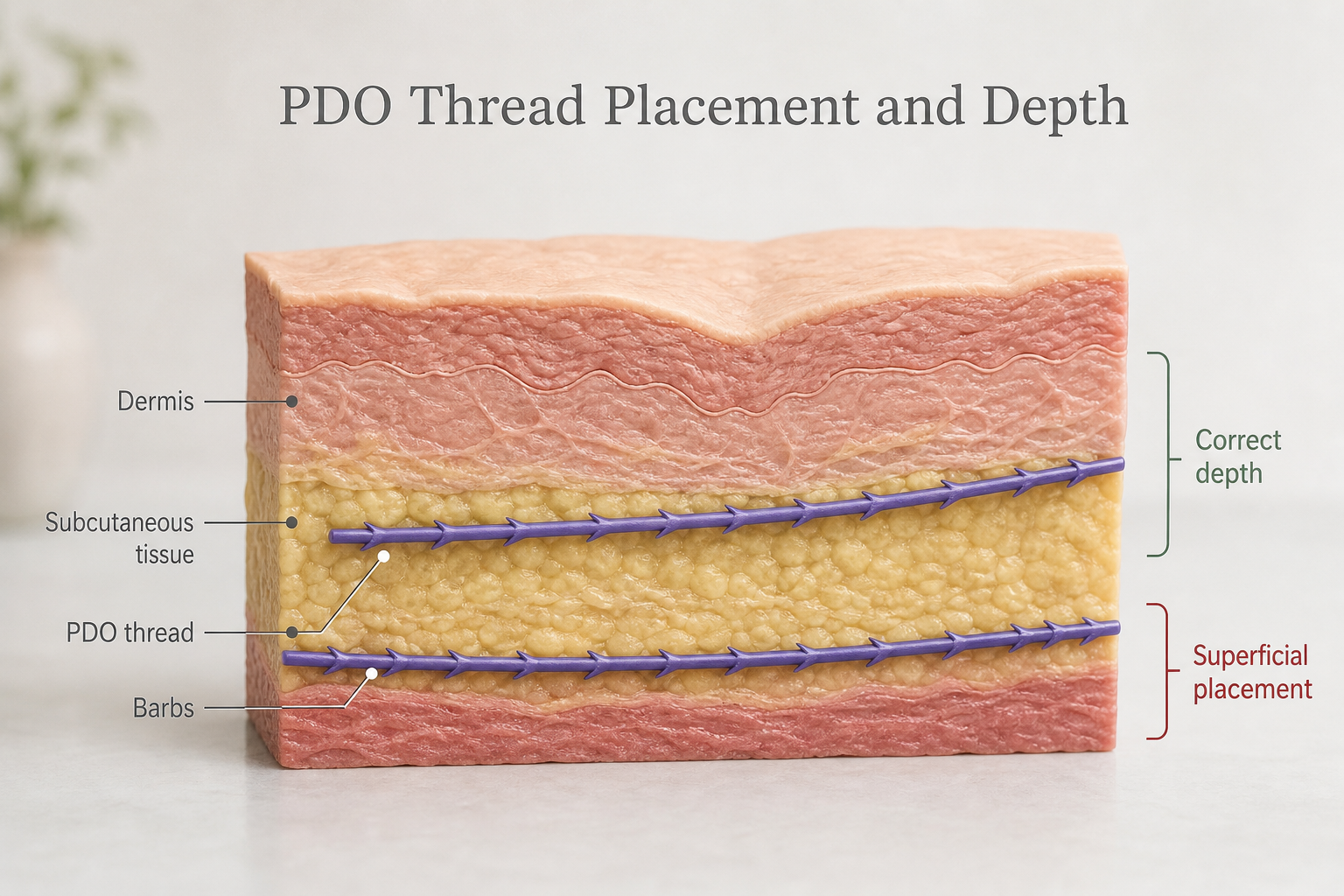

A thread lift can produce meaningful facial rejuvenation when performed correctly, but like any minimally invasive procedure it carries real risks. When a thread lift goes wrong, the results can range from temporary dimpling and asymmetry to more serious problems such as infection, nerve injury, or persistent contour irregularities. Understanding what can go wrong, why it happens, and what can be done about it helps patients make informed decisions — whether they are considering the procedure for the first time or are already dealing with an unsatisfactory outcome.
Key Takeaways
- PDO thread lift complications include dimpling, thread migration, facial asymmetry, visible threads, infection, and — rarely — nerve damage or granuloma formation.
- Some swelling and bruising in the first week is expected; worsening pain, fever, or spreading redness after Day 3 are warning signs that require prompt medical attention.
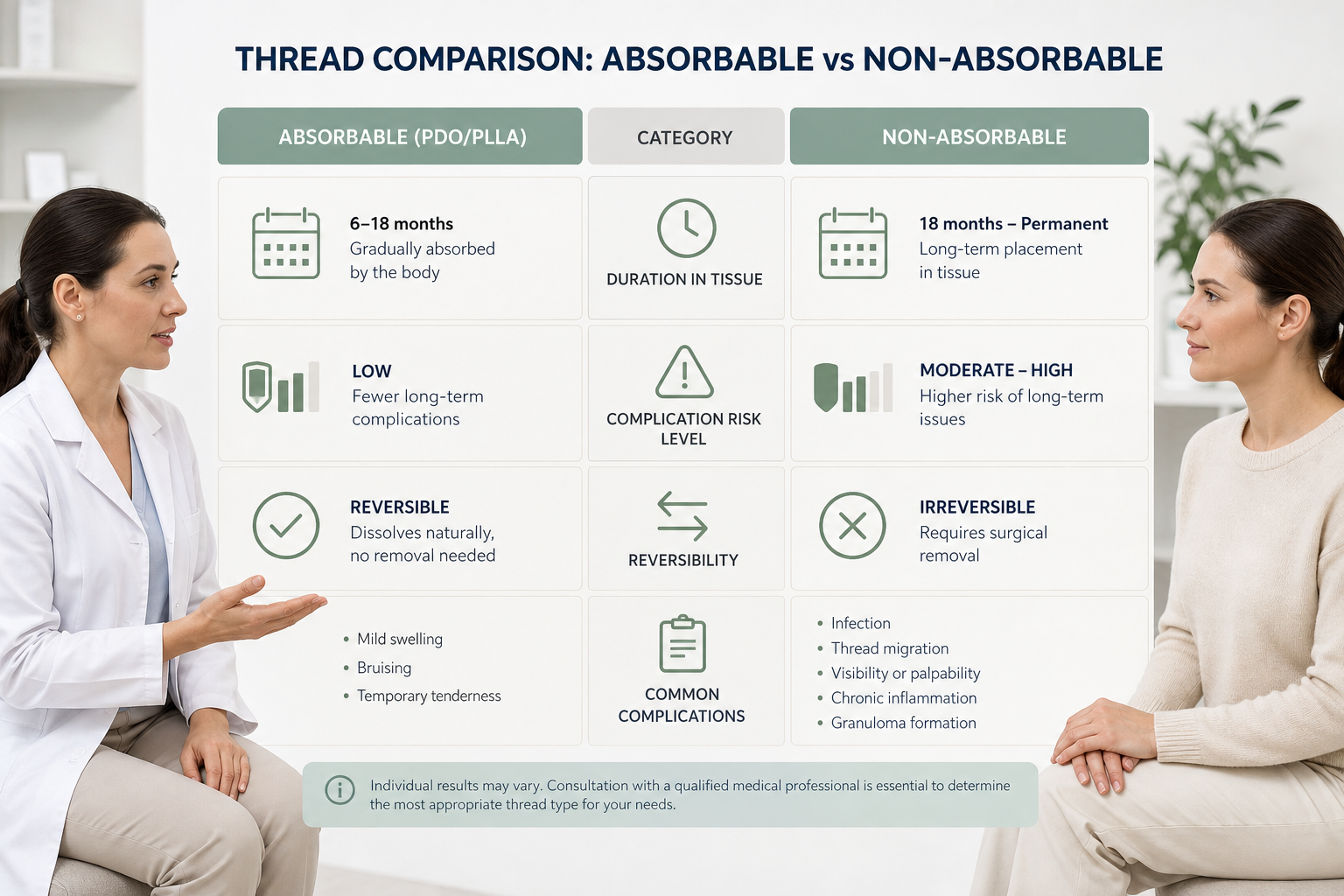
- Non-absorbable threads carry a significantly higher complication rate than absorbable PDO or PLLA threads, particularly for thread extrusion and infection.
- Many complications can be corrected through thread removal, dermal filler camouflage, or targeted treatments — but outcomes depend on the type and severity of the problem.
- Choosing a practitioner with documented experience in thread lifting and facial anatomy is the single most important factor in reducing risk.
What Is a Thread Lift and Why Do Things Go Wrong?
A thread lift is a minimally invasive procedure in which barbed or cog sutures — most commonly made from polydioxanone (PDO) or poly-L-lactic acid (PLLA) — are inserted beneath the skin to mechanically lift sagging tissue and stimulate collagen production. The threads are anchored at a fixation point and the barbs grip the surrounding tissue to reposition it. When the procedure works well, patients see a modest lift in areas such as the jowls, midface, brows, or neck, with results typically lasting 12 to 24 months as the absorbable threads gradually dissolve.
Complications arise for several interconnected reasons. Thread depth is critical: threads placed too superficially can catch the dermis, causing visible ridging or skin dimpling. Incorrect vector selection — the direction in which the thread pulls tissue — can create unnatural contours or asymmetry. Excessive tension during insertion increases the risk of tissue bunching and prolonged pain. Poor patient selection also plays a significant role; patients with significant facial laxity, very thin skin, or certain medical histories are at higher risk of unsatisfactory outcomes. Finally, inadequate sterile technique during insertion raises the risk of infection and biofilm formation around the thread.
Normal Side Effects vs. True Complications: A Timeline
One of the most common sources of patient anxiety after a thread lift is not knowing whether what they are experiencing is a normal part of healing or a sign that something has gone wrong. The distinction matters because some early symptoms are expected and self-limiting, while others require prompt clinical assessment.
Days 1–3
Swelling, bruising, tenderness, and a pulling or tightening sensation are all normal in the first 72 hours. Mild skin puckering at the insertion sites is also common at this stage and usually resolves as the tissue settles. Some patients notice temporary numbness or itching around the treated area. These are expected responses to the insertion process and local anaesthesia.
Week 1–2
Bruising should be fading and swelling reducing. Mild dimpling may still be visible but should be improving. If pain is worsening rather than improving after Day 3, or if redness is spreading beyond the insertion sites, this is not normal and warrants contact with the treating practitioner. A low-grade fever at this stage should also be assessed promptly.
Week 3–4
By this point, most normal side effects should have resolved. Persistent asymmetry, visible or palpable threads under the skin, firm lumps, or ongoing pain at this stage are signs of a true complication rather than normal healing. Thread migration — where a thread shifts from its original position — may also become apparent in this window.
Month 2 and Beyond
Delayed complications can include granuloma formation, which presents as a firm, sometimes tender nodule beneath the skin, and late-onset infection related to biofilm around the thread. Thread extrusion — where a thread works its way through the skin surface — can also occur weeks or months after the procedure, particularly with non-absorbable threads.
Common PDO Thread Lift Complications Explained
Skin Dimpling and Puckering
Skin dimpling and puckering is the most frequently reported complication after a thread lift. A 2021 meta-analysis by Niu and colleagues, which reviewed 26 studies, found dimpling in approximately 10% of cases. It occurs when the barbs on the thread catch the dermis rather than the deeper subcutaneous tissue, or when the thread is placed too superficially. In many cases, gentle massage in the days following the procedure helps the tissue redistribute. Persistent dimpling that does not resolve within two to four weeks may require thread repositioning, thread removal, or small-volume dermal filler to camouflage the contour irregularity.
Facial Asymmetry and Uneven Results
Facial asymmetry after a thread lift can result from unequal thread tension on each side of the face, different tissue responses, or threads placed at slightly different depths or vectors. Mild asymmetry in the first two weeks may resolve as swelling subsides. Persistent or significant asymmetry — particularly if one side appears over-lifted or distorted — is a true complication. Corrective options include releasing or adjusting the thread on the affected side, or using small amounts of dermal filler to balance the appearance while the threads absorb.
Visible or Palpable Threads
Visible or palpable threads under the skin affect approximately 4% of patients according to published data. This complication is more common when threads are placed too close to the skin surface, particularly in areas with thin skin such as the under-eye region or the neck. Patients may feel a cord-like structure beneath the skin or see a ridge when the face is in certain positions. Depending on whether the thread is absorbable or non-absorbable, management may involve waiting for natural dissolution, thread trimming at the exit point, or full thread removal.
Thread Migration and Thread Extrusion
Thread migration refers to a thread shifting from its intended position after insertion, which can alter the lift result or create new contour irregularities. Thread extrusion occurs when a thread gradually works its way to the skin surface and protrudes through it. Both complications are more common with non-absorbable threads and with threads placed under excessive tension. Thread extrusion carries an infection risk because it creates a channel between the external environment and the subcutaneous tissue. Extruding threads should be assessed by a qualified practitioner promptly; they typically require trimming or removal rather than being pushed back under the skin.
Infection After Thread Lift
Signs of infection after a thread lift include increasing redness, warmth, swelling, pain, and discharge or pus at the insertion site. Fever is a significant warning sign. Infection rates are reported at approximately 2% in published literature, but the risk is higher when non-absorbable threads are used, when sterile technique is inadequate, or when aftercare instructions are not followed. A particular concern is biofilm — a layer of bacteria that can form on the thread surface and resist standard antibiotic treatment. Early infections may respond to oral antibiotics, but established biofilm-related infections often require thread removal. Patients should not delay seeking assessment if they suspect infection.
Granuloma Formation
A granuloma is an inflammatory nodule that forms when the body mounts a foreign-body reaction to the thread material. Granulomas typically present as firm, sometimes tender lumps beneath the skin, appearing weeks to months after the procedure. They are more common with non-absorbable threads but can occur with absorbable materials. Treatment options include intralesional steroid injections to reduce inflammation, and in persistent cases, surgical removal of the granuloma and the associated thread. Granulomas are often underreported in consumer-facing information despite being a clinically significant delayed complication.
Nerve Damage from Thread Lift
Nerve damage from a thread lift is uncommon but documented. Sensory disturbance — including numbness, tingling, or altered sensation — affects approximately 6% of patients according to the Niu 2021 meta-analysis, and is often temporary as the nerve recovers. More serious motor nerve injury, which could cause facial weakness or altered expression, is rare but has been reported in peer-reviewed literature, including injury to the greater auricular nerve and, in rare cases, the glossopharyngeal nerve. Nerve injuries are more likely when threads are placed in anatomically complex areas without precise knowledge of nerve locations. Temporary sensory changes usually resolve within weeks to months; persistent motor weakness requires specialist neurological assessment.
Haematoma and Vascular Complications
A haematoma — a collection of blood beneath the skin — can develop if a blood vessel is disrupted during thread insertion. Small haematomas often resolve on their own, but larger collections may require drainage. Vascular complications are rare but serious: if a thread or the insertion needle damages or compresses a blood vessel, the affected tissue may show sudden blanching (whitening) or a livedo pattern (mottled discolouration), indicating compromised blood supply. These signs require immediate medical attention. Parotid gland injury — where threads are inadvertently placed through the parotid salivary gland region — is another rare but documented complication that can cause localised swelling and discomfort.
Absorbable vs. Non-Absorbable Threads: Why the Thread Type Matters
The distinction between absorbable and non-absorbable threads is clinically important when assessing complication risk. Absorbable threads — including PDO and PLLA — gradually break down in the body over months, which means that many complications associated with them are self-limiting. Non-absorbable threads, by contrast, remain in the tissue indefinitely. Published data consistently shows that non-absorbable threads carry a significantly higher rate of thread extrusion, infection, granuloma formation, and long-term contour irregularities. If a non-absorbable thread causes a problem, removal is the only definitive solution, and this can be technically challenging depending on how the thread has integrated with surrounding tissue. Patients considering a thread lift should ask their practitioner specifically which thread material will be used and why.
Complications by Treatment Area
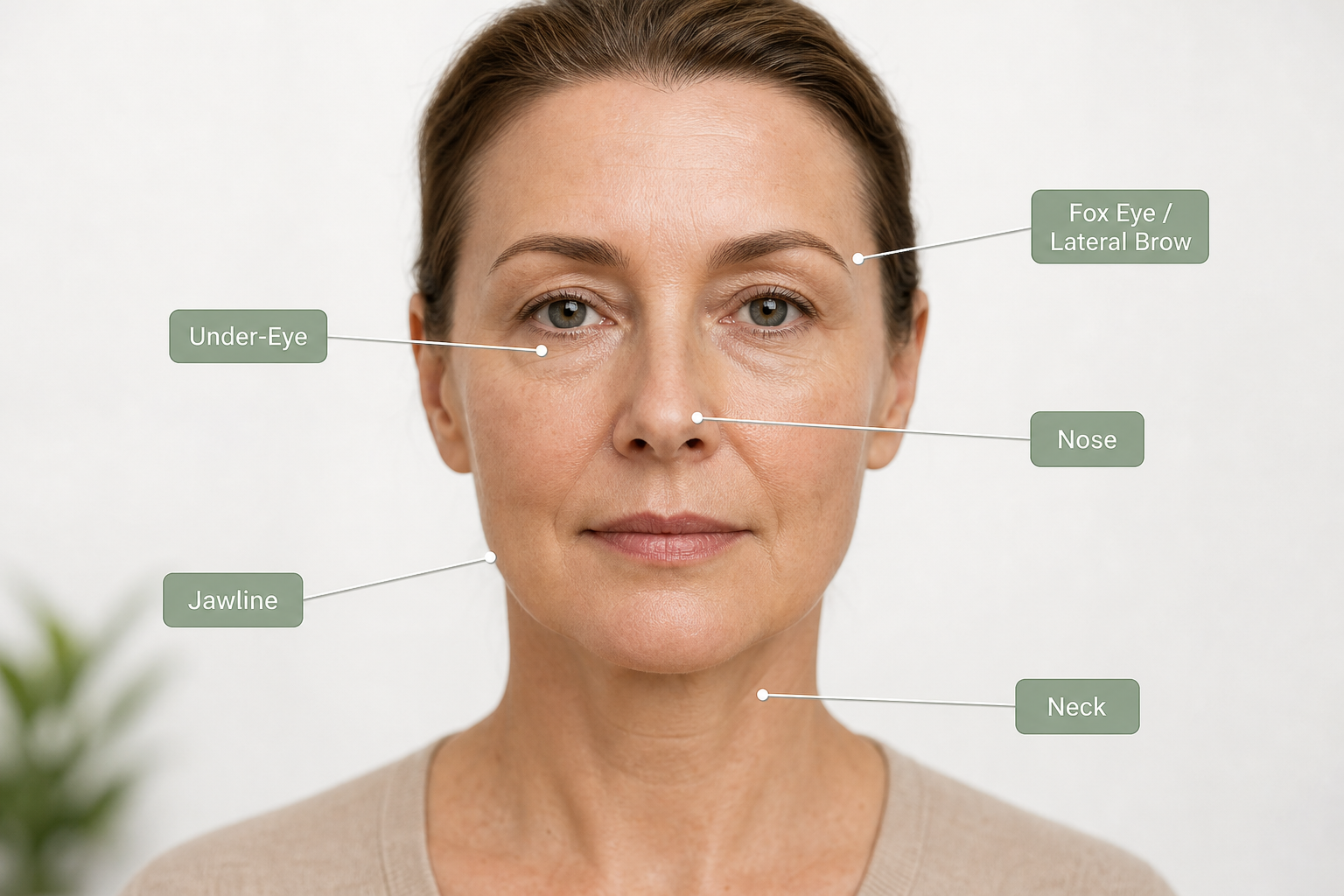
The risk profile of a thread lift varies depending on where on the face or body the threads are placed. Nose thread lift complications can include thread extrusion through the nasal tip, visible ridging, and — in rare cases — vascular compromise given the limited blood supply to nasal tip skin. Fox eye thread lift complications, where threads are used to elevate the lateral brow and outer eye area, include visible thread tracks, asymmetry, and an unnatural or fixed appearance. Neck thread lift complications include visible or palpable threads in thin neck skin, and a higher risk of thread migration given the mobility of the neck. Jawline thread lift complications often involve dimpling or bunching of tissue along the mandibular border. Under-eye thread lift complications are particularly concerning given the delicate anatomy and thin skin of the periorbital area, where visible threads and contour irregularities are difficult to conceal and correct.
Warning Signs That Require Immediate Medical Attention
Most thread lift complications can be managed effectively when identified early. The following signs should prompt same-day or urgent contact with a medical professional rather than a wait-and-see approach:
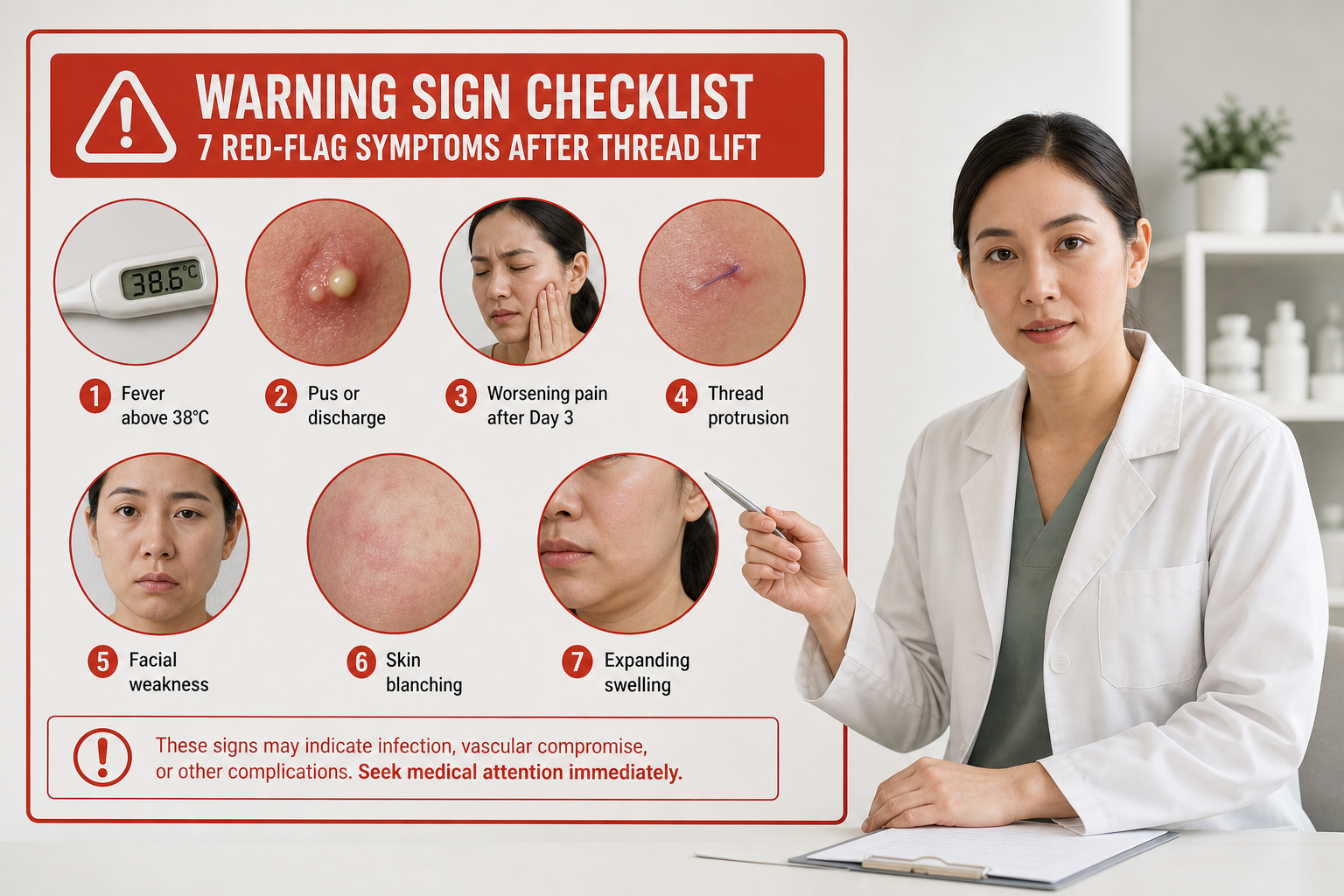
- Fever above 38°C combined with increasing redness or swelling at the treatment site
- Pus or discharge from an insertion point
- Worsening pain after Day 3 rather than gradual improvement
- Visible thread protrusion through the skin surface
- One-sided facial weakness or difficulty with facial expression
- Sudden blanching or mottled discolouration of the skin, suggesting vascular compromise
- Rapidly expanding firm swelling that is asymmetric and growing
When in doubt, seek a second opinion from a qualified medical practitioner rather than waiting for symptoms to resolve on their own.
Corrective Options for a Botched Thread Lift
| Complication | First-Line Approach | Further Options |
|---|---|---|
| Skin dimpling / puckering | Gentle massage; wait 2–4 weeks | Thread repositioning; HA filler camouflage |
| Facial asymmetry | Allow swelling to resolve | Thread adjustment; small-volume filler; revision procedure |
| Visible / palpable threads | Thread trimming at exit point | Full thread removal; ultrasound-guided removal |
| Thread migration | Clinical assessment; imaging if needed | Thread removal; revision lift |
| Thread extrusion | Prompt thread trimming or removal | Antibiotics if infection present; wound care |
| Infection | Oral antibiotics; wound swab | Thread removal; IV antibiotics for severe cases |
| Granuloma | Intralesional steroid injection | Surgical removal of granuloma and thread |
| Haematoma | Conservative management; compression | Aspiration or drainage if large |
| Nerve injury (sensory) | Observation; time | Specialist neurological assessment if persistent |
Ultrasound-guided thread removal is an emerging technique that allows a practitioner to visualise the thread in real time before removal, reducing the risk of inadvertent tissue damage during the extraction process. This approach is particularly useful for threads that have migrated from their original position or are deeply embedded. Not all clinics offer this service, and patients dealing with complex thread complications may need referral to a specialist centre.
Can You Have Another Thread Lift After a Bad Experience?
Whether a repeat thread lift is appropriate after a previous complication depends on the nature of the problem, how it was resolved, and the condition of the tissue. If the original complication involved infection, granuloma, or significant scarring, the altered tissue architecture may make a repeat procedure technically more difficult and potentially higher risk. Patients who experienced complications primarily due to practitioner technique — such as incorrect thread depth or poor vector selection — may be candidates for a repeat procedure with a more experienced provider, but only after the original complication has fully resolved and the tissue has recovered. A thorough consultation with a practitioner experienced in revision procedures is essential before proceeding.
The Role of Practitioner Experience in Preventing Complications
Practitioner experience is consistently identified in the clinical literature as one of the most significant modifiable risk factors for thread lift complications. Thread lifting requires detailed knowledge of facial anatomy, including the location of nerves, vessels, and the SMAS (superficial musculoaponeurotic system) layer, as well as technical skill in thread insertion, tension calibration, and vector planning. In many countries, including the UK, there is currently no legal requirement for practitioners performing thread lifts to hold a specific medical qualification, which means the procedure is performed by individuals with widely varying levels of training.
When vetting a practitioner, patients should ask about their specific training in thread lifting, how many procedures they have performed, what their complication management protocol is, and whether they have access to a medical professional who can manage complications if they arise. Clinics that offer a clear aftercare pathway and a named point of contact for post-procedure concerns are preferable to those that do not. Prophylactic antibiotics are used by some practitioners to reduce infection risk, though practice varies and this should be discussed at consultation.
Legal Considerations After a Thread Lift Gone Wrong
Patients who have experienced a botched thread lift as a result of practitioner negligence may have grounds for a legal claim. It is important to distinguish between an accepted complication — a known risk that occurred despite reasonable care — and negligence, which involves a failure to meet the standard of care expected of a competent practitioner. Examples of potential negligence include performing the procedure without adequate training, failing to obtain informed consent about known risks, using inappropriate thread materials for the patient’s anatomy, or failing to manage a complication appropriately once identified. Patients considering legal action should seek advice from a solicitor specialising in cosmetic procedure claims and should retain all records of their treatment, including consent forms, aftercare instructions, and any correspondence with the clinic.
Frequently Asked Questions
How do I know if my thread lift has gone wrong?
Key signs that a thread lift has gone wrong include persistent dimpling or puckering beyond four weeks, visible or palpable threads under the skin, significant facial asymmetry, worsening pain after the first few days, signs of infection such as redness, swelling, or discharge, and any thread protruding through the skin surface. If you are unsure, contact your treating practitioner or seek a second opinion from a qualified medical professional.
Can thread lift complications be fixed?
Many thread lift complications can be corrected, though the options and outcomes depend on the type and severity of the problem. Dimpling and minor asymmetry often resolve with time or can be improved with filler. Visible or extruding threads can be trimmed or removed. Infections require prompt antibiotic treatment and sometimes thread removal. Granulomas may respond to steroid injections. More complex complications, such as nerve injury or significant scarring, may require specialist assessment and longer recovery periods.
How long does it take for thread lift complications to resolve?
Minor complications such as dimpling and mild asymmetry often improve within two to four weeks. Bruising and swelling typically resolve within one to two weeks. More significant complications such as infection, granuloma, or nerve injury may take months to resolve, and some — particularly those involving non-absorbable threads — may require active intervention rather than simply waiting.
Are PDO thread lift complications common?
PDO thread lift complications occur at varying rates depending on the specific problem. The most frequently reported complication is dimpling, affecting around 10% of patients in published studies. Sensory disturbance affects approximately 6%, and visible or palpable threads around 4%. Infection and thread extrusion each occur in approximately 2% of cases. These figures come from a 2021 meta-analysis of 26 studies and represent averages across different practitioners and settings; individual clinic rates may differ.
Is thread removal painful?
Thread removal is typically performed under local anaesthesia, so discomfort during the procedure itself is usually minimal. Some soreness and bruising in the days following removal is expected. The complexity of removal depends on how long the threads have been in place, whether they are absorbable or non-absorbable, and whether they have migrated from their original position. Ultrasound-guided removal may be recommended for threads that are difficult to locate by feel alone.
What should I do if I think my thread lift has become infected?
Contact your treating practitioner or a medical professional the same day if you notice increasing redness, warmth, swelling, discharge, or fever after a thread lift. Do not attempt to manage a suspected infection at home. Early treatment with antibiotics is often effective, but delayed treatment increases the risk of abscess formation, biofilm development around the thread, and the need for thread removal.
What to Do If Your Thread Lift Has Not Gone as Expected
If you are unhappy with your thread lift result or concerned about a complication, the first step is to contact your treating practitioner and describe your symptoms clearly. Most reputable clinics will offer a review appointment to assess the outcome and discuss management options. If you do not feel confident in your original practitioner’s response, seeking a second opinion from a qualified medical professional with experience in thread lift complications is entirely reasonable and often advisable. Bring any documentation you have from your original treatment, including consent forms, aftercare instructions, and photographs if available.
For patients dealing with a botched thread lift, it is worth knowing that corrective options exist for most complications, and that many problems — particularly those involving absorbable threads — will improve with time and appropriate management. The most important step is not to delay seeking assessment when warning signs are present. Early intervention consistently leads to better outcomes than waiting for a serious complication to worsen.
