
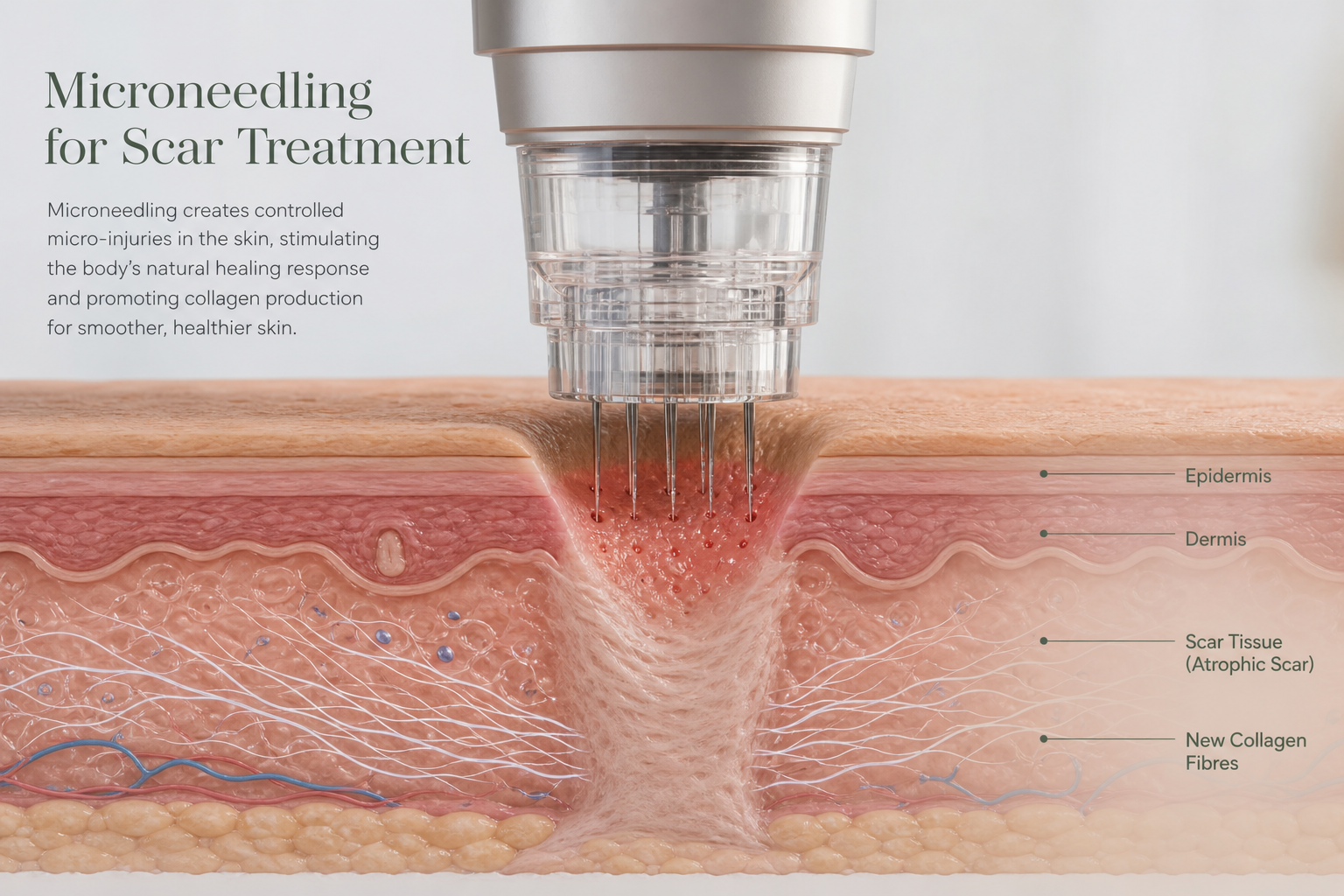

Microneedling is one of the most widely studied minimally invasive procedures for improving the appearance of scars. By creating controlled micro-injuries in the skin, it triggers the body’s own wound healing cascade to produce new collagen and elastin — a process formally known as percutaneous collagen induction therapy. This article explains how that process works, which scar types respond best, what a realistic treatment course looks like, and how microneedling compares to other options, so you can approach a consultation with a clear and informed perspective.
Key Takeaways
- Microneedling stimulates collagen remodeling by creating precise, controlled micro-injuries that activate the skin’s natural repair response without removing the outer skin layer.
- Atrophic acne scars — particularly rolling scars and boxcar scars — tend to respond best; ice pick scars and raised scars are less responsive to microneedling alone.
- A typical treatment series involves 3–6 sessions spaced 4–6 weeks apart, with peak results often visible at 3–6 months after the final session.
- Microneedling improves scars in most patients but rarely eliminates them entirely; realistic expectations are essential before starting treatment.
- Combining microneedling with platelet-rich plasma (PRP), subcision, or radiofrequency microneedling may enhance outcomes for certain scar presentations.
What Is Percutaneous Collagen Induction Therapy?
Percutaneous collagen induction therapy — the clinical term for microneedling — uses a device fitted with fine needles to create thousands of microscopic channels through the epidermis and into the dermis. Unlike ablative laser resurfacing, which removes the outer skin layer, microneedling preserves the epidermis while still reaching the deeper dermal tissue where scar remodeling occurs. This epidermis preservation is one reason the procedure is associated with a relatively short recovery period and a lower risk of post-inflammatory hyperpigmentation compared to more aggressive resurfacing techniques.
Devices used in clinical settings include automated microneedling pens and, for more advanced applications, radiofrequency microneedling platforms such as Morpheus8, which combine needle penetration with RF energy delivery. At-home dermarollers exist but operate at needle depths of around 0.25 mm — shallow enough to improve product absorption but insufficient to generate meaningful collagen induction for established scars, which typically requires depths of 1.0–2.5 mm under professional supervision.
How Microneedling Triggers Collagen Remodeling
The mechanism behind microneedling for scars centres on the wound healing cascade. When needles penetrate the dermis, the body interprets the micro-channels as minor wounds and initiates a structured repair sequence. This begins with platelet activation and the release of growth factors, followed by fibroblast activation — the stage at which fibroblasts migrate to the treated area and begin synthesising new collagen (primarily types I and III) and elastin. Glycosaminoglycans, which help maintain skin hydration and structure, are also produced during this phase.
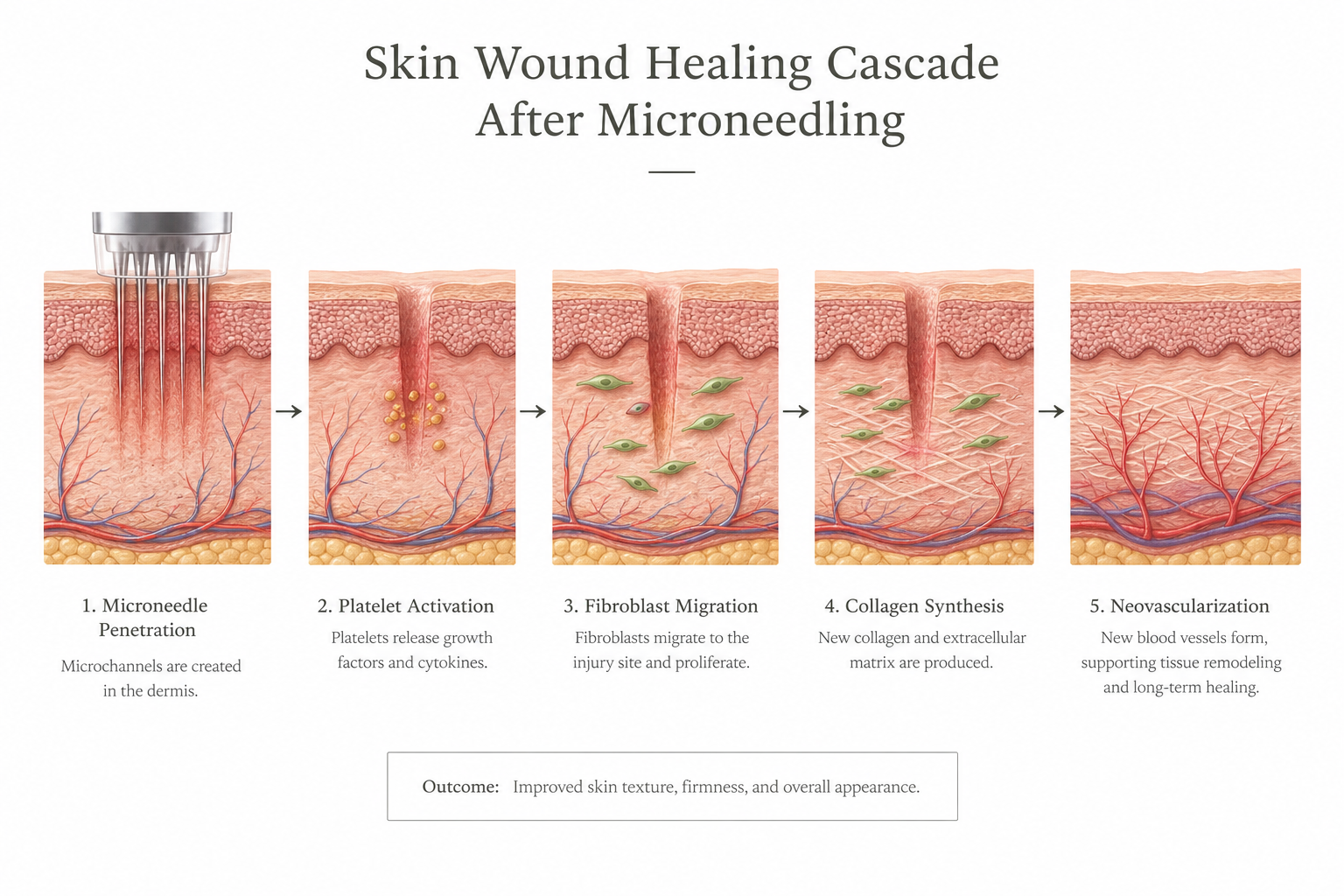
Over the following weeks, the newly deposited collagen undergoes remodeling, gradually replacing the disorganised fibrous tissue characteristic of scar tissue with a more organised matrix. Neovascularization — the formation of new small blood vessels — also occurs, improving circulation and nutrient delivery to the remodeling tissue. This is why results from microneedling are not immediate: the collagen synthesis and maturation process unfolds over months rather than days. Importantly, research suggests that collagen deposited through this process can remain structurally stable for several years before natural degradation occurs, making the improvements relatively durable when a full treatment series is completed.
Which Scar Types Respond to Microneedling?
Not all scars respond equally to collagen induction therapy. Understanding where microneedling is likely to help — and where it has clear limitations — is important for setting realistic expectations before committing to a treatment course.
Atrophic Scars: The Best Candidates
Atrophic scars sit below the surrounding skin surface because tissue was lost during the original injury or inflammatory process. They are the primary target for microneedling and include three subtypes with different characteristics. Rolling scars have a broad, wave-like depression caused by fibrous tethering beneath the skin surface; they tend to respond well to microneedling because the collagen induction can help lift and fill the depressed area. Boxcar scars have sharper, defined edges and a flat base; they respond moderately well, particularly when the walls are not too steep. Ice pick scars are narrow, deep, and V-shaped, extending into the deeper dermis; they are the most resistant subtype and often require adjunctive treatments such as TCA CROSS (trichloroacetic acid chemical reconstruction of skin scars) alongside microneedling for meaningful improvement.
Atrophic acne scars are the most extensively studied indication for microneedling. A prospective study of 120 patients published in the Journal of Dermatological Treatment found clinically meaningful reductions in scar severity scores following a series of microneedling sessions, with rolling and boxcar subtypes showing the greatest response. Varicella (chickenpox) scars and some traumatic or surgical scars with an atrophic character can also respond to microneedling, though evidence for these indications is less extensive than for acne scarring.
Hypertrophic Scars and Keloids
Hypertrophic scars — raised, firm scars that remain within the original wound boundary — may benefit from microneedling in some cases, though the evidence is more limited and results are less predictable than for atrophic scars. Keloid scars, which extend beyond the original wound margin and result from an exaggerated healing response, represent a contraindication to microneedling. Needling a keloid-prone area carries a risk of stimulating further abnormal collagen deposition and worsening the scar. A thorough clinical assessment is essential before treating any raised scar.
Surgical, Burn, and Stretch Mark Scars
Surgical scars, including C-section scars, and burn scars may respond to microneedling when they are mature (typically at least 6–12 months old), flat, and not actively inflamed. Stretch marks (striae) share some structural similarities with atrophic scars and are sometimes treated with microneedling, though improvement tends to be modest and evidence remains limited compared to acne scar data. For all scar types, newer scars — those under approximately one year old — may respond more readily because the collagen matrix is still in an active remodeling phase, making it more amenable to therapeutic intervention.
Scar Type and Microneedling Responsiveness at a Glance
| Scar Type | Typical Responsiveness | Notes |
|---|---|---|
| Rolling acne scars | Good | Often the most responsive subtype; may benefit from subcision first |
| Boxcar acne scars | Moderate to good | Shallower scars respond better than deep, steep-walled variants |
| Ice pick acne scars | Limited alone | TCA CROSS or combination approach usually needed |
| Chickenpox / varicella scars | Moderate | Similar mechanism to atrophic acne scars |
| Surgical / traumatic scars (atrophic) | Moderate | Best results in mature, flat scars |
| Hypertrophic scars | Variable | Requires careful clinical assessment; limited evidence |
| Keloid scars | Contraindicated | Risk of worsening; avoid microneedling |
| Stretch marks (striae) | Modest | Some improvement possible; evidence limited |
Needle Depth, Session Number, and Treatment Protocol
The needle depth used during a microneedling session is one of the most important variables determining whether meaningful collagen induction occurs. For facial atrophic scars, depths typically range from 1.0 to 2.5 mm depending on the scar depth, skin thickness, and treatment area. Body scars — on the chest, back, or limbs — generally have a thicker dermis and may require greater depths and more passes to achieve equivalent dermal penetration. A qualified practitioner will adjust depth based on individual anatomy and scar characteristics rather than applying a fixed setting.
A standard treatment series for acne scars consists of 3–6 sessions spaced 4–6 weeks apart. This spacing allows the wound healing cascade to complete its initial phase before the next session begins. Attempting sessions too frequently can interfere with the collagen maturation process rather than accelerating it. Most patients notice progressive improvement across the series, with peak results typically visible at 3–6 months after the final session as collagen continues to mature and remodel. After completing an initial series, maintenance sessions — typically once or twice a year — may help sustain results over time.
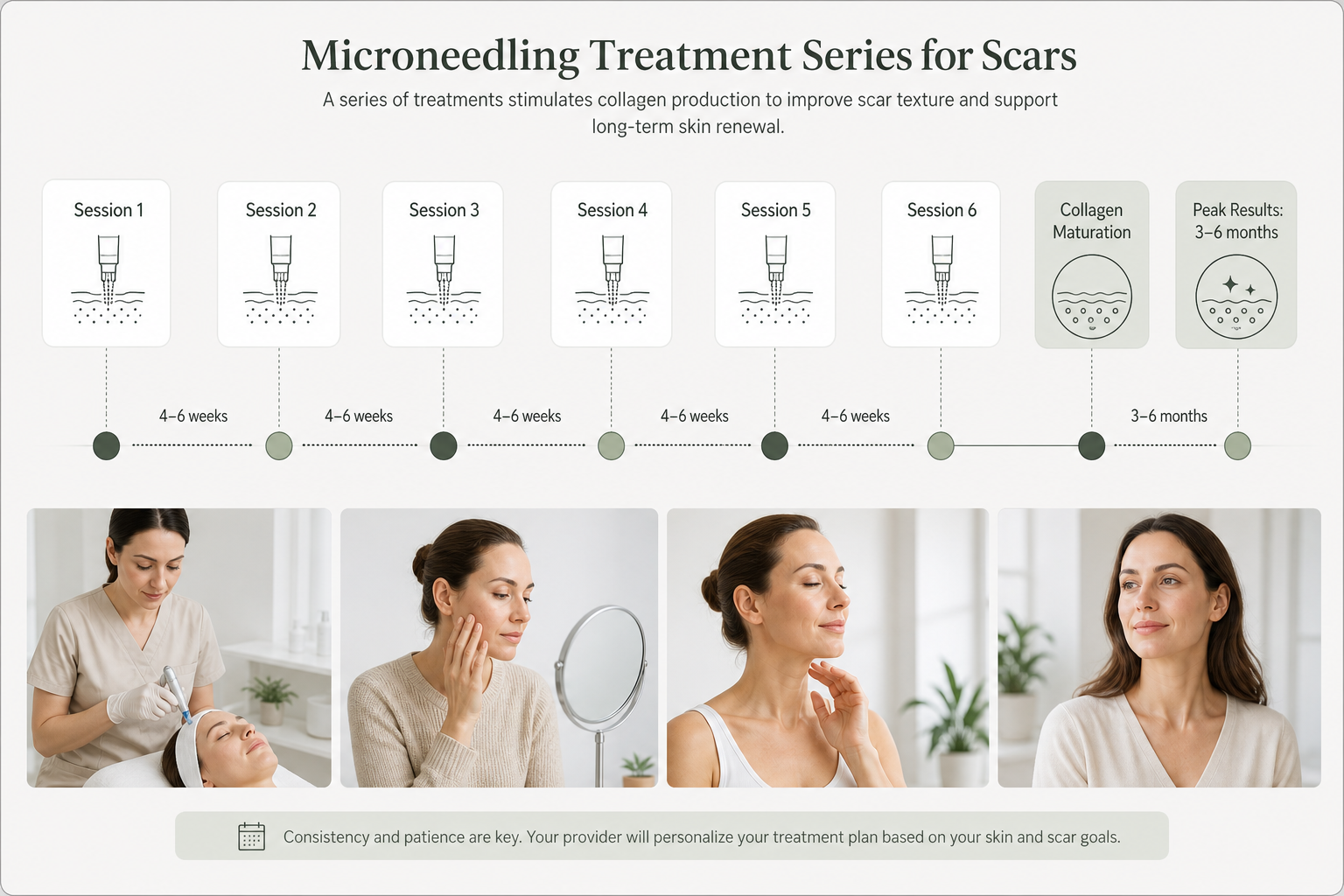
Before each session, a topical numbing cream is applied for approximately 30–45 minutes to minimise discomfort. The procedure itself usually takes 20–40 minutes for a facial treatment area. Immediately after, the skin appears red and may feel warm, similar to mild sunburn. Most patients experience 24–72 hours of visible redness and minor swelling, with the skin returning to a presentable state within a few days for standard microneedling. Radiofrequency microneedling sessions may involve slightly longer downtime due to the additional thermal component.
Microneedling and Skin Tone: Fitzpatrick Skin Type Considerations
One of the clinically meaningful advantages of microneedling over ablative laser resurfacing is its relative safety across a wider range of skin tones. Ablative and fractional laser treatments carry a higher risk of post-inflammatory hyperpigmentation in patients with Fitzpatrick skin types IV through VI — those with medium-brown to dark skin — because the thermal energy can disrupt melanin-producing cells. Microneedling, which does not generate significant heat in standard form, is generally considered a lower-risk option for darker skin tones when performed correctly.
That said, post-inflammatory hyperpigmentation can still occur after microneedling, particularly if the skin is treated while actively inflamed, if post-procedure sun protection is inadequate, or if the needle depth is excessive for the individual’s skin. Practitioners experienced in treating diverse skin tones will typically use conservative parameters initially, ensure thorough sun avoidance guidance, and may recommend a topical preparation protocol before treatment to reduce PIH risk. Patients with darker skin tones should discuss Fitzpatrick skin type-specific protocols with their practitioner before proceeding.
Combining Microneedling with Other Treatments
For patients with moderate to severe scarring, microneedling alone may produce limited improvement, and combining it with complementary treatments can enhance outcomes. The most evidence-supported combination is microneedling with platelet-rich plasma (PRP). PRP is prepared from the patient’s own blood by centrifugation to concentrate growth factors, which are then applied to the skin immediately after microneedling while the micro-channels are open. A clinical study involving 107 patients found that the microneedling plus PRP combination produced statistically greater improvements in scar severity scores compared to microneedling alone, with a favourable safety profile. The addition of PRP may accelerate fibroblast activation and enhance the overall collagen synthesis response.
For rolling scars with significant dermal tethering, subcision — a procedure in which a fine needle or cannula is used to release the fibrous bands anchoring the scar to deeper tissue — is often performed before a microneedling series. Releasing the tethering first allows the skin to lift more freely, and subsequent microneedling sessions can then stimulate collagen to fill the space. For ice pick scars, TCA CROSS applied to individual scars can be staged alongside microneedling sessions to address the depth that microneedling alone cannot reach. Radiofrequency microneedling adds a thermal component to the needle penetration, which may produce additional dermal tightening and collagen contraction, and is sometimes preferred for patients with both scarring and skin laxity concerns.
Microneedling vs. Other Scar Treatments
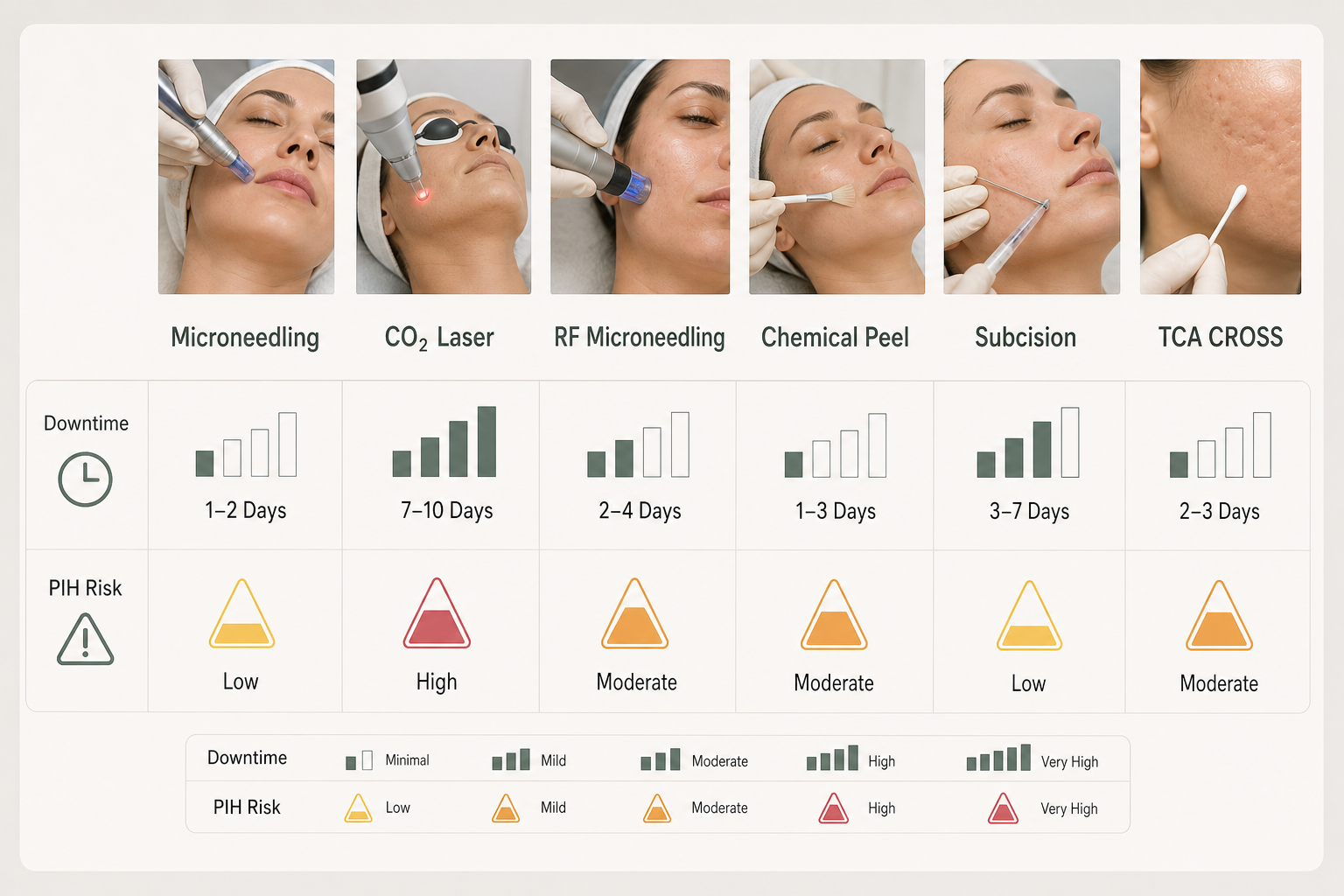
| Treatment | Mechanism | Best For | Downtime | PIH Risk (Darker Skin) |
|---|---|---|---|---|
| Microneedling | Controlled micro-injuries, collagen induction | Atrophic acne scars, rolling, boxcar | 1–3 days | Low to moderate |
| Fractional CO2 laser | Ablative thermal resurfacing | Moderate–severe atrophic scars, skin texture | 5–10 days | Higher |
| RF microneedling | Needle penetration + radiofrequency heat | Atrophic scars + skin laxity | 2–5 days | Low to moderate |
| Chemical peel (medium–deep) | Controlled chemical exfoliation | Superficial texture, mild scarring | 5–14 days | Moderate to higher |
| Subcision | Mechanical release of fibrous tethering | Rolling scars with tethering | 3–7 days (bruising) | Low |
| TCA CROSS | Focal chemical reconstruction | Ice pick scars | 7–10 days per spot | Moderate |
Microneedling occupies a useful middle ground: it is more effective for dermal scar remodeling than superficial chemical peels or microdermabrasion, while carrying less downtime and a lower PIH risk than ablative laser resurfacing. For patients with mild to moderate atrophic scarring and a preference for minimal downtime, it is often a logical first-line option. For more severe scarring, a combination approach or a more aggressive resurfacing modality may be more appropriate — a decision best made after a thorough clinical assessment.
Who May Be Suitable — and Who Should Avoid Microneedling
Microneedling for scars may be appropriate for adults with stable atrophic scarring who have realistic expectations about the degree of improvement achievable. Suitable candidates typically have no active inflammatory acne in the treatment area, are not pregnant or breastfeeding, and are not taking anticoagulant medications that would increase bleeding risk. Patients who have used oral isotretinoin (Accutane) are generally advised to wait at least six months after completing the course before undergoing microneedling, as isotretinoin affects wound healing and collagen synthesis in ways that may alter the treatment response and increase complication risk.
Microneedling should be avoided in patients with active skin infections, open wounds, or active inflammatory conditions in the treatment area. As noted above, keloid-prone skin is a contraindication. Patients with a history of herpes simplex virus (cold sores) in the treatment area may require antiviral prophylaxis before treatment to prevent viral reactivation triggered by the procedure. Implanted electronic devices near the treatment area are a consideration specifically for radiofrequency microneedling. A comprehensive consultation and medical history review is essential before any microneedling treatment.
Realistic Expectations: What Improvement Looks Like
Clinical studies consistently report meaningful improvements in atrophic scar appearance following a microneedling series, with many studies documenting reductions of 50–70% in standardised scar severity scores for suitable candidates. However, these figures represent averages across study populations, and individual results vary considerably depending on scar type, depth, age, skin characteristics, and the number of sessions completed. Microneedling improves scars — it does not erase them. Patients who approach treatment expecting a significant but partial improvement tend to be more satisfied than those expecting complete scar elimination.
The improvement is cumulative: each session builds on the collagen deposited in previous sessions, which is why completing the full recommended series matters. Visible changes typically begin to appear after the second or third session, but the most meaningful improvement often becomes apparent at 3–6 months after the final session, once the newly synthesised collagen has had time to mature and integrate into the dermal matrix. Photographs taken before treatment and at regular intervals are a useful way to track progress objectively, since gradual changes can be difficult to perceive in day-to-day observation.
Frequently Asked Questions
How many microneedling sessions are needed for acne scars?
Most treatment protocols for atrophic acne scars involve 3–6 sessions spaced 4–6 weeks apart. The exact number depends on scar severity, subtype, and individual response. Mild scarring may show satisfactory improvement after three sessions; moderate to severe scarring typically requires the full series and may benefit from combination approaches.
Does microneedling hurt?
A topical numbing cream is applied before treatment, which significantly reduces discomfort for most patients. During the procedure, patients typically describe a sensation of pressure or mild scratching rather than sharp pain. Deeper needle settings or more sensitive areas may feel more intense. Discomfort is generally manageable and brief.
Can microneedling make scars worse?
When performed correctly by a qualified practitioner on appropriate candidates, microneedling is unlikely to worsen atrophic scars. However, treating keloid-prone skin, active acne, or infected skin carries a risk of adverse outcomes. Post-inflammatory hyperpigmentation is a possible side effect, particularly in darker skin tones or with inadequate sun protection after treatment.
Is at-home microneedling effective for scars?
At-home dermarollers typically operate at needle depths of 0.25 mm or less, which is sufficient to enhance topical product absorption but does not reach the dermal depth required to trigger meaningful collagen induction for established scars. Professional devices used in clinical settings penetrate to 1.0–2.5 mm under controlled, sterile conditions. For scar treatment specifically, professional microneedling is significantly more likely to produce clinically relevant results.
How long do microneedling results last for scars?
The structural collagen improvements achieved through a microneedling series can remain stable for several years, as newly deposited collagen matures and integrates into the dermis. However, the skin continues to age naturally, and maintenance sessions — typically once or twice a year after completing the initial series — are often recommended to sustain and build on results over time.
Can microneedling be combined with PRP for better scar results?
Yes. Combining microneedling with platelet-rich plasma (PRP) is one of the better-supported combination approaches for scar treatment. PRP delivers concentrated growth factors directly into the micro-channels created by needling, which may enhance fibroblast activation and collagen synthesis beyond what microneedling alone achieves. Clinical evidence supports improved outcomes with this combination compared to microneedling alone for atrophic acne scars.
How soon after getting a scar can microneedling be performed?
Most practitioners recommend waiting until a scar is fully healed and no longer actively inflamed — typically at least 6–12 months after the original injury or surgery. Newer scars that are still in the active remodeling phase may actually respond more readily to treatment, but treating too early risks disrupting normal healing. A clinical assessment will determine the appropriate timing for each individual case.
Is Microneedling the Right Approach for Your Scars?
Microneedling — or percutaneous collagen induction therapy — is a well-evidenced, minimally invasive option for improving the appearance of atrophic scars, particularly rolling scars and boxcar scars from acne. Its ability to stimulate meaningful collagen remodeling with relatively low downtime and a favourable safety profile across diverse skin tones makes it a practical choice for many patients. It is not a solution for keloid scars, and it works best as part of a considered treatment plan rather than a standalone quick fix.
For patients with mild to moderate atrophic scarring, a series of professional microneedling sessions may produce a meaningful and durable improvement in skin texture and scar depth. For more complex or severe presentations — particularly mixed scar types or deep ice pick scars — a combination protocol involving subcision, TCA CROSS, or radiofrequency microneedling may be more appropriate. The right approach depends on your specific scar characteristics, skin type, medical history, and goals. A consultation with a practitioner experienced in scar management is the most reliable way to determine whether microneedling, a combination approach, or an alternative treatment is the most suitable path forward for your individual situation.
