

Enlarged male breast tissue is more common than many men realise, and it can affect confidence at any age. Whether the cause is excess chest fat, a hormonal imbalance, or true glandular breast tissue, the right approach depends on understanding which type you have — because the treatments differ significantly. This guide explains how to identify the cause, what non-surgical options can realistically achieve, when medical or surgical intervention may be appropriate, and what to expect from each pathway.
Key Takeaways
- Enlarged male breast tissue has two distinct causes — excess chest fat (pseudogynecomastia) and true glandular breast tissue (gynecomastia) — and each responds to different treatments.
- Spot reduction is a myth; overall fat loss through a caloric deficit and exercise can reduce chest fat, but will not remove firm glandular tissue.
- True gynecomastia is driven by a hormonal imbalance between oestrogen and testosterone and often requires medical or surgical treatment.
- Male breast reduction surgery — combining liposuction and glandular excision — produces reliable, long-lasting results for confirmed gynecomastia.
- A clinical assessment is essential before choosing any treatment, particularly if a firm lump, nipple tenderness, or rapid breast growth is present.
Chest Fat or Gynecomastia? How to Tell the Difference
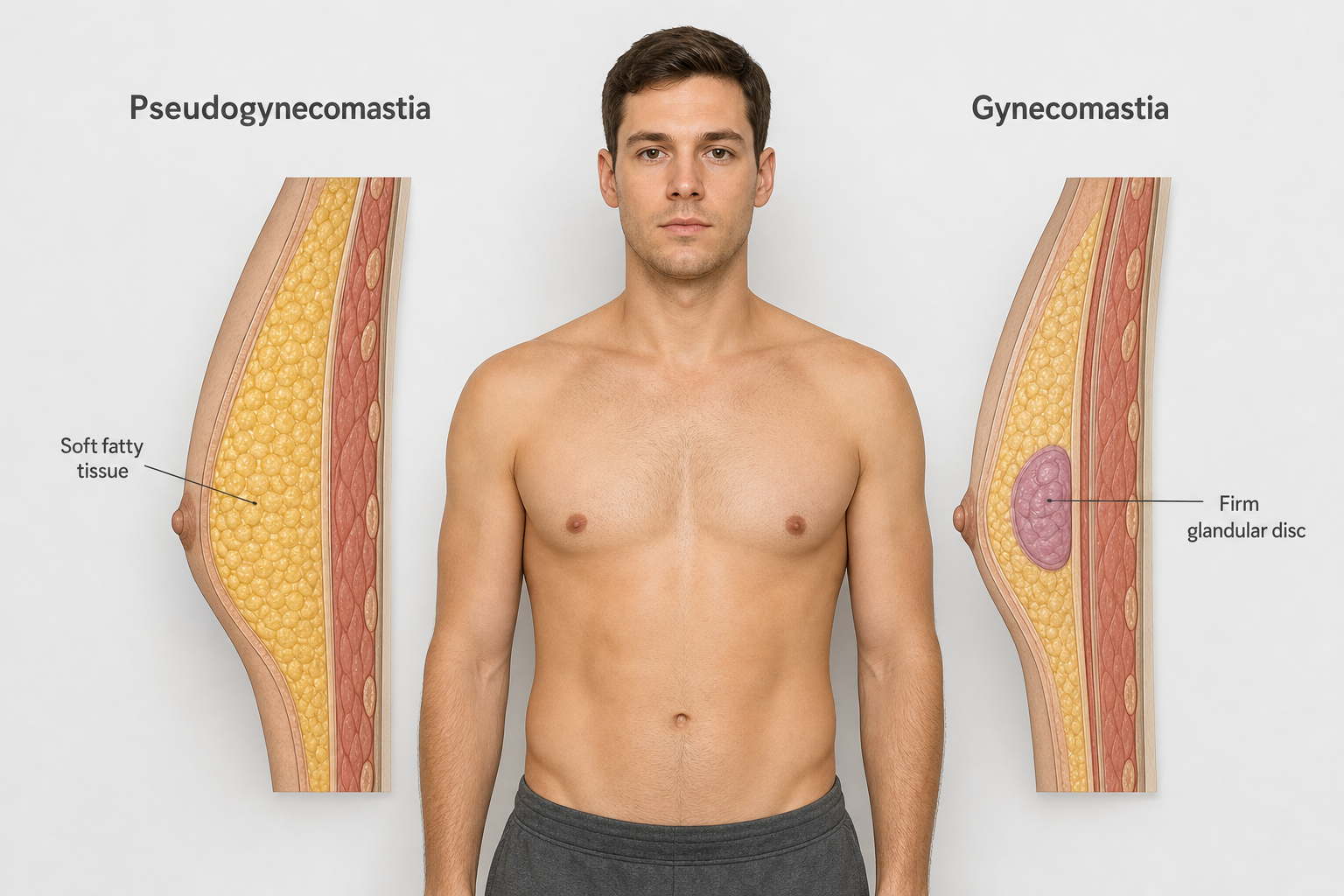
The first and most important step is identifying which condition you are dealing with, because the treatments are not interchangeable. Pseudogynecomastia refers to the accumulation of fatty tissue across the chest — it looks similar to gynecomastia but has a completely different cause and responds well to diet and exercise. True gynecomastia involves the growth of actual glandular breast tissue beneath the nipple, driven by a shift in the oestrogen-to-testosterone ratio, and it does not disappear with fat loss alone.
A simple self-assessment can help distinguish between the two. Lie flat and press two fingers firmly around the areola (the pigmented skin surrounding the nipple). In pseudogynecomastia, the tissue feels soft and diffuse — similar to the fat found elsewhere on the body. In true gynecomastia, you are likely to feel a firm or rubbery disc of tissue directly beneath the nipple, sometimes described as a pea- or grape-sized lump. This glandular tissue may also cause nipple tenderness or sensitivity. If you lose weight and the chest flattens evenly, pseudogynecomastia is the more likely explanation. If a firm central lump persists after meaningful weight loss, a medical assessment is warranted.
It is worth noting that many men have a mixed presentation — some degree of both fatty tissue and glandular tissue — which is why a clinical examination and sometimes imaging or blood tests are needed for a definitive diagnosis.
| Feature | Pseudogynecomastia (Chest Fat) | True Gynecomastia (Glandular Tissue) |
|---|---|---|
| Tissue feel | Soft, diffuse, similar to body fat | Firm or rubbery lump under the nipple |
| Distribution | Spread across the chest | Centred beneath the areola |
| Nipple tenderness | Uncommon | Often present |
| Response to diet and exercise | Reduces with overall fat loss | Persists despite fat loss |
| Primary cause | Excess body fat | Hormonal imbalance |
| Treatment | Caloric deficit, exercise, body contouring | Medical review, possible surgery |
What Causes Gynecomastia?
True gynecomastia develops when the balance between oestrogen and testosterone shifts in favour of oestrogen, stimulating the growth of glandular breast tissue. This hormonal imbalance can arise from several different causes, and identifying the underlying reason matters both for treatment and for ruling out anything that needs separate medical attention.
Puberty
Pubertal gynecomastia is the most common form, affecting an estimated 50–70% of adolescent boys during the hormonal fluctuations of puberty. In most cases it resolves on its own within one to two years as testosterone levels stabilise. Persistent pubertal gynecomastia — where the glandular tissue remains beyond the mid-teens — is less likely to resolve without intervention and may benefit from medical review.
Ageing
Testosterone levels decline gradually with age, while body fat — which converts testosterone to oestrogen via a process called aromatisation — tends to increase. This combination means that gynecomastia affects a significant proportion of men over 50, and the prevalence continues to rise with age.
Drug-Induced Gynecomastia
Drug-induced gynecomastia is a frequently overlooked cause. A range of medications and substances can disrupt the oestrogen-to-testosterone ratio, including anabolic steroids (a common cause in bodybuilders), spironolactone (used for blood pressure and heart failure), anti-androgens used in prostate cancer treatment, certain HIV medications, some antidepressants, and long-term use of proton pump inhibitors. Recreational cannabis use has also been associated with gynecomastia in some studies. If a medication is the likely cause, discussing alternatives with a prescribing doctor is an important first step — stopping the causative drug can sometimes allow the tissue to regress, particularly if caught early.
Other Medical Causes
Less commonly, gynecomastia can be associated with conditions including hypogonadism, Klinefelter syndrome, hyperthyroidism, liver cirrhosis, kidney failure, or oestrogen-secreting tumours. These are relatively rare but are among the reasons why a new or rapidly growing breast lump in a man should always be assessed by a doctor rather than assumed to be benign.
How to Get Rid of Man Boobs Without Surgery
Non-surgical approaches are most effective for pseudogynecomastia — where the primary issue is excess chest fat — and for mild or early-stage gynecomastia where the glandular component is small. They are unlikely to eliminate firm, established glandular tissue on their own, but they can meaningfully improve chest contour and overall health.
Create a Caloric Deficit for Overall Fat Loss
The spot reduction myth is well established in exercise science: performing chest exercises alone will not selectively burn fat from the chest. Fat loss occurs systemically in response to a sustained caloric deficit — consuming fewer calories than the body expends over time. A moderate deficit of 300–500 calories per day, maintained consistently, typically produces visible fat loss over 12–24 weeks in cases of pseudogynecomastia. Prioritising lean protein (chicken, fish, legumes, eggs) helps preserve muscle mass during a deficit, while reducing refined carbohydrates, processed foods, and alcohol supports both fat loss and hormonal health.
Strength Training and Chest-Focused Exercise
Building the pectoral muscles through resistance training does not burn chest fat directly, but pectoral hypertrophy improves the underlying structure of the chest, creating a firmer, more defined appearance as fat reduces. Effective exercises include the bench press, incline press, dumbbell flyes, push-ups, and cable crossovers. Importantly, back training is often overlooked in this context: strengthening the rhomboids and mid-trapezius muscles through rows and pull-downs improves posture, reducing the forward rounding of the shoulders that can make the chest appear more prominent. A combination of chest and back training typically produces better visual results than chest work alone.
Cardiovascular Exercise
Regular cardiovascular exercise — running, cycling, swimming, or high-intensity interval training (HIIT) — accelerates the caloric deficit needed for fat loss and supports cardiovascular health. HIIT in particular has been associated with favourable effects on body composition and may help support testosterone levels compared with prolonged steady-state cardio, though individual responses vary.
Lifestyle Factors That Support Testosterone
Alcohol consumption contributes to testosterone suppression and increases aromatisation of testosterone to oestrogen, making it a meaningful factor in both pseudogynecomastia and hormonal gynecomastia. Prioritising sleep — aiming for seven to nine hours per night — supports natural testosterone production, as the majority of daily testosterone release occurs during sleep. Adequate intake of zinc, magnesium, and vitamin D through diet or supplementation may support hormonal health in men who are deficient, though no supplement has been shown to specifically target or reduce chest fat or glandular breast tissue.
Compression Garments
A compression garment or compression vest does not treat the underlying cause of enlarged breast tissue, but it can meaningfully reduce the visible appearance of the chest under clothing while other approaches are underway. This makes it a practical confidence tool for men managing pseudogynecomastia through diet and exercise, or for those awaiting surgical consultation. Compression garments are also routinely used after male breast reduction surgery to support healing and maintain chest contour during recovery.
Medical (Non-Surgical) Treatment Options
For confirmed true gynecomastia, particularly in its earlier or more active phase, some medical treatments may be considered under specialist supervision. These are not widely available as standard NHS treatments and are typically used off-label in the UK.
Tamoxifen, a selective oestrogen receptor modulator (SERM), works by blocking oestrogen receptors in breast tissue and has shown some effectiveness in reducing glandular breast tissue in men, particularly in the early or tender phase of gynecomastia. Aromatase inhibitors — medications that reduce the conversion of testosterone to oestrogen — have also been used in specific cases, such as pubertal gynecomastia or gynecomastia associated with elevated oestrogen levels. Neither tamoxifen nor aromatase inhibitors are licensed specifically for gynecomastia treatment, and their use should only be considered under the guidance of an endocrinologist or specialist with experience in this area. Evidence for their effectiveness is moderate, and they are generally less effective once the glandular tissue has become fibrotic (hardened over time).
If drug-induced gynecomastia is suspected, the most important medical step is reviewing and, where possible, discontinuing the causative medication with the prescribing doctor’s guidance. Early intervention — before the glandular tissue matures — offers the best chance of non-surgical resolution.
Surgical Treatment: Male Breast Reduction
Male breast reduction surgery is the most reliable treatment for true gynecomastia, particularly where glandular tissue is established, the condition has persisted for more than a year, or non-surgical approaches have not produced satisfactory results. It is also an option for pseudogynecomastia that has not responded adequately to diet and exercise, or where significant excess skin is present.
Liposuction
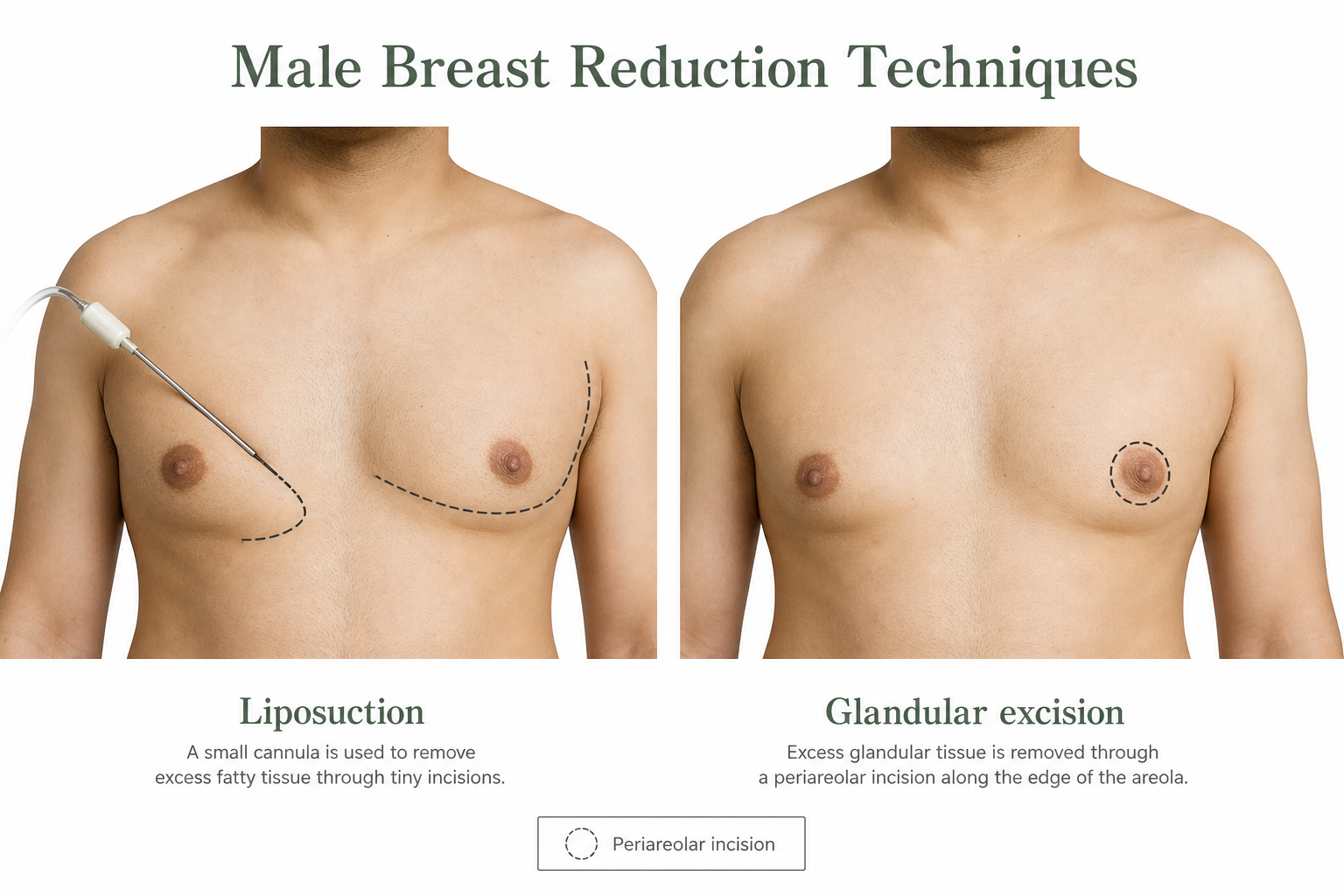
Liposuction uses a thin tube called a cannula to remove fatty tissue through small incisions, typically in the armpit or at the edge of the areola. It is effective for pseudogynecomastia and for the fatty component of mixed cases. Suction lipectomy alone is not sufficient when firm glandular tissue is present, as glandular tissue is too dense to be removed by suction.
Glandular Excision (Subcutaneous Mastectomy)
Where glandular breast tissue is the primary concern, surgical excision is required. This is performed through a periareolar incision — a small cut along the lower edge of the areola — which heals with minimal visible scarring in most cases. The surgeon removes the glandular disc directly, restoring a flat chest contour. This procedure is sometimes referred to as a subcutaneous mastectomy or reduction mammaplasty in a male context.
Combined Liposuction and Excision
The majority of gynecomastia cases involve both fatty and glandular tissue, and the most common surgical approach combines liposuction to address the fatty component with direct excision of the glandular tissue. This combined technique produces the most complete improvement in chest contour for mixed presentations.
Skin Removal
In cases of significant weight loss or severe gynecomastia with excess skin, additional skin removal may be required. This involves longer incisions and more visible scarring, and is typically reserved for cases where skin laxity would otherwise leave the chest looking deflated after tissue removal.
What to Expect: Procedure and Recovery
Male breast reduction is usually performed as a day-case procedure under general anaesthesia or local anaesthesia with sedation, depending on the extent of surgery. Most patients return home the same day. A compression garment is worn for several weeks post-operatively to reduce swelling, support the healing tissue, and help the skin conform to the new chest contour. Bruising and swelling are expected in the first one to two weeks. Most men can return to desk-based work within one to two weeks and resume exercise after four to six weeks, though full results — including resolution of residual swelling — typically become visible at around three to six months. Scarring from a periareolar incision generally fades significantly over six to twelve months.
Risks associated with male breast reduction surgery include bleeding, infection, changes in nipple sensation, asymmetry, contour irregularities, and — in a small proportion of cases — recurrence if the underlying hormonal cause is not addressed. A thorough pre-operative assessment, including blood tests and a hormone panel where indicated, helps identify any treatable underlying cause before surgery proceeds.
Gynecomastia in Specific Groups
The appropriate approach to gynecomastia varies depending on the age and circumstances of the individual. Teenagers with pubertal gynecomastia are generally advised to wait and monitor for one to two years, as spontaneous resolution is common. If the condition persists beyond this window — persistent pubertal gynecomastia — or is causing significant psychological distress, a referral to a paediatric endocrinologist or specialist is appropriate before considering surgery.
Older men experiencing age-related gynecomastia should have a medical assessment to rule out underlying causes and review any medications that may be contributing. Weight management and lifestyle changes are a reasonable first step, but established glandular tissue in this group is unlikely to resolve without surgical intervention.
Bodybuilders and men who use anabolic steroids represent a distinct group. Steroid use is one of the most common causes of drug-induced gynecomastia in younger men, as exogenous androgens are converted to oestrogen through aromatisation. Stopping steroid use and addressing the hormonal imbalance is the first step; however, glandular tissue that has already developed often requires surgical excision, as it tends to persist even after the causative substance is discontinued.
The Psychological Impact and Body Image
The physical appearance of enlarged male breast tissue is only part of the picture. Research consistently shows that gynecomastia and pseudogynecomastia can have a significant impact on body image, self-confidence, and quality of life — affecting willingness to exercise in public, participate in swimming or sport, and engage socially. These psychological effects are clinically recognised and are a legitimate factor in treatment decisions, not simply a cosmetic concern. Men experiencing significant distress related to their chest appearance are encouraged to discuss this openly with their GP or a specialist, as it is relevant to both the urgency and the appropriateness of treatment options.
What to Expect at a Medical Consultation
If you decide to seek a medical opinion, knowing what to expect can make the process less daunting. A GP assessment will typically involve a physical examination of the breast tissue, a review of your medications and medical history, and — if gynecomastia is suspected — blood tests to assess hormone levels (testosterone, oestrogen, LH, FSH), liver and kidney function, and thyroid function. If a firm or unusual lump is found, an ultrasound may be requested to rule out other causes. Depending on the findings, your GP may refer you to an endocrinologist, a urologist, or a plastic surgeon with experience in gynecomastia.
At a surgical consultation, the surgeon will assess the type and extent of the breast tissue, discuss realistic outcomes, explain the procedure in detail, and review your suitability for surgery based on your health, BMI, and goals. This is also the appropriate time to ask about the surgeon’s experience with gynecomastia specifically, what the recovery involves, and what results are realistic for your particular presentation.
Frequently Asked Questions
Can push-ups and chest exercises get rid of man boobs?
Chest exercises such as push-ups and bench press build the pectoral muscles and improve chest definition, but they do not selectively burn chest fat. Fat loss requires a sustained caloric deficit across the whole body. For pseudogynecomastia, a combination of diet, cardio, and strength training can produce meaningful improvement over time. For true gynecomastia involving glandular tissue, exercise alone will not remove the underlying tissue.
Can gynecomastia go away on its own?
Pubertal gynecomastia resolves spontaneously in the majority of adolescent boys within one to two years. Gynecomastia caused by a medication may improve if the causative drug is stopped early. However, established gynecomastia in adults — particularly where the glandular tissue has been present for more than a year — is unlikely to resolve without medical or surgical treatment.
How long does it take to see results from diet and exercise?
For pseudogynecomastia, early changes in chest appearance may become noticeable after four to eight weeks of consistent effort, with more significant improvement typically visible at twelve to twenty-four weeks. Results depend on the degree of fat loss achieved, starting body composition, and consistency of the approach.
Do I need surgery for gynecomastia?
Not necessarily. Early or mild gynecomastia may respond to addressing the underlying cause — stopping a causative medication, correcting a hormonal imbalance, or losing weight. Medical treatments such as tamoxifen may be appropriate in specific cases under specialist supervision. However, established glandular tissue that has been present for more than a year is unlikely to resolve without surgical excision, and surgery remains the most reliable long-term solution for confirmed gynecomastia.
Will gynecomastia come back after surgery?
Recurrence after male breast reduction surgery is uncommon when the underlying cause has been identified and addressed. If the hormonal imbalance or causative medication is not resolved, there is a risk that new glandular tissue could develop. This is why a thorough pre-operative assessment is important, and why bodybuilders who continue steroid use after surgery face a higher risk of recurrence.
Are there supplements that can reduce chest fat or gynecomastia?
No supplement has been shown in reliable clinical evidence to specifically reduce chest fat or glandular breast tissue. Some supplements marketed for testosterone support (such as zinc, magnesium, and vitamin D) may help correct deficiencies that contribute to hormonal imbalance, but they are not a treatment for gynecomastia and should not be expected to produce visible changes in breast tissue on their own.
Choosing the Right Approach for Your Situation
The most appropriate path forward depends on which type of enlarged breast tissue you have, how long it has been present, and whether an underlying cause can be identified and addressed. For men whose chest appearance is primarily due to excess body fat, a structured programme of caloric deficit, cardiovascular exercise, and strength training — with realistic expectations about timelines — is a sensible and evidence-supported starting point. A compression garment can help manage appearance in the interim.
For men with confirmed or suspected true gynecomastia — particularly where a firm lump is present, the condition has persisted for more than a year, or it is causing significant distress — a medical consultation is the appropriate next step rather than attempting to manage it through exercise alone. A GP can arrange relevant blood tests, identify any treatable underlying cause, and refer to the appropriate specialist. Where surgery is indicated, male breast reduction combining liposuction and glandular excision offers reliable, long-lasting improvement in chest contour for suitable candidates.
Whatever the cause, the condition is common, well understood, and treatable. Speaking with a qualified clinician is the most reliable way to get an accurate diagnosis and a treatment plan matched to your specific situation.
