

Using a sunbed after filler is one of the most common aftercare mistakes patients make, often because the connection between heat, UV radiation, and filler behaviour is not well explained at the time of treatment. The short answer is that sunbeds should be avoided for at least two weeks after dermal filler, and ideally longer — but the reasons behind this advice are more nuanced than the familiar phrase “heat melts filler” suggests. This article explains what heat and UV exposure actually do to filler, how long to wait, what to watch for if you have already used a sunbed, and how to protect your results long term.
Key Takeaways
- Sunbeds combine UV radiation and heat, both of which can negatively affect dermal filler — but through different mechanisms and over different timeframes.
- In the first two weeks after treatment, heat is the more immediate concern because it worsens swelling, bruising, and inflammation at injection sites.
- UV radiation may contribute to accelerated hyaluronic acid breakdown over time, potentially reducing how long your filler lasts.
- If you have accidentally used a sunbed after filler, monitor for unusual swelling, asymmetry, or prolonged redness and contact your clinic if concerned.
- Self-tanning products are a practical alternative to sunbeds once the initial healing period has passed.
What Heat and UV Actually Do to Dermal Filler
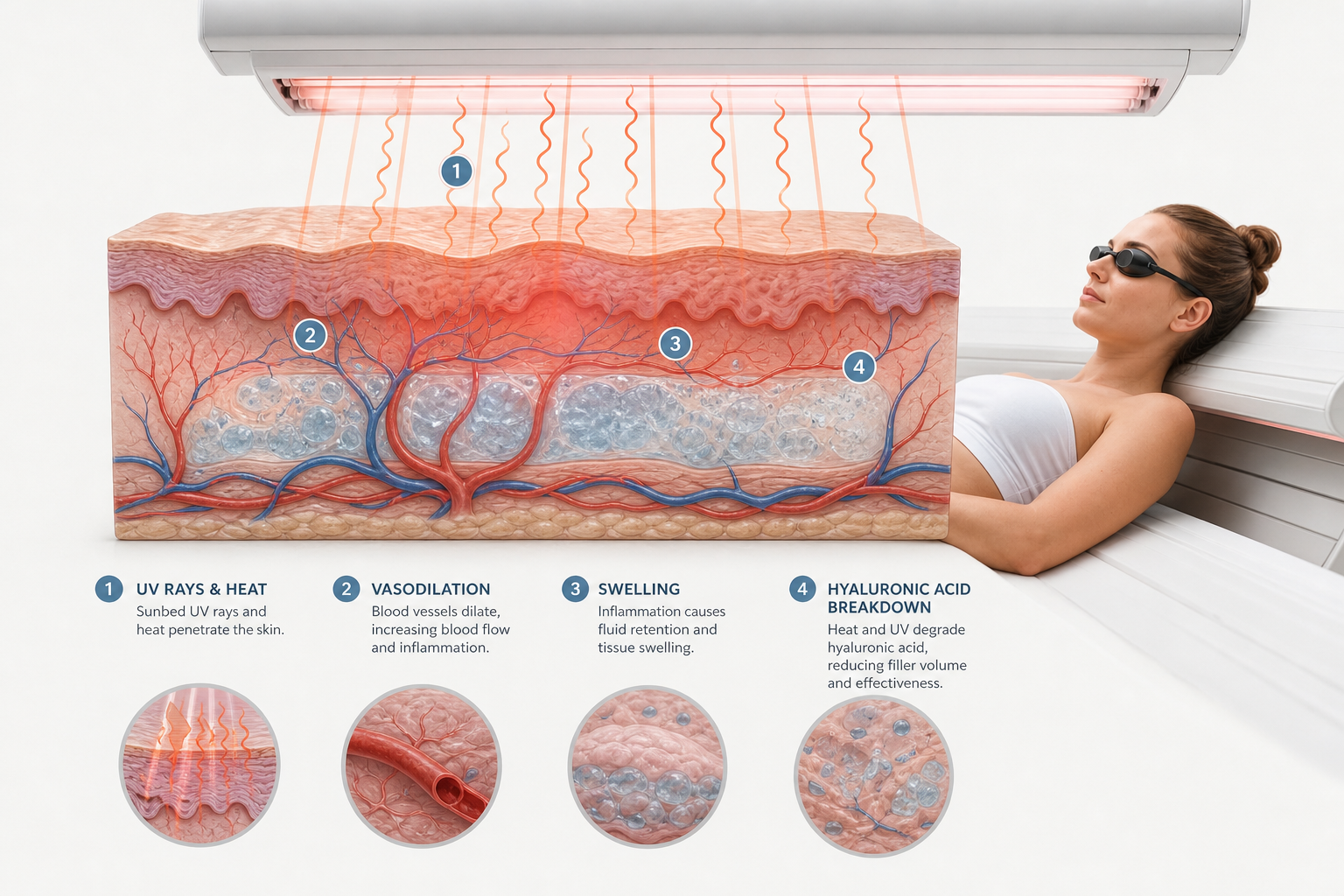
The phrase “heat melts filler” is repeated so often that it has taken on a life of its own — but it is not quite accurate, and understanding the real mechanisms helps patients make better decisions. Heat and UV radiation are two distinct risks that happen to arrive together on a sunbed, and they affect filler in different ways.
The Heat Mechanism
In the days immediately following a filler treatment, the injection sites are in an active healing phase. Blood vessels in the area are already slightly dilated as part of the normal inflammatory response, and the surrounding tissue is more sensitive than usual. Exposure to intense heat — whether from a sunbed, sauna, hot tub, or steam room — causes further vasodilation, meaning blood vessels expand and blood flow to the area increases. This amplifies swelling and can worsen bruising that might otherwise have been mild. The result is not that the filler dissolves, but that the healing environment becomes more chaotic, making it harder to assess the final result and increasing patient discomfort.
There is also a theoretical concern, supported by some laboratory research into thermal degradation of hyaluronic acid, that sustained high temperatures may affect the structural integrity of cross-linked hyaluronic acid gels. In clinical practice, the temperatures reached during a sunbed session are unlikely to cause dramatic immediate filler breakdown, but repeated or prolonged heat exposure during the settling period is not advisable. The filler settling period — typically one to two weeks — is when the product integrates with surrounding tissue, and disrupting this process with heat is counterproductive.
The UV Radiation Mechanism
UV radiation introduces a separate set of concerns. Ultraviolet light generates free radicals in the skin, triggering oxidative stress that can degrade the extracellular matrix, including hyaluronic acid. Hyaluronic acid is a polysaccharide that is naturally broken down by the enzyme hyaluronidase, but UV-induced oxidative stress may accelerate this degradation independently. Over time, regular UV exposure — including from sunbeds — may reduce filler longevity by contributing to faster hyaluronic acid breakdown. This is a cumulative effect rather than an immediate one, but it is clinically relevant for patients who use sunbeds regularly and then wonder why their filler seems to fade more quickly than expected.
UV radiation also damages the skin itself, reducing collagen production and accelerating skin ageing — which is somewhat counterproductive when the goal of filler treatment is to restore volume and improve the appearance of ageing skin. Broad-spectrum SPF after filler is therefore not just about protecting the injection sites; it is about protecting the skin environment in which the filler sits.
How Long Should You Avoid Sunbeds After Filler?
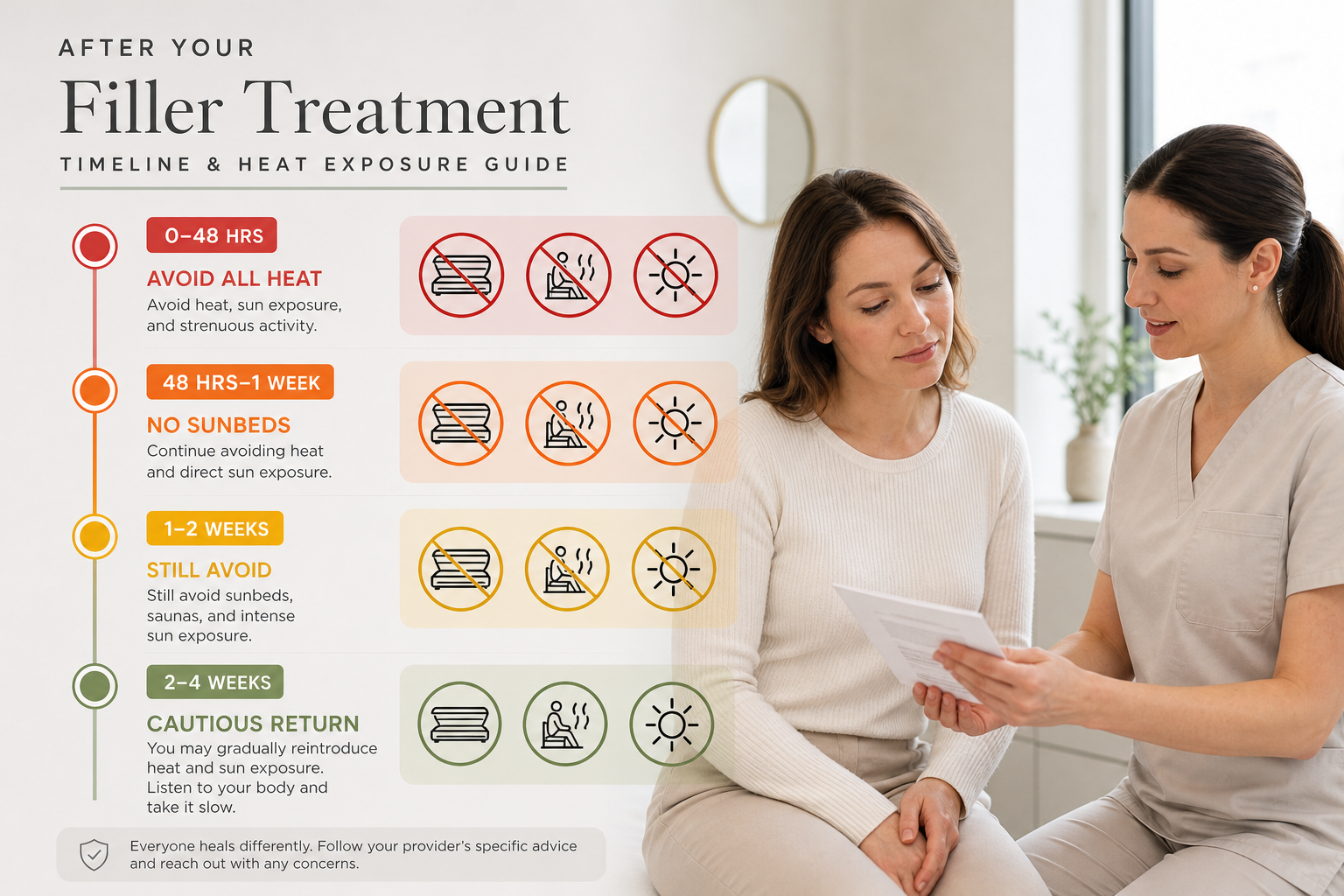
Clinical guidance on how long to wait after filler before using a sunbed varies, but a practical framework based on the healing timeline looks like this:
| Timeframe | Filler Status | Sunbed Advice |
|---|---|---|
| 0–48 hours | Injection sites actively healing; swelling and bruising likely | Avoid all heat sources entirely, including sunbeds, saunas, hot baths, and hot yoga |
| 48 hours–1 week | Initial swelling subsiding; filler beginning to integrate | Continue to avoid sunbeds; gentle cool or lukewarm showers only |
| 1–2 weeks | Filler settling; most bruising resolved in uncomplicated cases | Still advisable to avoid sunbeds; apply broad-spectrum SPF 50 if any sun exposure occurs |
| 2–4 weeks | Filler largely integrated in most patients | Sunbed use may be cautiously reintroduced, but shorter sessions and high SPF are advisable |
| Beyond 4 weeks | Filler settled; results established | Sunbed use carries ongoing UV-related risks to filler longevity and skin health; SPF remains essential |
Most practitioners advise avoiding sunbeds for at least two weeks after filler as a minimum. More conservative guidance suggests four weeks, particularly for treatments in sensitive areas such as the lips, under-eyes, or nose. Individual healing varies, and patients who bruise easily or who have had larger volumes of filler placed may benefit from a longer avoidance period. Your treating practitioner is best placed to advise based on your specific treatment and healing progress.
Does the Type of Filler Make a Difference?
The majority of dermal fillers used in aesthetic practice are hyaluronic acid-based products — brands such as Juvederm, Restylane, and Revolax fall into this category. Hyaluronic acid fillers are the most relevant to the heat and UV discussion because hyaluronic acid is inherently susceptible to enzymatic and oxidative breakdown, and cross-linked hyaluronic acid formulations vary in their resistance to degradation depending on the degree of cross-linking and the specific product used.
Non-hyaluronic acid fillers such as Sculptra (poly-L-lactic acid) and Radiesse (calcium hydroxylapatite) work through different mechanisms — they stimulate collagen production rather than adding immediate volume through a gel. The heat and UV risks for these products are less well characterised in the literature, but the general principle of avoiding intense heat during the healing period still applies, as the inflammatory response and injection site healing are similar regardless of filler type. If you have had a non-HA filler, discuss specific aftercare with your practitioner rather than assuming the same timeline applies.
Does the Treatment Area Matter?
Lip filler is the most commonly discussed treatment in the context of sunbed aftercare, partly because the lips are highly visible and partly because they are particularly sensitive to heat and UV. The lip area has a rich blood supply, which makes it more prone to swelling and bruising after treatment, and more reactive to vasodilation caused by heat. Patients with a history of cold sores should be especially cautious, as UV exposure is a well-recognised trigger for herpes simplex virus reactivation — a risk that exists independently of filler but is compounded by sunbed use in the weeks after lip filler treatment.
Cheek filler, jawline filler, and liquid rhinoplasty (nose filler) each have their own considerations. Nose filler is placed in a relatively confined anatomical space, and significant swelling in this area can temporarily distort the result. Under-eye filler (tear trough treatment) is placed in very delicate tissue with thin overlying skin, making this area particularly sensitive to both heat-induced swelling and UV-related pigmentation changes. If you have had filler in any of these areas, the two-week minimum avoidance period for sunbeds is especially relevant.
What If You Accidentally Used a Sunbed After Filler?
Accidentally using a sunbed after filler — particularly in the first week — is a situation many patients find themselves in, often because they had a pre-booked session or were not clearly advised at the time of treatment. The good news is that a single sunbed session is unlikely to cause catastrophic or permanent damage to your filler, but it may worsen temporary side effects and, in some cases, affect the final result.
If you have already used a sunbed after filler, the practical steps are:
- Cool the area gently if it feels hot or inflamed — a cool (not ice-cold) compress applied briefly can help reduce vasodilation-related swelling.
- Stay well hydrated, as heat exposure and UV radiation both contribute to skin dehydration, and hyaluronic acid relies on moisture to maintain its volume and structure.
- Apply a broad-spectrum SPF 50 to any exposed areas and avoid further sun or heat exposure while the skin recovers.
- Monitor the treated area over the following 24–72 hours for signs that go beyond normal post-treatment swelling.
- Contact your clinic if you notice unusual asymmetry, lumps, prolonged inflammation, skin discolouration, or any symptoms that concern you.
Most patients who use a sunbed once in the early post-treatment period will experience some additional swelling or redness that resolves within a few days. However, if symptoms persist or worsen, a follow-up assessment with your practitioner is the appropriate next step.
Signs of Filler Damage from Heat: Normal vs. Concerning
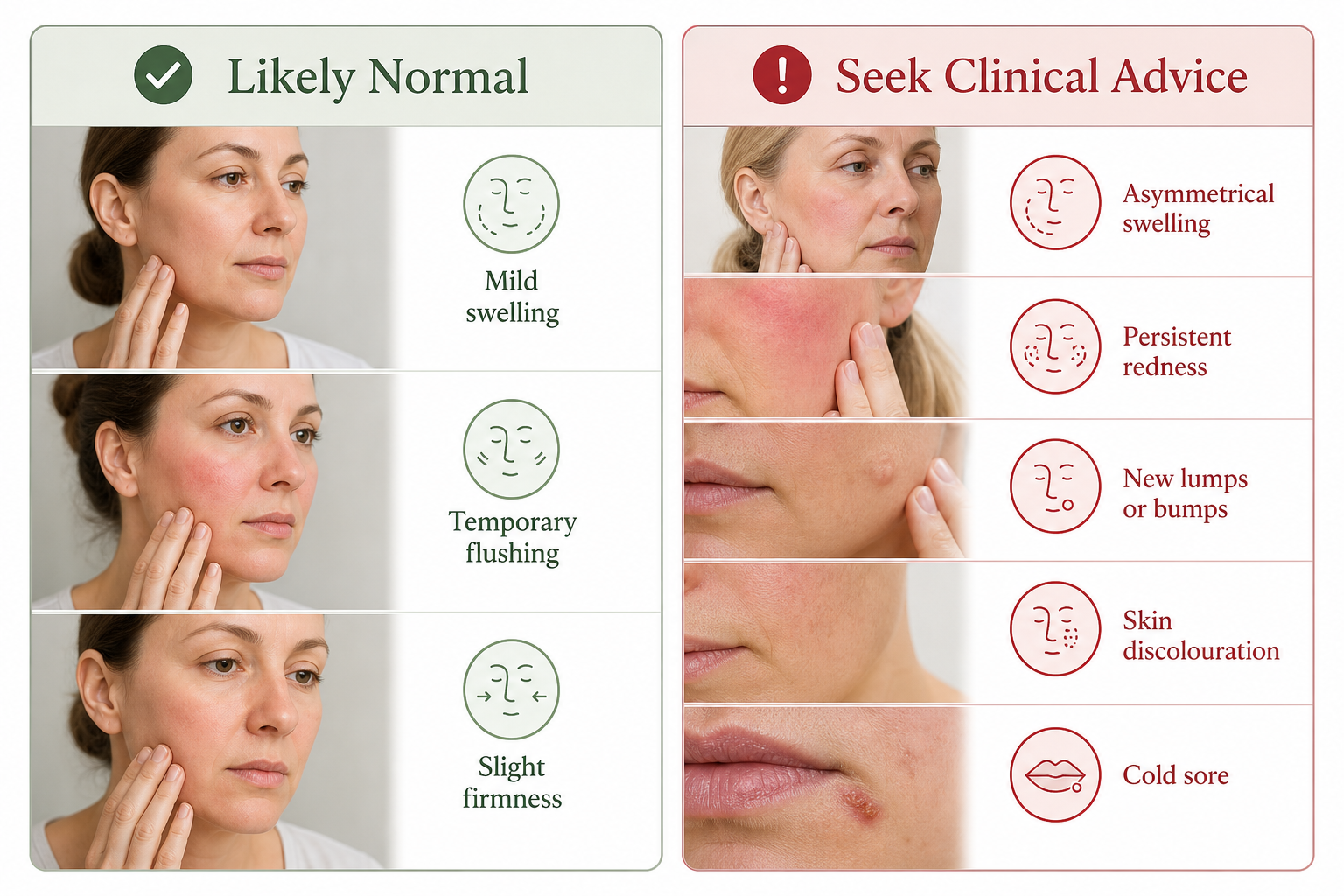
Knowing what to look for after heat exposure helps patients decide when to seek advice and when to monitor and wait. The table below outlines the distinction between expected responses and signs that warrant clinical review.
| Symptom | Likely Normal | Seek Clinical Advice |
|---|---|---|
| Swelling | Mild, symmetrical, resolves within 48–72 hours | Significant, asymmetrical, or worsening after 72 hours |
| Redness / flushing | Temporary, fades within hours of heat exposure | Persistent redness, warmth, or spreading beyond the injection site |
| Bruising | Pre-existing bruise appears slightly darker or larger temporarily | New bruising appearing days after treatment, or bruising that is expanding |
| Texture | Slight firmness or puffiness that settles | New lumps, nodules, or uneven texture not present before heat exposure |
| Skin colour | Temporary flushing | Persistent discolouration, blistering, or dark spots |
| Cold sore (lip area) | N/A | Any tingling, blistering, or cold sore developing after UV exposure — seek antiviral advice promptly |
It is worth noting that vascular occlusion — a rare but serious complication of filler where blood supply to an area is compromised — is not caused by sunbed use, but its symptoms (blanching, severe pain, skin colour changes) should always prompt immediate contact with a medical professional regardless of the cause.
Protecting Your Filler: Practical Aftercare Dos and Don’ts
Good filler aftercare extends beyond the first 48 hours. The following guidance covers the broader post-treatment period and helps protect both the filler result and the surrounding skin.
Do
- Apply a broad-spectrum SPF 30 or SPF 50 daily to all treated areas, even on cloudy days or when indoors near windows.
- Choose a mineral sunscreen containing zinc oxide or titanium dioxide if your skin is sensitive or reactive post-treatment, as these sit on the skin surface rather than being absorbed.
- Use an SPF lip balm to protect lip filler from UV exposure whenever you are outdoors.
- Wear a wide-brimmed hat when spending extended time in direct sunlight.
- Stay well hydrated — hyaluronic acid fillers attract and retain water, and adequate hydration supports both filler performance and skin health.
- Reapply sunscreen every two hours during outdoor activities.
Don’t
- Use sunbeds for at least two weeks after filler, and ideally four weeks.
- Visit saunas, steam rooms, hot tubs, or Turkish baths (hammams) in the first two weeks after treatment.
- Take very hot baths or showers in the first 48 hours.
- Engage in strenuous exercise or hot yoga in the first 24–48 hours, as elevated body temperature and increased blood flow can worsen swelling.
- Sunbathe directly in the first two weeks after treatment.
- Use infrared facial devices or heat-generating aesthetic treatments in the treated area during the settling period without first consulting your practitioner.
Can You Use Self-Tanning Products After Filler?
Self-tanning products — including gradual tanning moisturisers and spray tans — are a practical alternative to sunbeds for patients who want a tanned appearance without UV exposure. Self-tan after filler is generally considered safe once the initial healing period has passed, typically after 48–72 hours for most patients, though waiting a full week is a more cautious approach that reduces the risk of product interacting with any residual sensitivity at injection sites.
When applying self-tan to the face after filler, use a gentle application technique and avoid pressing firmly on treated areas. Patch testing on a small area first is sensible if you have not used the product before. Self-tanning products do not carry the UV radiation or heat risks associated with sunbeds, making them a reasonable option for maintaining a tanned look while protecting your filler investment.
Should You Avoid Sunbeds Before Filler Treatment Too?
Most aftercare discussions focus on what to avoid after filler, but the period immediately before treatment also matters. Using a sunbed in the 24–48 hours before a filler appointment can leave the skin sensitised, mildly inflamed, and more prone to bruising. Sunburned or UV-stressed skin is not an ideal canvas for injectable treatment, and some practitioners will decline to treat skin that appears actively sun-damaged or irritated. If you have a filler appointment planned, avoiding sunbeds for at least 48 hours beforehand is a sensible precaution.
Long-Term Sunbed Use and Filler Longevity
Beyond the immediate post-treatment period, regular sunbed use has implications for how long filler results last. Chronic UV exposure accelerates skin ageing by degrading collagen and elastin, reducing the skin’s structural support. It also contributes to ongoing oxidative stress that may hasten hyaluronic acid breakdown over time. Patients who use sunbeds regularly may find that their filler longevity is shorter than average — not because of a single session, but because the cumulative UV burden creates a less favourable environment for filler to persist.
There is also a broader consideration: dermal filler is typically used to address volume loss, fine lines, and the visible signs of skin ageing. Regular sunbed use actively accelerates the same ageing processes that filler is intended to address. From a practical standpoint, protecting your skin from UV radiation is one of the most effective ways to extend the value of your filler treatment and reduce the frequency with which top-up appointments are needed.
Scheduling Filler Around Holidays and Sunbed Habits
If you have a holiday planned — particularly one involving significant sun exposure — timing your filler appointment thoughtfully can make a meaningful difference to your results. Ideally, filler should be scheduled at least four weeks before a sun-heavy holiday to allow full settling and integration before sustained UV and heat exposure. Scheduling filler immediately before a beach holiday or a period of regular sunbed use is not advisable, as the healing period will coincide with exactly the conditions that should be avoided.
If your holiday is imminent and you are considering filler, discuss the timing honestly with your practitioner. In some cases, it may be better to wait until after you return, when you can follow aftercare guidance properly and give the filler the best chance of settling well.
Frequently Asked Questions
How long after lip filler can I use a sunbed?
Most practitioners advise waiting a minimum of two weeks before using a sunbed after lip filler. A four-week wait is more conservative and is particularly recommended if you bruised significantly or if your lips are still settling. The lips are especially sensitive to heat-induced vasodilation and UV-triggered cold sore reactivation, so erring on the side of caution is worthwhile.
Will a sunbed dissolve my filler?
A single sunbed session is very unlikely to dissolve your filler immediately. The “heat melts filler” idea is an oversimplification. The more accurate concern is that heat worsens swelling and bruising in the short term, and that cumulative UV exposure may accelerate hyaluronic acid breakdown over time, potentially reducing how long your filler lasts. The risk is real but more gradual than the dramatic language sometimes used to describe it.
Can I use a sauna after filler?
Sauna after filler carries the same heat-related risks as sunbed use — vasodilation, increased swelling, and disruption of the healing process. Saunas should be avoided for at least two weeks after filler treatment, and ideally for the full settling period of four weeks. Steam rooms and hot tubs fall into the same category.
What sunscreen should I use after filler?
A broad-spectrum SPF 50 is recommended after filler treatment. Mineral sunscreens containing zinc oxide or titanium dioxide are a good choice for sensitive or recently treated skin, as they provide physical UV protection without the potential for irritation associated with some chemical filter ingredients. For lip filler, an SPF lip balm provides targeted protection for the treated area.
I accidentally used a sunbed two days after filler — what should I do?
Monitor the treated area carefully over the next 48–72 hours. Some additional swelling or redness is likely but should resolve. Keep the area cool, stay hydrated, apply SPF, and avoid further heat exposure. If you notice significant asymmetry, new lumps, persistent inflammation, skin discolouration, or any symptoms that concern you, contact your clinic for a review appointment.
Does UV exposure affect all types of filler equally?
Hyaluronic acid fillers are the most studied in relation to UV and heat exposure, and the evidence for accelerated breakdown with UV radiation relates primarily to HA products. Non-HA fillers such as Sculptra and Radiesse work through different mechanisms, but the general advice to avoid intense heat during the healing period applies regardless of filler type. Speak to your practitioner about specific aftercare for non-HA products.
Protecting Your Filler Results: The Practical Decision
The decision to avoid sunbeds after filler is not about following arbitrary rules — it is about giving your treatment the best possible environment to heal, settle, and last. Heat exposure after dermal filler worsens the short-term healing process, and regular UV radiation may reduce filler longevity over time. Both risks are manageable with straightforward aftercare: a two-to-four-week avoidance period for sunbeds and heat sources, consistent use of broad-spectrum SPF, and honest communication with your practitioner about your lifestyle and any planned sun exposure.
If you are unsure how long to wait based on your specific treatment, the area treated, or how your healing is progressing, your treating practitioner is the right person to ask. A brief follow-up call or message to your clinic is always preferable to guessing — and it ensures that your filler results are protected from the outset.
