

A melasma mustache is a band of brown or grey-brown discoloration that appears across the upper lip, mimicking the shadow of facial hair. It is one of the most common and frustrating presentations of melasma, partly because the upper lip skin is thin, frequently irritated by hair removal, and constantly exposed to sunlight. Understanding what drives this pigmentation — and why it tends to return — is the first step toward choosing a treatment approach that can realistically make a difference.
Key Takeaways
- A melasma mustache is caused by excess melanin production triggered by UV exposure, hormonal fluctuations, and visible light — not by actual hair growth.
- Melasma is a chronic and relapsing condition; treatment reduces pigmentation but does not permanently eliminate the underlying tendency.
- Tinted sunscreen with iron oxides is essential because standard broad-spectrum SPF does not block the visible light wavelengths that trigger melanin in the upper lip area.
- Topical depigmenting agents such as hydroquinone, tranexamic acid, azelaic acid, and kojic acid are first-line treatments, but results typically require 8–12 weeks of consistent use.
- A board-certified dermatologist can confirm the diagnosis, distinguish melasma from post-inflammatory hyperpigmentation, and tailor a maintenance treatment plan to your skin type.
What Is a Melasma Mustache?
The melasma mustache — sometimes called a hormonal mustache or sun mustache — is a specific pattern of upper lip hyperpigmentation caused by overactive melanocytes, the pigment-producing cells in the skin. These cells produce excess melanin in response to UV light, hormonal signals, or heat, depositing flat brown or grey-brown patches across the philtrum and perioral region. The result is a shadow-like discoloration that sits symmetrically across the upper lip and can range from barely noticeable to quite pronounced.
Melasma most commonly follows a centrofacial pattern, affecting the central face including the forehead, nose, cheeks, and upper lip. The upper lip zone is particularly vulnerable because it receives direct sun exposure throughout the day and is often subjected to hair removal methods that can further irritate the skin. Melasma is a benign, cosmetic condition — it carries no health risk — but its visibility in such a prominent facial area makes it a significant concern for many people.
People with Fitzpatrick skin types IV and V (medium-brown to dark skin) are at higher risk of developing melasma and are also more prone to complications from certain treatments, which makes professional assessment especially important in these groups.
What Causes Upper Lip Melasma?
Melasma develops when melanocytes become overactive and produce more pigment than the surrounding skin. Several well-established triggers drive this process, and most people with a melasma mustache have more than one contributing factor.
UV and Visible Light Exposure
Ultraviolet radiation is the most consistent trigger for melasma, but UV light is not the only concern. Visible light — the portion of the spectrum between approximately 400 and 700 nanometres, including high-energy visible (HEV) or blue light — can independently stimulate melanogenesis in people with darker skin tones. This means that standard broad-spectrum sunscreen, which blocks UVA and UVB but not visible light, may be insufficient on its own. Tinted sunscreen with iron oxides provides visible light protection that untinted formulas cannot offer, and clinical evidence supports its use as part of a melasma management plan.
Hormonal Influences
Oestrogen and progesterone sensitise melanocytes to UV stimulation, which is why melasma is strongly associated with pregnancy (sometimes called the mask of pregnancy), oral contraceptive use, and hormone replacement therapy. Thyroid dysfunction has also been linked to melasma in some patients. Hormonal fluctuations do not cause melasma in isolation — sun exposure is still required — but they significantly lower the threshold at which pigmentation develops.
Heat and Inflammation
Heat exposure, including from saunas, hot yoga, and even cooking over a stove, can worsen melasma independently of UV light. Inflammation from skin irritation — including waxing, threading, and tweezing the upper lip — can trigger post-inflammatory hyperpigmentation (PIH), a separate but visually similar condition that is often confused with melasma. Understanding this distinction matters because PIH and melasma respond differently to treatment.
Genetics and Medications
A family history of melasma increases individual risk. Certain medications, including some antibiotics and photosensitising drugs, can also contribute. Identifying and modifying triggers where possible is a meaningful part of any long-term management plan.
Melasma Mustache vs. Post-Inflammatory Hyperpigmentation
One of the most clinically important distinctions for upper lip discoloration is whether the pigmentation is true melasma or post-inflammatory hyperpigmentation (PIH). Both conditions produce brown patches in the same area, but their causes and optimal treatments differ.
True melasma tends to be bilateral and symmetrical, following the centrofacial pattern. It develops gradually in response to sun exposure and hormonal triggers, and it typically has a diffuse, blended border. PIH, by contrast, develops after a specific inflammatory event — in the upper lip area, this is most commonly waxing, threading, or tweezing. PIH patches may be less symmetrical and are more directly linked to the site of irritation.
This distinction matters practically because aggressive treatments aimed at melasma — particularly certain laser procedures and strong chemical peels — can worsen PIH, especially in darker skin tones. If upper lip discoloration followed a hair removal session, it is worth discussing this history with a dermatologist before beginning treatment. Safer hair removal alternatives for melasma-prone skin include depilatory creams and, with appropriate caution, laser hair removal performed by an experienced practitioner.
How Is a Melasma Mustache Diagnosed?
Diagnosis is usually clinical, based on the characteristic appearance and distribution of the pigmentation. A board-certified dermatologist may use dermoscopy — a handheld magnifying device — to examine the pigment pattern more closely. Under dermoscopy, melasma typically shows a pseudoreticular network with perifollicular sparing, which helps distinguish it from other causes of upper lip discoloration such as labial melanotic macules or age spots.
Determining whether melasma is epidermal (superficial), dermal (deeper), or mixed is clinically useful because epidermal melasma generally responds better to topical treatments, while dermal melasma is more resistant and may require a combination approach. A Wood’s lamp examination can help assess pigment depth in some cases, though it is less reliable in darker skin tones.
Topical Treatments for the Melasma Mustache
Topical depigmenting agents are the foundation of melasma treatment. They work by interrupting melanogenesis — the process by which melanocytes produce and transfer pigment — through various mechanisms. Results are gradual; most evidence-based topical treatments require a minimum of 8–12 weeks of consistent use before meaningful improvement becomes visible.
Hydroquinone
Hydroquinone remains the most widely studied depigmenting agent and is considered the gold standard for melasma treatment. It works as a tyrosinase inhibitor, blocking a key enzyme in the melanin production pathway. Over-the-counter formulations contain 2% hydroquinone; prescription-strength formulations reach 4%. The upper lip skin is thinner and more sensitive than other facial areas, so starting with every-other-day application and gradually increasing frequency can help reduce irritation. Hydroquinone should not be used continuously for more than a few months without a break, and it should always be combined with diligent sun protection.
Triple Combination Cream
The triple combination cream — containing hydroquinone, tretinoin, and a low-potency corticosteroid (fluocinolone acetonide) — is the only FDA-approved hydroquinone-containing prescription product for melasma. Tretinoin accelerates skin cell turnover, helping to shed pigmented cells more quickly, while the corticosteroid component reduces inflammation and limits irritation from the other two actives. This combination has demonstrated strong clinical efficacy but requires prescription and medical supervision, particularly given the potential for skin thinning with prolonged corticosteroid use.
Tranexamic Acid
Tranexamic acid (TXA) has emerged as one of the most promising additions to melasma treatment in recent years. It works by inhibiting plasmin, an enzyme that stimulates melanocytes, thereby reducing melanogenesis through a different pathway than hydroquinone. Topical TXA at concentrations of 3–5% has shown meaningful reductions in Melasma Area and Severity Index (MASI) scores in clinical studies. Oral tranexamic acid at 250 mg twice daily has also been studied and shown efficacy, though it carries systemic considerations — including a small risk of thromboembolic events — and should only be used under medical supervision. TXA is particularly useful for patients who cannot tolerate hydroquinone or who need an alternative maintenance agent.
Azelaic Acid, Kojic Acid, and Niacinamide
Azelaic acid (10–20%) acts as both a tyrosinase inhibitor and an anti-inflammatory agent, making it a well-tolerated option for sensitive skin and for patients with concurrent rosacea. Kojic acid at 2% is another tyrosinase inhibitor available in many over-the-counter formulations; it is often combined with other actives for additive effect. Niacinamide (vitamin B3) works differently — it reduces the transfer of melanosomes (pigment packets) from melanocytes to surrounding skin cells rather than blocking melanin production directly. Niacinamide is notably non-irritating and can be layered with other actives, making it a practical addition to a melasma skincare routine.
Vitamin C, Arbutin, Cysteamine, and Thiamidol
Vitamin C (ascorbic acid) functions as both an antioxidant and a tyrosinase inhibitor, and it may help neutralise free radical damage from UV exposure. Arbutin, a naturally derived compound, also inhibits tyrosinase and is available in many cosmeceutical formulations. Cysteamine 5% cream is a newer option with clinical evidence suggesting efficacy comparable to kojic acid, with a generally acceptable tolerability profile. Thiamidol is an emerging depigmenting agent with early clinical data showing meaningful MASI score reductions; it is positioned as a potential alternative to hydroquinone for patients seeking non-prescription options, though long-term evidence is still developing.
In-Office Treatments for Upper Lip Melasma
Professional treatments can accelerate pigment clearance and address melasma that has not responded adequately to topical therapy alone. They are most effective when combined with a consistent topical regimen and strict sun protection, and they are not a substitute for ongoing maintenance treatment.
Chemical Peels
Chemical peels promote skin cell turnover and help remove superficial pigmented cells. For the upper lip area, mandelic acid peels (30–45%) and glycolic acid peels are commonly used because they offer meaningful exfoliation with a relatively manageable irritation profile. Salicylic acid (10–20%) and lactic acid peels are also used, particularly for patients with more sensitive skin. Multiple sessions spaced several weeks apart are typically required. Cosmelan and Mesopeel depigmentation systems combine chemical exfoliation with targeted depigmenting actives and have shown clinical utility for melasma, though they require careful post-treatment management.
Chemical peels carry a risk of post-inflammatory hyperpigmentation, particularly in Fitzpatrick skin types IV–VI. This risk is not a contraindication but does require that the treating practitioner adjust peel strength and frequency accordingly. Attempting strong chemical peels at home on the upper lip is not advisable.
Microneedling
Microneedling creates controlled micro-injuries in the skin that stimulate collagen production and, when combined with a depigmentation serum, can enhance the delivery of active ingredients into the dermis. Some clinical evidence supports microneedling as an adjunct to topical treatment for melasma, though results vary and the procedure carries a risk of PIH if performed too aggressively or too frequently. It is generally considered a second-line option rather than a standalone treatment for the melasma mustache.
Laser and Light-Based Treatments
Laser treatment for melasma requires careful patient selection and practitioner expertise. Fractional lasers and devices such as the Aerolase laser have been used with some success, but melasma is notoriously unpredictable in its response to laser energy — heat from the laser can paradoxically stimulate melanocytes and worsen pigmentation. The risk of PIH from laser treatment is substantially higher in darker Fitzpatrick skin types, and this risk must be weighed carefully against potential benefit. Photofacials and IPL (intense pulsed light) carry similar considerations. Laser and light-based treatments are generally reserved for cases that have not responded to topical and chemical peel approaches, and they should be performed by practitioners experienced in treating melasma across a range of skin tones.
The Role of Sun and Visible Light Protection
Sun protection is not optional in melasma management — it is the single most important factor in preventing recurrence and allowing other treatments to work. Without consistent photoprotection, topical and in-office treatments will have limited and short-lived effect.
A broad-spectrum SPF 30–50+ sunscreen applied every morning is the baseline requirement. However, for melasma specifically, the choice of sunscreen matters beyond the SPF number. Standard chemical and mineral sunscreens block UVA and UVB radiation but do not meaningfully block visible light. Tinted sunscreen with iron oxides — listed on the ingredient label as CI 77491, CI 77492, or CI 77499 — provides visible light protection that untinted formulas cannot offer. Clinical trial data supports the superiority of iron oxide-containing tinted sunscreens over untinted broad-spectrum sunscreens for melasma outcomes. The tint must be present in sufficient concentration to be visible on the skin to provide meaningful visible light protection.
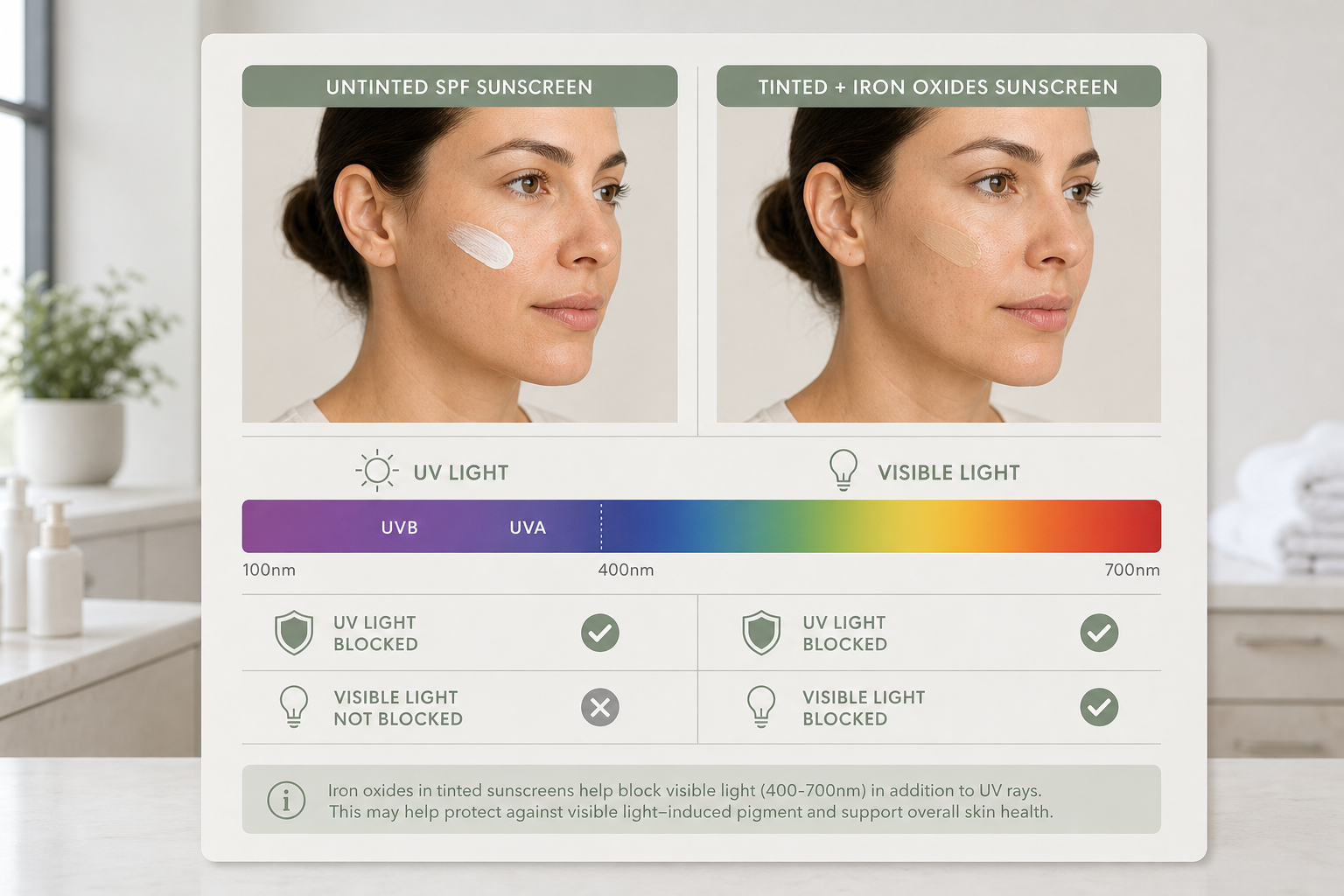
Reapplication throughout the day, particularly after eating or drinking, is important for the upper lip area. Wide-brimmed hats and seeking shade during peak UV hours (typically 10am–4pm) add meaningful additional protection. Reducing screen time or using blue-light-filtering screen protectors may offer marginal benefit for those concerned about HEV light exposure, though the clinical evidence for this specific measure in melasma is less established than for UV protection.
Building a Daily Skincare Routine for the Melasma Mustache
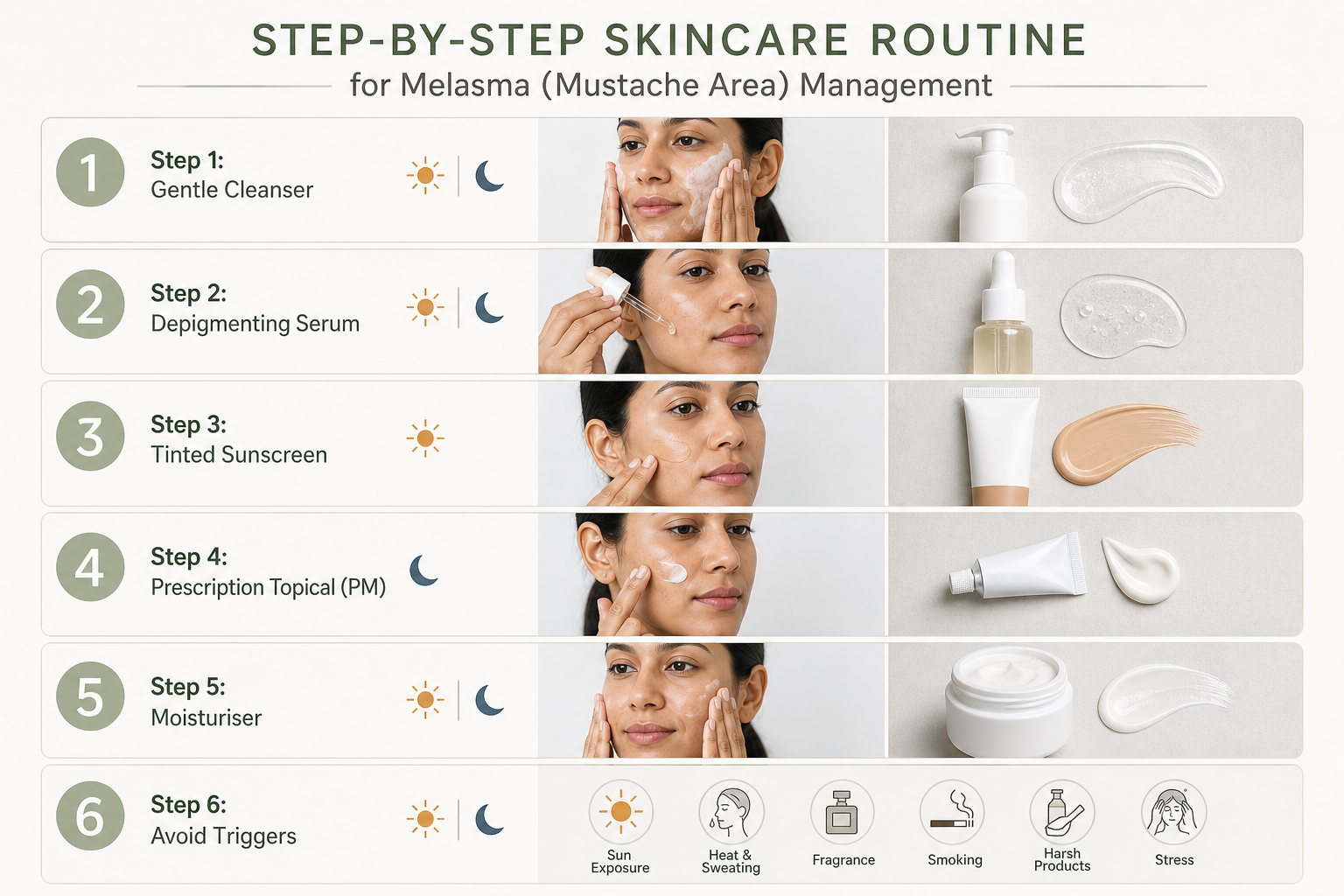
- Gentle cleanser: Use a mild, non-stripping cleanser morning and evening. Avoid scrubs, exfoliating brushes, or anything that causes friction on the upper lip area.
- Targeted depigmenting serum: Apply a serum containing tranexamic acid, niacinamide, vitamin C, or azelaic acid in the morning. These actives are generally well tolerated and compatible with daily use.
- Tinted mineral sunscreen with iron oxides: Apply generously to the entire face, including the upper lip, every morning. Reapply after meals and throughout the day as needed.
- Prescription topical at night: If prescribed, apply hydroquinone, tretinoin, or triple combination cream to the upper lip area in the evening. Begin with every-other-day application to assess tolerance, then increase frequency as directed.
- Moisturiser: A simple, fragrance-free moisturiser helps maintain the skin barrier, which is especially important when using retinoids or hydroquinone on the thin upper lip skin.
- Avoid known triggers: Minimise heat exposure, reconsider oral contraceptives if clinically appropriate (in discussion with your doctor), and switch from waxing or threading to gentler hair removal methods.
Covering the Melasma Mustache While Treating It
Cosmetic coverage is a practical bridge strategy while waiting for topical treatments to take effect. A peach or orange colour-correcting primer applied to the upper lip before foundation neutralises the grey-brown tones of melasma pigmentation. Tinted sunscreen with iron oxides can serve double duty as both photoprotection and light coverage, reducing the number of products needed. Foundation or BB cream formulated with iron oxides provides additional coverage while contributing to visible light protection. Avoiding heavy powder application directly over the upper lip can prevent the discoloration from appearing more pronounced in certain lighting conditions.
Melasma Mustache in Men
Although melasma is far more common in women, men do develop upper lip hyperpigmentation from the same mechanisms — UV exposure, genetic predisposition, and occasionally hormonal factors. In men, the melasma mustache may be dismissed as a natural shadow from facial hair, which can delay diagnosis and treatment. The same treatment principles apply: sun protection, topical depigmenting agents, and professional assessment when needed. Men may find that certain topical formulations interact with shaving routines, so discussing product application timing with a dermatologist is worthwhile.
Realistic Expectations and Long-Term Management
Melasma is a chronic and relapsing condition. There is currently no treatment that permanently eliminates the underlying tendency for melanocytes to overproduce pigment in response to triggers. This does not mean treatment is futile — meaningful lightening is achievable for most patients — but it does mean that maintenance treatment and ongoing sun protection are necessary to sustain results.
Most topical treatments require a minimum of 8–12 weeks before visible improvement appears, and full results may take longer. Patients who discontinue treatment and sun protection after initial improvement frequently see pigmentation return, particularly after sun exposure or hormonal changes. A realistic long-term plan involves a maintenance phase — often a lower-intensity version of the active treatment phase — combined with consistent photoprotection throughout the year, not just in summer.
The MASI score (Melasma Area and Severity Index) is a clinical tool used in research and practice to track treatment response objectively. Discussing MASI-based progress with a dermatologist can help set realistic benchmarks and guide decisions about when to adjust the treatment approach.
Frequently Asked Questions
Will a melasma mustache go away on its own?
It may fade partially if the triggering factor — such as pregnancy or oral contraceptive use — is removed and sun exposure is minimised. However, melasma rarely resolves completely without active treatment, and it commonly returns with sun exposure even after fading. Most people benefit from a structured treatment plan rather than waiting for spontaneous resolution.
Is the melasma mustache the same as a hormonal mustache?
The terms are often used interchangeably. A hormonal mustache refers to upper lip discoloration driven primarily by hormonal fluctuations — oestrogen and progesterone sensitising melanocytes to UV light. A sun mustache emphasises the UV trigger. In practice, most cases involve both hormonal and UV components, and the treatment approach is the same regardless of which term is used.
Can I use hydroquinone on my upper lip every day?
The upper lip skin is thinner and more sensitive than other facial areas, so daily application of hydroquinone — particularly at 4% — can cause irritation, dryness, or rebound hyperpigmentation if the skin barrier is disrupted. Starting with every-other-day application and increasing frequency gradually, under dermatologist guidance, is a more cautious and often more effective approach.
Does waxing the upper lip make melasma worse?
Waxing and threading can trigger post-inflammatory hyperpigmentation (PIH) in the upper lip area, which may worsen or mimic melasma. If you are prone to upper lip discoloration, switching to depilatory creams or discussing laser hair removal with a qualified practitioner may reduce this risk. Laser hair removal on the upper lip requires careful settings to avoid triggering PIH, particularly in darker skin tones.
How long does it take for upper lip melasma treatment to work?
Topical treatments generally require 8–12 weeks of consistent use before meaningful improvement is visible. In-office treatments such as chemical peels may produce faster results but typically require multiple sessions. Melasma is a long-term condition, and most patients need ongoing maintenance treatment to sustain improvement.
Is laser treatment safe for a melasma mustache?
Laser treatment for melasma carries a meaningful risk of worsening pigmentation, particularly in Fitzpatrick skin types IV–VI, because heat from the laser can stimulate melanocytes. It is generally reserved for cases that have not responded to topical and chemical peel approaches, and it should only be performed by practitioners experienced in treating melasma. A thorough consultation and patch testing are advisable before committing to laser treatment for upper lip melasma.
What sunscreen should I use for a melasma mustache?
A tinted broad-spectrum sunscreen containing iron oxides (CI 77491, CI 77492, or CI 77499) is the most appropriate choice. Standard untinted sunscreens block UV radiation but not visible light, which is an independent trigger for melasma. Look for SPF 30–50+, zinc oxide at 15% or higher, and a visible tint that confirms sufficient iron oxide concentration. Reapply throughout the day, especially after eating or drinking.
Getting the Right Diagnosis and Treatment Plan
Upper lip hyperpigmentation has several possible causes — true melasma, post-inflammatory hyperpigmentation from hair removal, labial melanotic macules, or simply the shadow of fine hair — and the treatment approach differs meaningfully between them. A board-certified dermatologist can confirm the diagnosis, assess pigment depth, evaluate your Fitzpatrick skin type, and design a treatment plan that balances efficacy with the specific sensitivities of the upper lip area.
If you have been managing upper lip discoloration with over-the-counter products without satisfactory results, or if the pigmentation has worsened despite sun protection, a professional consultation is a practical next step. A dermatologist can also advise on whether prescription options such as the triple combination cream or oral tranexamic acid may be appropriate for your situation, and can monitor for side effects that are difficult to self-assess. Melasma is manageable — but it responds best to a structured, evidence-informed approach rather than trial and error with individual products.
