

Key Takeaways
- Non-surgical fat removal treatments target subcutaneous fat cells beneath the skin using energy-based or injectable methods, without incisions or general anaesthesia.
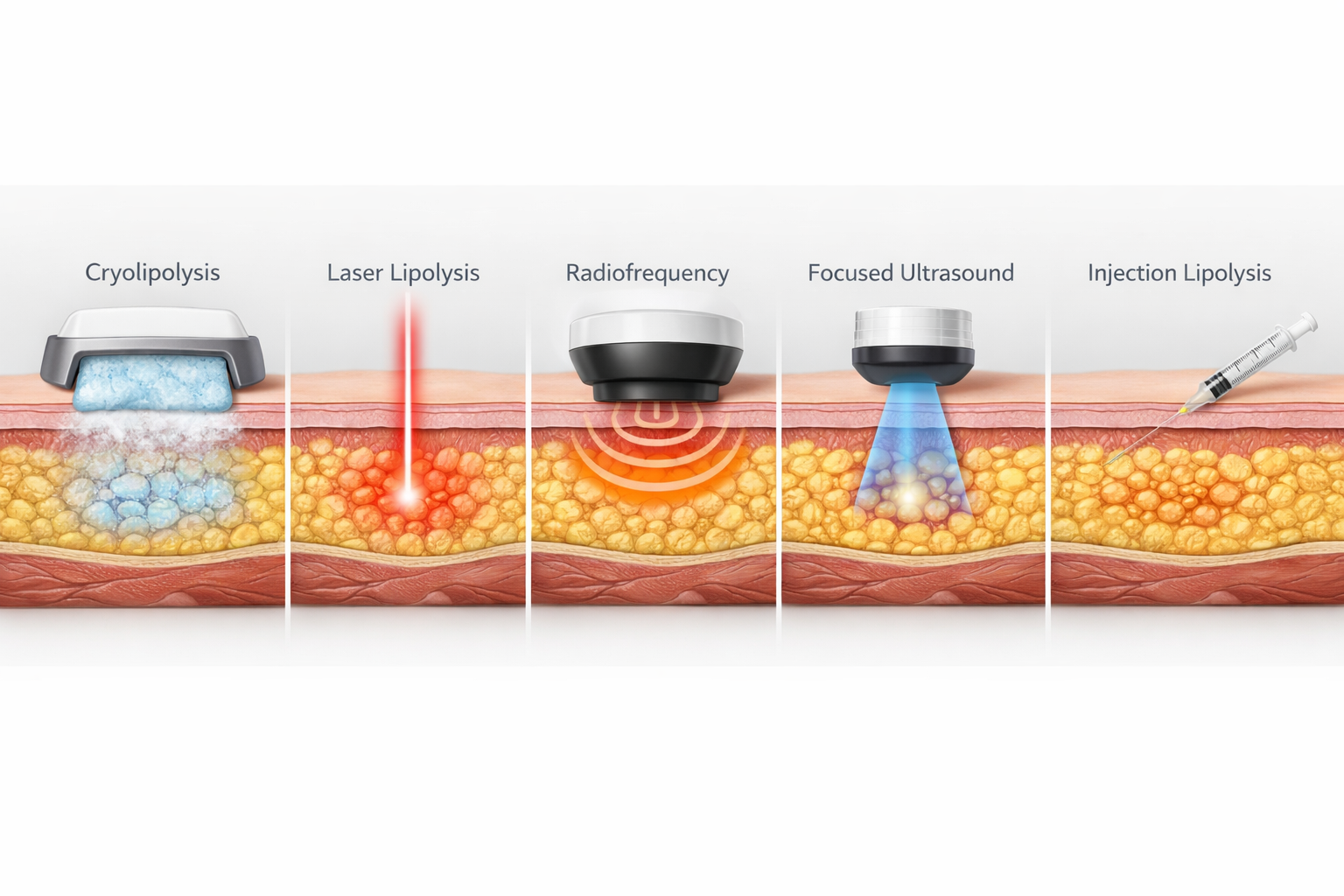
- The main treatment categories include cryolipolysis (fat freezing), laser lipolysis, radiofrequency lipolysis, focused ultrasound, and injection lipolysis — each using a different mechanism to reduce localised fat.
- These treatments are body contouring tools, not weight-loss solutions; they work best on stubborn pockets of fat in people who are already close to their ideal body weight.
- Results appear gradually over weeks to months as the body clears destroyed fat cells through the lymphatic system, and multiple sessions may be needed depending on the treatment area.
- A consultation with a qualified practitioner is essential to confirm suitability, discuss realistic expectations, and choose the most appropriate approach.
What Is Non-Surgical Fat Removal?
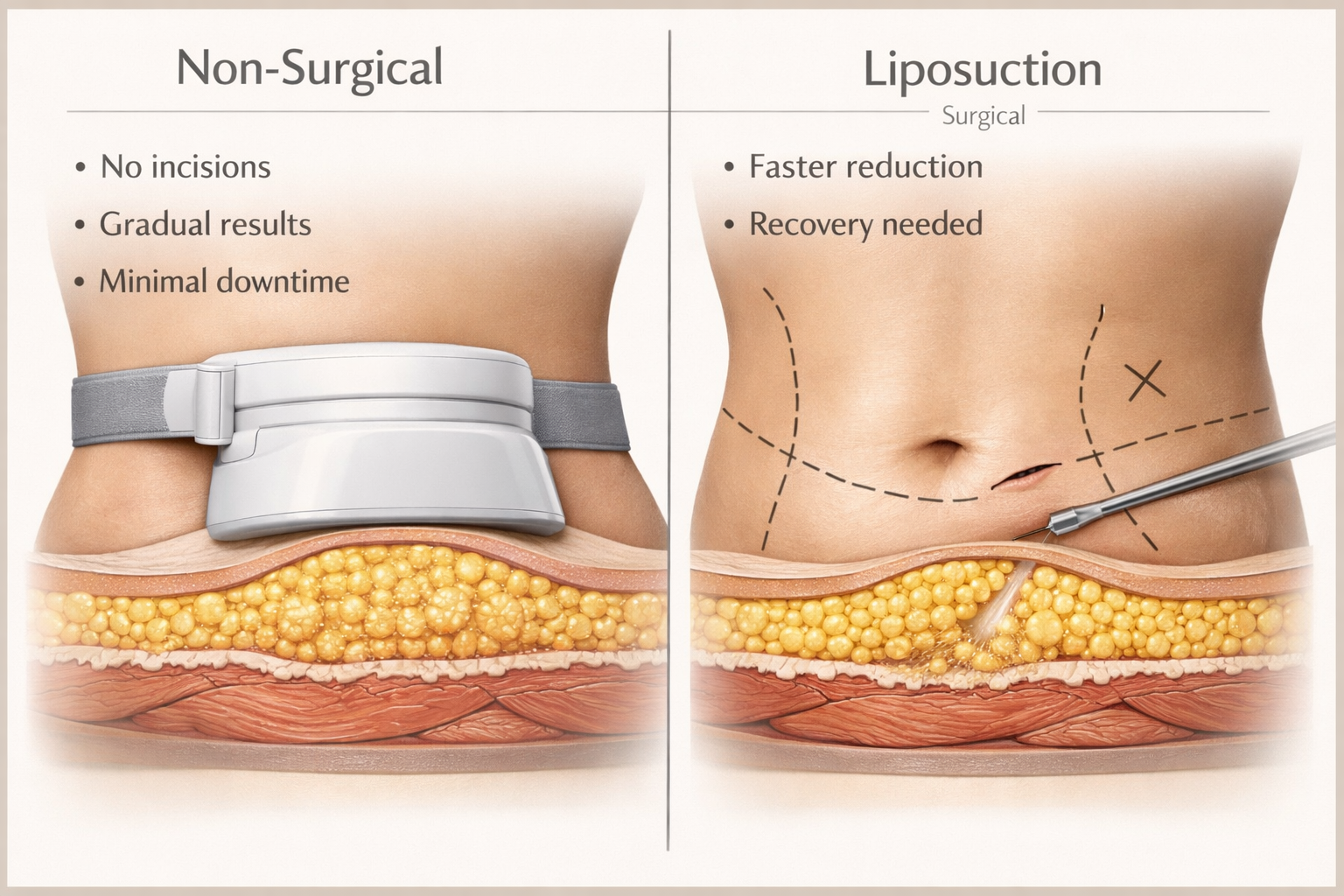
Non-surgical fat removal refers to a group of non-invasive body contouring procedures that reduce subcutaneous fat cells — the fat stored just beneath the skin — without surgery, incisions, or general anaesthesia. Unlike liposuction, which physically removes fat cells during a surgical procedure, non-surgical methods use energy (cold, heat, ultrasound, or radiofrequency) or injectable compounds to damage or destroy fat cells, which the body then gradually processes and eliminates through the lymphatic system.
These treatments are designed for body sculpting rather than weight management. They are most effective on localised deposits of fat that remain despite a healthy diet and regular exercise — areas such as the lower abdomen, flanks, double chin, inner thighs, or upper arms. Candidates who are already near their ideal body weight tend to achieve the most noticeable improvements. Non-surgical fat removal is not a treatment for obesity and will not produce the dramatic volume reduction that liposuction can achieve in a single session.
How Non-Surgical Fat Removal Works: The Science
Different treatment modalities use different physical or chemical mechanisms, but most share a common endpoint: the destruction of subcutaneous fat cells through a process called apoptosis, or programmed cell death. Once fat cells are damaged beyond repair, the body recognises them as cellular debris and sends immune cells to clear the area. The broken-down contents of the fat cells are then transported through the lymphatic system and eliminated over the following weeks and months.
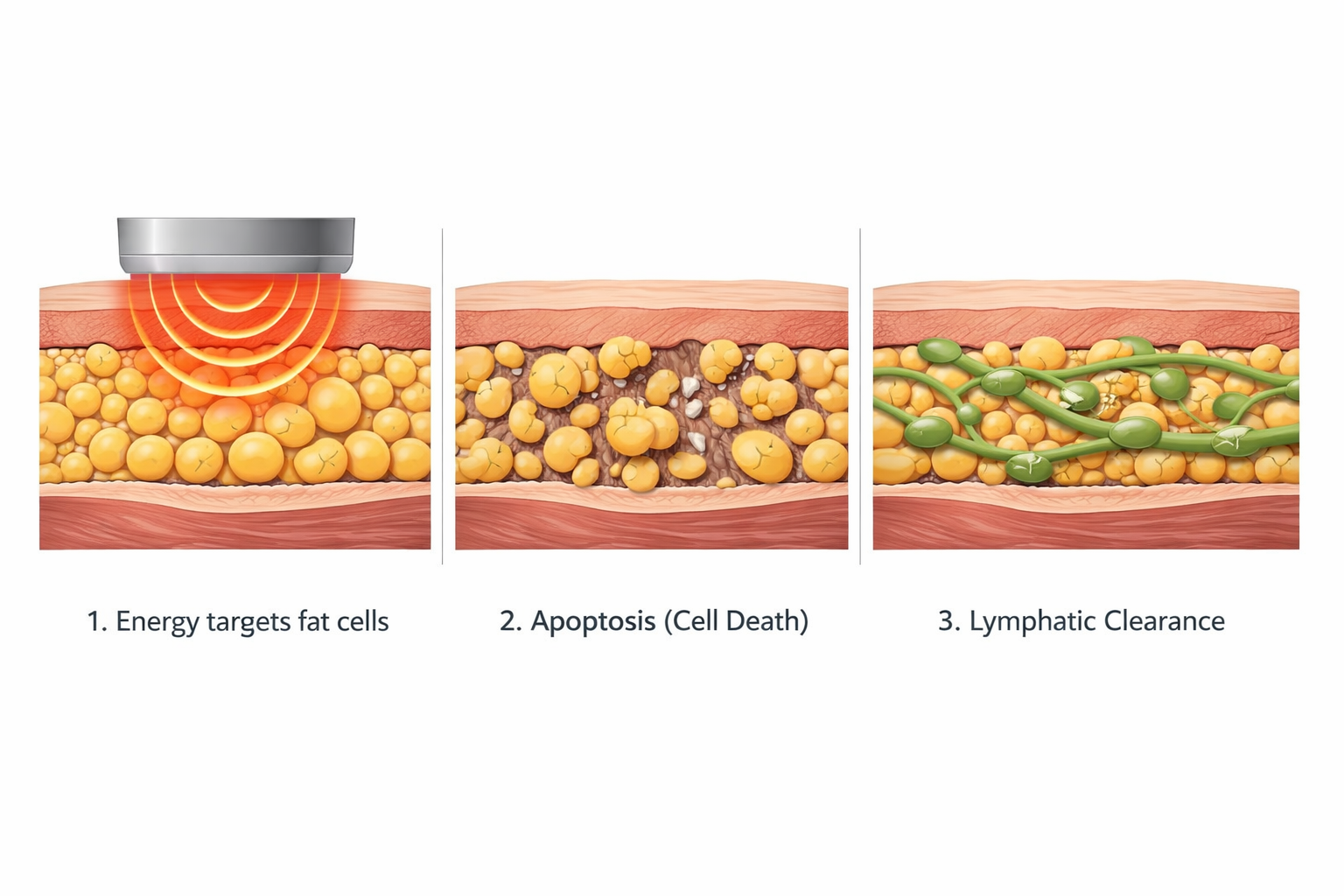
This clearance process is why results from non-invasive body contouring appear gradually rather than immediately. Most patients begin noticing changes at around four to eight weeks, with full results typically visible at two to three months after treatment. Because the fat cells themselves are destroyed rather than simply shrunk, the volume reduction in the treated area is considered long-lasting — provided the patient maintains a stable weight. Significant weight gain can cause remaining fat cells elsewhere in the body to enlarge, which may affect the overall result.
Main Types of Non-Surgical Fat Removal
Cryolipolysis (Fat Freezing)
Cryolipolysis is one of the most studied non-invasive fat reduction methods available. The treatment uses controlled cooling to lower the temperature of subcutaneous fat cells to a point where they crystallise and undergo apoptosis, while the surrounding skin, nerves, and other tissues remain unharmed. CoolSculpting is the most widely recognised FDA-cleared cryolipolysis device, and newer applicator designs such as CoolSculpting Elite allow multiple treatment areas to be addressed simultaneously.
During a session, an applicator is placed over the target area and suction draws the tissue between cooling panels. The area becomes numb within minutes as the temperature drops. Each applicator cycle typically lasts between 35 and 60 minutes depending on the device and the area being treated. Common treatment areas include the abdomen, flanks (love handles), inner and outer thighs, upper arms, bra fat, and the double chin using a smaller applicator. A rare but recognised side effect specific to cryolipolysis is paradoxical adipose hyperplasia — a condition in which the treated area develops increased firmness and volume rather than decreasing. This complication appears to be uncommon, but patients should be informed of it during the consultation process.
Laser Lipolysis
Laser lipolysis uses targeted laser energy to heat subcutaneous fat cells to a temperature that causes thermal disruption and triggers apoptosis. SculpSure is an FDA-cleared laser lipolysis device that delivers 1060 nm wavelength laser energy through a flat applicator held against the skin. A typical SculpSure session lasts around 25 minutes and can treat multiple areas simultaneously using several applicators.
Patients generally experience alternating sensations of warmth and cooling during treatment, as the device includes an integrated cooling mechanism to keep the skin surface comfortable while heat penetrates to the fat layer beneath. Laser lipolysis is suitable for the abdomen, flanks, back, inner thighs, and outer thighs. As with cryolipolysis, results develop gradually as the lymphatic system clears the affected fat cells, with visible improvement typically emerging over eight to twelve weeks.
Radiofrequency Lipolysis
Radiofrequency lipolysis delivers electromagnetic energy that generates heat within the subcutaneous fat layer, causing fat cell death while leaving surrounding tissues intact. Some radiofrequency devices are non-contact — meaning they deliver energy from a distance above the skin — making them suitable for larger treatment areas. Vanquish is an example of a non-contact radiofrequency device used primarily for the abdomen and flanks.
Emsculpt Neo combines radiofrequency energy with high-intensity focused electromagnetic (HIFEM) technology in a single treatment. The radiofrequency component targets subcutaneous fat cells, while HIFEM energy simultaneously induces powerful involuntary muscle contractions that may improve muscle tone and definition. This dual mechanism makes Emsculpt Neo a distinct option for patients interested in both fat reduction and muscle conditioning in the same treatment area. Several sessions are typically required to achieve the desired result, and individual response varies.
Focused Ultrasound Fat Reduction
Focused ultrasound treatments direct sound wave energy precisely into the subcutaneous fat layer to disrupt fat cell membranes through rapid pressure changes. Liposonix and UltraShape are two devices that use different ultrasound approaches — Liposonix uses high-intensity focused ultrasound (HIFU) to create a defined thermal zone within the fat, while UltraShape uses pulsed focused ultrasound energy. Both aim to cause fat cell apoptosis while leaving adjacent tissue undamaged.
Focused ultrasound treatment areas typically include the abdomen and flanks. Some patients find ultrasound-based treatments uncomfortable due to the intense localised energy delivery, and practitioners should discuss what to expect in terms of sensation during the appointment. Results follow a similar timeline to other modalities, with gradual improvement over two to three months.
Injection Lipolysis
Injection lipolysis involves injecting a solution directly into a localised fat deposit to chemically break down fat cell membranes. Kybella (deoxycholic acid) is an FDA-approved injectable treatment specifically indicated for reducing submental fat — the fat beneath the chin that creates the appearance of a double chin. Deoxycholic acid is a naturally occurring bile acid that disrupts fat cell membranes on contact, leading to cell death and subsequent clearance by the body.
Kybella is administered in a series of small injections across the treatment area during an appointment that typically takes 15 to 20 minutes. Most patients require between two and four treatment sessions, spaced at least four weeks apart. Swelling, bruising, and temporary numbness beneath the chin are common after each session and can be pronounced for several days. Because Kybella is a site-specific injectable, it is not suitable for large areas of the body — its approved use is currently limited to the submental area.
Low-Level Laser Therapy and Red Light Treatments
Low-level laser therapy (LLLT) and related red light devices use low-intensity light energy at specific wavelengths to temporarily disrupt the membranes of fat cells, causing them to release some of their contents. Unlike the higher-energy laser devices used in laser lipolysis, LLLT does not destroy fat cells outright. Devices such as UltraSlim are marketed in this category. The evidence base for LLLT as a standalone fat reduction approach is less robust than for cryolipolysis or laser lipolysis, and any results achieved tend to be modest. Patients considering these options should ask about the clinical evidence specific to the device being proposed.
Non-Surgical Fat Removal vs. Liposuction
| Factor | Non-Surgical Fat Removal | Liposuction |
|---|---|---|
| Procedure type | Non-invasive or minimally invasive | Surgical |
| Anaesthesia | None required | Local or general anaesthesia |
| Fat reduction per session | Typically up to 20–25% in treated area | More significant volume reduction possible |
| Downtime | Minimal to none | Days to weeks of recovery |
| Results timeline | Gradual; 2–3 months | Visible sooner; full result after swelling resolves |
| Scarring | None | Small incision marks |
| Number of sessions | Often multiple sessions needed | Usually one procedure |
| Best for | Localised, modest fat pockets | Larger or multiple areas, more significant reduction |
| Risk profile | Generally lower; no surgical risks | Surgical risks apply |
Non-surgical fat removal offers a meaningful advantage for patients who want to avoid surgical risks, anaesthesia, and recovery time. However, liposuction remains capable of producing more substantial fat volume reduction in a single procedure, and a board-certified cosmetic surgeon can help determine which approach aligns with a patient’s goals and anatomy.
Who May Be a Suitable Candidate?
Non-invasive body contouring treatments are generally most effective for adults who are already close to their ideal body weight — typically within approximately 10 to 15 pounds of their target — but who have one or more stubborn pockets of fat that have not responded to diet and exercise. Good skin elasticity in the treatment area is also a helpful factor, as it allows the skin to conform to the reduced fat volume after treatment.
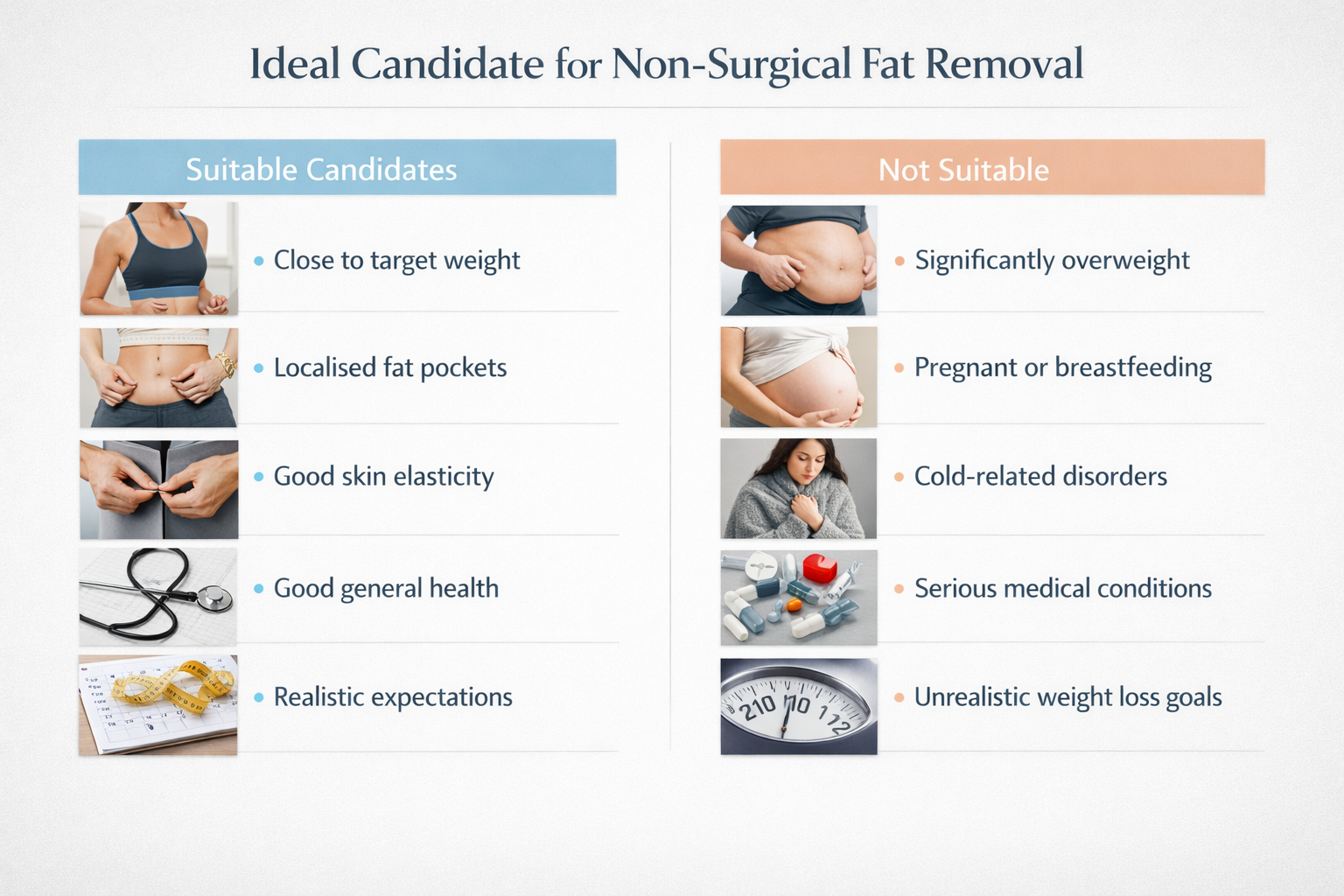
Candidates should be in good general health without active infections, inflammatory skin conditions, or implanted electronic devices near the planned treatment area. Pregnancy and breastfeeding are contraindications for most of these treatments. Patients with certain cold-related disorders such as cryoglobulinaemia or cold agglutinin disease should not undergo cryolipolysis. For Kybella, the presence of infections or conditions affecting the submental area would need to be assessed before treatment.
Non-surgical fat removal is not appropriate as a weight-loss strategy. Patients with a high body mass index who are significantly above a healthy weight range are unlikely to achieve satisfying results from these treatments alone, and a different approach to health and weight management would be more appropriate to discuss with a medical professional.
Realistic Results and Limitations
Published clinical data for established devices such as cryolipolysis and laser lipolysis suggest that a single treatment session may reduce fat in the treated area by approximately 20 to 25 percent. However, individual results vary considerably based on the treatment area, the amount of subcutaneous fat present, the device used, and how many sessions are completed. Some patients achieve noticeable improvement after one session, while others may require two or three sessions in the same area to reach their goal.
The changes produced by non-surgical fat removal are body contouring improvements — a smoother, slimmer contour in a targeted area — rather than a transformation in overall body weight or composition. Results photographs and patient testimonials can be helpful for setting expectations, but they reflect individual outcomes and should not be taken as a guarantee of any specific result. A realistic pre-treatment conversation about expected improvement, number of sessions, and cost is an important part of the consultation process.
Risks and Side Effects
Non-surgical fat removal treatments carry a lower overall risk profile than surgical alternatives, but they are not without potential side effects. The most commonly reported short-term effects across all energy-based modalities include temporary redness, swelling, tenderness, and numbness in the treatment area. These typically resolve within a few days to a few weeks depending on the treatment type and the individual patient’s response.
Cryolipolysis carries a specific rare risk of paradoxical adipose hyperplasia — a condition in which the treated fat tissue enlarges and hardens rather than reducing. This is an uncommon complication, but it is important for prospective patients to understand before proceeding. Injection lipolysis with Kybella typically causes more pronounced swelling and bruising under the chin following each session, which can affect appearance for several days. Any treatment delivering heat energy to the skin surface carries a theoretical risk of burns or blistering if not performed correctly, which underlines the importance of choosing a trained and experienced provider.
How to Choose a Provider
The safety and outcome of any non-surgical fat removal treatment depends significantly on the provider’s training, the quality of the device being used, and the thoroughness of the pre-treatment assessment. When evaluating a clinic, it is reasonable to ask whether the practitioner performing the treatment has specific training and experience with the device, whether the device is an FDA-cleared treatment or carries equivalent regulatory approval in the relevant country, and whether a full medical consultation is carried out before treatment begins.
Consultations should include a discussion of the patient’s medical history, current medications, and any contraindications, as well as an honest assessment of the likely degree of improvement and the number of sessions that may be required. Red flags include clinics that guarantee specific results, offer very heavily discounted packages without proper assessment, or use devices whose regulatory status is unclear. A consultation with a board-certified cosmetic surgeon or a medically qualified aesthetics practitioner provides a higher standard of clinical oversight, particularly for patients considering multiple modalities or combination approaches.
Combining Treatments for Enhanced Results
Some practitioners offer combination approaches that pair fat reduction with complementary treatments. Emsculpt Neo is a notable example of a device that combines radiofrequency lipolysis with HIFEM muscle stimulation in a single session, addressing both subcutaneous fat and the underlying muscle layer simultaneously. Other clinics may sequence treatments — for example, using cryolipolysis to reduce fat volume and subsequently addressing skin laxity with a skin-tightening radiofrequency or ultrasound procedure.
Combining treatments may be appropriate for patients with multiple concerns in the same area, but it adds cost and requires careful planning to avoid over-treating the tissue. Any combination plan should be developed by a qualified practitioner based on an individual assessment rather than a generic protocol.
Frequently Asked Questions
Is non-surgical fat removal permanent?
The fat cells destroyed during treatment do not regenerate, so the reduction in fat cell number in the treated area can be considered long-lasting. However, remaining fat cells in the body can enlarge with weight gain, which may diminish the result over time. Maintaining a stable weight through diet and exercise helps preserve the outcome.
How many sessions will I need?
This depends on the treatment type, the size of the area being treated, the amount of fat present, and the result the patient wants to achieve. Some patients see satisfying improvement after a single session; others may benefit from two or three sessions in the same area. A practitioner should provide a realistic estimate during the consultation rather than committing to an exact number without assessing the patient.
Does non-surgical fat removal hurt?
Sensation during treatment varies by modality. Cryolipolysis initially produces an intense cold sensation and suction pressure, followed by numbness as the area becomes cold. Laser lipolysis involves alternating warmth and cooling. Focused ultrasound can produce sharp or deep pressure sensations during delivery. Injection lipolysis involves the discomfort of multiple small needle injections and typically causes significant swelling afterwards. Most patients tolerate these treatments without sedation or anaesthesia.
When will I see results?
Because fat cell clearance depends on the lymphatic system processing cellular debris, results appear gradually. Most patients begin to notice changes at around four to eight weeks, with the most visible improvement appearing at two to three months after each session. This timeline is normal and not a sign that treatment has not worked.
Can I return to normal activities the same day?
Most non-surgical fat removal treatments involve minimal downtime, and the majority of patients return to normal activities the same day. Some temporary soreness, redness, or swelling in the treatment area is common, but this rarely prevents daily activity. Kybella is an exception — submental swelling after each injection session can be visible and uncomfortable for several days.
Are these treatments suitable for large-scale fat reduction?
Non-surgical treatments are designed for localised body contouring rather than large-volume fat reduction. Patients looking for significant overall fat removal, or those who are substantially above a healthy weight, are unlikely to achieve their goals through non-invasive methods alone and should speak with a medical professional about a more comprehensive approach.
Deciding Whether Non-Surgical Fat Removal Is Right for You
Non-surgical fat removal covers a genuinely diverse range of technologies, each with different mechanisms, appropriate treatment areas, evidence levels, and patient profiles. For someone close to their ideal body weight with one or more stubborn pockets of fat that have resisted diet and exercise, one or more of these treatments may offer a meaningful improvement in body contour with minimal downtime and no surgical risk. The gradual nature of results, the potential need for multiple sessions, and the importance of weight maintenance are all relevant factors to weigh against those benefits.
No single treatment is the right choice for every patient. Cryolipolysis and laser lipolysis have the most established evidence bases among energy-based devices. Kybella has a specific and well-defined role for submental fat. Emsculpt Neo offers a dual-action option for patients interested in both fat reduction and muscle conditioning. Less established modalities such as low-level laser therapy warrant a careful evidence-based discussion before committing to a course of treatment.
A consultation with a qualified and experienced practitioner — ideally one who can offer more than one treatment option — is the most reliable way to identify which approach, if any, is appropriate for your specific anatomy, goals, and health profile. Bringing a clear list of questions about the device’s regulatory status, the expected number of sessions, realistic improvement, and possible side effects will help you make a well-informed decision.
