

Key Takeaways
- Cheek lift filler is a non-surgical, minimally invasive treatment that uses injectable dermal fillers to restore lost volume, enhance cheekbone projection, and lift the mid-face.
- Hyaluronic acid-based fillers such as Juvederm Voluma and Restylane Lyft are most commonly used due to their higher viscosity and ability to provide structural support.
- Results are typically visible immediately and may last between 12 and 24 months depending on the product used and individual factors.
- The procedure carries real risks — including bruising, asymmetry, and rare but serious vascular complications — and should only be performed by a qualified aesthetic practitioner.
- A cheek lift with fillers is not a replacement for surgery in cases of significant skin laxity; a clinical assessment is essential to determine the right approach.
What Is a Cheek Lift with Filler?
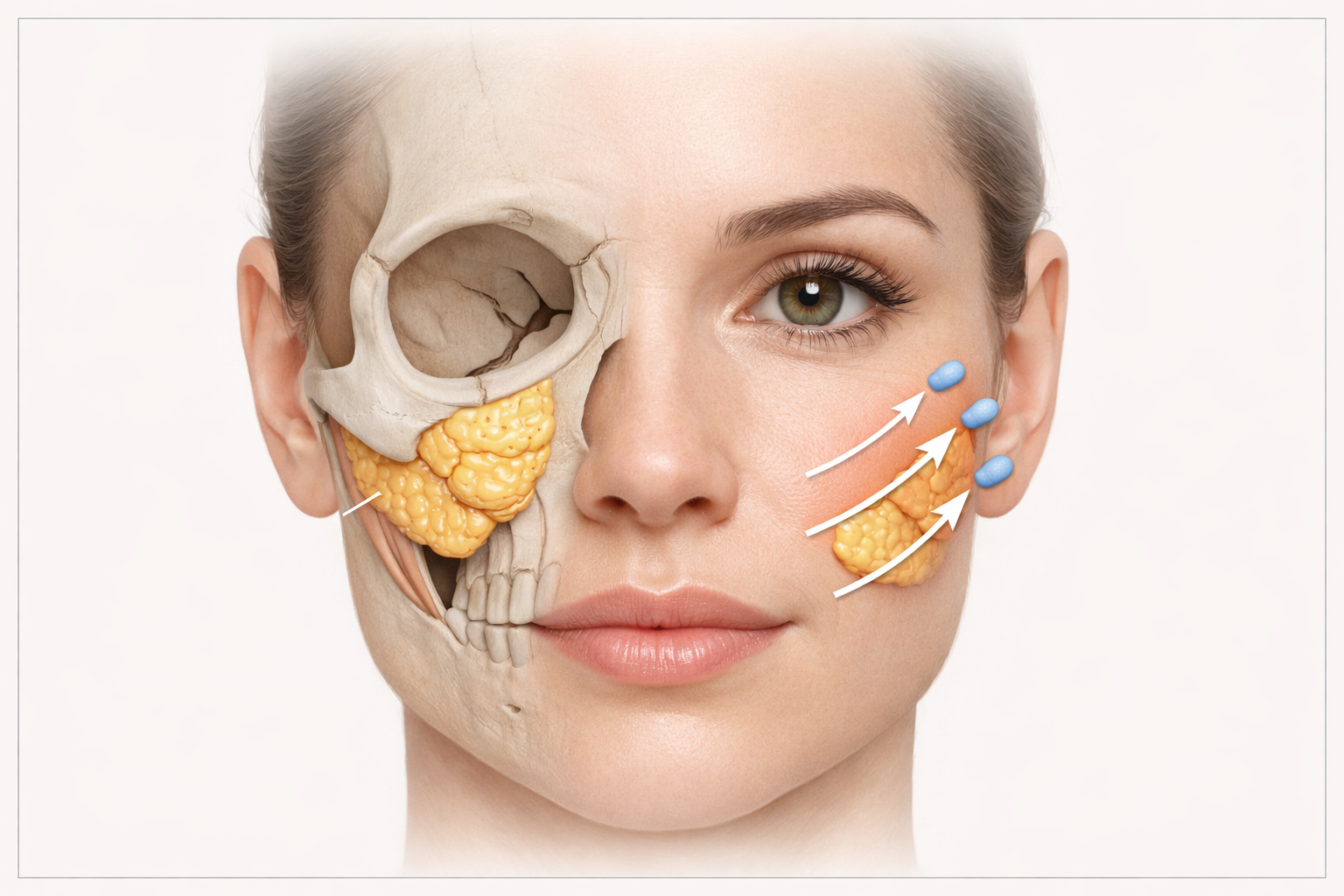
A cheek lift filler is a non-surgical facial rejuvenation treatment in which injectable dermal fillers are placed strategically into the mid-face to restore volume, improve cheekbone definition, and create a subtle upward lift. Rather than surgically repositioning tissue, the treatment works by adding structural support beneath the skin — counteracting the downward shift of facial fat pads and the age-related volume deficit that occurs as collagen and elastin decline over time.
The term “cheek lift” is used because well-placed filler in the malar region can indirectly improve the appearance of nasolabial folds, soften early jowl formation, and reduce the hollowed look beneath the eyes — effects typically associated with a surgical midface lift, but achieved without incisions or general anaesthesia. The degree of lift achievable with filler is moderate and depends on the extent of volume loss, skin quality, and the technique used. It is not a substitute for surgery in advanced cases of facial sagging.
Why the Mid-Face Changes with Age
Understanding why the cheeks flatten and descend with age helps explain what cheek lift filler is designed to address. The mid-face is supported by several distinct fat compartments — including the medial cheek fat, the malar fat pad, and the submalar fat — as well as by the underlying bone structure and the skin’s own structural proteins.
As collagen and elastin production slows from the mid-twenties onwards, and as facial fat pad descent occurs — meaning these compartments gradually shift downward and inward — the cheeks lose their youthful projection and fullness. The overlying skin, now less supported, may appear to sag or hollow. Bony resorption of the zygomatic arch and surrounding facial skeleton also contributes to mid-face volume loss, reducing the scaffolding that once kept soft tissue elevated.
These combined changes — collagen depletion, elastin loss, fat pad descent, and skeletal remodelling — explain why the nasolabial folds deepen, jowls begin to form, and cheekbone definition diminishes. Cheek lift filler targets several of these structural deficits simultaneously by restoring volume to areas where it has been lost.
How Cheek Filler Creates a Lifting Effect
The lifting effect of cheek filler is primarily mechanical. When a high-viscosity hyaluronic acid gel or a collagen-stimulating filler is placed at or near the cheekbone — often at the supraperiosteal level, meaning directly on top of the bone — it effectively props up the overlying soft tissue. This elevation of the malar region creates the appearance of higher cheekbones, reduces the depth of nasolabial folds by pushing tissue upward and outward, and can soften the transition between the lower eyelid and cheek.
Injection placement is critical to achieving a natural-looking lift rather than simply adding volume. Skilled practitioners often use a dual-plane approach — placing filler both deep near the bone for structural support and more superficially within the fat compartments to smooth transitions. The submalar and anteromedial regions are commonly addressed, alongside the malar area itself, depending on where volume deficit is most pronounced.
The physical properties of the filler — particularly its G prime, which describes the firmness and resistance of the gel — determine how well it maintains its shape and provides lift. Higher G prime fillers are preferred for deep structural placement because they resist compression from surrounding tissue and maintain cheekbone projection over time.
Types of Filler Used for Cheek Lifting
Several injectable products are used for cheek lift treatments, each with different properties, longevity profiles, and clinical applications.
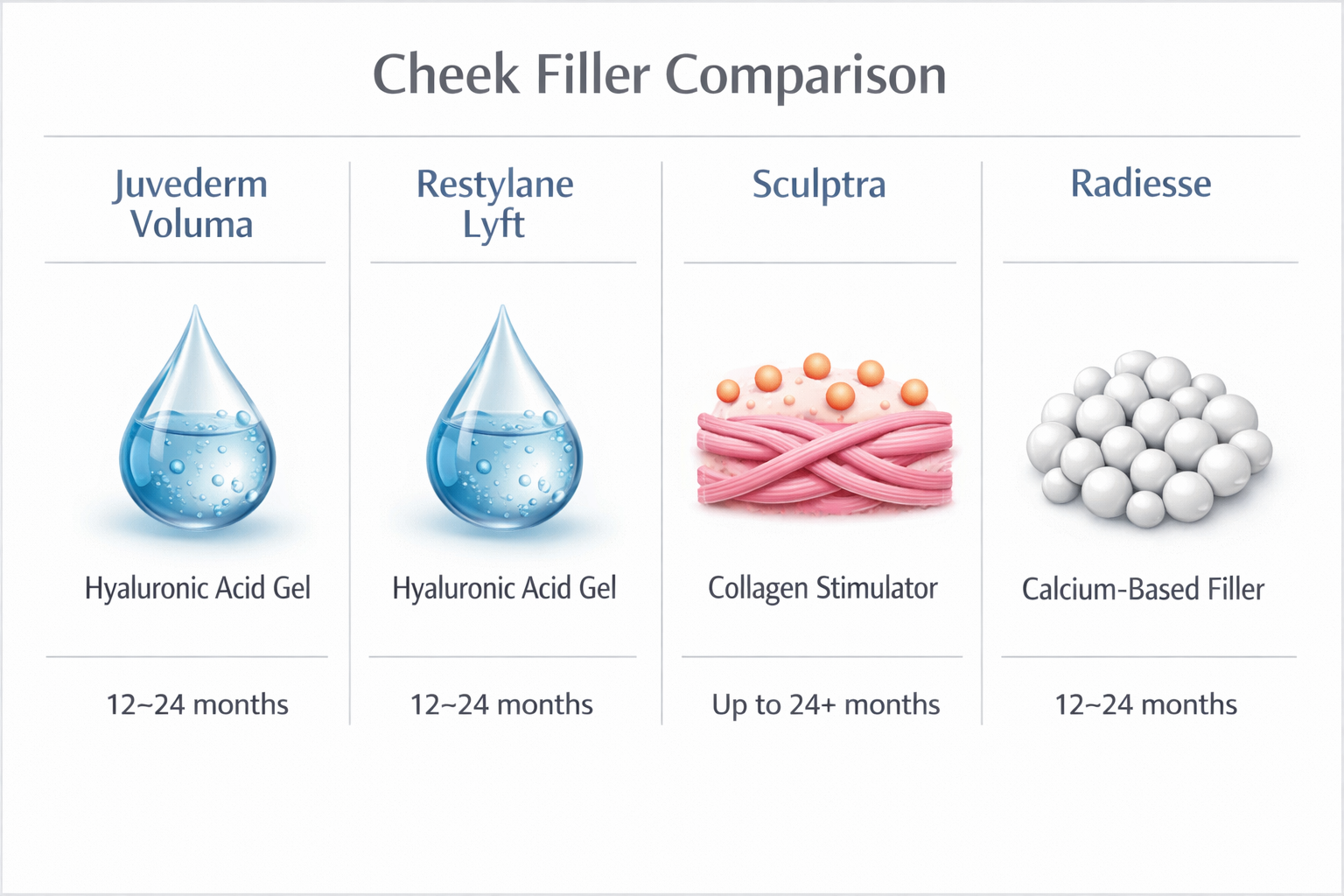
| Filler | Type | G Prime | Longevity | Reversible? | Best Suited For |
|---|---|---|---|---|---|
| Juvederm Voluma | Hyaluronic acid | High | 18–24 months | Yes (hyaluronidase) | Deep structural lift, volume restoration |
| Restylane Lyft | Hyaluronic acid | High | 12–18 months | Yes (hyaluronidase) | Cheekbone projection, midface volume |
| Restylane Contour | Hyaluronic acid | Medium-High | 12–18 months | Yes (hyaluronidase) | Natural movement, cheek contouring |
| Sculptra | Poly-L-lactic acid | N/A (stimulator) | Up to 24+ months | No | Gradual volume restoration, collagen stimulation |
| Radiesse | Calcium hydroxylapatite | High | 12–18 months | No | Structural support, collagen-stimulating effect |
Hyaluronic acid-based fillers such as Juvederm Voluma and Restylane Lyft are the most widely used for cheek lift treatments. Their higher viscosity and elevated G prime make them well-suited for deep placement where structural support is required. A significant practical advantage of HA fillers is that they are reversible with hyaluronidase — an enzyme that dissolves the gel — if results are unsatisfactory or a complication arises.
Sculptra (poly-L-lactic acid) and Radiesse (calcium hydroxylapatite) work differently: they act as collagen-stimulating fillers, gradually prompting the body to produce its own collagen rather than providing immediate volume. Results develop over several weeks to months and tend to last longer, but these products are not reversible with hyaluronidase, which is an important consideration when weighing risk.
Injection Technique: Cannula vs. Needle
Cheek lift filler can be delivered using either a sharp needle or a blunt-tipped cannula, and the choice of technique affects both the safety profile and the precision of placement. Needles allow very targeted placement at specific anatomical points — particularly useful for deep supraperiosteal injections at the zygomatic arch — while blunt cannulas are associated with a lower risk of bruising and reduced likelihood of inadvertent intravascular injection because the rounded tip is less likely to penetrate vessel walls.
Many experienced injectors use a combination of both: a needle to access specific deep planes and a cannula to distribute filler through the superficial fat compartments. Clinical evidence published in peer-reviewed literature supports cannula use as a risk-reduction strategy for filler in vascular-dense areas of the face, though neither technique completely eliminates the risk of vascular complications. The practitioner’s anatomical knowledge and clinical experience remain the most important safety factors, regardless of the instrument used.
Who May Be a Suitable Candidate
A cheek lift with fillers may be worth discussing with a qualified practitioner if you experience one or more of the following:
- Flattened or sunken cheeks due to mid-face volume loss
- Loss of cheekbone definition and projection that was present in younger years
- Deepening nasolabial folds related to mid-face descent
- Hollow cheeks or a gaunt appearance following significant weight loss or ageing
- Early jowl formation linked to mid-face tissue descent
- Under-eye hollows partially caused by loss of cheek support
- A preference for a non-surgical approach with minimal downtime
Cheek lift filler tends to produce the most natural-looking results in patients with mild to moderate mid-face laxity and sufficient skin quality to respond well to volumisation. Those with significant skin sagging, very thin skin, or advanced facial laxity may find that injectable treatment alone produces limited improvement and that a surgical assessment is more appropriate.
Who Should Avoid Cheek Lift Filler
Cheek filler is not suitable for everyone. Contraindications and cautions include:
- Pregnancy or breastfeeding
- Active skin infection, cold sore, or inflammatory skin condition in the treatment area
- Known allergy to hyaluronic acid, lidocaine, or other filler components
- Bleeding disorders or use of anticoagulant medications (which may increase bruising risk)
- Autoimmune conditions that could affect healing or increase complication risk
- History of severe or anaphylactic allergic reactions
- Unrealistic expectations that cannot be met by a non-surgical approach
A thorough consultation and medical history review with a qualified aesthetic practitioner is essential before any injectable treatment to identify individual risk factors.
Male vs. Female Anatomy Considerations
Aesthetic goals for cheek lifting differ between male and female facial anatomy. For female patients, the typical aim is to restore or enhance a gentle, rounded fullness in the malar region — the apple of the cheek — with a soft lift that maintains femininity. For male patients, the goal is generally more angular: enhancing the lateral cheekbone projection and the zygomatic arch to create a defined, structured appearance. Injection placement and the volume used may differ accordingly, and an experienced practitioner will tailor the approach to the individual’s facial structure and aesthetic goals rather than applying a single technique universally.
What Happens During the Procedure
A typical cheek lift filler appointment follows a structured sequence:
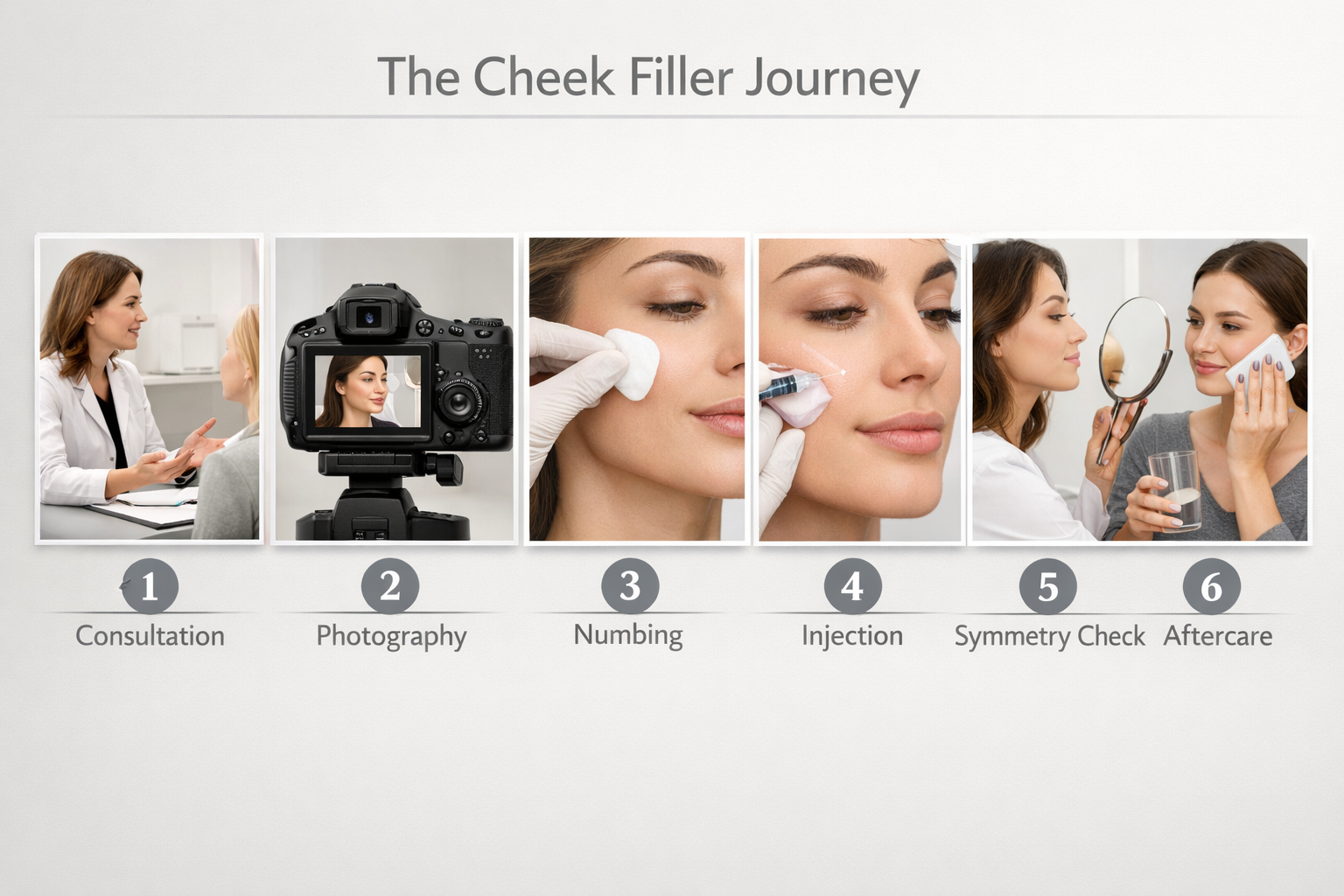
- Consultation and facial assessment: The practitioner evaluates your facial anatomy, discusses your goals, reviews your medical history, and identifies which areas of the mid-face would benefit most from volumisation.
- Photography: Before-and-after photographs are usually taken to document your baseline and allow comparison after treatment.
- Skin preparation: The treatment area is cleansed and a topical numbing cream may be applied for approximately 20–30 minutes to reduce discomfort. Most modern cheek fillers also contain lidocaine, which provides additional comfort during injection.
- Injection: The practitioner administers filler into the planned areas using a needle, cannula, or both. The injection itself typically takes 15–30 minutes depending on the number of areas treated and the volume used.
- Assessment and symmetry check: The practitioner reviews the result, checks for facial balance, and may make minor adjustments.
- Aftercare advice: You will receive instructions on what to avoid in the hours and days following treatment.
Most patients describe the sensation during cheek filler injection as mild pressure and a slight stinging or pinching feeling. Discomfort is generally well tolerated, though individual sensitivity varies.
Results: What to Expect and How Long They Last
One of the advantages of hyaluronic acid cheek filler is that results are visible immediately after injection. However, initial results may appear slightly uneven or overfull due to swelling, and the final outcome typically becomes clearer over one to two weeks as swelling subsides and the filler settles into the surrounding tissue.
Longevity depends on several factors: the type of filler used, the volume injected, the depth of placement, individual metabolism, and lifestyle factors. HA-based cheek fillers such as Juvederm Voluma may last up to 18–24 months in some patients, while Restylane Lyft tends to last 12–18 months. Collagen-stimulating fillers like Sculptra may produce effects that persist beyond two years, though results develop gradually. Maintenance top-up treatments are typically recommended before the filler is fully metabolised to preserve continuity of results.
It is worth noting that individual results vary considerably. Patients with higher metabolic rates, significant physical activity, or greater initial volume deficit may find that their results are shorter-lived than average. A realistic conversation about expected longevity is an important part of the pre-treatment consultation.
Aftercare and Recovery
Cheek lift filler involves minimal downtime for most patients. Many people return to normal daily activities on the same day, though the following aftercare guidance is generally recommended:
- Do apply a cold compress gently to reduce swelling if needed
- Do keep the head elevated when sleeping for the first night or two
- Do apply sunscreen and protect the treated area from direct sun exposure
- Do contact your practitioner promptly if you notice unusual pain, skin colour changes, or any signs of infection
- Avoid strenuous exercise for 24–48 hours
- Avoid saunas, steam rooms, and hot baths for at least 48 hours
- Avoid applying makeup to the injection sites for at least 12–24 hours
- Avoid alcohol for 24 hours, as it may worsen bruising
- Avoid swimming pools or open water for at least 24 hours to reduce infection risk
- Avoid massaging or applying significant pressure to the treated area
Bruising and swelling are the most common side effects and typically resolve within five to ten days. Bruising may be more pronounced in patients who take aspirin, ibuprofen, fish oil, or other blood-thinning supplements, and practitioners often advise pausing these (where medically safe to do so) before treatment.
Risks and Side Effects
Cheek lift filler is generally considered safe when performed by a qualified aesthetic practitioner with a strong understanding of facial anatomy, but it is not without risk. Patients should be aware of the following:
Common and Expected
- Bruising and swelling at the injection sites
- Temporary redness or tenderness
- Mild asymmetry that resolves as swelling settles
Less Common
- Persistent asymmetry requiring correction
- Nodules or firmness under the skin, particularly with superficially placed filler
- Infection (rare with proper technique and sterile conditions)
- Delayed inflammatory reaction
Rare but Serious
- Vascular occlusion: If filler is inadvertently injected into or compresses a blood vessel, it can restrict blood flow and — in the most serious cases — cause tissue necrosis (tissue death) or, very rarely, vision changes. This is a medical emergency requiring immediate intervention. The risk is one reason why treatment should only be performed by practitioners who hold appropriate training, understand vascular anatomy, and carry hyaluronidase on site.
The reversibility of HA fillers with hyaluronidase is an important safety advantage. If a vascular complication is identified promptly, dissolving the filler may limit injury. Non-HA fillers such as Radiesse and Sculptra cannot be dissolved in the same way, which is relevant to individual risk assessment.
Cheek Lift Filler vs. Surgical Alternatives
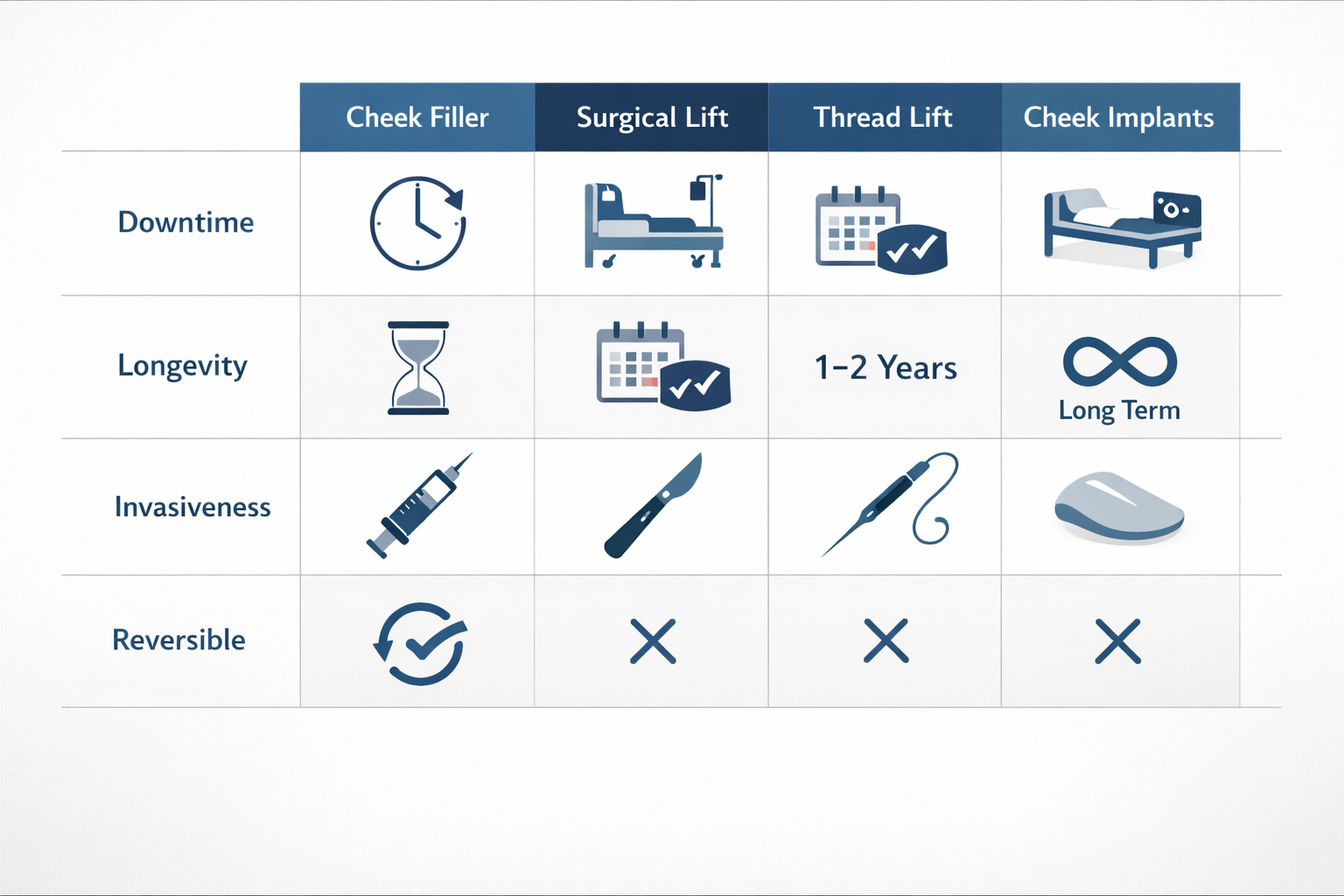
| Factor | Cheek Lift Filler | Surgical Midface Lift | Thread Lift | Cheek Implants |
|---|---|---|---|---|
| Invasiveness | Minimally invasive | Surgical (general or local anaesthesia) | Minimally invasive | Surgical |
| Downtime | Minimal (1–3 days for bruising) | 2–4 weeks | 1–7 days | 1–3 weeks |
| Longevity | 12–24 months | 5–10+ years | 12–18 months | Long-term / permanent |
| Reversibility | Yes (HA fillers) | No | Partial | Implant can be removed |
| Cost (approx.) | Lower initial cost | Significantly higher | Moderate | High |
| Degree of lift | Mild to moderate | Significant | Mild to moderate | Volume and structure only |
| Best suited for | Mild–moderate volume loss, early ageing | Significant laxity and descent | Mild laxity, early descent | Structural enhancement |
For patients with mild to moderate mid-face volume loss and reasonable skin quality, cheek lift filler often provides meaningful improvement with significantly less risk, cost, and recovery time than surgery. However, for those with advanced facial sagging, significant skin laxity, or deep structural descent, a surgical midface lift or deep plane facelift may be more appropriate and produce more durable results. The right approach depends on the individual’s anatomy, goals, and tolerance for downtime and risk — a decision best made through consultation with practitioners experienced in both surgical and non-surgical options.
How Cheek Filler Affects Adjacent Areas
One of the less discussed benefits of a well-executed non-surgical cheek lift is its effect on neighbouring facial regions. Restoring volume to the malar area can reduce the apparent depth of nasolabial folds by physically elevating the cheek tissue and reducing the downward pull that creates the fold. This nasolabial fold improvement is often achieved without injecting the fold itself — a distinction that matters because direct filler placement into the fold can sometimes look unnatural.
Improved cheek support can also soften the appearance of under-eye hollows and tear trough shadows, since the cheek and lower eyelid form a continuous aesthetic unit. If the cheek is adequately supported and projected, the transition between the eyelid and cheek appears smoother. Similarly, mild jowl formation driven by mid-face descent — rather than excess skin — may appear less pronounced when the mid-face is lifted and volumised. These cascading effects make strategic mid-face volumisation a central component of comprehensive facial rejuvenation planning.
Realistic Cost Considerations
The cost of cheek lift filler varies depending on the practitioner’s experience level, the clinic location, the product used, and the number of syringes required. Most patients require one to two syringes of filler per side for moderate cheek volumisation, though the exact amount depends on the degree of volume deficit and the desired outcome. Because maintenance treatments are typically needed every 12–24 months, the cumulative cost over several years is worth factoring into the decision.
While cheek lift filler involves a lower upfront cost than surgery, repeated maintenance over many years can approach or exceed the cost of certain surgical procedures. Patients should discuss realistic volume requirements, expected longevity, and likely maintenance frequency during the consultation to make a fully informed financial decision.
Frequently Asked Questions
Is cheek lift filler painful?
Most patients find cheek lift filler tolerable. A topical numbing cream is usually applied before the procedure, and most modern HA fillers contain lidocaine within the formulation, which reduces discomfort during injection. The sensation is typically described as brief pressure or mild stinging. Patients with particular sensitivity to needles or injections may find the experience more uncomfortable, and this should be discussed with the practitioner beforehand.
Can cheek filler look natural?
Natural-looking results are achievable when filler is placed strategically and conservatively by an experienced practitioner who understands facial proportions and anatomy. Overfilling or incorrect placement is a common cause of unnatural appearances. Choosing a practitioner with a portfolio of before-and-after results relevant to your aesthetic goals, and discussing the volume and approach in detail during consultation, can reduce this risk.
How many syringes of filler are needed for a cheek lift?
The amount varies depending on individual anatomy and the degree of volume loss. Many patients require one to two syringes per side, though some may need more or less. Starting conservatively and adding volume in staged treatments is generally considered a safer approach than placing a large volume in a single session.
What happens when cheek filler wears off?
As hyaluronic acid filler is gradually broken down by the body, the face returns toward its pre-treatment appearance. There is no evidence that HA filler causes permanent tissue changes or makes the face look worse once it has fully dissolved. Some patients choose to have maintenance treatments before the filler is fully metabolised to sustain continuity of results.
Can cheek filler be dissolved?
Hyaluronic acid-based cheek fillers are reversible with hyaluronidase — an injectable enzyme that breaks down the HA gel. This makes HA fillers the preferred choice for patients who are new to the treatment or who want the reassurance of reversibility. Collagen-stimulating fillers such as Sculptra and Radiesse cannot be dissolved with hyaluronidase, which is an important consideration when choosing a product.
Is a cheek lift with filler safe?
When performed by a qualified and experienced aesthetic practitioner using appropriate technique and sterile conditions, cheek lift filler has a reasonable safety profile for most suitable patients. However, the mid-face contains important blood vessels, and vascular complications — while rare — can be serious. Choosing a practitioner with appropriate training in facial anatomy and emergency management of filler complications is the single most important safety factor.
How does cheek filler differ from a surgical cheek lift?
Cheek filler adds volume to lift and support the soft tissue non-surgically, with minimal downtime and temporary results. A surgical midface lift repositions the underlying tissue and removes excess skin, producing more significant and longer-lasting structural change. Surgery is generally more appropriate for advanced facial laxity, while filler tends to suit earlier-stage volume loss with reasonable skin quality.
Is Cheek Lift Filler the Right Approach for You?
A cheek lift with filler offers a meaningful but realistic option for patients experiencing early to moderate mid-face volume loss, flattened cheekbones, or the early effects of facial fat pad descent — particularly those who prefer a minimally invasive approach with minimal downtime and the option of reversibility. The treatment can improve cheekbone projection, soften nasolabial folds, and refresh overall facial proportions without surgery when the right candidate is selected and the procedure is performed skillfully.
At the same time, it is important to approach cheek lift filler with realistic expectations. The degree of lifting achievable is moderate, results are temporary and require maintenance, and the procedure carries genuine risks that should not be minimised. It is not a substitute for a surgical midface lift in patients with significant skin laxity or structural descent.
If you are considering a non-surgical cheek lift, the most important step is a thorough consultation with a qualified aesthetic practitioner who can assess your facial anatomy, discuss appropriate filler options, and provide an honest appraisal of what the treatment can and cannot achieve for your individual situation. A well-informed decision — made with clear expectations — is the foundation of a satisfying result.
