
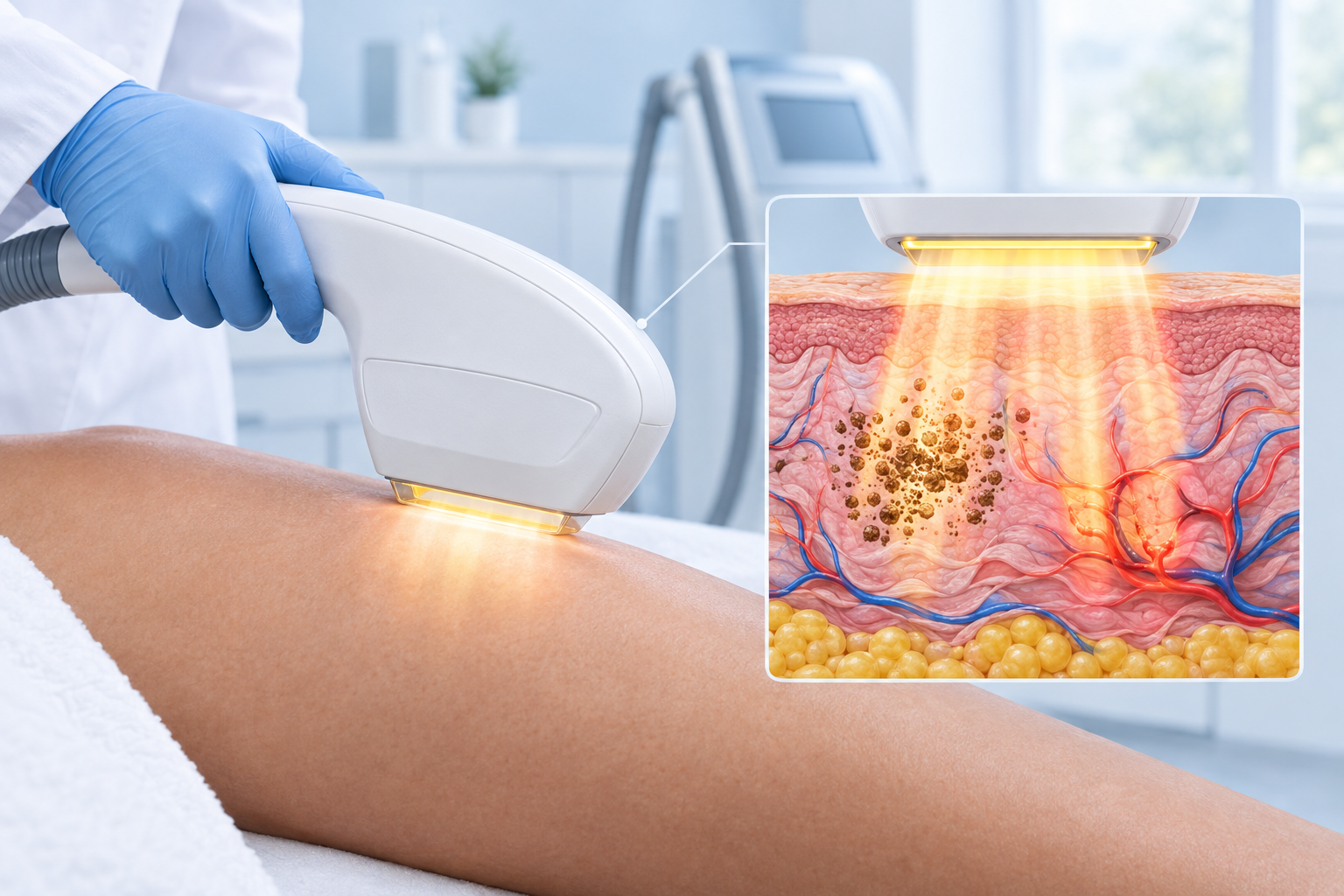

BBL laser treatment — short for BroadBand Light — is a form of intense pulsed light therapy that has traditionally been used for facial skin concerns such as pigmentation, redness, and texture. In recent years, clinicians have explored its application across larger body areas, raising genuine patient interest in whether light-based technology can play a meaningful role in body contouring and skin improvement beyond the face. This article explains how BBL works, what it can and cannot realistically achieve on the body, who may be a suitable candidate, and how it compares to other non-surgical options.
Key Takeaways
- BBL (BroadBand Light) is an intense pulsed light device, not a true laser in the conventional sense; it delivers broad-spectrum light energy to target specific skin concerns.
- When used for body contouring purposes, BBL primarily addresses skin quality, tone, and texture rather than directly reducing fat volume.
- Multiple treatment sessions are typically required, and results vary considerably depending on skin type, treatment area, and individual response.
- BBL is generally considered a skin rejuvenation and refinement tool; it is not a standalone fat reduction or body sculpting treatment.
- A thorough clinical assessment is essential to determine whether BBL or an alternative approach better matches your specific goals.
What Is BBL Light Therapy?
BroadBand Light (BBL) is a technology developed by Sciton that delivers high-intensity pulses of broad-spectrum light to the skin. Unlike a single-wavelength laser, BBL emits light across a range of wavelengths, which can be filtered and adjusted to target different chromophores — the molecules in the skin that absorb light energy. Common targets include melanin (responsible for pigmentation) and oxyhaemoglobin (responsible for visible redness and vascular irregularities). The device is sometimes referred to as a BBL laser in everyday language, though technically it functions as an intense pulsed light (IPL) system with a more refined delivery mechanism than earlier IPL devices.
The distinction matters clinically because the wavelength range, pulse duration, and fluence (energy delivered per unit area) all influence which skin structures are affected and how deeply the energy penetrates. BBL devices typically allow practitioners to select specific cut-off filters, meaning the treatment can be tailored to address pigmented lesions, vascular concerns, or general skin quality depending on the patient's needs and the area being treated.
How Does BBL Work on the Body?
When BBL light energy is absorbed by the skin, it generates controlled thermal injury in targeted structures. In the context of pigmentation, the light energy is absorbed by melanin granules, which fragment and are subsequently cleared by the body's immune system. For vascular concerns such as broken capillaries or diffuse redness, the energy is absorbed by oxyhaemoglobin within blood vessels, causing them to coagulate and gradually fade. These mechanisms are well established for facial applications and are similarly applicable to body skin, though body skin tends to be thicker and may respond differently to treatment parameters.
A separate and increasingly discussed application involves the effect of BBL energy on dermal fibroblasts — the cells responsible for producing collagen and elastin. Research published in peer-reviewed journals, including work associated with Sciton's FOREVER Young BBL protocol, has suggested that repeated BBL treatments may influence gene expression in skin cells in ways that support collagen remodelling and skin quality improvement over time. However, it is important to note that much of this research has been conducted on facial skin, and independent replication across diverse populations and body areas remains limited. Patients should approach claims about cellular rejuvenation with appropriate caution and discuss the evidence base with their practitioner.
BBL for Body Contouring: What Can It Realistically Achieve?
The term "body contouring" covers a broad range of goals, from fat reduction and muscle definition to skin tightening and surface refinement. Understanding where BBL sits within this spectrum is essential for setting realistic expectations.
BBL light therapy does not directly destroy or reduce fat cells. Treatments that achieve meaningful fat reduction — such as cryolipolysis (CoolSculpting), high-intensity focused ultrasound (HIFU), radiofrequency-based devices, or injectable fat dissolving agents — work through fundamentally different mechanisms. BBL is not a fat reduction treatment, and presenting it as a primary body sculpting solution would be misleading.
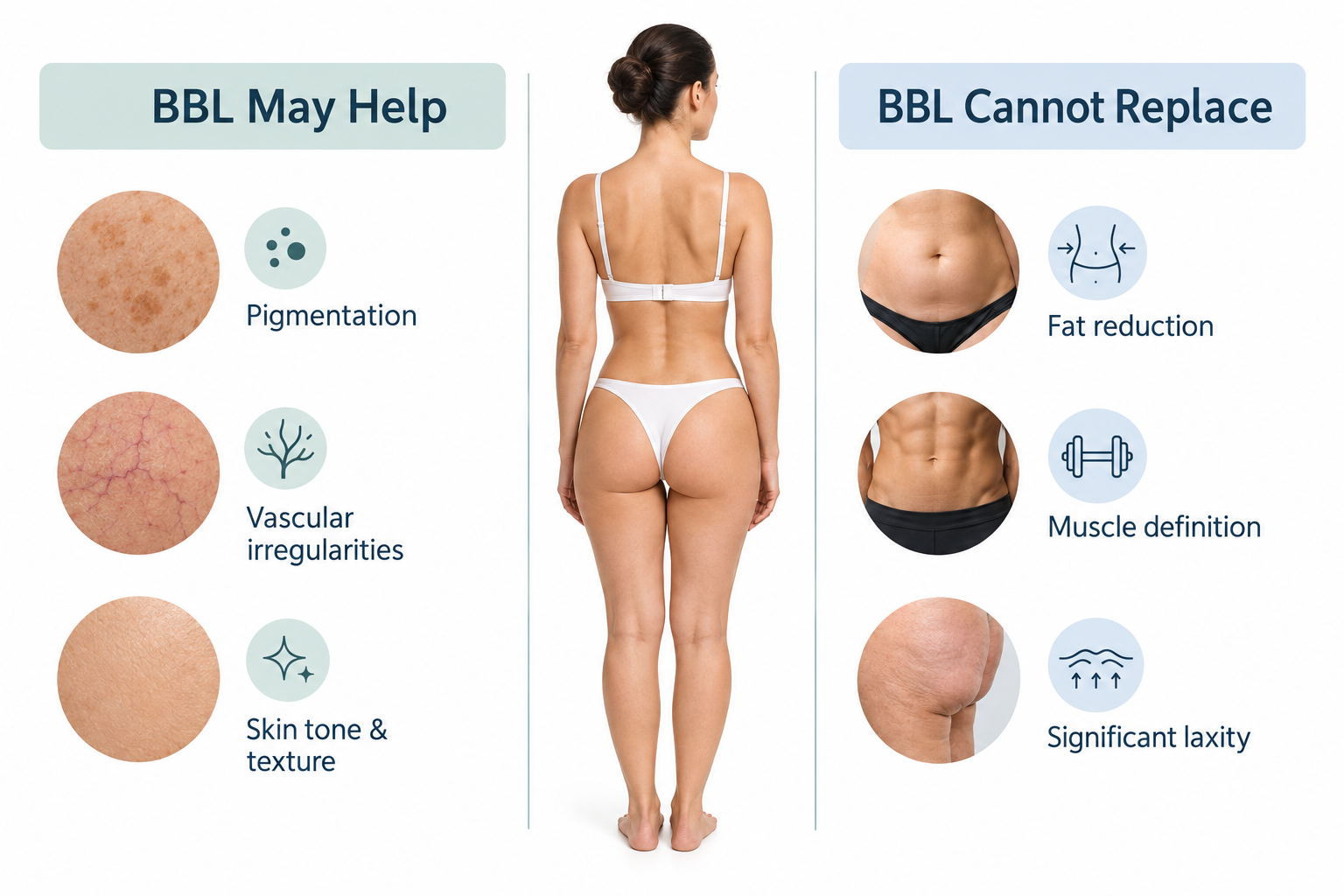
Where BBL may offer genuine value in a body context is in addressing the skin quality concerns that often accompany body contouring goals. These include:
- Uneven skin tone and sun damage on areas such as the chest, shoulders, arms, and décolletage.
- Diffuse redness or vascular irregularities on the body surface.
- Pigmented lesions such as age spots, freckles, or post-inflammatory hyperpigmentation on body skin.
- Skin texture and early laxity, where collagen stimulation may contribute to modest improvement in skin firmness over a course of treatments.
- Stretch marks — some practitioners use BBL as part of a multi-modal approach to improving the appearance of striae, though evidence for this specific application is still developing.
In practice, BBL is often used as a complementary treatment alongside body contouring procedures rather than as a standalone contouring solution. For example, a patient who has undergone fat reduction treatment may use BBL to address residual pigmentation or improve overall skin quality in the treated area.
Common Treatment Areas on the Body
BBL can be applied to most areas of the body where skin concerns are present, though treatment parameters need to be adjusted carefully for different anatomical sites. Commonly treated body areas include:
- Chest and décolletage — often affected by sun damage, pigmentation, and vascular irregularities.
- Arms and hands — where age spots and diffuse pigmentation are frequent concerns.
- Shoulders and upper back — areas prone to sun-related skin changes.
- Abdomen — where skin tone and texture concerns may arise, particularly following weight changes or pregnancy.
- Legs — where vascular concerns such as superficial broken vessels or diffuse redness may be addressed.
Body skin generally has fewer sebaceous glands and a different structural composition compared to facial skin, which can affect both the treatment response and the risk profile. Practitioners experienced in body BBL treatments will adjust energy settings, pulse durations, and cooling parameters accordingly.
What Happens During a BBL Treatment Session?
A BBL treatment session for body areas typically begins with a consultation and skin assessment to determine appropriate settings based on skin type, concern, and treatment area. The Fitzpatrick skin type scale — a classification system used to assess skin's response to UV light — is commonly used to guide parameter selection, as darker skin tones carry a higher risk of post-inflammatory hyperpigmentation with light-based treatments.
During the appointment, protective eyewear is provided to both the patient and the practitioner. A cool gel is usually applied to the treatment area to improve light transmission and provide surface cooling. The BBL handpiece is then applied to the skin in a series of overlapping pulses. Most patients describe the sensation as a brief snap or warmth with each pulse, similar to the feeling of a rubber band against the skin. Integrated cooling systems in modern BBL devices help manage discomfort, and topical anaesthetic cream may be applied beforehand for more sensitive areas or larger treatment zones.
Session duration varies depending on the size of the area being treated. A small area such as the hands may take fifteen to twenty minutes, while larger body areas such as the chest or abdomen may require forty-five minutes or more. Most patients can return to normal activities the same day, though some temporary redness and mild swelling are common immediately after treatment.
Recovery and Downtime
One of the practical advantages of BBL treatment is its relatively low downtime compared to ablative laser procedures. Most patients experience some degree of redness and mild swelling in the treated area for several hours to a day or two following treatment. Pigmented lesions targeted during the session often darken initially before gradually flaking away over one to two weeks — a process sometimes described as the lesions appearing to "rise" to the surface before resolving.
Sun protection is essential following BBL treatment. The treated skin is more photosensitive in the days and weeks after a session, and unprotected sun exposure can increase the risk of post-inflammatory hyperpigmentation, particularly in patients with medium to darker skin tones. Broad-spectrum SPF 30 or higher should be applied consistently, and direct sun exposure to treated areas should be minimised during the recovery period.
Strenuous exercise, hot baths, and activities that significantly raise skin temperature are generally advised against for the first twenty-four to forty-eight hours after treatment, as these can exacerbate redness and swelling. Skincare products containing active ingredients such as retinoids or exfoliating acids may need to be paused temporarily around the time of treatment, as advised by the treating practitioner.
How Many Sessions Are Typically Needed?
The number of BBL sessions required depends on the specific concern being addressed, the severity of the skin change, the treatment area, and the individual's skin response. For pigmentation and vascular concerns on the body, a course of three to six sessions spaced approximately four to six weeks apart is commonly recommended, though this varies between patients and practitioners.
Maintenance treatments are often suggested to sustain results, particularly for concerns such as sun damage that can recur with ongoing UV exposure. Some protocols, particularly those targeting overall skin quality and collagen stimulation, involve annual or twice-yearly maintenance sessions after an initial course. Patients should discuss realistic treatment timelines and maintenance expectations with their practitioner before committing to a course of treatment.
When Will Results Become Visible?
The timeline for visible improvement varies depending on the concern being treated. Pigmented lesions often show initial darkening within a few days of treatment, followed by gradual fading over one to three weeks as the fragmented pigment is cleared. Vascular irregularities may begin to fade within one to two weeks of treatment. Improvements in overall skin tone and texture tend to develop more gradually, with meaningful changes often becoming apparent after two to three sessions.
Collagen remodelling, if it occurs, is a slower biological process. Any improvement in skin firmness or quality related to collagen stimulation is unlikely to be apparent immediately and may continue to develop over several months following a course of treatment. Individual results vary considerably, and not all patients will experience the same degree of improvement.
Risks and Side Effects
BBL is generally considered a well-tolerated treatment when performed by a trained and experienced practitioner using appropriate settings for the patient's skin type. However, as with any energy-based skin treatment, risks and side effects exist and should be understood before proceeding.
Common and usually temporary side effects include redness, mild swelling, and a sensation of warmth in the treated area. These typically resolve within hours to a couple of days. Pigmented lesions may temporarily darken before fading, which can be alarming if patients are not forewarned.
Less common but more significant risks include:
- Post-inflammatory hyperpigmentation (PIH) — darkening of the skin following treatment, more common in patients with medium to darker skin tones (Fitzpatrick types III–VI). This risk is significantly increased if treatment parameters are not appropriately adjusted for skin type.
- Hypopigmentation — lightening of the skin, which may be temporary or, in rare cases, more persistent.
- Burns or blistering — can occur if excessive energy is delivered or if the treatment is performed on tanned or recently sun-exposed skin.
- Scarring — rare but possible, particularly if burns are not managed appropriately.
- Paradoxical darkening — in some cases, pigmented lesions may worsen rather than improve, particularly if the underlying pigmentation type is not correctly identified before treatment.
The risk of adverse outcomes is meaningfully reduced when treatment is performed by a qualified practitioner who conducts a thorough pre-treatment assessment, uses appropriate settings, and provides clear aftercare guidance.
Who May Be Suitable for BBL Body Treatment?
BBL treatment for body skin concerns may be appropriate for individuals who:
- Have lighter skin tones (Fitzpatrick types I–III), as the risk profile is generally more favourable in this group.
- Present with specific, identifiable concerns such as sun damage, pigmented lesions, or vascular irregularities on body skin.
- Have realistic expectations about the nature and degree of improvement achievable.
- Are not currently pregnant or breastfeeding.
- Have not had significant sun exposure or used self-tanning products in the weeks before treatment.
- Are not taking photosensitising medications, which can increase the risk of adverse reactions to light-based treatments.
Patients with active skin infections, open wounds, or inflammatory skin conditions in the treatment area are generally not suitable candidates until these concerns have resolved. A thorough medical history and skin assessment by a qualified practitioner is essential before proceeding.
Who May Not Be Suitable
BBL treatment may not be appropriate for individuals with darker skin tones without specialist experience and careful parameter adjustment, as the risk of pigmentation complications is substantially higher. Patients with a history of keloid scarring, photosensitive conditions such as lupus, or those taking medications that increase photosensitivity should discuss these factors carefully with their practitioner. Active tan — whether from sun exposure or self-tanning products — is a contraindication for treatment, as it significantly increases the risk of burns and pigmentation changes.
Alternatives to BBL for Body Skin and Contouring Goals
Understanding the alternatives to BBL helps patients identify which approach may better match their specific goals. The most relevant alternatives depend on whether the primary concern is skin quality, fat reduction, skin tightening, or a combination.
For skin pigmentation and vascular concerns on the body: Fractional laser treatments (such as fractional CO2 or erbium lasers) can address pigmentation and texture with potentially greater depth of effect, though they typically involve more downtime. Q-switched or picosecond lasers are often preferred for specific pigmented lesions such as age spots or post-inflammatory hyperpigmentation. Chemical peels may address mild to moderate pigmentation concerns with lower technology requirements.
For skin tightening and laxity: Radiofrequency (RF) treatments — including monopolar, bipolar, and fractional RF devices — stimulate collagen production through thermal energy and are commonly used for skin tightening on the body. High-intensity focused ultrasound (HIFU) delivers energy to deeper tissue layers and may be suitable for more significant laxity concerns. These technologies are generally considered more targeted for skin tightening than BBL.
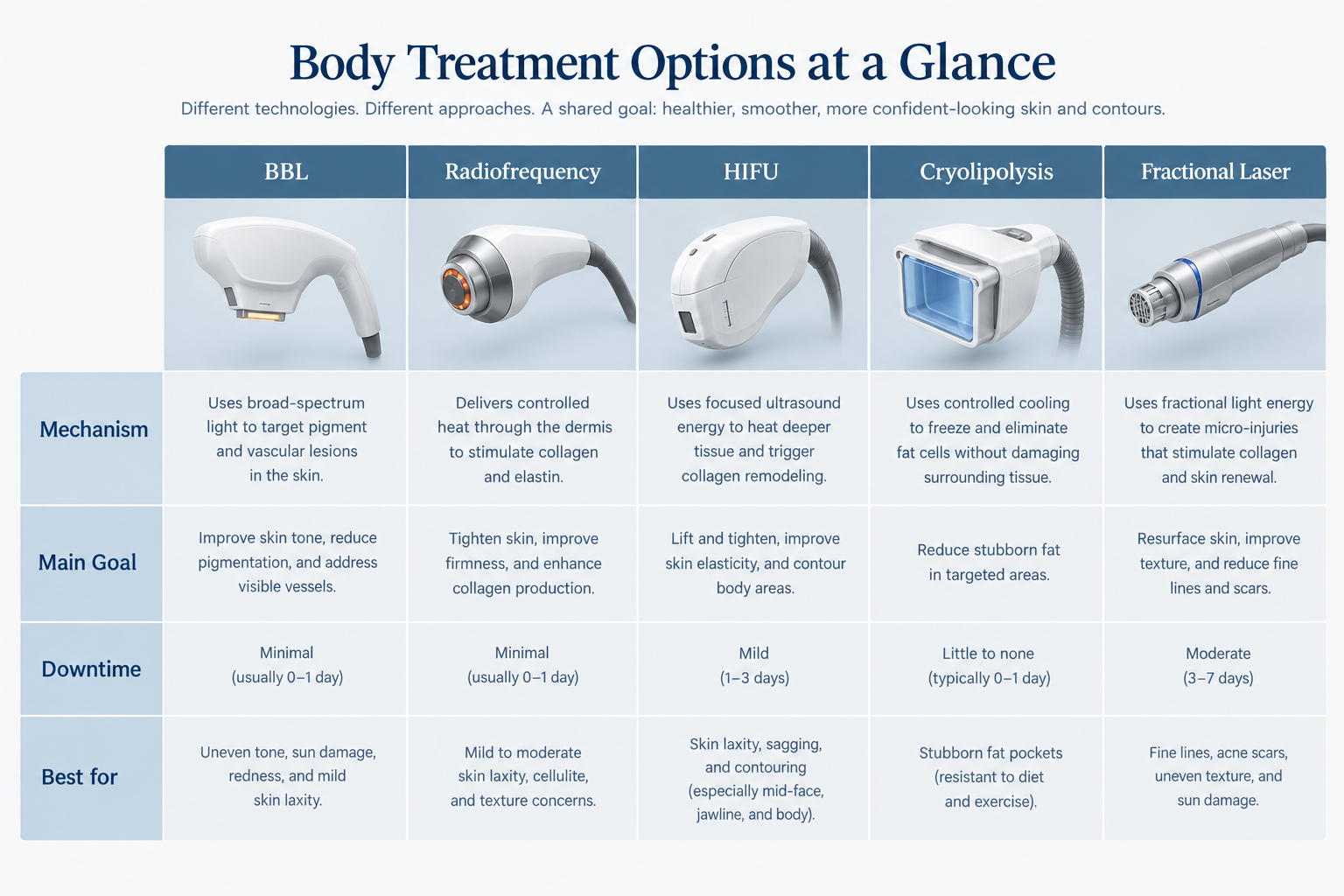
For fat reduction and body sculpting: Cryolipolysis, radiofrequency lipolysis, high-intensity focused electromagnetic (HIFEM) technology such as Emsculpt, and injectable fat dissolving treatments address fat volume and body shape through mechanisms entirely distinct from light-based therapy. Patients whose primary goal is fat reduction or muscle definition are unlikely to achieve those outcomes through BBL treatment alone.
For stretch marks: Fractional laser resurfacing, microneedling with radiofrequency, and platelet-rich plasma (PRP) therapy are among the approaches with a more established evidence base for striae improvement than BBL, though all carry variable results and evidence limitations.
Frequently Asked Questions
Is BBL the same as IPL?
BBL (BroadBand Light) is a form of intense pulsed light (IPL) technology, but it is a specific device manufactured by Sciton with design features that differentiate it from earlier or more basic IPL systems. These include more precise wavelength filtering, integrated cooling, and consistent energy delivery. The terms are sometimes used interchangeably in patient-facing contexts, but they are not identical. When researching treatment options, it is worth asking specifically which device will be used and what its capabilities are.
Can BBL reduce fat on the body?
No. BBL light therapy does not destroy or reduce fat cells. Its primary mechanisms involve targeting pigment and vascular structures in the skin, and potentially stimulating collagen remodelling. Patients seeking fat reduction should discuss dedicated body contouring treatments with their practitioner.
Is BBL safe for all skin tones?
BBL carries a higher risk of pigmentation complications in patients with medium to darker skin tones (Fitzpatrick types III–VI). Treatment is not universally contraindicated in these groups, but it requires careful parameter adjustment and should only be performed by practitioners with specific experience treating diverse skin tones. A thorough pre-treatment assessment is essential.
How long do BBL results last on the body?
Results vary depending on the concern treated and the individual's skin behaviour. Improvements in pigmentation and vascular irregularities can be long-lasting if sun protection is maintained consistently, but new sun damage can develop over time with ongoing UV exposure. Skin quality improvements related to collagen stimulation may require periodic maintenance treatments to sustain. There is no universally applicable duration, and individual outcomes differ.
Does BBL hurt?
Most patients describe BBL as mildly uncomfortable rather than painful. The sensation is often compared to a brief snap or warmth with each light pulse. Modern BBL devices incorporate cooling systems to manage discomfort, and topical anaesthetic cream can be applied beforehand if needed. Tolerance varies between individuals and treatment areas.
How soon after BBL can I exercise?
Most practitioners advise avoiding strenuous exercise for twenty-four to forty-eight hours after BBL treatment, as increased body heat and sweating can exacerbate redness and swelling. Specific guidance will depend on the treatment area and the individual's response, so it is best to follow the aftercare instructions provided by your treating practitioner.
Can BBL be combined with other body treatments?
BBL is sometimes used as part of a multi-modal treatment plan alongside other body procedures. However, combining treatments requires careful planning to avoid overlapping recovery periods or compounding risks. Any combination approach should be discussed and coordinated by a qualified practitioner who can assess suitability and sequence treatments appropriately.
Is BBL Light Therapy the Right Choice for Your Body Goals?
BBL laser treatment offers a clinically recognised approach to improving skin quality, tone, and surface concerns on the body — particularly sun damage, pigmentation, and vascular irregularities. For patients whose primary concern is skin refinement in these areas, BBL may be a reasonable option to discuss with a qualified practitioner, provided expectations are grounded in what the technology can realistically achieve.
Where BBL is less well suited is as a standalone body contouring or fat reduction treatment. Patients seeking meaningful changes in body shape, fat volume, or skin laxity are likely to find that alternative technologies — such as radiofrequency, HIFU, cryolipolysis, or HIFEM-based treatments — are more directly aligned with those goals. In some cases, BBL may complement these approaches by addressing skin quality concerns in the same area.
The most important step before committing to any light-based body treatment is a thorough consultation with a practitioner who can assess your skin type, identify the underlying concern accurately, explain the evidence base honestly, and recommend the approach most likely to match your individual goals. If you are considering BBL for body skin concerns, seeking a practitioner with documented experience in body applications — not only facial treatments — is a meaningful factor in both safety and outcome.
