
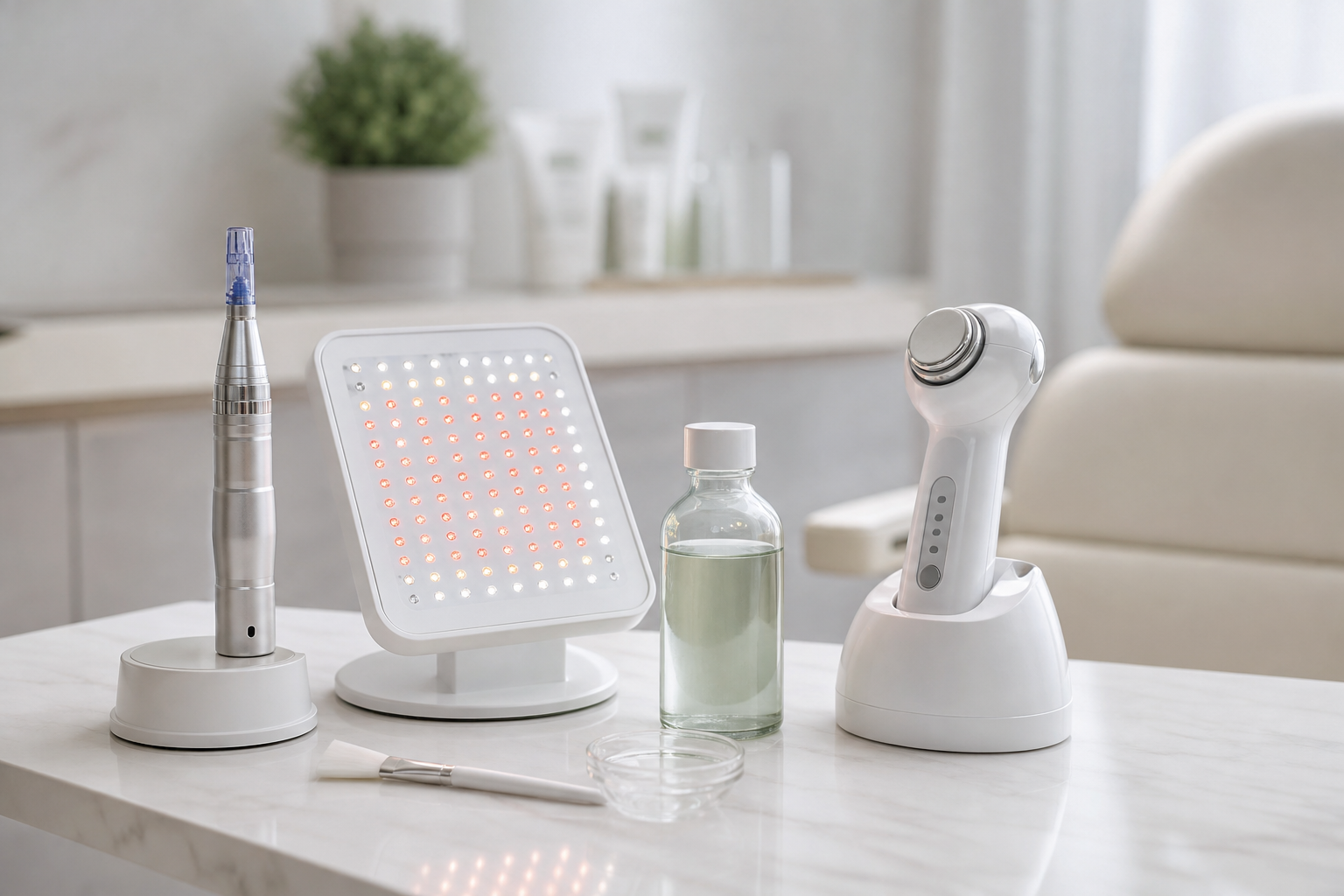

Choosing the best facial for aging skin is rarely straightforward, because aging affects everyone differently — some people notice fine lines and wrinkles first, others experience skin laxity, uneven tone, or a loss of radiance. The good news is that professional anti-aging facial treatments have advanced considerably, and there are now well-established options for almost every concern, skin type, and budget. This guide explains the main treatment categories, how each works, realistic results timelines, and how to decide which approach may be worth discussing with a qualified practitioner.
Key Takeaways
- No single facial suits every aging concern — the right choice depends on your specific skin changes, skin type, and how much downtime you can accept.
- Treatments range from gentle, zero-downtime options such as LED light therapy and HydraFacial to more intensive resurfacing procedures such as chemical peels and RF microneedling.
- Collagen stimulation is the shared goal of many anti-aging treatments, but the mechanism, depth, and results timeline differ significantly between them.
- Combining treatments — for example, microneedling with PRP, or microcurrent with LED — can address multiple concerns in a single protocol, though this should be guided by a professional.
- Preventative facials in your 20s and 30s differ meaningfully from corrective treatments suited to mature skin over 50.
Why Aging Skin Needs a Different Approach
Skin aging is driven by a combination of intrinsic factors — genetics, hormonal changes, and the natural slowdown of fibroblast activity — and extrinsic factors such as UV exposure, pollution, and lifestyle. From around the mid-20s, collagen production begins to decline gradually, and elastin fibres become less resilient. Cell turnover slows, meaning dead skin cells accumulate on the surface for longer, contributing to dullness and uneven texture. Over time, facial volume loss occurs as fat pads shift and diminish, hollowing the cheeks and deepening lines around the mouth and eyes. Photoaging — cumulative sun damage — accelerates pigmentation changes and the breakdown of collagen and elastin in the dermis. Understanding which of these processes is most prominent in your skin helps determine which treatment category is likely to be most useful.
The Main Anti-Aging Facial Treatment Categories
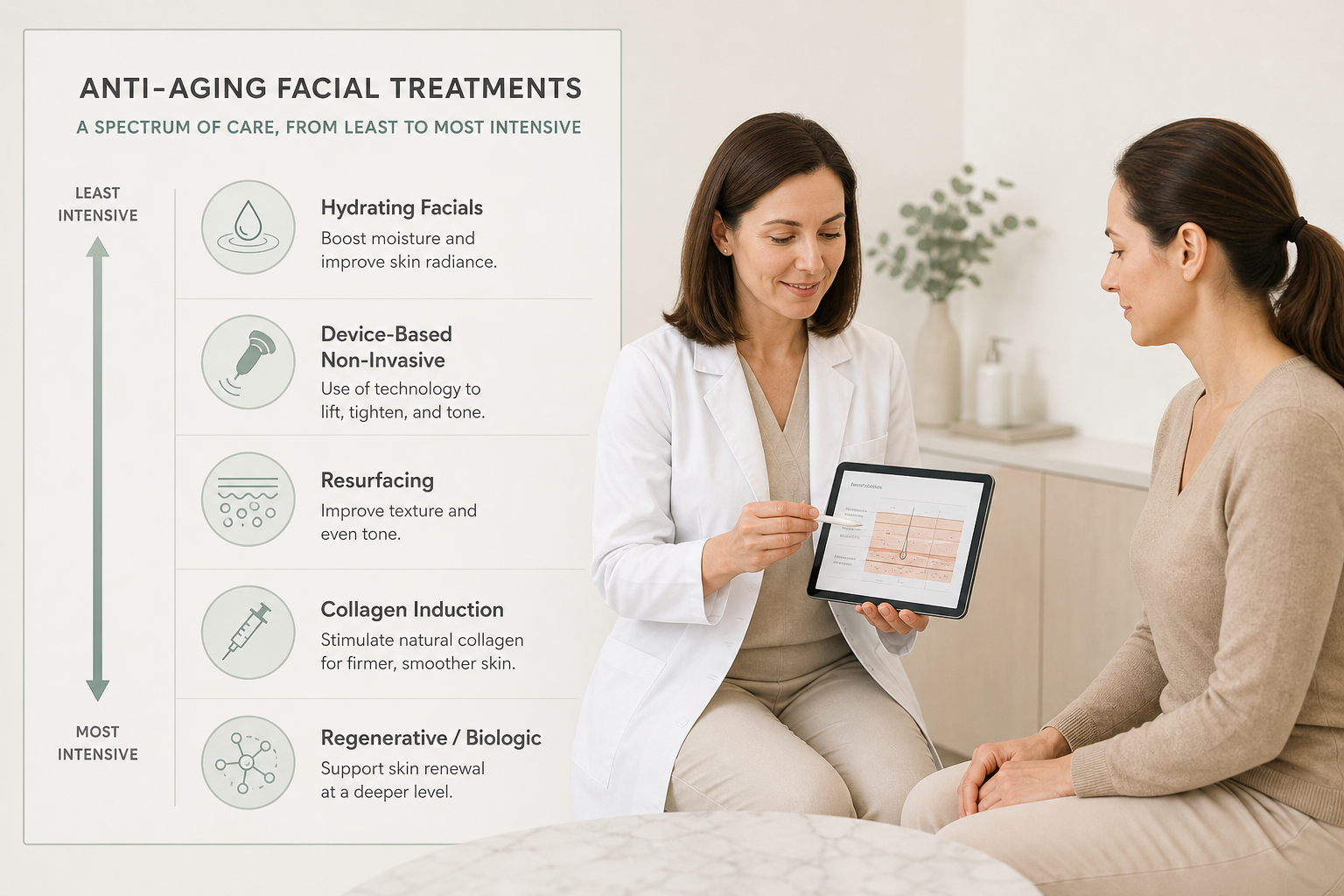
Professional anti-aging facials broadly fall into five categories: hydrating and nourishing facials, device-based non-invasive treatments, resurfacing treatments, collagen induction therapies, and regenerative or biologic facials. Each category targets different layers of the skin and different aspects of the aging process. The sections below explain each category in practical terms.
Hydrating and Nourishing Facials
Treatments such as the HydraFacial, oxygen facial, vitamin C facial, and enzyme facial sit at the gentler end of the spectrum. The HydraFacial uses a multi-step vortex system to cleanse, exfoliate, extract, and infuse the skin with hydrating serums containing hyaluronic acid, peptides, and antioxidants. It is widely used for dull, dehydrated, or mildly textured skin and produces an immediate improvement in radiance with zero downtime. An oxygen facial delivers pressurised oxygen alongside anti-aging serums to temporarily plump and brighten the skin. Enzyme facials use fruit-derived enzymes — typically papain or bromelain — to dissolve dead skin cells gently, making them a good option for sensitive skin that cannot tolerate stronger acids.
These treatments are best understood as maintenance and skin barrier support rather than corrective procedures. They do not meaningfully stimulate collagen production or address established skin laxity, but they can improve hydration, tone, and the overall condition of the skin barrier — which is particularly important for mature skin that tends toward dryness. Results are visible immediately but are not long-lasting without regular sessions.
Device-Based Non-Invasive Treatments
Microcurrent facials and LED light therapy are the two most established device-based options in this category. A microcurrent facial delivers low-level electrical currents that stimulate the facial muscles and underlying tissue, producing a temporary lifting and firming effect that is sometimes described as a non-surgical facelift. The treatment is painless, requires no downtime, and is suitable for most skin types. Results are cumulative with a course of sessions and require ongoing maintenance to sustain. Microcurrent is particularly popular for early jowling, brow heaviness, and mild loss of facial definition.
LED light therapy — specifically red light in the 630–660nm wavelength range — has a reasonable body of evidence supporting its ability to stimulate fibroblast activity and support collagen and elastin production over a course of treatments. It is non-invasive, painless, and safe for all skin tones including darker Fitzpatrick skin types. LED is often used as a standalone treatment for mild aging concerns or as an add-on after more intensive procedures to support recovery and enhance results. It does not resurface the skin or address significant laxity, but it can improve skin quality and reduce redness over time.
Microdermabrasion uses fine crystals or a diamond-tipped wand to mechanically exfoliate the outermost skin layer, improving texture, tone, and the appearance of superficial fine lines. It promotes cell turnover and can improve the absorption of topical skincare. It is a low-downtime option but is not suitable for active skin conditions and has limited effect on deeper wrinkles or laxity.
Resurfacing Treatments
Chemical peels, fractional laser resurfacing, and IPL photofacials all work by removing or disrupting the outer layers of the skin to stimulate cellular renewal and, in the case of medium and deep peels and fractional lasers, to trigger a wound-healing response that drives new collagen production. The depth of treatment determines both the results and the recovery involved.
Light chemical peels — using alpha hydroxy acids (AHAs) such as glycolic or lactic acid at lower concentrations — improve skin texture, mild pigmentation, and surface dullness with minimal downtime of one to three days of mild flaking. Medium-depth peels, such as the VI Peel or TCA-based formulations, penetrate deeper into the dermis and can address more established fine lines, sun damage, and uneven skin tone, but require five to seven days of peeling and redness. Deep chemical peels produce more significant skin resurfacing but involve substantial downtime and are typically reserved for specific clinical indications under medical supervision.
Fractional laser resurfacing — including devices such as Clear + Brilliant for milder concerns and more ablative fractional lasers for advanced photoaging — creates microscopic treatment zones in the skin, leaving surrounding tissue intact to accelerate healing. This approach can meaningfully improve wrinkles, skin texture, and pigmentation, with results developing over several weeks as new collagen forms. Downtime ranges from two to five days for non-ablative fractional lasers to one to two weeks for ablative options.
IPL (intense pulsed light) photofacials target pigmentation, redness, and vascular irregularities caused by sun damage and rosacea. IPL is effective for photoaging-related concerns but is not suitable for darker skin tones (Fitzpatrick IV–VI) due to the risk of post-inflammatory hyperpigmentation or burns. Patients with darker skin should discuss alternative options — such as microneedling or LED — with their practitioner before proceeding with any light-based resurfacing treatment.
Collagen Induction Therapies
Microneedling — also called collagen induction therapy — uses a device with fine needles to create controlled micro-injuries in the dermis, triggering the skin’s natural healing response and stimulating new collagen and elastin production. It is one of the most evidence-supported minimally invasive treatments for fine lines, skin texture, enlarged pores, and mild skin laxity. A course of three to six sessions spaced four to six weeks apart is typically recommended, with results continuing to develop for up to three to six months after the final session. Microneedling is generally safe for all skin tones, making it a useful option for patients who cannot tolerate IPL or certain lasers.
RF microneedling combines the collagen-induction effect of microneedling with radiofrequency (RF) energy delivered through the needle tips into the deeper dermis. Devices such as Morpheus8, Potenza, and Vivace are used for this purpose. The addition of RF energy allows for greater skin tightening and remodelling at deeper tissue levels, making RF microneedling particularly useful for skin laxity, jowling, and deeper wrinkles. Results develop gradually over two to three months and can be sustained for twelve to eighteen months or longer with appropriate maintenance.
It is worth noting that the FDA issued a safety communication regarding RF microneedling devices, highlighting risks including burns, scarring, fat atrophy (unintended loss of facial fat), and nerve damage when treatments are performed incorrectly or with inappropriate settings. These risks are significantly reduced when treatment is carried out by a trained and experienced practitioner using a properly calibrated device. Patients should ask about their practitioner’s specific training and experience with the device being used before proceeding.
Regenerative and Biologic Facials
PRP (Platelet-Rich Plasma) treatment — sometimes called the Vampire Facial when combined with microneedling — uses a concentration of the patient’s own platelets, which are rich in growth factors, to support tissue repair and collagen stimulation. PRP is typically applied topically after microneedling or injected into the skin. Evidence for PRP in skin rejuvenation is growing, though study quality varies and results depend on the concentration and preparation method used. It is generally well tolerated and carries a low risk of allergic reaction because it uses the patient’s own blood.
PRF (Platelet-Rich Fibrin) is considered a next-generation development of PRP, processed without anticoagulants to produce a fibrin matrix that releases growth factors more slowly and may sustain the regenerative effect for longer. Clinical evidence for PRF in aesthetic skin treatments is still developing, but early results are promising for skin quality improvement and mild volume support.
Exosome therapy is an emerging regenerative facial treatment that uses exosomes — nano-sized extracellular vesicles derived from stem cells — to deliver growth factors, proteins, and genetic signalling molecules into the skin. Exosome facials are increasingly offered as a standalone treatment or in combination with microneedling to enhance the skin’s repair response. Interest in exosome therapy has grown significantly in 2024–2025, and early clinical data suggest potential benefits for skin texture, tone, and collagen stimulation. However, the evidence base is still limited compared to more established treatments, and regulatory status varies by country. Patients should ask their practitioner about the source, quality, and regulatory standing of any exosome product being used.
Choosing the Right Treatment by Skin Concern
Rather than selecting a treatment by name, it is often more useful to start with your primary concern and work backwards to the appropriate treatment category.
- Fine lines and early wrinkles: Microneedling, light-to-medium chemical peels, LED light therapy, or HydraFacial with peptide serums. Microcurrent can help with mild dynamic wrinkles around the eyes and forehead.
- Deeper wrinkles and established skin laxity: RF microneedling, medium-to-deep chemical peels, or fractional laser resurfacing. These concerns may also benefit from injectable treatments such as dermal fillers or biostimulatory injectables discussed alongside facial treatments.
- Uneven skin tone, age spots, and sun damage: IPL photofacial (for lighter skin tones), medium chemical peels, or fractional laser. Vitamin C facials and brightening facials can support maintenance between more intensive sessions.
- Dullness and dehydration: HydraFacial, oxygen facial, enzyme facial, or LED light therapy. These are effective maintenance options that improve radiance without downtime.
- Facial volume loss and hollowing: Facial treatments alone do not restore lost volume. Dermal fillers using hyaluronic acid or biostimulatory injectables are the appropriate treatment category for this concern, often used alongside skin-quality treatments.
Anti-Aging Facials by Decade
The most appropriate treatment approach shifts meaningfully across different life stages, reflecting the difference between prevention and correction.
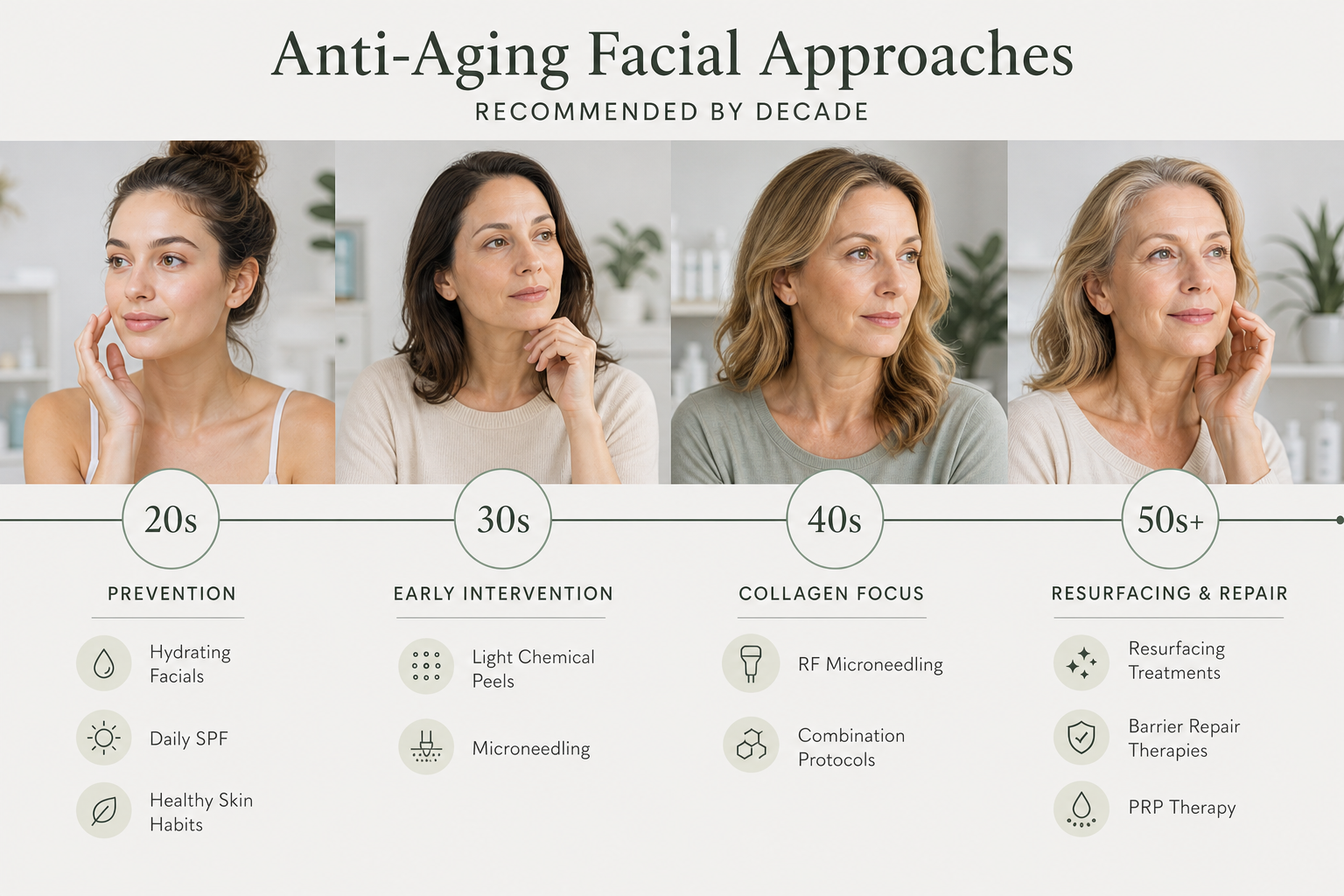
20s: Collagen production is still robust, so the focus is on prevention — protecting the skin barrier, managing early photoaging, and establishing good skincare habits. Hydrating facials, enzyme peels, and LED light therapy are appropriate. SPF use is the single most impactful preventative measure at this stage.
30s: Cell turnover begins to slow and early fine lines may appear, particularly around the eyes and forehead. Light chemical peels, HydraFacial, and microneedling can address early texture changes and support collagen levels. This is a good decade to begin a regular professional facial routine.
40s: Collagen decline accelerates and skin laxity becomes more noticeable. Microneedling, RF microneedling, medium chemical peels, and fractional laser become more relevant. Combination treatment protocols — for example, RF microneedling followed by LED therapy — can address multiple concerns simultaneously.
50s and beyond: Mature skin over 50 often benefits from treatments that combine skin resurfacing with deeper collagen stimulation and hydration support. RF microneedling, fractional laser, PRP or PRF, and medium-depth peels are commonly used. Skin barrier repair becomes increasingly important, and post-treatment skincare — including ceramides, hyaluronic acid, and broad-spectrum SPF — plays a significant role in maintaining results.
Combination Treatment Protocols
One of the most meaningful advances in professional anti-aging treatment is the use of combination treatment protocols, where two or more modalities are used together or in sequence to address different aspects of skin aging simultaneously. Common pairings include microneedling with PRP or exosome therapy (to enhance the regenerative response), microcurrent with LED light therapy (for lifting and collagen support with zero downtime), and RF microneedling followed by a hydrating or barrier-repair facial (to support recovery and optimise results). A practitioner experienced in combination protocols can design a treatment plan that addresses skin laxity, texture, pigmentation, and hydration in a structured sequence, often producing better outcomes than any single treatment alone. These protocols should be tailored individually and are not appropriate for every patient.
Results Timeline and Cost Overview
| Treatment | Best For | Downtime | When Results Appear | Approximate Cost Per Session |
|---|---|---|---|---|
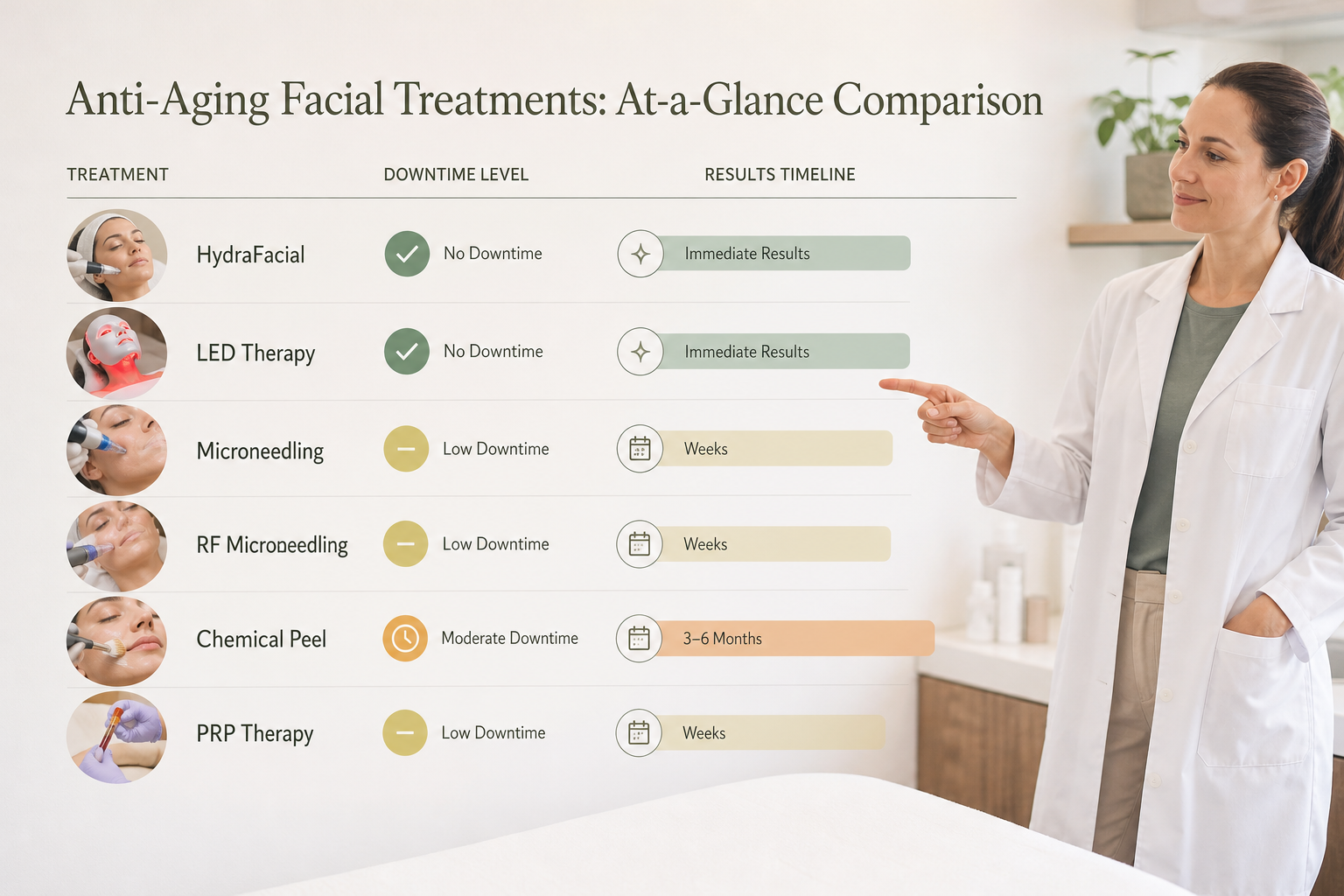
| HydraFacial | Dullness, dehydration, mild texture | None | Immediately | £150–£250 / $150–$300 |
| LED Light Therapy | Mild aging, redness, collagen support | None | 4–8 weeks (course) | £50–£120 / $60–$150 |
| Microcurrent Facial | Mild laxity, lifting, definition | None | Immediately; cumulative over course | £80–£180 / $100–$200 |
| Light Chemical Peel | Texture, tone, mild pigmentation | 1–3 days | 1–2 weeks | £80–£200 / $100–$250 |
| Medium Chemical Peel | Wrinkles, sun damage, pigmentation | 5–7 days | 2–4 weeks | £200–£500 / $250–$600 |
| Microneedling | Fine lines, texture, pores, mild laxity | 1–3 days | 4–8 weeks; full results 3–6 months | £200–£400 / $250–$500 |
| RF Microneedling | Skin laxity, deeper wrinkles, tightening | 2–5 days | 6–12 weeks; full results 3–6 months | £400–£900 / $600–$1,200+ |
| IPL Photofacial | Pigmentation, redness, sun damage | 1–5 days | 2–4 weeks | £150–£350 / $200–$450 |
| PRP / PRF Facial | Skin quality, collagen, regeneration | 1–3 days | 4–8 weeks; full results 3–4 months | £300–£600 / $400–$800 |
| Exosome Facial | Skin quality, regeneration, emerging use | 1–3 days (if combined with needling) | 4–8 weeks | £400–£800 / $500–$1,000+ |
Costs vary significantly by location, clinic, and practitioner experience. The figures above are approximate ranges for guidance only. A course of treatments is typically required for most options, which affects the overall investment.
Post-Treatment Skincare: Extending Your Results
What you do after a professional facial treatment has a meaningful impact on how long results last and how well the skin recovers. After any resurfacing or collagen-induction treatment, the skin barrier is temporarily compromised and requires gentle, supportive care. Broad-spectrum SPF 30 or higher is essential — UV exposure after resurfacing can trigger post-inflammatory hyperpigmentation and accelerate the breakdown of newly formed collagen. Fragrance-free moisturisers containing ceramides and hyaluronic acid help support skin barrier repair during the recovery period.
Once the skin has fully healed — typically two to four weeks after more intensive treatments — reintroducing evidence-supported active ingredients such as retinoids, vitamin C, and AHAs can help maintain and extend the results of professional treatments. Retinoids in particular support ongoing cell turnover and collagen stimulation between sessions. Any post-treatment skincare plan should be discussed with your treating practitioner, as the appropriate timing and product selection will depend on the specific treatment received and your skin’s response.
Skin Tone Considerations
Not all anti-aging facial treatments are equally safe across all skin tones. Patients with darker skin tones (Fitzpatrick IV–VI) face a higher risk of post-inflammatory hyperpigmentation with certain light-based and heat-based treatments. IPL photofacials and some ablative laser resurfacing treatments are generally not recommended for darker skin tones without specialist assessment. Microneedling, LED light therapy, and enzyme or lactic acid peels are generally considered safer options across a wider range of skin tones, though individual assessment is always required. If you have a darker skin tone, it is particularly important to consult a practitioner with specific experience in treating your skin type before undergoing any resurfacing or energy-based treatment.
Professional vs. At-Home Anti-Aging Facials
The professional vs. at-home facial distinction matters more for anti-aging treatments than for general skincare. At-home devices — including consumer-grade LED masks, microcurrent tools, and dermarollers — can provide mild maintenance benefits but operate at significantly lower energy levels than professional equipment. They are not equivalent to clinical treatments and should not be expected to produce the same results. At-home skincare with evidence-supported ingredients such as retinoids, vitamin C, niacinamide, and SPF remains the most impactful daily intervention for aging skin, and it complements rather than replaces professional treatments. Professional facials provide access to clinical-grade devices, higher-concentration actives, and practitioner expertise that cannot be replicated at home.
Frequently Asked Questions
At what age should I start getting anti-aging facials?
There is no fixed age, but preventative treatments such as hydrating facials, enzyme peels, and LED light therapy can be beneficial from the mid-20s onwards. More corrective treatments such as microneedling or chemical peels are typically more relevant from the 30s and 40s, when collagen decline and cell turnover slowdown become more noticeable. Starting earlier with gentle maintenance is generally more effective than waiting until concerns are advanced.
Which facial produces the fastest visible results?
Hydrating facials such as the HydraFacial and oxygen facial produce the most immediate visible improvement — typically within hours of treatment. However, these results are largely due to hydration and temporary plumping rather than structural skin changes. Treatments that stimulate collagen production, such as microneedling or RF microneedling, take longer to show their full effect — often two to six months — but produce more durable changes in skin quality and firmness.
How often should I have anti-aging facial treatments?
Frequency depends on the treatment type. Gentle hydrating or LED facials can be repeated monthly or even more frequently. Microneedling is typically performed in a course of three to six sessions spaced four to six weeks apart, followed by maintenance sessions every three to six months. More intensive treatments such as medium chemical peels or RF microneedling are usually performed as a course of two to three sessions with longer intervals, and maintenance is less frequent. Your practitioner will recommend a schedule based on your skin’s response and goals.
Are anti-aging facials safe for sensitive skin?
Many anti-aging facials are suitable for sensitive skin, but the choice of treatment matters. Enzyme facials, LED light therapy, and HydraFacial are generally well tolerated by sensitive skin. Chemical peels, microneedling, and RF microneedling require careful assessment and may need to be approached more cautiously or avoided during active skin flares. Always disclose any skin conditions, allergies, or sensitivities to your practitioner before treatment.
Can facials replace dermal fillers or anti-wrinkle injections?
Facials and injectables address different aspects of aging and are not direct substitutes for one another. Facials improve skin quality, texture, tone, and to varying degrees, firmness. They cannot restore significant facial volume loss — which is best addressed with dermal fillers — or relax dynamic wrinkles caused by muscle movement, which is the role of neuromodulators such as botulinum toxin. Many patients benefit from a combination of skin-quality treatments and injectables, tailored to their specific concerns.
Is RF microneedling safe?
RF microneedling is considered safe when performed by a trained and experienced practitioner using appropriate device settings. The FDA has issued a safety communication noting that risks — including burns, scarring, and unintended fat loss — can occur when the treatment is performed incorrectly. Choosing a qualified medical or aesthetic professional with specific training in the device being used significantly reduces these risks. A thorough consultation and skin assessment should always precede treatment.
Choosing the Right Anti-Aging Facial for Your Skin
The best facial for aging skin is the one that matches your specific concerns, skin type, lifestyle, and realistic expectations — not necessarily the most advanced or most expensive option available. For mild concerns or maintenance, gentle treatments such as HydraFacial, LED light therapy, or enzyme facials offer meaningful benefits with no downtime. For more established wrinkles, skin laxity, or photoaging, treatments such as microneedling, RF microneedling, or medium chemical peels can produce more significant and longer-lasting improvements, though they require more recovery time and a greater investment. Emerging options such as exosome therapy show genuine promise but are best approached with realistic expectations given the still-developing evidence base.
A consultation with a qualified aesthetic practitioner or dermatologist is the most reliable way to identify which treatment — or combination of treatments — is appropriate for your skin. A good practitioner will assess your skin in person, discuss your goals and medical history, and recommend a realistic treatment plan rather than a one-size-fits-all approach. Post-treatment skincare, sun protection, and maintenance sessions all play an important role in sustaining results over time.
