


Rosacea is a chronic inflammatory skin condition that affects millions of people, causing persistent facial redness, visible blood vessels, skin sensitivity, and in some cases, papules and pustules. Building the right skincare routine is one of the most important steps in managing rosacea day to day, yet it is also one of the most confusing. The wrong product can trigger a flare within minutes, while the right combination of gentle, barrier-supporting ingredients can meaningfully reduce redness, discomfort, and reactivity over time. This article explains how to build a gentle rosacea skincare routine, which ingredients are most likely to help, which to avoid, and when professional treatment may be worth discussing with a qualified practitioner.
Key Takeaways
- Rosacea-prone skin requires a simplified, fragrance-free routine focused on barrier repair and gentle hydration rather than active exfoliation or harsh cleansing.
- Certain ingredients — including niacinamide, azelaic acid, and ceramides — have evidence supporting their use in rosacea-prone skin, while others such as alcohol, fragrance, and strong retinoids are common triggers.
- Sun protection is essential for rosacea management; UV exposure is one of the most consistent triggers for flares across all rosacea subtypes.
- Skincare alone may not be sufficient for moderate to severe rosacea; prescription treatments and in-clinic procedures may be appropriate depending on the subtype and severity.
- Individual triggers vary significantly, so a patch-testing approach and a trigger diary can help identify which products and environmental factors worsen your specific rosacea.
Understanding Rosacea Before Building a Routine
Rosacea is not a single condition but a spectrum of subtypes, each with distinct characteristics. Erythematotelangiectatic rosacea (subtype 1) is characterised by persistent central facial redness and visible capillaries. Papulopustular rosacea (subtype 2) resembles acne but differs in its inflammatory mechanism and requires different treatment. Phymatous rosacea (subtype 3) involves skin thickening, most commonly on the nose, while ocular rosacea (subtype 4) affects the eyes and eyelids. Understanding which subtype or combination of subtypes you have matters because it influences which skincare ingredients and professional treatments are most appropriate.
The underlying mechanisms of rosacea involve a dysregulated innate immune response, impaired skin barrier function, neurovascular dysregulation, and an altered skin microbiome. The skin barrier in rosacea-prone skin is often compromised, meaning it loses moisture more readily and allows irritants to penetrate more easily. This is why harsh cleansers, exfoliants, and fragranced products cause disproportionate reactions in people with rosacea. A well-designed skincare routine addresses barrier repair as a primary goal rather than treating rosacea as a simple cosmetic concern.
The Core Principles of a Rosacea-Friendly Skincare Routine
The foundation of any effective rosacea skincare routine is simplicity. Using fewer products reduces the cumulative risk of encountering a trigger ingredient, and it makes it easier to identify what is causing a reaction if one occurs. A basic routine for rosacea-prone skin typically involves a gentle cleanser, a hydrating and barrier-supporting moisturiser, and a broad-spectrum mineral sunscreen applied every morning. Evening routines may include a targeted active ingredient such as azelaic acid or niacinamide, applied after cleansing and before moisturising.
Consistency matters more than complexity. Rotating between many products or frequently introducing new ones increases the likelihood of irritation. When adding a new product, introduce it one at a time and allow at least two to three weeks before assessing whether it is well tolerated. Patch testing on a small area of skin before full-face application is a practical precaution for anyone with reactive or rosacea-prone skin.
Choosing the Right Cleanser for Rosacea
Cleansing is the step most likely to disrupt the skin barrier if done incorrectly. For rosacea-prone skin, the ideal cleanser is a low-pH, fragrance-free, non-foaming or gently foaming formula that removes surface impurities without stripping the skin's natural lipids. Micellar water or cream cleansers are often well tolerated. Gel cleansers can work if they are genuinely gentle and free from sulphates, alcohol, and fragrance.
Avoid cleansers containing sodium lauryl sulphate (SLS), menthol, eucalyptus, peppermint, or high concentrations of essential oils. These ingredients are common rosacea triggers and can cause immediate flushing, stinging, or prolonged redness. Water temperature also matters: hot water dilates blood vessels and can worsen facial redness, so lukewarm water is preferable. Pat the skin dry gently with a soft cloth rather than rubbing, which can further aggravate inflammation.
Moisturising and Barrier Repair in Rosacea-Prone Skin
Moisturising is arguably the most important step in a rosacea skincare routine because it directly addresses the impaired skin barrier that characterises the condition. A good rosacea moisturiser should contain a combination of humectants, emollients, and occlusives to attract moisture, soften the skin surface, and reduce transepidermal water loss.
Ceramides are among the most clinically relevant ingredients for rosacea-prone skin. Ceramides are lipid molecules that form a significant part of the skin barrier, and research has shown that ceramide levels are reduced in rosacea-affected skin. Moisturisers containing ceramides, along with cholesterol and fatty acids in physiological ratios, may help restore barrier integrity over time. Hyaluronic acid is a well-tolerated humectant that draws water into the skin and is generally suitable for rosacea-prone skin, provided the product does not contain other irritating ingredients. Glycerin is another gentle humectant with a long safety record in sensitive skin formulations.
Niacinamide (vitamin B3) deserves particular mention. At concentrations of two to five percent, niacinamide has demonstrated anti-inflammatory properties, supports ceramide synthesis, and may help reduce redness and improve skin barrier function in rosacea-prone skin. It is generally well tolerated, though some individuals report mild flushing at higher concentrations, so starting with a lower-percentage product is a sensible approach.
Active Ingredients That May Help Rosacea
Beyond basic moisturisation, certain active ingredients have evidence supporting their use in rosacea management. It is important to note that most of these have been studied in the context of prescription-strength formulations or specific rosacea subtypes, and results in over-the-counter products may vary.
Azelaic Acid
Azelaic acid is one of the best-supported topical ingredients for rosacea. It is available in prescription formulations (typically 15–20%) and in lower concentrations in some over-the-counter products. Azelaic acid has anti-inflammatory, antimicrobial, and antioxidant properties, and it has been shown in clinical studies to reduce papules, pustules, and erythema in papulopustular rosacea. It is generally well tolerated, though some users experience mild tingling or temporary redness on initial application. Starting with a lower concentration and applying every other day before building to daily use can help minimise this.
Niacinamide
As noted above, niacinamide at two to five percent concentration may reduce redness and support barrier function. It is available in many over-the-counter serums and moisturisers and is one of the more accessible active ingredients for people managing rosacea through skincare alone.
Green Tea Extract
Green tea extract contains polyphenols with antioxidant and anti-inflammatory properties. Some small studies have suggested that topical green tea formulations may reduce erythema and papulopustular lesions in rosacea, though the evidence base is less robust than for azelaic acid. It is generally well tolerated and may be a useful addition to a rosacea routine when present in a well-formulated product.
Centella Asiatica
Centella asiatica (also known as cica or gotu kola) is increasingly used in sensitive and rosacea-prone skin formulations. It contains compounds such as asiaticoside and madecassoside that have demonstrated wound-healing and anti-inflammatory properties in laboratory and some clinical settings. Evidence specific to rosacea remains limited, but it is generally considered a low-irritation ingredient suitable for reactive skin.
Ingredients to Avoid with Rosacea
Knowing what to avoid is as important as knowing what to use. Common skincare ingredients that frequently trigger rosacea flares include:
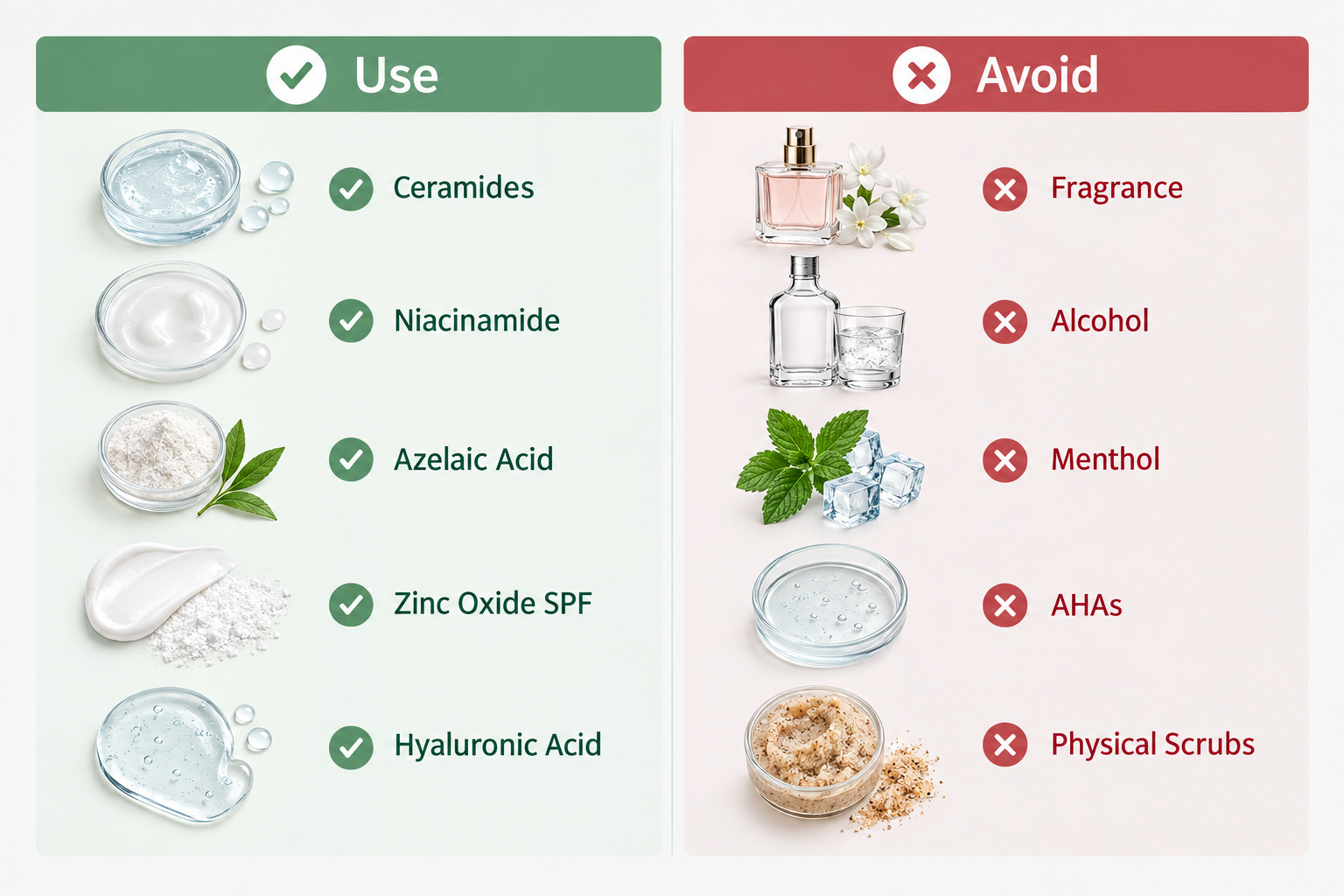
- Fragrance and parfum — one of the most common causes of contact irritation in sensitive skin; both synthetic and natural fragrances can trigger flushing and inflammation.
- Alcohol (denatured or SD alcohol) — drying and barrier-disrupting; found in many toners, setting sprays, and lightweight serums.
- Menthol, peppermint, and eucalyptus — cooling agents that stimulate nerve endings and can cause immediate flushing.
- Strong retinoids — prescription-strength retinoids such as tretinoin can cause significant irritation in rosacea-prone skin; if retinoids are used, a very low concentration and a buffer method (applying over moisturiser) may reduce irritation, but this should be discussed with a dermatologist or qualified practitioner.
- Alpha hydroxy acids (AHAs) at high concentrations — glycolic acid and lactic acid at high percentages can disrupt the skin barrier and trigger flares; low-concentration lactic acid may be tolerated by some individuals but should be introduced cautiously.
- Physical scrubs and exfoliating brushes — mechanical exfoliation is generally contraindicated in rosacea-prone skin as it can worsen inflammation and damage fragile capillaries.
- Witch hazel — often marketed as a natural toner, but it contains tannins and alcohol that can be irritating to rosacea-prone skin.
- Camphor and clove oil — common in some acne and spot treatments; highly irritating to reactive skin.
Sun Protection: A Non-Negotiable Step
UV exposure is one of the most consistently reported triggers for rosacea flares across all subtypes. Ultraviolet radiation stimulates the release of inflammatory mediators, promotes vascular dilation, and can worsen both erythema and papulopustular lesions. Daily broad-spectrum sun protection is therefore not optional in a rosacea skincare routine — it is one of the most evidence-supported steps available.
Mineral sunscreens containing zinc oxide or titanium dioxide are generally better tolerated by rosacea-prone skin than chemical sunscreens. Chemical UV filters such as oxybenzone and avobenzone can cause stinging and flushing in sensitive skin, particularly around the eyes and cheeks. Zinc oxide, in addition to providing broad-spectrum UV protection, has mild anti-inflammatory properties and is unlikely to cause irritation. Look for a formulation with SPF 30 or higher, ideally in a lightweight, fragrance-free base. Tinted mineral sunscreens have the added benefit of providing some colour correction for redness, which many people with rosacea find useful.
Lifestyle Triggers and Skincare Interactions
Skincare products are only one part of rosacea management. Environmental and lifestyle triggers can significantly influence how reactive the skin is on any given day, and they can make even well-tolerated products seem problematic. Common rosacea triggers beyond skincare include heat, spicy foods, alcohol consumption, emotional stress, strenuous exercise, wind, and cold temperatures. Identifying personal triggers through a diary or elimination approach can help distinguish between a product reaction and an environmental flare.
Temperature extremes during skincare application can also matter. Applying products to flushed or overheated skin may increase absorption of active ingredients and heighten the risk of irritation. Allowing the skin to cool and calm before applying actives — particularly azelaic acid or niacinamide — may improve tolerability.
When Skincare Alone Is Not Enough
A well-constructed skincare routine can meaningfully reduce rosacea symptoms and improve skin comfort, but it is unlikely to fully control moderate to severe rosacea on its own. Prescription topical treatments such as metronidazole, ivermectin cream, and higher-concentration azelaic acid have stronger clinical evidence for reducing papulopustular rosacea than most over-the-counter options. Oral antibiotics, low-dose doxycycline, and in some cases isotretinoin may be appropriate for more severe presentations. These require assessment and prescription by a qualified medical professional.
In-clinic aesthetic treatments may also be relevant for certain rosacea features. Vascular laser treatments such as pulsed dye laser (PDL) and intense pulsed light (IPL) therapy can reduce visible blood vessels and persistent background redness in erythematotelangiectatic rosacea. These treatments work by targeting haemoglobin in dilated capillaries, causing them to collapse and be reabsorbed. Multiple sessions are typically required, and results vary depending on skin tone, vessel depth, and the specific device used. These procedures do not cure rosacea but may provide meaningful and lasting reduction in visible redness for suitable candidates.
Brimonidine and oxymetazoline are prescription topical vasoconstrictors that can temporarily reduce facial redness for several hours. They are not a long-term solution and can cause rebound redness if overused, but they may be useful for specific occasions. A dermatologist or aesthetic medicine practitioner can advise on whether these options are appropriate for your situation.
Building Your Routine: A Practical Framework
A practical rosacea skincare routine does not need to be complicated. The following framework reflects the principles discussed above and can be adapted based on individual tolerance and specific rosacea subtype.
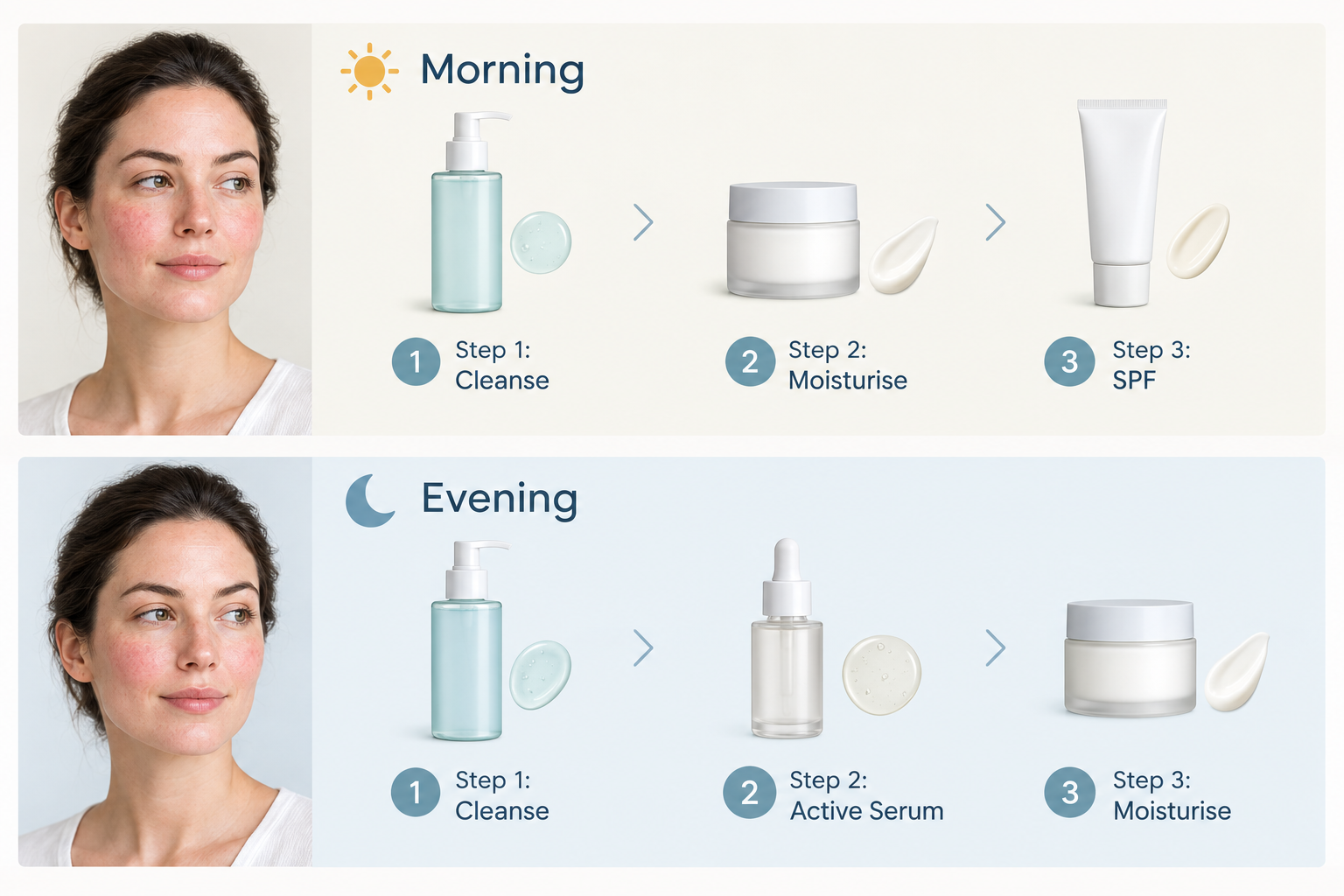
Morning Routine
- Cleanse with a gentle, fragrance-free, low-pH cleanser using lukewarm water.
- Apply a hydrating serum or moisturiser containing ceramides, hyaluronic acid, or niacinamide while skin is slightly damp.
- Apply a broad-spectrum mineral SPF 30+ sunscreen as the final step before makeup if worn.
Evening Routine
- Cleanse as in the morning; if wearing sunscreen or makeup, a gentle micellar water first cleanse followed by a cream cleanser can remove residue without over-stripping.
- Apply an active ingredient such as azelaic acid or a niacinamide serum if tolerated, starting every other night and building to nightly use.
- Seal with a richer ceramide-containing moisturiser to support overnight barrier repair.
This routine uses a small number of products with well-supported ingredients and avoids the common triggers outlined earlier. It can be adjusted as tolerance improves or as specific concerns — such as papulopustular lesions or persistent redness — are addressed with professional guidance.
Frequently Asked Questions
Can I use retinol if I have rosacea?
Retinol and stronger retinoids can be irritating for rosacea-prone skin, particularly during the initial adjustment period. Some people with rosacea tolerate very low concentrations of retinol (0.025–0.05%) when introduced slowly and applied over a moisturiser to buffer the effect. However, this should be approached cautiously and ideally discussed with a dermatologist, as retinoids can worsen redness and sensitivity in some individuals, particularly those with erythematotelangiectatic rosacea.
Is vitamin C serum safe for rosacea?
Vitamin C (ascorbic acid) in its pure form is acidic and can cause stinging and irritation in rosacea-prone skin. Some people tolerate stabilised or derivative forms of vitamin C, such as sodium ascorbyl phosphate or ascorbyl glucoside, better than pure ascorbic acid. If you want to include an antioxidant in your routine, niacinamide or green tea extract may be better-tolerated alternatives. Patch testing is advisable before applying any vitamin C product to the full face.
How long does it take to see improvement with a rosacea skincare routine?
Skin barrier improvement can begin within a few weeks of consistent use of appropriate products, but meaningful reduction in redness and reactivity typically takes six to twelve weeks. Active ingredients such as azelaic acid may show visible effects on papulopustular lesions within four to eight weeks of regular use. Results vary depending on rosacea subtype, severity, and whether lifestyle triggers are also being managed.
Should I avoid all exfoliation with rosacea?
Physical exfoliation — scrubs, brushes, and cleansing devices — is generally not recommended for rosacea-prone skin as it can worsen inflammation and damage fragile capillaries. Very gentle chemical exfoliation with low-concentration lactic acid or polyhydroxy acids (PHAs) may be tolerated by some individuals with rosacea, but this should be introduced with caution and is not necessary for most people. Barrier repair and hydration are more important priorities than exfoliation in rosacea management.
Can makeup make rosacea worse?
Makeup itself does not necessarily worsen rosacea, but certain formulations can. Products containing fragrance, alcohol, or irritating preservatives may trigger reactions. Mineral-based makeup is often better tolerated. Green-tinted colour-correcting primers can help neutralise redness. Thorough but gentle removal of makeup at the end of the day is important to avoid leaving residue that could irritate the skin overnight.
When should I see a doctor or dermatologist about my rosacea?
If your rosacea is causing significant discomfort, is not responding to a gentle skincare routine after two to three months, is affecting your eyes, or is causing skin thickening, a consultation with a dermatologist or qualified aesthetic medicine practitioner is advisable. Prescription treatments and in-clinic procedures can offer more targeted management than over-the-counter skincare alone, and early intervention may help prevent progression.
Building a Rosacea Routine That Works for Your Skin
Managing rosacea through skincare requires patience, consistency, and a willingness to simplify rather than add more products. The best skincare for rosacea is not necessarily the most expensive or the most complex — it is the routine that consistently supports the skin barrier, avoids known triggers, and includes daily sun protection. Ingredients such as ceramides, niacinamide, azelaic acid, and mineral SPF have the strongest evidence base for rosacea-prone skin and form a practical foundation for most people.
It is equally important to recognise the limits of skincare. If rosacea is moderate to severe, causing persistent papules and pustules, significant vascular changes, or affecting quality of life, a consultation with a dermatologist or qualified aesthetic practitioner can open the door to prescription treatments and in-clinic options that go beyond what topical skincare can achieve. A professional assessment can also help confirm whether rosacea is the correct diagnosis, as conditions such as perioral dermatitis, seborrhoeic dermatitis, and lupus can present with similar facial redness and require different management approaches. A thoughtful, evidence-informed routine — combined with professional support where needed — offers the most realistic path to calmer, more comfortable skin.
