


Unwanted facial hair is one of the most common cosmetic concerns among both women and men, yet the range of available removal methods can make choosing the right approach genuinely confusing. Some methods offer temporary results that last days, while others can significantly reduce hair growth over months or years. Understanding how each option works, who it suits, and what realistic outcomes look like is essential before committing to any treatment.
Key Takeaways
- No single method is universally the best way to remove facial hair — the right choice depends on hair colour, skin tone, budget, pain tolerance, and whether you want temporary or long-term reduction.
- Laser hair removal and intense pulsed light (IPL) offer the most significant long-term hair reduction but require multiple sessions and are not equally effective on all hair and skin types.
- Temporary methods such as threading, waxing, and dermaplaning are widely accessible and suitable for most people, but results typically last only days to a few weeks.
- Electrolysis is the only method currently recognised as capable of permanent hair removal, though it is time-intensive and best suited to smaller areas.
- A consultation with a qualified practitioner is advisable before starting any energy-based treatment, particularly for individuals with darker skin tones or hormonal conditions affecting hair growth.
Why Facial Hair Removal Requires a Different Approach
Facial skin is generally thinner, more sensitive, and more visible than skin on the body, which means the margin for error with any hair removal method is smaller. The face also contains a higher density of sebaceous glands and is more prone to post-inflammatory hyperpigmentation, particularly in individuals with medium to darker skin tones. Additionally, facial hair growth patterns are often influenced by hormonal factors — including conditions such as polycystic ovary syndrome (PCOS) — which can affect how well any removal method performs over time. For these reasons, methods that work well on the legs or underarms may not translate directly to the face without adjustment.
The facial areas most commonly treated include the upper lip, chin, jawline, sideburns, and the area between the eyebrows. Each of these zones has slightly different hair density, follicle depth, and skin sensitivity, which can influence which method is most appropriate.
Temporary Facial Hair Removal Methods
Temporary methods remove hair at or near the surface of the skin. They do not affect the hair follicle itself, so regrowth occurs within days to weeks depending on the technique used.
Shaving
Shaving cuts hair at the skin's surface and is one of the fastest options available. On the face, it is more commonly used by men for beard management, though some women also use facial razors or dermaplaning tools for fine vellus hair removal. Results typically last one to three days before stubble becomes visible. A persistent concern about shaving is that it causes hair to grow back with a blunt tip, which can feel coarser — though this does not change the actual hair structure or growth rate. Shaving carries a low risk of irritation, nicks, and ingrown hairs, particularly on curved areas such as the chin and jawline.
Threading
Threading is a technique that uses a twisted cotton thread to trap and pull multiple hairs from the follicle simultaneously. It is particularly precise, making it well suited to shaping eyebrows and removing hair from the upper lip and chin. Because threading removes hair from the root, results typically last two to four weeks. Threading does not involve chemicals or heat, which makes it a suitable option for individuals with sensitive skin or those using topical retinoids or other treatments that increase skin fragility. Mild redness immediately after treatment is common and usually resolves within a few hours.
Waxing
Facial waxing removes hair from the root using warm or cold wax applied to the skin and then pulled away. Results generally last three to six weeks, as the hair must regrow from the follicle. Repeated waxing over time may cause some follicles to produce finer, sparser hair, though this effect is not guaranteed. Waxing carries a risk of skin irritation, redness, and in some cases minor burns if the wax is too hot. It is generally not recommended for individuals using isotretinoin (Roaccutane), topical retinoids, or certain prescription skin treatments, as these can increase skin fragility and the risk of skin lifting during wax removal.
Depilatory Creams
Depilatory creams use alkaline chemicals — typically thioglycolate compounds — to break down the keratin structure of the hair shaft, allowing it to be wiped away. Results are similar to shaving in terms of longevity, lasting roughly two to five days. Facial-specific formulations are available and are generally milder than body versions, but a patch test is strongly recommended before use, as chemical sensitivity and allergic reactions can occur. Depilatory creams are not suitable for use near the eyes or on broken, inflamed, or sensitised skin.
Dermaplaning
Dermaplaning involves using a sterile surgical scalpel or specialised blade to gently scrape the surface of the skin at a 45-degree angle, removing both fine vellus hair (often called peach fuzz) and the outermost layer of dead skin cells. When performed by a trained aesthetician or clinician, dermaplaning can leave the skin noticeably smoother and may improve the application of skincare products and makeup. Results for hair removal typically last two to four weeks. Dermaplaning is not appropriate for active acne, rosacea flares, or highly sensitised skin, as the mechanical action can spread bacteria or cause irritation.
Longer-Lasting Facial Hair Removal Methods
The following methods target the hair follicle more directly, offering results that last significantly longer than surface-level techniques — in some cases leading to substantial long-term hair reduction.
Laser Hair Removal
Laser hair removal uses concentrated light energy at a specific wavelength to target melanin — the pigment — within the hair follicle. The absorbed energy converts to heat, which damages the follicle and inhibits future hair growth. Because the laser targets melanin, it has historically worked most effectively on individuals with a combination of darker hair and lighter skin, where the contrast between hair and skin pigment is greatest. Advances in laser technology, including Nd:YAG lasers, have improved safety and efficacy for individuals with medium to darker skin tones, though a thorough consultation and patch test remain essential.
Laser hair removal on the face typically requires a course of six to eight sessions spaced four to six weeks apart, as the treatment is only effective during the active growth phase of the hair cycle (known as the anagen phase). After completing a full course, many patients experience a significant and lasting reduction in hair density and thickness, though some maintenance sessions may be needed annually. Laser hair removal is not effective on white, grey, blonde, or very light red hair, as these lack sufficient melanin for the laser to target.
Common side effects include temporary redness, swelling, and mild discomfort during treatment. More serious but less common risks include blistering, pigmentation changes, and scarring, particularly if the treatment is not appropriately calibrated for the individual's skin type. Sun exposure before and after treatment should be minimised, and the use of broad-spectrum SPF is strongly advised throughout the treatment course.
Intense Pulsed Light (IPL)
Intense pulsed light (IPL) uses broad-spectrum light rather than a single laser wavelength to target hair follicles. The mechanism is similar to laser — light energy is absorbed by melanin in the follicle, generating heat that disrupts hair growth. IPL devices are widely available in professional clinic settings and increasingly in at-home consumer devices, though clinical-grade systems deliver higher energy levels and are generally more effective.
IPL tends to be less precise than dedicated laser systems and may be less effective on coarser or deeper facial hair. It shares the same limitation regarding hair colour — it is not suitable for white, grey, or very light hair. IPL is generally considered less suitable for darker skin tones than Nd:YAG laser, as the broad light spectrum carries a higher risk of unintended pigmentation changes. Multiple sessions are required, and results vary considerably between individuals. At-home IPL devices may offer some reduction in hair regrowth with consistent use, but clinical evidence for their long-term efficacy on facial hair is more limited than for professional treatments.
Electrolysis
Electrolysis is the only hair removal method currently recognised by regulatory bodies in several countries — including the US Food and Drug Administration — as capable of achieving permanent hair removal. The technique involves inserting a very fine probe into each individual hair follicle and delivering a small electrical current that destroys the follicle's ability to produce hair. There are two main types: galvanic electrolysis (which uses a direct current to create a chemical reaction) and thermolysis (which uses high-frequency alternating current to generate heat). A blend method combining both is also used.
Because each follicle must be treated individually, electrolysis is time-intensive and best suited to smaller facial areas such as the upper lip, chin, or eyebrow shaping. It is effective regardless of hair colour or skin tone, which makes it a valuable option for individuals who are not candidates for laser or IPL. Multiple sessions are required, and the number depends on the density of hair and the individual's hair growth cycle. Side effects can include temporary redness, swelling, and in rare cases, scarring or pigmentation changes if performed incorrectly. Choosing a qualified and experienced electrologist is important for minimising these risks.
Comparing Facial Hair Removal Methods at a Glance
| Method | How It Works | Longevity | Suitable Hair Colours | Suitable Skin Tones | Sessions Needed | Key Limitations |
|---|---|---|---|---|---|---|
| Shaving | Cuts hair at surface | 1–3 days | All | All | Ongoing | Very short-term; stubble regrowth |
| Threading | Pulls hair from root | 2–4 weeks | All | All | Ongoing | Requires skill; mild discomfort |
| Waxing | Pulls hair from root | 3–6 weeks | All | All | Ongoing | Not suitable with certain medications |
| Depilatory cream | Dissolves hair shaft | 2–5 days | All | All | Ongoing | Chemical sensitivity risk; short-term |
| Dermaplaning | Scrapes surface hair and skin | 2–4 weeks | All (vellus hair) | All | Ongoing | Not for active acne or rosacea |
| Laser hair removal | Targets follicle melanin with laser | Long-term reduction | Dark hair only | Best for lighter tones; Nd:YAG for darker | 6–8+ sessions | Ineffective on light/grey/white hair |
| IPL | Broad-spectrum light targets melanin | Long-term reduction | Dark hair only | Lighter tones preferred | 6–8+ sessions | Less precise; higher pigmentation risk on darker skin |
| Electrolysis | Electrical current destroys follicle | Permanent | All | All | Many sessions | Time-intensive; follicle-by-follicle |
Factors That Influence Which Method May Suit You
Choosing the most appropriate facial hair removal method involves weighing several personal and clinical factors rather than simply selecting the most advanced technology available.

- Hair colour and thickness: Energy-based treatments such as laser and IPL require sufficient melanin in the hair. Individuals with blonde, white, grey, or very light red facial hair are not suitable candidates for these methods and may find electrolysis or temporary methods more appropriate.
- Skin tone: Individuals with medium to darker skin tones face a higher risk of pigmentation changes with certain laser and IPL systems. Nd:YAG laser is generally considered safer for these skin types, but a thorough assessment by an experienced practitioner is essential.
- Underlying hormonal conditions: Conditions such as PCOS or elevated androgen levels can drive ongoing facial hair growth, which may reduce the long-term effectiveness of any hair removal method. Managing the underlying hormonal cause alongside hair removal treatment may improve outcomes.
- Skin sensitivity and active conditions: Active acne, rosacea, eczema, or psoriasis in the treatment area may contraindicate certain methods. Individuals using prescription topical treatments should discuss this with their practitioner before proceeding.
- Budget and time commitment: Laser and electrolysis require a financial and time investment across multiple sessions. Temporary methods have lower upfront costs but accumulate expense and effort over time.
- Desired outcome: Those seeking a permanent solution may find electrolysis or a full laser course most aligned with their goals. Those wanting occasional maintenance with minimal commitment may prefer threading or waxing.
Risks and Side Effects to Be Aware Of
Every facial hair removal method carries some degree of risk, even if minor. Temporary methods such as threading and waxing most commonly cause short-lived redness and mild irritation. Depilatory creams can cause chemical burns or allergic reactions if left on too long or used on sensitised skin. Dermaplaning, if performed incorrectly, can cause micro-cuts or spread bacteria from active breakouts.
Energy-based treatments carry a broader range of potential side effects. Laser hair removal and IPL can cause temporary redness, swelling, and a sensation similar to a mild sunburn immediately after treatment. More significant risks — including blistering, hyperpigmentation, hypopigmentation, and in rare cases scarring — are more likely when treatments are performed on unsuitable skin types, with incorrect settings, or by inadequately trained practitioners. This is why choosing a regulated clinic with appropriately qualified staff and medical-grade equipment matters considerably.
Electrolysis, when performed by an experienced electrologist, is generally well tolerated, but improper technique can cause scarring, infection, or pigmentation changes. Temporary redness and minor swelling after each session are normal and typically resolve within a day.
What to Expect During and After Treatment
For temporary methods, the experience is generally straightforward. Threading and waxing appointments are brief — often ten to twenty minutes for a specific facial area — and most people return to normal activities immediately. Some redness is expected and usually fades within a few hours. Avoiding heat, direct sun, and active skincare ingredients such as AHAs or retinoids for twenty-four hours after waxing or threading is generally advisable.
Laser hair removal appointments for facial areas typically last fifteen to thirty minutes depending on the size of the area being treated. A cooling device or gel is usually applied to the skin during treatment to reduce discomfort, which is often described as a snapping or stinging sensation. After each session, the treated area may appear red and slightly swollen for up to forty-eight hours. Hairs do not fall out immediately — they shed gradually over the following two to three weeks as the damaged follicle releases them. Sun protection is particularly important throughout the treatment course, as UV exposure can increase the risk of pigmentation changes.
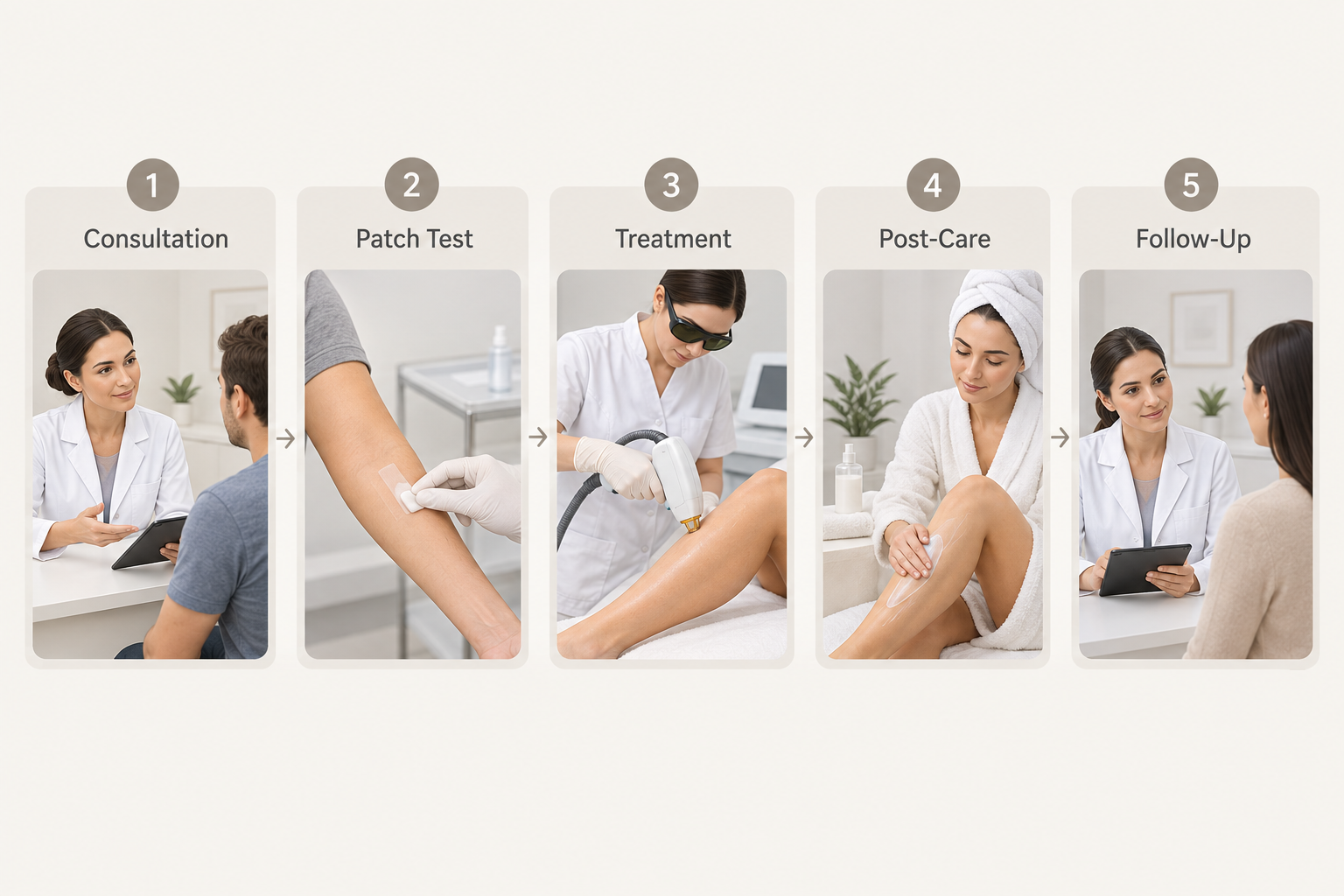
Electrolysis sessions vary in length depending on the area and hair density, ranging from fifteen minutes to over an hour. A slight stinging or heat sensation is felt with each follicle treatment. Redness and minor swelling are normal after each session and typically resolve within twenty-four hours. Keeping the treated area clean and avoiding makeup or heavy skincare products immediately after treatment helps reduce the risk of irritation or infection.
Frequently Asked Questions
Is laser hair removal on the face safe for all skin tones?
Laser hair removal can be performed safely on a range of skin tones, but the choice of laser system matters significantly. Nd:YAG lasers are generally considered more appropriate for medium to darker skin tones because their longer wavelength penetrates deeper and is less readily absorbed by skin pigment. A thorough consultation and patch test with an experienced practitioner are essential before beginning treatment on any skin tone.
How many laser sessions are typically needed for facial hair?
Most people require between six and eight sessions for meaningful hair reduction on the face, spaced approximately four to six weeks apart. The exact number varies depending on hair density, hair colour, skin type, hormonal factors, and how the individual responds to treatment. Some people may need additional maintenance sessions after completing the initial course.
Can facial hair removal methods cause permanent scarring?
Permanent scarring is uncommon with most facial hair removal methods when they are performed correctly and on appropriate candidates. The highest risk of scarring is associated with energy-based treatments — laser and IPL — when used with incorrect settings or on unsuitable skin types. Electrolysis also carries a small risk of scarring if performed improperly. Choosing a qualified and experienced practitioner significantly reduces this risk.
Does threading or waxing cause hair to grow back thicker?
Threading and waxing remove hair from the root, and there is no clinical evidence that either method causes hair to grow back thicker or darker. Because the hair regrows from the follicle with its natural tapered tip intact, it may feel softer than shaved regrowth. Some people notice that hair appears finer over time with repeated waxing, though this is not guaranteed.
Is electrolysis better than laser for facial hair removal?
Electrolysis and laser hair removal serve different needs. Electrolysis is the only method recognised as capable of permanent hair removal and works on all hair colours and skin tones, making it suitable for individuals with light or grey hair who are not candidates for laser. Laser hair removal can treat larger areas more quickly and may be more practical for individuals with dark hair and suitable skin tones. The better option depends on individual hair and skin characteristics, the area being treated, and the desired outcome.
Can hormonal conditions affect the results of facial hair removal?
Yes. Conditions such as PCOS or elevated androgen levels can stimulate ongoing hair follicle activity, which may reduce the long-term effectiveness of laser, IPL, or electrolysis. In these cases, addressing the underlying hormonal imbalance — often in collaboration with a GP or endocrinologist — alongside hair removal treatment may improve and sustain results.
Is dermaplaning suitable for people with acne-prone skin?
Dermaplaning is generally not recommended for individuals with active acne breakouts, as the blade can spread bacteria across the skin and potentially worsen inflammation. It may be suitable for people with occasional blemishes rather than active widespread acne, but a clinical assessment is advisable. Individuals with rosacea or highly sensitised skin should also discuss suitability with a qualified practitioner before proceeding.
Choosing the Right Facial Hair Removal Approach for Your Needs
There is no universally best way to remove facial hair — the most appropriate method depends on a combination of your hair colour, skin tone, skin condition, hormonal background, budget, and how long you want results to last. Temporary methods such as threading, waxing, and dermaplaning are accessible, low-risk, and suitable for most people, but they require ongoing commitment. Laser hair removal offers meaningful long-term reduction for those with suitable hair and skin characteristics, while electrolysis remains the most established option for permanent results across all hair colours and skin tones.
If you are considering an energy-based treatment such as laser or IPL, a consultation with a qualified practitioner is an important first step. A thorough assessment of your skin type, hair characteristics, medical history, and any medications you are taking will help determine which method is appropriate and what realistic outcomes look like for your specific situation. For individuals with hormonally driven facial hair growth, discussing this aspect with a healthcare professional alongside any cosmetic treatment plan is also worthwhile.
