

Microneedling is one of the most searched cosmetic treatments for a reason: it works across a wide range of skin concerns, from acne scars and fine lines to uneven texture and enlarged pores. But before booking an appointment, most people want an honest answer to one question — does microneedling hurt? The short answer is that most patients describe it as mild discomfort rather than genuine pain, particularly when a topical numbing cream is applied beforehand. The longer answer depends on needle depth, treatment area, device type, and your individual pain tolerance, all of which this guide covers in practical detail.
Key Takeaways
- Most patients rate microneedling at around 2–3 out of 10 on a pain scale when topical numbing cream is used correctly.
- Sensation varies significantly by needle depth, treatment area, and device type — bony areas such as the forehead and jawline tend to feel more intense.
- RF microneedling adds a heat or zapping sensation on top of the standard prickling, making it feel more noticeable than standard microneedling.
- Post-treatment skin feels similar to mild sunburn for 24–48 hours; serious or worsening pain after this window is a red flag worth reporting to your provider.
- At-home dermarollers are generally more uncomfortable than professional devices and carry a higher risk of uneven pressure and skin trauma.
What Does Microneedling Actually Feel Like?
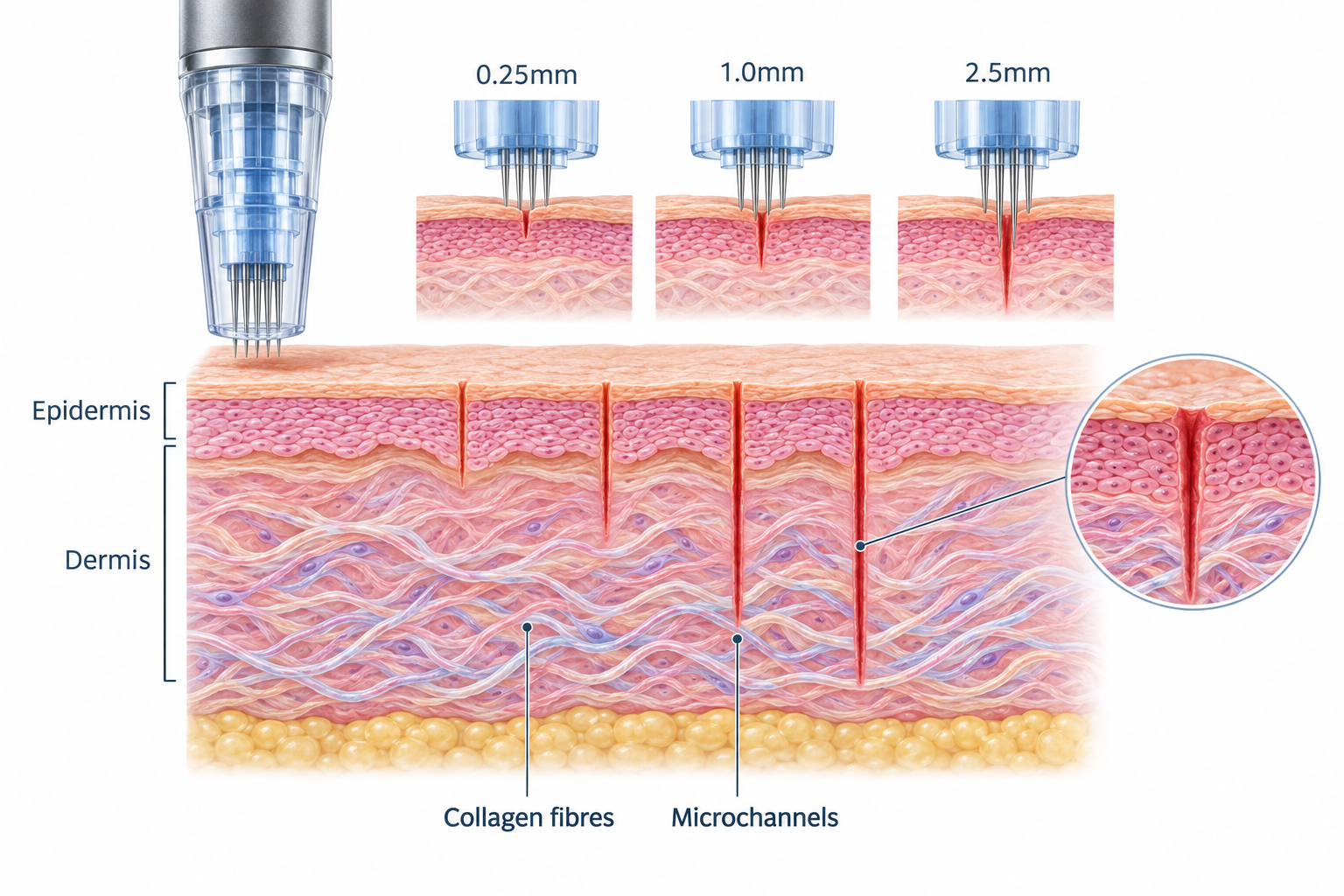
Microneedling works by creating controlled micro-injuries in the skin using a motorized pen or roller fitted with fine needles. These microchannels trigger the skin's natural repair response, stimulating collagen production and elastin remodelling over the following weeks. The sensation during treatment is a direct result of those tiny punctures passing through the outer layers of skin.
With numbing cream applied, most patients describe the sensation as a prickling feeling — similar to light scratching or the drag of a stiff-bristled brush across the skin. Some compare it to the vibration of an electric toothbrush held against the face, or the feeling of fine sandpaper moving quickly over the surface. The device glides across the skin in short passes, so the sensation is intermittent rather than constant. Pressure is often felt more than pain, particularly over fleshier areas like the cheeks.
Without numbing cream, the experience is noticeably sharper. The scratching sensation becomes more pronounced, and bony areas in particular can feel genuinely uncomfortable. Most clinics apply numbing cream as standard, so this scenario is relatively uncommon in a professional setting — but it is worth understanding the difference, especially for anyone considering an at-home approach.
How Painful Is Microneedling? The Pain Scale Explained
On a standard 0–10 pain scale, professional microneedling with numbing cream typically sits between 2 and 3 for most patients on the face. To put that in context, a routine blood draw is often rated around 2–3, while waxing commonly scores 4–5 and a tattoo can reach 6–7 depending on placement. Microneedling with adequate numbing is generally considered more tolerable than waxing for most people.
Without numbing cream, the same treatment on the face might rise to a 4–5 for an average pain tolerance, and higher over sensitive zones. Individual pain tolerance plays a significant role here — what feels like mild pressure to one person may feel sharp to another, and this is not a reflection of anything being done incorrectly. Skin sensitivity also varies with hormonal cycles, recent sun exposure, and certain skincare products used in the days before treatment.
Pain by Treatment Area
Not all areas of the face and body respond the same way. Bony areas where the skin sits close to the underlying bone tend to feel more intense because there is less soft tissue to absorb the sensation. The forehead, jawline, temples, and the area around the nose are commonly reported as the most uncomfortable zones. The upper lip is particularly sensitive due to the density of nerve endings in that region.
By contrast, the cheeks and mid-face generally feel much more manageable — many patients barely notice the treatment in these areas with numbing in place. The neck and décolletage are moderately sensitive. The scalp, which is increasingly treated for hair loss concerns, has its own profile: the skin is thinner and sits directly over bone in many areas, making it one of the more sensitive treatment zones overall. Thighs and other body areas with thicker skin tend to be among the least uncomfortable.
| Treatment Area | Typical Sensation (with numbing) | Approximate Pain Rating |
|---|---|---|
| Cheeks / mid-face | Light pressure, mild prickling | 1–2 / 10 |
| Forehead | Sharper prickling, vibration | 3–4 / 10 |
| Jawline / chin | Noticeable scratching sensation | 3–4 / 10 |
| Upper lip / nose | Sharp prickling, most sensitive | 4–5 / 10 |
| Temples | Prickling, pressure | 3 / 10 |
| Neck / décolletage | Mild to moderate prickling | 2–3 / 10 |
| Scalp | Sharp prickling, pressure | 3–5 / 10 |
| Thighs / body | Mild pressure, low sensitivity | 1–2 / 10 |
How Needle Depth Affects Pain
Needle depth is one of the most important variables in how microneedling feels. Professional devices allow the practitioner to adjust penetration depth, typically ranging from 0.25 mm to 2.5 mm depending on the treatment goal and skin area. Shallower depths are used for general skin texture and fine lines; deeper settings are reserved for acne scars, stretch marks, and areas with thicker skin.

| Needle Depth | Typical Use | Expected Sensation |
|---|---|---|
| 0.25 mm | Product absorption, skin texture | Barely perceptible, light tingling |
| 0.5 mm | Fine lines, mild pigmentation | Mild prickling, easily tolerated |
| 1.0 mm | Moderate acne scars, skin renewal | Noticeable prickling, some pressure |
| 1.5 mm | Deeper scars, collagen stimulation | Clear scratching sensation, more intense |
| 2.0–2.5 mm | Significant scarring, body areas | Pronounced discomfort, numbing essential |
At shallower depths, many patients are surprised by how little they feel. At depths of 1.5 mm and above, the sensation becomes more pronounced, and adequate numbing becomes increasingly important. A skilled practitioner will adjust depth according to the area being treated — using shallower settings over bony areas and deeper settings where the skin is thicker and more resilient.
The Role of Numbing Cream
Topical numbing cream is the primary tool used to manage discomfort during professional microneedling. Most clinics use a cream containing lidocaine, prilocaine, or a combination of both — lidocaine being the most commonly used local anaesthetic in aesthetic practice. The cream is applied to clean, dry skin and left in place for 20 to 45 minutes before treatment begins, allowing the active ingredient to penetrate the outer skin layers and temporarily reduce nerve signal transmission.
When applied correctly and given sufficient time to work, numbing cream significantly reduces the prickling sensation and makes the procedure comfortable for the vast majority of patients. The effect is not total anaesthesia — you will still feel pressure and movement — but the sharp edge of the needle sensation is substantially blunted. Clinics that rush the numbing time or apply cream to damp skin may find it less effective, which is one reason the pre-treatment preparation step matters.
If you are particularly anxious about discomfort, it is worth telling your provider before the appointment. They can ensure the numbing cream is applied generously and given adequate time, and may be able to adjust the treatment settings for a first session to help you build confidence with the procedure.
What If You Skip Numbing Cream?
Skipping numbing cream is not dangerous, but it does make the experience noticeably more uncomfortable, particularly at needle depths above 0.5 mm and over sensitive areas. Without numbing, the scratching sensation is sharper and more persistent, and bony areas of the face can feel genuinely unpleasant. Some patients with very high pain tolerance manage without it at shallow depths, but this is the exception rather than the rule. For most people, numbing cream is not optional — it is what makes the treatment tolerable and allows the practitioner to work at the depths needed to achieve meaningful results.
Is RF Microneedling More Painful Than Standard Microneedling?
RF microneedling — radiofrequency microneedling — combines the standard needle puncture with the delivery of radiofrequency energy through the needle tips into the deeper layers of skin. This dual mechanism produces more significant collagen and elastin remodelling than standard microneedling alone, but it also adds a distinct heat or zapping sensation that standard microneedling does not produce.
Patients who have experienced both treatments consistently describe RF microneedling as more intense. The prickling sensation from the needles is similar, but the simultaneous delivery of heat creates a warm stinging feeling that can feel like a brief electric pulse at each treatment point. Over bony areas or at higher energy settings, this can be quite noticeable even with numbing cream in place. On a pain scale, RF microneedling typically rates 3–5 out of 10 with numbing, compared to 2–3 for standard microneedling.
It is worth noting that regulatory bodies including the FDA have issued communications regarding heat-related risks associated with RF microneedling devices, emphasising the importance of using properly cleared devices and having treatment performed by trained practitioners. This does not mean the treatment is unsafe when performed correctly, but it underlines why provider selection and device quality matter more with RF than with standard microneedling.
Professional Microneedling vs. At-Home Dermaroller: Pain Comparison
An at-home dermaroller uses the same basic principle as professional microneedling — fine needles puncturing the skin surface — but the experience and risk profile differ in important ways. Professional motorized devices insert needles vertically into the skin, which creates cleaner microchannels and causes less lateral tearing of tissue. A dermaroller, by contrast, enters the skin at an angle as it rolls, which can cause more dragging and tearing, particularly if pressure is uneven or the roller is used too slowly.
At-home dermarollers are typically used at much shallower depths (0.25–0.5 mm) and without any numbing, which limits both the discomfort and the clinical effect. At these depths, the sensation is usually mild — a light scratching or tingling — but the lack of numbing means any error in technique, such as pressing too hard or rolling over the same area repeatedly, can cause more discomfort and potential skin irritation than a professional session. At-home use also carries a higher risk of infection if the device is not properly sterilised between uses.
For meaningful results — particularly for acne scars, deeper lines, or significant skin texture concerns — professional treatment at appropriate needle depths is considerably more effective and, paradoxically, often more comfortable than at-home attempts at deeper settings, because numbing cream is available and technique is controlled.
Microneedling on the Scalp: What to Expect
Scalp microneedling is used primarily to support hair regrowth in conditions such as androgenetic alopecia, often alongside topical treatments like minoxidil or platelet-rich plasma. The scalp has a distinct pain profile compared to the face: the skin is thinner in many areas, sits directly over the skull, and contains a high density of nerve endings and hair follicles, all of which contribute to a sharper sensation than most facial areas.
Research published in peer-reviewed literature has examined anaesthesia methods for scalp microneedling specifically, reflecting the fact that the scalp is considered one of the more challenging areas to treat comfortably. Numbing cream is applied in the same way as for facial treatment, though the hair can make even application more difficult. Some practitioners use a nerve block or additional topical anaesthetic for patients with lower pain tolerance or when deeper needle depths are required. With adequate numbing, most patients describe scalp microneedling as a 3–4 out of 10 — noticeable but manageable.
What to Expect After Microneedling: Post-Treatment Sensations
Once the numbing cream wears off — usually within an hour or two of treatment — the skin enters a recovery phase that has its own distinct sensations. The most common post-treatment feeling is a sunburn-like sensation: warmth, tightness, and mild tenderness across the treated area. This is a normal inflammatory response and reflects the controlled micro-injuries doing their job of triggering collagen production.
Visible redness (erythema) is expected and typically peaks in the first few hours before gradually fading over 24–48 hours for most patients. Mild swelling may accompany the redness, particularly around the eyes and cheeks. Skin sensitivity is heightened during this period, so sun exposure, active skincare ingredients, and heat should be avoided. Most patients are comfortable returning to daily activities within 24–48 hours, though some redness may persist slightly longer depending on needle depth and individual skin response.
Day-by-Day Recovery Timeline
| Day | Typical Experience |
|---|---|
| Day 0 (treatment day) | Redness, warmth, mild swelling, sunburn-like sensation |
| Day 1–2 | Redness fading, skin feels tight and sensitive, mild dryness |
| Day 3–4 | Possible light flaking or peeling as skin renews |
| Day 5–7 | Skin largely settled, texture may feel smoother |
| Week 2–4 | Collagen remodelling continues; gradual improvement in skin quality |
Downtime is generally minimal compared to more ablative treatments such as laser resurfacing. Most patients manage post-treatment skin sensitivity with a gentle moisturiser, SPF, and by avoiding retinoids, acids, and active exfoliants for the first few days. Your provider will give specific aftercare instructions based on the depth and area treated.
Normal Sensations vs. Red Flags After Microneedling
Understanding the difference between expected post-treatment sensations and warning signs is important for patient safety. The following table outlines what is typically normal and what warrants contacting your provider.
| Normal After Microneedling | Red Flags — Contact Your Provider |
|---|---|
| Redness fading within 24–48 hours | Redness spreading or worsening after 48 hours |
| Mild warmth and tightness | Increasing pain or burning sensation after day 2 |
| Light flaking or peeling (days 3–4) | Pus, oozing, or crusting beyond light scabbing |
| Mild swelling, especially around eyes | Significant or worsening swelling after 48 hours |
| Skin sensitivity to touch | Blistering or open wounds |
| Temporary dryness | Signs of hyperpigmentation developing |
Infection following microneedling is uncommon when treatment is performed in a clinical setting with sterile equipment, but it is not impossible. If you notice any of the red flags above — particularly increasing pain, spreading redness, or any discharge — contact your provider promptly rather than waiting to see if it resolves.

Pre-Treatment Steps That Can Reduce Discomfort
A few practical steps in the days before your appointment can help minimise skin sensitivity and make the treatment more comfortable. Avoiding retinoids, AHAs, BHAs, and other active exfoliants for at least 48–72 hours before treatment reduces baseline skin sensitivity. Sun exposure should also be avoided in the days prior, as sunburned or recently sun-damaged skin is more reactive. Staying well hydrated supports skin resilience, though the effect on pain is modest.
On the day of treatment, arrive with clean skin and no makeup. Your provider will apply the topical numbing cream and allow it sufficient time — typically 20 to 45 minutes — before beginning. If you have a known needle phobia or significant anxiety about the procedure, mentioning this before the appointment allows your provider to take extra time with numbing, explain each step as it happens, and adjust the pace of treatment to help you feel more in control.
Does Microneedling Get Less Uncomfortable Over Time?
Many patients who undergo a course of microneedling sessions report that subsequent treatments feel more manageable than the first. This may partly reflect familiarity — knowing what to expect reduces anxiety, which in turn reduces perceived discomfort. There is also some evidence that repeated controlled micro-injuries and the resulting skin remodelling may alter the local tissue environment over time, though the primary reason repeat sessions feel easier is likely psychological rather than physiological. Either way, most patients find that their first session is the most daunting and that subsequent treatments feel progressively more routine.
Who Should Avoid Microneedling
Microneedling is not suitable for everyone, and certain conditions increase both the risk of complications and the likelihood of a more uncomfortable experience. Active acne breakouts, eczema, psoriasis, or rosacea flares in the treatment area are contraindications, as microneedling can worsen inflammation and spread bacteria. A history of keloid scarring means the controlled micro-injuries could trigger abnormal scar formation. Patients taking blood-thinning medications may experience more bruising and prolonged redness. Recent radiation therapy to the treatment area, active skin infections, and pregnancy are also reasons to postpone or avoid treatment. A thorough consultation with a qualified practitioner is the appropriate way to assess individual suitability.
Frequently Asked Questions
How long does the discomfort last during a microneedling session?
A typical professional microneedling session on the face takes 20 to 30 minutes once numbing cream has been removed. During that time, most patients experience intermittent mild discomfort rather than continuous pain. The sensation stops as soon as the device is lifted from the skin.
Can I take a painkiller before microneedling to reduce discomfort?
Some patients ask about taking over-the-counter pain relief before treatment. Non-steroidal anti-inflammatory drugs (NSAIDs) such as ibuprofen are generally best avoided immediately before microneedling as they can increase bleeding tendency and may affect the inflammatory response that drives collagen production. Paracetamol is less likely to interfere, but you should always check with your provider before taking any medication pre-treatment.
Is microneedling more painful for people with sensitive skin?
Skin sensitivity does influence the experience. People with reactive or sensitised skin may find the post-treatment sunburn-like sensation more pronounced and lasting slightly longer. However, a skilled practitioner can adjust needle depth and treatment speed to accommodate sensitive skin, and numbing cream remains effective regardless of skin type.
Does microneedling hurt more the first time?
Many patients report that their first session feels the most unfamiliar, largely because they do not know what to expect. Subsequent sessions are often described as easier, partly due to reduced anxiety and partly because the skin may respond differently after prior treatment. The numbing protocol remains the same across sessions.
Is RF microneedling safe despite the added heat sensation?
RF microneedling is considered safe when performed by a trained practitioner using a properly cleared device and appropriate energy settings. The additional heat sensation is expected and manageable with numbing. Risks increase when devices are used at excessive energy levels or by inadequately trained operators, which is why provider selection is particularly important for this treatment variant.
How soon after microneedling can I wear makeup?
Most practitioners advise waiting at least 24 hours before applying makeup to allow the microchannels to close and reduce the risk of introducing bacteria or irritants into the skin. Mineral-based makeup is often recommended as the first product to reintroduce, as it is less likely to cause irritation on sensitised skin.
Is Microneedling Worth the Discomfort?
For most patients, the answer is yes — with the important caveat that realistic expectations matter. Microneedling is a well-established treatment for improving skin texture, reducing the appearance of acne scars, and supporting overall skin rejuvenation through collagen stimulation. The discomfort involved is, for the majority of people, genuinely mild when numbing cream is used correctly and the treatment is performed by a qualified practitioner at an appropriate needle depth.
The key variables — needle depth, treatment area, device type, and individual pain tolerance — mean that the experience is not identical for everyone. Someone having RF microneedling at 2.0 mm over the forehead will have a more noticeable experience than someone having standard microneedling at 0.5 mm on the cheeks. Understanding these differences before you book helps set accurate expectations and reduces pre-treatment anxiety.
If you are considering microneedling and are concerned about discomfort, the most useful step is a consultation with a qualified aesthetic practitioner who can assess your skin, discuss the appropriate treatment depth for your goals, and explain exactly what the numbing protocol at their clinic involves. Going in informed makes a meaningful difference to how the experience feels — and to whether the results are worth it for you.
