
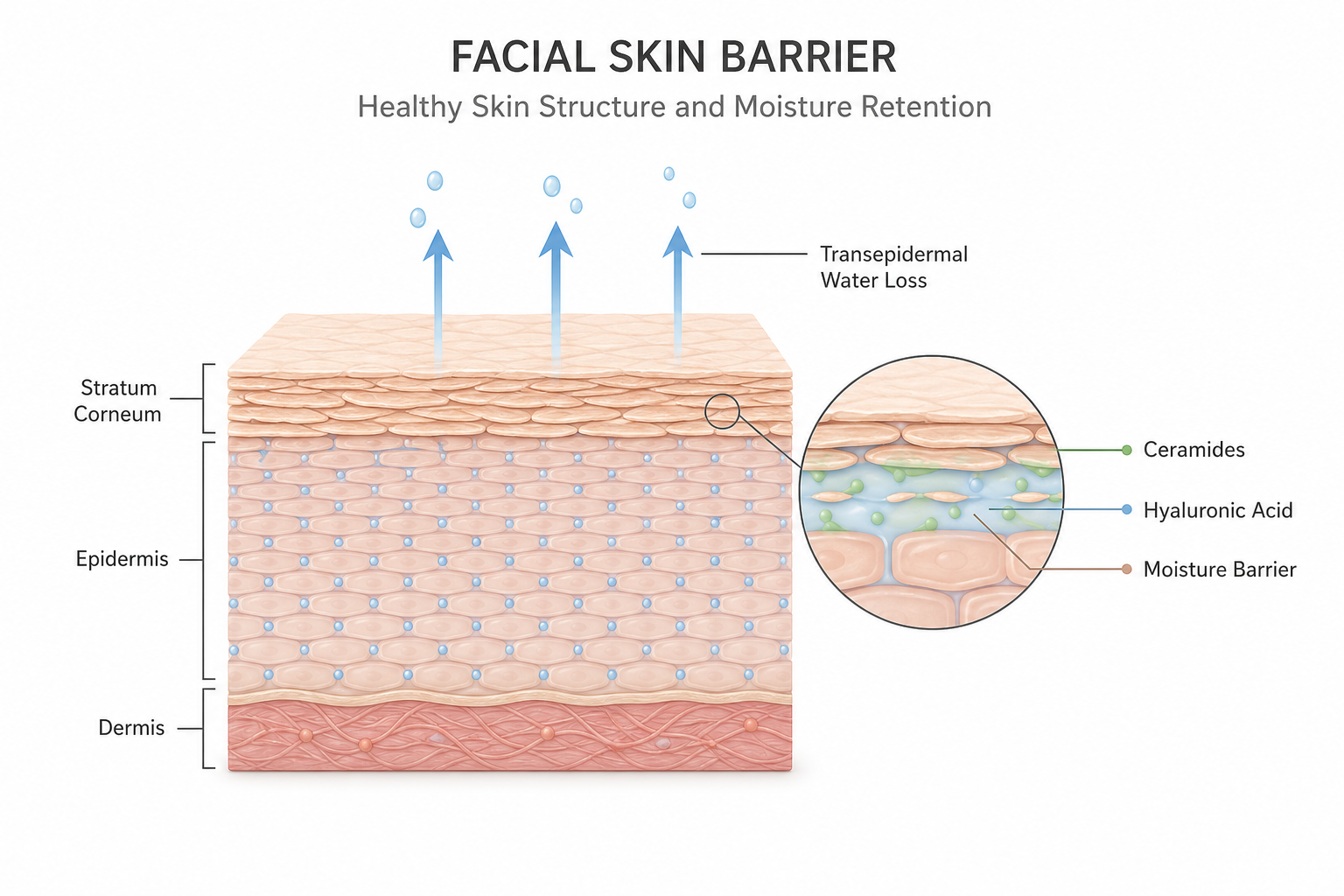

Dry skin on the face is one of the most common skin concerns seen in clinical practice, yet it is frequently misunderstood and poorly managed. Whether you experience persistent dry patches on the face, uncomfortable tightness after cleansing, or visible flaking that no amount of moisturiser seems to fix, the underlying cause matters enormously — because the right approach depends on whether your skin is genuinely dry, temporarily dehydrated, or showing early signs of a treatable skin condition. This guide explains the biology behind facial dryness, the most effective ingredients and routines, and when professional assessment is the appropriate next step.
Key Takeaways
- Dry skin on the face results from a compromised skin moisture barrier that allows water to escape faster than it can be replaced — a process called transepidermal water loss.
- Dry skin (a skin type lacking oil) and dehydrated skin (a temporary condition lacking water) are distinct problems that require different solutions.
- Dermatologist-recommended ingredients such as ceramides, hyaluronic acid, glycerin, and squalane address different layers of the moisture problem and work best when layered correctly.
- Persistent, worsening, or unusual dryness — especially with redness, crusting, or patches that do not respond to over-the-counter care — warrants professional evaluation to rule out conditions such as atopic dermatitis, rosacea, or psoriasis.
- Lifestyle factors including hot showers, harsh cleansers, low humidity, and certain medications can all undermine even a well-chosen skincare routine.
Dry Skin vs Dehydrated Skin: An Important Distinction
Most articles on facial dryness treat these two conditions as interchangeable, but they have different causes and respond to different interventions. Understanding the difference is one of the most practical steps you can take before spending money on products.
Dry skin is a skin type, not a temporary state. It is characterised by reduced sebum production — the skin’s natural oil — which means the stratum corneum (the outermost layer of skin) lacks the lipids it needs to form a robust protective barrier. People with genuinely dry skin tend to experience dryness consistently across seasons and throughout their lives. The skin may feel rough, look dull, and develop fine lines more readily.
Dehydrated skin, by contrast, is a condition that can affect any skin type, including oily skin. It occurs when the skin lacks sufficient water content rather than oil. Dehydrated skin often feels tight, looks slightly dull or crepey, and may show fine surface lines that temporarily worsen when you pinch the skin gently. Dehydration can be caused by environmental exposure, inadequate fluid intake, alcohol consumption, or the use of products that strip the skin’s natural moisture.
The practical implication: dry skin benefits most from emollients and occlusives that replace missing lipids, while dehydrated skin responds well to humectants that draw water into the skin. Many people need both, but knowing which problem is dominant helps you prioritise.
What Causes Dry Skin on the Face?
Facial dryness develops when the skin moisture barrier is disrupted, allowing water to evaporate from the skin surface at an accelerated rate — a process known as transepidermal water loss (TEWL). Several factors can trigger or worsen this process.
Environmental and Lifestyle Triggers
- Cold weather and low humidity: Cold air holds less moisture, and indoor central heating further reduces ambient humidity, both of which accelerate TEWL.
- Hot showers and baths: Hot water dissolves the skin’s natural lipid layer more aggressively than lukewarm water, leaving the barrier temporarily compromised.
- Harsh cleansers and soaps: Products containing sulphates, alcohol, or synthetic fragrances can strip sebum and disrupt the skin’s natural pH, weakening the barrier with every wash.
- Over-washing: Cleansing the face more than twice daily removes protective oils faster than the skin can replenish them.
- Air conditioning: Like heating, air conditioning reduces indoor humidity and can worsen dryness, particularly in office environments.
- UV exposure: Chronic sun damage degrades collagen and impairs the skin’s ability to retain moisture over time.
- Hard water: Mineral deposits in hard water can disrupt the skin barrier and leave a residue that contributes to dryness and irritation.
Ageing and Hormonal Changes
Sebum production naturally declines with age, which is why dry facial skin becomes increasingly common from the mid-thirties onwards. In women, the hormonal shifts associated with perimenopause and menopause cause a significant reduction in oestrogen, which in turn reduces the skin’s capacity to retain moisture and produce collagen. Men also experience age-related changes in skin hydration, though typically at a slower rate. Mature skin benefits from richer formulations and ingredients that support skin barrier repair.
Underlying Medical Conditions
Persistent or severe facial dryness is sometimes a sign of an underlying condition rather than a simple skincare issue. Atopic dermatitis (eczema) is one of the most common causes of chronic dry, itchy, and inflamed facial skin. Psoriasis can produce thick, scaly dry patches on the face, particularly around the hairline and eyebrows. Rosacea, while primarily associated with redness and flushing, often presents with a compromised skin barrier and increased sensitivity. Seborrheic dermatitis tends to cause flaky, oily-looking patches around the nose, eyebrows, and scalp. Systemic conditions including hypothyroidism, diabetes, and kidney disease can also manifest as generalised skin dryness. If your skin does not respond to appropriate skincare within a few weeks, a dermatologist assessment is advisable.
Medications
Certain medications are known to reduce skin hydration as a side effect. These include diuretics, statins, retinoids (when used without adequate moisturisation), some chemotherapy agents, and medications used in dialysis. If you have recently started a new medication and noticed increased facial dryness, discuss this with your prescribing clinician.
Recognising the Symptoms
Dry skin on the face presents differently depending on severity and individual skin tone. Common signs include a feeling of tightness — particularly after cleansing — along with visible flaking, rough texture, and dullness. More pronounced dryness may cause redness, itching, and fine surface cracking. In people with darker skin tones, dryness often presents as ashiness or a greyish cast rather than the visible redness more commonly described in lighter-skinned individuals, which means standard symptom descriptions can underrepresent how dryness looks across the full range of skin of colour.
Dry patches on the face that bleed, crust, or fail to heal with standard moisturisation should be assessed by a clinician. Rough, scaly patches that persist in the same location — particularly in sun-exposed areas — may occasionally represent actinic keratosis, a pre-cancerous skin change that requires professional evaluation rather than home treatment.
Key Ingredients for Dry Facial Skin
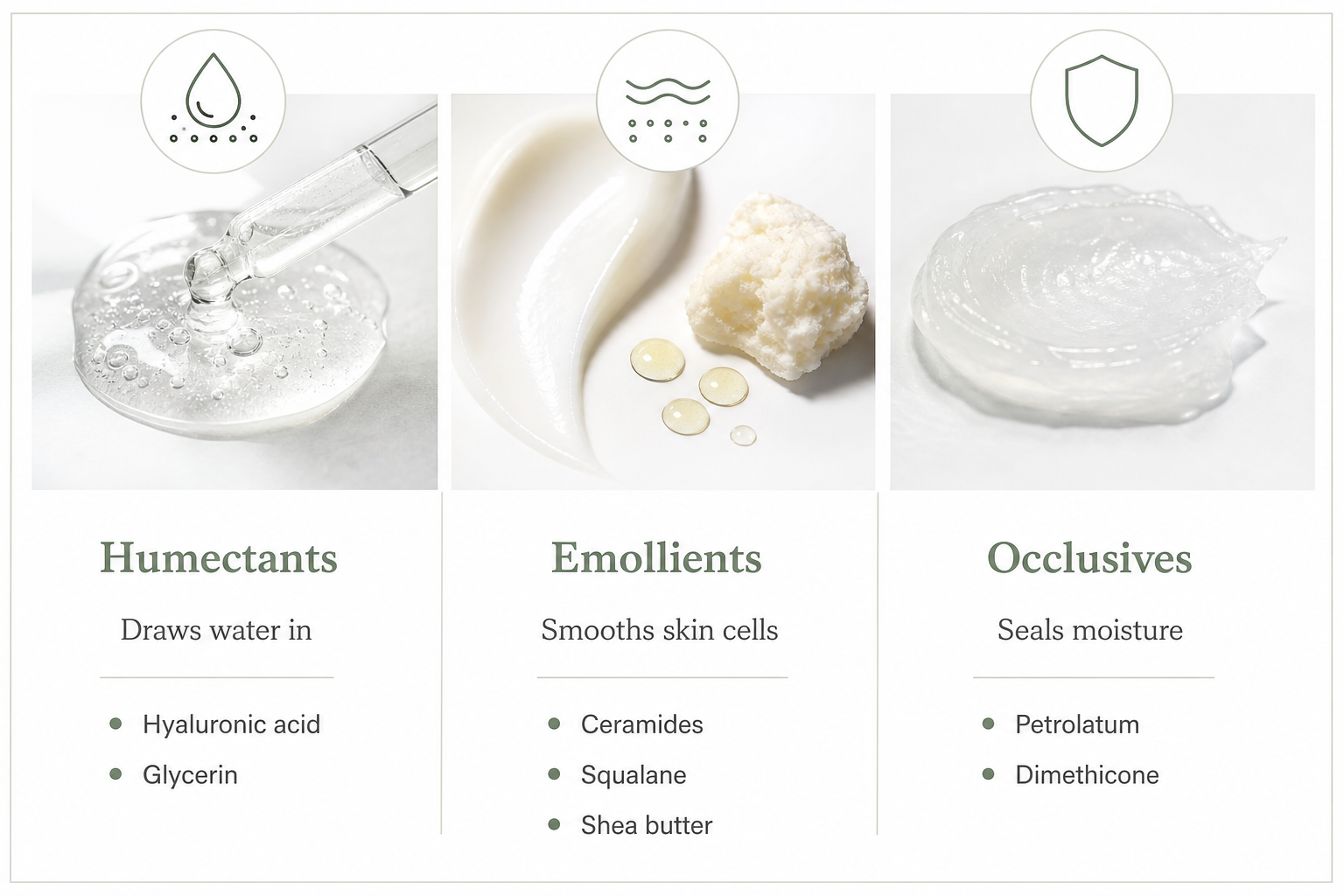
Effective moisturisation works through three complementary mechanisms: drawing water into the skin (humectants), sealing moisture in (occlusives), and softening and smoothing the skin surface (emollients). Understanding which ingredients belong to which category helps you build a routine that addresses the full picture rather than relying on a single product.
| Category | How It Works | Key Ingredients |
|---|---|---|
| Humectant | Attracts water from the environment or deeper skin layers into the stratum corneum | Hyaluronic acid, glycerin, panthenol (Vitamin B5), urea, aloe vera |
| Emollient | Fills gaps between skin cells, smoothing texture and improving flexibility | Ceramides, squalane, fatty acids, shea butter, jojoba oil, dimethicone |
| Occlusive | Forms a physical barrier on the skin surface to prevent water evaporation | Petrolatum, dimethicone, beeswax, lanolin, mineral oil |
A Note on Ingredient Layering
Hyaluronic acid is widely promoted as a hydration hero, but it requires careful use. As a humectant, hyaluronic acid draws moisture towards itself — ideally from the environment. In very dry or low-humidity conditions, it can draw water from deeper skin layers instead, potentially worsening surface dryness if used without an occlusive on top. For this reason, dermatologist-recommended practice is to apply hyaluronic acid to slightly damp skin and follow immediately with a moisturiser containing emollient and occlusive ingredients to lock that moisture in. This layering logic is rarely explained in product marketing but makes a meaningful practical difference.
Ceramides deserve particular attention for skin barrier repair. The stratum corneum naturally contains ceramides — lipid molecules that act like mortar between skin cells — and their depletion is a central feature of conditions such as atopic dermatitis. Moisturisers formulated with ceramides, cholesterol, and fatty acids in physiologically relevant ratios have been shown in clinical research to support barrier function and reduce transepidermal water loss over time.
Niacinamide (Vitamin B3) is a versatile ingredient that supports the skin barrier, reduces inflammation, and can improve skin tone. It is generally well tolerated even by sensitive skin and pairs well with ceramide-based moisturisers. Squalane, a stable derivative of the naturally occurring skin lipid squalene, functions as both an emollient and a lightweight occlusive and is suitable for most skin types including those prone to congestion.
Building a Skincare Routine for Dry Facial Skin
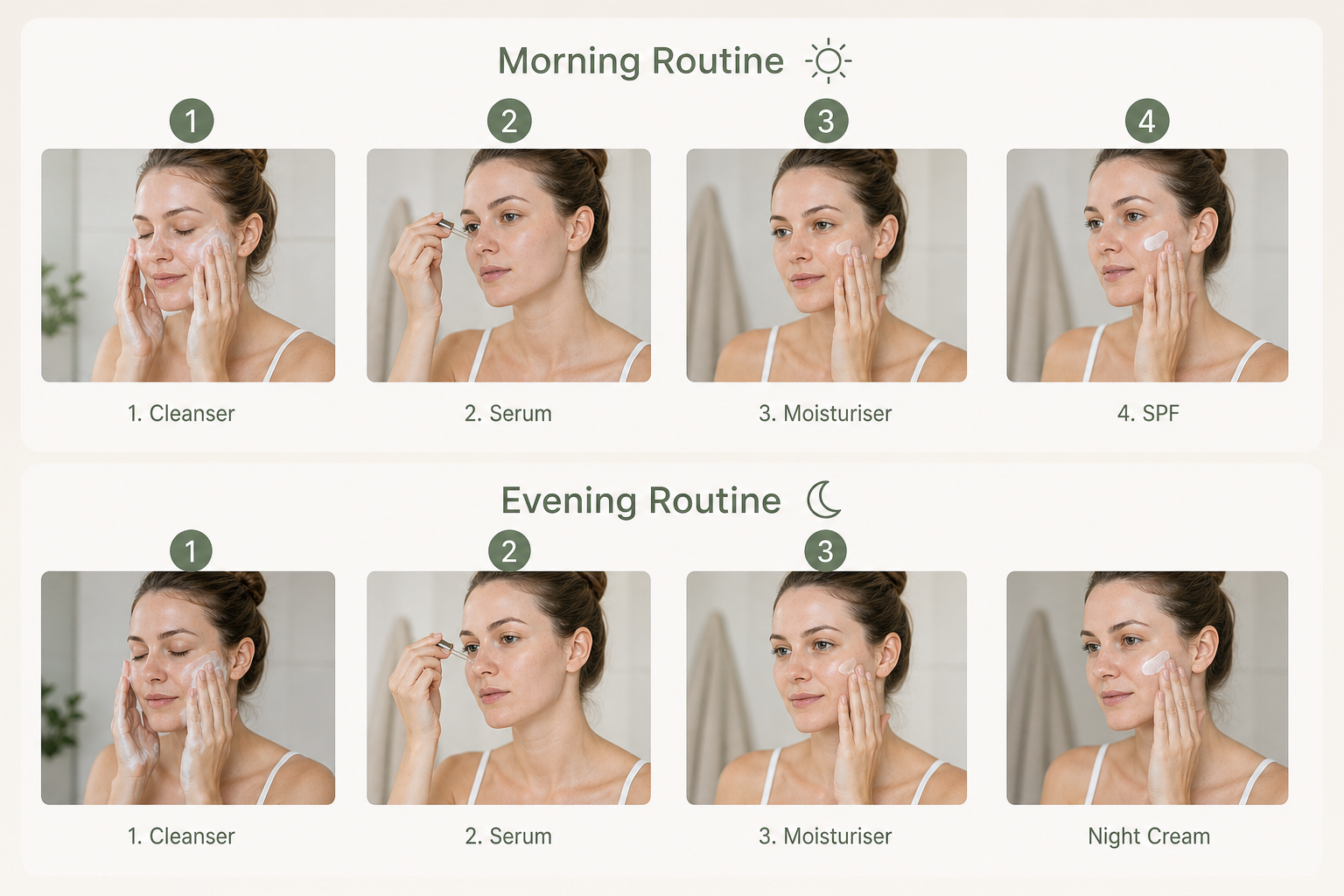
A consistent, appropriately sequenced routine is more effective than any single product. The following framework reflects dermatologist-recommended principles for managing dry facial skin.
Morning Routine
- Gentle, fragrance-free cleanser: In the morning, many people with dry skin benefit from rinsing with lukewarm water alone or using a very mild, cream-based cleanser. Avoid foaming cleansers with sulphates, which can strip the barrier.
- Hydrating toner or essence (optional): A hydrating toner containing glycerin or panthenol can add a layer of moisture before your serum. Apply to slightly damp skin.
- Hydrating serum: A serum containing hyaluronic acid or niacinamide applied to damp skin helps draw and retain moisture in the upper layers of the skin.
- Moisturiser: Apply moisturizer on damp skin immediately after your serum to seal in hydration. Look for formulations containing ceramides, squalane, or shea butter. For very dry or mature skin, a richer cream or balm is preferable to a lightweight lotion.
- Broad-spectrum SPF: Sun protection is non-negotiable. UV exposure degrades the skin barrier and accelerates moisture loss over time. Choose a broad-spectrum SPF 30 or higher with a moisturising base if possible.
Evening Routine
- Cleanse: Use a gentle, fragrance-free cleanser or a cleansing balm to remove SPF and any makeup without stripping the skin. If you wear heavy SPF or makeup, a double cleanse — oil-based cleanser followed by a gentle water-based cleanser — is effective without being harsh.
- Treatment serum (if applicable): If you use a retinoid or active treatment, apply it at this stage. See the FAQ section for guidance on using retinol with dry skin.
- Facial oil or hydrating serum: A few drops of a facial oil such as argan or jojoba can be layered over a hydrating serum to add emollient richness before your night cream.
- Rich night cream or occlusive moisturiser: Night is the optimal time for barrier repair. Choose a richer formulation than your daytime moisturiser. For very dry or compromised skin, consider slugging — applying a thin layer of petrolatum or a petrolatum-based balm as the final step to create a complete occlusive seal overnight.
What Is Slugging?
Slugging refers to the practice of applying a thin layer of petrolatum (such as plain petroleum jelly) as the final step of an evening skincare routine. The petrolatum acts as a powerful occlusive, preventing transepidermal water loss overnight and allowing the skin barrier to repair itself. Slugging is particularly useful for very dry, compromised, or sensitised skin. It is not recommended for acne-prone skin, as petrolatum can trap sebum and contribute to breakouts. Used correctly — over a complete moisturising routine rather than on bare skin — slugging can produce a noticeable improvement in skin texture and hydration within a few days.
Seasonal and Environmental Adaptation
A single routine rarely performs equally well across all seasons and climates. In winter or in dry, low-humidity environments, the skin loses moisture more rapidly, and a richer moisturiser, more consistent occlusive use, and a bedroom humidifier can all make a meaningful difference. In summer or humid climates, a lighter emollient formulation may be sufficient, and the focus can shift towards consistent SPF use and gentle cleansing after sweating. Travelling between climates — particularly on long-haul flights, where cabin humidity is extremely low — can trigger acute dryness even in people who do not normally experience it, and a hydrating serum and occlusive balm applied during the flight can help mitigate this.
Lifestyle Factors That Affect Skin Hydration
Skincare products address the skin surface, but internal factors also influence how well the skin retains moisture. Omega-3 fatty acids, found in oily fish, flaxseed, and walnuts, support the integrity of cell membranes and may help maintain the skin’s lipid barrier from within. While the evidence for specific dietary interventions in dry skin is not yet conclusive, a diet rich in essential fatty acids, antioxidants, and adequate calories generally supports skin health. Smoking impairs circulation and accelerates skin ageing, contributing to a drier, more lined appearance over time. Alcohol is a diuretic that reduces overall hydration and can worsen skin dryness with regular use.
Adequate fluid intake supports overall hydration, though the relationship between drinking water and skin moisture is more nuanced than often presented — the skin is the last organ to receive water from internal sources, and topical moisturisation remains the most direct way to address surface dryness. Using a humidifier in heated or air-conditioned rooms, patting the skin dry rather than rubbing after washing, and avoiding very hot showers are practical habits that reduce unnecessary moisture loss.
When to See a Dermatologist
Most cases of dry facial skin respond well to appropriate skincare adjustments within two to four weeks. However, professional assessment is appropriate in the following situations:
- Dryness is severe, persistent, or progressively worsening despite consistent use of suitable products
- The skin is cracking, bleeding, or developing crusted patches
- There is significant itching, burning, or pain
- Dry patches are accompanied by redness, swelling, or oozing that suggests infection or active inflammation
- You suspect an underlying condition such as atopic dermatitis, psoriasis, or rosacea
- A dry, rough, or scaly patch in a sun-exposed area does not resolve — this may warrant evaluation for actinic keratosis
- Dryness began or worsened after starting a new medication
- Over-the-counter treatments have not produced improvement after four to six weeks of consistent use
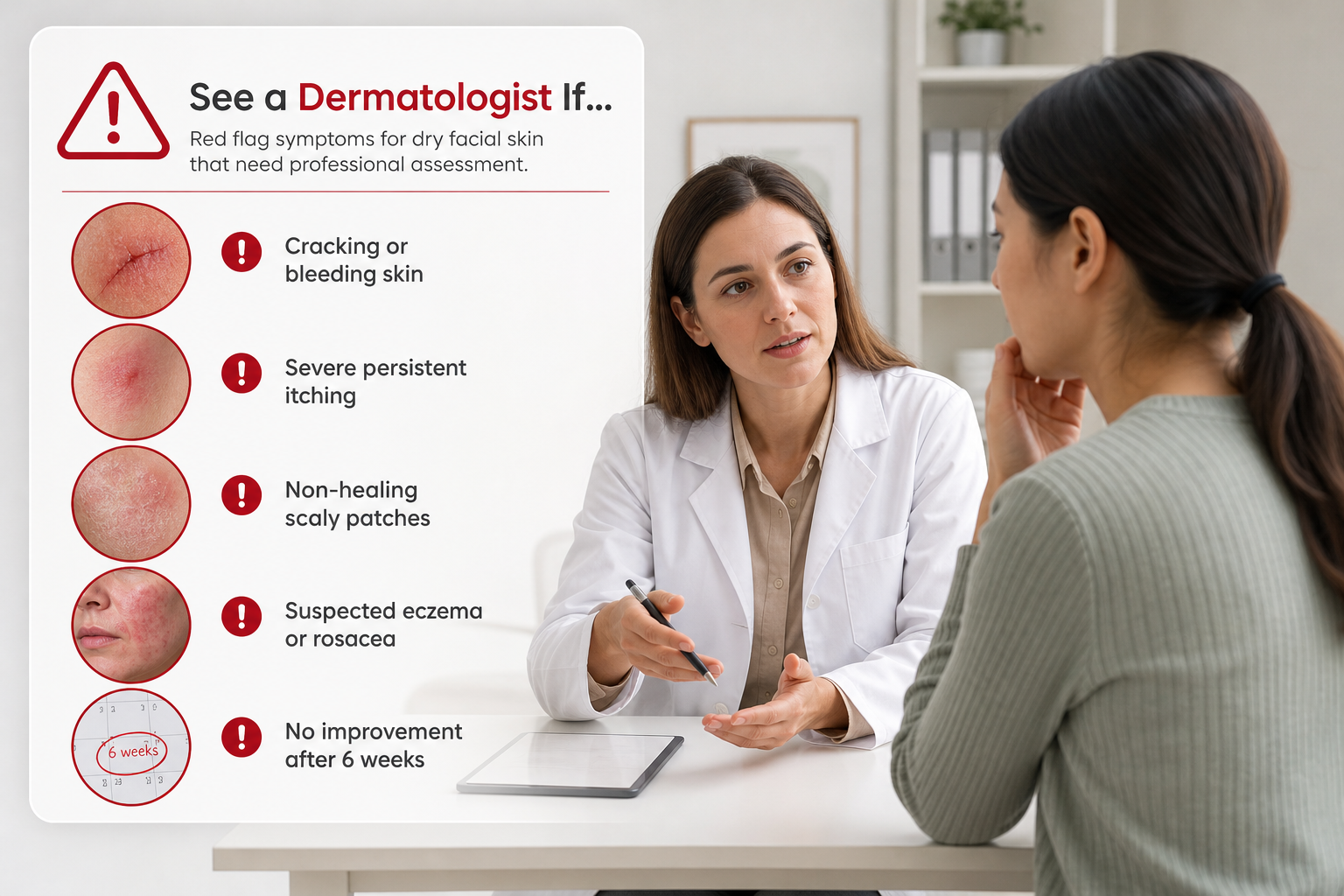
A dermatologist can confirm whether the dryness reflects a skin type, a treatable condition, or a systemic issue, and can prescribe topical treatments — including prescription-strength barrier repair creams, topical corticosteroids for inflammatory conditions, or targeted therapies for conditions such as eczema — that are not available over the counter.
Frequently Asked Questions
Can I use retinol if I have dry skin on my face?
Retinol and prescription retinoids are effective for skin ageing and certain skin conditions, but they can initially worsen dryness, flaking, and sensitivity — a process sometimes called retinoid dermatitis. If you have dry facial skin and want to use a retinoid, start with a low concentration used no more than two or three times per week, always apply it to skin that has been moisturised first (the sandwich method — moisturiser, retinol, moisturiser — reduces irritation), and build frequency gradually. Avoid using retinol on actively irritated or compromised skin. If dryness or irritation is significant, pause use and consult a dermatologist before continuing.
Is dry skin on the face the same as eczema?
Not necessarily. Dry skin is a common skin type, while atopic dermatitis (eczema) is a chronic inflammatory condition characterised by a genetically impaired skin barrier, immune dysregulation, and typically significant itching. Eczema on the face often involves flares of redness, oozing, and intense itch that go beyond ordinary dryness. However, the two can overlap, and people with atopic dermatitis always have a compromised barrier that makes dry skin worse. If you are unsure whether your symptoms represent simple dryness or eczema, a dermatologist assessment will clarify the diagnosis and guide appropriate treatment.
Why does my face feel dry even after moisturising?
Several factors can explain this. The moisturiser may not contain the right combination of humectants, emollients, and occlusives for your skin’s needs. It may be applied to completely dry skin, reducing the amount of moisture available to be sealed in. The cleanser used beforehand may be stripping the barrier faster than the moisturiser can repair it. Environmental conditions — particularly very low humidity — may be overwhelming the product’s capacity to retain moisture. Reviewing each step of your routine, switching to a richer formulation, and applying moisturiser on damp skin are practical starting points.
How do I read a product label to find the right moisturiser?
Look for ceramides, glycerin, hyaluronic acid, squalane, shea butter, or petrolatum in the first half of the ingredient list — ingredients are listed in descending order of concentration. Avoid products that list alcohol denat (denatured alcohol), synthetic fragrance, or essential oils near the top of the list, as these are common irritants that can worsen barrier disruption. Fragrance-free is preferable to unscented, as unscented products may still contain masking fragrances. For very dry or sensitive skin, simpler formulations with fewer ingredients reduce the risk of irritation.
Does drinking more water cure dry skin on the face?
Adequate hydration supports overall health and contributes to skin function, but drinking more water alone is unlikely to resolve established dry facial skin. The skin barrier’s ability to retain moisture depends primarily on its lipid composition and structural integrity, which are influenced by genetics, age, environment, and topical care rather than fluid intake alone. Topical moisturisation remains the most direct and evidence-supported approach to managing surface dryness.
Can dry skin on the face be a sign of something serious?
In most cases, dry facial skin reflects environmental exposure, skin type, or routine habits rather than a serious underlying condition. However, persistent dryness that does not respond to appropriate skincare, or that is accompanied by systemic symptoms such as fatigue, weight changes, or widespread skin changes, may occasionally reflect a systemic condition such as hypothyroidism or diabetes. Rough, scaly patches in sun-exposed areas that do not resolve should be assessed to rule out actinic keratosis. When in doubt, a clinical assessment provides clarity and appropriate management.
Managing Dry Facial Skin: Practical Next Steps
Dry skin on the face is a manageable condition for the majority of people, provided the approach is matched to the actual cause. Identifying whether the skin is genuinely dry, temporarily dehydrated, or showing signs of an underlying condition shapes every subsequent decision — from which cleanser to use to whether a dermatologist appointment is warranted.
For most people, the most impactful changes are the simplest: switching to a gentle, fragrance-free cleanser, applying moisturizer on damp skin using a formulation that combines humectants, emollients, and occlusives, protecting the skin daily with a broad-spectrum SPF, and reducing exposure to the environmental triggers — hot water, harsh products, low humidity — that undermine the skin moisture barrier. Ingredients such as ceramides, hyaluronic acid, glycerin, and squalane are well-supported by clinical evidence and form the foundation of any dermatologist-recommended dry skin routine.
If your skin does not respond to these measures within four to six weeks, or if your symptoms suggest a condition such as atopic dermatitis, rosacea, or psoriasis, a consultation with a dermatologist or aesthetic clinician experienced in skin health is the appropriate next step. Professional assessment can confirm the diagnosis, identify any contributing factors that home care cannot address, and provide access to prescription-strength treatments where needed. Persistent dry facial skin is rarely something you simply have to live with — the right clinical guidance can make a significant difference.
