

Quick Comparison
| Characteristic | Emsculpt | Emsculpt Neo |
|---|---|---|
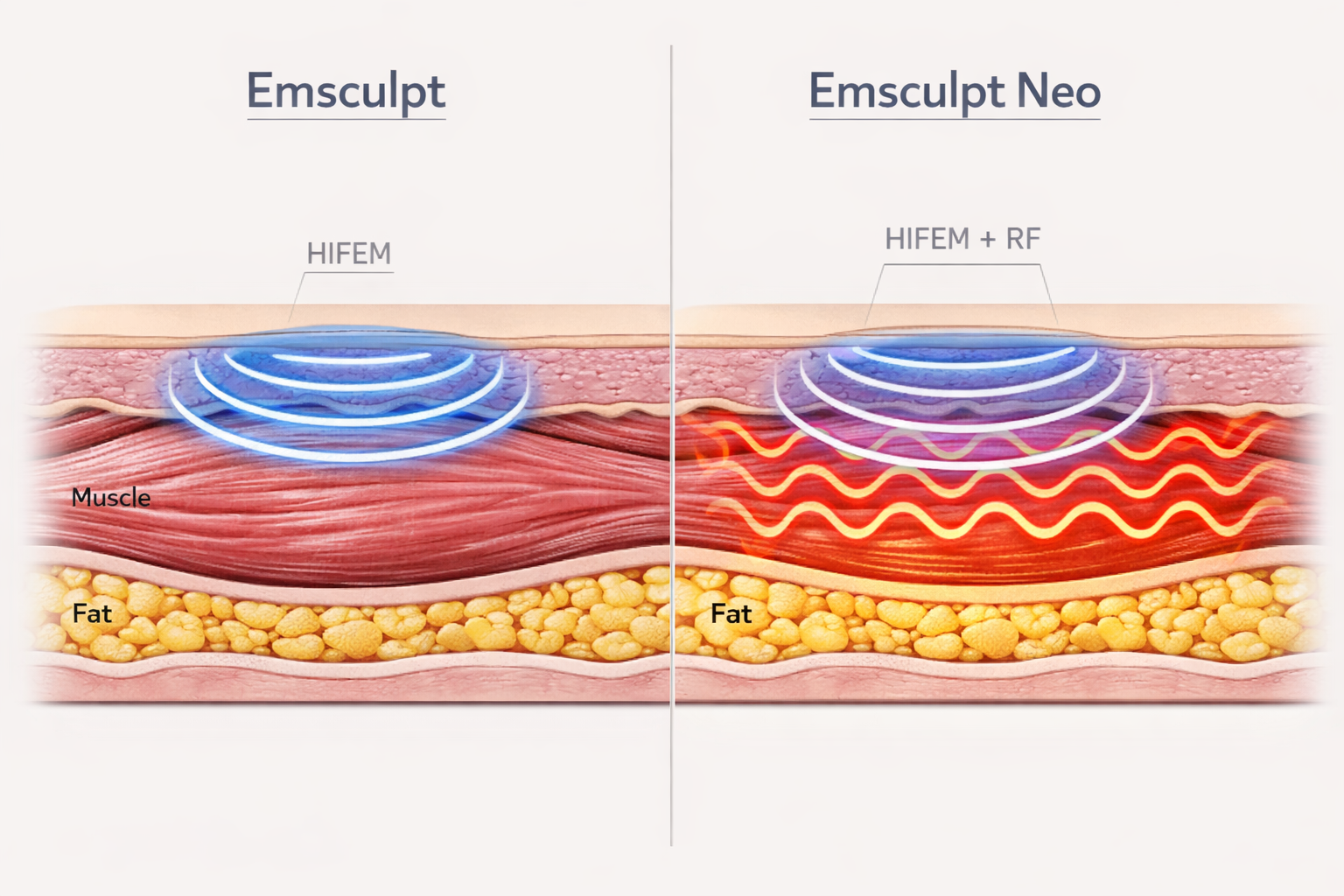
| Technology | HIFEM only | HIFEM + synchronized radiofrequency heating |
| Primary goal | Muscle building and toning | Muscle building and fat reduction combined |
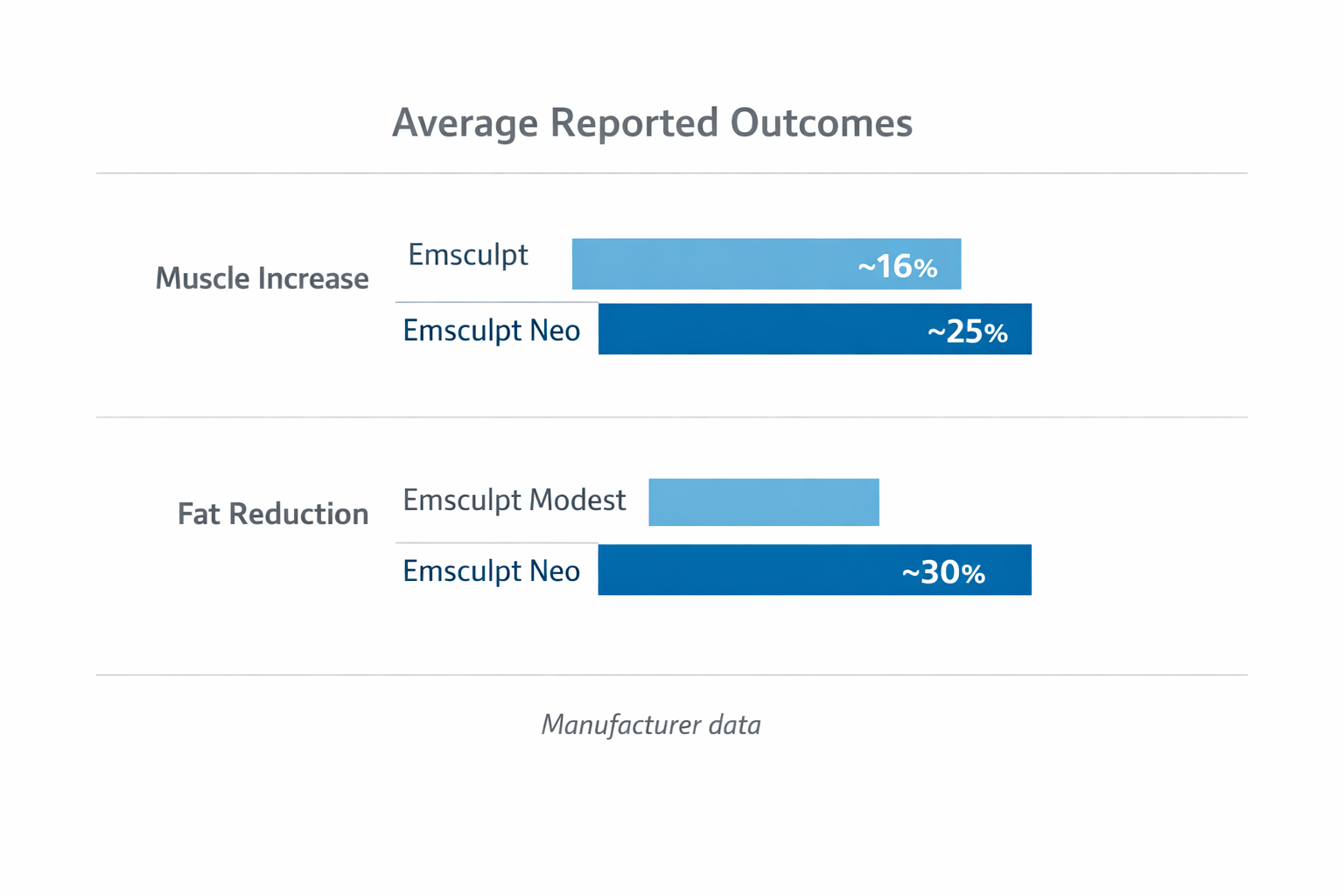
| Fat reduction | Modest secondary effect | Up to approximately 30% subcutaneous fat reduction (manufacturer data) |
| Muscle improvement | Up to approximately 16% increase (manufacturer data) | Up to approximately 25% increase (manufacturer data) |
| Skin tightening | Not a primary effect | RF energy may support collagen production and mild skin tightening |
| BMI suitability | Generally up to BMI 30 | Generally up to BMI 35 |
| FDA clearance | FDA-cleared for muscle conditioning and fat reduction | FDA-cleared; expanded 2024 clearance includes neuromuscular stimulation in arms and legs |
| Sessions | Typically four sessions, 5–10 days apart | Typically four sessions, 5–10 days apart |
| Session length | 30 minutes | 30 minutes |
| Downtime | None | None |
| Peak results | Approximately 2–3 months after final session | Approximately 2–3 months after final session |
| Typical cost | Generally lower per session | Generally higher per session due to dual-technology platform |
What Is Emsculpt?
Emsculpt is a non-invasive body contouring device developed by BTL Industries that uses High-Intensity Focused Electromagnetic (HIFEM) technology to stimulate muscle contractions at an intensity that cannot be achieved through voluntary exercise. During a session, electromagnetic energy penetrates the skin and fat layer to directly engage the underlying muscle tissue, triggering what are called supramaximal muscle contractions — contractions far beyond what even the most intense physical training can produce. A single 30-minute session can induce thousands of these contractions, which creates a metabolic and structural stimulus for muscle hypertrophy (growth of individual muscle fibres) and muscle hyperplasia (an increase in the number of muscle fibres).
Emsculpt received its original FDA clearance for strengthening, toning, and firming the abdomen and buttocks. It has since been cleared for additional areas including the arms, thighs, and calves. The treatment is positioned as body sculpting without surgery, targeting muscle definition and tone rather than significant fat loss. Some secondary effect on localized subcutaneous fat has been reported in clinical imaging studies, though the primary indication remains muscle conditioning.
What Is Emsculpt Neo?
Emsculpt Neo is the next-generation platform from BTL, combining the original HIFEM muscle stimulation technology with synchronized radiofrequency (RF) heating delivered simultaneously through the same applicator. The addition of RF energy is the defining clinical difference between the two devices. During a session, RF energy heats the subcutaneous fat layer to a temperature that triggers apoptosis — a controlled form of programmed fat cell death — while also warming the muscle tissue before the HIFEM contractions begin, which may allow the muscle to work more efficiently during stimulation.
This dual-technology approach means Emsculpt Neo addresses two separate tissue layers simultaneously: fat and muscle. Manufacturer-cited clinical data suggests an average of approximately 30% reduction in subcutaneous fat and approximately 25% increase in muscle mass, though it is worth noting that the majority of imaging studies supporting these figures were conducted by or in collaboration with BTL-affiliated investigators, and some measured changes fall within ranges that independent reviewers have flagged as warranting cautious interpretation. Emsculpt Neo is FDA-cleared, and in 2024 its clearance was expanded to include neuromuscular stimulation in the arms and legs, with specific recognition of applications in muscle weakness, disuse atrophy, and post-surgical rehabilitation — a meaningful development that most clinic comparisons overlook.
How Does the Technology Differ in Practice?
For Emsculpt, the treatment experience centres entirely on muscle stimulation. Applicators are placed against the target area and secured, and the device cycles through sequences of rapid contractions and brief rest phases. Most patients describe the sensation as unusual but manageable — an intense internal muscle engagement unlike any normal exercise sensation. There is no heat involved, and the skin surface is not directly affected.
With Emsculpt Neo, the session begins with the RF component warming the treatment area before and during HIFEM stimulation. Patients often describe the warmth as similar to a hot stone massage, combined with the same internal muscle contraction sensation. Because the RF energy reaches temperatures that are therapeutically meaningful at the fat layer, some patients may notice mild redness in the treated area after the session, which typically resolves quickly. The RF component also stimulates collagen production in some patients, which may contribute to a mild skin-tightening effect over the treatment course — a benefit that original Emsculpt does not offer.
Both devices use 30-minute sessions and both follow a standard treatment protocol of four sessions spaced approximately 5–10 days apart, though individual protocols can vary based on treatment area and patient goals.
Treatment Areas
Both platforms cover overlapping treatment areas, though availability of specific applicators may vary by clinic and device configuration.
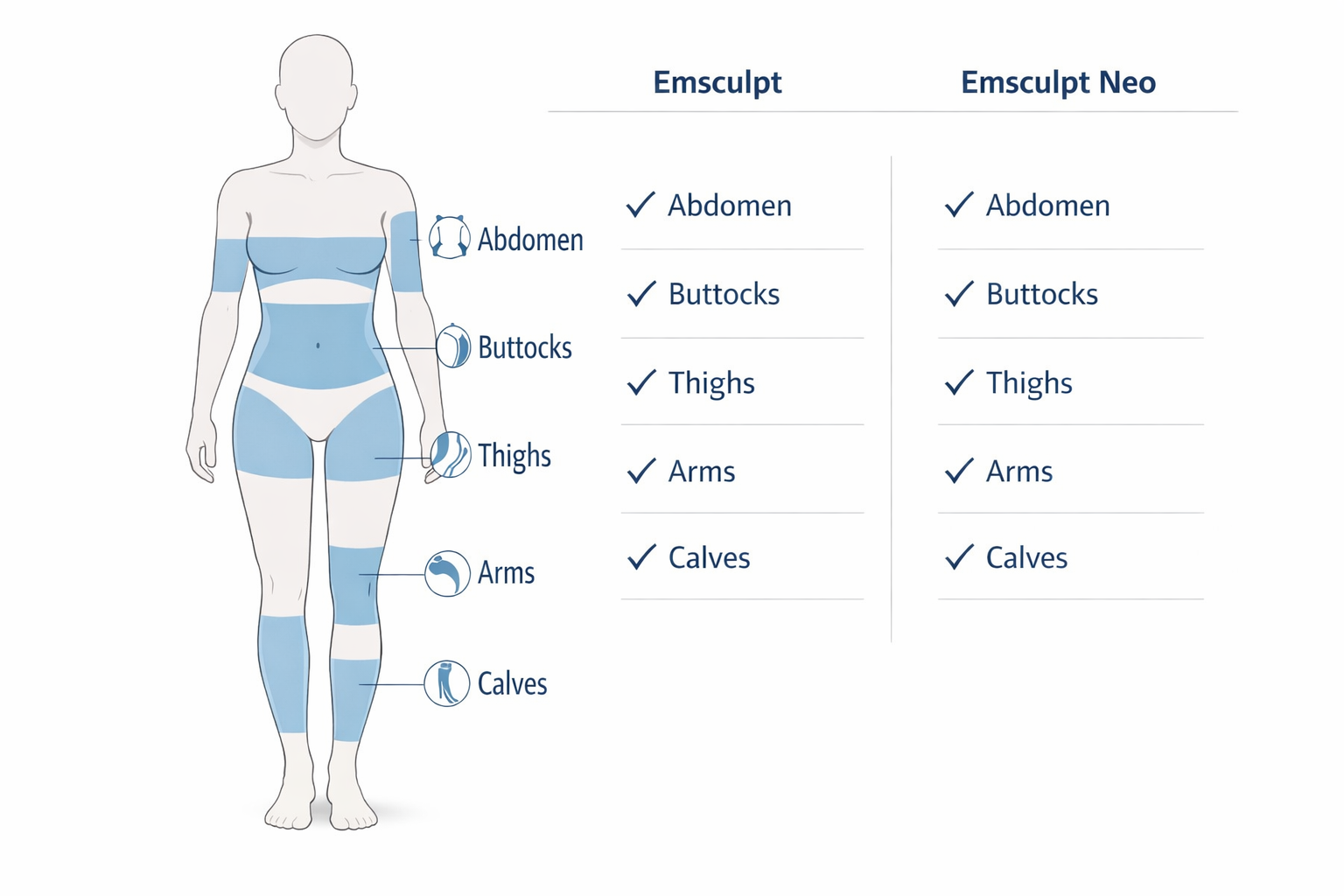
- Abdomen: The most commonly treated area for both devices. Studies show measurable improvement in abdominal muscle thickness and, with Emsculpt Neo, reduction in the subcutaneous fat layer. Emsculpt Neo has also shown improvement in diastasis recti — the separation of the abdominal muscles that often occurs during pregnancy — making it particularly relevant for postpartum body reshaping.
- Buttocks and glutes: Both devices are used for non-surgical gluteal lifting and contouring, often described as a non-surgical alternative to a Brazilian butt lift. HIFEM stimulation builds and firms the gluteal muscles without the risks of surgical fat transfer.
- Thighs: Inner and outer thighs can be targeted to improve muscle tone and, with Emsculpt Neo, to reduce stubborn fat deposits in the area.
- Arms: Biceps and triceps conditioning is available with both platforms, with Emsculpt Neo’s 2024 expanded FDA clearance specifically recognising the arms for neuromuscular stimulation applications.
- Calves: Calf muscle definition and strengthening is an option on both platforms, particularly relevant for patients with functional muscle atrophy concerns.
Results: What the Evidence Suggests
Clinical evidence for both Emsculpt and Emsculpt Neo comes predominantly from imaging studies — MRI, CT, and ultrasound — conducted before and after a standard four-session treatment protocol. Manufacturer figures for Emsculpt cite an average of around 16% increase in muscle mass and modest fat reduction. Emsculpt Neo figures cite up to approximately 25% muscle increase and up to approximately 30% fat reduction. A 2023 systematic review published in a peer-reviewed journal found broadly positive outcomes across multiple studies, though the authors noted that most published trials were conducted by investigators with ties to BTL Industries, and that some reported changes — particularly in fat layer measurements — were relatively small in absolute terms.
This does not mean the treatments are ineffective, but it does mean readers should approach headline percentages with an informed eye. The most consistently reported outcomes across independent patient assessments are improvements in visible muscle definition, a firmer appearance in treated areas, and — for Emsculpt Neo — a noticeable reduction in localized fat that resists diet and exercise. Visible results typically begin to appear within two to four weeks of completing the treatment course, with peak results at 2–3 months as muscle remodelling and fat cell clearance progress. Results are not permanent: muscle tone will gradually decline without maintenance or continued exercise, and some fat reduction may be sustained longer if the patient maintains a stable weight.
A 2025 clinical study evaluated Emsculpt Neo combined with complementary energy technologies in postpartum women, finding encouraging outcomes for abdominal muscle recovery and diastasis recti improvement — an area of growing clinical interest and a relevant option for women looking to rebuild core strength after childbirth beyond what early postnatal exercise alone can achieve.
Functional and Wellness Benefits Beyond Aesthetics
Both devices are often discussed purely in aesthetic terms, but their functional benefits deserve equal attention. The supramaximal muscle contractions produced by HIFEM technology constitute a form of muscle re-education — stimulating neuromuscular pathways and rebuilding muscle mass in patients who have experienced atrophy due to injury, immobility, or ageing. This is particularly relevant for older patients who may find conventional exercise difficult due to joint pain, mobility limitations, or cardiovascular contraindications.
The 2024 expanded FDA clearance for Emsculpt Neo in the context of neuromuscular stimulation for muscle weakness, disuse atrophy, and post-surgical rehabilitation formalises what many practitioners have observed clinically: these devices can support functional health improvements, not only cosmetic ones. Improvements in core strength may reduce lower back pain and improve posture. Pelvic floor strengthening is addressed through a related but separate protocol — Core-to-Floor therapy — which combines Emsculpt Neo or Emsculpt with EMSELLA, a HIFEM device designed specifically for pelvic floor muscle stimulation. This combined approach is the only non-invasive solution using two simultaneous HIFEM therapies to address both abdominal and pelvic floor muscles, and is increasingly used for postpartum rehabilitation and urinary continence support.
Who May Be a Suitable Candidate?
Neither Emsculpt nor Emsculpt Neo is a treatment for obesity or a substitute for weight management. Both are designed for patients who are already close to their target body weight and want to address localized stubborn fat deposits and improve muscle definition in specific areas.
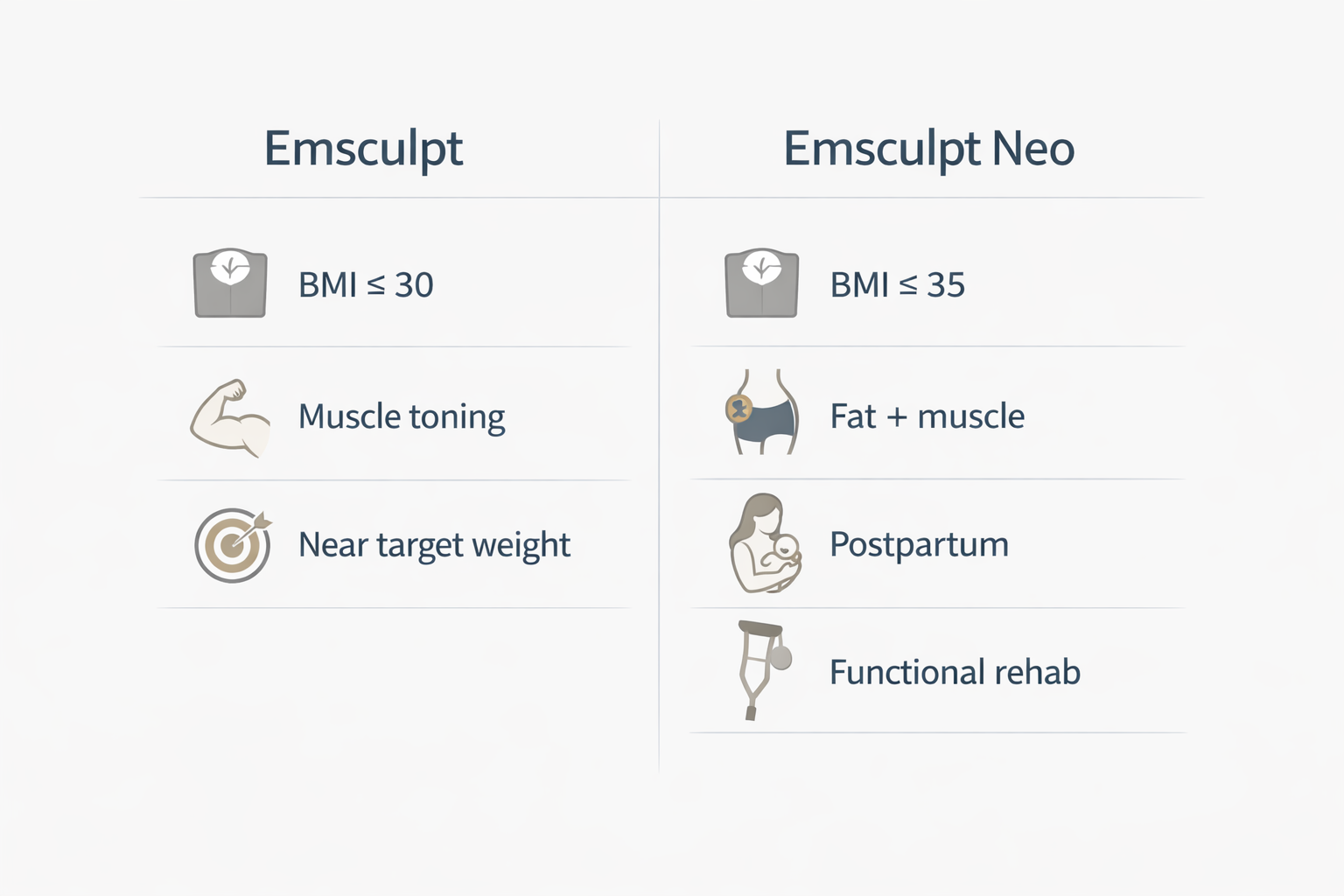
- Emsculpt is generally considered suitable for patients with a BMI of up to approximately 30. The ideal candidate has good baseline fitness or body composition and wants to enhance muscle tone and definition rather than achieve significant fat reduction.
- Emsculpt Neo extends suitability to patients with a BMI up to approximately 35, because the RF fat reduction component adds meaningful clinical value for patients who carry more subcutaneous fat in the treatment area. Patients seeking combined fat reduction and muscle building in a single device are the primary candidates.
- Postpartum women represent a specific and growing candidate group, particularly for abdominal treatments addressing muscle separation and lost core strength, where traditional exercise may take considerably longer to produce equivalent results.
- Patients with physical limitations — such as older adults, those recovering from orthopaedic surgery, or those with conditions limiting exercise capacity — may benefit from the functional muscle-building effect, particularly under the expanded FDA indications now associated with Emsculpt Neo.
A clinical assessment is required before treatment to confirm suitability. Patients with implanted electronic devices such as pacemakers or defibrillators, metal implants in the treatment area, pregnancy, or certain neurological conditions are generally not candidates. A qualified practitioner will review medical history and treatment area before recommending a protocol.
Emsculpt Neo vs CoolSculpting: Understanding the Difference
A common question among patients researching non-invasive body contouring is how Emsculpt Neo compares to CoolSculpting (cryolipolysis). The distinction is straightforward but important. CoolSculpting uses controlled cooling to freeze and destroy subcutaneous fat cells in a targeted area, producing fat reduction without any effect on muscle tissue. It does not build muscle, improve muscle tone, or stimulate collagen production. Emsculpt Neo, by contrast, targets both fat and muscle simultaneously, and its RF component adds a skin-warming effect that CoolSculpting does not provide.
For patients whose primary goal is fat reduction only, CoolSculpting may be a relevant option. For patients who want to simultaneously improve muscle definition — or who have any degree of muscle atrophy, weakness, or postpartum muscle loss — Emsculpt Neo addresses a dimension that CoolSculpting cannot. Some clinics combine the two technologies across separate treatment courses to address different tissue layers sequentially, though this involves greater cost and time commitment and should be guided by a thorough clinical assessment of individual goals.
What to Expect During and After Treatment
Both Emsculpt and Emsculpt Neo require no anaesthesia, no needles, and no incisions. Patients remain fully clothed below the applicator, which is strapped to the treatment area. Sessions last 30 minutes, and patients can typically return to normal activities immediately, with no downtime required.
During the session, the sensation of supramaximal contractions is distinct and unfamiliar — described by most patients as a strong internal pulsing or gripping sensation rather than pain. Emsculpt Neo adds warmth from the RF energy, which most patients find comfortable. After the session, mild muscle soreness similar to the feeling after an intensive workout is common and may last one to two days. Some patients also notice mild redness or warmth in the treated skin area after Emsculpt Neo, which generally resolves within hours.
Visible changes begin to emerge gradually over the weeks following the final session, with peak results at 2–3 months as fat cell clearance and muscle remodelling complete. To maintain results, practitioners typically recommend periodic maintenance sessions — often one or two sessions every three to six months — alongside regular exercise and a balanced diet. Emsculpt Neo works best as part of a broader approach to body composition; it is not a replacement for physical activity or nutritional habits.
Frequently Asked Questions
Is Emsculpt Neo painful?
Emsculpt Neo is not typically described as painful. The supramaximal contractions are intense and unfamiliar, and the RF heating produces noticeable warmth, but most patients tolerate the 30-minute session without significant discomfort. Post-treatment muscle soreness is common for one to two days.
How long do Emsculpt and Emsculpt Neo results last?
Results are not permanent. Muscle tone improvements may persist for six months or longer if supported by regular exercise, while fat reduction results may be more durable provided body weight remains stable. Maintenance sessions are generally recommended every three to six months to sustain visible outcomes.
Can Emsculpt or Emsculpt Neo replace exercise?
No. Both devices are designed to complement an active lifestyle, not replace it. Results are enhanced when combined with regular physical activity and a balanced diet. Patients who return to a sedentary lifestyle after treatment typically see results diminish more quickly.
Is Emsculpt Neo safe for postpartum women?
Emsculpt Neo may be considered for postpartum women after medical clearance, typically once the patient is no longer breastfeeding and has been assessed by a clinician. It is not used during pregnancy. Its potential for improving diastasis recti and rebuilding core strength is an area of active clinical interest, and a 2025 study evaluated its application in this patient group with encouraging initial findings.
How many sessions are needed?
The standard treatment protocol is four sessions, spaced approximately 5–10 days apart. Some patients may benefit from additional sessions depending on their goals and response, which a practitioner can advise on after assessing initial results.
Does Emsculpt Neo tighten loose skin?
The RF component in Emsculpt Neo stimulates collagen production, which may produce a mild skin-tightening effect in the treated area. This is a secondary benefit rather than the primary indication, and patients with significant skin laxity should discuss realistic expectations with their practitioner, as more targeted skin-tightening treatments may be more appropriate for that specific concern.
What is Core-to-Floor therapy?
Core-to-Floor therapy combines Emsculpt Neo or Emsculpt with EMSELLA, a separate HIFEM device designed to stimulate the pelvic floor muscles. This combination protocol addresses both the abdominal core and the pelvic floor in a coordinated treatment plan, and is used for postpartum rehabilitation, urinary continence, and functional core strength — currently the only non-invasive approach using two HIFEM therapies in this way.
Emsculpt or Emsculpt Neo: Choosing the Option That Fits Your Goals
The right choice between Emsculpt and Emsculpt Neo depends primarily on what you want to achieve. If your main goal is improving muscle definition and tone in a specific area, and your BMI is at or below approximately 30 with relatively little excess subcutaneous fat in the treatment zone, original Emsculpt may deliver a focused and cost-effective result. If you want to address both stubborn fat deposits and muscle tone simultaneously — or if your BMI is closer to 35, or you are seeking postpartum abdominal recovery, or you want the added benefit of mild skin tightening — Emsculpt Neo is the more comprehensive option and is generally the more versatile of the two platforms.
Both treatments carry a reasonable evidence base for their stated goals, though it is worth approaching manufacturer percentage figures with measured expectations and understanding that individual results vary based on body composition, baseline fitness, treatment area, and lifestyle factors after treatment. Neither device is a substitute for weight management, and both work most effectively when integrated with an active, health-supportive lifestyle.
If you are considering either treatment, a consultation with a qualified practitioner who uses the device clinically — and who can assess your specific anatomy, goals, and medical history — is the most reliable way to determine whether either option is appropriate for you and what a realistic outcome might look like in your case.
