

Key Takeaways
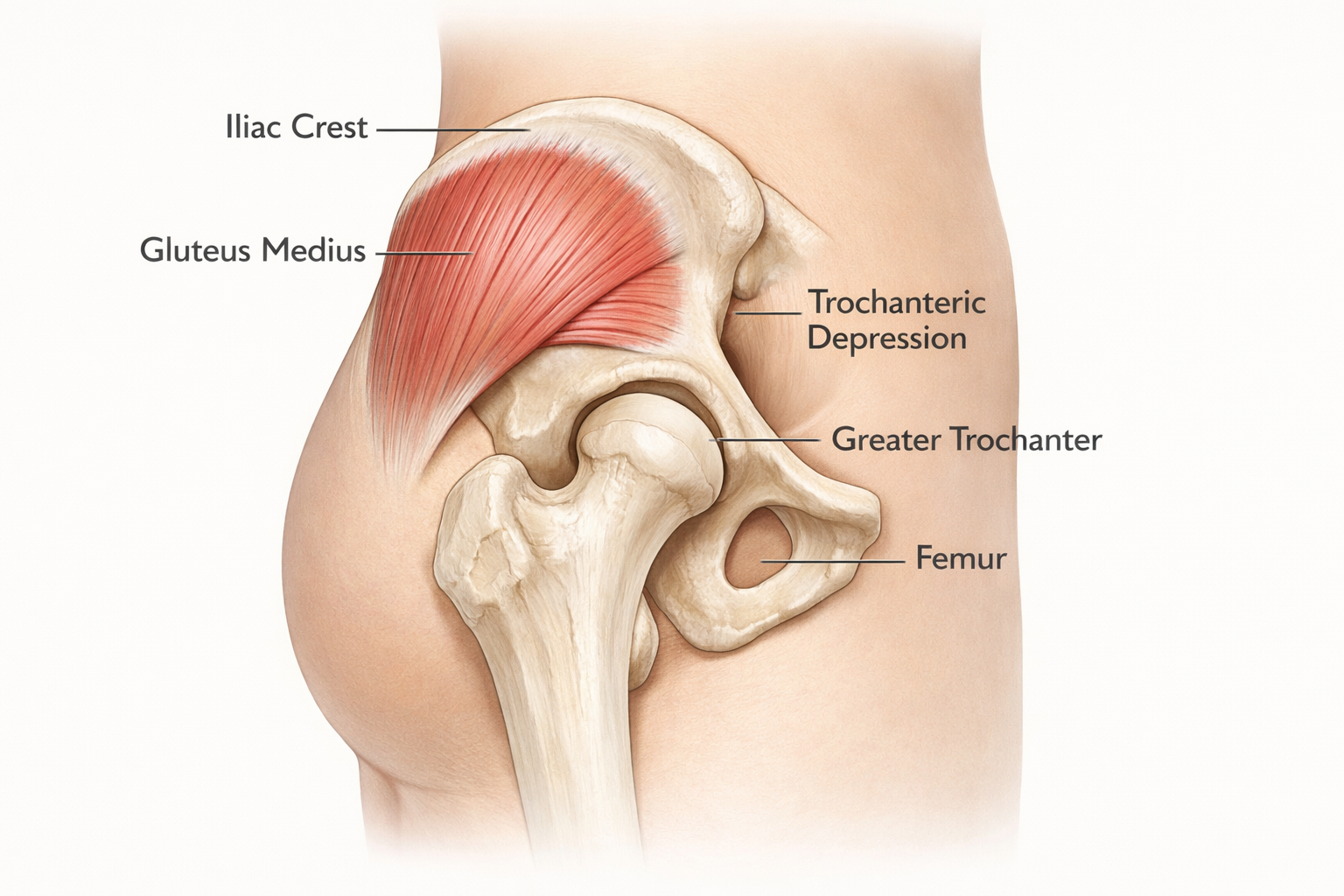
- Hip dips are a normal anatomical variation caused primarily by bone structure — specifically the position of the iliac crest relative to the greater trochanter — and are not a sign of being unfit or overweight.
- Exercise can build muscle around the outer hip and improve body composition, but cannot eliminate hip dips entirely because their depth is largely determined by skeletal structure and genetics.
- Spot reduction of fat in any specific area is a fitness myth; overall body composition changes may subtly alter how hip dips appear, but targeted fat loss at the hip is not achievable through exercise alone.
- Cosmetic treatments such as dermal fillers and fat grafting can reduce the appearance of hip dips, but carry meaningful risks and produce variable results depending on individual anatomy.
- Hip dips are not a health concern and do not require medical treatment; the decision to pursue any intervention — exercise-based or cosmetic — should be made on personal terms, free from social pressure.
What Are Hip Dips?
Hip dips are the gentle inward curves that appear on the outer side of each thigh, just below the hip bone. Rather than a smooth, continuous line from the waist to the thigh, the outer silhouette dips inward at this point before widening again toward the upper leg. They are also sometimes called violin hips or, in clinical anatomy, a trochanteric depression.
Despite the surge in online searches and social media discussion about hip dips, they are not a new phenomenon or an emerging health condition. They have always existed across all body types, genders, and ethnicities. What has changed is the visibility of body scrutiny on social media, which has led many people — particularly younger women and teenagers — to view a completely normal anatomical feature as a problem to be corrected.
Hip dips exist on a spectrum. In some people they are barely noticeable; in others they appear as a more pronounced indentation. Both presentations are entirely within the range of normal human anatomy.
What Causes Hip Dips?
The primary cause of hip dips is bone structure — specifically, the relationship between two bony landmarks: the iliac crest and the greater trochanter. The iliac crest is the uppermost ridge of the pelvis, which forms the curve of the hip. The greater trochanter is the bony prominence at the top of the femur (thigh bone), which sits lower and slightly outward. When the distance between these two landmarks is relatively large, or when the iliac crest is positioned higher or more prominently, a visible indentation forms between them — this is the hip dip.
Because the iliac crest and greater trochanter are skeletal structures, the shape and position of these bones is almost entirely determined by genetics and pelvic structure. No amount of exercise or dieting can alter bone positioning. This is a critical point that much online fitness content fails to make clear.
Several additional factors influence how noticeable hip dips appear:
- Fat distribution: Where and how the body stores subcutaneous fat is genetically influenced. People who store less fat over the outer hip may display a more pronounced trochanteric depression, while those with more fat in this area may find their hip dips are less visible.
- Muscle mass: The thickness of the gluteus medius and surrounding hip abductors — muscles that sit over the outer hip — can partially fill the area between the iliac crest and the greater trochanter, softening the dip’s appearance.
- Skin tethering: In some individuals, the skin over the outer hip is more firmly attached to the underlying tissue and bone, contributing to a deeper-looking indentation regardless of muscle or fat coverage.
- Overall body composition: A lower body fat percentage may make the bony contours of the hip more visible, while a slightly higher percentage of body fat in this area can soften the outline.
Hip dips are not caused by poor diet, a sedentary lifestyle, or being overweight. They appear in elite athletes, bodybuilders, and people with very low body fat percentages, which further illustrates that they reflect anatomical variation rather than a health or fitness deficit.
Do Hip Dips Affect Your Health?
Hip dips are purely a cosmetic feature and have no bearing on physical health, hip function, mobility, or strength. A pronounced trochanteric depression does not indicate weakness in the hip abductors, nor does it suggest any underlying musculoskeletal problem.
It is worth distinguishing hip dips from hip pain. If you experience pain, tenderness, swelling, or asymmetry around the hip or outer thigh, these symptoms warrant a medical assessment — they are unrelated to hip dips and may reflect conditions such as bursitis, tendinopathy, or other musculoskeletal issues. Hip dips themselves cause no pain and require no clinical intervention.
Hip Dips vs. Love Handles: What’s the Difference?
| Feature | Hip Dips | Love Handles |
|---|---|---|
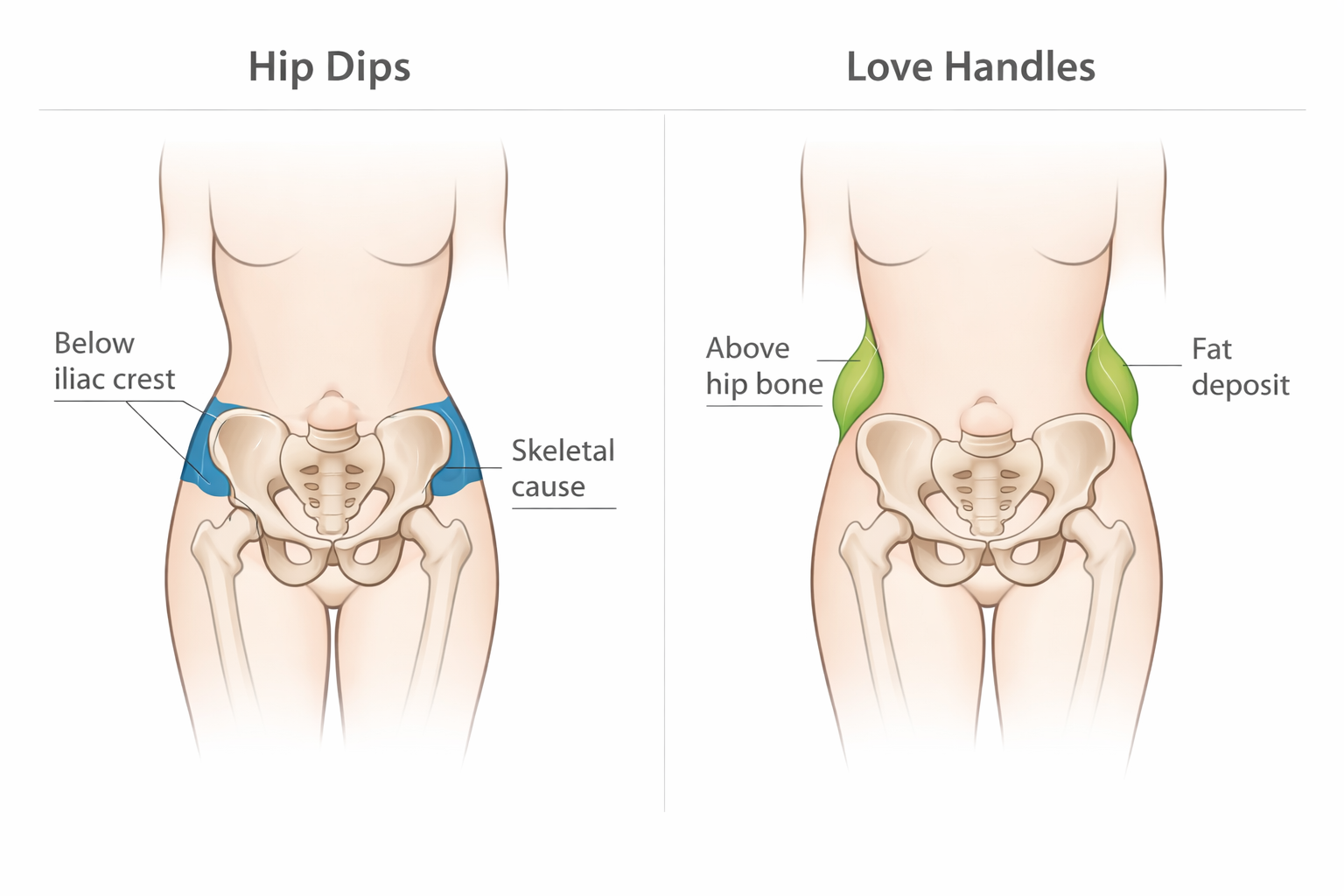
| Location | Outer thigh, below the iliac crest | Sides of the waist, above the hip bone |
| Primary cause | Skeletal structure and genetics | Excess subcutaneous or visceral fat |
| Influenced by exercise? | Partially (muscle volume can soften appearance) | Yes — overall fat loss reduces love handles |
| Influenced by diet? | Minimally | Yes — caloric balance affects fat stores |
| Health significance | None | Excess abdominal fat may carry cardiovascular risk |
| Can they be eliminated? | No — bone structure cannot be changed | Potentially, with sustained fat loss |
Many people conflate the two. Love handles are a fat deposit above the hip, while hip dips are a skeletal contour below the hip bone. They may coexist but have different causes and respond differently to lifestyle changes.
Can Exercise Reduce the Appearance of Hip Dips?
Exercise cannot change bone structure, so it cannot eliminate hip dips. However, targeted glute strengthening and hip abductor training may increase muscle volume in the area, which can partially fill the trochanteric depression and create a smoother outer hip contour. This is a real but limited effect — results depend on individual anatomy, training consistency, and how much of the dip’s depth is due to muscle versus skeletal structure.
It is also important to address a persistent fitness myth: spot reduction does not work. Performing exercises targeting the outer hip will not specifically burn fat from that area. Fat loss occurs systemically in response to an overall caloric deficit, not in response to which muscles are trained. If your hip dips are partly influenced by low fat coverage over the outer thigh, overall body composition changes may subtly alter their appearance — but this cannot be targeted directly.
Realistic expectations matter. With consistent training three to four times per week, visible changes in muscle tone and volume can take eight to twelve weeks to become apparent. Progress depends on training load, nutrition, sleep, and individual genetics.
Exercises That May Help
The following exercises target the gluteus medius, gluteus minimus, and surrounding hip abductors — the muscles most relevant to the outer hip area. They are commonly included in physiotherapy-informed hip strengthening programmes and are appropriate for most healthy adults.
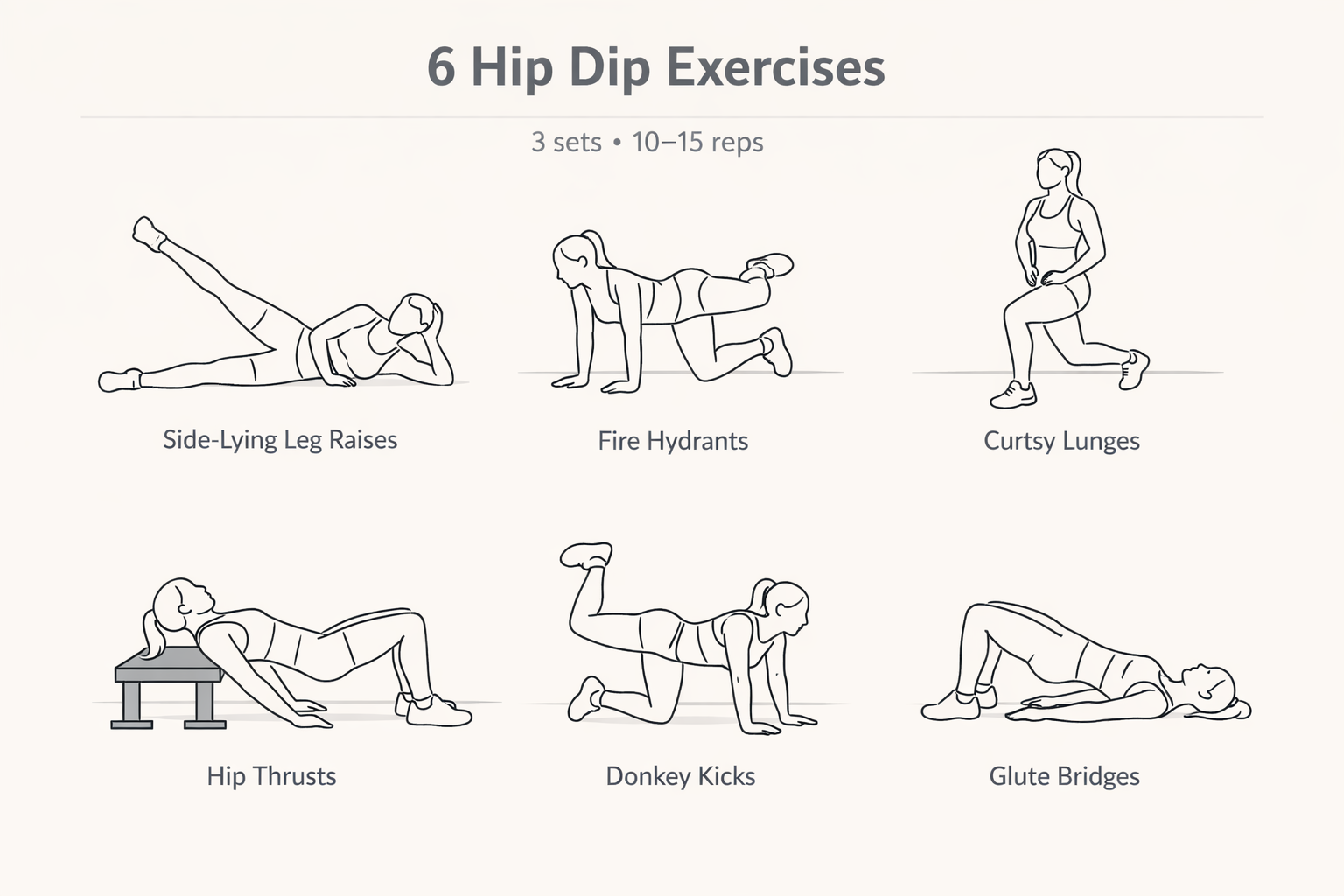
- Side-lying leg raises: Lie on your side with legs straight. Slowly raise the top leg to approximately 45 degrees, hold briefly, then lower with control. Three sets of 12–15 repetitions per side. Ankle weights can increase resistance as strength improves.
- Fire hydrants: Begin on hands and knees. Keeping the knee bent at 90 degrees, raise one knee out to the side, then lower with control. Three sets of 12–15 repetitions per side. Resistance bands placed above the knees add progressive difficulty.
- Curtsy lunges: Standing, step one foot diagonally behind and across the other, bending both knees to lower the body as if performing a curtsy. Return to standing. Three sets of 10–12 repetitions per side. This exercise also engages the gluteus medius effectively.
- Hip thrusts: Sit with your upper back resting on a bench or raised surface, feet flat on the floor. Drive the hips upward by squeezing the glutes until the body forms a straight line from shoulders to knees. Lower with control. Three sets of 10–15 repetitions. A barbell or dumbbell across the hips adds resistance.
- Sumo squats: Stand with feet wider than shoulder-width and toes turned outward. Lower into a squat, keeping the chest tall and knees tracking over the toes. Return to standing. Three sets of 12 repetitions. This stance increases engagement of the inner thighs and outer glutes.
- Donkey kicks: Begin on hands and knees. Keeping the knee bent, drive one heel toward the ceiling by engaging the glute, then lower with control. Three sets of 15 repetitions per side. Adding a resistance band above the knee increases gluteal activation.
- Glute bridges: Lie on your back with knees bent and feet flat on the floor. Press through the heels to raise the hips, squeeze the glutes at the top, then lower slowly. Three sets of 15 repetitions. This is a good starting point for those new to glute training or returning after a break.
These exercises also support hip stability and mobility, which contributes to better functional movement and may reduce the risk of certain hip and knee injuries over time — benefits that extend well beyond the aesthetic goal.
Cosmetic Treatments for Hip Dips
For individuals who want to reduce the appearance of hip dips beyond what exercise can achieve, several cosmetic procedures are available. None of these options can alter bone structure, but they can add volume or contour to the outer hip area. Each carries meaningful risks and produces variable results, and a thorough consultation with a qualified practitioner is essential before proceeding.
Dermal Fillers
Injectable fillers — most commonly hyaluronic acid-based products — can be placed into the trochanteric depression to add volume and soften the indentation. This is a non-surgical option with relatively little downtime. Results are temporary, typically lasting twelve to eighteen months depending on the filler used, the amount placed, and the individual’s metabolism. The hip area requires larger volumes than typical facial filler treatments, which increases both cost and the risk of complications such as swelling, bruising, asymmetry, or, in rare cases, vascular occlusion. Hip filler is an off-label use in most countries and should only be performed by experienced practitioners familiar with the anatomy of this region.
Fat Grafting (Fat Transfer)
Fat grafting — sometimes called autologous fat transfer — involves removing fat from another area of the body through liposuction, processing it, and injecting it into the hip area. Because the transferred fat is the patient’s own tissue, there is no risk of allergic reaction. However, not all transferred fat survives the transfer process; typically a proportion is reabsorbed by the body in the months following the procedure, which means results can be unpredictable and may require more than one session. This is a surgical procedure requiring anaesthesia, with a recovery period of several weeks. Risks include infection, fat necrosis, contour irregularity, and asymmetry.
Hip Implants
Silicone implants can be surgically placed over the greater trochanter to add permanent volume to the outer hip. This is the most invasive option and carries the highest risk profile, including infection, implant displacement, capsular contracture, and scarring. Recovery is typically four to six weeks. Hip implants are less commonly performed than fat grafting and are generally considered a last resort when other options are unsuitable.
Realistic Expectations for Cosmetic Treatment
All cosmetic treatments for hip dips improve contour rather than producing a complete transformation. Individual results depend on the depth of the trochanteric depression, skin quality, the volume achievable, and the specific procedure chosen. No cosmetic treatment can guarantee a symmetrical hourglass figure, and the pursuit of an idealized shape based on filtered social media images is unlikely to be achievable or satisfying for most people. A candid discussion with an experienced practitioner about realistic outcomes is an essential part of the decision-making process.
Hip Dips, Body Image, and Social Media
The volume of searches for hip dips has grown significantly alongside the rise of social media platforms that heavily feature filtered, edited, and staged images of bodies. The hourglass figure — with a defined waist and smooth, rounded outer hips — is frequently presented as an aspirational standard, but many of the images that promote it have been digitally altered or are the result of specific poses and lighting.
Hip dips appear on people of every body type, including fitness professionals, models, and athletes who appear extensively in these same media environments. The fact that hip dips are often edited out of images does not mean they are rare; it means they are being systematically erased from the visual record, which distorts the perception of normal anatomy.
Body positivity and body neutrality movements have helped reframe this conversation, encouraging people to evaluate their bodies by function, health, and personal wellbeing rather than by proximity to digitally constructed ideals. For teenagers especially, developing a realistic understanding of how common hip dips are — and that they reflect normal bone structure rather than a flaw — is an important part of building a healthy relationship with one’s own body.
Choosing to reduce the appearance of hip dips through exercise or cosmetic treatment is a personal decision that can be entirely reasonable. The key distinction is whether that decision is driven by personal preference or by external pressure and unrealistic beauty standards. Cosmetic interventions pursued under social pressure, or in the hope of matching digitally altered images, are unlikely to produce lasting satisfaction.
Common Myths About Hip Dips
Myth: Hip dips mean you’re out of shape or overweight. Hip dips are determined by bone structure and genetics, not fitness level or body weight. Very lean, highly trained individuals can have pronounced hip dips.
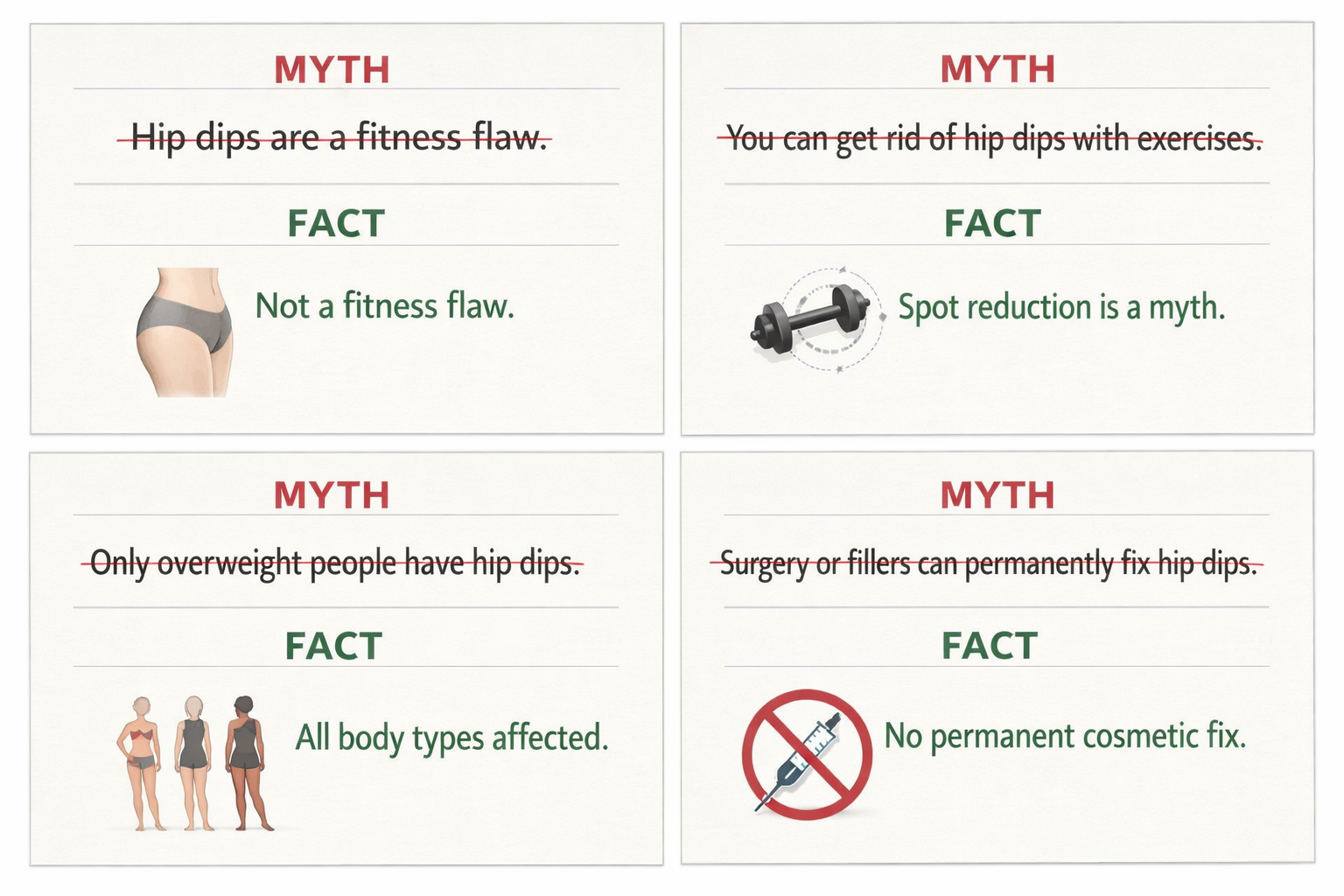
Myth: You can spot-reduce fat from the hip dip area with targeted exercises. Spot reduction is not physiologically possible. Exercise in a specific area builds muscle there but does not preferentially burn fat from that location.
Myth: Hip dips only affect certain body types. Hip dips appear across all body shapes, sizes, genders, and ethnicities. They affect men as well as women, though they tend to attract more attention in female-coded body image discussions.
Myth: The right diet will get rid of hip dips. No dietary approach can alter the position of the iliac crest or greater trochanter. Changes in overall body composition may slightly affect how the dip looks, but the underlying skeletal contour remains.
Myth: Cosmetic treatment offers a permanent fix. Injectable fillers are temporary. Even fat grafting produces variable long-term results due to fat reabsorption. No current cosmetic treatment provides a guaranteed permanent change to hip contour.
Frequently Asked Questions
Are hip dips the same as violin hips?
Yes — violin hips is the most widely used informal name for hip dips. Both terms describe the same indentation along the outer thigh below the iliac crest. The name comes from the hourglass-like shape of a violin body, which narrows in the middle in a way that resembles this contour.
Can hip dips get worse over time?
Hip dips may become more noticeable with age as muscle mass decreases and fat distribution changes. Consistent resistance training that maintains gluteal muscle volume may help preserve the appearance of a fuller outer hip contour over time, though the underlying bone structure remains unchanged.
Do hip dips affect men as well as women?
Yes. Hip dips occur in people of all genders. Because male pelvic anatomy is typically narrower than female pelvic anatomy, the relationship between the iliac crest and greater trochanter differs — but men can and do have hip dips. Most online content focuses on female bodies, which can create the impression that hip dips are exclusively a female concern; they are not.
How long before I see results from glute exercises?
Meaningful changes in muscle volume and tone generally require eight to twelve weeks of consistent training at an appropriate intensity. Results vary depending on training frequency, progressive overload, nutrition, sleep quality, and individual genetics. Patience and consistency matter more than any single exercise choice.
Is hip filler safe?
Hip filler carries a meaningful risk profile, particularly because large volumes are often required and the region has significant blood vessel anatomy. Possible complications include swelling, bruising, asymmetry, granuloma formation, and, in rare cases, vascular complications. The procedure should only be performed by a practitioner with specific experience in this area and a thorough understanding of the relevant anatomy. A detailed consultation discussing risks is essential.
Should I see a doctor about my hip dips?
Hip dips themselves do not require medical assessment. However, if you experience pain, swelling, tenderness, or asymmetry around the hip or outer thigh, a clinical evaluation is appropriate to rule out musculoskeletal conditions that may need treatment. Purely cosmetic concerns about hip dips are best discussed with a qualified aesthetic practitioner.
What to Consider Before Deciding on Any Intervention
Hip dips are a normal feature of human anatomy rooted in skeletal structure, fat distribution, and genetics — three factors that sit largely outside individual control. Understanding this is the foundation for making any decision about them, whether that means embracing them as they are, building strength in the surrounding muscles, or exploring cosmetic options.
Exercise-based approaches are low-risk, broadly beneficial for hip strength and stability, and may subtly improve the outer hip contour over time. They are the most appropriate starting point for anyone bothered by the appearance of their hip dips. Realistic expectations — improvement rather than elimination, over months rather than weeks — are essential.
Cosmetic treatments offer more visible contour changes but come with genuine risks, financial costs, and — in the case of fillers — the need for ongoing maintenance. Anyone considering a cosmetic procedure for hip dips should seek a consultation with a practitioner who will provide an honest assessment of likely outcomes for their specific anatomy, clearly explain the risks involved, and who does not pressure toward treatment.
If you feel ready to explore options in more detail, a consultation with a qualified aesthetic clinician can help you understand which approach — if any — may be appropriate for your individual goals and anatomy.
