

Eye bags — the puffiness, swelling, or fullness that appears beneath the eyes — are one of the most common aesthetic concerns that patients raise during consultation. They can make a person look tired, older, or unwell even when they feel perfectly fine. Understanding what actually causes eye bags matters because the underlying reason directly influences which approaches may help and which are unlikely to make a meaningful difference.
Key Takeaways
- Eye bags have multiple distinct causes, including fat compartment changes, fluid retention, skin laxity, and genetics — and these often overlap.
- Ageing is the most significant structural cause, but lifestyle factors such as sleep, diet, and alcohol consumption can worsen puffiness considerably.
- Identifying the correct underlying cause is essential before considering any treatment, because different causes respond to different approaches.
- Some causes of under-eye puffiness are temporary and respond well to lifestyle changes, while structural causes typically require clinical intervention.
- A qualified practitioner should assess the under-eye area before any treatment is recommended, as anatomy and cause vary significantly between individuals.
What Are Eye Bags?
Eye bags refer to the visible fullness or swelling that develops in the lower eyelid area, typically beneath the orbital rim — the bony edge of the eye socket. They are distinct from dark circles, though the two concerns often coexist and are frequently confused. Dark circles are primarily a pigmentation or vascular issue, whereas eye bags involve a physical change in the contour or volume of the lower eyelid and surrounding tissue. The distinction matters clinically because the causes and appropriate management differ considerably between the two.
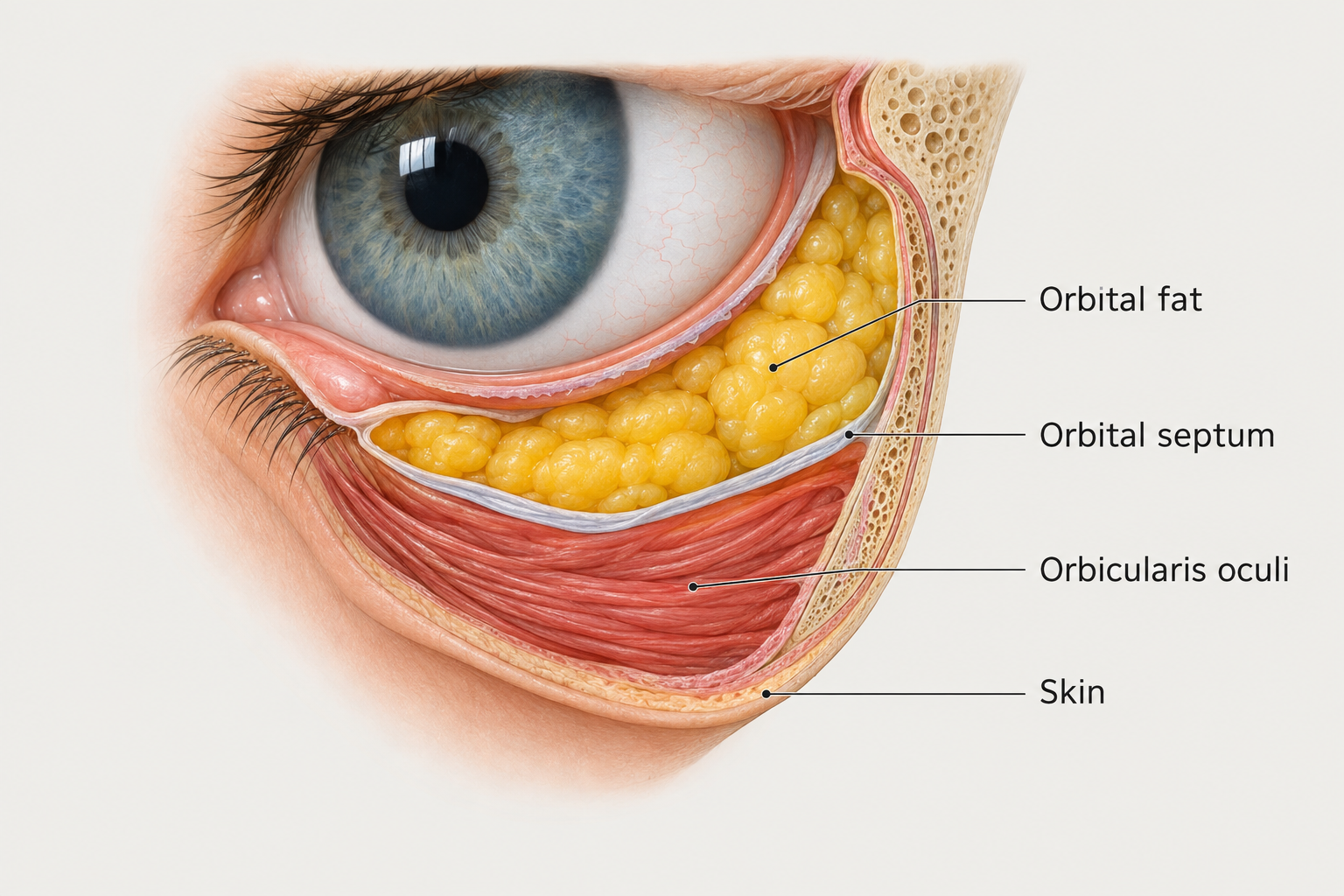
The lower eyelid is a structurally complex area. It contains skin, muscle, fat compartments, and connective tissue, all of which can change independently over time or in response to various triggers. When any of these components shift, the result can be visible puffiness, shadowing, or a tired appearance. Because multiple structures are involved, eye bags rarely have a single cause — most cases involve a combination of factors.
The Role of Orbital Fat in Under-Eye Puffiness
One of the most significant structural causes of eye bags is the forward displacement of orbital fat — the cushioning fat that sits behind the eye within the eye socket. This fat is normally held in place by a thin membrane called the orbital septum. As the orbital septum weakens with age, or due to genetic predisposition, the fat can bulge forward into the lower eyelid, creating the characteristic rounded fullness associated with persistent eye bags.

This type of eye bag is structural rather than temporary. It does not fluctuate significantly with sleep or hydration, and it tends to be present consistently throughout the day. Orbital fat prolapse, as this process is called, is one of the primary reasons why eye bags can appear even in younger adults who are otherwise healthy and well-rested. In these cases, the tendency is often inherited, meaning a parent or sibling may have the same concern.
It is worth noting that the orbital fat is divided into distinct compartments — typically three in the lower eyelid — and these compartments may protrude to different degrees. This is why some people develop a single prominent bulge while others have a more irregular or multi-lobed appearance beneath the eye.
How Ageing Contributes to Eye Bags
Ageing affects the under-eye area through several simultaneous mechanisms, which is why eye bags tend to become more pronounced and persistent as people get older. The skin of the lower eyelid is among the thinnest on the body, making it particularly susceptible to the structural changes that accompany the ageing process.
Collagen and elastin — the proteins responsible for skin firmness and elasticity — decline progressively from the mid-twenties onwards. As lower eyelid skin loses structural support, it becomes looser and less able to contain the underlying fat and fluid. This skin laxity allows fat compartments to become more visible and allows fluid to accumulate more easily in the tissue beneath the eye.
The supporting ligaments and connective tissue of the face also weaken with age. The orbicularis oculi muscle, which encircles the eye, loses tone over time, reducing its ability to support the lower eyelid contents. Simultaneously, volume loss in the mid-face — particularly in the cheek fat compartments — can create a relative hollowing below the eye bags, making the puffiness appear more pronounced by contrast. This is sometimes described as a tear trough deformity, where a groove or shadow forms between the lower eyelid and the cheek.
Bone resorption is another age-related factor that is less commonly discussed but clinically relevant. The orbital rim and surrounding facial bones gradually lose density and volume with age, which can alter the structural support of the overlying soft tissue and contribute to the appearance of under-eye fullness and hollowing.
Genetics and Hereditary Factors
Genetics play a substantial role in determining who develops eye bags and at what age. Some individuals inherit a naturally weaker orbital septum, larger orbital fat compartments, or thinner lower eyelid skin — all of which increase the likelihood of developing visible under-eye puffiness earlier in life. It is not uncommon for patients in their twenties or early thirties to present with significant eye bags that have been present since adolescence, with a clear family history of the same concern.
Ethnicity can also influence the appearance of the under-eye area. Differences in fat distribution, skin thickness, pigmentation, and facial bone structure mean that the presentation of eye bags varies across different populations. These anatomical differences are clinically relevant when assessing treatment suitability and expected outcomes.
When eye bags are primarily genetic and structural, lifestyle modifications alone are unlikely to produce significant improvement. This is an important point for patients to understand, as it helps set realistic expectations and guides the conversation towards appropriate clinical options.
Fluid Retention and Temporary Puffiness
Not all under-eye puffiness is structural. Fluid retention — the accumulation of excess fluid in the soft tissue beneath the eye — is a common and often temporary cause of eye bags. The lower eyelid area is particularly prone to fluid accumulation because the skin is thin, the tissue is loose, and lymphatic drainage in this region can be sluggish.
Several factors can trigger or worsen fluid retention around the eyes. High dietary salt intake causes the body to retain water, which can manifest as puffiness throughout the face, including beneath the eyes. This type of puffiness is often most noticeable in the morning and tends to reduce as the day progresses and the body redistributes fluid through movement and gravity.
Alcohol consumption is another well-recognised contributor. Alcohol causes dehydration, which paradoxically prompts the body to retain fluid, and it also disrupts sleep quality — both of which can worsen under-eye puffiness. Similarly, crying causes temporary swelling due to increased blood flow and fluid accumulation in the periorbital tissue.
Hormonal fluctuations, particularly those associated with the menstrual cycle, can cause cyclical fluid retention that affects the face and under-eye area. Some individuals notice that their eye bags are significantly worse at certain points in their cycle, which can be a useful diagnostic clue.
Sleep, Fatigue and Lifestyle Factors
Poor sleep is one of the most frequently cited causes of temporary eye bags, and there is a physiological basis for this association. During sleep, the body regulates fluid balance and reduces inflammation. When sleep is insufficient or disrupted, fluid can accumulate in the periorbital tissue, blood vessels may dilate, and the skin appears paler — all of which make under-eye puffiness more visible.
Sleeping position can also influence morning puffiness. Lying flat allows fluid to redistribute towards the face overnight, which is why eye bags are often most pronounced immediately after waking and improve once a person has been upright for a few hours. Elevating the head slightly during sleep may help reduce this effect for some individuals.
Chronic fatigue, high stress levels, and irregular sleep patterns can contribute to persistent rather than occasional puffiness. Cortisol — the stress hormone — can affect fluid balance and skin integrity over time, potentially worsening the appearance of the under-eye area in people who experience prolonged periods of poor sleep or high psychological stress.
Smoking accelerates the breakdown of collagen and elastin in the skin, which can worsen skin laxity in the lower eyelid and make eye bags more prominent over time. The circulatory effects of smoking may also impair lymphatic drainage in the periorbital area.
Allergies and Sinus Issues
Allergic reactions — whether seasonal, environmental, or food-related — can cause significant under-eye puffiness. Allergies trigger the release of histamine, which causes blood vessels to dilate and become more permeable, allowing fluid to leak into surrounding tissue. This produces swelling that can be particularly pronounced around the eyes, where the skin and tissue are especially delicate.
Allergic shiners — a term used to describe the dark, puffy appearance beneath the eyes associated with chronic allergies — are a recognised clinical presentation. In these cases, addressing the underlying allergy through avoidance, antihistamines, or other appropriate management may reduce under-eye puffiness more effectively than any cosmetic intervention.
Sinus congestion and chronic sinusitis can also contribute to under-eye swelling by impairing drainage from the periorbital area. Individuals who experience recurrent sinus problems may notice that their eye bags worsen during flare-ups and improve when their sinuses clear. If allergies or sinus issues are suspected as a significant contributing factor, assessment by a relevant medical specialist is appropriate before pursuing aesthetic treatment.
Thyroid and Medical Conditions
In some cases, persistent or worsening eye bags may be associated with an underlying medical condition rather than purely cosmetic or lifestyle factors. Thyroid disorders — particularly hypothyroidism and Graves' disease — can cause periorbital swelling and changes in the appearance of the eye area. Kidney disease, which affects the body's ability to regulate fluid balance, can also present with facial and periorbital puffiness.
Dermatitis and eczema affecting the eyelid skin can cause swelling, redness, and thickening of the lower eyelid tissue, which may be mistaken for or contribute to the appearance of eye bags. Certain medications, including some blood pressure drugs and corticosteroids, can cause fluid retention that manifests around the eyes.
It is important that any sudden, rapid, or asymmetric worsening of under-eye puffiness — particularly if accompanied by other symptoms such as fatigue, weight changes, or visual disturbance — is assessed by a medical professional to rule out an underlying systemic cause before any cosmetic treatment is considered.
Sun Damage and Skin Quality
Cumulative ultraviolet exposure accelerates the breakdown of collagen and elastin in the skin, a process known as photoageing. In the lower eyelid area, this leads to earlier and more pronounced skin laxity, which allows the underlying fat compartments to become more visible and makes fluid retention more apparent. Individuals with a history of significant sun exposure — particularly without adequate sun protection — may develop more prominent eye bags at an earlier age than those who have protected their skin consistently.
Photoageing also affects skin texture and tone, which can make the under-eye area appear more shadowed and tired even when structural puffiness is relatively mild. This is why skin quality is an important consideration when assessing the under-eye area — addressing skin laxity and texture alongside any structural concerns may produce a more balanced improvement in overall appearance.
Why Identifying the Cause Matters for Treatment
The cause of eye bags directly determines which treatment approaches are likely to be appropriate and effective. Temporary puffiness driven by fluid retention, poor sleep, or dietary factors may respond well to lifestyle modifications — reducing salt intake, improving sleep hygiene, staying well hydrated, and managing allergies where relevant. These changes are unlikely to resolve structural eye bags caused by orbital fat prolapse or significant skin laxity, however.
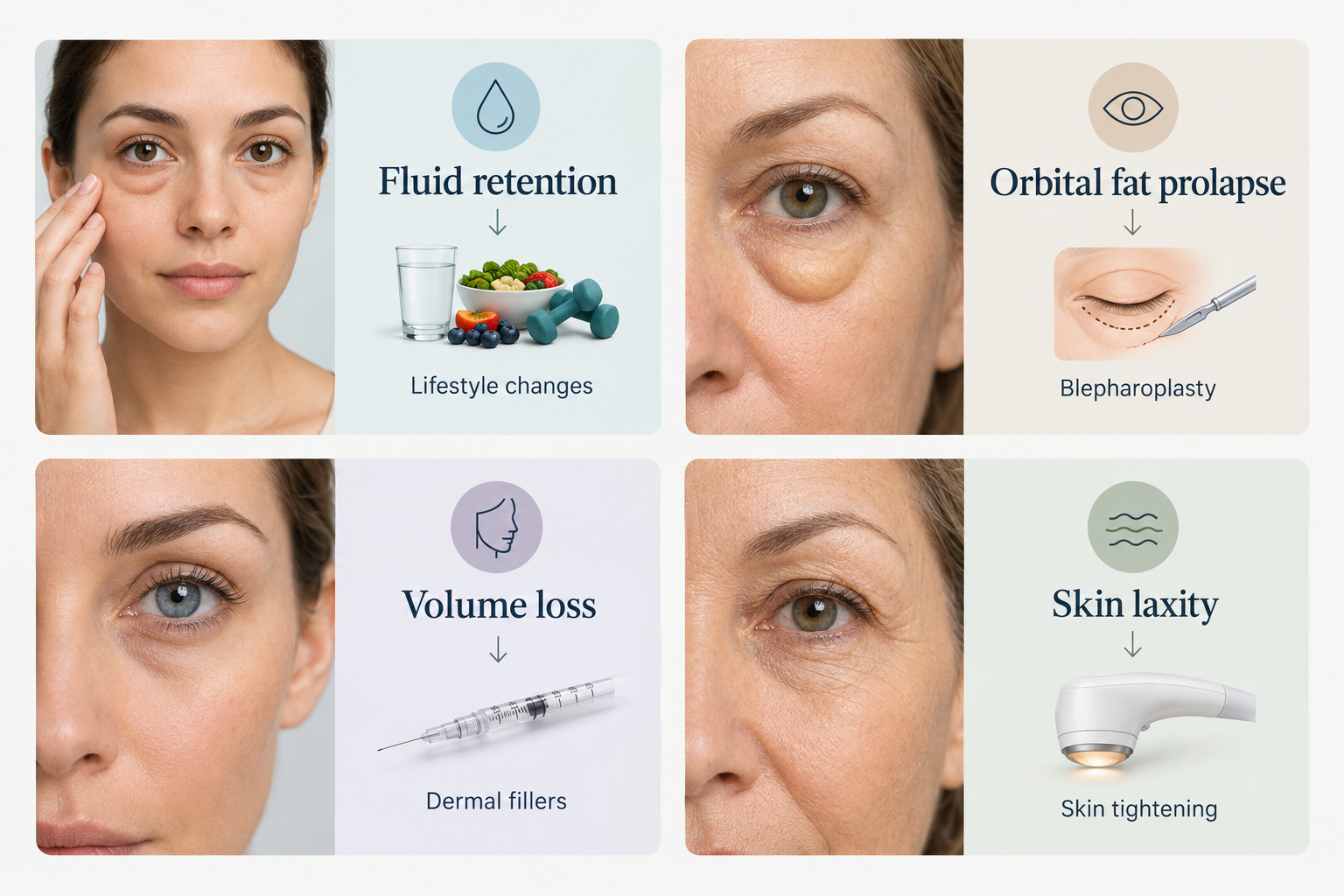
Structural eye bags caused by fat prolapse and skin laxity are typically addressed through clinical interventions. Surgical lower blepharoplasty — a procedure that repositions or removes excess orbital fat and tightens the lower eyelid skin — is considered the most definitive treatment for significant structural eye bags. It is performed by ophthalmic or plastic surgeons and involves a recovery period.
Non-surgical options may be appropriate for milder concerns or for patients who are not suitable for or do not wish to pursue surgery. Dermal fillers placed in the tear trough area can camouflage the transition between the lower eyelid and cheek, reducing the appearance of shadowing associated with mild fat prolapse or volume loss. However, fillers do not remove or reposition fat, and they are not appropriate for all presentations — in some cases, adding volume in the wrong area can worsen the appearance of puffiness. This is why a thorough clinical assessment is essential before any filler treatment in this region.
Radiofrequency skin tightening and other energy-based devices may help improve mild skin laxity in the lower eyelid area, though results are generally more modest than surgical intervention. Polynucleotide injections and other biostimulatory treatments may support skin quality and hydration in the periorbital area, which can complement other approaches. The evidence base for non-surgical treatments in this area continues to develop, and realistic expectations are important.
Frequently Asked Questions
Can eye bags go away on their own?
Temporary eye bags caused by fluid retention, poor sleep, or dietary factors can reduce or resolve with appropriate lifestyle changes. Structural eye bags caused by orbital fat prolapse, skin laxity, or significant volume loss are unlikely to improve without clinical intervention, as these involve physical changes to the anatomy of the lower eyelid.
Are eye bags always a cosmetic concern, or can they indicate a health problem?
In most cases, eye bags are a cosmetic concern related to ageing, genetics, or lifestyle. However, sudden onset, rapid worsening, or asymmetric puffiness — particularly alongside other symptoms — warrants medical assessment to rule out thyroid disorders, kidney disease, or other systemic conditions.
Why are my eye bags worse in the morning?
Morning puffiness is typically caused by fluid redistribution during sleep. When lying flat, fluid accumulates in the periorbital tissue rather than draining downward. This usually improves within an hour or two of being upright. Sleeping with the head slightly elevated may help reduce morning puffiness for some people.
Do eye creams help with eye bags?
Topical eye creams containing ingredients such as caffeine, retinol, or peptides may provide modest temporary improvement in mild puffiness or skin quality, but they are unlikely to produce significant or lasting changes in structural eye bags. They are generally more useful as a supportive measure alongside other approaches rather than as a standalone solution.
At what age do eye bags typically develop?
This varies considerably between individuals. Genetically predisposed individuals may notice eye bags in their twenties or even earlier. For most people, age-related changes to the orbital septum, skin, and facial volume become more apparent from the late thirties onwards, with progression continuing through the forties and fifties.
Can losing weight reduce eye bags?
Weight loss is unlikely to significantly reduce structural eye bags caused by orbital fat prolapse, as the orbital fat compartments are largely independent of general body fat. However, overall fluid retention may reduce with dietary improvements, which could have a modest effect on temporary puffiness.
Understanding Your Eye Bags Before Seeking Treatment
Eye bags are rarely the result of a single cause. In most patients, a combination of genetic predisposition, age-related structural changes, skin quality, and lifestyle factors contributes to the overall appearance. This complexity is precisely why a thorough clinical assessment by a qualified practitioner is the essential first step before any treatment decision is made.
Identifying whether puffiness is primarily structural, fluid-related, or driven by skin laxity — or a combination of all three — allows a practitioner to recommend approaches that are genuinely appropriate for the individual's anatomy and concerns. Pursuing treatment without this understanding risks disappointing results or, in some cases, worsening the appearance of the area.
If eye bags are affecting your confidence or quality of life, a consultation with a practitioner experienced in periorbital assessment is a reasonable starting point. They can help determine the likely cause, discuss realistic expectations, and outline which options — whether lifestyle-based, non-surgical, or surgical — may be worth considering for your specific situation.
