


Walking into an aesthetic skin clinic for the first time can feel unfamiliar, particularly if you are unsure what the appointment involves, which treatments might be relevant, or how to prepare. This article explains what typically happens during an initial consultation, how a practitioner assesses your skin, which concerns are commonly addressed, what realistic outcomes look like, and what questions are worth asking before agreeing to any treatment.
Key Takeaways
- A first visit to an aesthetic skin clinic is primarily a consultation, not a treatment session — the practitioner assesses your skin, discusses your concerns, and explains relevant options.
- Reputable clinics carry out a thorough medical and skin history before recommending any procedure, and a qualified practitioner will not pressure you into same-day treatment.
- Many aesthetic concerns — such as fine lines, uneven skin tone, volume loss, and skin texture — can be approached in more than one way, and the most suitable option depends on your individual anatomy, skin type, and goals.
- Results from aesthetic treatments vary between individuals; realistic expectations and an understanding of limitations are important before committing to any procedure.
- You are entitled to take time to consider your options, ask for written information, and seek a second opinion before proceeding.
What Happens at an Aesthetic Skin Clinic Consultation?
An initial consultation at an aesthetic skin clinic is a structured clinical appointment, not a sales meeting. The practitioner — who may be a doctor, nurse prescriber, dentist, or other regulated healthcare professional depending on the clinic — will begin by taking a detailed history. This typically covers your general health, current medications, known allergies, previous cosmetic or surgical procedures, and any skin conditions you have been diagnosed with or treated for. This information is clinically relevant because many aesthetic treatments have contraindications, and a responsible practitioner needs a complete picture before making any recommendation.
After the history, the practitioner will examine the areas of concern. This may involve assessing skin quality under different lighting, evaluating facial symmetry and proportions, examining skin laxity, pigmentation, vascular changes, and texture, and sometimes using a magnifying device or skin analysis technology to assess the deeper layers of the skin. The purpose of this assessment is to identify the underlying cause of a concern rather than simply treating its surface appearance. For example, dark circles under the eyes may result from pigmentation, visible blood vessels, hollowness, or a combination of these — and each cause may respond differently to treatment.
The practitioner will then explain which treatments may be relevant to your concerns, how each one works, what realistic outcomes look like, how many sessions may be needed, what the recovery involves, and what the risks are. A thorough consultation should leave you with enough information to make an informed decision without feeling rushed.
How to Prepare for Your First Visit
Arriving prepared helps you get the most from a consultation at an aesthetic skin clinic. Before the appointment, it is useful to write down your main concerns in order of priority, since consultations are time-limited and it is easy to forget specific questions once you are in the room. Note any treatments you have had previously, including the approximate dates and any reactions you experienced.
Bring a list of your current medications, including over-the-counter products, supplements, and topical skincare. Some medications — including blood thinners, certain antidepressants, and high-dose vitamin E or fish oil supplements — can affect treatment suitability or increase the risk of bruising. If you are pregnant or breastfeeding, mention this at the start of the appointment, as most aesthetic treatments are not recommended during these periods.
Arrive without heavy makeup if possible, particularly if the consultation involves skin analysis. Some clinics ask patients to complete a medical questionnaire before the appointment; if this is sent to you in advance, complete it carefully and honestly. Photographs taken in consistent lighting can also be useful if you want to track changes over time, though many clinics take their own standardised clinical photographs as part of the consultation process.
Common Concerns Discussed at an Aesthetic Skin Clinic
Aesthetic skin clinics address a wide range of concerns, and the treatments available vary considerably between clinics depending on the qualifications of the practitioners and the equipment they hold. The following are among the most frequently discussed concerns at an initial consultation.
Fine Lines and Dynamic Wrinkles
Fine lines caused by repeated facial muscle movement — such as frown lines between the eyebrows, forehead lines, and crow's feet around the eyes — are among the most common reasons people attend an aesthetic skin clinic. Botulinum toxin injections (commonly known by brand names such as Botox, Dysport, or Azzalure) are frequently used to temporarily reduce the appearance of these dynamic wrinkles by relaxing the underlying muscles. Results typically become visible within a few days to two weeks and generally last between three and six months, after which the treatment needs to be repeated to maintain the effect. Botulinum toxin treatment is not permanent, and individual response varies.
Volume Loss and Static Lines
As the face ages, fat compartments reduce, bone remodels, and collagen production slows. This can result in hollowing around the cheeks and temples, deepening of the nasolabial folds (the lines running from the nose to the corners of the mouth), thinning of the lips, and loss of jawline definition. Dermal fillers — injectable gels, most commonly based on hyaluronic acid — are frequently used to restore volume, soften static lines, and reshape specific facial features. Hyaluronic acid fillers are temporary and can generally be dissolved with an enzyme called hyaluronidase if needed, though this is not always straightforward and carries its own considerations. Results typically last between six and eighteen months depending on the product used, the area treated, and individual metabolism.
Skin Quality, Texture, and Pigmentation
Concerns about skin texture, enlarged pores, uneven skin tone, sun damage, melasma, acne scarring, and dullness are commonly raised at aesthetic skin clinics. A range of treatments may be relevant depending on the specific concern and skin type, including chemical peels, microneedling, laser treatments, intense pulsed light (IPL), and prescription-grade topical skincare. Some of these treatments require a course of sessions rather than a single appointment, and certain procedures — particularly laser and IPL — require careful patient selection based on skin tone to minimise the risk of post-inflammatory hyperpigmentation or other adverse effects.
Skin Laxity and Collagen Stimulation
Mild to moderate skin laxity — looseness or sagging of the skin — can sometimes be addressed with non-surgical treatments such as radiofrequency, high-intensity focused ultrasound (HIFU), or collagen-stimulating injectables such as polynucleotides or biostimulators. These treatments aim to stimulate the skin's own collagen and elastin production over time. Results are generally gradual and may take several weeks to months to become visible; they are typically more modest than surgical alternatives and are most appropriate for patients with mild to moderate laxity rather than significant sagging.
Acne and Active Skin Conditions
Some aesthetic skin clinics, particularly those led by doctors or nurse prescribers, can assess and treat active acne alongside cosmetic concerns. This may involve prescription topical or oral medications, chemical peels formulated for acne-prone skin, or light-based treatments. It is important to note that active inflammatory skin conditions may need to be managed before certain aesthetic procedures can be safely performed.
Understanding Realistic Outcomes
One of the most important conversations to have at a first aesthetic skin clinic appointment is about realistic expectations. Aesthetic treatments can produce meaningful improvements in many concerns, but they do not stop the ageing process, and results are rarely as dramatic as heavily edited before-and-after photographs suggest. The degree of improvement depends on the severity of the concern, the treatment chosen, the skill and experience of the practitioner, and individual factors such as skin type, lifestyle, and how the body responds to treatment.
Most non-surgical aesthetic treatments produce temporary results that require maintenance. Botulinum toxin treatments typically need repeating every three to six months. Dermal fillers may last six to eighteen months. Skin quality treatments such as chemical peels or microneedling often require a course of sessions followed by periodic maintenance. Understanding this commitment — both in terms of time and cost — before starting treatment helps avoid disappointment later.
A practitioner who provides honest, balanced information about what a treatment can and cannot achieve is a positive sign. Be cautious of any clinic that guarantees specific results, dismisses your questions, or pressures you to book treatment at the first appointment without adequate time to consider your options.
Risks and Side Effects: What You Should Know
Every aesthetic treatment carries some degree of risk, and a responsible practitioner will explain the relevant risks clearly before any procedure. Common side effects across many injectable and skin treatments include temporary redness, swelling, bruising, and tenderness at the treatment site. These effects are usually mild and resolve within a few days, though the timeline varies by treatment and individual.
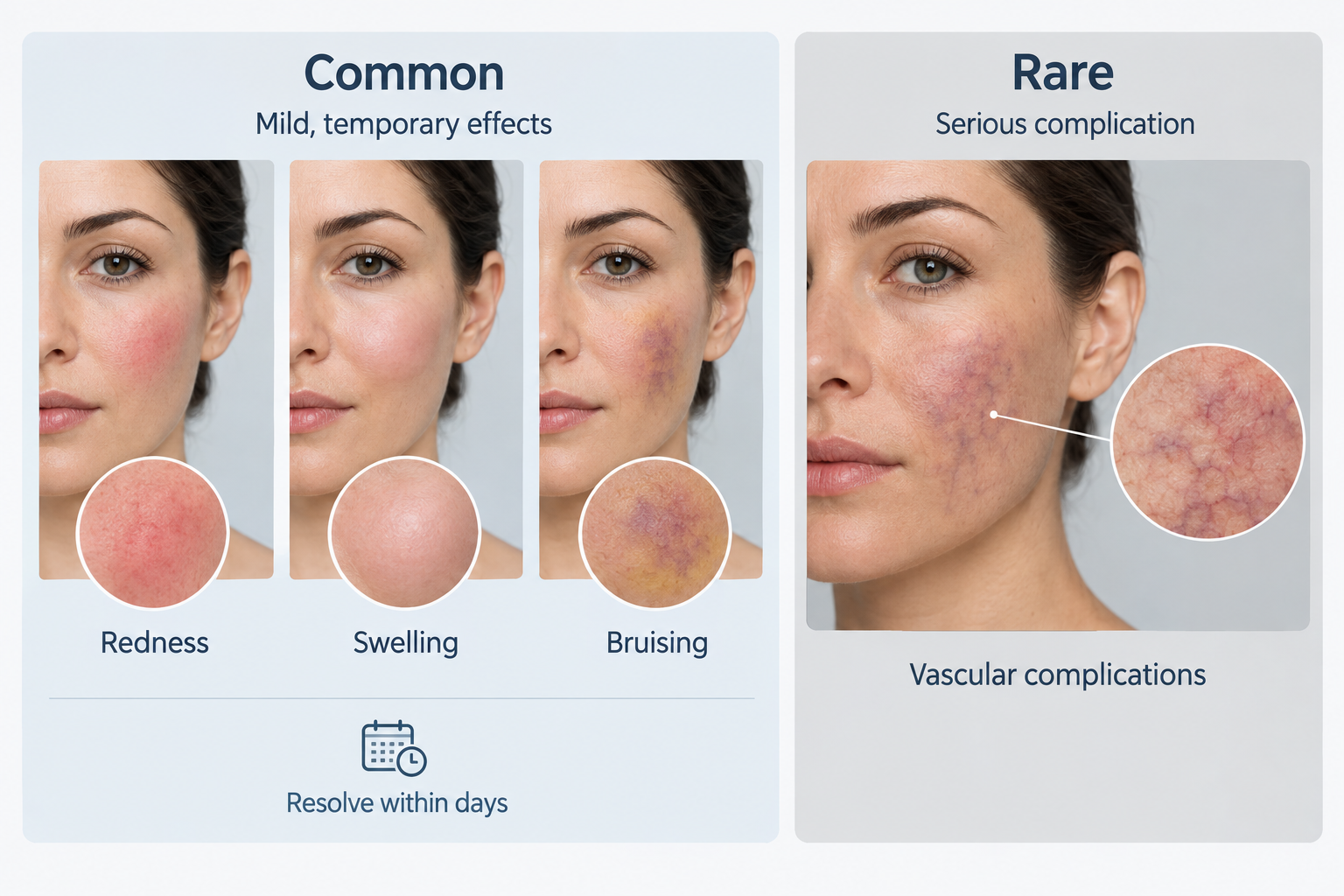
More significant risks depend on the specific treatment. Botulinum toxin injections can occasionally cause temporary drooping of the eyelid or brow if the product migrates to an unintended muscle. Dermal filler complications range from bruising and asymmetry to, in rare but serious cases, vascular occlusion — where filler inadvertently enters or compresses a blood vessel, potentially affecting blood supply to surrounding tissue. This is a medical emergency that requires immediate treatment, and it is one reason why aesthetic procedures should only be performed by appropriately trained practitioners who carry the necessary emergency medications and know how to use them.
Laser and light-based treatments carry risks including burns, blistering, and changes in skin pigmentation, particularly in patients with darker skin tones or those who have had recent sun exposure. Chemical peels can cause prolonged redness, peeling, and in some cases scarring if not matched appropriately to the patient's skin type and concern.
Before any treatment, ask the practitioner to explain the specific risks relevant to you, what signs of a complication to look out for, and who to contact if you experience a problem after leaving the clinic.
How to Assess Whether a Clinic Is Reputable
The aesthetic medicine sector is regulated differently across countries, and in some regions the regulatory framework for non-surgical cosmetic procedures is less stringent than for surgical ones. This makes it important for patients to take an active role in assessing the credentials and standards of any clinic they attend.
A reputable aesthetic skin clinic will employ practitioners who hold recognised medical, nursing, dental, or allied health qualifications and who have completed specific training in aesthetic medicine. The clinic should be registered with the relevant regulatory body in your country — in the United Kingdom, for example, clinics providing certain treatments must be registered with the Care Quality Commission (CQC). Practitioners should be registered with their professional regulatory body, such as the General Medical Council (GMC) or the Nursing and Midwifery Council (NMC).
Look for clinics that conduct thorough consultations before treatment, provide written aftercare instructions, have a clear complaints procedure, and carry appropriate medical indemnity insurance. Be cautious of clinics that offer very low prices without explanation, perform treatments without a prior consultation, or cannot clearly explain the qualifications of the person performing your procedure.
Questions Worth Asking at Your First Appointment
Arriving with prepared questions helps you gather the information you need to make a confident, informed decision. The following questions are worth raising during or after your consultation at an aesthetic skin clinic.
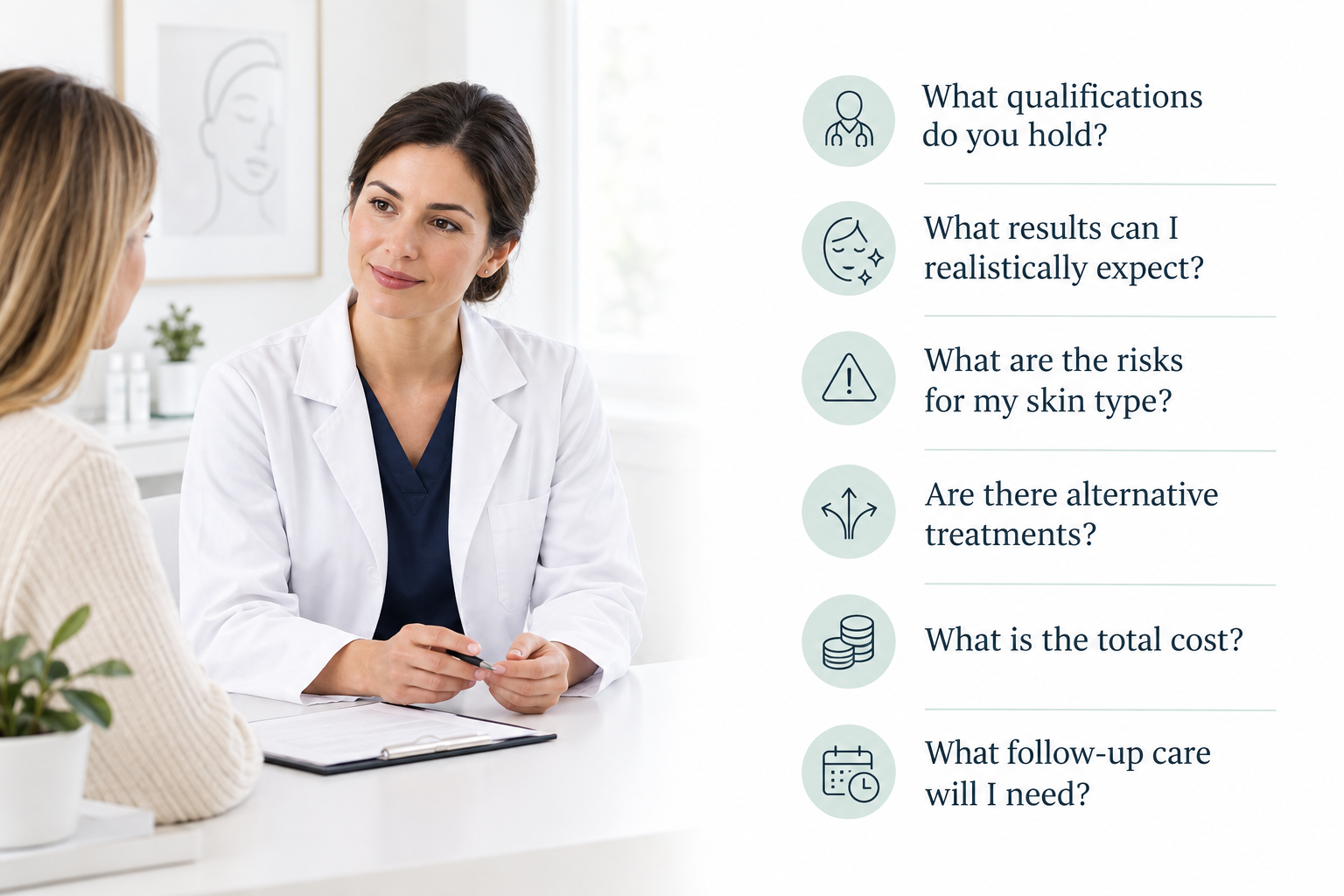
- What qualifications and specific training do you hold in aesthetic medicine?
- Is this clinic registered with the relevant regulatory authority?
- What treatment are you recommending for my concern, and why is it the most appropriate option?
- What results can I realistically expect, and over what timeframe?
- What are the specific risks and side effects of this treatment for someone with my skin type and medical history?
- What happens if I experience a complication — who do I contact, and what is the process?
- How many sessions are likely to be needed, and how often will I need maintenance treatment?
- Are there alternative treatments that might achieve a similar outcome?
- What is the total cost, including any follow-up appointments?
- Can I take time to consider before booking?
Alternatives to Aesthetic Clinic Treatments
Not every skin concern requires a clinical procedure. A well-structured skincare routine using evidence-supported active ingredients — such as retinoids, vitamin C, niacinamide, and broad-spectrum sun protection — can produce meaningful improvements in skin quality, texture, and early signs of ageing over time. Some aesthetic skin clinics offer medical-grade skincare consultations as part of their services, which can be a useful starting point for patients who are not yet ready for injectable or device-based treatments.
For concerns related to significant skin laxity, deep structural changes, or features that non-surgical treatments are unlikely to address adequately, a referral to a plastic surgeon or oculoplastic surgeon for a surgical consultation may be more appropriate. A reputable aesthetic practitioner will acknowledge the limitations of non-surgical options and discuss surgical alternatives where relevant, rather than recommending a non-surgical treatment that is unlikely to meet your goals.
Lifestyle factors — including sun protection, hydration, nutrition, sleep, and avoiding smoking — also have a meaningful impact on skin health and the longevity of aesthetic treatment results. These are worth discussing as part of a holistic approach to skin care.
Frequently Asked Questions
Do I need to have treatment at my first appointment?
No. A first appointment at an aesthetic skin clinic should be a consultation, not a commitment to treatment. You are entitled to take time to consider the information provided, research your options, and return for treatment at a later date. Reputable practitioners will not pressure you to proceed on the same day.
How long does an aesthetic skin clinic consultation typically last?
Initial consultations generally last between 30 and 60 minutes, depending on the complexity of your concerns and the number of areas being assessed. Some clinics offer shorter introductory appointments followed by a more detailed follow-up; ask about the format when booking.
Will the practitioner recommend multiple treatments at once?
It is not unusual for a practitioner to identify several concerns and discuss more than one treatment option. However, a responsible approach involves prioritising your main concern, explaining each option clearly, and allowing you to decide what — if anything — you wish to proceed with. Be cautious if a practitioner recommends a large number of treatments without clearly explaining the rationale for each one.
Is it normal to feel nervous before a first aesthetic appointment?
Yes, and a good practitioner will acknowledge this. If you feel uncomfortable at any point during the consultation — whether due to the environment, the manner of the practitioner, or the information being provided — you are not obliged to continue. Feeling at ease and well-informed is a reasonable expectation before agreeing to any procedure.
Can I attend an aesthetic skin clinic if I have a skin condition such as eczema or rosacea?
Having a skin condition does not automatically exclude you from aesthetic treatments, but it does affect which treatments may be appropriate and when they can safely be performed. Active flares of conditions such as eczema, rosacea, or psoriasis may mean that certain procedures need to be postponed. A practitioner with experience in skin health will assess your condition as part of the consultation and advise accordingly.
How do I know if the price I am quoted is reasonable?
Aesthetic treatment costs vary considerably depending on the clinic's location, the qualifications of the practitioner, the products used, and the complexity of the treatment. Very low prices can sometimes indicate the use of unregulated products, undertrained practitioners, or inadequate aftercare. It is reasonable to ask what is included in the quoted price and whether follow-up appointments are covered.
Making an Informed Decision About Your First Aesthetic Skin Clinic Visit
Attending an aesthetic skin clinic for the first time is a meaningful step, and the quality of that first appointment has a significant bearing on whether any subsequent treatment is safe, appropriate, and likely to meet your expectations. A thorough consultation, an honest discussion of realistic outcomes, clear information about risks, and the absence of pressure to commit immediately are all markers of a clinic that prioritises patient welfare over commercial outcomes.
Aesthetic medicine offers a genuinely useful range of options for many common skin and facial concerns, but no treatment is without limitation or risk, and the most suitable approach depends on factors that can only be assessed through an individual clinical consultation. Taking the time to prepare for your appointment, asking the right questions, and choosing a clinic with appropriately qualified practitioners gives you the best foundation for a positive experience and a result that is both safe and aligned with your goals. If you are considering attending an aesthetic skin clinic, booking a consultation — without any obligation to proceed — is a reasonable first step.
