
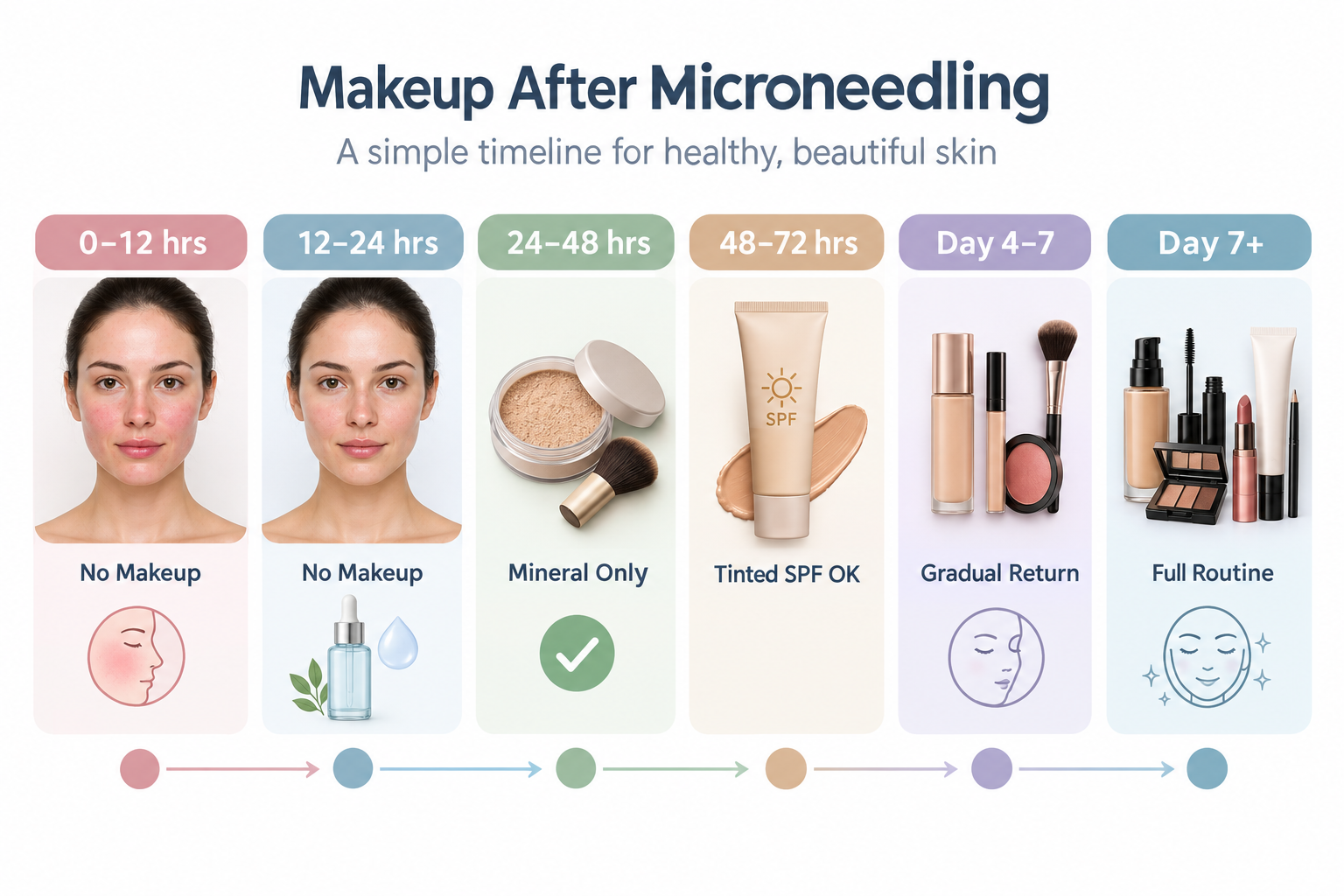

Most people can apply mineral-based makeup 24 to 48 hours after a standard microneedling session, but the exact timing depends on how deeply the needles penetrated, which type of treatment you had, and how quickly your skin heals. Applying makeup too soon can introduce bacteria into open microchannels, increase the risk of irritation, and interfere with the collagen induction process that makes microneedling worthwhile. This guide explains the reasoning behind the waiting period, gives you a practical day-by-day timeline, and helps you choose the right products when you are ready to cover up again.
Key Takeaways
- Wait at least 24 hours before applying any makeup after standard microneedling; 48 hours is a safer target for most people.
- RF microneedling treatments such as Morpheus8 typically require a longer wait of 48 to 72 hours or more due to greater treatment depth and thermal energy.
- Mineral-based, fragrance-free, non-comedogenic products are the safest first choices when you do resume makeup.
- Certain ingredients — including retinoids, AHAs, BHAs, and alcohol-based formulas — should be avoided for at least five to seven days post-treatment.
- A tinted mineral SPF can serve as a practical coverage compromise during the early healing phase when full foundation is still off-limits.
Why Makeup Timing Matters After Microneedling
Microneedling — also called collagen induction therapy — works by creating thousands of controlled micro-injuries in the skin using fine needles. These micro-injuries stimulate the skin's natural wound-healing response, triggering collagen and elastin production over the following weeks. Immediately after treatment, the skin surface is covered in tiny open microchannels that remain permeable for a variable period depending on needle penetration depth and individual skin type.
During this window, the skin barrier is temporarily compromised. Applying conventional makeup products introduces pigments, preservatives, fragrances, and potential contaminants directly into those open channels. This can cause clogged pores, localised inflammation, bacterial infection, or allergic reactions that would not occur on intact skin. Beyond infection risk, many makeup ingredients are chemically active enough to disrupt the healing phase and reduce the quality of your results. Waiting is not simply a cosmetic precaution — it is a meaningful part of post-microneedling aftercare.
Day-by-Day Makeup Timeline After Standard Microneedling
The following timeline applies to professional microneedling performed at needle penetration depths typically used in clinic settings (approximately 0.5 mm to 2.5 mm). Individual variation is normal, and your practitioner's specific guidance always takes priority.
| Time After Treatment | Skin Status | Makeup Guidance |
|---|---|---|
| 0–12 hours | Microchannels open; active redness and swelling; skin barrier disrupted | No makeup of any kind. Cleanse gently with cool water only. |
| 12–24 hours | Microchannels beginning to close; redness persisting; skin still sensitive | No makeup. Apply hyaluronic acid serum and a ceramide moisturizer as directed. |
| 24–48 hours | Microchannels largely closed in most patients; redness fading; mild sensitivity may remain | Mineral-based makeup may be introduced cautiously. Use clean applicators and pat gently — do not rub. |
| 48–72 hours | Surface healing well advanced; some patients experience mild flaking or dryness | Mineral foundation and tinted moisturizer generally well tolerated. Continue to avoid active ingredients. |
| Day 4–7 | Skin largely healed at the surface; collagen remodeling ongoing beneath | Most makeup products can be reintroduced gradually. Avoid retinoids and exfoliating acids until day 5–7 minimum. |
| Day 7+ | Surface fully healed for most patients; deeper remodeling continues for weeks | Full makeup routine can typically resume. Confirm with your practitioner if any sensitivity persists. |
How Needle Depth Affects the Waiting Period
Treatment depth is one of the most important factors determining how long your skin needs before makeup is safe. Shallower treatments create less disruption to the skin barrier and allow microchannels to close more quickly. Deeper treatments penetrate further into the dermis, stimulate a more significant healing response, and leave the skin more vulnerable for longer.
| Needle Penetration Depth | Typical Use | Suggested Minimum Makeup Wait |
|---|---|---|
| 0.25–0.5 mm (at-home dermaroller) | Superficial texture, product absorption | 12–24 hours |
| 0.5–1.0 mm (light professional) | Fine lines, mild texture | 24 hours |
| 1.0–1.5 mm (moderate professional) | Acne scarring, pigmentation, skin rejuvenation | 24–48 hours |
| 1.5–2.5 mm (deeper professional) | Deeper scars, significant laxity | 48–72 hours |
| Up to 4 mm (RF microneedling / Morpheus8) | Skin tightening, deep remodeling | 72 hours or longer |
At-home microneedling devices such as dermarollers typically operate at shallower depths than professional clinic treatments, which means the skin barrier recovers more quickly. Even so, the same principle applies: wait until redness has substantially resolved and the skin no longer feels raw or sensitive before applying any product.
RF Microneedling and Morpheus8: A Longer Wait
RF microneedling combines traditional needle penetration with radiofrequency energy delivered directly into the dermis. Devices such as Morpheus8 can reach depths of up to 4 mm and deliver thermal energy that creates a more substantial tissue response than standard microneedling alone. The result is a more powerful stimulus for collagen remodeling and skin tightening — but also a more significant healing phase.
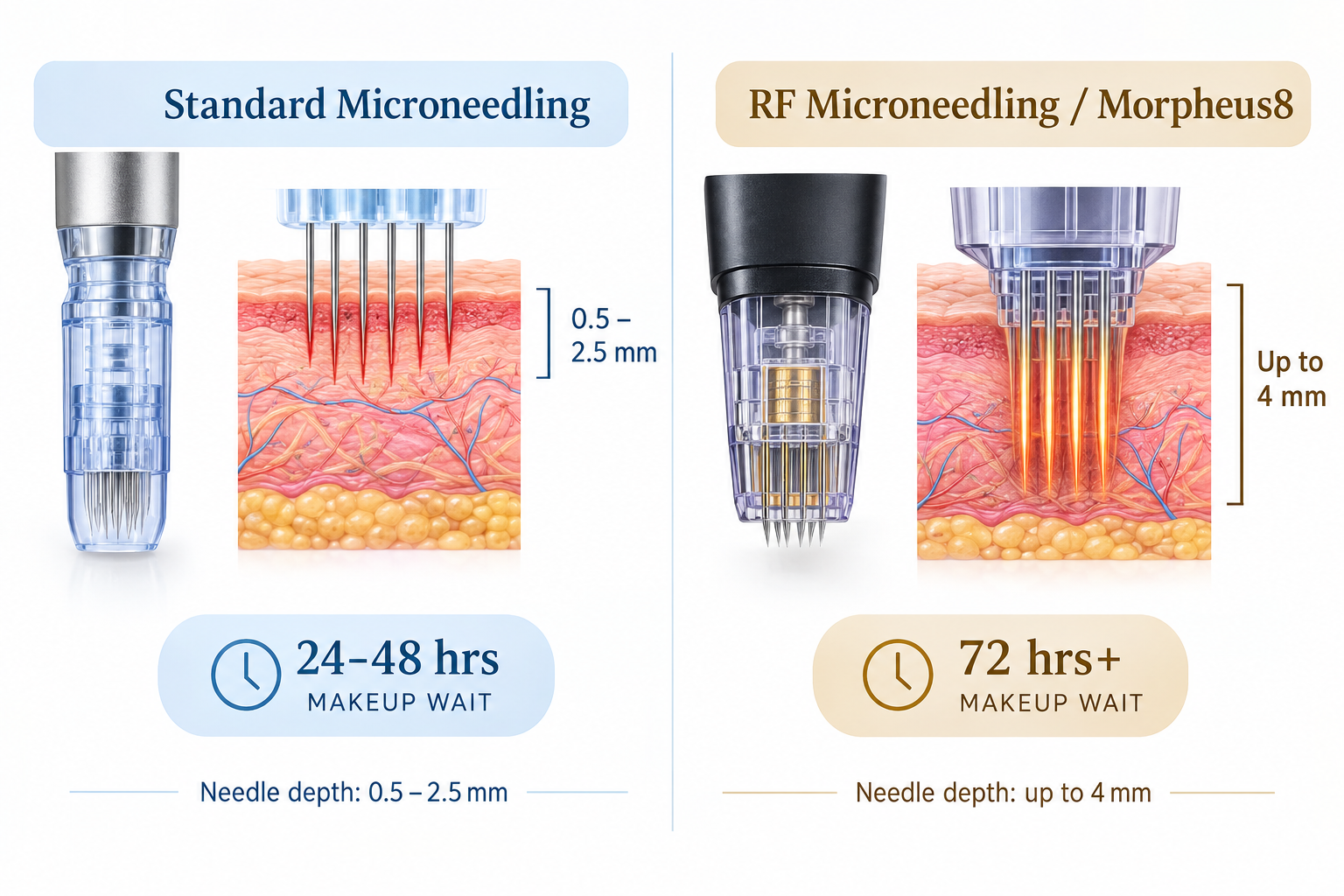
After RF microneedling, patients commonly experience more pronounced redness, swelling, and warmth than after standard treatment. Morpheus8 in particular can cause pinpoint crusting or micro-crusts at needle entry points, especially at higher energy settings. These micro-crusts are part of the normal healing process and should not be picked or covered aggressively with makeup. Most practitioners advise waiting a minimum of 48 to 72 hours before applying any makeup after RF microneedling, and some recommend waiting the full 72 hours or beyond for higher-intensity sessions. Social downtime of three to five days is realistic for many patients following Morpheus8.
What Makeup Is Safe to Use First?
When your skin is ready, the safest products to reintroduce are those that are least likely to irritate healing tissue or introduce harmful ingredients through residual microchannels.
Recommended First Choices
- Mineral-based makeup: Mineral foundations and mineral powders contain iron oxides and zinc oxide rather than synthetic dyes and chemical preservatives. They are generally non-comedogenic, less likely to clog pores, and less irritating to sensitive post-treatment skin.
- Tinted mineral SPF: A broad-spectrum SPF 30 or higher with a mineral base (zinc oxide or titanium dioxide) provides sun protection — which is essential after microneedling — while offering light coverage. This is a practical compromise when you want some coverage but are not yet ready for foundation.
- Fragrance-free tinted moisturizer: A light, fragrance-free, non-comedogenic tinted moisturizer can provide hydration and minimal coverage simultaneously. Check the ingredient list carefully before use.
- Eye makeup: The eye area is not typically treated during standard microneedling, so mascara and eye shadow are generally safe to apply after 24 hours provided the skin around the eyes is not red or irritated. Use clean applicators and avoid tugging the skin.
Application Technique Matters
Even with the right products, how you apply makeup in the days after microneedling affects your skin's recovery. Always use clean brushes or fresh disposable applicators — bacteria on used tools can cause problems even when the product itself is safe. Pat products onto the skin rather than rubbing or dragging, which can disturb the healing surface. Apply in light layers rather than building heavy coverage, and avoid pressing sponges or brushes firmly against the skin. Remove makeup at the end of the day with a gentle, soap-free cleanser and cool water rather than micellar water containing alcohol or fragrance.
Ingredients and Products to Avoid After Microneedling
The microchannels created during microneedling temporarily allow substances to penetrate the skin more deeply than they normally would. This is beneficial for supportive serums such as hyaluronic acid, but it means that irritating or chemically active ingredients can also reach deeper layers and cause more significant reactions than usual.
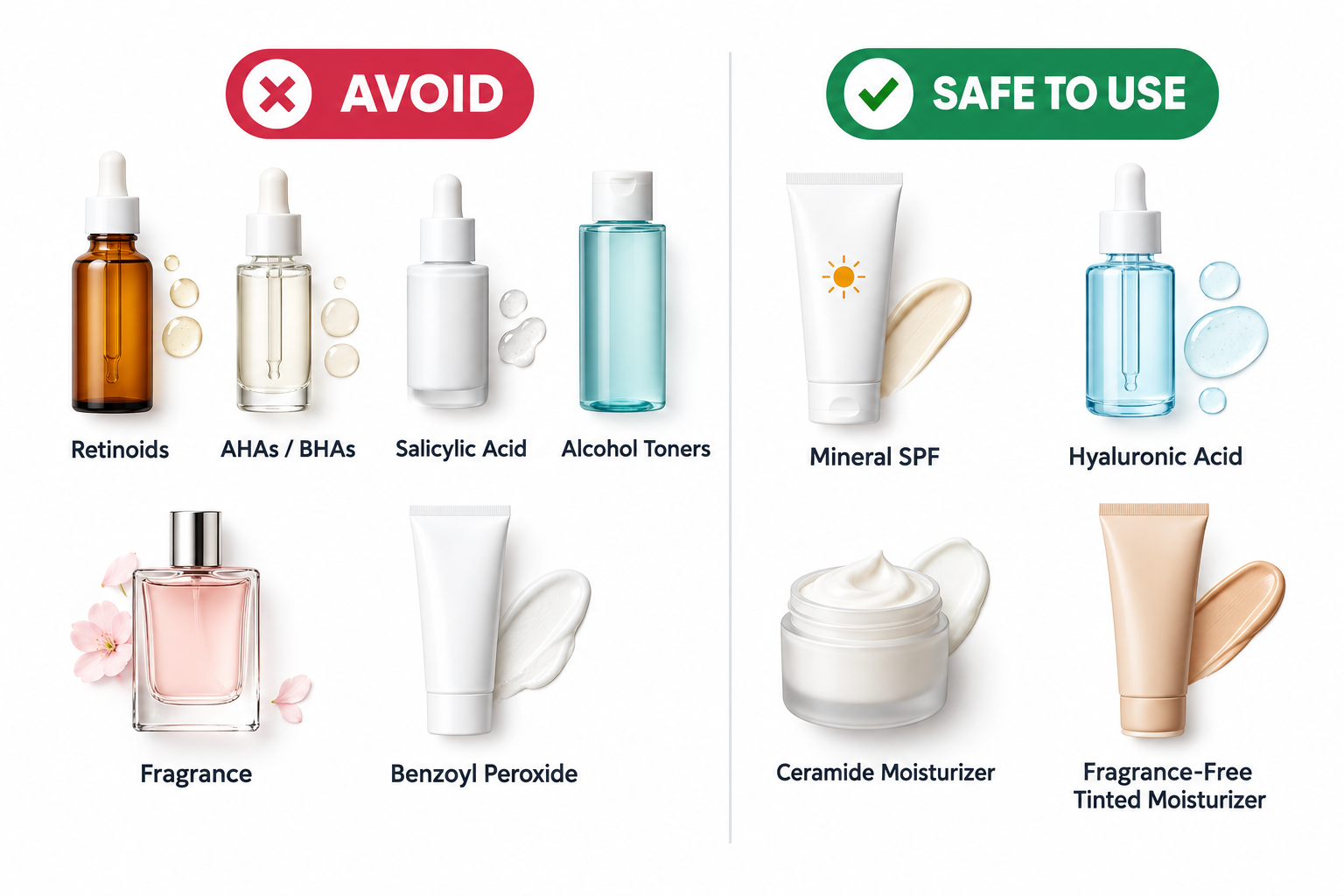
Avoid These Ingredients for at Least Five to Seven Days
- Retinoids (retinol, tretinoin, Retin-A): These vitamin A derivatives accelerate cell turnover and can cause significant irritation on healing skin. Avoid for a minimum of five to seven days, or as directed by your practitioner.
- AHAs (glycolic acid, lactic acid, mandelic acid): Alpha-hydroxy acids exfoliate the skin surface and can disrupt the healing phase. Avoid for at least five days.
- BHAs (salicylic acid): Beta-hydroxy acids penetrate pores and have exfoliating properties that are inappropriate for post-treatment skin.
- Vitamin C serums (L-ascorbic acid at low pH): High-concentration vitamin C can sting and irritate compromised skin. Some practitioners introduce a gentle vitamin C formulation after 48 to 72 hours, but this should be guided by your provider.
- Benzoyl peroxide: A common acne treatment that is too drying and potentially irritating for post-microneedling skin.
- Alcohol-based toners and astringents: These strip moisture and disrupt the skin barrier at a time when barrier repair is the priority.
- Fragranced products: Synthetic fragrance is a common sensitiser and should be avoided across all skincare and makeup products during the healing phase.
- Heavy oil-based foundations: These can clog pores and trap bacteria against healing skin.
- Physical exfoliants and scrubs: Any form of mechanical exfoliation is inappropriate until the skin has fully healed at the surface.
How to Tell Whether Your Skin Is Ready for Makeup
Clock-based guidelines are useful starting points, but your skin's actual condition is the most reliable indicator of readiness. Before applying any makeup after microneedling, run through this brief self-assessment.
- Redness: Active redness should have faded to a mild pink flush or resolved entirely. If your skin still looks significantly red, it is not ready.
- Sensitivity to touch: Gently press a clean fingertip against your cheek. If the skin feels tender, stings, or is noticeably warm, wait longer.
- Open areas or crusting: Any visible micro-crusts, open spots, or areas that feel rough and raised should be left to heal without makeup coverage. This is particularly relevant after RF microneedling.
- Dryness and tightness: Mild dryness is normal and does not prevent makeup use, provided the skin surface is intact. Apply a ceramide moisturizer first and allow it to absorb before applying any coverage.
- Flaking: Light flaking in the days after treatment is a normal part of the healing process. Do not attempt to cover or remove flaking skin aggressively with makeup or tools.
What If You Accidentally Wore Makeup Too Soon?
If you applied makeup before your skin was ready, try not to panic. Remove the makeup as gently as possible using a fragrance-free, soap-free cleanser and cool water. Avoid rubbing or using micellar water with alcohol. Pat the skin dry with a clean cloth and apply a soothing, fragrance-free hyaluronic acid serum followed by a ceramide moisturizer to support barrier repair.
Monitor your skin over the following 24 to 48 hours. Mild additional redness or sensitivity may occur and usually resolves without intervention. Signs that warrant contacting your practitioner include increasing redness that worsens rather than improves after 48 hours, pustules or spots that appear to be infected, significant swelling, or any skin reaction that concerns you. Early removal of the product and gentle aftercare will minimise the likelihood of any lasting effect in most cases.
Smart Scheduling: The Friday Appointment Strategy
One practical way to manage the no-makeup window is to book your microneedling appointment strategically. Scheduling your treatment on a Thursday afternoon or Friday means that by Monday morning — roughly 60 to 72 hours later — most patients with standard microneedling are comfortably past the initial healing phase and able to apply mineral-based makeup before returning to work or social commitments.
For RF microneedling or Morpheus8, consider booking on a Wednesday or Thursday if you need to look presentable by Monday, as the social downtime for these treatments can extend to four or five days. Discuss realistic downtime expectations with your practitioner before booking so you can plan your schedule accordingly. Avoiding important events, photoshoots, or occasions where you need full makeup within the first 72 hours is always advisable.
Reading Product Labels: What to Look For
Knowing which products are safe is only useful if you can identify them on a label. When selecting makeup or skincare to use in the days after microneedling, look for the following on the ingredient list.
Reassuring Label Indicators
- Zinc oxide or titanium dioxide as the active sunscreen ingredient (indicates a mineral SPF)
- Hyaluronic acid, sodium hyaluronate, or glycerin (hydrating, non-irritating)
- Ceramides (support skin barrier repair)
- Squalane (gentle, non-comedogenic emollient)
- Iron oxides (the pigments used in mineral makeup — generally well tolerated)
