
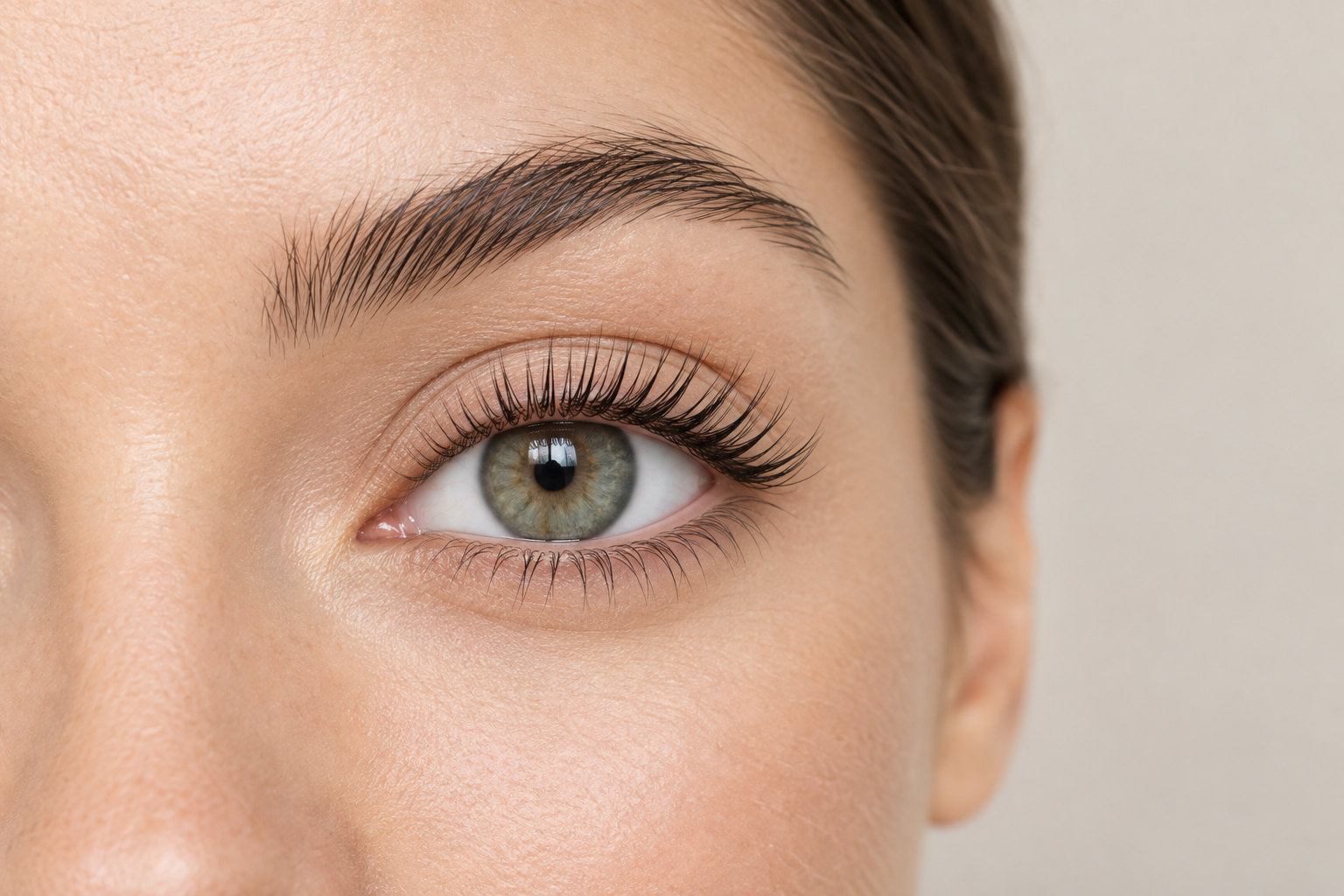

A standard lash lift appointment takes approximately 45 to 60 minutes, though the exact time depends on your natural lash type, whether you add a tint, and the specific technique your lash technician uses. This article breaks down each stage of the process, explains what influences how long results last, and covers aftercare, suitability, and what to realistically expect from this semi-permanent treatment.
Key Takeaways
- A lash lift appointment typically takes 45 to 60 minutes; adding a lash tint extends this to around 60 to 90 minutes.
- Results generally last 6 to 8 weeks, aligned with the natural lash growth cycle.
- Lash type, aftercare compliance, and product quality all influence how long your lift holds.
- A patch test is recommended at least 24 to 48 hours before your first appointment.
- Lash lift contraindications include active eye infections, recent eye surgery, and certain medications — always disclose your medical history before treatment.
What Is a Lash Lift?
A lash lift is a semi-permanent treatment that uses a chemical solution to reshape your natural lashes into a lifted, curled position. Unlike lash extensions, which attach synthetic fibres to existing lashes, a lash lift works entirely with your own lashes — no added length or volume, just a more open, defined curl that can make lashes appear longer and more prominent without mascara. The effect is sometimes compared to a lash perm, though modern lash lift formulations and silicone shield techniques produce a more controlled, uniform result than older perming methods.
The treatment is popular as a low-maintenance beauty treatment because it requires no daily curling, minimal mascara use, and no adhesive upkeep. It suits people who want a subtle enhancement that looks natural rather than dramatic. Keratin lash lift systems add a conditioning element to the process, which may support lash health alongside the cosmetic result.
How Long Does a Lash Lift Appointment Take?
For most people, a lash lift appointment takes between 45 to 60 minutes from start to finish. This covers consultation, preparation, the lifting solution processing time, the neutralizing lotion step, and a final conditioning application. If you choose to add a lash tint, expect the total appointment to run closer to 60 to 90 minutes. The table below shows a typical per-step breakdown.
| Stage | Approximate Duration |
|---|---|
| Consultation and lash assessment | 5–10 minutes |
| Cleansing and preparation | 5 minutes |
| Silicone shield placement and lash adhesion | 5–10 minutes |
| Lifting solution (Step 1) | 6–12 minutes |
| Neutralizing lotion (Step 2) | 5–10 minutes |
| Optional lash tint | 5–10 minutes |
| Conditioning or nourishing serum | 3–5 minutes |
| Removal and finishing | 5 minutes |
These timings are approximate. The lifting solution processing time in particular varies depending on your lash type, the product system used, and the curl result your lash technician is aiming for. Rushing this step risks under-processing, which produces a weak or uneven curl; leaving the solution on too long risks over-processing, which can cause brittleness or lash breakage.

How Lash Type Affects Appointment Length
Fine lashes absorb the lifting solution more quickly than coarse or thick lashes, which means processing times differ meaningfully between clients. A person with fine, light lashes may need only 6 to 8 minutes for the lifting step, while someone with coarse or resistant lashes may need 10 to 12 minutes. This is one reason why a skilled lash technician assesses your lashes before selecting a silicone shield size and timing the solution carefully.
| Lash Type | Typical Lifting Solution Time | Estimated Total Appointment |
|---|---|---|
| Fine or light lashes | 6–8 minutes | 40–50 minutes |
| Medium lashes | 8–10 minutes | 50–60 minutes |
| Coarse or thick lashes | 10–12 minutes | 55–70 minutes |
Lash Lift and Tint: How Long Does It Take?
A lash lift and tint appointment combines the curl treatment with a semi-permanent dye applied to the lashes, typically a vegetable-based or oxidative tint in black or dark brown. The tint step adds roughly 5 to 10 minutes of processing time after the neutralizing lotion is removed. Most lash lift and tint appointments run between 60 and 90 minutes in total. The tint itself lasts approximately 4 weeks before it fades, which is shorter than the lift, so some clients choose to have the tint refreshed independently between full lift appointments.
Keratin and Korean Lash Lift Timing
A keratin lash lift uses a formulation that incorporates keratin proteins alongside the lifting chemistry, aiming to condition the lash structure during the treatment. Processing times for keratin systems can be slightly longer than standard lifts, and some practitioners report results lasting up to 8 to 12 weeks with these systems, though individual variation is significant. The Korean lash lift is a technique trend that emphasises nourishing formulas and a glossy, natural-looking finish rather than a dramatic upward curl. Appointment times for Korean lash lift treatments are broadly similar to standard lifts, though the curl preference tends to be softer and the conditioning steps may be more involved.
Cysteamine-based lash lift systems use a gentler active ingredient than the ammonium thioglycolate found in traditional formulations. Because cysteamine works more slowly, processing times for the lifting step can extend to 10 to 16 minutes, making the overall appointment slightly longer. The trade-off is a reduced risk of chemical irritation, which may make cysteamine systems preferable for clients with sensitive eyes or finer lashes.
How Long Do Lash Lift Results Last?
Lash lift results typically last 6 to 8 weeks. This timeframe reflects the natural lash growth cycle rather than the chemistry wearing off in the traditional sense. As your lashes grow and shed through their anagen (growth), catagen (transition), and telogen (resting) phases, the lifted lashes are gradually replaced by new lashes growing in their natural, unlifted position. By around week 6 to 8, enough new growth has occurred that the overall curl appears uneven or significantly reduced, which is when most clients choose to rebook.
Lash Lift Week by Week
Understanding how a lash lift changes over time helps set realistic expectations. The progression below is a general guide; individual timelines vary depending on lash growth speed and aftercare.

- Weeks 1–2: The lift is at its most defined. Lashes hold a consistent upward curl and appear noticeably longer and more open.
- Weeks 3–4: The curl begins to soften slightly as new lash growth emerges at the base. The overall effect remains visible and flattering for most people.
- Weeks 5–6: Variation between lifted and new lashes becomes more apparent. Some clients notice the curl looks less uniform.
- Weeks 7–8: Most of the lifted lashes have shed and been replaced by new growth. This is the typical rebooking window for a refresh appointment.
Factors That Affect How Long a Lash Lift Lasts
Several variables influence whether your results hold closer to 6 weeks or extend toward 8 weeks or beyond. Lash growth speed is largely genetic and cannot be controlled, but the following factors are within your influence.
- Aftercare compliance: Following lash lift aftercare instructions carefully — particularly in the first 24 to 48 hours — is one of the most significant factors in result longevity.
- Exposure to heat and steam: Saunas, steam rooms, and hot showers can relax the curl prematurely, especially in the first 48 hours when the chemical bonds are still stabilising.
- Oil-based products: Oils break down the lifted structure over time. Using oil-free cleansers and avoiding oil-based eye makeup removers helps preserve the curl.
- Eye rubbing: Mechanical pressure on the lashes can distort the curl and accelerate shedding.
- Lash health: Healthy, well-conditioned lashes tend to hold a lift better than dry or damaged ones.
- Technician skill and product quality: Correct timing of the lifting solution and neutralizing lotion, appropriate silicone shield selection, and professional-grade products all contribute to a durable result.
What Happens During a Lash Lift Appointment?
Understanding the step-by-step process helps you know what to expect and why each stage matters for the final result.
- Consultation and lash assessment: Your lash technician examines your natural lash length, thickness, and curl preference. This informs silicone shield size selection and solution timing.
- Cleansing: Lashes are thoroughly cleaned to remove any traces of makeup, oil, or skincare product that could interfere with the lifting solution.
- Silicone shield placement: A silicone shield (also called a silicone rod or silicone pad) is adhered to the eyelid. Your lashes are carefully combed and adhered over the shield in the desired curl direction. Shield size determines the degree of curl — smaller shields produce a tighter curl, larger shields a more open, natural lift.
- Lifting solution application: The lifting cream is applied to the lashes and left to process. This step breaks the disulfide bonds within the lash hair, allowing the lash to take on the shape of the shield.
- Neutralizing lotion application: After the lifting solution is removed, the neutralizing solution is applied. This step reforms the disulfide bonds in the new lifted position, locking in the curl.
- Optional tint: If a lash tint is included, it is applied at this stage and left to develop before removal.
- Conditioning serum: A nourishing or conditioning serum is applied to support lash health after the chemical process.
- Removal and finishing: The silicone shield is gently removed, and the lashes are brushed into their final position with a spoolie.
The treatment is generally comfortable. Most clients experience no significant discomfort, though some notice a mild sensation from the chemical solutions near the eye area. You keep your eyes closed throughout the procedure.
Lash Lift Aftercare
Lash lift aftercare in the first 24 to 48 hours is critical. During this window, the chemical bonds are still stabilising, and exposure to moisture, heat, or mechanical pressure can weaken or distort the curl before it fully sets.
- Avoid getting lashes wet for at least 24 hours after treatment.
- Avoid steam, saunas, swimming pools, and hot showers for 24 to 48 hours.
- Do not apply mascara, eye makeup, or eye cream for the first 24 hours.
- Avoid rubbing or touching the eye area.
- Sleep on your back where possible to avoid pressing lashes against a pillow.
Beyond the initial 48-hour period, ongoing aftercare helps extend results. Use oil-free products around the eye area, avoid waterproof mascara where possible (it requires an oil-based remover to dissolve), and brush lashes gently with a clean spoolie each morning. Applying a nourishing lash conditioning serum regularly can support lash health between appointments, which may help the lifted lashes remain in better condition for longer.
Lash Lift vs. Lash Extensions: How Do They Compare?
Lash extensions and lash lifts serve different goals and suit different lifestyles. The table below outlines the main practical differences to help you consider which may be more appropriate for your needs.
| Factor | Lash Lift | Lash Extensions |
|---|---|---|
| Appointment time | 45–90 minutes | 90–180 minutes (initial set) |
| Result type | Enhanced natural lashes | Added length and volume |
| Maintenance | Low — rebook every 6–8 weeks | High — infills every 2–3 weeks |
| Result duration | 6–8 weeks | 2–3 weeks between infills |
| Aftercare complexity | Moderate (first 48 hours critical) | Ongoing (daily brushing, avoid oils) |
| Natural lash impact | Minimal if correctly processed | Possible strain with heavy extensions |
| Cost frequency | Lower (less frequent appointments) | Higher (regular infills required) |
A lash lift is generally considered the lower-maintenance option. It works with your existing lashes and requires no infill appointments. Lash extensions offer more dramatic results in terms of length and volume but require consistent upkeep. Neither option is universally superior — the right choice depends on your aesthetic goals, lifestyle, and budget.
Who May Not Be Suitable for a Lash Lift?
Lash lift contraindications are an important consideration that is often overlooked in general information about the treatment. A responsible lash technician will ask about your medical history and eye health before proceeding. You may not be suitable for a lash lift if any of the following apply.
- Active eye infections: Conditions such as conjunctivitis, blepharitis, or a stye mean the treatment should be postponed until the infection has fully resolved.
- Recent eye surgery: If you have had LASIK, cataract surgery, or another eye procedure, you should wait until your surgeon confirms it is safe to proceed — typically several months post-operatively.
- Pregnancy: Many practitioners advise caution during pregnancy, particularly in the first trimester, due to the chemical nature of the solutions used and the limited safety data available for this group.
- Retinoid or Accutane use: Topical retinoids and oral isotretinoin (Accutane) can make lashes more fragile and sensitive to chemical processing, increasing the risk of breakage or irritation.
- Known allergy to lash lift chemicals: Ammonium thioglycolate and cysteamine HCl are the active ingredients in most lifting solutions. A patch test 24 to 48 hours before your appointment is strongly recommended, particularly for first-time clients or those with a history of chemical sensitivities.
- Very short or sparse lashes: The treatment requires sufficient lash length to adhere to the silicone shield. Very short lashes may not produce a visible result.
Always disclose your full medical history, current medications, and any known allergies to your lash technician before treatment. This allows them to make an informed decision about whether to proceed and which product system is most appropriate for you.
How Often Can You Have a Lash Lift?
Most practitioners recommend waiting at least 6 to 8 weeks between lash lift appointments, which aligns with the natural lash growth cycle. Rebooking too soon — before the previous lift has grown out — risks over-processing lashes that have already been chemically treated. Over-processing weakens the lash structure, potentially causing brittleness, breakage, or temporary lash loss. Waiting for sufficient new growth before retreating ensures the chemical solution is applied primarily to unlisted lashes rather than previously processed ones.
If your lashes feel dry, brittle, or appear to have lost density after a lift, it is worth discussing this with your lash technician before booking a repeat treatment. A conditioning period using a lash serum may be advisable before the next appointment.
Frequently Asked Questions
Can I wear mascara after a lash lift?
You should avoid mascara for at least 24 hours after your lash lift appointment. After this period, regular mascara is generally fine to use. Waterproof mascara is best avoided long-term because it requires an oil-based remover, which can weaken the lifted curl over time. Many clients find they need little or no mascara after a lift, particularly if a tint has been added.
Does a lash lift damage your natural lashes?
When performed correctly by a trained lash technician using appropriate processing times, a lash lift should not cause significant damage to natural lashes. The main risk of damage comes from over-processing — leaving the lifting solution on for too long — which can make lashes brittle or prone to breakage. Choosing a qualified practitioner and following aftercare instructions reduces this risk considerably.
Is a patch test necessary before a lash lift?
A patch test is strongly recommended, especially for first-time clients or anyone with a history of skin or chemical sensitivities. The test involves applying a small amount of the lifting solution to the inner arm or behind the ear 24 to 48 hours before the appointment. If redness, itching, or swelling develops, the treatment should not proceed.
Can I get a lash lift if I wear contact lenses?
Most practitioners advise removing contact lenses before a lash lift appointment, as you will have your eyes closed throughout and the chemical solutions are used near the eye area. Bring your glasses or arrange to have someone accompany you if needed. You can typically reinsert lenses after the appointment once any residual solution has been cleared.
How soon before an event should I book a lash lift?
Booking your lash lift appointment 2 to 5 days before a special event is generally advisable. This allows the initial curl to settle slightly from its freshly lifted position, which many clients find looks more natural, and gives time to address any concerns with your technician if the result is not quite what you expected.
What is the difference between a lash lift and a lash perm?
A lash perm is an older technique that uses similar chemistry but typically employs small foam or plastic rods and produces a more uniform, rounded curl. A modern lash lift uses a silicone shield that creates a more elongated, upward lift rather than a circular curl, generally producing a more natural-looking result. Most salons now offer lash lifts rather than traditional lash perms.
Is a Lash Lift the Right Treatment for You?
A lash lift is a practical, relatively low-commitment option for people who want to enhance the appearance of their natural lashes without the ongoing maintenance of extensions. The appointment time of 45 to 60 minutes is manageable for most schedules, and results lasting 6 to 8 weeks mean you are likely rebooking only six to eight times per year. Adding a lash tint extends the appointment slightly but can meaningfully improve the visible result, particularly for those with lighter lashes.
The treatment is not suitable for everyone. Active eye conditions, recent surgery, certain medications, and pregnancy are all reasons to postpone or avoid the procedure. A patch test before your first appointment is a sensible precaution. Choosing a qualified, experienced lash technician who assesses your lash type, selects an appropriate silicone shield, and times the lifting solution carefully is the most important factor in both the quality of your result and the health of your lashes.
If you are considering a lash lift, a consultation with a trained lash professional will give you a clearer picture of what to expect based on your specific lash type, lifestyle, and goals. They can advise on whether a standard lift, a keratin lash lift, or an alternative approach is most appropriate for you.
