

Microneedling costs typically range from $200 to $800 per session for professional treatment, though the price you see advertised and the amount you actually pay can differ significantly once add-ons, numbing cream, aftercare products, and tax are factored in. This guide breaks down what drives those differences — by treatment type, provider credentials, location, and session count — so you can budget accurately before booking a consultation.
Key Takeaways
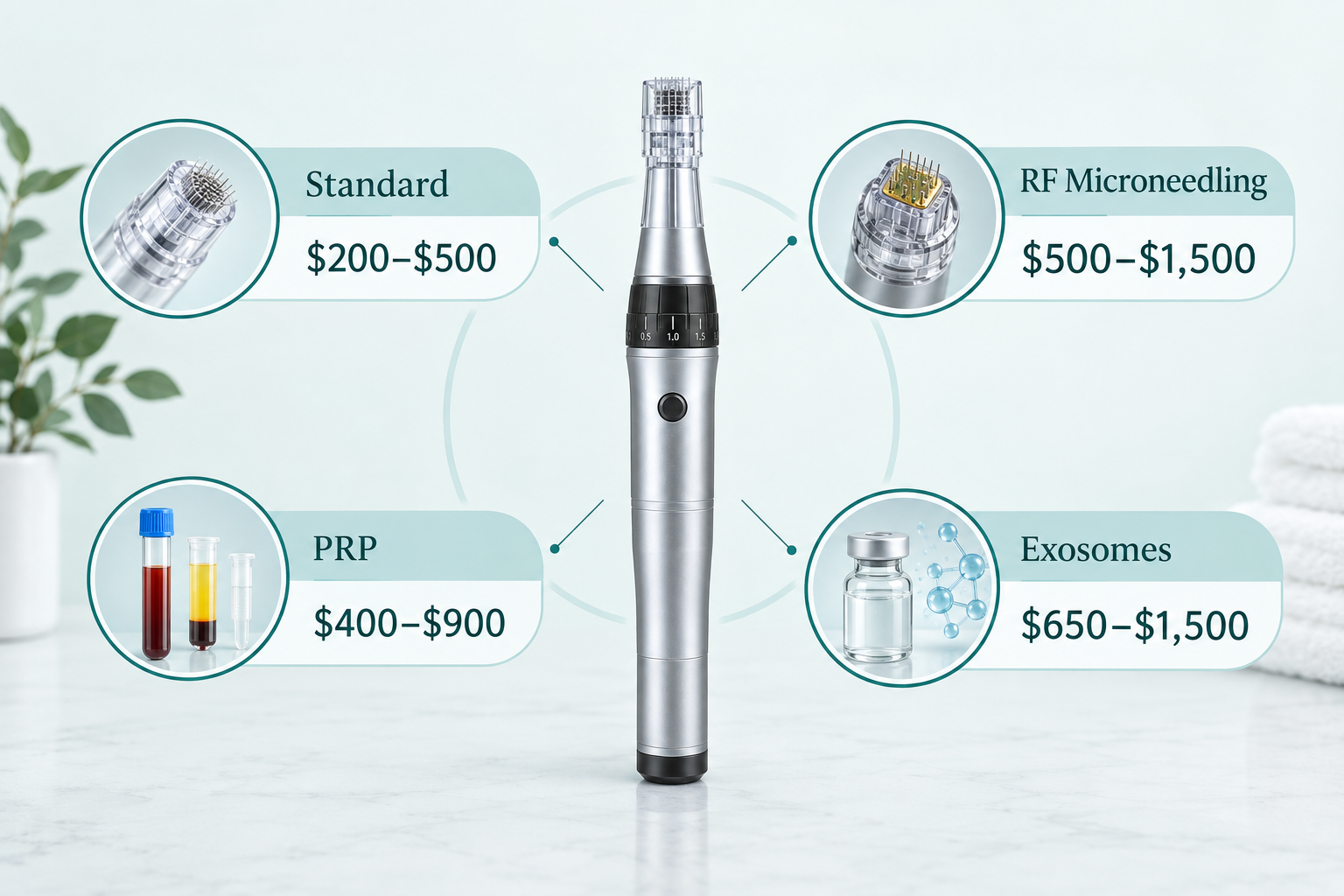
- Standard professional microneedling typically costs $200–$500 per session; radiofrequency microneedling ranges from $500–$1,500 per session depending on the device and provider.
- A full treatment series of three to six sessions is usually recommended for concerns such as acne scarring or fine lines, making the total investment considerably higher than a single session price suggests.
- Provider credentials, clinic type, geographic location, and add-ons such as platelet-rich plasma (PRP) or exosomes are the biggest drivers of price variation.
- Microneedling is a cosmetic procedure not covered by standard health insurance, though HSA or FSA funds may apply in limited circumstances.
- Very low prices can signal compromised device quality, inadequate sterility protocols, or undertrained providers — factors worth weighing alongside cost.
Average Microneedling Cost Per Session
The national average cost per session for standard professional microneedling in the United States sits broadly between $200 and $500, with many mid-range med spas pricing individual sessions at $300–$400. That figure shifts substantially based on treatment type, the provider's qualifications, and where the clinic is located. Radiofrequency microneedling — which combines needle penetration with thermal energy to enhance skin tightening — typically starts at $500 and can reach $1,500 or more per session at premium dermatology practices in major cities.
The table below summarizes typical per-session price ranges by treatment type across the United States. These are broad estimates; actual pricing at any individual clinic may fall outside these ranges.
| Treatment Type | Cost Per Session (Typical Range) | Full Series Estimate (3–6 Sessions) |
|---|---|---|
| Standard microneedling (pen/stamp) | $200–$500 | $600–$3,000 |
| RF microneedling (e.g., Morpheus8, Potenza, Vivace) | $500–$1,500 | $1,500–$4,500 |
| Microneedling with PRP (vampire facial) | $400–$900 | $1,200–$5,400 |
| Microneedling with exosomes | $650–$1,500 | $1,950–$9,000 |
| Scalp microneedling (hair loss) | $300–$600 | $900–$3,600 |
| At-home dermaroller (device only) | $10–$80 (one-time) | N/A |
Types of Microneedling and What Each Costs
Standard Microneedling
Standard microneedling uses a motorized pen or stamp device fitted with fine needles to create controlled micro-injuries in the skin's surface. These micro-injuries trigger the body's natural repair response, stimulating collagen and elastin production over the following weeks. A professional microneedling pen — such as the FDA-cleared SkinPen — delivers more consistent needle depth and speed than a manual roller, which is one reason professional results tend to differ from at-home attempts. Sessions for the face alone typically run 30–60 minutes including topical numbing cream application, and the cost per session at a mid-range med spa generally falls between $250 and $400.
Radiofrequency Microneedling
Radiofrequency microneedling devices such as Morpheus8, Potenza, and Vivace combine needle penetration with radiofrequency energy delivered directly into the dermis. The added thermal effect promotes deeper collagen remodeling and more pronounced skin tightening compared with standard microneedling alone, which is why this category commands a higher price. The cost per session for RF microneedling typically ranges from $500 to $1,500, with Morpheus8 often priced at the higher end due to its deeper penetration capability and the device's licensing costs. A full treatment series of three sessions can therefore represent a total investment of $1,500–$4,500 before add-ons.
Microneedling with PRP
Microneedling with platelet-rich plasma (PRP) — sometimes called the vampire facial — involves drawing a small amount of the patient's blood, processing it to concentrate growth factors, and applying or injecting the PRP into the skin during or after the microneedling treatment. The additional cost reflects the blood draw, centrifuge processing, and the extra clinical time involved. PRP add-ons typically add $150–$400 to a standard microneedling session, bringing the combined cost per session to roughly $400–$900. Evidence for PRP as an adjunct to microneedling for acne scarring is growing, though results vary between individuals and the research base is still developing.
Microneedling with Exosomes
Exosome-enhanced microneedling is an emerging add-on in which laboratory-derived exosomes — small extracellular vesicles thought to carry signaling molecules — are applied to the skin following the microneedling treatment. Proponents suggest this may amplify the skin rejuvenation response, though the clinical evidence base is considerably less established than for PRP. Pricing reflects both the cost of the exosome product and its novelty: sessions typically range from $650 to $1,500, making this one of the most expensive microneedling variants currently available. Patients considering this option should ask providers specifically about the evidence and the regulatory status of the exosome product being used.
Scalp Microneedling for Hair Loss
Scalp microneedling is used as an adjunct approach for certain types of hair thinning, often combined with topical minoxidil or PRP. The treatment area is the scalp rather than the face, and sessions are typically priced between $300 and $600. This application is less widely offered than facial microneedling, and the evidence supporting its effectiveness for hair loss — while promising in some small studies — remains limited compared with established hair loss treatments. A dermatologist or trichologist assessment is advisable before pursuing this option.
At-Home Dermarollers
At-home dermarollers and microneedling pens are widely available for $10–$80. While they use the same basic principle of needle penetration, at-home devices operate at shallower depths, carry a higher risk of improper use, and cannot replicate the sterility controls or precise needle depth of a medical-grade device used by a trained provider. At-home microneedling may offer mild improvements in product absorption and superficial skin texture, but it is not a substitute for professional treatment when addressing concerns such as acne scarring, significant skin laxity, or deeper wrinkles.
Factors That Affect Microneedling Pricing
Understanding why prices vary so widely helps you evaluate quotes more accurately. The following factors have the most consistent influence on what a clinic charges.
- Provider credentials: A licensed aesthetician typically charges less than a registered nurse, nurse practitioner, or board-certified dermatologist. Higher credentials generally reflect greater clinical training, the ability to manage complications, and access to more advanced medical-grade devices.
- Clinic type: Day spas tend to price at the lower end; dedicated med spas occupy the mid-range; dermatology offices and plastic surgery practices typically charge the most, reflecting overhead, equipment investment, and physician supervision.
- Geographic location: Clinics in coastal metropolitan areas such as New York, Los Angeles, and Miami charge significantly more than those in smaller cities or rural areas, often by a factor of 1.5–2×.
- Treatment area size: Face-only sessions are priced lower than face-plus-neck combinations or larger body zones such as the abdomen or thighs, which require more time and consumables.
- Device generation: Newer FDA-cleared devices with advanced features carry higher licensing and maintenance costs that are passed on to patients.
- Add-ons: PRP, exosomes, growth factor serums, hyaluronic acid serum infusion, and LED light therapy each add to the base session price.
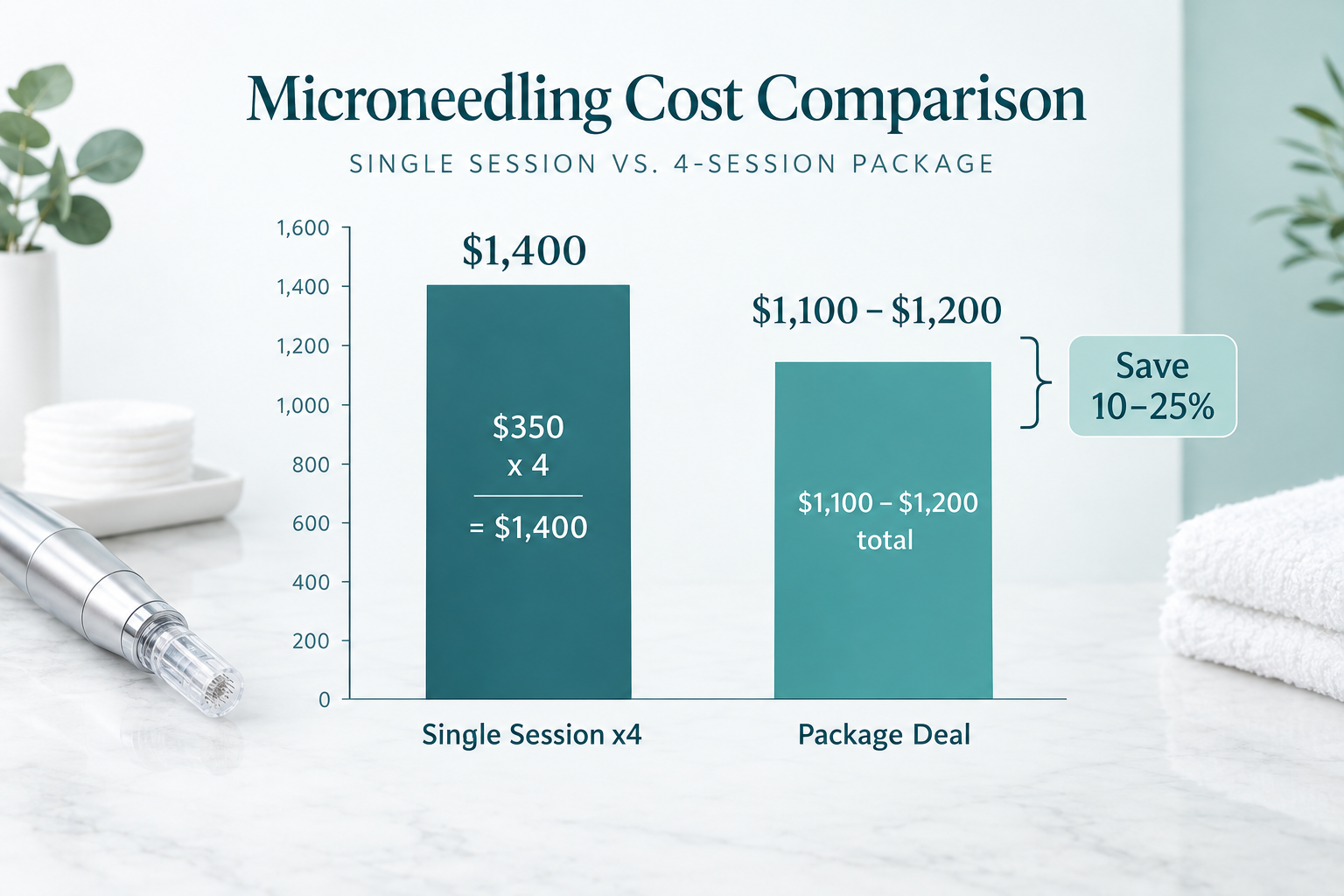
- Single session vs. package pricing: Most clinics offer package deals for a series of sessions, typically at a 10–25% discount compared with paying per session individually.
Cost by Provider Type
Provider type is one of the most reliable predictors of price. The table below reflects typical ranges; individual clinics vary, and a higher price does not automatically guarantee a better outcome.
| Provider Type | Typical Cost Per Session | Notes |
|---|---|---|
| Licensed aesthetician (day spa) | $150–$300 | Limited to superficial needle depths in most states; may not use medical-grade devices |
| Licensed aesthetician (med spa) | $250–$400 | Often uses FDA-cleared pens under physician oversight |
| Registered nurse / nurse practitioner | $300–$500 | Clinical training; can manage minor adverse reactions |
| Board-certified dermatologist or plastic surgeon | $400–$800+ | Highest level of clinical oversight; access to advanced RF devices |
The True Walk-Out Price: What You'll Actually Pay
Most advertised microneedling prices reflect the base session fee only. The realistic walk-out price — what you pay when you leave the clinic — is often meaningfully higher once all associated costs are included. A session advertised at $350 might realistically cost closer to $500–$550 when the following are added.
- Topical numbing cream: Some clinics include this; others charge $20–$50 separately.
- Aftercare kit: Post-treatment serums, barrier creams, or SPF products are sometimes sold at checkout for $30–$100.
- Consultation fee: Initial consultations may cost $50–$200, though many clinics waive this if you proceed with treatment.
- Sales tax: Applicable in most US states on cosmetic services, typically 6–10%.
- Gratuity: Common at med spas and day spas, typically 15–20% of the service fee.
- Add-on serums or boosters: Growth factor serums or hyaluronic acid infusions offered during the session may add $50–$150.
When comparing quotes from different providers, ask specifically whether the quoted price includes numbing, aftercare, and any standard serums — or whether these are billed separately.
Single Session vs. Package Pricing
Most providers recommend a full treatment series of three to six sessions spaced four to six weeks apart to achieve meaningful improvement in concerns such as acne scarring, enlarged pores, or fine lines and wrinkles. Collagen remodeling continues for several months after each session, so spacing treatments appropriately is important for cumulative results.
Paying per session is more flexible but more expensive overall. Package deals — typically sold as three, four, or six session bundles — usually offer a 10–25% discount compared with the single-session rate. A clinic charging $350 per session might offer a package of four sessions for $1,100–$1,200 rather than $1,400. If you are confident you will complete the series, package pricing generally represents better value. Ask whether unused sessions are refundable or transferable before committing.
Budget Tiers: What You Get at Each Price Point
A useful way to evaluate microneedling pricing is through a budget-tier framework. Each tier reflects a different combination of device quality, provider training, and clinical environment.

- Budget tier ($150–$250 per session): Typically offered at day spas or newer med spas. May use entry-level devices, shallower needle depths, and providers with limited clinical training. Suitable for mild skin texture concerns in low-risk patients, but less appropriate for significant acne scarring or skin laxity.
- Mid-range tier ($300–$500 per session): The most common price point at established med spas with physician oversight. Usually involves FDA-cleared medical-grade devices, trained RN or NP providers, and standard aftercare protocols. Appropriate for most cosmetic microneedling indications.
- Premium tier ($600–$1,000+ per session): Dermatology offices, plastic surgery practices, or boutique studios offering advanced RF microneedling devices, physician-performed or physician-supervised treatment, and comprehensive consultation. Most appropriate for complex concerns, patients with a history of complications, or those seeking RF-enhanced skin tightening.
Red Flags at Very Low Price Points
Unusually low microneedling prices — particularly sessions advertised below $100–$150 — can indicate corners being cut in ways that affect both safety and results. Specific concerns include the use of non-sterile or reused needle cartridges, devices that are not FDA-cleared, providers without adequate training in needle depth adjustment, and inadequate skin assessment before treatment. Microneedling creates deliberate openings in the skin barrier, which means sterility and appropriate technique are not optional extras — they are fundamental to safe treatment. If a price seems significantly below the local market rate, it is reasonable to ask detailed questions about the device used, cartridge disposal practices, and the provider's qualifications before proceeding.
Geographic Price Variation
Location has a substantial effect on microneedling costs. The following city-level estimates reflect typical mid-range med spa pricing for a standard facial microneedling session and are approximate.
| City / Region | Typical Per-Session Range (Standard) |
|---|---|
| New York City | $400–$700 |
| Los Angeles | $350–$650 |
| Miami | $300–$600 |
| Chicago | $275–$500 |
| Dallas / Houston | $250–$450 |
| Atlanta | $225–$400 |
| Smaller cities / suburban areas | $150–$350 |
Insurance, HSA, FSA, and Financing Options
Microneedling is a cosmetic procedure and is not covered by standard health insurance in the United States. However, the situation with HSA (Health Savings Account) and FSA (Flexible Spending Account) funds is more nuanced than most pricing guides suggest. In most cases, cosmetic microneedling is not an eligible HSA or FSA expense. However, if a board-certified dermatologist documents that microneedling is being performed for a medically indicated condition — such as treatment-resistant acne scarring — some HSA and FSA administrators may accept a letter of medical necessity. This is not guaranteed, and eligibility depends on the specific plan administrator's interpretation. Patients should confirm eligibility with their plan before assuming these funds can be used.
Medical financing through services such as CareCredit is widely accepted at med spas and dermatology practices and allows patients to spread the cost of a full treatment series over monthly payments, sometimes with promotional interest-free periods. This can make a $1,200–$2,000 series more manageable, though it is worth reviewing the financing terms carefully before enrolling.
Microneedling vs. Laser Resurfacing: A Cost Comparison
Patients considering microneedling for skin rejuvenation, acne scarring, or fine lines often compare it with laser resurfacing. The two treatments differ in mechanism, downtime, and cost.
| Factor | Microneedling | Laser Resurfacing (Fractional) |
|---|---|---|
| Typical cost per session | $200–$800 | $500–$2,500 |
| Sessions typically needed | 3–6 | 1–3 |
| Downtime | 1–3 days (redness/sensitivity) | 3–10 days (varies by intensity) |
| Skin tightening effect | Moderate (enhanced with RF) | Moderate to significant |
| Suitable for darker skin tones | Generally yes (lower pigmentation risk) | Greater caution required |
| Mechanism | Mechanical micro-injuries → collagen stimulation | Thermal energy → collagen remodeling |
Microneedling is generally considered more accessible in terms of cost per session and carries a lower risk of post-inflammatory hyperpigmentation in patients with medium to darker skin tones compared with ablative or fractional laser treatments. Laser resurfacing may achieve more dramatic results in fewer sessions for certain concerns, particularly deeper wrinkles or significant sun damage. A consultation with a qualified provider is the most reliable way to determine which approach is better suited to a specific skin concern and skin type.
How to Save Money on Microneedling Without Compromising Safety
There are legitimate ways to reduce the overall cost of a microneedling treatment series without sacrificing quality or safety.
- Book a package: Package deals consistently offer 10–25% savings over per-session pricing at the same clinic.
- Time your treatment seasonally: Many clinics run promotions in January (post-holiday) and in autumn after summer sun exposure has subsided. Avoiding peak demand periods can yield meaningful discounts.
- Prioritize the treatment area: If budget is a concern, starting with the face only rather than face-plus-neck reduces the per-session cost while still addressing the primary concern.
- Ask about maintenance session pricing: Some clinics offer reduced rates for maintenance sessions once an initial series is complete, which lowers the long-term cost of sustaining results.
- Use CareCredit or medical financing: Spreading the cost of a full series over several months can make premium-tier treatment accessible without requiring the full amount upfront.
- Avoid unnecessary add-ons on the first session: Starting with standard microneedling and adding PRP or serums only if results warrant it is a reasonable approach for cost-conscious patients.
Questions to Ask Before Booking
When you receive a quote for microneedling, the following questions help you evaluate whether the price reflects genuine value and appropriate clinical standards.
- Is the quoted price all-inclusive, or are numbing cream, aftercare products, and serums billed separately?
- What device will be used, and is it FDA-cleared?
- Who will perform the treatment — what are their qualifications and training?
- Is there physician oversight at this clinic?
- Are needle cartridges single-use and disposed of after each patient?
- How many sessions do you recommend for my specific concern, and what does the full series cost?
- Do you offer package pricing, and what is the refund or transfer policy for unused sessions?
- What aftercare is included, and what products will I need to purchase?
Frequently Asked Questions
How many microneedling sessions will I need?
Most providers recommend three to six sessions for concerns such as acne scarring, enlarged pores, or fine lines, spaced four to six weeks apart. Milder skin texture concerns may respond in three sessions; deeper scarring or significant skin laxity may require more. Maintenance sessions once or twice a year are often suggested to sustain results, as the collagen and elastin production stimulated by treatment gradually diminishes over time.
How long do microneedling results last?
Results from a full treatment series typically last six to twelve months before a maintenance session may be beneficial. The longevity depends on the concern being treated, the number of sessions completed, the patient's age and skin condition, and lifestyle factors such as sun exposure and skincare routine. RF microneedling results may last somewhat longer due to the deeper collagen remodeling effect.
Is microneedling painful?
Most patients describe professional microneedling as mildly uncomfortable rather than painful. Topical numbing cream is applied 20–45 minutes before treatment to minimize discomfort. RF microneedling tends to produce more sensation due to the added heat, and deeper treatment areas such as the jawline or bony prominences may feel more intense. Downtime is typically one to three days of redness and sensitivity, similar in appearance to mild sunburn.
Can microneedling help with acne scars?
Microneedling is one of the more commonly used minimally invasive treatments for atrophic acne scarring (the depressed, pitted type). The controlled micro-injuries stimulate collagen remodeling, which can gradually improve scar depth and skin texture over a series of sessions. Results vary depending on scar type, depth, and skin tone. It is generally less effective for ice-pick scars than for rolling or boxcar scars, and a dermatologist assessment is advisable to determine whether microneedling, laser, subcision, or a combination approach is most appropriate.
Is microneedling safe for all skin tones?
Professional microneedling is generally considered suitable for a wider range of skin tones than many laser treatments, as it does not rely on light-based energy that can affect melanin. However, patients with darker skin tones should still seek a provider experienced with their skin type, as post-inflammatory hyperpigmentation is possible if the treatment is too aggressive or if aftercare is inadequate. A thorough consultation and patch assessment are advisable.
Does the cost of microneedling vary by body area?
Yes. Face-only sessions are typically the baseline price. Adding the neck, décolletage, or hands increases the cost, usually by $50–$150 per additional area. Larger body zones such as the abdomen, thighs, or back for stretch mark treatment are priced higher still, often $300–$600 per body area per session, reflecting the additional time and consumables required.
Is Microneedling Worth the Investment for Your Skin Goals?
Whether microneedling represents good value depends on the specific concern being treated, the number of sessions required, and realistic expectations about the degree of improvement. For mild to moderate acne scarring, uneven skin texture, enlarged pores, and early fine lines, a well-performed series of standard or RF microneedling sessions can produce meaningful, visible improvement that is supported by a reasonable body of clinical evidence. The treatment is minimally invasive, carries relatively low downtime compared with ablative laser resurfacing, and is generally suitable for a broad range of skin types.
The total investment for a full treatment series — including realistic walk-out pricing rather than advertised session rates — typically falls between $1,000 and $3,500 for standard microneedling and $2,000–$5,000 or more for RF microneedling. Maintenance sessions add to the long-term cost. For patients with more advanced concerns such as significant skin laxity or deep scarring, a consultation with a board-certified dermatologist or plastic surgeon is worthwhile to determine whether microneedling alone, RF microneedling, or a combination with laser or other treatments would deliver the most appropriate outcome for the investment.
If you are considering microneedling, booking a consultation with a qualified provider — ideally one who can assess your skin in person and recommend a treatment plan tailored to your specific concerns — is the most reliable first step toward understanding both the likely results and the realistic total cost.
