
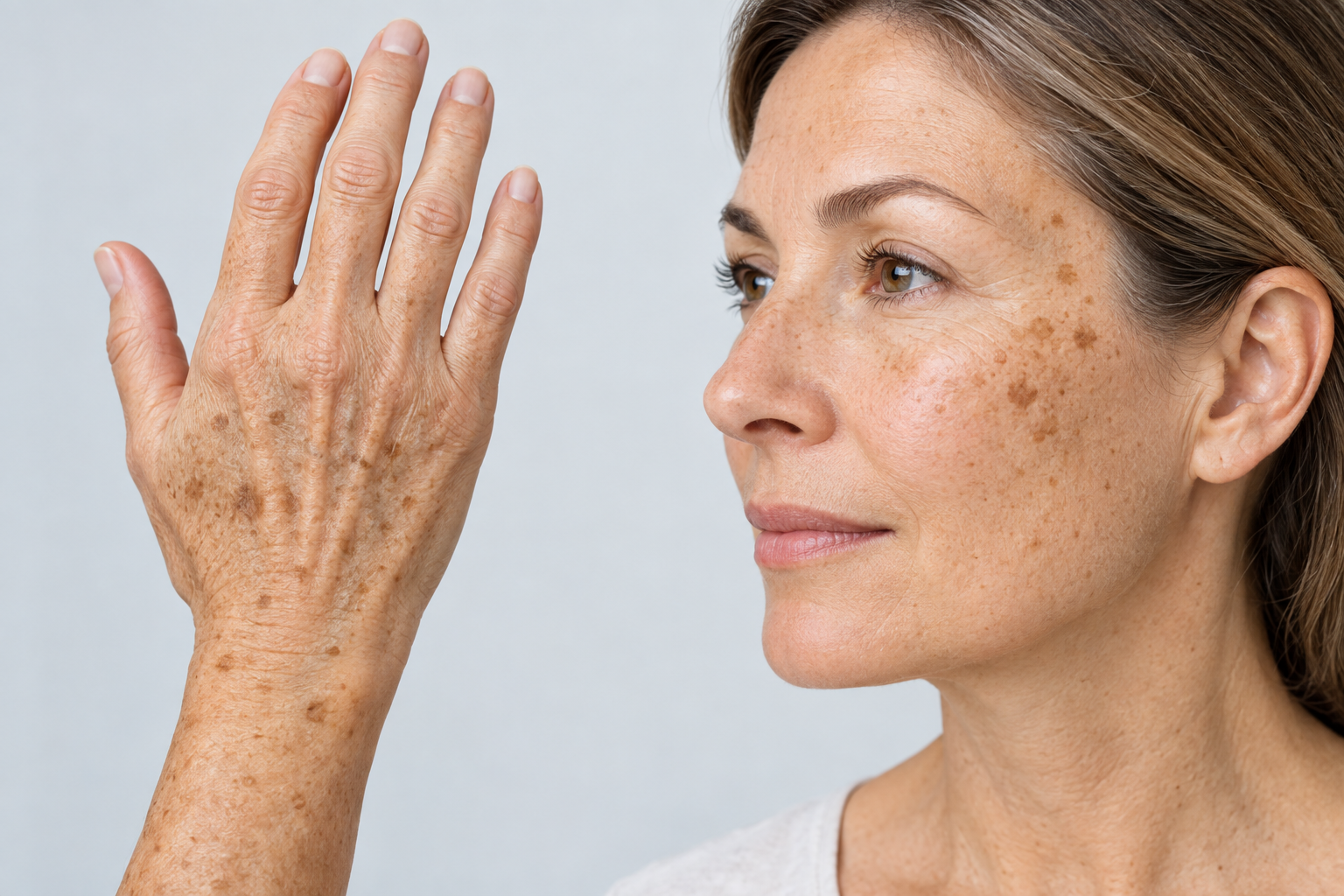

Age spots are a common cosmetic concern, particularly for people over 40 who have spent years in the sun. While they are harmless, many people want to fade or lighten these flat brown patches on the face, hands, and other sun-exposed areas. Natural remedies range from well-studied botanical ingredients to popular kitchen staples, and understanding which approaches have genuine evidence behind them — and which carry real risks — can save you time, money, and potential skin damage.
Key Takeaways
- Age spots, also called solar lentigines or liver spots, are caused by cumulative UV damage that triggers excess melanin production in localised areas of skin.
- Some natural ingredients — particularly stabilised vitamin C, niacinamide, licorice root extract, and aloe vera — have meaningful evidence supporting their ability to fade hyperpigmentation gradually.
- Raw kitchen remedies such as undiluted lemon juice carry real risks including phytophotodermatitis and chemical burns, especially on sensitive or darker skin tones.
- Daily broad-spectrum SPF 30+ sunscreen is the single most important step in any age spot management routine, both for prevention and to protect fading progress.
- Natural approaches require consistent use over weeks to months; they do not produce overnight results, and professional treatments remain an option for faster or more significant improvement.
What Are Age Spots and Why Do They Form?
Age spots — clinically known as solar lentigines — are flat, well-defined patches of increased pigmentation that develop on skin that has received prolonged UV exposure over a lifetime. They are sometimes called liver spots, though they have no connection to liver function. The term simply reflects their brown, liver-like colour. They most commonly appear on the face, hands, forearms, shoulders, and chest — the areas most consistently exposed to sunlight.
The underlying mechanism involves melanocytes, the pigment-producing cells in the skin. UV radiation stimulates these cells to produce melanin as a protective response. Over decades, repeated UV exposure causes certain melanocytes to become overactive and cluster together, producing localised deposits of melanin that appear as dark spots. The enzyme tyrosinase plays a central role in this process: it catalyses the conversion of the amino acid tyrosine into melanin. Many effective skin-brightening ingredients work by acting as a tyrosinase inhibitor, slowing this enzyme's activity and reducing melanin production at the source.
Age spots are benign and require no medical treatment. However, because some skin changes — including early melanoma — can resemble age spots, it is important to know the difference. Any spot that is asymmetrical, has irregular borders, contains multiple colours, is larger than 6mm, or is evolving in size, shape, or colour should be assessed by a dermatologist promptly. This is the ABCDE rule (Asymmetry, Border, Colour, Diameter, Evolving) used in clinical practice to flag potentially concerning lesions.
Why Natural Remedies Work Slowly: The Biology
Understanding why natural remedies take weeks or months to show results helps set realistic expectations. Melanin is stored in the upper layers of the epidermis, and the skin renews itself through a process called cell turnover — old keratinocytes gradually migrate to the surface and shed, taking accumulated melanin with them. In younger skin, this cycle takes roughly 28 days. With age, cell turnover slows considerably, meaning pigmented cells linger longer at the surface. Natural ingredients that inhibit melanin production or gently accelerate exfoliation must work within this biological timeline, which is why gradual improvement over four to twelve weeks is the realistic expectation rather than rapid fading.
Evidence Tiers: Ranking Natural Approaches Honestly
Not all natural remedies are equally supported by evidence. The following breakdown organises approaches by the strength of available data, helping you make informed choices rather than relying on anecdote alone.

Strong Evidence: Formulated Botanical Actives
These ingredients have been studied in peer-reviewed research and are available in stabilised, formulated skincare products. They represent the most reliable natural approach to fading solar lentigines.
- Vitamin C (L-ascorbic acid): A well-documented tyrosinase inhibitor and antioxidant. Stabilised vitamin C serums (typically 10–20% L-ascorbic acid) have demonstrated meaningful skin brightening effects in clinical studies. Vitamin C also provides antioxidant protection against ongoing UV-induced oxidative stress. Raw lemon juice contains citric acid and some vitamin C, but the concentration is unstable and the pH is highly acidic — a formulated serum delivers far more reliable and safer results.
- Niacinamide (Vitamin B3): Niacinamide works differently from tyrosinase inhibitors — it reduces the transfer of melanin from melanocytes to surrounding skin cells rather than blocking its production. Studies have shown that 4–5% niacinamide can visibly reduce hyperpigmentation with consistent use over eight to twelve weeks. It is also well tolerated by most skin types, including sensitive skin.
- Licorice root extract: The active compounds glabridin and liquiritin in licorice root extract inhibit tyrosinase activity and disperse melanin within the skin. Multiple studies support its use as a skin brightening agent, and it is generally gentle enough for sensitive and darker skin tones. Products containing 0.5–2% licorice root extract are widely available.
- Alpha arbutin: A glycosylated form of hydroquinone derived from bearberry plants, alpha arbutin inhibits tyrosinase with a lower irritation profile than hydroquinone. It is considered one of the more evidence-supported natural depigmenting agents available in over-the-counter formulations.
- Kojic acid: Derived from fungi during the fermentation of certain foods, kojic acid is a recognised tyrosinase inhibitor with a reasonable evidence base. It can cause irritation in some individuals, so patch testing is advisable.
Limited but Plausible Evidence: Common Natural Remedies
These remedies have some biological rationale and are widely used, but robust clinical evidence in humans is limited. They may offer modest benefit with consistent use and appropriate application.
- Aloe vera gel: Aloe vera contains aloesin and aloin, compounds that have shown tyrosinase-inhibiting activity in laboratory studies. Aloesin in particular may reduce UV-induced hyperpigmentation. Fresh aloe vera gel applied directly to age spots is generally well tolerated, though human clinical trials are limited. It is one of the safer DIY options available.
- Green tea extract: Green tea polyphenols, particularly epigallocatechin gallate (EGCG), have antioxidant properties and some evidence of melanin-inhibiting activity. Topical application of green tea extract may offer modest skin brightening alongside broader antioxidant protection.
- Papaya enzymes (papain): Papain is a proteolytic enzyme that gently exfoliates dead skin cells, potentially accelerating the removal of melanin-rich surface cells. The effect is mild and primarily surface-level, but regular use may contribute to a more even skin tone over time.
- Buttermilk and yogurt: These contain lactic acid, an alpha hydroxy acid (AHA) that promotes gentle exfoliation and may help disperse surface melanin. The concentration of lactic acid in dairy products is low compared to formulated AHA products, so results are likely to be subtle.
- Bakuchiol: A plant-derived compound increasingly studied as a retinol alternative, bakuchiol may support cell turnover and skin regeneration. Evidence is still developing, but it is gaining attention as a gentler option for those who cannot tolerate retinoids.
Risky or Unsupported: Remedies to Approach with Caution
Some popular remedies carry meaningful risks that are rarely discussed clearly in online guides.
- Undiluted lemon juice: Lemon juice is frequently cited as a natural age spot remedy due to its citric acid and vitamin C content. However, applying undiluted lemon juice to skin — particularly before sun exposure — can cause phytophotodermatitis, a chemical reaction between plant compounds (furanocoumarins) and UV light that produces severe blistering, burns, and paradoxically, post-inflammatory hyperpigmentation that is darker and harder to treat than the original age spots. If you choose to use lemon juice, dilute it significantly, apply it only at night, and always follow with broad-spectrum sunscreen the next morning.
- Apple cider vinegar (ACV): ACV contains acetic acid and is often promoted for skin brightening. The evidence is largely anecdotal, and undiluted application can disrupt the skin barrier, cause chemical burns, and worsen pigmentation through inflammation. Diluted use may be tolerated by some, but the risk-to-benefit ratio is unfavourable compared to better-evidenced alternatives.
- Potato slices: Potato contains small amounts of catecholase, an enzyme with theoretical melanin-inhibiting properties. Evidence in humans is essentially absent, and the remedy is unlikely to produce meaningful results.
A Practical Morning and Evening Routine
Combining evidence-supported natural ingredients into a consistent daily routine gives the best chance of gradual improvement. The following framework uses ingredients with reasonable evidence and a manageable risk profile.

Morning: Cleanse gently, then apply a stabilised vitamin C serum (10–20% L-ascorbic acid or a vitamin C derivative) to target melanin production and provide antioxidant protection. Follow with a moisturiser containing niacinamide if tolerated, and finish with a broad-spectrum SPF 30+ sunscreen. Sunscreen is non-negotiable — UV exposure will continue to stimulate melanin production and undo any fading progress.
Evening: Cleanse, then apply fresh aloe vera gel or a formulated product containing licorice root extract or alpha arbutin to sun-exposed areas where age spots are present. Allow to absorb before moisturising. If you are using a retinol or bakuchiol product, this is the appropriate time to apply it, as these ingredients increase photosensitivity and should not be used in the morning without robust sun protection.
Always perform a patch test before introducing any new ingredient, particularly on the inner forearm, and wait 24–48 hours to check for irritation before applying to the face or hands.
Age Spots on the Hands: Specific Considerations
The backs of the hands are among the most common locations for solar lentigines, yet they are often overlooked in skincare routines. Hand skin is thinner than facial skin and loses moisture more readily, making it more susceptible to irritation from active ingredients. When applying brightening serums or treatments to the hands, use the same products as for the face but be particularly attentive to hydration — follow active ingredients with a nourishing hand cream. Crucially, reapply sunscreen to the hands every time they are washed or exposed to sunlight, as this area receives significant incidental UV exposure throughout the day.
Realistic Timeline: What to Expect and When
| Ingredient / Approach | Typical Onset of Visible Change | Evidence Level | Key Consideration |
|---|---|---|---|
| Stabilised Vitamin C serum | 4–8 weeks | Strong | Must be stored correctly; oxidises quickly once opened |
| Niacinamide (4–5%) | 8–12 weeks | Strong | Well tolerated; suitable for sensitive skin |
| Licorice root extract | 8–12 weeks | Moderate | Gentle; suitable for darker skin tones |
| Alpha arbutin | 8–12 weeks | Moderate | Lower irritation than hydroquinone |
| Aloe vera gel (fresh) | 4–8 weeks | Limited | Generally safe; modest effect |
| Lactic acid (formulated) | 4–6 weeks | Moderate | Increases photosensitivity; use SPF |
| Undiluted lemon juice | Unpredictable | Weak / Risky | Risk of phytophotodermatitis; not recommended |
Skin-Type Considerations
Most online guides treat all skin types as equivalent, but skin type meaningfully affects both the choice of remedy and the risk of adverse effects. People with sensitive skin should prioritise niacinamide and aloe vera over acids and high-concentration vitamin C, introducing one new ingredient at a time. Those with oily or combination skin generally tolerate a wider range of actives but should still patch test. People with darker skin tones (Fitzpatrick types IV–VI) face a particular risk: inflammation from irritating ingredients can trigger post-inflammatory hyperpigmentation, creating new dark patches that are often more persistent than the original age spots. For darker skin tones, gentle, well-tolerated ingredients such as niacinamide, licorice root extract, and alpha arbutin are preferable to aggressive acids or undiluted kitchen remedies.
Prevention: The Most Effective Long-Term Strategy
No natural remedy can fully reverse decades of UV damage, and without ongoing sun protection, new age spots will continue to form while existing ones darken. Daily application of a broad-spectrum SPF 30+ sunscreen to all sun-exposed areas is the most evidence-supported intervention for both preventing new solar lentigines and protecting the skin while brightening treatments take effect. Broad-spectrum protection covers both UVA rays (which drive pigmentation and ageing) and UVB rays (which cause burning).
Beyond sunscreen, wearing protective clothing, wide-brimmed hats, and seeking shade during peak UV hours (typically 10am–4pm) meaningfully reduces cumulative UV exposure. Avoiding tanning beds is equally important — artificial UV sources produce the same melanin-stimulating damage as sunlight. Supporting skin health from within through an antioxidant-rich diet, adequate hydration, and sufficient sleep may also contribute to overall skin resilience, though these lifestyle factors are unlikely to fade existing age spots on their own.
When to See a Dermatologist
Natural remedies and over-the-counter brightening products are appropriate for cosmetic age spots that have been stable over time. However, professional assessment is important in several situations. See a dermatologist if a spot is new and growing rapidly, has irregular or blurred borders, contains more than one colour (particularly shades of red, white, or blue-black), is larger than 6mm, bleeds, itches, or crusts. These features may indicate a condition other than a benign age spot, including melanoma, which is treatable when caught early.
A dermatologist can also offer treatments that produce faster and more significant results than natural approaches, including prescription-strength retinoids, hydroquinone (a regulated depigmenting agent), chemical peels using higher concentrations of AHAs or trichloroacetic acid, laser therapy targeting melanin, microdermabrasion, and cryotherapy. These professional options are worth discussing if natural approaches have not produced satisfactory results after three to six months of consistent use.
Frequently Asked Questions
Can age spots be removed permanently with natural remedies?
Natural remedies can fade solar lentigines significantly with consistent use, but they rarely eliminate them entirely. Even when spots fade, continued sun exposure without adequate protection can cause them to return or darken. Maintaining a daily SPF routine is essential to preserve any improvement achieved.
Is lemon juice safe to use on age spots?
Undiluted lemon juice is not recommended. It can cause phytophotodermatitis — a severe photosensitive reaction — when applied before sun exposure, potentially causing blistering and worsening pigmentation. If used at all, it should be heavily diluted, applied only at night, and followed by sunscreen the next morning. A stabilised vitamin C serum is a safer and more effective alternative.
How long does it take for natural remedies to work on age spots?
Most evidence-supported natural ingredients require four to twelve weeks of consistent daily use before visible fading becomes apparent. Results depend on the depth and density of pigmentation, the ingredient used, skin type, and whether sun protection is maintained throughout. Expecting results in days or a single week is not realistic.
Are age spots the same as freckles or moles?
No. Freckles are smaller, lighter, and often fade in winter — they reflect a genetic tendency to produce melanin in response to sun. Moles (nevi) are raised or flat growths involving a different type of melanocyte cluster and carry different monitoring considerations. Age spots are flat, well-defined, and typically appear in adulthood on chronically sun-exposed skin.
Can I use multiple brightening ingredients at the same time?
Combining ingredients can improve results, but layering too many actives simultaneously increases the risk of irritation and skin barrier disruption. A practical approach is to use vitamin C in the morning and a niacinamide or licorice root extract product in the evening, always with SPF during the day. Introduce one new ingredient at a time and allow two to four weeks before adding another.
Do age spots affect all skin tones equally?
Age spots can develop on any skin tone, but they are more visible on lighter skin. People with darker skin tones are at greater risk of post-inflammatory hyperpigmentation from irritating treatments, so ingredient selection and patch testing are especially important. Gentle, well-tolerated actives such as niacinamide and licorice root extract are generally preferred for Fitzpatrick types IV–VI.
Choosing the Right Approach for Your Skin and Goals
Natural age spot removal is achievable for many people, but the results depend heavily on choosing ingredients with genuine evidence, using them consistently, and protecting the skin from further UV damage every single day. The most effective natural strategy combines a stabilised vitamin C serum in the morning with a niacinamide or licorice root extract product in the evening, applied to clean skin and always followed by broad-spectrum SPF 30+ sunscreen during daylight hours. This routine addresses melanin production, supports cell turnover, and prevents new pigmentation from forming.
Avoid the temptation to reach for undiluted kitchen remedies such as lemon juice or apple cider vinegar — the risk of worsening pigmentation through phytophotodermatitis or skin barrier damage outweighs any potential benefit, particularly when safer and better-evidenced alternatives are readily available. If you have sensitive skin or a darker skin tone, prioritise gentle ingredients and introduce them one at a time after patch testing.
If three to six months of consistent natural care does not produce satisfactory improvement, a consultation with a dermatologist or aesthetic medicine practitioner can open the door to prescription-strength treatments or professional procedures that offer faster and more predictable results. Age spots are a cosmetic concern, not a medical emergency, but professional guidance ensures you are treating the right condition with the right approach for your individual skin.
