

Key Takeaways
- Inner thigh fat accumulates due to genetics, hormonal changes, age-related muscle loss, and lifestyle factors — not simply a lack of exercise.
- Spot reduction is a myth: no exercise or diet targets fat loss in one specific area, including the inner thighs.
- A sustainable calorie deficit combined with lower body strength training and cardiovascular exercise supports overall body fat loss, which includes the thigh area.
- Non-invasive fat reduction treatments such as cryolipolysis and radiofrequency body contouring may help address stubborn thigh fat that does not respond to lifestyle changes.
- If inner thigh fat is accompanied by pain, easy bruising, or symmetrical swelling, a medical assessment is advisable to rule out conditions such as lipedema.
Why Does Inner Thigh Fat Accumulate?
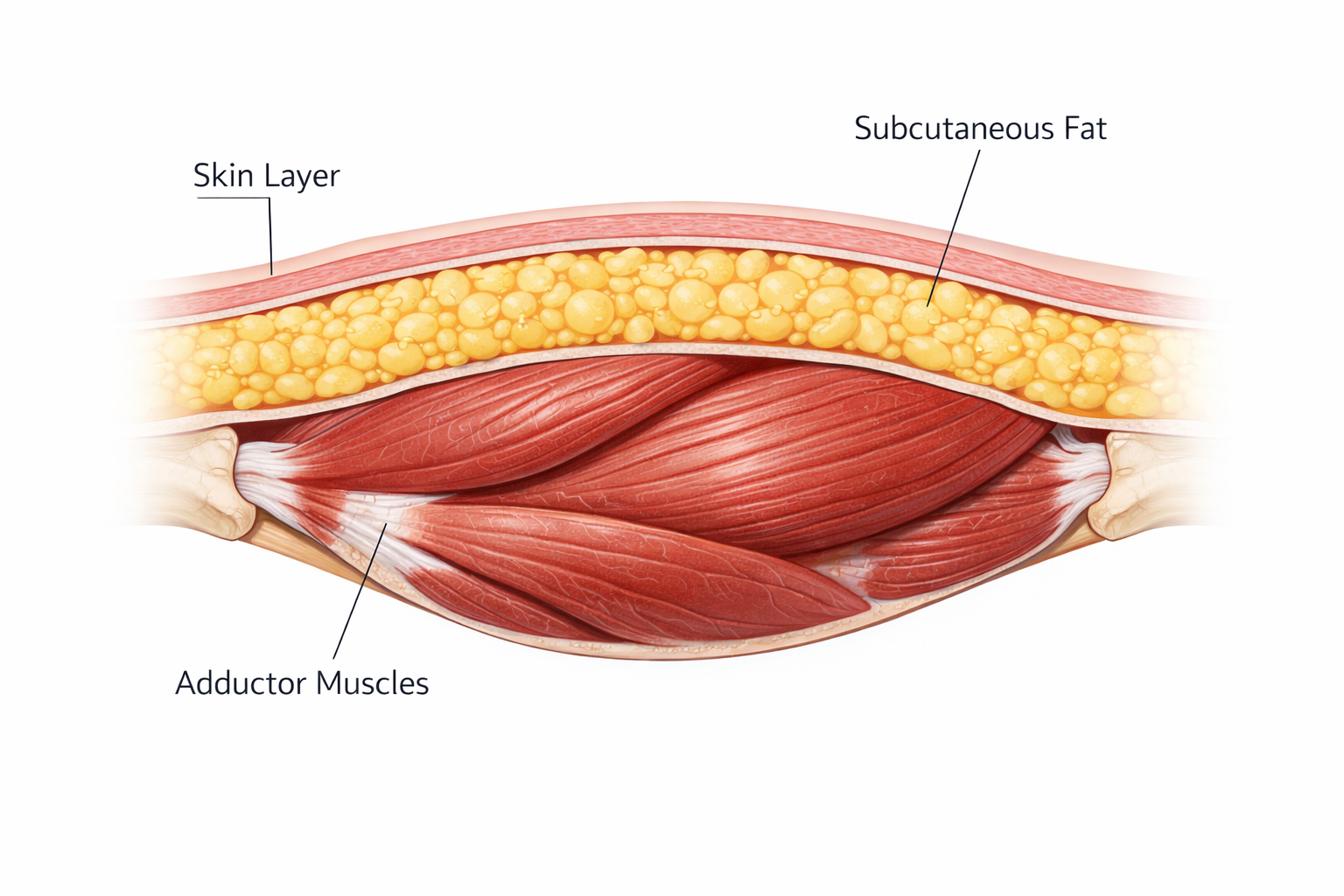
The inner thighs are one of the most common areas where subcutaneous fat — the soft fat stored just beneath the skin — tends to collect, particularly in women. Unlike visceral fat, which surrounds internal organs and carries significant metabolic health risks, subcutaneous fat in the thighs is generally less harmful but can be notably resistant to change.
Several interconnected factors determine why fat gathers in this specific area:
- Genetics: Where your body preferentially stores fat is largely determined by your genetic makeup. For many people, the hips, buttocks, and inner thighs are primary storage sites, and this pattern can run in families. Genetics also influence how readily the body releases fat from these areas during a calorie deficit.
- Hormonal influences: Oestrogen plays a central role in directing fat storage to the lower body, particularly the hips and thighs. This is why inner thigh fat is far more common in women than in men. Hormonal shifts during puberty, pregnancy, and menopause can all amplify fat accumulation in this region. A hormonal imbalance related to conditions such as PCOS or hypothyroidism may also make fat loss from the thighs more difficult.
- Age and muscle loss: As the body ages, metabolism naturally slows and muscle mass decreases — a process called sarcopenia. Adults can lose a meaningful proportion of muscle mass per decade from their thirties onward. Less muscle means a lower resting metabolic rate, making it easier to accumulate fat even without significant dietary changes.
- Sedentary lifestyle: Prolonged sitting and limited physical activity reduce the demand on the adductor muscles of the inner thigh, allowing fat to accumulate more readily in this area over time.
- Caloric surplus: When energy intake consistently exceeds energy expenditure, the body stores the excess as fat — and the inner thighs are a common destination, particularly for women.
In men, excess body fat tends to accumulate predominantly in the abdomen, though inner thigh fat does occur and is subject to the same underlying mechanisms of genetics and overall body fat percentage.
The Spot Reduction Myth
One of the most persistent misconceptions in fitness is that performing exercises targeting a specific area — such as inner thigh squeezes or leg lifts — will burn fat from that exact location. This concept, known as spot reduction, has been consistently refuted by research. The body draws on fat stores systemically in response to an energy deficit; it does not selectively mobilize fat from the muscle being trained.
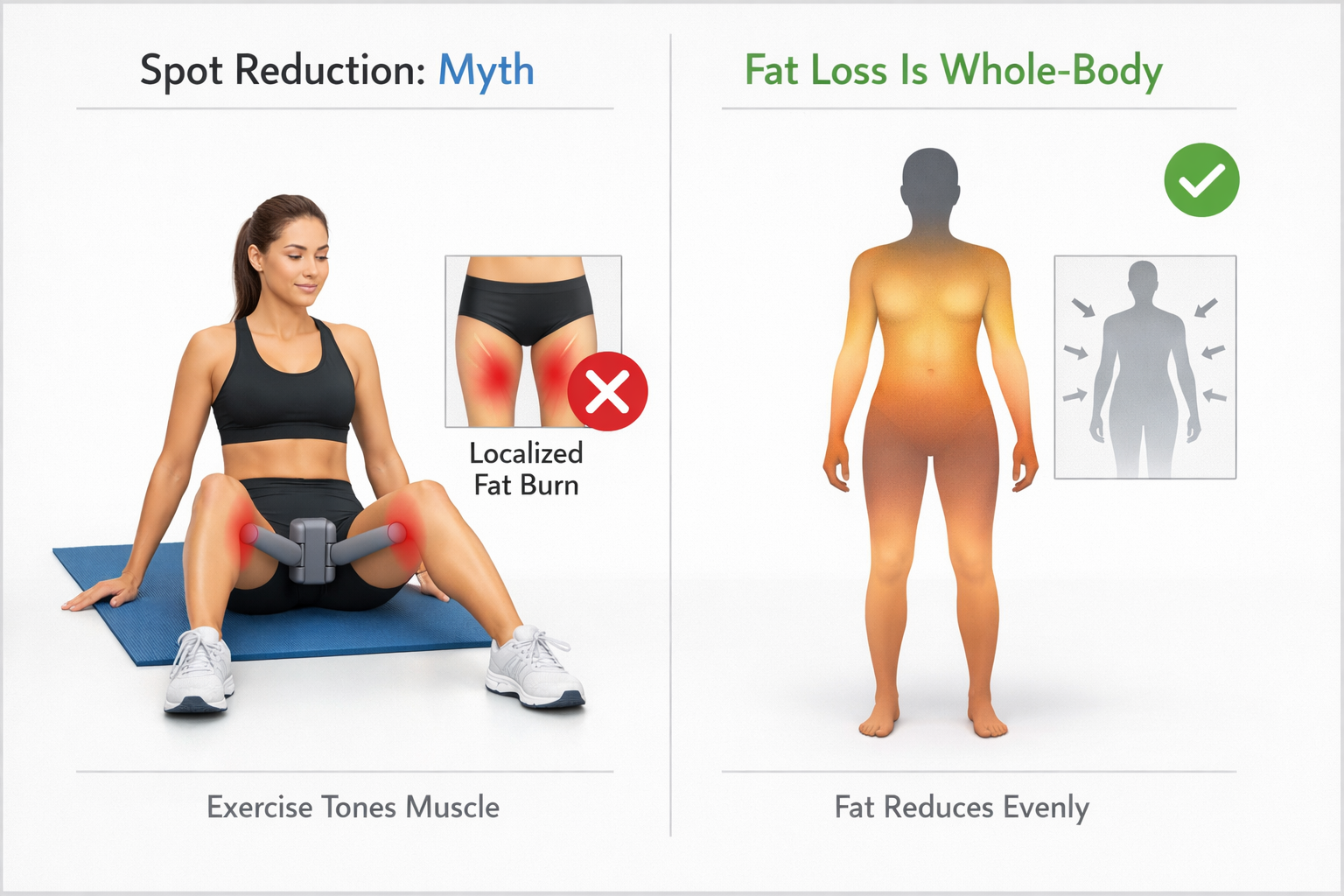
This means that even a rigorous programme of inner thigh exercises will strengthen and tone the underlying adductor muscles but will not cause localized fat loss in that area alone. Overall body fat loss, achieved through a sustained calorie deficit and regular exercise, is the mechanism that reduces fat across the body — including the inner thighs. The rate and pattern of that reduction remains influenced by genetics and hormones, which is why some areas respond more slowly than others.
Understanding this is important for setting realistic expectations. Toning exercises remain genuinely valuable — they improve muscle definition, stability, posture, and functional strength — but they work alongside overall fat loss, not as a substitute for it.
Exercises That Support Inner Thigh Fat Loss
Lower body strength training builds the adductor muscles, improves body composition, and contributes to the overall calorie burn that supports fat loss. The exercises below are frequently recommended because they engage the inner thigh directly while also recruiting larger muscle groups for greater metabolic effect.
Sumo Squat
The sumo squat is a wide-stance variation of the standard squat that places greater emphasis on the adductors and glutes. Stand with your feet wider than shoulder-width apart and toes angled outward at roughly 45 degrees. Lower your body by bending at the knees and hips, keeping your chest upright and your knees tracking over your toes, until your thighs are approximately parallel to the floor. Press through your heels to return to standing. Aim for three sets of 12–15 repetitions, adding resistance gradually as strength improves.
Lateral Lunge
The lateral lunge targets the inner thigh through a side-to-side movement pattern that standard lunges miss. Stand tall with feet together. Step widely to one side, bending the knee of the stepping leg while keeping the opposite leg straight, and lower your hips toward the floor. Push through the bent leg to return to the starting position, then repeat on the other side. Three sets of 10–12 repetitions per side are a practical starting point.
Curtsy Lunge
The curtsy lunge adds a rotational component that increases demand on the inner thigh and glute medius. Step one foot diagonally behind the opposite leg, lowering the back knee toward the floor as in a traditional lunge. Return to standing and alternate sides for two to three sets of 10–12 repetitions per leg.
Side-Lying Inner Thigh Lift
This bodyweight isolation exercise directly targets the adductors with minimal equipment. Lie on your side with your top leg crossed in front of your body, foot flat on the floor. Keeping your lower leg straight, lift it several centimetres off the ground, hold briefly, and lower with control. Perform three sets of 15–20 repetitions per side.
Cardiovascular Exercise
Aerobic exercise increases total calorie expenditure and supports the calorie deficit required for fat loss. HIIT (High-Intensity Interval Training) is frequently highlighted because it can produce a meaningful calorie burn in a shorter session and may help preserve muscle mass compared with prolonged steady-state cardio. Steady-state options such as brisk walking, cycling, and swimming are equally valid and may be preferable for those with joint concerns.
A Note on Heavy Lifting and Thigh Size
It is worth noting that high-volume training with very heavy weights — such as heavily loaded squats, leg presses, and Olympic lifts — can stimulate significant muscle hypertrophy (growth) in the thighs. For individuals who want to reduce thigh circumference rather than add size, moderating load and focusing on higher repetitions with lighter resistance and cardiovascular exercise is generally more appropriate.
Diet Strategies to Support Fat Loss
Exercise alone is rarely sufficient to produce meaningful fat loss without corresponding dietary changes. The most evidence-supported approach is a moderate, sustainable calorie deficit — consuming slightly less energy than the body expends — over a consistent period.
- Prioritize protein: Adequate protein intake helps preserve muscle mass during a calorie deficit, which is particularly important when strength training. It also contributes to satiety, making it easier to maintain reduced calorie intake.
- Choose whole, nutrient-dense foods: Vegetables, legumes, whole grains, lean proteins, and healthy fats provide essential nutrients alongside appropriate caloric content. These foods tend to be more filling per calorie than processed alternatives.
- Reduce refined carbohydrates and added sugar: Foods such as white bread, pastries, sugary drinks, and processed snacks cause rapid fluctuations in blood sugar, which can drive hunger and support fat storage. Replacing these with higher-fibre options supports more stable energy levels.
- Stay well hydrated: Adequate hydration supports metabolic function and can reduce the likelihood of confusing thirst with hunger.
- Avoid crash dieting: Severely restricted calorie intake can cause muscle loss alongside fat loss, slowing metabolism and making long-term weight management harder. Gradual, consistent deficit approaches tend to produce better-sustained results.
Sleep quality and stress management, while often overlooked, also play a meaningful role. Poor sleep elevates cortisol levels, which can promote fat storage and increase appetite — both counterproductive to fat loss efforts.
When Lifestyle Changes Are Not Enough
For many people, consistent exercise and dietary changes produce significant improvements in overall body fat, including the inner thighs. However, stubborn thigh fat — particularly in areas genetically predisposed to fat storage — can persist even when overall body weight and composition have improved. In these situations, professional body contouring treatments may be worth considering.
It is important to understand that these treatments address localized fat deposits; they are not weight-loss solutions and are not appropriate as a substitute for a healthy lifestyle. Candidates who are closest to their target weight and have realistic expectations about the degree of improvement tend to achieve the most satisfying outcomes.
Excess fat in the inner thighs can also cause thigh chafing — persistent skin irritation and friction between the legs — which represents a functional concern beyond aesthetics and may be a practical reason to explore reduction options.
Non-Surgical Treatments for Inner Thigh Fat
Cryolipolysis (CoolSculpting)
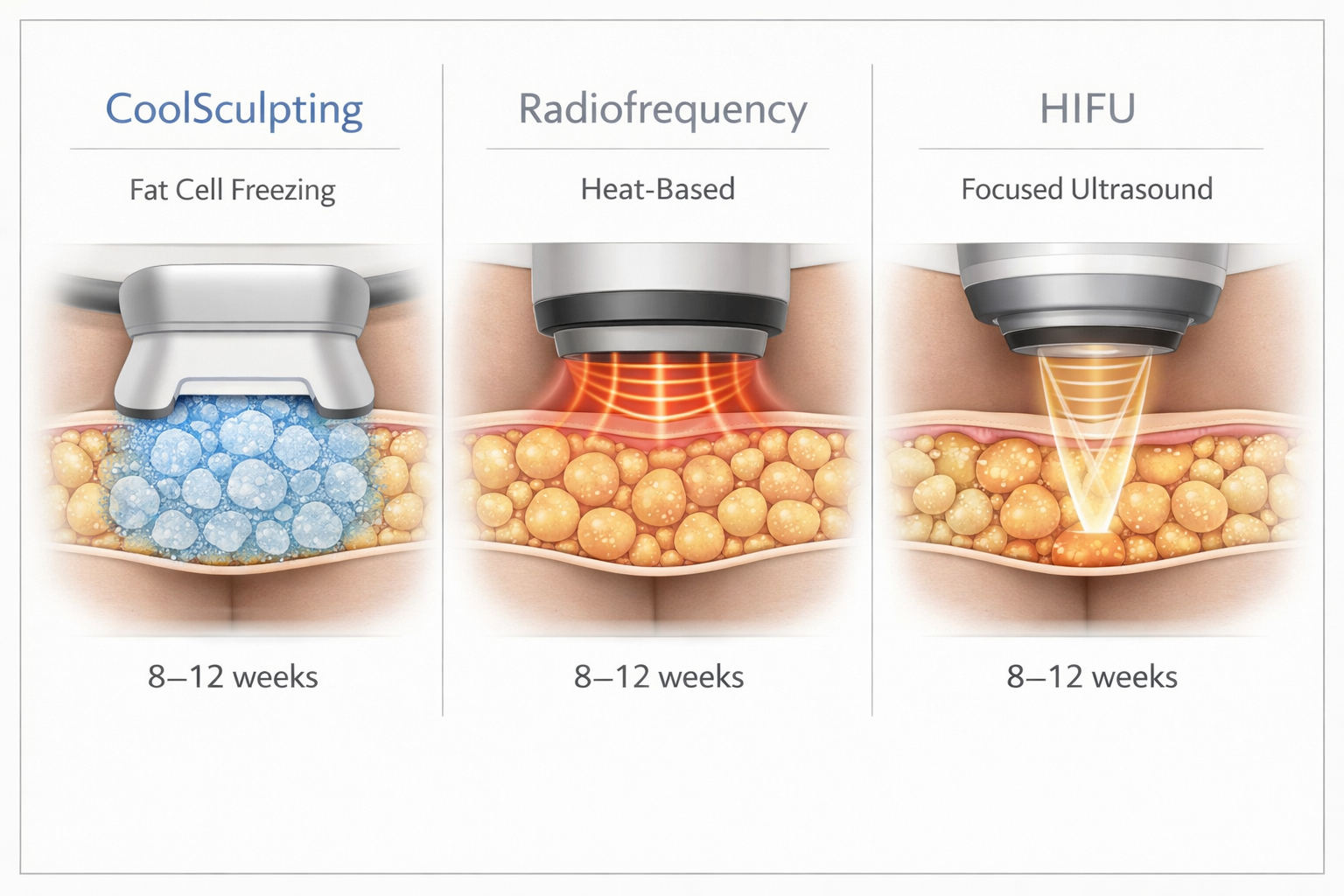
Cryolipolysis is a non-invasive fat reduction technique that uses controlled cooling to selectively damage fat cells without harming surrounding tissue. Fat cells are more vulnerable to cold temperatures than other cell types; the damaged cells are gradually cleared through the lymphatic system over the following weeks. CoolSculpting is one of the most widely studied non-surgical fat reduction technologies and has received regulatory clearance in a number of markets for specific treatment areas, including the inner thighs. Results typically develop over eight to twelve weeks as the body processes the treated fat cells, with some patients requiring more than one session to achieve their desired outcome.
Radiofrequency Body Contouring
Radiofrequency (RF) energy can heat fat cells to a level that causes them to be permanently destroyed while also stimulating collagen production in the overlying skin. Devices such as truSculpt iD use monopolar radiofrequency to target the fat layer. Clinical studies have demonstrated measurable fat cell reduction following treatment, with the added potential benefit of mild skin tightening — which is relevant in the inner thigh area where skin laxity can be a concern. Radiofrequency body contouring typically involves minimal downtime, with temporary warmth and redness in the treated area.
HIFU (High-Intensity Focused Ultrasound)
High-intensity focused ultrasound delivers precise energy to the fat layer beneath the skin, generating heat that disrupts fat cells. HIFU body contouring devices are used in some clinics for localized fat reduction, though evidence for this application is less extensive than for cryolipolysis. It may be considered in certain cases, and a qualified practitioner can advise on suitability.
Comparison of Non-Surgical Options
| Treatment | Mechanism | Typical Downtime | Results Timeline | Skin Tightening Benefit | Sessions Often Needed |
|---|---|---|---|---|---|
| Cryolipolysis (CoolSculpting) | Controlled fat cell freezing | Minimal (possible temporary redness, numbness) | 8–12 weeks | Limited | 1–2 per area |
| Radiofrequency (e.g. truSculpt iD) | Heat-based fat cell destruction | Minimal (temporary warmth, redness) | 6–12 weeks | Moderate | 1–3 per area |
| HIFU body contouring | Focused ultrasound heat | Minimal | 8–12 weeks | Mild to moderate | 1–2 per area |
All non-invasive fat reduction treatments have limitations. They can reduce localized fat deposits but do not produce the same degree of change as surgical intervention, and they do not address significant skin laxity. Results vary between individuals and are not guaranteed. Maintaining results over the long term depends on stable body weight.
Surgical Options for Inner Thigh Fat
Liposuction
Liposuction remains the most direct surgical approach to removing inner thigh fat. Techniques such as Vaser liposuction use ultrasound energy to break down fat cells before removal, which can allow for precise contouring with potentially less trauma to surrounding tissue compared with traditional liposuction. The procedure is performed under anaesthesia and involves a recovery period that typically includes swelling, bruising, and the need for compression garments for several weeks. Results can be significant and long-lasting, provided body weight remains stable, but liposuction carries inherent surgical risks including infection, contour irregularities, fluid accumulation, and anaesthesia-related complications.
Thigh Lift (Thighplasty)
A thigh lift is a surgical procedure that removes excess skin and tissue from the inner thigh. It is most relevant when skin laxity — rather than fat volume alone — is the primary concern, particularly following significant weight loss. Unlike fat reduction procedures, a thigh lift directly addresses loose skin that exercise and non-surgical treatments cannot meaningfully improve. It involves a longer recovery than non-surgical options and produces visible scarring, which should be carefully discussed during surgical consultation. It is worth noting that fat reduction procedures — whether surgical or non-surgical — do not resolve loose skin and in some cases can make skin laxity more apparent, making a thigh lift a more appropriate primary option for patients where excess skin is the dominant issue.
Medical Conditions to Be Aware Of
Not all lower body fat accumulation follows typical patterns. Lipedema is a chronic condition characterized by symmetrical fat accumulation in the legs and sometimes the arms, often accompanied by tenderness, easy bruising, and a disproportionate distribution of fat relative to the upper body. Unlike typical subcutaneous fat, lipedema fat does not respond well to diet and exercise and requires specific management approaches, including compression therapy, manual lymphatic drainage, and in some cases specialized surgical intervention. If inner thigh fat is accompanied by pain, a feeling of heaviness, unusual bruising, or symmetrical swelling that does not respond to lifestyle changes, a medical assessment is advisable.
Hormonal conditions including PCOS and hypothyroidism can also contribute to fat distribution patterns that are resistant to standard lifestyle approaches. If fat loss is not progressing despite genuine, sustained effort, a discussion with a GP or endocrinologist to rule out underlying hormonal causes is a reasonable step.
Realistic Timelines for Results
Understanding realistic timelines helps manage expectations and supports consistent effort:
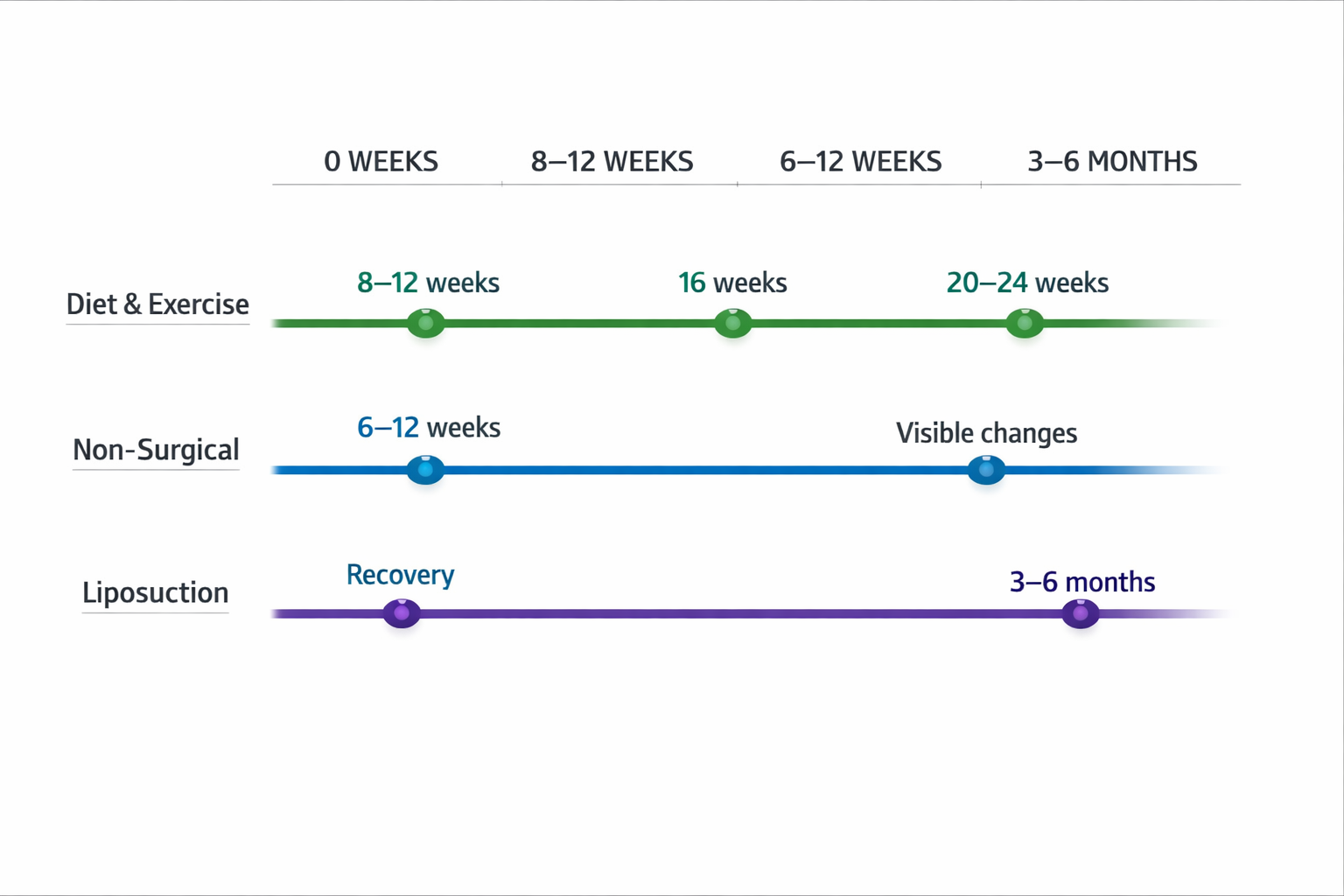
- Diet and exercise: Meaningful changes in body composition typically require a minimum of eight to twelve weeks of consistent effort, with more noticeable results in twelve to twenty-four weeks. The inner thighs may respond more slowly than other areas due to genetic fat distribution patterns.
- Non-surgical fat reduction: Initial changes may become visible around six to eight weeks after treatment, with full results typically apparent at twelve weeks. The gradual timeline reflects the natural process by which the lymphatic system clears treated fat cells.
- Surgical liposuction: Swelling after liposuction can take several months to fully resolve. Most patients see a clearer picture of their results at three to six months post-procedure.
Frequently Asked Questions
Can you target fat loss specifically in the inner thighs?
No. The spot reduction myth is well established — fat cannot be selectively removed from a specific area through targeted exercise. Inner thigh exercises strengthen the adductor muscles and improve tone but do not cause localized fat loss. Reducing body fat overall through a calorie deficit and regular exercise is the approach that leads to fat reduction across all areas, including the thighs.
What hormone is responsible for inner thigh fat in women?
Oestrogen is the primary hormonal driver of lower-body fat storage in women, directing fat to the hips, thighs, and buttocks. This pattern is biologically normal and serves energy-reserve functions. Hormonal shifts during puberty, pregnancy, and menopause — when oestrogen levels fluctuate — often coincide with changes in thigh fat distribution.
Is inner thigh fat harder to lose than fat elsewhere?
For many people, particularly women, the inner thighs are a site of stubborn thigh fat that responds more slowly to diet and exercise than areas such as the face, arms, or abdomen. This is largely a function of genetic predisposition and the hormonal environment that governs fat mobilization in the lower body, rather than any failure of effort or approach.
How many sessions of CoolSculpting are needed for inner thighs?
This varies by individual, but many patients undergo one to two cryolipolysis sessions per area. A qualified practitioner will assess the volume of subcutaneous fat present and discuss realistic expectations during a consultation. Results build gradually over eight to twelve weeks after each session.
Can inner thigh exercises make thighs bigger?
Heavy resistance training with progressive overload can stimulate muscle hypertrophy, which may increase thigh circumference even as fat reduces. For individuals whose goal is to reduce overall thigh size, lighter resistance with higher repetitions and a focus on cardiovascular exercise alongside a calorie deficit is generally a more appropriate approach.
What is lipedema and could it explain my inner thigh fat?
Lipedema is a chronic condition causing symmetrical, disproportionate fat accumulation in the legs that is often painful, bruises easily, and does not respond to standard diet and exercise. It is distinct from typical subcutaneous fat and requires a clinical diagnosis. If your lower body fat distribution seems disproportionate, is tender to touch, and has not responded to sustained lifestyle efforts, a consultation with a medical professional is worthwhile.
Making an Informed Decision About Inner Thigh Fat
Inner thigh fat is a genuinely common concern shaped by factors — genetics, hormones, age-related sarcopenia — that go beyond lifestyle choices alone. A structured approach combining a sustainable calorie deficit, consistent lower body strength training, and cardiovascular exercise will support overall body fat loss and improve the appearance of the inner thighs for most people, though the timeline requires patience and the degree of change varies between individuals.
When stubborn thigh fat persists despite sustained lifestyle effort, non-invasive fat reduction treatments such as cryolipolysis or radiofrequency body contouring offer a clinically supported route to further improvement with minimal downtime. Surgical options including liposuction provide more pronounced results but carry greater procedural risk and recovery demands. Where loose skin rather than fat volume is the dominant concern — particularly after significant weight loss — a thigh lift may be the more appropriate surgical consideration.
Before pursuing any professional treatment, a consultation with a qualified aesthetic practitioner or surgeon is essential. They can assess your individual anatomy, discuss realistic outcomes, identify any medical considerations, and recommend the approach most likely to align with your specific goals. Anyone experiencing pain, swelling, or unusual fat distribution should seek a medical assessment before proceeding with aesthetic treatments.
