
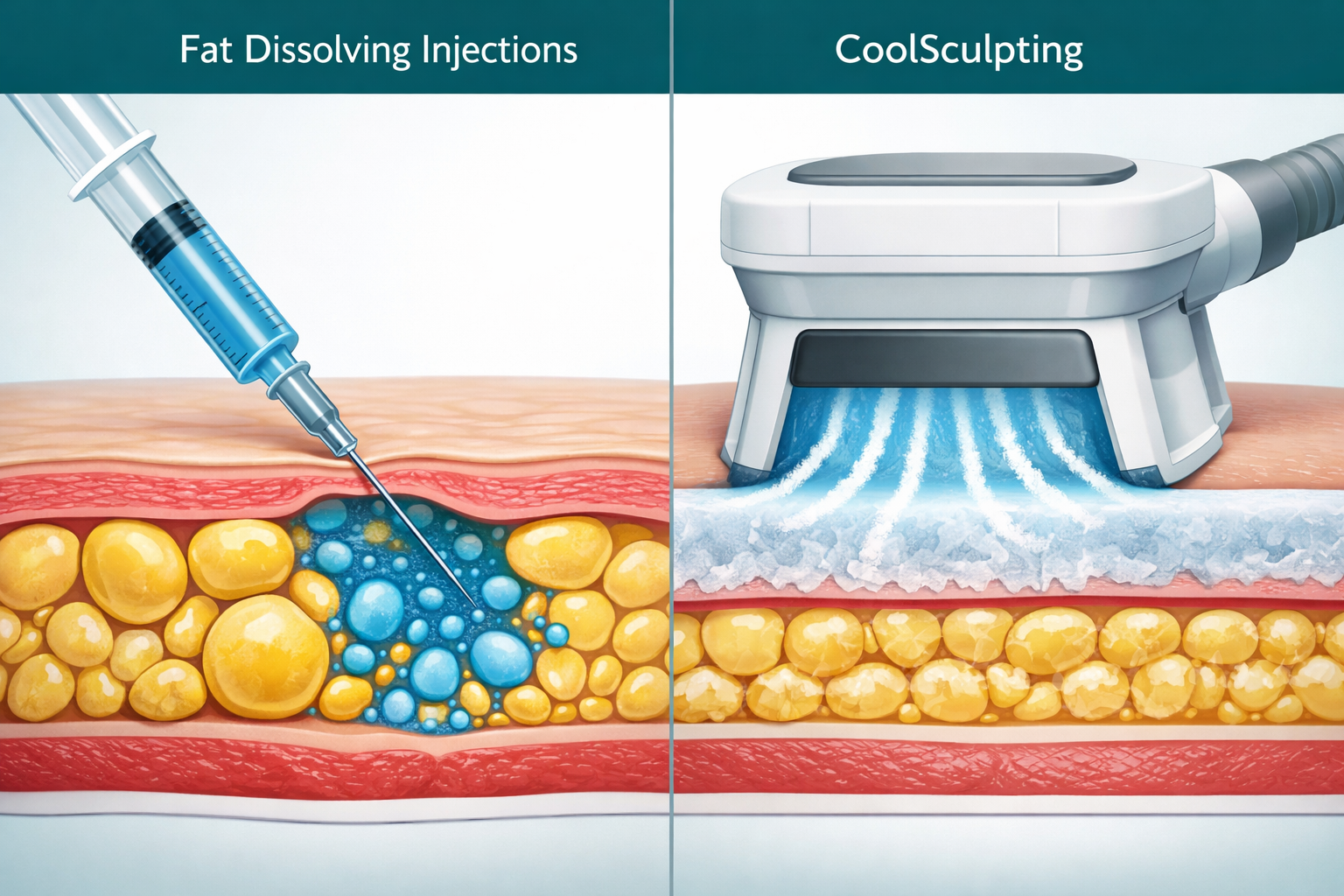

Quick Comparison
| Feature | Fat Dissolving Injections | CoolSculpting (Cryolipolysis) |
|---|---|---|
| Mechanism | Chemical lysis of fat cell membranes via deoxycholic acid or phosphatidylcholine | Controlled cooling destroys fat cells through cryolipolysis |
| Treatment type | Injectable (needles) | Non-invasive device (applicator placed on skin) |
| Key brands | Kybella (US), Aqualyx, Celluform, PCDC formulations | CoolSculpting (Allergan Aesthetics) |
| Common areas | Double chin, abdomen, flanks, inner thighs, upper arms, bra fat, knees | Abdomen, flanks, thighs, upper arms, under chin, bra fat |
| Sessions typically needed | 2–6 sessions, spaced 4–6 weeks apart | 1–3 sessions per area |
| Results timeline | Gradual over 4–8 weeks per session | Gradual over 8–12 weeks after each session |
| Downtime | Minimal; swelling and bruising common for several days | Minimal; temporary redness, numbness, aching |
| Rare serious risk | Nerve injury, difficulty swallowing (submental area) | Paradoxical adipose hyperplasia |
| Skin tightening potential | Some formulations may stimulate collagen | Not a primary effect |
| Versatility for small areas | High — suitable for very localised fat pockets | Moderate — limited by applicator size |
| Longevity | Long-lasting if weight is maintained | Long-lasting if weight is maintained |
What Are Fat Dissolving Injections?
Fat dissolving injections — also called injection lipolysis or injectable lipolysis — use a solution injected directly into subcutaneous fat to break down and destroy fat cells. The most well-studied active ingredient is deoxycholic acid, a naturally occurring bile acid that disrupts fat cell membranes, causing the cells to lyse (break apart). The released fat is then processed and gradually cleared from the body via the lymphatic system over several weeks.
In the United States, the FDA-approved product for submental fat is Kybella, which contains synthetic deoxycholic acid. In the UK and parts of Europe, Aqualyx is among the most widely used products; it combines deoxycholic acid with a plant-derived compound and is used across multiple body areas. Celluform and Celluform+ contain phosphatidylcholine (PPC) combined with deoxycholic acid — a formulation often referred to as PCDC or PPC-DC. These products are used off-label for many body areas outside of their licensed indications, which is important to understand before treatment.
It is worth distinguishing fat dissolving from weight loss. These injections reduce the volume of localised fat deposits in specific areas; they do not act on visceral fat (the fat around internal organs), and they are not a treatment for obesity or general weight management. The ideal candidate is someone who is at or near a stable, healthy weight but has stubborn fat pockets that have not responded to diet and exercise.
What Is CoolSculpting?
CoolSculpting is a non-invasive body contouring device that uses cryolipolysis — the controlled application of cold temperatures — to selectively damage and destroy fat cells beneath the skin without harming the overlying tissue. Fat cells are more vulnerable to cold than surrounding structures, which is the biological basis of the treatment. The device places an applicator over the target area and delivers a precisely calibrated cooling effect over a treatment session lasting around 35 to 60 minutes per area, depending on the applicator used.
CoolSculpting received FDA clearance in 2010 and has been studied across a wide range of body areas including the abdomen, flanks, inner and outer thighs, upper arms, bra fat, and the area beneath the chin. Following a treatment session, the damaged fat cells are gradually cleared through the body’s natural inflammatory and lymphatic processes over a period of eight to twelve weeks, with results continuing to develop during this time.
Like injection lipolysis, cryolipolysis is a form of spot reduction — it targets specific areas rather than reducing overall body fat. It is not a weight loss procedure and does not address visceral fat. Patients typically see a reduction of approximately 10–25% of fat in the treated area per session, though individual results vary considerably.
How Each Treatment Works: The Mechanism in Plain Language
Both treatments achieve fat cell destruction through different mechanisms, and understanding this helps clarify their respective strengths.
With fat dissolving injections, the active agents work at a cellular level. Deoxycholic acid and phosphatidylcholine each interact with fat cell membranes in different ways — deoxycholic acid effectively solubilises the membrane, leading to adipocyte lysis, while phosphatidylcholine is thought to assist in emulsifying fat and may also have membrane-disrupting effects, though its precise mechanism remains an area of ongoing research. Once fat cell membranes are disrupted, the contents are released into the surrounding tissue and cleared through the lymphatic system over the following weeks. This gradual clearance is why results take several weeks to become visible after each session, and why a full treatment course of multiple sessions is usually required.
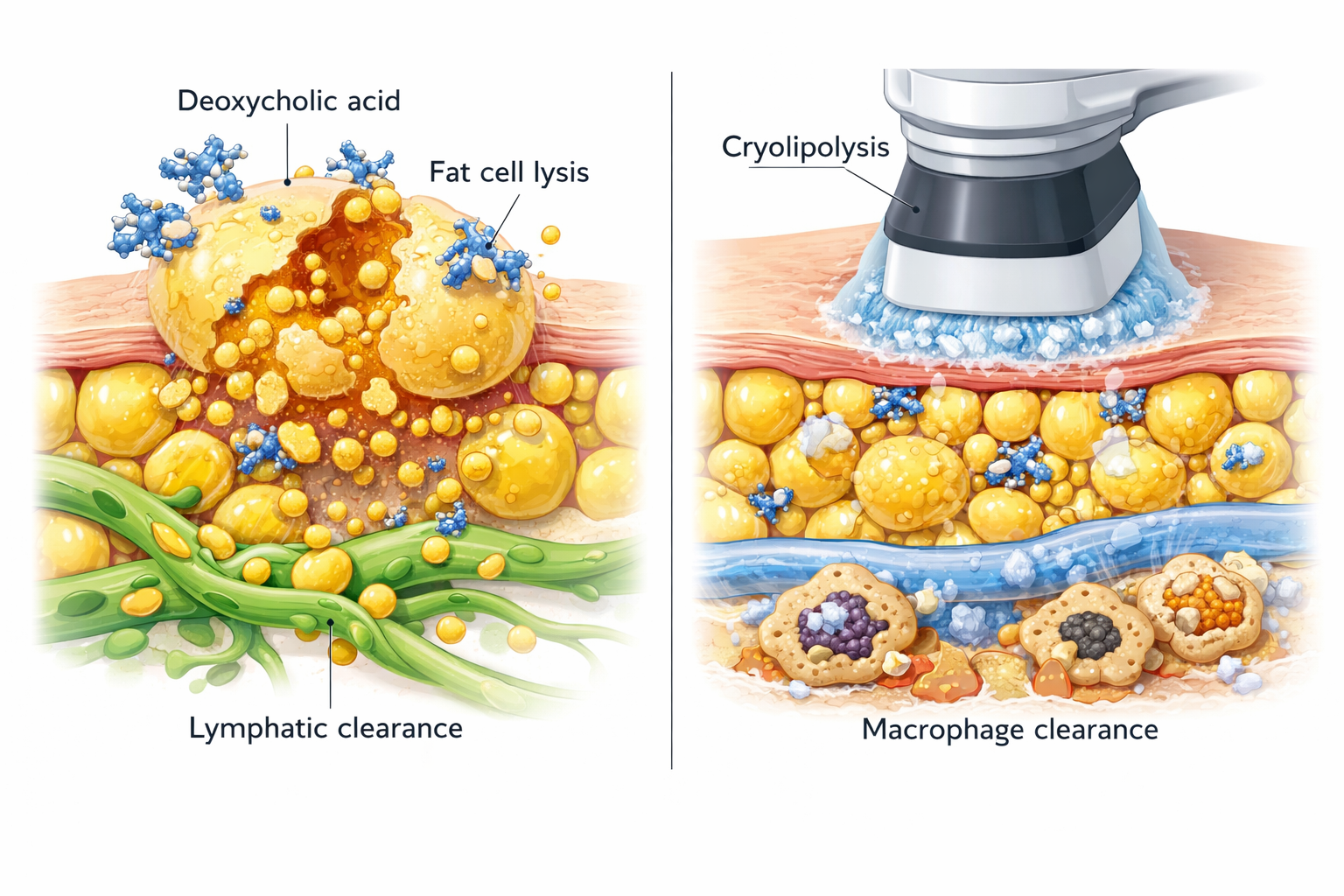
With CoolSculpting, the cooling applicator draws the tissue into a cup and applies a sustained, controlled temperature that triggers a process called apoptosis — a form of programmed cell death — in the fat cells. The cells are not immediately destroyed; rather, they undergo a gradual inflammatory process over the following weeks, during which macrophages (immune cells) engulf and remove the cellular debris. The result is a progressive reduction in the fat layer in the treated area.
Both mechanisms result in the permanent destruction of fat cells in the treated area. This means the cells themselves do not return — but remaining fat cells in the body can still enlarge if a person gains weight, which can diminish the results over time.
Treatment Areas: Where Each Option Works Best
One practical advantage of fat dissolving injections is their adaptability to very small or anatomically awkward areas. Because the solution is delivered through fine needles, a qualified aesthetic practitioner can precisely target localised fat deposits that may be too small for a CoolSculpting applicator to effectively reach. Common treatment areas include:
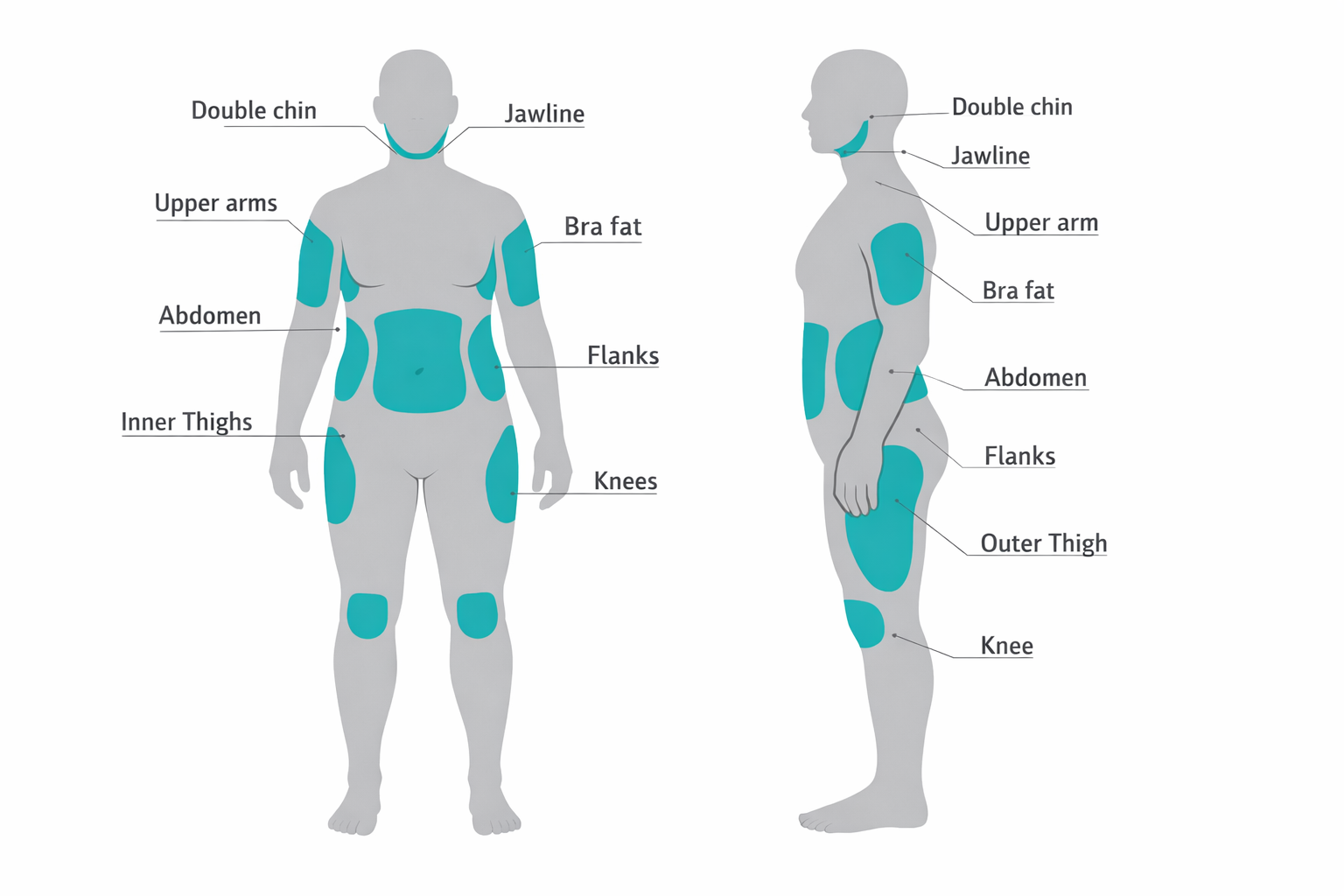
- Submental fat (double chin) — one of the most frequently treated areas with injection lipolysis; Kybella is specifically FDA-approved for this indication
- Abdomen — particularly small, localised pockets rather than larger areas of fat
- Flanks and love handles
- Inner and outer thighs
- Upper arms (bat wings)
- Bra fat
- Knees — an area that CoolSculpting applicators struggle to reach effectively
- Jawline — for contouring and definition
CoolSculpting covers many of the same areas but relies on applicators of various sizes and shapes, which means treatment suitability depends partly on whether the area can be drawn into the applicator. Larger, more defined pockets of subcutaneous fat on the abdomen and flanks tend to respond particularly well to CoolSculpting. The under-chin area is also treatable with a specific smaller applicator.
Who May Be Suitable — and Who May Not
Both treatments are designed for non-surgical body contouring in people who are already close to their target weight. They are not substitutes for weight management and will not produce meaningful results in people with large amounts of excess fat or a high BMI.
A suitable candidate for either treatment is typically someone who:
- Is at or near a healthy, stable weight
- Has one or more localised fat deposits that do not respond to diet or exercise
- Has realistic expectations about the degree of reduction achievable
- Does not have active infection or inflammation in the planned treatment area
- Is not pregnant or breastfeeding
- Does not have a clotting disorder or is not taking anticoagulants (particularly relevant for injections)
Fat dissolving injections are generally not suitable for people with autoimmune conditions affecting fat tissue, significant liver or kidney impairment, or known allergy to any component of the formulation. For the submental area specifically, a thorough assessment of neck anatomy is essential — previous neck surgery, swallowing difficulties, or certain thyroid conditions may affect suitability.
CoolSculpting is contraindicated in people with cold-related conditions such as cryoglobulinaemia, cold agglutinin disease, or paroxysmal cold haemoglobinuria, as well as those with Raynaud’s disease. A medically-led consultation and thorough assessment is essential before either treatment to ensure the approach is appropriate for the individual.
Side Effects and Risks: What to Be Aware Of
Both treatments carry their own side effect profiles, and it is important to understand these before making a decision rather than assuming either option is without meaningful risk.
Fat Dissolving Injections: Side Effects and Risks
Common side effects following injection lipolysis include swelling, bruising, redness, tenderness, and a warm or burning sensation at the injection site. These are expected reactions and typically resolve within a few days to two weeks. Swelling can be pronounced — particularly in the submental area — and patients should be prepared for this as part of the recovery experience rather than a sign of a problem.
Less common but more serious risks include temporary or prolonged numbness, hard lumps or nodules beneath the skin, and — in the chin and jaw area — temporary or, rarely, prolonged difficulty swallowing due to the proximity of nerves. Nerve injury is a recognised risk of submental injections when performed without adequate anatomy knowledge, which is one of the strongest arguments for choosing a highly experienced, medically qualified injector. There is also a risk of infection if injections are performed in unsterile conditions or by unqualified providers.
CoolSculpting: Side Effects and Risks
CoolSculpting’s common side effects include temporary redness, bruising, numbness, aching, cramping, and a pulling or pinching sensation during the treatment itself. These typically resolve within days to weeks. A rarer but clinically important risk is paradoxical adipose hyperplasia — a condition in which, instead of shrinking, the treated fat tissue enlarges and hardens in response to the cooling. This occurs in a small percentage of cases (estimated at less than 1%, though some real-world data suggests it may be somewhat more common) and typically requires surgical intervention such as liposuction to correct. It is more commonly reported in male patients and those treated on the abdomen, though it can occur in any area. Patients should be clearly informed of this possibility before proceeding.
Results: What to Expect and When
Neither treatment produces immediate visible results. Fat cell destruction is followed by a gradual clearance process, and the timeline differs slightly between the two approaches.
With fat dissolving injections, initial swelling in the days after treatment can temporarily make the area appear larger before reduction becomes visible. Meaningful fat reduction typically becomes apparent over four to eight weeks as the lymphatic system clears the treated cells. Because a treatment course usually involves multiple sessions, the full outcome is generally assessed several weeks after the final session. Most patients require between two and six sessions, spaced four to six weeks apart, depending on the volume of fat being treated, the area, and the formulation used.
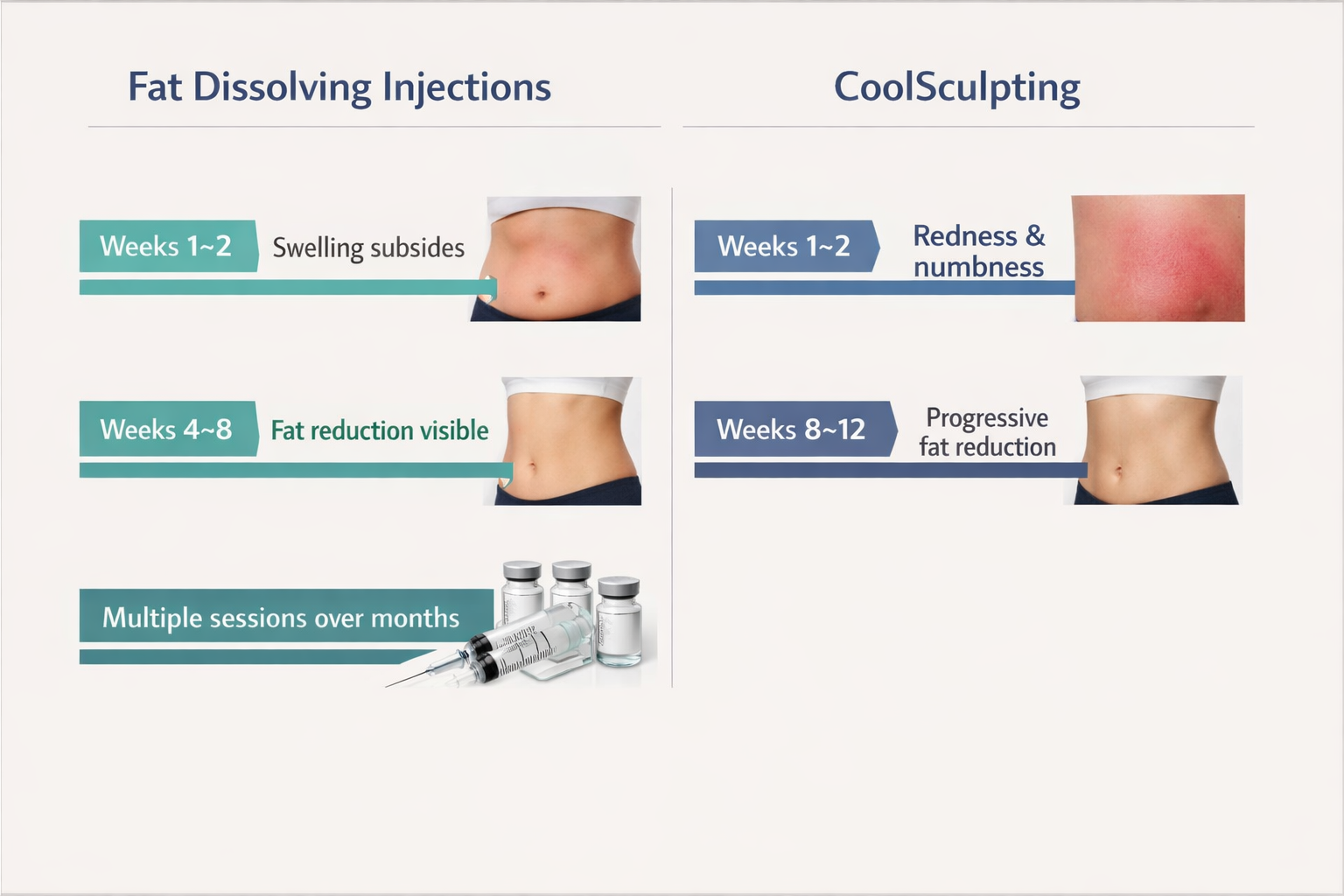
With CoolSculpting, results develop over eight to twelve weeks following each session, with some patients continuing to see gradual improvement beyond this point. The number of sessions needed depends on the area and the degree of reduction desired. One session per area may be sufficient for some patients, while others may benefit from a second session.
In both cases, results are generally long-lasting provided the patient maintains a stable weight. The treated fat cells are permanently destroyed, meaning those specific cells do not regenerate. However, if significant weight is gained after treatment, remaining fat cells elsewhere in the body — and any remaining cells in the treated area — can enlarge, which may reduce the visual benefit of the procedure.
A Note on Combining Both Treatments
One approach that is underexplored in most patient guides is the possibility of using CoolSculpting and fat dissolving injections in a staged or complementary way. For example, CoolSculpting may be used first to achieve a general volume reduction in a larger area, and injection lipolysis used subsequently for precise fine-tuning of smaller remaining pockets — particularly in areas that are harder to reach with the applicator. Conversely, a patient with a small, defined area of concern may find injections alone are sufficient, while someone with a broader area of subcutaneous fat may benefit more from cryolipolysis as a first step.
Combining treatments is not appropriate for everyone and should only be considered following a thorough assessment by a qualified practitioner who can evaluate the specific anatomy, volume of fat, and overall treatment goals. There is no standardised protocol for combination approaches, and decisions should be made on a case-by-case basis.
Cost: What to Realistically Budget
Cost varies significantly depending on the area being treated, the number of sessions required, the product or device used, and the clinic’s location and experience level. In the UK, fat dissolving injection sessions typically range from approximately £150 to £600 per session depending on the area, with a full treatment course often costing between £400 and £1,800 or more. CoolSculpting sessions tend to be priced per applicator cycle, with individual cycles typically ranging from £300 to £700, and many patients requiring multiple cycles across different areas.
Because both treatments require more than one session in many cases, it is important to ask for a realistic estimate of the full treatment course cost during consultation rather than focusing on the per-session price. Unusually low pricing — particularly for injectable treatments — can be an indicator of inadequate training, unregulated products, or unsafe practice environments.
Choosing a Qualified Provider: Why It Matters
The safety and effectiveness of both treatments depend heavily on the skill and knowledge of the person performing them. Fat dissolving injections carry particular risk when administered by inadequately trained practitioners — incorrect injection depth, poor anatomical knowledge, or use of unverified products can result in irregular fat loss, prolonged nerve effects, or infection. When seeking treatment, patients should look for a practitioner with relevant medical qualifications, demonstrable training in injectables, experience with the specific product being used, and a clinical setting that allows for proper assessment and follow-up.
Red flags include practitioners who do not conduct a thorough pre-treatment consultation, who cannot clearly explain the product formulation and its regulatory status, who do not discuss risks and realistic expectations, or who operate from non-clinical settings without appropriate facilities. For CoolSculpting, ensure the device being used is genuine and operated by someone trained in its application — suboptimal device placement affects both results and risk.
Frequently Asked Questions
Are the results of fat dissolving injections or CoolSculpting permanent?
The fat cells destroyed by either treatment do not regenerate. In that sense, the reduction in those specific cells is permanent. However, if you gain a significant amount of weight after treatment, remaining fat cells throughout the body — including in the treated area — can enlarge, which may reduce the visible benefit. Maintaining a stable weight through diet and activity is important for sustaining results from both treatments.
Which treatment is more painful?
Experiences vary between individuals, but fat dissolving injections typically involve a burning or stinging sensation during administration that subsides relatively quickly, followed by soreness and swelling for several days. CoolSculpting involves an intense cold sensation and a pulling feeling from the applicator, which most patients tolerate reasonably well — the area becomes numb quite quickly during the cooling phase. Post-treatment, CoolSculpting can cause aching and cramping as sensation returns. Neither treatment is generally described as severely painful, but both involve meaningful discomfort, particularly in the submental area for injections.
Can fat dissolving injections help with loose skin?
Some formulations — particularly those containing phosphatidylcholine or certain deoxycholic acid combinations — may stimulate fibroblasts and encourage some degree of collagen production, which could improve skin firmness to a modest degree. This is a secondary and inconsistent effect rather than a primary outcome, and fat dissolving should not be considered a skin tightening treatment. Patients with significant skin laxity may need to discuss additional options with their practitioner.
What does paradoxical adipose hyperplasia mean, and how common is it?
Paradoxical adipose hyperplasia is a complication specific to cryolipolysis in which the treated fat tissue unexpectedly grows and hardens rather than reducing. It is thought to be caused by the fat cells proliferating in response to the cold stimulus in susceptible individuals. It is considered a rare complication, though the exact incidence is debated in the literature. When it occurs, it typically requires treatment with liposuction or other surgical methods. Patients should be clearly informed about this risk before CoolSculpting treatment.
How many sessions will I need?
For fat dissolving injections, most patients need between two and six sessions per area, spaced four to six weeks apart. CoolSculpting typically requires one to three sessions per area. The exact number depends on the amount of fat present, the area treated, the degree of reduction desired, and how the individual responds to treatment. A realistic session estimate should be provided during your consultation rather than after the first treatment.
Can both treatments be used on the same area?
In some cases, yes — using CoolSculpting for initial volume reduction followed by injection lipolysis for fine-tuning of smaller remaining areas is an approach some clinicians use. However, this should only be considered with a significant gap between treatments and only when clinically appropriate. There is no standard protocol for combining these treatments, and individual assessment is essential.
Is off-label use of fat dissolving products safe?
Many fat dissolving products are used off-label — that is, in body areas or for indications not specifically covered by the product’s licensed approval. Off-label use is legal and common in aesthetic medicine and does not inherently mean unsafe practice. However, it does place greater responsibility on the practitioner to have the relevant training, knowledge of the product, and understanding of the anatomy involved. Patients should ask whether the specific product is being used within or outside its licensed indication and what evidence supports its use in the intended area.
Fat Dissolving or CoolSculpting: Finding the Right Fit for Your Goals
Neither fat dissolving injections nor CoolSculpting is universally superior — each has genuine strengths and meaningful limitations, and the better choice depends on your specific anatomy, goals, budget, and tolerance for the different experiences each treatment involves.
Injection lipolysis tends to suit people with smaller, more precisely defined localised fat deposits, particularly in areas that are harder to treat with a device applicator — such as the knees, jawline, or very small pockets beneath the chin. It also offers flexibility for fine-tuning and may provide a modest secondary benefit in terms of skin quality for some formulations. The trade-off is a longer treatment course, more pronounced post-treatment swelling, and risks that are strongly dependent on the skill and anatomy knowledge of the injector.
CoolSculpting may be preferable for larger or more defined subcutaneous fat areas — particularly the abdomen and flanks — where the applicator can achieve good contact and a meaningful volume reduction per session. It avoids needles entirely, which is relevant for patients with needle aversion. However, patients should be informed about the rare but significant risk of paradoxical adipose hyperplasia and should ensure they are treated with a genuine, properly maintained device by a trained provider.
Both treatments are appropriate only for people who have realistic expectations, are at or near a stable weight, and have localised fat deposits rather than generalised excess fat. The most important first step is a thorough medically-led consultation with a qualified aesthetic practitioner who can assess your anatomy, discuss your goals honestly, and recommend the approach most likely to deliver a meaningful result safely.
