

Lip filler is one of the most commonly requested aesthetic treatments, yet it's also one of the most misunderstood. Whether you're curious about subtle volume enhancement, improved lip symmetry, or addressing age-related thinning, understanding what the treatment actually involves — including its realistic benefits, limitations, and risks — is essential before booking a consultation. This guide covers everything a prospective patient needs to know, from how lip filler works to what recovery looks like and when results may appear.
Key Takeaways
- Lip filler most commonly uses hyaluronic acid, a substance naturally found in the body, to add volume, shape, or definition to the lips.
- Results are temporary, typically lasting between six and twelve months depending on the product used, the amount injected, and individual metabolism.
- Common side effects include swelling, bruising, and tenderness; serious complications are uncommon but possible, particularly when treatment is performed by an unqualified injector.
- Hyaluronic acid lip filler can be dissolved with an enzyme called hyaluronidase, which provides a degree of reversibility not available with all filler types.
- A thorough consultation with a qualified medical professional is important for assessing suitability, discussing goals, and minimising risk.
What Is Lip Filler?
Lip filler is a non-surgical injectable treatment designed to alter the size, shape, or definition of the lips. The vast majority of lip fillers used in clinical practice today are based on hyaluronic acid (HA), a naturally occurring polysaccharide found in connective tissue, skin, and joints. Hyaluronic acid attracts and retains water molecules, which is what gives HA-based fillers their volumising and hydrating properties when injected into lip tissue.
Several brands of hyaluronic acid filler are used for lip augmentation, including Juvederm, Restylane, Belotero, and Teosyal, among others. Each product has a slightly different gel consistency, cross-linking density, and rheological profile — meaning they behave differently in tissue and may be selected by a practitioner based on the specific outcome being sought, such as subtle hydration versus more defined volume. The choice of product is a clinical decision that should be made by a qualified injector based on individual anatomy and treatment goals.
Older filler materials such as permanent or semi-permanent fillers (for example, silicone or certain calcium hydroxylapatite products) are occasionally encountered but are generally not recommended for lip augmentation due to a less favourable risk profile and the absence of reversibility. Hyaluronic acid remains the standard of care for lip enhancement in most clinical settings.
How Does Lip Filler Work?
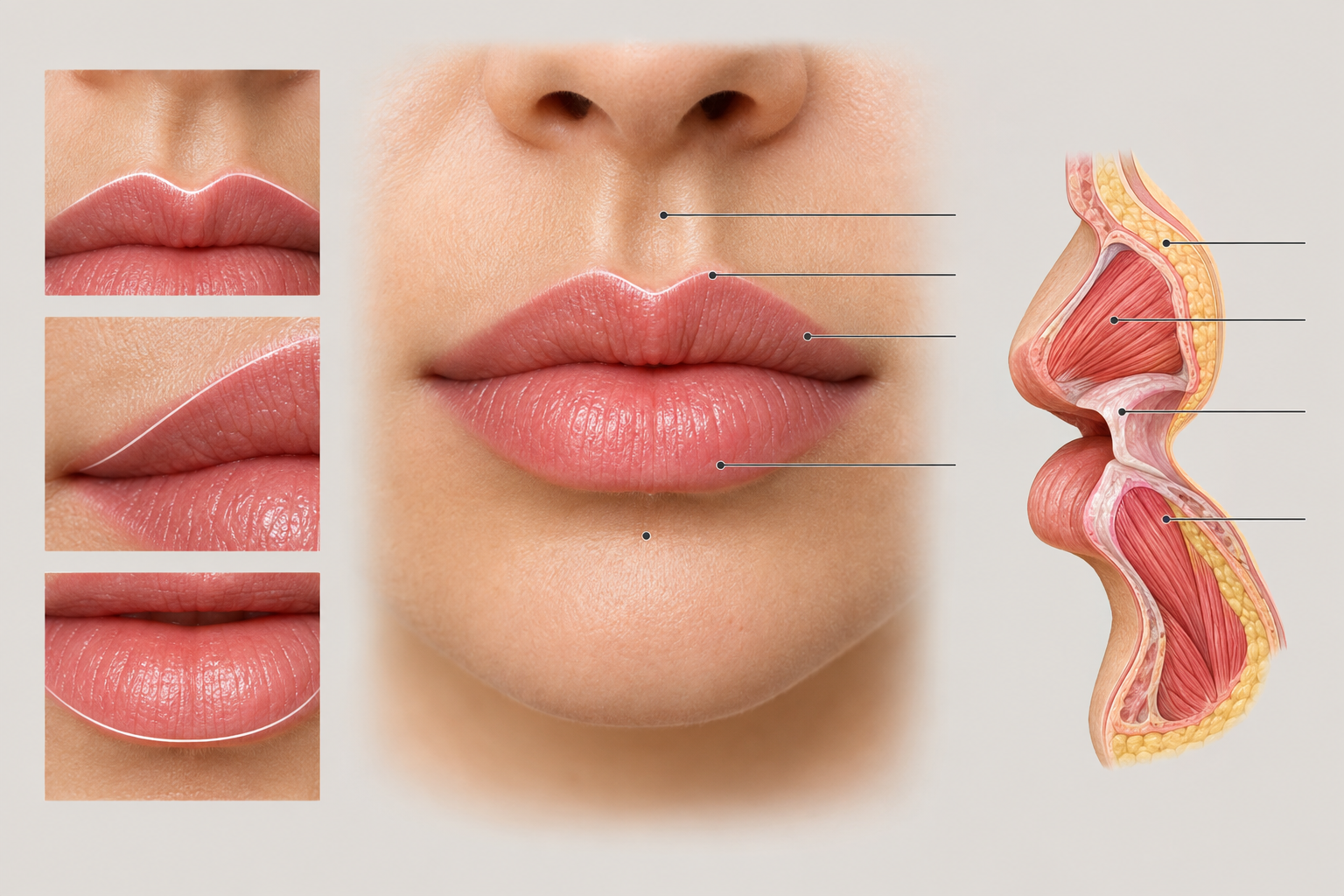
When hyaluronic acid gel is injected into the lips, it physically occupies space within the tissue, adding volume and altering the contour of the lip border, body, or cupid's bow depending on where it is placed. The gel also draws in water from surrounding tissue, which contributes to the plumping effect. Because hyaluronic acid is biocompatible — meaning the body recognises it as a familiar substance — it integrates relatively well into lip tissue without triggering a significant immune response in most patients.
The injector's technique plays a significant role in the outcome. Filler can be placed using a fine needle or a blunt-tipped cannula, and the depth, location, and volume of each injection point are determined by the practitioner based on the patient's anatomy and desired result. Techniques vary between practitioners and are adapted to individual lip structure, which is why results can differ considerably between clinics even when the same product is used.
Over time, the body gradually breaks down hyaluronic acid through enzymatic processes, which is why lip filler results are temporary. The rate of breakdown varies between individuals and is influenced by factors such as metabolism, the specific product used, and the volume injected.
What Can Lip Filler Address?
Lip filler is used for a range of aesthetic concerns, and understanding which goals it can realistically address helps set appropriate expectations before treatment.
- Volume enhancement: Adding fullness to naturally thin lips or lips that have lost volume with age.
- Lip border definition: Sharpening the vermilion border (the edge between the lip and surrounding skin) for a more defined appearance.
- Cupid's bow enhancement: Accentuating the double curve of the upper lip.
- Lip symmetry: Addressing mild asymmetry between the upper and lower lip or between the left and right sides.
- Philtrum and lip proportion: Adjusting the ratio between the upper and lower lip, or improving the appearance of a lengthened philtrum (the area between the nose and upper lip) that can develop with age.
- Perioral lines: Some practitioners use small amounts of filler to soften fine lines around the mouth, though this is often combined with other treatments such as botulinum toxin for better results.
- Hydration and texture: Certain softer HA products are used primarily to improve lip hydration and skin quality rather than add significant volume.
Lip filler is not a treatment for all lip concerns. It cannot address concerns related to lip pigmentation, cold sore scarring, or significant structural asymmetry caused by underlying anatomy. A consultation with a qualified practitioner is the appropriate way to determine whether lip filler is likely to achieve a specific goal.
What Happens During a Lip Filler Appointment?
A lip filler appointment typically begins with a consultation, which may take place at the same visit or as a separate session beforehand. During the consultation, the practitioner should review the patient's medical history, discuss aesthetic goals, explain the treatment options available, and outline the risks and expected outcomes. Photographs are often taken for clinical records.
Before the injections begin, a topical anaesthetic cream is usually applied to the lips and surrounding area and left for approximately fifteen to thirty minutes to reduce discomfort. Many hyaluronic acid lip fillers also contain lidocaine — a local anaesthetic — within the gel itself, which further reduces discomfort during injection. Some practitioners offer a dental block (a local anaesthetic injection similar to those used in dentistry) for patients who prefer a more complete numbing effect.
The injection process itself typically takes between fifteen and thirty minutes. The practitioner will inject small amounts of filler at multiple points, pausing to assess symmetry and volume throughout. Patients are usually shown a mirror during the appointment so they can provide feedback. Mild pressure or massage may be applied after injection to distribute the product evenly.
After treatment, the practitioner will provide aftercare instructions and discuss what to expect in the days following the appointment. Most patients are able to return to normal activities the same day, though some swelling and tenderness is expected.
Does Lip Filler Hurt?
Discomfort during lip filler treatment is generally manageable for most patients, particularly with the use of topical anaesthetic and lidocaine-containing filler products. The lips are a sensitive area, and some patients describe a mild stinging or pressure sensation during injection. The level of discomfort varies between individuals and depends on pain tolerance, the technique used, and the number of injection points required.
Patients who are particularly sensitive to discomfort may wish to discuss a dental nerve block with their practitioner before the appointment. This approach numbs the lips more completely but involves an additional injection and may cause temporary numbness that persists for a short period after the procedure.
Recovery and Downtime After Lip Filler
Lip filler has minimal downtime compared to surgical lip procedures, but the immediate post-treatment period does involve some predictable side effects that patients should be prepared for.
Swelling is the most common and expected response. The lips may appear significantly more swollen than the intended final result in the first twenty-four to forty-eight hours after treatment. This is a normal inflammatory response and does not reflect the final outcome. Swelling typically subsides substantially within three to five days, with residual mild swelling resolving over one to two weeks.
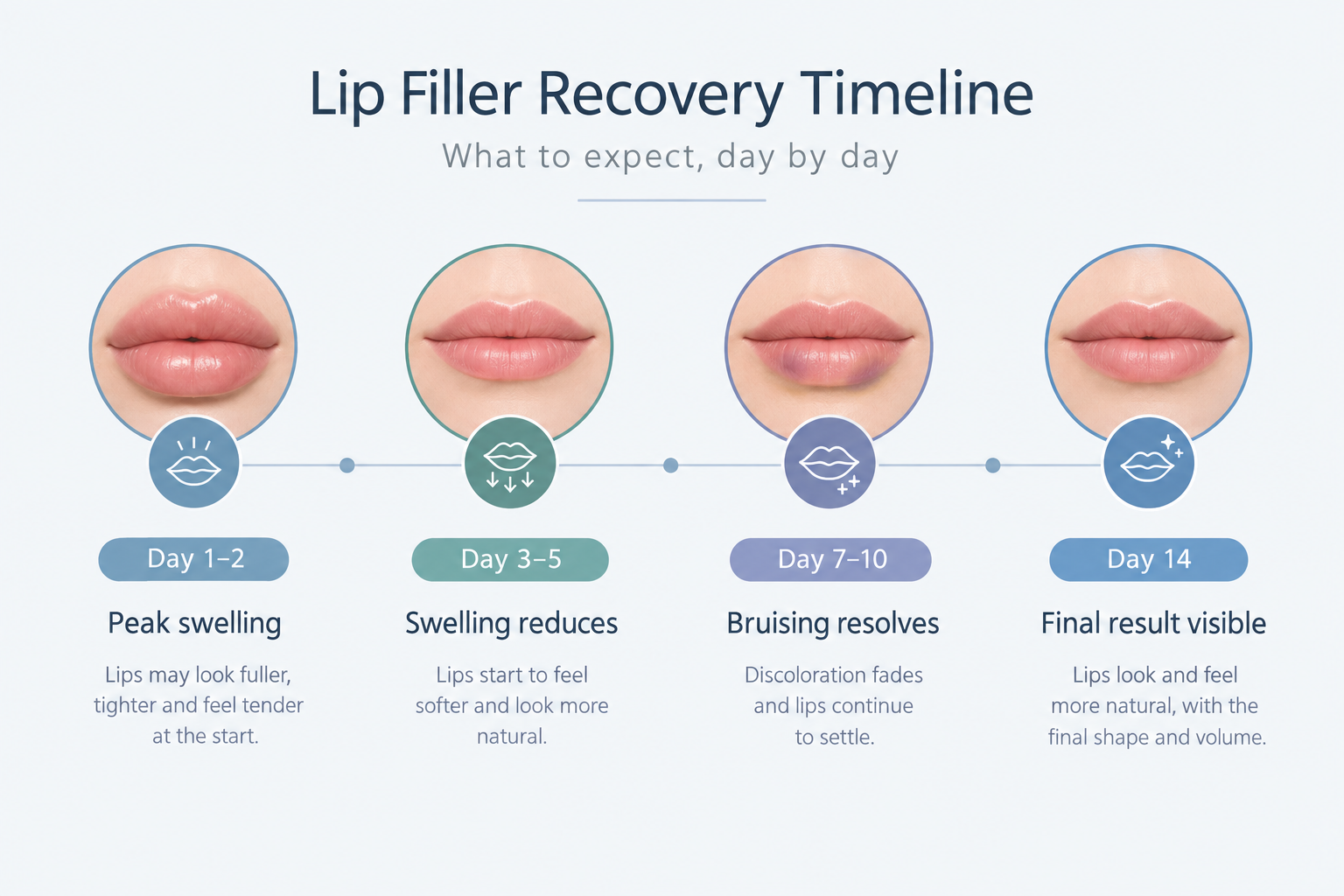
Bruising is also common and may appear at injection sites. The lips have a rich blood supply, which makes bruising more likely in this area than in some other treatment sites. Bruising can range from minor to more noticeable and may take up to ten days to fully resolve. Avoiding blood-thinning medications and supplements (such as aspirin, ibuprofen, fish oil, and vitamin E) in the days before treatment, where medically appropriate, may help reduce bruising risk — but patients should always consult their prescribing doctor before stopping any medication.
Tenderness and firmness at the injection sites are normal in the first few days. The lips may feel slightly firm or lumpy initially as the filler settles into the tissue. This usually resolves within one to two weeks as the product integrates and swelling reduces.
Patients are generally advised to avoid strenuous exercise, excessive heat (such as saunas or hot baths), alcohol, and significant sun exposure for twenty-four to forty-eight hours after treatment. Kissing and applying significant pressure to the lips is also typically discouraged for the first twenty-four hours.
When Do Lip Filler Results Appear and How Long Do They Last?
The final result of lip filler treatment is not immediately visible due to post-injection swelling. Most patients see a clearer indication of their result after five to seven days, with the full settled outcome typically visible at two weeks. A follow-up appointment at this stage allows the practitioner to assess the result and determine whether any refinement is needed.
Hyaluronic acid lip filler results are temporary. Most patients can expect results to last between six and twelve months, though this varies considerably depending on the specific product used, the volume injected, individual metabolism, and lifestyle factors. Some patients find that results in the lips tend to be shorter-lived than in other facial areas, partly because the lips are a highly mobile area subject to constant movement during speaking and eating.
Repeat treatments are required to maintain results. Some practitioners suggest that with repeated treatments over time, the interval between top-up appointments may gradually extend, though this is not guaranteed and individual responses vary.
Risks and Side Effects of Lip Filler
Lip filler is a medical procedure and carries risks that patients should understand before consenting to treatment. Most side effects are mild and temporary, but serious complications, while uncommon, can occur.
Common and Expected Side Effects
- Swelling and puffiness, particularly in the first 48 hours
- Bruising at injection sites
- Tenderness and sensitivity
- Temporary firmness or lumpiness as the filler settles
- Mild asymmetry in the immediate post-treatment period
Less Common Side Effects
- Prolonged swelling beyond two weeks
- Visible or palpable filler nodules
- Tyndall effect (a bluish discolouration visible through thin skin if filler is placed too superficially)
- Reactivation of cold sores (herpes simplex) in patients with a history of oral herpes — antiviral prophylaxis may be recommended before treatment in susceptible individuals
- Allergic or hypersensitivity reactions
Serious but Uncommon Complications
Vascular occlusion is the most serious potential complication of lip filler. This occurs when filler is inadvertently injected into or compresses a blood vessel, restricting blood flow to surrounding tissue. In the lip and perioral area, vascular occlusion can cause tissue damage if not recognised and treated promptly. Symptoms may include severe pain, blanching (whitening of the skin), or a dusky discolouration at or near the injection site. Immediate treatment with hyaluronidase — the enzyme that dissolves hyaluronic acid filler — is required in this situation. This is one of the key reasons why lip filler should only be performed by a qualified medical professional who is trained to recognise and manage this complication.
Infection, granuloma formation (a chronic inflammatory reaction to the filler), and biofilm-related complications are also possible, though uncommon. Delayed-onset nodules can occasionally occur weeks or months after treatment, sometimes triggered by illness or dental procedures, and should be assessed by a qualified practitioner.
Who May Be Suitable for Lip Filler?
Lip filler may be suitable for adults who are in good general health, have realistic expectations about the outcome, and have a specific aesthetic concern that the treatment can reasonably address. Suitable candidates are typically those who want to enhance lip volume, improve definition, or address mild asymmetry, and who understand that results are temporary and maintenance treatments will be required.
A thorough medical consultation is necessary to assess individual suitability. Factors that a practitioner will consider include current medications, medical history, previous filler treatments, and the patient's anatomy.
Who May Not Be Suitable for Lip Filler?
Lip filler is not appropriate for everyone. Contraindications and cautions include:
- Pregnancy and breastfeeding: Lip filler is generally not recommended during pregnancy or while breastfeeding due to insufficient safety data.
- Active infection or inflammation: Treatment should not be performed in the presence of active skin infection, cold sores, or significant inflammation in or around the treatment area.
- Bleeding disorders or anticoagulant therapy: These may increase the risk of bruising and bleeding complications.
- Known allergy to hyaluronic acid or lidocaine: Patients with known hypersensitivity to filler components should not receive treatment.
- Autoimmune conditions: Certain autoimmune conditions may affect healing or increase the risk of inflammatory reactions; individual assessment is required.
- Unrealistic expectations: Patients who expect results that are not achievable with filler alone, or who have body dysmorphic disorder, are generally not considered suitable candidates.
- Previous permanent filler: The presence of permanent or semi-permanent filler in the lips from previous treatments can complicate new injections and requires careful assessment.
The Importance of Choosing a Qualified Practitioner
The safety and outcome of lip filler treatment are significantly influenced by the qualifications, training, and experience of the person performing the injections. Lip filler should be administered by a qualified medical professional — such as a doctor, dentist, or nurse prescriber with specific training in facial anatomy and injectable treatments — who is able to manage complications if they arise.
Patients should be cautious of treatments offered at very low prices, in non-clinical settings, or by practitioners who cannot demonstrate relevant qualifications and experience. The ability to recognise and treat a vascular occlusion promptly, for example, requires both clinical training and access to hyaluronidase — neither of which can be assumed in all settings.
Before booking, it is reasonable to ask a practitioner about their qualifications, their experience with lip filler specifically, what products they use, and what their protocol is in the event of a complication.
Alternatives to Lip Filler
Lip filler is not the only option for patients interested in improving the appearance of their lips. Depending on the specific concern, the following alternatives may be worth discussing with a qualified practitioner:
- Botulinum toxin (lip flip): A small amount of botulinum toxin injected into the orbicularis oris muscle above the upper lip can cause the lip to roll slightly outward, creating the appearance of a fuller upper lip without adding volume. This is a subtle effect and is not equivalent to filler in terms of volume change, but may suit patients who want a minimal enhancement.
- Profhilo or skin booster injections: These injectable treatments use highly fluid hyaluronic acid to improve skin hydration and quality in the perioral area rather than add structural volume. They may be appropriate for patients primarily concerned with lip texture and hydration rather than size.
- Surgical lip augmentation: Procedures such as a lip lift (which shortens the philtrum and increases the visible height of the upper lip) or fat transfer offer more permanent results but involve surgical risks, recovery time, and greater cost. These are typically considered when non-surgical options have not achieved the desired outcome.
- Makeup and cosmetic techniques: Lip liner, overlining, and certain lip plumping products can create the appearance of fuller lips without any medical intervention. While results are temporary and require daily application, these options carry no medical risk.
Frequently Asked Questions
Can lip filler be dissolved if I don't like the result?
Hyaluronic acid lip filler can be dissolved using an injectable enzyme called hyaluronidase. This is one of the advantages of HA-based fillers over permanent alternatives. Dissolution is not always instantaneous and may require more than one treatment session, but it does provide a meaningful degree of reversibility. Hyaluronidase is also used as an emergency treatment for vascular occlusion.
How much lip filler do I need?
The appropriate volume of filler depends on individual anatomy, the starting point, and the desired outcome. Many practitioners begin with a conservative amount — often 0.5ml to 1ml — particularly for first-time patients, and assess the result before considering additional volume. Starting conservatively reduces the risk of an overfilled appearance and allows the patient to adjust their expectations based on the initial result.
Will lip filler make my lips look unnatural?
The risk of an unnatural result is real but largely depends on the volume used, the technique applied, and the practitioner's aesthetic judgement. Overfilling — particularly when repeated over multiple sessions without allowing previous filler to fully break down — is a common cause of the exaggerated appearance sometimes associated with lip filler. A skilled practitioner working within appropriate volume limits and with a clear understanding of facial proportions is more likely to achieve a natural-looking result.
Does lip filler affect lip movement or sensation?
Lip filler should not permanently affect lip movement or sensation when performed correctly. Temporary numbness may occur immediately after treatment due to the lidocaine in the filler or from a dental block, but this resolves as the anaesthetic wears off. Significant or persistent changes in sensation or movement are uncommon and should be assessed by the treating practitioner.
Can I have lip filler if I get cold sores?
A history of oral herpes (cold sores) is not an absolute contraindication to lip filler, but it does increase the risk of a cold sore outbreak being triggered by the treatment. Patients with a known history of cold sores should inform their practitioner before treatment. Antiviral prophylaxis (medication taken before the procedure to reduce the risk of an outbreak) is often recommended in this situation.
How soon after lip filler can I wear lipstick?
Most practitioners advise waiting at least twenty-four hours before applying makeup to the lips to reduce the risk of introducing bacteria to the injection sites. After this period, lipstick and other lip products can generally be used normally, provided the skin is intact and there are no open areas at the injection sites.
Is there a minimum age for lip filler?
In many countries, lip filler is restricted to adults aged eighteen and over. In the United Kingdom, for example, legislation introduced in 2021 prohibits the administration of cosmetic fillers to anyone under the age of eighteen. Patients should check the regulations applicable in their country and be cautious of any practitioner willing to treat minors.
Is Lip Filler the Right Choice for You?
Lip filler can be a well-tolerated and effective option for adults seeking to enhance lip volume, improve definition, or address age-related changes to the lip area. When performed by a qualified medical professional using an appropriate product and technique, the treatment can produce natural-looking results with manageable downtime. The reversibility of hyaluronic acid filler adds a degree of flexibility that makes it a reasonable starting point for patients who are uncertain about how much change they want.
At the same time, lip filler is a medical procedure with genuine risks, including the rare but serious possibility of vascular occlusion. Results are temporary, requiring ongoing maintenance to sustain, and outcomes vary between individuals. The practitioner's skill and training are among the most important factors in both safety and aesthetic outcome, making the choice of clinic and injector a decision that deserves careful consideration.
If you are considering lip filler, a consultation with a qualified medical professional is the appropriate next step. A good consultation should give you the opportunity to discuss your specific goals, understand what the treatment can and cannot achieve for your anatomy, and ask questions about the risks and aftercare involved. Approaching the decision with realistic expectations and a clear understanding of the process is the best foundation for a positive experience.
