
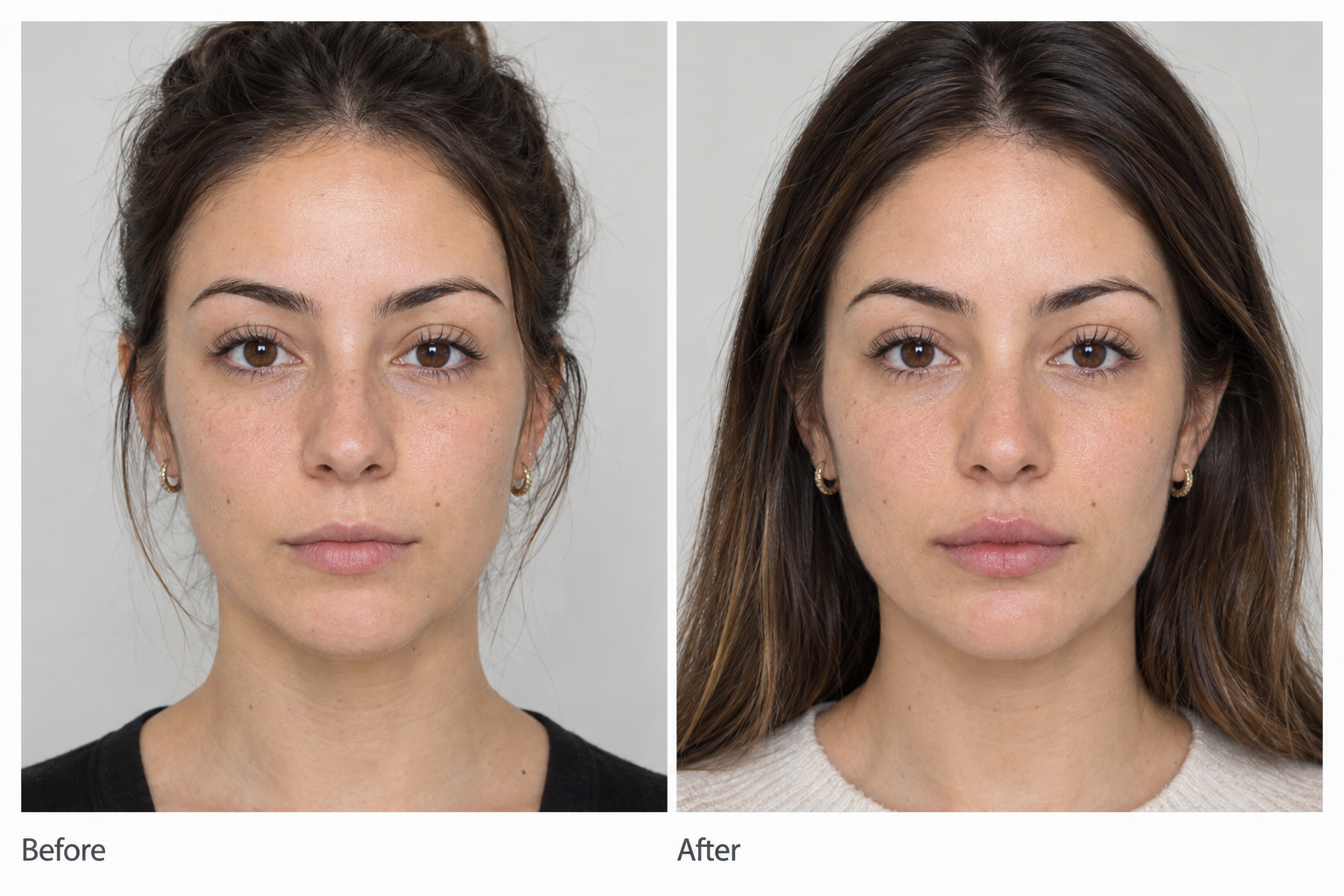

The lip flip is one of the most searched non-surgical lip treatments, largely because it promises a subtle enhancement without the volume associated with traditional lip filler. Understanding what actually changes before and after a lip flip — and what does not — is essential for setting realistic expectations before booking a consultation.
Key Takeaways
- A lip flip uses a small amount of botulinum toxin injected into the orbicularis oris muscle around the upper lip, causing it to relax and roll slightly outward, creating the appearance of a fuller upper lip without adding volume.
- Results are subtle; the lip flip changes the shape and posture of the upper lip rather than increasing tissue volume, making it most suitable for patients who want a natural-looking improvement.
- Visible changes typically appear within three to seven days, with full results usually evident by two weeks after treatment.
- Effects generally last between six and twelve weeks, which is shorter than most lip filler treatments, and maintenance appointments are required to sustain results.
- The lip flip is not a replacement for lip filler in patients seeking significant volume increase; a qualified practitioner can help determine which approach, or combination, may suit individual anatomy and goals.
What Is a Lip Flip?
A lip flip is a cosmetic injectable treatment that uses botulinum toxin — the same active ingredient found in brands such as Botox, Dysport, and Azzalure — to temporarily relax the muscle that encircles the mouth, known as the orbicularis oris. A small number of units are placed along the upper lip border, typically at the cupid's bow and the corners of the mouth. When the muscle relaxes, the upper lip rolls gently outward and upward, revealing slightly more of the pink mucosal tissue. The result is an impression of a fuller, more defined upper lip without injecting any filler material into the lip itself.
The treatment is distinct from lip filler, which uses hyaluronic acid to physically add volume and shape to the lip tissue. The lip flip adds no volume; it changes the resting position and posture of the upper lip. This distinction is central to understanding what before and after photographs actually show and whether the outcome is likely to match a patient's goals.
How the Lip Flip Works: The Mechanism Behind the Results
Botulinum toxin works by temporarily blocking the nerve signals that cause a muscle to contract. In the context of the lip flip, a precise, low-dose injection into the upper portion of the orbicularis oris reduces the muscle's ability to pull the upper lip inward and downward. With that inward pull reduced, the lip naturally rolls outward, a movement sometimes described as eversion. This eversion exposes more of the vermilion — the pink-red border of the lip — giving the appearance of increased lip height and definition.
Because the mechanism relies on muscle relaxation rather than tissue augmentation, the change is positional rather than volumetric. Patients who have a naturally thin upper lip, a lip that disappears when they smile, or a gummy smile may notice a meaningful visual difference. Patients who already have good lip volume but want more fullness may find the lip flip alone insufficient for their goals.
The orbicularis oris is also involved in speech, eating, and drinking, which is why some patients notice temporary functional changes — such as difficulty using a straw or pronouncing certain sounds — particularly in the first week after treatment. These effects are temporary and resolve as the botulinum toxin wears off.
Lip Flip Before and After: What Actually Changes
When reviewing lip flip before and after results, the most consistent change visible is an increase in the apparent height of the upper lip, particularly at the centre. The cupid's bow may appear more defined, and the upper lip may look slightly more projected when viewed from the side. In patients whose upper lip tends to thin or disappear when smiling, the lip flip can help maintain more visible lip tissue during expression.
What does not change is the overall volume or size of the lip. The lower lip is unaffected. The lip border does not become sharper in the way that lip liner or lip filler can create. Patients who compare their before and after photographs often describe the difference as natural-looking and subtle — which is precisely the appeal for many, but a potential disappointment for those expecting a more dramatic transformation.
Before and after photographs shared by clinics and patients online can vary considerably in quality, lighting, and angle, which can make results appear more or less significant than they are in person. A well-lit, consistent before and after image taken at the same angle and expression provides the most reliable comparison. Photographs taken mid-smile versus at rest will show different degrees of change, since the lip flip's effect on the smiling lip is one of its more noticeable outcomes.
Changes That Are Commonly Reported
- Increased visible height of the upper lip at rest
- Reduced lip thinning when smiling
- Slight reduction in the appearance of a gummy smile in some patients
- More defined cupid's bow contour
- A subtle upward curl at the lip corners in some cases
Changes That Are Not Expected
- Significant increase in lip volume or fullness
- Sharper lip border definition comparable to filler
- Any change to the lower lip
- Permanent or long-lasting structural change to lip anatomy
Timeline: When Do Lip Flip Results Appear?
Botulinum toxin does not produce immediate results. After a lip flip treatment, most patients begin to notice the early effects of muscle relaxation within three to five days. The upper lip may start to feel slightly different in movement before a visible change is apparent. Full results are generally visible by ten to fourteen days after the appointment, once the botulinum toxin has fully taken effect and the muscle has reached its new resting tone.
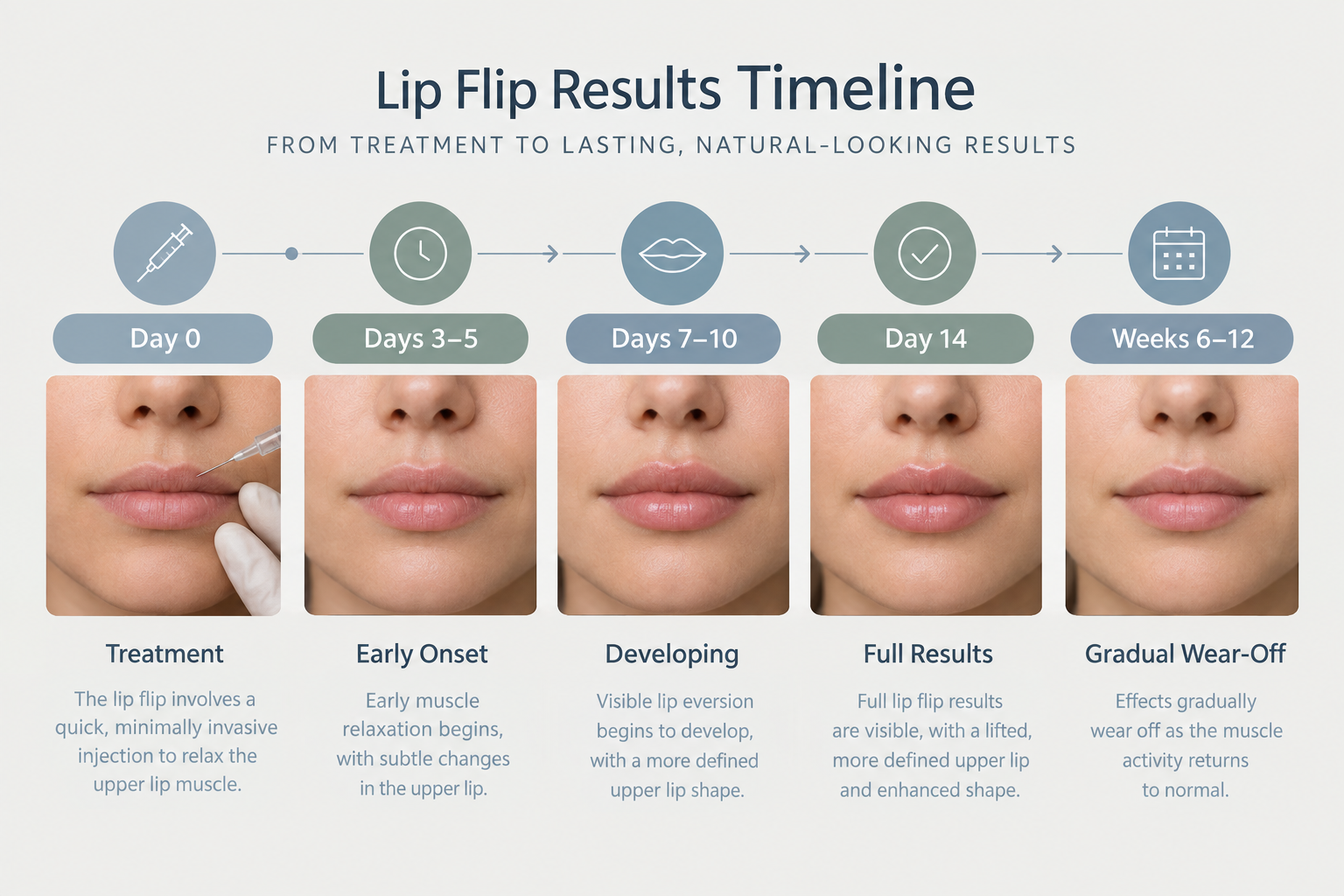
Some practitioners recommend a review appointment at two weeks to assess the outcome and determine whether any refinement is appropriate. This is particularly relevant for first-time patients, as individual response to botulinum toxin can vary based on muscle mass, metabolism, and the specific product used.
Patients should avoid making a final judgement on their results in the first few days, as the lip may look asymmetrical or feel unusual during the early onset phase. Temporary swelling or minor bruising at the injection sites can also affect the appearance in the first twenty-four to forty-eight hours.
How Long Do Lip Flip Results Last?
Lip flip results are temporary. The effects of botulinum toxin in this area typically last between six and twelve weeks, though individual variation is common. Several factors influence how long results are maintained, including the patient's metabolism, the number of units used, the specific botulinum toxin product administered, and how active the orbicularis oris muscle is in daily expression and speech.
This duration is notably shorter than the longevity typically associated with lip filler, which may last anywhere from six to eighteen months depending on the product and individual factors. Patients who want to maintain lip flip results will need repeat treatments approximately every two to three months. For some patients, this frequency is acceptable given the lower cost and minimal downtime of each appointment; for others, the maintenance requirement may make lip filler a more practical long-term option.
There is no evidence that repeated lip flip treatments cause permanent changes to lip shape or muscle function when performed by a qualified practitioner using appropriate doses. As the botulinum toxin metabolises, the orbicularis oris gradually regains its normal tone and the lip returns to its pre-treatment appearance.
The Treatment Experience: What to Expect at the Appointment
A lip flip appointment is typically brief, often completed within fifteen to thirty minutes including consultation and aftercare discussion. The treatment area is usually cleaned, and a topical numbing cream may be applied beforehand, though many patients find the injections tolerable without anaesthesia given the small number of injection points and low volume used.
The practitioner will assess the upper lip anatomy, discuss the patient's goals, and determine the appropriate placement and dose of botulinum toxin. The injections themselves take only a few minutes. Patients may notice a small amount of redness, swelling, or pinpoint bruising at the injection sites immediately after treatment, which generally resolves within a day or two.
Aftercare instructions typically include avoiding pressure on the treated area, refraining from strenuous exercise for twenty-four hours, and not lying face-down immediately after treatment. Patients are usually advised to avoid alcohol and blood-thinning medications in the days before treatment to reduce bruising risk, though specific guidance should come from the treating practitioner.
Risks and Side Effects
The lip flip carries a different risk profile from lip filler because no material is injected into the lip tissue itself. However, botulinum toxin treatments in this area are not without potential side effects, and patients should be aware of these before proceeding.
Common and Temporary Side Effects
- Temporary functional changes: Difficulty using a straw, whistling, or pronouncing certain consonants is common in the first one to two weeks as the orbicularis oris adjusts to reduced muscle tone. These effects resolve as the treatment wears off.
- Bruising and swelling: Minor bruising or swelling at injection sites is possible and usually resolves within a few days.
- Asymmetry: Slight asymmetry in the early days is not uncommon as the botulinum toxin takes effect unevenly. Most cases resolve by the two-week review.
Less Common Concerns
- Excessive muscle relaxation: If too much botulinum toxin is placed, the upper lip may appear overly flat or drooped, affecting both appearance and function more significantly. This resolves as the product wears off but highlights the importance of conservative dosing in this area.
- Unintended spread: Botulinum toxin can occasionally affect adjacent muscles if placement is imprecise, potentially affecting the smile or lip movement temporarily.
- Dissatisfaction with results: Because the lip flip produces subtle changes, some patients find the outcome less noticeable than expected. Unlike hyaluronic acid filler, botulinum toxin cannot be dissolved; patients must wait for the effects to wear off naturally.
Serious complications from lip flip treatment are rare when performed by a trained and experienced practitioner. Vascular complications, which are a recognised risk with lip filler injections, are not a primary concern with the lip flip since no filler material is injected into the lip tissue. However, any injectable treatment carries a small risk of infection, and patients should ensure treatment is performed in a clean clinical environment.
Who May Be Suitable for a Lip Flip
The lip flip may be worth discussing with a practitioner for patients who have one or more of the following characteristics or goals:
- A naturally thin upper lip that disappears or thins significantly when smiling
- A desire for subtle lip enhancement without added volume
- Mild gummy smile concerns, where the upper lip rises too high on smiling — though this indication requires careful clinical assessment
- Patients who have previously had lip filler and want to complement existing volume with improved lip posture
- Those who are new to cosmetic injectables and prefer a low-commitment, reversible-by-time option
Who May Not Be Suitable
The lip flip is unlikely to meet the goals of patients who want a significant increase in lip volume or a more defined lip border. It is also not appropriate for everyone from a medical standpoint. Patients who may not be suitable include those who:
- Are pregnant or breastfeeding
- Have a known allergy or sensitivity to botulinum toxin or any of its components
- Have a neuromuscular condition such as myasthenia gravis or Lambert-Eaton syndrome
- Are taking certain medications that may interact with botulinum toxin, including some antibiotics and muscle relaxants
- Have an active infection or skin condition in the treatment area
- Have unrealistic expectations about the degree of change achievable
A thorough consultation with a qualified practitioner is essential to assess individual suitability, medical history, and whether the lip flip, lip filler, or a combination approach is most appropriate for a patient's anatomy and goals.
Lip Flip vs Lip Filler: Understanding the Difference
The lip flip and lip filler are frequently compared because both aim to improve the appearance of the lips, but they work through entirely different mechanisms and produce different outcomes. Lip filler uses hyaluronic acid — a substance that attracts and retains water — to physically add volume, shape, and definition to the lip tissue. The lip flip uses botulinum toxin to change the resting position of the upper lip without adding any material to the lip itself.
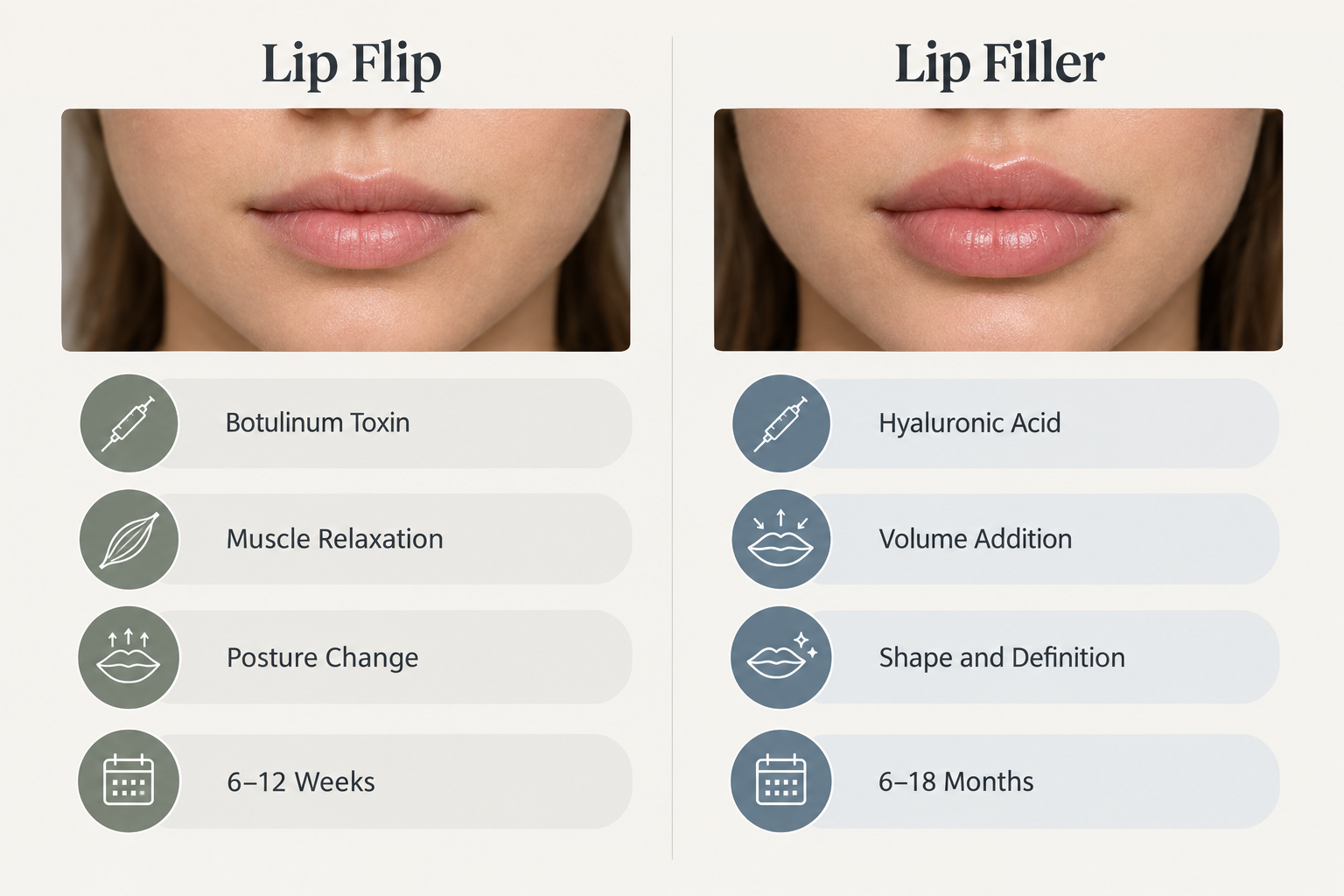
Lip filler is generally more appropriate for patients who want a noticeable increase in lip size, improved symmetry, or a more defined vermilion border. The lip flip is more appropriate for patients who want a subtle improvement in upper lip appearance, particularly the height and posture of the lip when smiling. Some patients benefit from a combination of both treatments, using filler to add volume and the lip flip to optimise the way the lip sits at rest and during expression. This combination approach should be discussed with a practitioner who can assess whether it is appropriate for individual anatomy.
From a longevity perspective, lip filler typically lasts considerably longer than the lip flip, making it a more practical option for patients who want sustained results without frequent maintenance appointments. The lip flip, however, involves no risk of filler-related complications such as migration, lumpiness, or the need for hyaluronidase dissolution, which some patients find reassuring.
Frequently Asked Questions
Does a lip flip hurt?
Most patients describe the lip flip as mildly uncomfortable rather than painful. The injections are made with a fine needle, and the number of injection points is small. Topical numbing cream can be applied beforehand to reduce discomfort. Individual pain tolerance varies, and the upper lip area can be sensitive, but the procedure is generally well tolerated.
Can I see lip flip results immediately after treatment?
No. Botulinum toxin does not produce instant results. The muscle relaxation that creates the lip flip effect develops gradually over three to seven days, with full results typically visible at the two-week mark. Any changes seen immediately after the appointment are more likely related to minor swelling at the injection sites rather than the intended treatment effect.
Will a lip flip make my lips look unnatural?
When performed with an appropriate dose by an experienced practitioner, the lip flip is designed to produce a subtle, natural-looking result. The risk of an unnatural appearance is generally associated with excessive dosing, which can over-relax the orbicularis oris and affect lip movement and expression. Conservative treatment and a two-week review appointment help minimise this risk.
Can I combine a lip flip with lip filler at the same appointment?
Some practitioners offer both treatments at the same appointment, while others prefer to stage them. The decision depends on individual anatomy, goals, and the practitioner's clinical judgement. Combining treatments can be appropriate for patients who want both volume and improved lip posture, but this should be discussed thoroughly during consultation.
How much does a lip flip cost compared to lip filler?
A lip flip typically uses a small number of botulinum toxin units and is generally less expensive per appointment than lip filler. However, because lip flip results last only six to twelve weeks compared to the longer duration of hyaluronic acid filler, the cumulative cost of maintaining lip flip results over time may be comparable to or exceed the cost of periodic filler treatments. Individual pricing varies by clinic, location, and product used.
Is the lip flip suitable for a gummy smile?
The lip flip may help reduce the appearance of a gummy smile in some patients by limiting how high the upper lip rises when smiling. However, gummy smile has several potential causes — including the position of the teeth, jaw structure, and the activity of multiple muscles — and botulinum toxin treatment for this concern requires careful clinical assessment to determine the most appropriate injection sites and whether the lip flip alone is sufficient.
What happens when the lip flip wears off?
As the botulinum toxin metabolises over six to twelve weeks, the orbicularis oris gradually regains its normal muscle tone and the upper lip returns to its pre-treatment appearance. There is no rebound effect or worsening of the lip's natural appearance. Patients who wish to maintain results will need repeat treatment.
Is a Lip Flip the Right Choice for Your Goals?
The lip flip is a well-established use of botulinum toxin that can produce a meaningful but subtle improvement in upper lip appearance, particularly for patients whose upper lip thins or disappears when smiling, or those who want a modest enhancement without added volume. Before and after results consistently show a change in lip posture and visible height rather than a dramatic increase in size, which makes the treatment well-suited to patients with realistic, conservative goals.
The treatment's short duration — typically six to twelve weeks — means it requires regular maintenance to sustain results, and patients who want longer-lasting change may find lip filler a more practical option. For those who want volume alongside improved lip posture, a combination approach may be worth discussing with a qualified practitioner.
As with any cosmetic injectable treatment, outcomes depend significantly on individual anatomy, the skill and experience of the practitioner, and the appropriateness of the treatment for the patient's specific concerns. A thorough consultation is the most reliable way to determine whether a lip flip, lip filler, or an alternative approach is likely to achieve the result you are looking for.
