
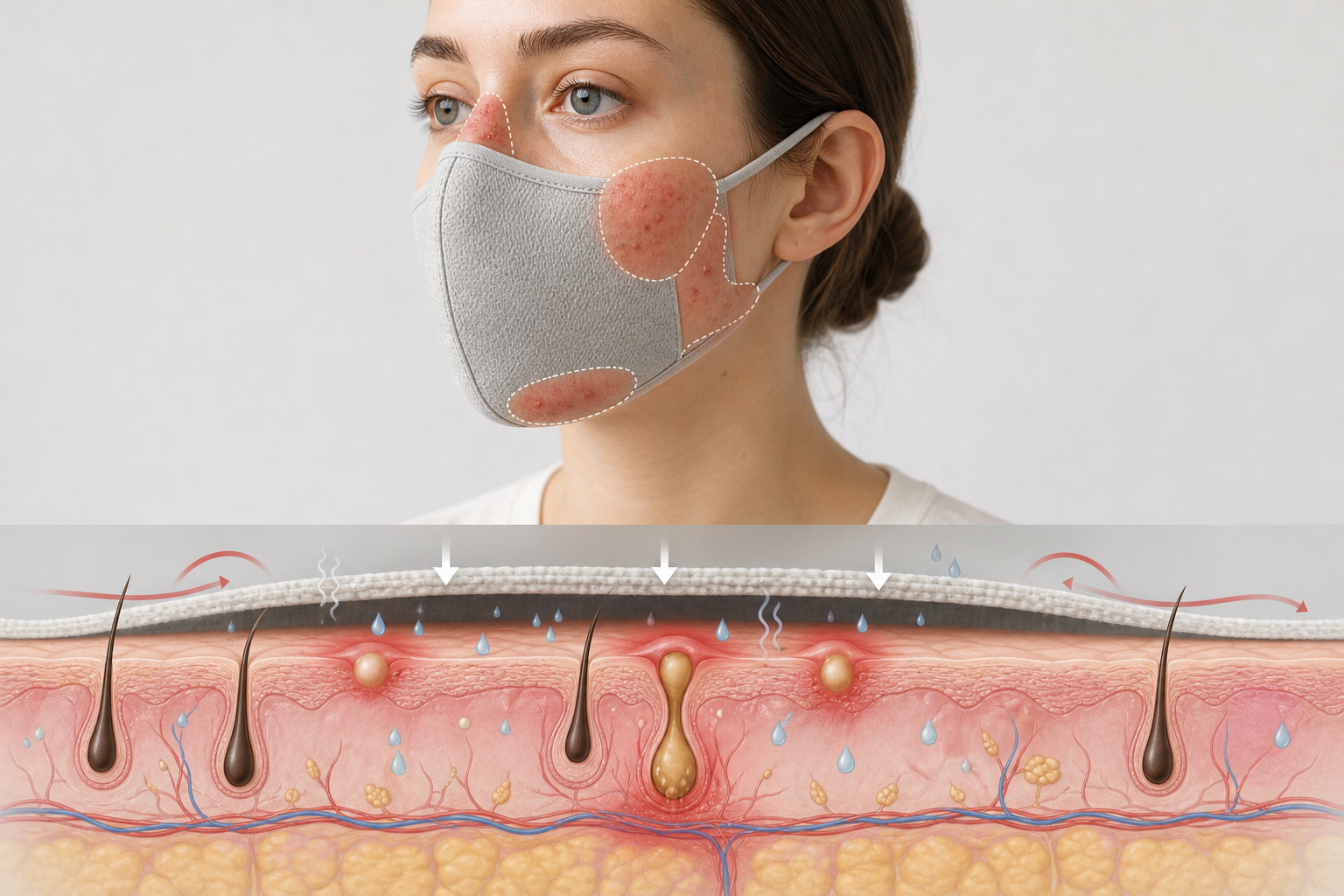

Maskne — the term coined for acne and skin irritation caused or worsened by wearing a face mask — became widely recognised during the COVID-19 pandemic, but the underlying mechanisms are well established in dermatology and affect anyone who wears a mask regularly, from healthcare workers to commuters. Understanding why masks trigger breakouts, how maskne differs from ordinary acne, and which treatments and prevention strategies are supported by evidence can help you manage the condition effectively and avoid making it worse.
Key Takeaways
- Maskne is a form of acne mechanica driven by friction, heat, humidity, and an occlusive microenvironment beneath the mask — not simply poor hygiene.
- The skin microbiome is disrupted under a mask, promoting overgrowth of Cutibacterium acnes and, in some cases, Malassezia yeast, which can produce different types of breakouts requiring different treatments.
- Gentle cleansing, a non-comedogenic moisturiser, and choosing a breathable fabric mask are the most evidence-supported first steps.
- Applying active ingredients such as retinoids or acids directly under a mask significantly amplifies irritation and should be avoided; use these at night only.
- Persistent, cystic, or scarring maskne warrants assessment by a board-certified dermatologist, as some conditions that mimic maskne — including fungal acne and perioral dermatitis — require entirely different treatments.
What Is Maskne and Why Does It Happen?
Maskne is an umbrella term for acne breakouts, folliculitis, and other inflammatory skin reactions that develop in the area covered by a face mask — typically the cheeks, chin, jawline, nose bridge, and around the mouth. Dermatologists classify it as a variant of acne mechanica, a well-documented form of acne triggered by physical forces on the skin rather than hormonal changes alone. The mask creates a set of conditions that are hostile to healthy skin: sustained friction, heat, trapped humidity from exhaled breath, and an occlusive microenvironment that prevents normal gas and moisture exchange.
These factors combine to disrupt the skin barrier — the outermost layer of the epidermis that normally regulates moisture and keeps irritants out. When the barrier is compromised, transepidermal water loss (TEWL) increases, the skin pH rises above its naturally acidic level, and the skin becomes more vulnerable to both microbial overgrowth and inflammatory reactions. Sebum production may also increase in response to barrier disruption, further contributing to clogged pores and comedone formation.
The Three Core Mechanisms Behind Mask Breakouts
Friction and Microabrasion
Every time you speak, chew, or adjust your mask, the fabric moves against your skin. This repeated friction creates microscopic abrasions that weaken the skin barrier, trigger localised inflammation, and force dead skin cells and sebum deeper into the follicle. Tight-fitting masks, stiff mask edges, and synthetic fabrics such as nylon, polyester, and rayon generate more friction than softer, natural alternatives. The result is a pattern of breakouts that follows the exact outline of the mask — a distribution pattern rarely seen with hormonal or dietary acne.
Occlusion and Pore Blockage
The mask acts as a physical seal over the skin. Sebum, dead skin cells, and any makeup or skincare product applied before masking become trapped against the surface. This occlusive environment prevents the normal shedding of skin cells and creates the ideal conditions for comedone formation — both open comedones (blackheads) and closed comedones (whiteheads). People who apply heavy foundations, primers, or pore-filling products under their mask are at significantly higher risk of blocked pores and subsequent breakouts.
Humidity, Heat, and Microbiome Dysbiosis
Exhaled breath raises the temperature and humidity beneath the mask considerably. This warm, moist environment alters the local skin microbiome in ways that favour the overgrowth of acne-associated bacteria. Research published in peer-reviewed journals has identified increased colonisation by Cutibacterium acnes (formerly known as P. acnes) in mask-covered skin, alongside potential overgrowth of Malassezia yeast — a fungus naturally present on skin that can proliferate in humid, sebum-rich conditions. This microbiome dysbiosis is a key reason why maskne can be more inflammatory and harder to resolve than typical acne, and why some cases do not respond to standard antibacterial treatments.
Maskne vs. Regular Acne: A Clinical Distinction That Matters
Maskne and conventional acne share some features — both involve clogged pores, sebum, and bacterial involvement — but they differ in important ways that affect treatment. Ordinary acne is primarily driven by hormonal fluctuations that increase sebum secretion, combined with follicular hyperkeratinisation and Cutibacterium acnes colonisation. Maskne adds a mechanical and barrier-disruption component that changes how the skin responds to treatment.
Specifically, the skin barrier disruption caused by mask friction means that aggressive active ingredients — high-concentration benzoyl peroxide, strong retinoids, or undiluted acids — can cause significant irritation, redness, and peeling in mask-wearing skin that would tolerate the same products well under normal circumstances. This is not a reason to avoid these ingredients entirely, but it is a reason to use lower concentrations, apply them only at night when the mask is off, and prioritise barrier repair alongside any acne treatment. Treating maskne as identical to hormonal acne and applying the same aggressive routine often worsens the condition.
Conditions That Can Mimic Maskne
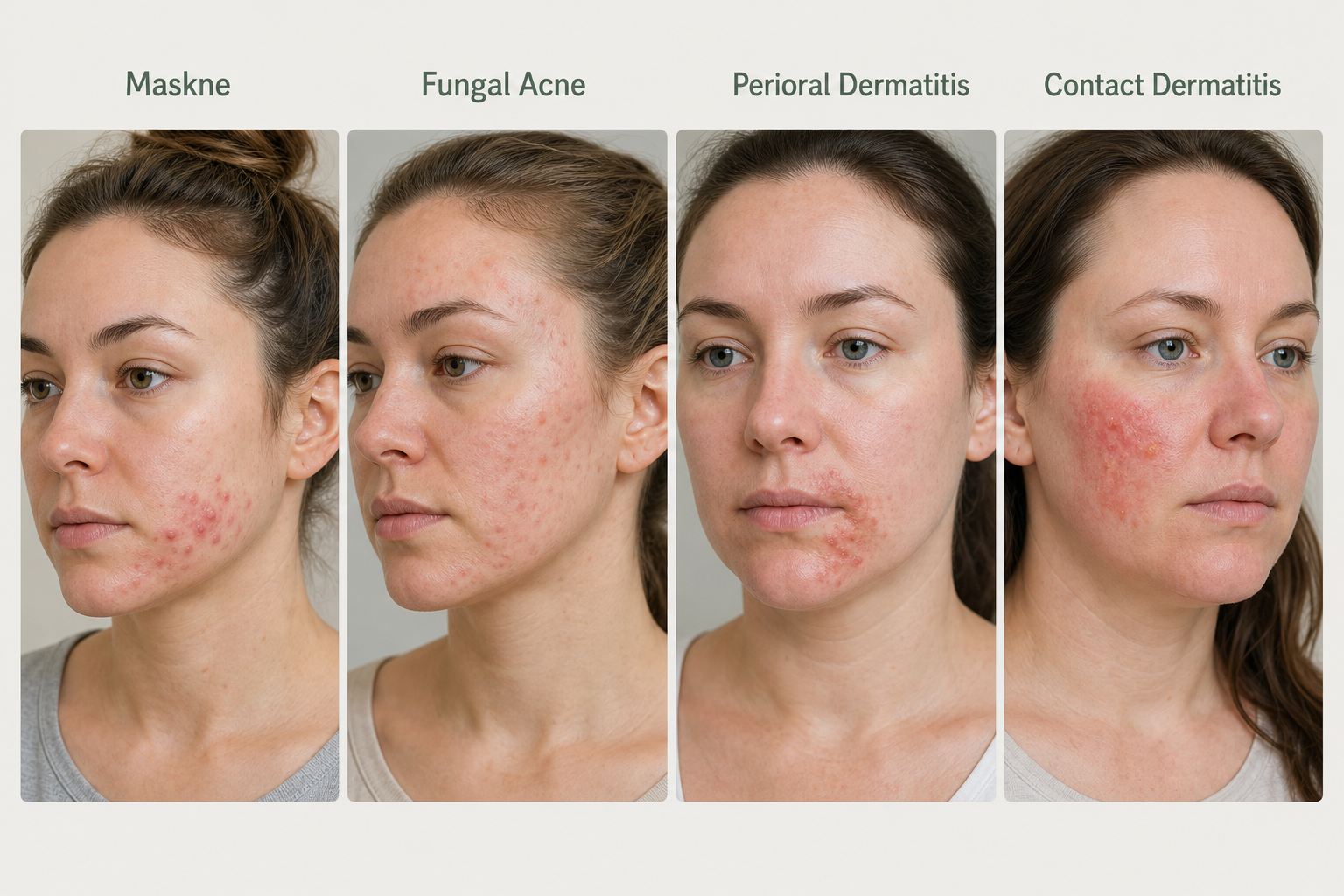
Not every rash or breakout in the mask zone is maskne. Several conditions can present similarly and require different management. Identifying the correct diagnosis is important because using the wrong treatment — for example, applying antibacterial spot treatments to a fungal infection — will not resolve the problem and may worsen it.
| Condition | Typical Appearance | Key Distinguishing Features | Treatment Approach |
|---|---|---|---|
| Maskne (acne mechanica) | Papules, pustules, comedones along mask outline | Follows mask distribution; worsens with mask use; mixed lesion types | Gentle cleansing, salicylic acid, benzoyl peroxide, barrier repair |
| Fungal acne (Malassezia folliculitis) | Uniform small itchy papules and pustules | Itching is common; lesions are similar in size; does not respond to antibiotics | Antifungal treatments (topical or oral); avoid occlusive oils |
| Perioral dermatitis | Small red papules around mouth and nose | Often worsened by topical steroids; burning sensation; spares lip border | Avoid steroids; topical metronidazole or azelaic acid; oral antibiotics if severe |
| Contact dermatitis | Red, itchy, sometimes weeping rash | Reaction to mask material, elastic, or detergent; may blister | Identify and remove trigger; barrier cream; antihistamine if needed |
| Bacterial folliculitis | Pustules centred on hair follicles | Tender; may have surrounding redness; responds to antibiotics | Topical or oral antibiotics depending on severity |
| Rosacea flare | Diffuse redness, flushing, papules | Background redness; triggered by heat and friction; no comedones | Azelaic acid, topical metronidazole; avoid heat triggers |
If your breakouts are uniformly sized and itchy, do not respond to standard acne treatments, or are accompanied by significant redness and burning, a consultation with a board-certified dermatologist is advisable before continuing self-treatment.
How to Treat Maskne: Evidence-Based Options
Gentle Cleansing
Washing the face before putting on a mask and again after removing it is one of the most consistently recommended steps. A gentle, fragrance-free cleanser that does not strip the skin barrier is preferable to foaming or antibacterial cleansers, which can raise skin pH and worsen barrier disruption. Brands such as CeraVe and Cetaphil are frequently cited by dermatologists for their mild, non-comedogenic formulations, though any gentle, pH-balanced cleanser without added fragrance or alcohol is appropriate.
Salicylic Acid
Salicylic acid is a beta-hydroxy acid (BHA) that penetrates the follicle to dissolve the mixture of sebum and dead skin cells that forms comedones. A cleanser or toner containing 0.5%–2% salicylic acid used once daily can help keep pores clear without over-drying the skin. Because salicylic acid is oil-soluble, it is particularly effective for oily and combination skin types prone to blackheads and whiteheads.
Benzoyl Peroxide
Benzoyl peroxide is an effective antibacterial agent that reduces Cutibacterium acnes colonisation and helps clear active pustules. Concentrations of 2.5%–5% are generally as effective as higher concentrations and cause less irritation — an important consideration for barrier-compromised mask-wearing skin. Benzoyl peroxide can bleach fabric, so applying it only at night and rinsing thoroughly before morning mask use is advisable.
Niacinamide
Niacinamide (vitamin B3) is a well-tolerated ingredient that supports barrier repair, reduces inflammation, and may help regulate sebum production. It is suitable for use under a mask during the day because it does not increase photosensitivity or irritation under occlusion. A serum or moisturiser containing 4%–10% niacinamide can be a useful addition to a maskne routine, particularly for those with sensitive or combination skin.
Azelaic Acid
Azelaic acid has antibacterial, anti-inflammatory, and mild keratolytic properties, making it useful for stubborn maskne that involves redness and post-inflammatory marks. It is also one of the few active ingredients considered suitable during pregnancy (at lower concentrations, under medical guidance). Azelaic acid is less likely to cause irritation than retinoids or high-concentration acids, which makes it a reasonable option for sensitive skin types.
Retinoids
Topical retinoids — including over-the-counter retinol and prescription-strength tretinoin or adapalene — are effective for normalising follicular keratinisation and reducing comedone formation. However, retinoids significantly increase skin sensitivity and should only be applied at night, after mask use has ended for the day. Applying a retinoid under a mask creates an occlusive environment that dramatically amplifies penetration and irritation, potentially causing severe redness, peeling, and barrier damage. Start with a low concentration and introduce retinoids gradually if the skin is already irritated from mask wear.
Spot Treatments and Hydrocolloid Patches
Hydrocolloid acne patches applied overnight can absorb fluid from active pustules, reduce inflammation, and protect the lesion from being touched. They are a low-risk, non-irritating option for individual spots. Targeted spot treatments containing benzoyl peroxide or salicylic acid can be applied to individual lesions rather than the whole face to minimise unnecessary irritation to surrounding skin.
Prescription Treatments
For moderate to severe maskne that does not respond to over-the-counter measures, a board-certified dermatologist may consider topical antibiotics (such as clindamycin), oral antibiotics (such as doxycycline), spironolactone for hormonally driven cases in women, or isotretinoin for severe, scarring acne. These options require professional assessment and are not appropriate for self-prescription.
A Structured Skincare Routine for Mask Wearers
Morning Routine
Cleanse with a gentle, fragrance-free cleanser. Apply a lightweight, oil-free, non-comedogenic moisturiser — look for ingredients such as hyaluronic acid, ceramides, or niacinamide that support the skin barrier without adding occlusive oils. Apply a broad-spectrum SPF 30 or higher sunscreen if the mask does not cover the entire face. Avoid heavy foundations, primers, or pore-filling products in the mask zone. If you use active ingredients such as vitamin C, apply them before moisturiser and allow them to absorb fully before masking.
Evening Routine
Cleanse again after removing the mask to clear accumulated sebum, sweat, and any residue. This is the appropriate time to apply active ingredients: salicylic acid exfoliants, benzoyl peroxide spot treatments, azelaic acid, or retinoids. Follow with a barrier-supportive moisturiser containing ceramides or niacinamide. Avoid applying retinoids or acids in the morning before mask use — the occlusive environment beneath the mask will amplify their effects unpredictably and may cause significant irritation.
Choosing the Right Mask and Maintaining Mask Hygiene
Mask material and hygiene have a direct impact on maskne severity. A 100% cotton mask is the most widely recommended option for acne-prone skin because cotton is breathable, generates less friction than synthetic fabrics, and is less likely to trap heat. Silk is an alternative with a smooth surface that minimises friction, though it may be less practical for everyday use. Synthetic fabrics — nylon, polyester, and rayon — retain more heat and moisture and are associated with higher rates of skin irritation and breakouts.
Reusable masks should be washed after every use. Washing in a fragrance-free, hypoallergenic detergent and avoiding fabric softeners reduces the risk of contact dermatitis and residue buildup on the mask surface. Masks should be dried completely before reuse, as a damp mask creates an even more humid microenvironment against the skin. Disposable masks should be replaced daily and should not be reused once they have become moist from breath.
Mask fit also matters. A mask that is too tight creates more friction and pressure; one that is too loose shifts constantly and generates more abrasion. The American Academy of Dermatology has suggested taking a mask break of approximately 15 minutes every four hours when it is safe to do so, to allow the skin to breathe and reduce cumulative occlusion time. This is particularly relevant for healthcare workers and others who must wear masks for extended periods.
Maskne in Healthcare Workers: A Distinct Presentation
Healthcare workers who wear N95 respirators or surgical masks for eight to twelve hours per day represent a distinct subgroup with more severe maskne presentations. The prolonged occlusion, higher-friction mask materials, and inability to take regular mask breaks create conditions that can cause not only acne but also pressure injuries, contact dermatitis, and significant skin barrier disruption across the nose bridge, cheeks, and chin. Studies conducted during the COVID-19 pandemic documented high rates of PPE-related skin conditions in this population, with acne and folliculitis among the most common complaints.
For healthcare workers, barrier protection before masking — applying a thin layer of a non-comedogenic, fragrance-free moisturiser or a silicone-based barrier product to the mask contact areas — may help reduce friction and TEWL. Skin assessment and early intervention are important in this group because prolonged untreated maskne can lead to post-inflammatory hyperpigmentation and scarring that is difficult to reverse.
Addressing Post-Maskne Scarring and Pigmentation
Once active maskne has been controlled, some patients are left with post-inflammatory hyperpigmentation (PIH) — flat, darkened marks at the site of previous breakouts. PIH is more common in medium to darker skin tones and can persist for months without targeted treatment. Ingredients that may help fade PIH include niacinamide, azelaic acid, vitamin C, and alpha-arbutin. Prescription-strength hydroquinone or topical retinoids may be recommended by a dermatologist for more persistent pigmentation.
Atrophic scarring — the depressed, pitted scars associated with deeper inflammatory acne — is less common with maskne than with severe cystic acne, but can occur if breakouts are repeatedly picked or squeezed. Professional treatments such as microneedling, chemical peels, or laser resurfacing may be considered for established scarring, but these are best discussed with a qualified practitioner after the active acne has been fully controlled.
Skin-Type Considerations
Oily skin types tend to experience more comedonal and pustular maskne due to higher baseline sebum production. A lightweight, gel-based non-comedogenic moisturiser and regular use of salicylic acid are generally well tolerated. Dry skin types are more vulnerable to barrier disruption from mask friction and may experience more redness and sensitivity than active breakouts; prioritising ceramide-rich barrier repair moisturisers and avoiding harsh cleansers is particularly important. Combination skin may benefit from a targeted approach — using salicylic acid in the oilier T-zone while applying a richer moisturiser to drier areas around the cheeks and jaw.
When to See a Dermatologist
Self-management is appropriate for mild to moderate maskne, but professional assessment is warranted in several situations. See a board-certified dermatologist if breakouts are not improving after four to six weeks of consistent skincare changes, if you are developing nodules or cysts, if you notice scarring or significant post-inflammatory hyperpigmentation, or if you are unsure whether your skin condition is maskne or something else entirely. A dermatologist can confirm the diagnosis, rule out fungal acne, perioral dermatitis, or contact dermatitis, and prescribe treatments that are not available over the counter. Healthcare workers with occupational mask requirements should seek early professional advice rather than waiting for the condition to worsen.
Frequently Asked Questions
How long does maskne take to clear up?
Mild maskne often improves within two to four weeks of consistent skincare changes and improved mask hygiene. More established breakouts, particularly those involving deeper papules or post-inflammatory marks, may take six to twelve weeks to resolve. If there is no improvement after four to six weeks, professional assessment is advisable.
Can I wear makeup under my mask if I have maskne?
Wearing makeup under a mask significantly increases the risk of clogged pores and worsens maskne. If makeup is necessary, choose oil-free, non-comedogenic, fragrance-free formulations and apply them sparingly in the mask zone. Remove makeup thoroughly as soon as the mask comes off.
Is maskne the same as fungal acne?
No. Maskne is primarily bacterial and mechanical in origin, while fungal acne (Malassezia folliculitis) is caused by yeast overgrowth. Fungal acne typically presents as uniformly sized, itchy papules that do not respond to antibacterial treatments. The two conditions can coexist, and a dermatologist can distinguish between them if standard maskne treatments are not working.
Does wearing a disposable mask reduce maskne compared to a reusable one?
Disposable surgical masks can reduce friction compared to some reusable options, but they still create an occlusive, humid environment. The key factors are breathability, fit, and hygiene rather than disposable versus reusable. A clean, well-fitting 100% cotton mask changed daily is a reasonable alternative to disposables for everyday use.
Can I use retinol if I wear a mask every day?
Yes, but only at night after mask use has finished. Applying retinol or any retinoid under a mask dramatically increases skin penetration and irritation due to the occlusive environment. Use retinoids as part of your evening routine only, and ensure the skin is not already significantly irritated before introducing them.
Why does my maskne keep coming back even when I treat it?
Recurring maskne usually means the underlying triggers — mask friction, occlusion, and humidity — are still present. Treatment addresses the breakouts but does not remove the cause. Consistent mask hygiene, barrier-supportive skincare, and choosing the right mask material are necessary alongside any active treatment to prevent recurrence.
Managing Maskne: Practical Steps Worth Taking
Maskne is a genuine dermatological condition with identifiable mechanisms, and it responds well to a structured, evidence-informed approach. The most effective strategy combines addressing the root causes — friction, occlusion, and microbiome disruption — with a simplified, barrier-supportive skincare routine and appropriate active ingredients used at the right time of day. Avoiding the temptation to apply multiple strong actives simultaneously, particularly under a mask, is as important as choosing the right products.
For most people, consistent gentle cleansing, a non-comedogenic moisturiser, targeted use of salicylic acid or benzoyl peroxide, and improved mask hygiene will produce meaningful improvement within a few weeks. Those with persistent, severe, or atypical presentations — or anyone concerned about scarring or post-inflammatory hyperpigmentation — should seek assessment from a board-certified dermatologist who can confirm the diagnosis and tailor treatment to their specific skin type and condition.
