
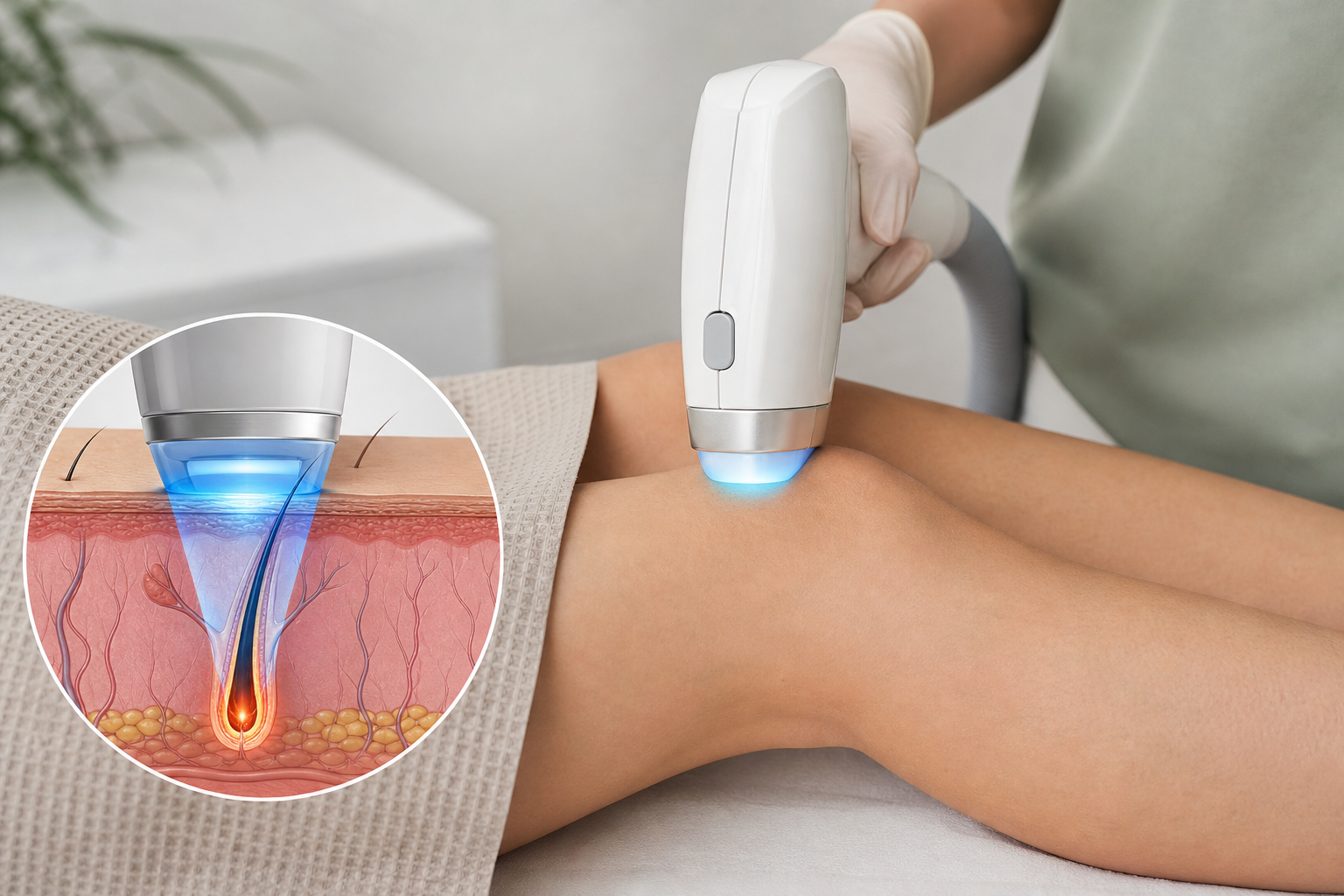

Laser hair removal is one of the most popular aesthetic treatments available, yet concern about discomfort remains one of the most common reasons people hesitate to book. The reality is that modern techniques, built-in cooling technology, and straightforward preparation steps have made the experience significantly more manageable than many people expect — and for some patients, genuinely close to pain-free laser hair removal is achievable. This guide explains what the sensation actually feels like, which factors influence discomfort, and what you can do before, during, and after each session to make treatment as comfortable as possible.
Key Takeaways
- Most patients describe laser hair removal as a warm pinprick sensation rather than sharp pain, and discomfort typically decreases with each successive session as hair becomes finer and less dense.
- Preparation steps — including shaving 12–24 hours before your appointment, avoiding sun exposure, and applying a topical numbing cream — can meaningfully reduce treatment discomfort.
- Modern devices with built-in cooling technology, such as sapphire contact cooling or in-motion delivery systems, have substantially improved treatment comfort compared with older static-pulse lasers.
- Sensitive areas like the bikini line and underarms tend to cause more discomfort than larger, flatter areas like the legs or back.
- Communicating openly with your practitioner during the session — including requesting laser settings adjustment or a short break — is both safe and appropriate.
What Does Laser Hair Removal Actually Feel Like?
The most accurate description most patients give is a warm pinprick sensation or the snap of a thin rubber band against the skin. The intensity varies depending on the treatment area, the device being used, your individual pain tolerance, and how coarse or dense the hair is. Describing the experience as universally painful overstates it for most people; describing it as completely painless understates it for sensitive areas. The honest answer sits somewhere in between, and it shifts considerably depending on preparation and technology.
Hair follicle targeting works by delivering laser energy that is absorbed by the pigment (melanin) in the hair shaft and root. This energy converts to heat, which damages the follicle and inhibits future growth. The heat generated at the follicle is what produces the sensation. Coarser, darker hair absorbs more energy and can therefore feel more intense during the first few sessions. As treatment progresses and hair becomes finer and sparser, the sensation typically diminishes — many patients find they no longer need numbing cream by their third or fourth session.
Pain Levels by Treatment Area
Skin sensitivity varies significantly across the body, influenced by skin thickness, nerve density, proximity to bone, and the coarseness of the hair being treated. The table below provides a general guide to expected discomfort by area. Individual experience will vary, and these ratings reflect typical patient-reported feedback rather than clinical measurements.
| Treatment Area | Typical Discomfort (1–10) | Common Sensation Description | Notes |
|---|---|---|---|
| Upper lip | 6–8 | Sharp, quick snapping | Thin skin, high nerve density; sessions are brief |
| Bikini line / Brazilian | 6–8 | Stinging, intense warmth | Most commonly cited sensitive area; numbing cream strongly recommended |
| Underarms | 5–7 | Warm pinprick, stinging | Sensitive skin; hair is often coarse and dense |
| Face (cheeks, chin) | 4–6 | Warm snapping | Varies by zone; upper lip is more intense than cheeks |
| Chest / abdomen | 3–5 | Mild to moderate warmth | Moderate sensitivity; hair density varies |
| Back | 3–5 | Mild warmth, occasional snap | Thicker skin reduces intensity in most areas |
| Arms | 2–4 | Mild warmth | Generally well tolerated |
| Legs | 2–4 | Mild warmth, occasional snap near knees/ankles | One of the most comfortable areas overall |
Factors That Influence Discomfort
Several variables determine how a session feels, and understanding them helps set realistic expectations. Hair colour and coarseness play a significant role: dark, coarse hair absorbs laser energy more efficiently, which is good for treatment effectiveness but can increase the sensation during early sessions. Skin sensitivity also varies by individual — people with naturally reactive skin or conditions such as eczema may find certain areas more uncomfortable.
Hormonal fluctuations are a less-discussed but meaningful factor. Pain sensitivity tends to be higher in the days immediately before and during menstruation, when oestrogen and progesterone levels shift and the nervous system becomes more reactive. Menstrual cycle scheduling — specifically booking sessions in the week or two after your period ends — can reduce perceived discomfort for patients who notice this pattern.
Lifestyle factors on the day of treatment also matter. Poor sleep increases nervous system reactivity and lowers the pain threshold. Dehydration can make skin more sensitive. High stress levels activate the sympathetic nervous system, which amplifies pain perception. Arriving well-rested, well-hydrated, and calm genuinely makes a measurable difference to how comfortable the session feels.
There is some debate about caffeine. Many clinics advise avoiding it before treatment on the basis that stimulants may heighten sensitivity. However, at least one line of research suggests caffeine may modestly increase pain tolerance, particularly in women. The evidence is not definitive either way, so following your clinic’s specific guidance is the most practical approach.
Before Your Session: Preparation Tips
Preparation is the single most controllable factor in treatment session comfort. The steps below are based on widely accepted pre-treatment protocols and can meaningfully reduce discomfort before you arrive at the clinic.
Shave the Treatment Area
Shave before your appointment — ideally 12 to 24 hours before the session. Shaving removes the hair above the skin surface so that laser energy is directed into the follicle rather than the hair shaft above the skin. Unshaved hair can cause surface burning and significantly increases discomfort. Waxing, plucking, or using depilatory creams should be avoided for at least four weeks before treatment, as these methods remove the hair root that the laser needs to target.
Avoid Sun Exposure and Tanning
Avoid sun exposure for at least two weeks before treatment. Tanned skin contains elevated melanin levels across the skin surface, which increases the risk of the laser energy being absorbed by the skin rather than the hair follicle. This raises both the risk of side effects and the likelihood of discomfort. Self-tanning products should also be avoided. If you have recently been in the sun, inform your practitioner so they can assess whether treatment should be postponed.
Apply a Topical Numbing Cream
A topical numbing cream is one of the most effective tools for reducing discomfort, particularly for sensitive areas such as the bikini line, underarms, and upper lip. Over-the-counter options typically contain 4–5% lidocaine and are applied 30 to 60 minutes before the session. For maximum effect, the cream can be covered with cling film (plastic wrap occlusion) after application, which increases absorption through the skin barrier.
Prescription-strength formulations — sometimes called BLT cream, which combines benzocaine, lidocaine, and tetracaine — provide deeper and more prolonged numbing and may be appropriate for patients with low pain tolerance or for particularly sensitive treatment areas. These require a prescription and should only be used under clinical guidance, as higher-concentration topical anaesthetics carry a small risk of systemic absorption if applied over large areas. Your practitioner can advise on which option is appropriate for your treatment plan.
Consider an Over-the-Counter Pain Reliever
Taking an over-the-counter pain reliever approximately 30 to 60 minutes before your session can help reduce discomfort. Acetaminophen (paracetamol) is generally considered the safest option. Aspirin is best avoided because it can increase bruising risk. Non-steroidal anti-inflammatory drugs (NSAIDs) such as ibuprofen are sometimes used, but some practitioners advise caution as they may affect platelet function. Always check with your practitioner or pharmacist before taking any medication before treatment, particularly if you have underlying health conditions or take other medications.
Arrive Prepared and Comfortable
On the day of your appointment, avoid applying lotions, oils, deodorant, or makeup to the treatment area, as these can interfere with the laser and increase skin sensitivity. Wear loose, comfortable clothing to your appointment so that treated areas are not compressed or irritated immediately after the session. Getting enough sleep the night before and staying hydrated in the days leading up to treatment are simple steps that support a lower pain threshold on the day.
During the Session: Comfort Strategies
What happens during the session itself is largely in the hands of your practitioner, but there are several things you can actively do to manage discomfort in real time.
Communicate With Your Practitioner
Open communication is the most important in-session strategy. If the sensation feels more intense than expected, tell your practitioner. A laser settings adjustment — reducing the fluence (energy level) or pulse duration — can reduce discomfort while still delivering effective treatment. Practitioners routinely make these adjustments, and requesting one is entirely appropriate. You also have the right to ask for a short break at any point during the session. A well-trained practitioner will welcome this feedback rather than discourage it.
Use Cooling and Distraction
Most modern devices include built-in cooling mechanisms — either a contact cooling tip, a cryogen spray, or a cold air system — that chill the skin surface immediately before, during, or after each pulse. If your clinic uses a separate cooling device such as a Zimmer cold air system, ask for it to be used throughout the session rather than only at the end. Applying an ice pack or cold compress to the area immediately before treatment begins can also pre-cool the skin and reduce the initial sensation.
Distraction techniques are underrated but genuinely effective. Listening to music, a podcast, or an audiobook during treatment shifts attention away from the sensation. Controlled deep breathing — inhaling slowly before a pulse and exhaling during it — can reduce the perceived intensity of each shot. Some patients find that simply talking to the technician keeps them relaxed and makes the session pass more quickly.
Understand the Pulse Pattern
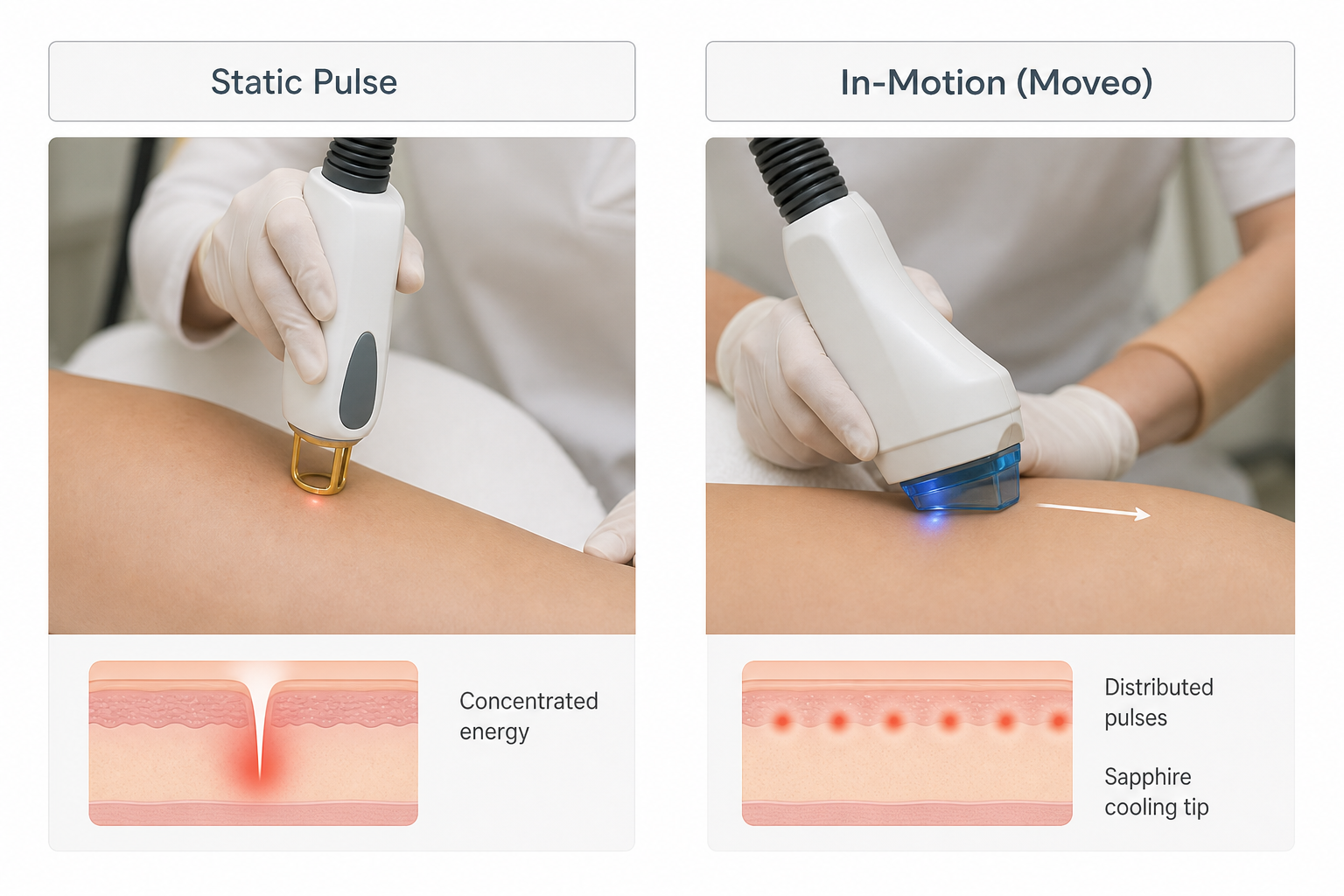
With traditional static-pulse laser delivery, each pulse is delivered to a fixed spot, which can feel more intense because the energy is concentrated. In-motion delivery systems — such as those using Moveo technology — move the handpiece continuously across the skin while delivering multiple lower-energy pulses. This gradual heating approach distributes energy more evenly across the treatment area, which many patients find significantly more comfortable than static delivery. If treatment comfort is a priority, asking your clinic which delivery method their device uses is a reasonable question before booking.
Cooling Technology and Pain-Free Laser Options
Device technology has advanced considerably, and the choice of laser system has a direct impact on treatment comfort. Understanding the main options helps patients ask informed questions when choosing a clinic.
Diode lasers with integrated cooling are among the most widely used systems and offer a good balance of efficacy and comfort for a range of skin tones. Alexandrite lasers (755nm wavelength) are highly effective for lighter skin tones with dark hair and are often used in in-motion systems. Nd:YAG lasers (1064nm wavelength) penetrate more deeply and have historically been the preferred option for darker skin tones, but they can require higher energy settings that some patients find more uncomfortable.
The Motus AX and Motus AZ+ systems from DEKA use Moveo technology — a combination of in-motion delivery and a sapphire cooling tip — to deliver Alexandrite laser energy in a way that is widely reported as more comfortable than conventional static-pulse Alexandrite treatment. Importantly, the Moveo approach allows Alexandrite wavelength treatment to be used on a broader range of skin tones than was previously possible, meaning patients with darker skin who previously required Nd:YAG (and its associated higher discomfort) may now have access to a more comfortable alternative. This is a meaningful development that is often underexplained in patient-facing information.
IPL (Intense Pulsed Light) is sometimes marketed alongside laser hair removal but is a distinct technology. IPL uses a broad spectrum of light rather than a single wavelength, which makes it less precise in targeting the hair follicle. It is generally considered less effective than true laser systems for long-lasting hair reduction, particularly on finer or lighter hair, and comfort levels vary by device and operator.
After Your Session: Reducing Post-Treatment Discomfort
Post-treatment skin sensitivity is normal and usually resolves within a few hours to a day. The treated area may appear slightly red or feel warm, similar to mild sunburn. The following steps help manage this and support skin recovery.
- Apply a cold compress or ice pack wrapped in a cloth to the treated area for 10–15 minutes to reduce heat and redness.
- Use a fragrance-free moisturiser to soothe the skin. Avoid products containing alcohol, retinoids, or active acids for at least 48 hours after treatment.
- Wear loose-fitting clothing after treatment to avoid friction on sensitive skin, particularly after bikini line or underarm sessions.
- Avoid intense exercise, saunas, and hot baths for 24 to 48 hours, as heat can exacerbate post-treatment redness and increase the risk of irritation.
- Apply SPF 30 or higher daily to treated areas, especially the face. Post-treatment skin is more vulnerable to UV damage, and sun exposure can increase the risk of pigmentation changes.
- Avoid sun exposure for at least two weeks after treatment for the same reason.
Does Discomfort Decrease Over Time?
Pain decreases over time for the majority of patients, and this is not simply reassurance — it reflects the underlying mechanism of treatment. Each session targets hair follicles in the active growth phase, progressively reducing the number of active follicles in the area. As the treatment series progresses, there are fewer follicles to target, the remaining hair becomes finer and less pigmented, and less laser energy is needed per pulse. The cumulative effect is that sessions three, four, and five typically feel noticeably less intense than session one.
Patients who found the first session uncomfortable enough to require numbing cream often find they no longer need it by the midpoint of their treatment series. This progression is one of the practical advantages of laser hair removal over waxing, where discomfort remains relatively constant across appointments. Most patients require between six and eight sessions for meaningful long-lasting hair reduction, with maintenance sessions occasionally needed thereafter depending on the area and individual response.
Who May Find Laser Hair Removal More Challenging
Laser hair removal is not suitable for everyone, and certain factors may make treatment less comfortable or less effective. Patients with very low pain tolerance, active skin conditions such as eczema or psoriasis in the treatment area, or a history of keloid scarring should discuss these factors with their practitioner before proceeding. Pregnancy is a contraindication for laser hair removal. Certain medications — including photosensitising drugs and some antibiotics — can increase skin sensitivity and may require treatment to be postponed.
Fine, light, grey, red, or blonde hair contains less melanin and is harder for the laser to target effectively. These hair types may require more sessions, may not respond as well to treatment, and in some cases may not be suitable candidates for laser hair removal at all. A thorough consultation with a qualified practitioner is essential to assess suitability and set realistic expectations before beginning a treatment series.
Frequently Asked Questions
Is laser hair removal more painful than waxing?
Most patients who have experienced both describe laser hair removal as comparable to or less uncomfortable than waxing, particularly after the first couple of sessions. Waxing removes hair from the root across the entire area at once, which many people find more acutely painful. Laser treatment delivers brief pulses to individual follicles, and modern cooling systems reduce the surface sensation considerably. Individual experience varies, but the comparison is generally favourable for laser.
Can I use numbing cream I buy myself, or does it need to come from the clinic?
Over-the-counter topical numbing creams containing up to 5% lidocaine are available without a prescription and are suitable for most patients. Prescription-strength formulations should only be used under clinical supervision. If you plan to use a numbing cream, inform your practitioner in advance so they can advise on timing, application method, and whether the product is compatible with the laser being used.
What should I do if the pain feels severe during a session?
Tell your practitioner immediately. You have the right to ask for a laser settings adjustment, request a short break, or stop the session entirely. A responsible practitioner will not pressure you to continue if you are in significant discomfort. Severe or unexpected pain can also be a signal that the settings need to be reviewed for your skin type, so communicating this is important for both comfort and safety.
How long does post-treatment redness or discomfort usually last?
Mild redness and warmth in the treated area typically resolve within a few hours. Some patients experience sensitivity for up to 24 hours, particularly after treatment of sensitive areas such as the bikini line or underarms. If redness, swelling, or discomfort persists beyond 48 hours, or if blistering occurs, contact your clinic for advice.
Does skin tone affect how comfortable treatment is?
Skin tone influences both the choice of laser and the energy settings used, which in turn affects comfort. Historically, patients with darker skin tones required Nd:YAG lasers at higher energy levels, which some found more uncomfortable. Advances in in-motion delivery technology now allow Alexandrite wavelength treatment to be used more safely across a broader range of skin tones, potentially offering a more comfortable experience. A qualified practitioner will select the appropriate device and settings for your skin tone and hair type.
Can I shave between sessions?
Yes. Shaving between sessions is not only permitted but recommended to keep the treatment area prepared. Waxing, plucking, threading, or using depilatory creams between sessions should be avoided, as these methods remove the hair root and reduce the laser’s ability to target the follicle at the next appointment.
Making an Informed Decision About Laser Hair Removal Comfort
For most patients, laser hair removal is a manageable and increasingly comfortable experience — particularly when approached with good preparation and the right device technology. The combination of a topical numbing cream for sensitive areas, a clinic using modern built-in cooling technology, and straightforward lifestyle adjustments before each session can make a substantial difference to how treatment feels. The fact that pain decreases over time as hair becomes finer and less dense means that even patients who find early sessions challenging typically find the experience improves significantly as the treatment series progresses.
Comfort is not the only factor worth considering. Suitability, realistic expectations about the number of sessions required, the qualifications of the practitioner, and the quality of the device all matter. A thorough consultation before beginning treatment gives you the opportunity to discuss your pain tolerance, ask about the specific laser technology being used, and understand what preparation is recommended for your skin type and treatment areas. If treatment comfort is a priority, asking specifically about in-motion delivery systems and integrated cooling options is a reasonable starting point for that conversation.
