
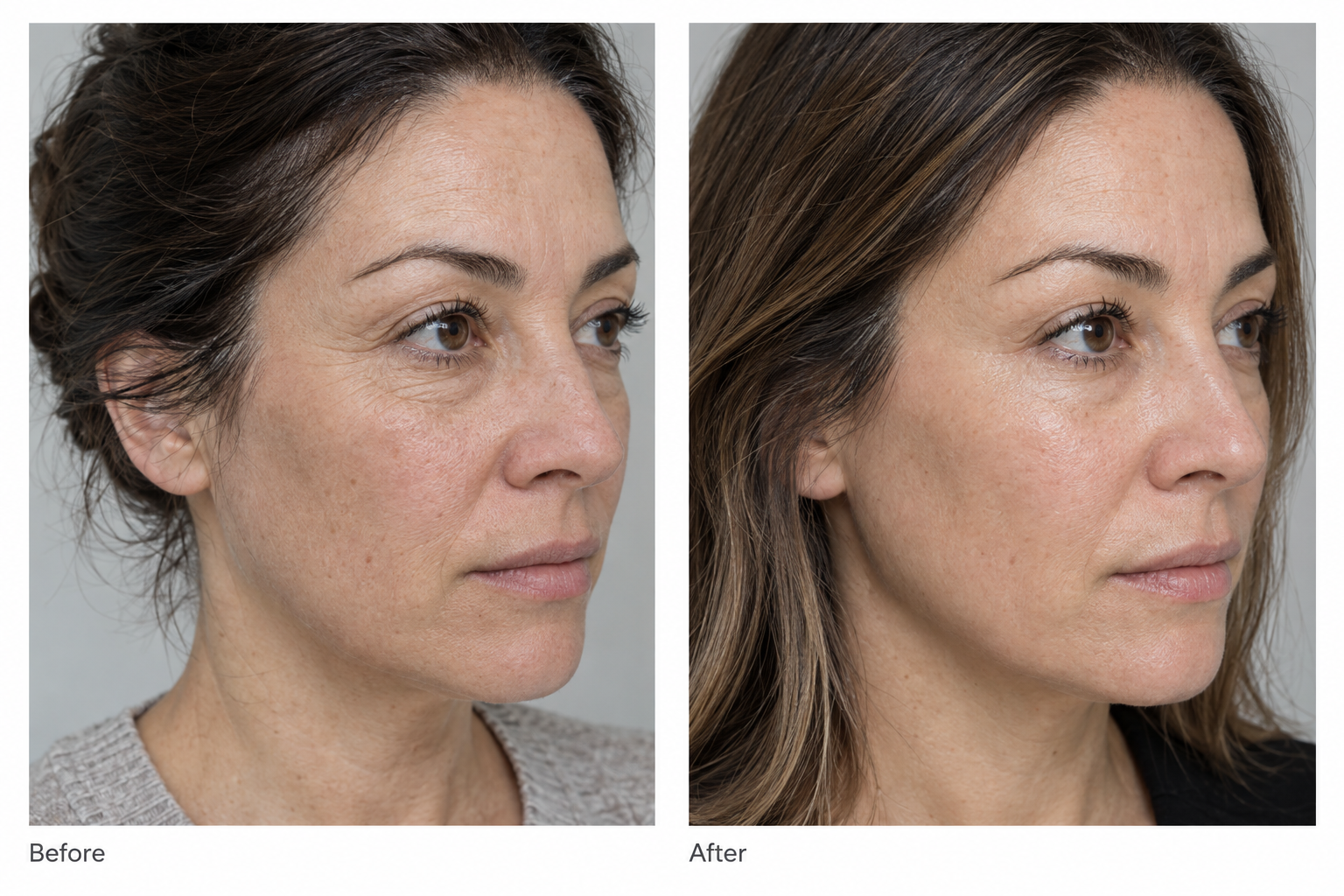

Polynucleotides have become one of the most discussed regenerative treatments in aesthetic medicine, but the results are often misunderstood. Unlike dermal fillers or botulinum toxin, polynucleotides work gradually by stimulating the skin's own repair processes rather than adding volume or relaxing muscles. This article explains what polynucleotides before and after results genuinely look like, which skin concerns respond best, how the results timeline unfolds, and where the treatment has clear limitations — so you can approach a consultation with realistic expectations.
Key Takeaways
- Polynucleotides produce gradual, progressive results driven by fibroblast stimulation and collagen and elastin production — visible changes typically develop over four to twelve weeks.
- Skin texture, hydration, fine lines, and crepey skin tend to respond well; volume loss and vascular dark circles respond poorly or not at all.
- A standard course of treatment usually involves two to four sessions spaced two to four weeks apart, with maintenance sessions recommended every six to twelve months.
- Results are natural-looking rather than dramatic — polynucleotides improve skin quality rather than reshape or volumise.
- Clinical evidence supports meaningful improvements in periorbital skin quality, skin hydration, and overall skin appearance, though individual outcomes vary.
What Polynucleotides Actually Do to the Skin
Polynucleotides are purified DNA fragments — most commonly derived from salmon or trout — that are administered via intradermal injections into the target area. Once in the skin, they bind to adenosine receptors on fibroblast cells, triggering a cascade of regenerative activity. This fibroblast stimulation leads to increased production of collagen and elastin, enhanced hyaluronic acid synthesis within the dermis, and improved cell renewal. The treatment also has documented anti-inflammatory and antioxidant properties, which can help calm reactive or sensitised skin over time.
The key distinction from other injectables is that polynucleotides do not add structure or volume. They act as a biological signal, encouraging the skin to repair and regenerate itself. This is why the results timeline is slower than fillers but the improvements in skin quality can be more durable and biologically integrated. Products such as Rejuran and those containing PDRN (polydeoxyribonucleotide) or PDRN HPT represent different formulations within this category, and product quality and concentration can influence outcomes — a factor rarely discussed on clinic websites but worth raising during consultation.
Polynucleotides Before and After: What Changes Are Visible?
The most consistent improvements reported in clinical assessments and patient satisfaction studies involve skin texture, skin hydration and radiance, fine lines, and overall skin quality improvement. A real-life assessment of polynucleotide HPT published in a peer-reviewed journal reported 100% clinician-rated improvement and 97–100% patient satisfaction across outcome measures including skin smoothness, hydration, and luminosity. These are meaningful figures, though it is important to note that results vary between individuals depending on age, skin condition, lifestyle, and the number of sessions completed.
Results by Treatment Area
Polynucleotides can be used across multiple areas of the face and body, and the visible changes differ somewhat by location.
- Under-eye and periorbital area: One of the most popular applications. Improvements in fine lines, skin crepiness, and skin quality around the eye are well-supported by clinical data. A prospective study assessing periorbital polynucleotide injections using validated FACE-Q outcome measures found meaningful improvements at one, three, and six months. However, under-eye rejuvenation with polynucleotides works best when the concern is skin quality, dehydration, or fine lines — not hollowness or vascular dark circles (see limitations below).
- Face (cheeks, forehead, nasolabial folds, crow's feet): Patients typically notice improved skin texture, reduced fine lines, a brighter complexion, and improved skin elasticity. An RCT comparing polynucleotides with another biostimulator for crow's feet found statistically significant improvements in periorbital rhytides. Results are subtle rather than transformative — the face looks refreshed rather than altered.
- Neck and décolletage: These areas often show crepey skin and loss of firmness that responds well to polynucleotide treatment. Skin laxity and fine lines in the neck and décolletage can improve meaningfully over a course of treatment, though multiple sessions are usually required.
- Hands: Thinning skin on the dorsum of the hands can benefit from improved hydration, texture, and reduced crepiness, though this application is less commonly discussed in published clinical literature.
- Scalp: Some practitioners use polynucleotides for hair thinning, with the rationale that improved scalp tissue quality and circulation may support follicle health, though evidence in this area remains more limited than for facial applications.
Which Skin Concerns Respond Best — and Which Do Not
| Skin Concern | Expected Response to Polynucleotides |
|---|---|
| Fine lines and surface wrinkles | Good — gradual softening over weeks to months |
| Crepey skin texture | Good — one of the strongest indications |
| Skin dehydration and dullness | Good — early hydration improvement often noticed first |
| Skin laxity (mild to moderate) | Moderate — improved firmness, not a lifting treatment |
| Acne scarring (superficial) | Moderate — some improvement in texture and erythema |
| Uneven skin tone / hyperpigmentation | Moderate — melanocyte regulation may help; results vary |
| Dark circles (pigmentation-related) | Limited — some improvement possible |
| Dark circles (vascular or structural) | Poor — polynucleotides are not effective for this cause |
| Volume loss / hollowness | Not suitable — polynucleotides are not a volume treatment |
| Deep static wrinkles | Limited — significant improvement unlikely without combination treatment |
| Dynamic wrinkles (movement-related) | Not suitable — requires botulinum toxin |
The Results Timeline: What to Expect Week by Week
Understanding the results timeline is essential for managing expectations. Polynucleotides do not produce immediate visible changes in the way that hyaluronic acid fillers do. The improvements are driven by biological processes that take time to develop.
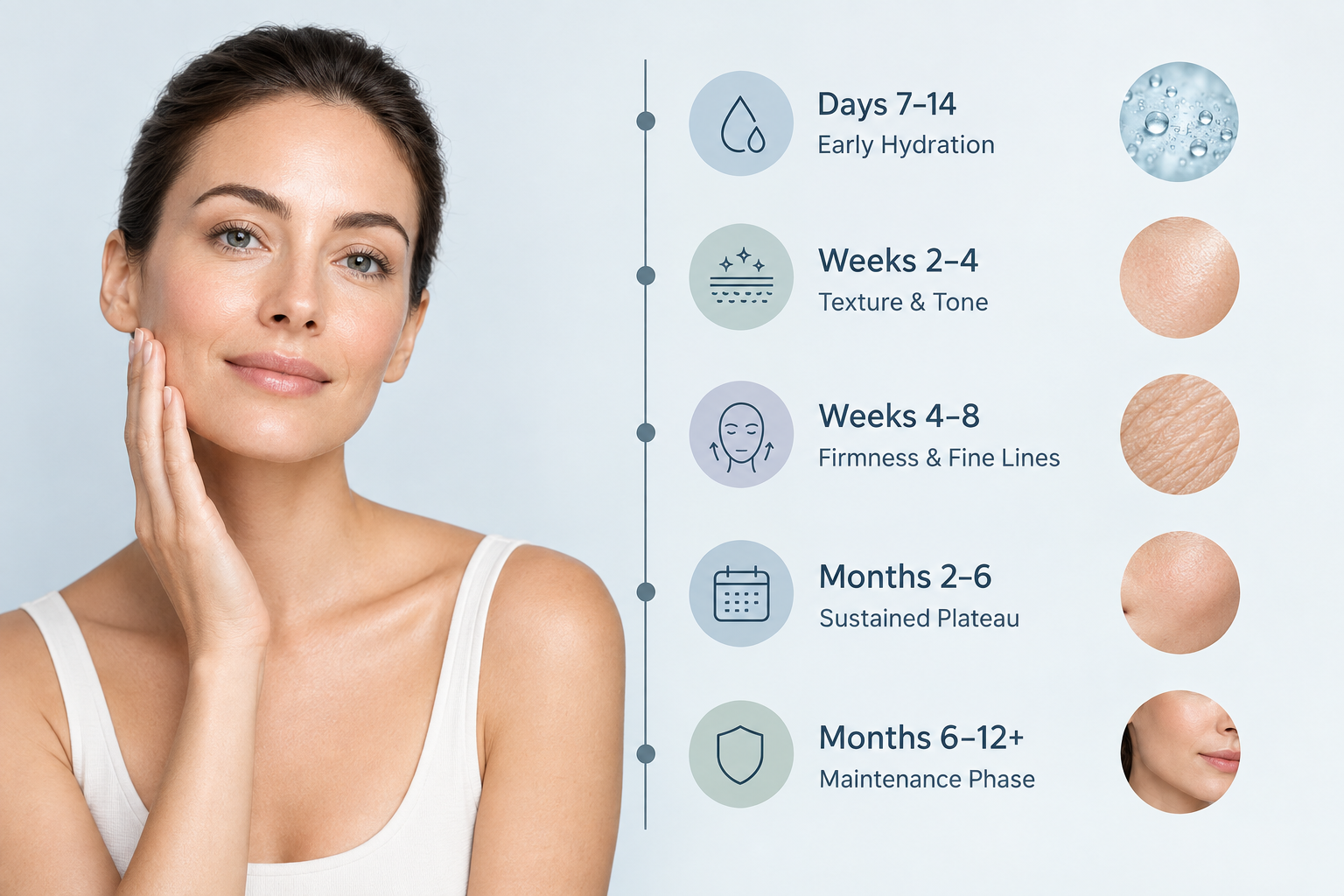
| Phase | Approximate Timeframe | What You May Notice |
|---|---|---|
| Early hydration phase | Days 7–14 | Skin may feel more hydrated and plump; some initial glow |
| Texture and tone improvement | Weeks 2–4 | Smoother skin surface, more even tone, reduced dullness |
| Firmness and elasticity | Weeks 4–8 | Improved skin firmness, softening of fine lines, reduced crepiness |
| Sustained plateau | Months 2–6 | Results consolidate; collagen remodelling continues |
| Longevity phase | Months 6–12+ | Results gradually diminish without maintenance; skin quality remains improved relative to baseline |
Most patients complete their initial course of treatment — typically two to four sessions — before the full benefit is apparent. Assessing results after a single session is unlikely to reflect the treatment's potential. Clinical studies measuring outcomes at one, three, and six months consistently show progressive improvement across this period, with the most significant changes often observed between the four and twelve week marks.
How Long Do Polynucleotide Results Last?
Results from a completed course of treatment typically last between six and twelve months for most patients, after which maintenance sessions are recommended to sustain the improvement. Some patients with good skin health and favourable lifestyle factors may notice benefits persisting beyond twelve months, but claims of results lasting eighteen to twenty-four months are outliers compared with the clinical consensus and should be interpreted cautiously.
Several factors influence longevity: the number of sessions completed, the patient's age and baseline skin condition, sun exposure, smoking, and general health. Skin regeneration is an ongoing biological process, and the collagen stimulated by polynucleotide treatment will naturally turn over with time. Maintenance sessions every six to twelve months are generally recommended to preserve the improvement rather than waiting for results to fully reverse before retreating.
Polynucleotides vs Dermal Fillers and Other Treatments
A common point of confusion is how polynucleotides compare with other injectable treatments. Understanding the differences helps clarify which treatment — or combination — may be appropriate for a given concern.
| Feature | Polynucleotides | Hyaluronic Acid Fillers | Botulinum Toxin | PRP |
|---|---|---|---|---|
| Mechanism | Fibroblast stimulation, collagen synthesis, tissue repair | Volume replacement, hydration | Muscle relaxation | Growth factor release, tissue repair |
| Primary goal | Skin quality improvement, regeneration | Volume, structure, hydration | Reduce dynamic wrinkles | Skin regeneration, hair growth |
| Onset of results | Weeks to months (gradual) | Immediate | 3–14 days | Weeks to months |
| Reversible? | No | Yes (hyaluronidase) | Partially (wears off) | No |
| Volume effect | None | Yes | None | Minimal |
| Longevity | 6–12 months | 6–18 months (area-dependent) | 3–6 months | Variable |
| Best for | Skin texture, fine lines, crepiness, hydration | Volume loss, deep folds, lip augmentation | Frown lines, crow's feet, forehead lines | Skin quality, hair thinning |
| Downtime | Minimal (24–72 hrs redness/swelling) | Minimal to moderate | Minimal | Minimal to moderate |
For under-eye concerns specifically, polynucleotides and tear trough filler address different problems. Tear trough filler replaces lost volume and corrects hollowness, producing an immediate structural change. Polynucleotides improve the quality of the overlying skin — reducing crepiness, fine lines, and dehydration — but will not correct a hollow tear trough. Many practitioners use both in combination for patients with both volume loss and poor skin quality in the periorbital area.
What Polynucleotides Cannot Do
Most clinic content focuses on what polynucleotides can achieve. Equally important — and rarely addressed — is what the treatment cannot do. Setting accurate expectations before treatment reduces disappointment and helps patients choose the right approach for their concern.
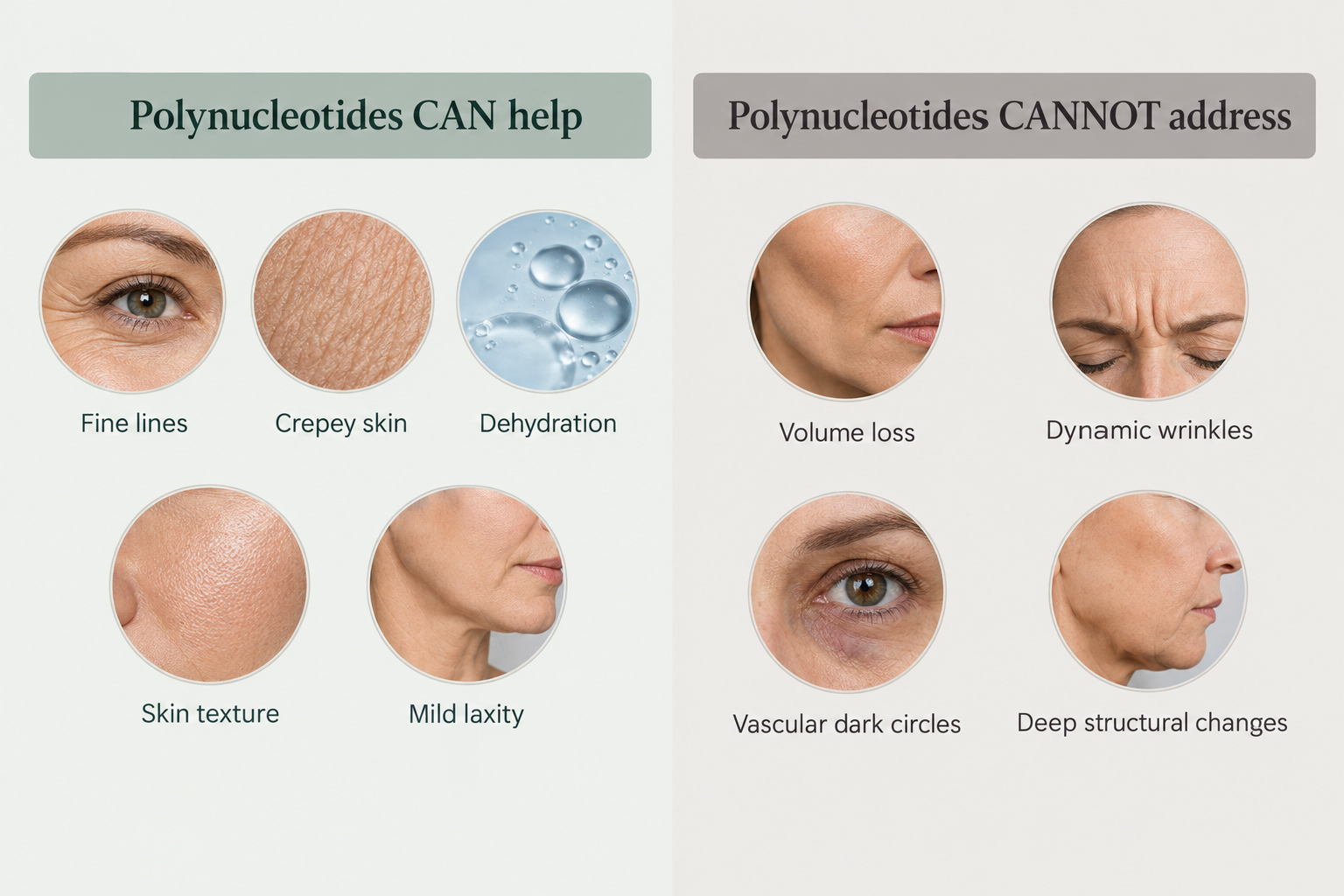
- Polynucleotides cannot replace lost volume. If hollowness in the cheeks, temples, or under-eye area is the primary concern, a volumising filler is the appropriate treatment. Polynucleotides are not a volume treatment.
- Polynucleotides cannot relax dynamic wrinkles. Expression lines caused by repeated muscle movement — such as frown lines or forehead lines — require botulinum toxin. Polynucleotides may improve the skin quality in these areas but will not prevent the movement that causes the lines.
- Polynucleotides have limited effect on vascular dark circles. Dark circles caused by visible blood vessels beneath thin under-eye skin respond poorly to polynucleotides. Improving skin thickness and quality may offer modest benefit, but this type of dark circle is difficult to treat with any injectable alone.
- Polynucleotides cannot produce immediate visible results. Patients expecting the kind of instant change seen with fillers will be disappointed. The treatment requires patience and a completed course of sessions before the full benefit is apparent.
- Polynucleotides are not reversible. Unlike hyaluronic acid fillers, which can be dissolved with hyaluronidase, polynucleotide injections cannot be reversed. This makes practitioner selection and pre-treatment assessment particularly important.
Side Effects, Downtime, and Safety
Polynucleotides have a well-established safety profile when administered by a trained practitioner, but side effects and downtime are a realistic part of the treatment experience. The most common side effects are mild redness and swelling at the injection sites, which typically resolve within 24 to 72 hours. Bruising is possible, particularly in the delicate periorbital area. Small temporary lumps or nodules at injection sites can occur and usually resolve within one to two weeks.
Rare but more serious complications include granuloma formation and, as with any injectable treatment, infection. Vascular occlusion — where an injection inadvertently affects a blood vessel — is a rare but serious risk associated with all injectable treatments and underlines the importance of treatment by a qualified and experienced practitioner. Patients with a known fish allergy should inform their practitioner before treatment, as most polynucleotide products are derived from salmon or trout DNA and this represents a contraindication in some cases.
Polynucleotides are generally not recommended during pregnancy or breastfeeding, and suitability should be assessed individually based on medical history, current medications, and skin condition.
How to Evaluate Before and After Photos Honestly
Before and after photographs are a useful reference point, but they require careful interpretation. When reviewing polynucleotides before and after images — whether from a clinic or online — consider the following factors before drawing conclusions.
- Lighting and angle: Differences in lighting between the before and after photograph can create the appearance of dramatic improvement that may not reflect the actual change. Consistent lighting and angle are essential for a fair comparison.
- Number of sessions completed: A photograph taken after a full course of treatment will show more improvement than one taken after a single session. Check whether the caption specifies how many treatments were completed.
- Time elapsed: Results continue to develop for weeks after each session. A photograph taken at six to eight weeks will typically show more improvement than one taken at two weeks.
- Skin preparation: Makeup, skincare, and skin preparation on the day of photography can influence the appearance of the skin in the after image.
- Patient selection: Clinics naturally select their most successful outcomes for marketing purposes. The results shown may not be representative of average outcomes.
Who May Be a Suitable Candidate
Polynucleotides may be worth discussing with a practitioner if you have concerns about skin quality, fine lines, skin dehydration, or crepey skin and are looking for a gradual, natural-looking improvement rather than an immediate structural change. The treatment tends to suit patients with thin, delicate, or dehydrated skin, those who want to avoid volume-adding treatments, and those seeking a regenerative approach to skin ageing.
Patients who are primarily concerned with volume loss, deep structural changes, or dynamic wrinkles are likely to achieve better results with alternative or combination treatments. A thorough consultation with a qualified practitioner is essential to assess whether polynucleotides are appropriate for your specific concerns, anatomy, and medical history.
Combination Treatment Approaches
Polynucleotides are increasingly used alongside other treatments to address concerns that a single modality cannot fully resolve. Common combinations include polynucleotides with botulinum toxin (to address both skin quality and dynamic wrinkles), polynucleotides with Profhilo or other skin boosters (to layer hydration and biostimulation), and polynucleotides with energy-based treatments such as radiofrequency microneedling for patients with more significant skin laxity. These combination approaches are often discussed in clinical practice but are less well-represented in published research, so the evidence base for specific combinations remains developing. A practitioner experienced in combination aesthetics can advise on whether a staged or combined approach may better address your goals.
Frequently Asked Questions
How many sessions of polynucleotides are needed to see results?
Most practitioners recommend a course of two to four sessions spaced two to four weeks apart. Meaningful improvements in skin texture and hydration may be noticeable after the first or second session, but the full benefit of the treatment typically becomes apparent four to eight weeks after completing the course.
Are polynucleotide results permanent?
No. Results are not permanent. The collagen and elastin stimulated by the treatment will naturally turn over with time, and the skin will gradually return towards its pre-treatment state without maintenance. Most patients benefit from maintenance sessions every six to twelve months to sustain the improvement.
Can polynucleotides fix dark circles under the eyes?
It depends on the cause. Polynucleotides may improve dark circles related to thin, dehydrated, or crepey skin by improving skin quality and thickness in the periorbital area. However, dark circles caused by visible blood vessels (vascular) or significant hollowness (structural) respond poorly to polynucleotides alone. A practitioner should assess the underlying cause before recommending treatment.
Do polynucleotides hurt?
Polynucleotides are administered via intradermal injections, which can cause mild to moderate discomfort depending on the treatment area and individual pain tolerance. Topical anaesthetic cream is commonly applied before treatment to reduce discomfort. The periorbital area tends to be more sensitive than other facial areas.
How do polynucleotides compare with Profhilo?
Both are injectable skin quality treatments, but they work differently. Profhilo is a high-concentration hyaluronic acid product that provides deep hydration and some biostimulation through a different mechanism. Polynucleotides work primarily through fibroblast stimulation and DNA repair pathways. Some practitioners use both in combination. Neither is a volume treatment, and both produce gradual rather than immediate results.
Is there clinical evidence that polynucleotides work?
Yes, though the evidence base is still growing. Published studies support improvements in periorbital skin quality, skin hydration, fine lines, and patient-reported outcomes. A prospective study using validated FACE-Q measures found progressive improvement at one, three, and six months following periorbital polynucleotide injections. Real-world assessments have reported high rates of clinician and patient satisfaction. As with many aesthetic treatments, large-scale randomised controlled trials remain limited, and results vary between individuals.
Making an Informed Decision About Polynucleotide Treatment
Polynucleotides offer a clinically supported approach to skin regeneration that can meaningfully improve skin texture, hydration, fine lines, and crepey skin over a course of treatment. The results are gradual and natural-looking rather than immediate or dramatic, which suits patients whose priority is improved skin quality rather than structural change. The treatment works best when expectations are aligned with what it can realistically achieve — and when patients understand clearly what it cannot do.
If your primary concerns are volume loss, deep structural changes, or movement-related wrinkles, polynucleotides alone are unlikely to be the right answer, though they may complement other treatments effectively. If your concerns centre on skin quality, dehydration, fine lines, or crepiness — particularly in the periorbital area, neck, or décolletage — polynucleotides may be worth exploring with a qualified practitioner who can assess your skin, discuss your goals, and recommend an appropriate treatment plan. A thorough consultation remains the most reliable way to determine whether this treatment is right for you.
