


Noticing that your skin looks worse after microneedling is one of the most common concerns patients raise following their first treatment. Redness, swelling, dryness, and even temporary breakouts can appear in the days after a session, which understandably causes alarm. In most cases, these reactions are a predictable part of the skin’s healing response rather than a sign that something has gone wrong. Understanding what is expected, what is not, and how to support your skin through recovery can make a significant difference to both your experience and your outcome.
Key Takeaways
- Redness, swelling, tightness, and mild peeling in the first few days after microneedling are normal parts of the inflammatory healing response and do not indicate a problem.
- Temporary skin purging, dryness, and increased sensitivity are common and usually resolve within one to two weeks depending on needle depth and individual skin type.
- Certain reactions — including prolonged redness, spreading infection, hyperpigmentation, or worsening acne beyond two weeks — warrant prompt assessment by a qualified practitioner.
- Aftercare choices, including skincare products used immediately after treatment, significantly influence how the skin heals and whether complications develop.
- Results from microneedling typically become visible several weeks after treatment, once the initial healing phase has passed and collagen remodelling has begun.
Why Skin Can Look Worse Immediately After Microneedling
Microneedling works by creating controlled micro-injuries in the skin using fine needles. These tiny punctures trigger the skin’s natural wound-healing cascade, which involves three overlapping phases: inflammation, proliferation, and remodelling. The inflammation phase begins immediately and is responsible for the redness, warmth, and swelling that many patients notice straight after their appointment. This is not damage in the harmful sense — it is the skin recruiting growth factors, fibroblasts, and collagen-producing cells to repair the treated area. The visible reaction is, in effect, evidence that the treatment has stimulated a biological response.
The depth of needle penetration influences how pronounced the initial reaction will be. Superficial treatments targeting fine lines or general skin texture typically cause mild redness that resolves within 24 to 48 hours. Deeper treatments aimed at acne scarring or significant textural irregularities may produce more noticeable swelling, pinpoint bleeding, and redness that persists for several days. Patients who have not had microneedling before are often surprised by how their skin looks in the first 24 to 72 hours, particularly if they were expecting an immediate improvement.
Normal Skin Reactions After Microneedling
Several reactions are considered a normal part of the post-microneedling healing process. Recognising these can help patients avoid unnecessary anxiety and avoid making aftercare mistakes that could interfere with healing.
Redness and Flushing
Redness is the most universally reported reaction after microneedling. The skin may appear sunburned or flushed immediately after treatment and for the following one to three days. This reflects increased blood flow to the treated area as part of the inflammatory response. In patients with fair skin or rosacea-prone complexions, the redness may appear more intense. It typically fades progressively and should not be accompanied by significant pain at rest.
Swelling and Puffiness
Mild swelling, particularly around the eyes and cheeks, is common in the first 24 to 48 hours. This is caused by fluid accumulation in the tissue as the healing response begins. Sleeping with the head slightly elevated on the night of treatment may help reduce morning puffiness. Swelling that is severe, asymmetrical, or accompanied by heat and pain beyond the first two days should be assessed by a practitioner.
Dryness, Tightness, and Flaking
As the skin begins to repair itself, many patients experience tightness and dryness from around day two onwards. Light flaking or peeling may follow as the outer layer of skin sheds and new skin cells emerge. This is a normal part of the skin renewal process and should not be forcibly removed by scrubbing or exfoliating. Using a gentle, fragrance-free moisturiser can help manage discomfort during this phase.
Skin Purging and Temporary Breakouts
Some patients notice small pimples, whiteheads, or congestion appearing in the week or two after microneedling. This is often referred to as skin purging — a process in which the increased cell turnover triggered by treatment brings existing congestion to the surface more quickly than it would have appeared naturally. Purging tends to occur in areas where a patient is already prone to breakouts and typically resolves within two weeks. It is distinct from a true acne flare or infection, which would involve more widespread, painful, or worsening spots that do not improve with time.
Increased Sensitivity and Reactivity
The skin’s barrier function is temporarily compromised after microneedling, which can make it more reactive to products, temperature changes, and sun exposure. Patients may notice that their usual skincare products sting or cause irritation in the days following treatment. This is expected and is one reason why aftercare guidance typically recommends avoiding active ingredients such as retinoids, vitamin C serums, acids, and exfoliants for at least several days after a session.
How Long Does the Skin Look Worse After Microneedling?
For most patients receiving a standard microneedling treatment, the most noticeable reactions — redness, swelling, and tightness — begin to settle within 48 to 72 hours. By day three to five, the skin often looks closer to its pre-treatment baseline, though some dryness and mild sensitivity may persist into the first week. Deeper treatments, or those combined with radiofrequency energy (sometimes called RF microneedling), may involve a longer recovery period of five to seven days or more.

The timeline also varies depending on individual factors including skin type, age, immune response, and how well aftercare instructions are followed. Patients who use inappropriate products, expose their skin to direct sunlight, or engage in vigorous exercise in the first 24 to 48 hours may experience a more prolonged or complicated recovery. A practitioner should provide specific aftercare guidance tailored to the treatment depth and the patient’s skin profile.
When Skin Reactions After Microneedling Are Not Normal
While most post-treatment reactions are temporary and self-limiting, certain signs suggest that something beyond the expected healing response may be occurring. These warrant prompt contact with the treating practitioner rather than a wait-and-see approach.
Prolonged or Worsening Redness
Redness that intensifies after the first 48 hours, rather than gradually fading, may indicate an adverse reaction. Persistent redness lasting beyond one week — particularly if accompanied by warmth, tenderness, or swelling — could suggest an inflammatory complication or, in rare cases, an infection. Patients with a history of rosacea or sensitive skin conditions should discuss their suitability for microneedling carefully before treatment, as these conditions may increase the risk of a prolonged inflammatory response.
Signs of Infection
Although infection following microneedling is uncommon when treatment is performed in a clinical setting with appropriate hygiene protocols, it can occur. Warning signs include increasing pain, significant swelling, yellow or green discharge, crusting, fever, or red streaking around the treated area. Any of these symptoms should be assessed by a medical professional promptly. Patients should avoid touching the treated skin with unwashed hands in the days following treatment and should not apply makeup until the practitioner advises it is safe to do so.
Post-Inflammatory Hyperpigmentation
Post-inflammatory hyperpigmentation (PIH) refers to darkening of the skin that can develop after any inflammatory skin injury, including microneedling. It is more common in patients with medium to darker skin tones (Fitzpatrick skin types III to VI) and in those who do not adequately protect their skin from sun exposure during the healing period. PIH can appear as patches of brown or grey-brown discolouration in the weeks following treatment. This is one reason why sun protection is considered essential after microneedling, and why patient selection and needle depth should be carefully considered for individuals with higher-risk skin tones.
Reactivation of Cold Sores
Microneedling around the mouth or on the face can trigger a reactivation of the herpes simplex virus in patients who carry it, even if they have not had a visible cold sore for some time. This can present as a cluster of painful blisters appearing within a few days of treatment. Patients with a known history of cold sores should inform their practitioner before treatment, as antiviral prophylaxis may be recommended in advance.
Persistent Acne Flare Beyond Two Weeks
While short-term purging is expected, acne that continues to worsen or spread beyond two weeks after microneedling is not a normal healing response. This may indicate that microneedling was not appropriate for the patient’s current skin condition, that the treatment was performed on actively inflamed acne, or that an infection has developed. Active inflammatory acne is generally considered a contraindication for microneedling, and patients should discuss their acne status honestly during their pre-treatment consultation.
Aftercare Mistakes That Can Make Skin Look Worse
The choices made in the hours and days after microneedling have a direct impact on how the skin heals. Several common aftercare mistakes can prolong or worsen the initial reaction.
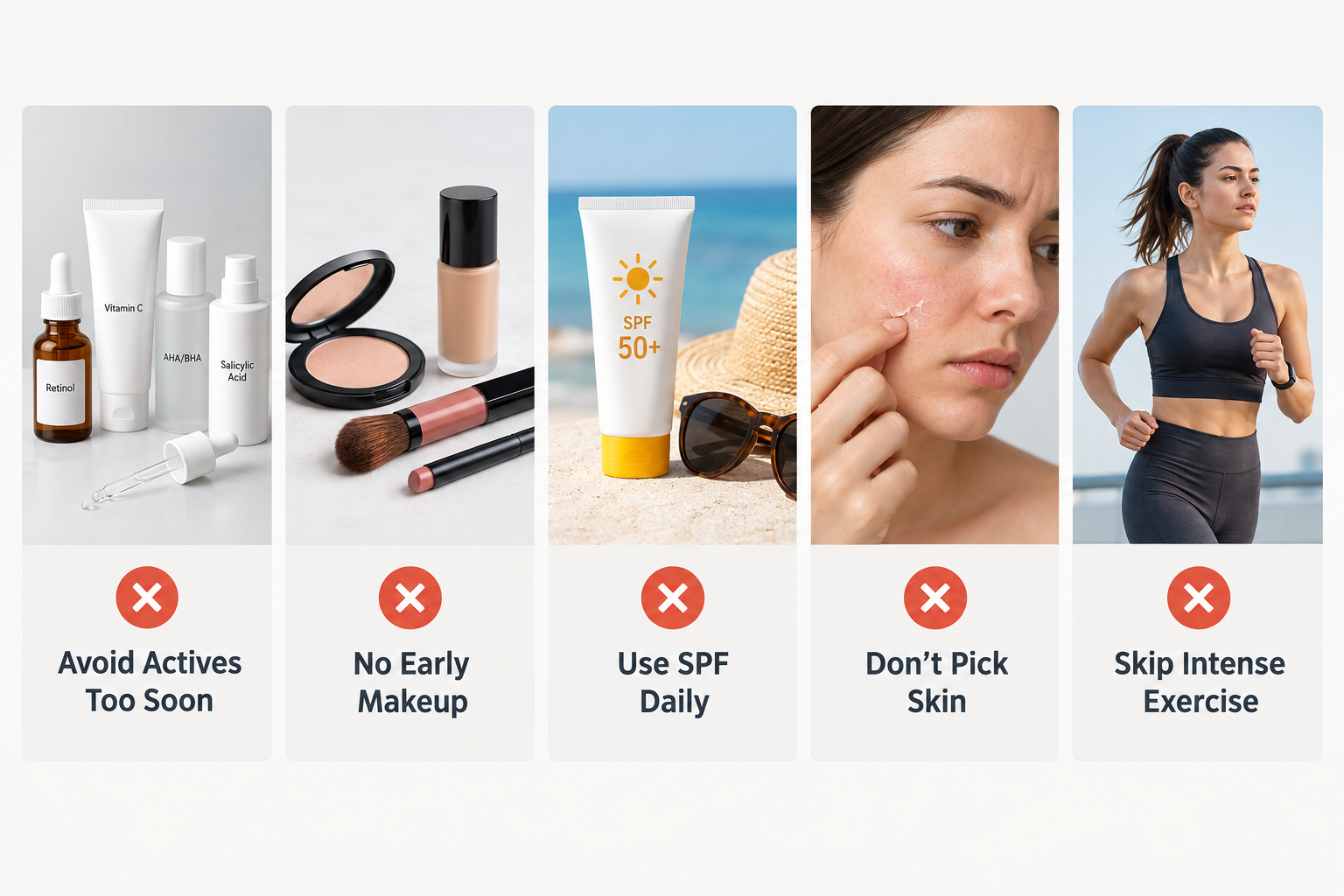
- Using active skincare ingredients too soon: Retinoids, alpha hydroxy acids, beta hydroxy acids, vitamin C, and other potent actives can cause significant irritation when applied to skin that has been microneedled. Most practitioners recommend avoiding these for at least three to five days, or longer depending on treatment depth.
- Applying makeup too early: Introducing makeup products to skin with open micro-channels increases the risk of irritation and infection. Practitioners typically advise waiting at least 24 hours, and sometimes longer.
- Sun exposure without protection: The skin is significantly more vulnerable to UV damage after microneedling. Unprotected sun exposure during the healing period increases the risk of hyperpigmentation and can worsen redness. Broad-spectrum SPF 30 or higher should be applied as soon as the skin can tolerate it.
- Picking or exfoliating flaking skin: Removing flaking skin manually can disrupt the healing process and increase the risk of scarring or pigmentation changes. Gentle moisturisation is preferable to physical exfoliation during recovery.
- Vigorous exercise immediately after treatment: Increased body heat, sweating, and friction can aggravate post-treatment redness and increase infection risk. Most practitioners recommend avoiding intense exercise for 24 to 48 hours.
- Using unverified topical products: Some patients apply home remedies or products not recommended by their practitioner. Certain natural ingredients, including essential oils and citrus extracts, can cause significant irritation on compromised skin.
When Will Skin Actually Look Better After Microneedling?
Microneedling results do not appear immediately. The treatment works by stimulating collagen and elastin production, which is a gradual biological process. Most patients begin to notice improvements in skin texture, tone, and radiance from around three to four weeks after their first session, as the remodelling phase of healing progresses. More significant changes — particularly in the appearance of acne scars, enlarged pores, or fine lines — typically become visible after a course of treatments, which commonly involves three to six sessions spaced four to six weeks apart.
It is worth setting realistic expectations before starting microneedling. The treatment may improve skin quality progressively over several months rather than producing a dramatic transformation after a single session. Patients who expect immediate visible improvement may interpret the normal post-treatment reaction as a failure of the treatment, when in fact the healing process is proceeding as expected.
Who May Not Be Suitable for Microneedling
Microneedling is not appropriate for everyone, and certain conditions increase the risk of an adverse reaction. A thorough consultation with a qualified practitioner should assess suitability before treatment. Factors that may affect suitability include:
- Active inflammatory acne or open skin lesions in the treatment area
- Active cold sores or a history of frequent herpes simplex outbreaks without prophylactic management
- Certain skin conditions including eczema, psoriasis, or rosacea in an active flare
- Use of isotretinoin (a medication for acne) — most practitioners recommend waiting at least six months after completing a course before undergoing microneedling
- Blood-thinning medications or clotting disorders, which may affect healing
- Pregnancy or breastfeeding
- A history of keloid scarring or hypertrophic scarring, which may increase the risk of abnormal scar formation
- Recent cosmetic procedures in the same area, including laser treatments or chemical peels, without adequate recovery time
- Skin cancer or a history of skin cancer in the treatment area
Patients with medium to darker skin tones should ensure their practitioner has experience treating their skin type, as the risk of post-inflammatory hyperpigmentation is higher and treatment parameters may need to be adjusted accordingly.
Alternatives to Microneedling Worth Considering
For patients who are concerned about the recovery period associated with microneedling, or who are not suitable candidates, several alternative treatments may address similar skin concerns with different risk and downtime profiles.
Chemical peels use exfoliating acids to improve skin texture, tone, and pigmentation. Superficial peels involve minimal downtime, while medium-depth peels may require a recovery period comparable to or longer than microneedling. The choice of peel depth and acid type should be matched to the patient’s skin concern and skin type.
Laser resurfacing treatments, including fractional laser and ablative laser options, can address similar concerns to microneedling — including acne scarring, fine lines, and skin texture — but typically involve more significant downtime and a higher risk of post-inflammatory hyperpigmentation in darker skin tones. Non-ablative laser treatments generally involve less downtime but may require more sessions to achieve comparable results.
Radiofrequency (RF) microneedling combines the micro-injury stimulus of traditional microneedling with radiofrequency energy delivered into the deeper layers of the skin. This combination may produce more pronounced skin tightening effects, particularly for laxity concerns, but typically involves a longer recovery period than standard microneedling.
HydraFacial and medical-grade facials offer skin-quality improvements with minimal downtime and are generally suitable for a wider range of skin types and conditions. These treatments do not stimulate collagen in the same way as microneedling and are better suited to maintenance and general skin health rather than significant structural concerns such as deep scarring.
The most appropriate treatment depends on the specific skin concern, skin type, lifestyle, and tolerance for downtime. A qualified practitioner can help identify which option is most likely to be effective and safe for an individual patient.
Frequently Asked Questions
Is it normal for skin to look worse after microneedling before it gets better?
Yes. The initial inflammatory response — redness, swelling, and tightness — is a normal part of the healing process and typically peaks within the first 24 to 48 hours before gradually improving. Most patients see their skin return to its pre-treatment baseline within three to five days, with visible improvements in skin quality appearing over the following weeks as collagen remodelling progresses.
How long does redness last after microneedling?
For standard microneedling treatments, redness usually fades within 24 to 72 hours. Deeper treatments or RF microneedling may cause redness that persists for up to five to seven days. Redness that worsens after the first 48 hours or lasts beyond one week should be assessed by the treating practitioner.
Can microneedling cause permanent skin damage?
Serious permanent complications from microneedling are uncommon when the treatment is performed by a trained practitioner using appropriate equipment and hygiene protocols. However, risks including post-inflammatory hyperpigmentation, scarring, and infection can occur, particularly when treatment is performed on unsuitable candidates, at inappropriate depths, or without adequate aftercare. Choosing a qualified and experienced practitioner significantly reduces these risks.
Why am I breaking out after microneedling?
Short-term breakouts after microneedling are often the result of skin purging — the accelerated turnover of skin cells bringing existing congestion to the surface. This typically resolves within two weeks. If breakouts are severe, spreading, or accompanied by pain and do not improve after two weeks, this should be discussed with the practitioner, as it may indicate an infection or that the treatment was not appropriate for the current skin condition.
Can I wear makeup after microneedling?
Most practitioners advise avoiding makeup for at least 24 hours after microneedling, and sometimes longer depending on treatment depth. Applying makeup to skin with open micro-channels increases the risk of irritation and infection. Mineral-based makeup is sometimes recommended as a first option when makeup use is resumed, but specific guidance should come from the treating practitioner.
Does microneedling make acne scars look worse before they improve?
Some patients notice that acne scars appear more prominent in the days immediately after microneedling due to swelling and redness in the surrounding skin. This is temporary. Meaningful improvement in acne scar appearance typically requires multiple treatment sessions and becomes visible gradually over several months as collagen remodelling takes effect.
What to Do If Your Skin Is Not Recovering as Expected
If your skin is not following the expected recovery timeline — or if you are experiencing symptoms that concern you — the most important step is to contact the practitioner who performed your treatment. Avoid applying additional products, attempting home remedies, or seeking advice from unqualified sources before speaking with a professional. A qualified practitioner can assess whether your reaction is within the normal range, whether a complication has developed, and what the appropriate next steps are. Microneedling, when performed correctly on suitable candidates with appropriate aftercare, has a well-established safety profile. Understanding the difference between a normal healing response and a genuine complication is the most useful thing a patient can know before and after treatment.
