
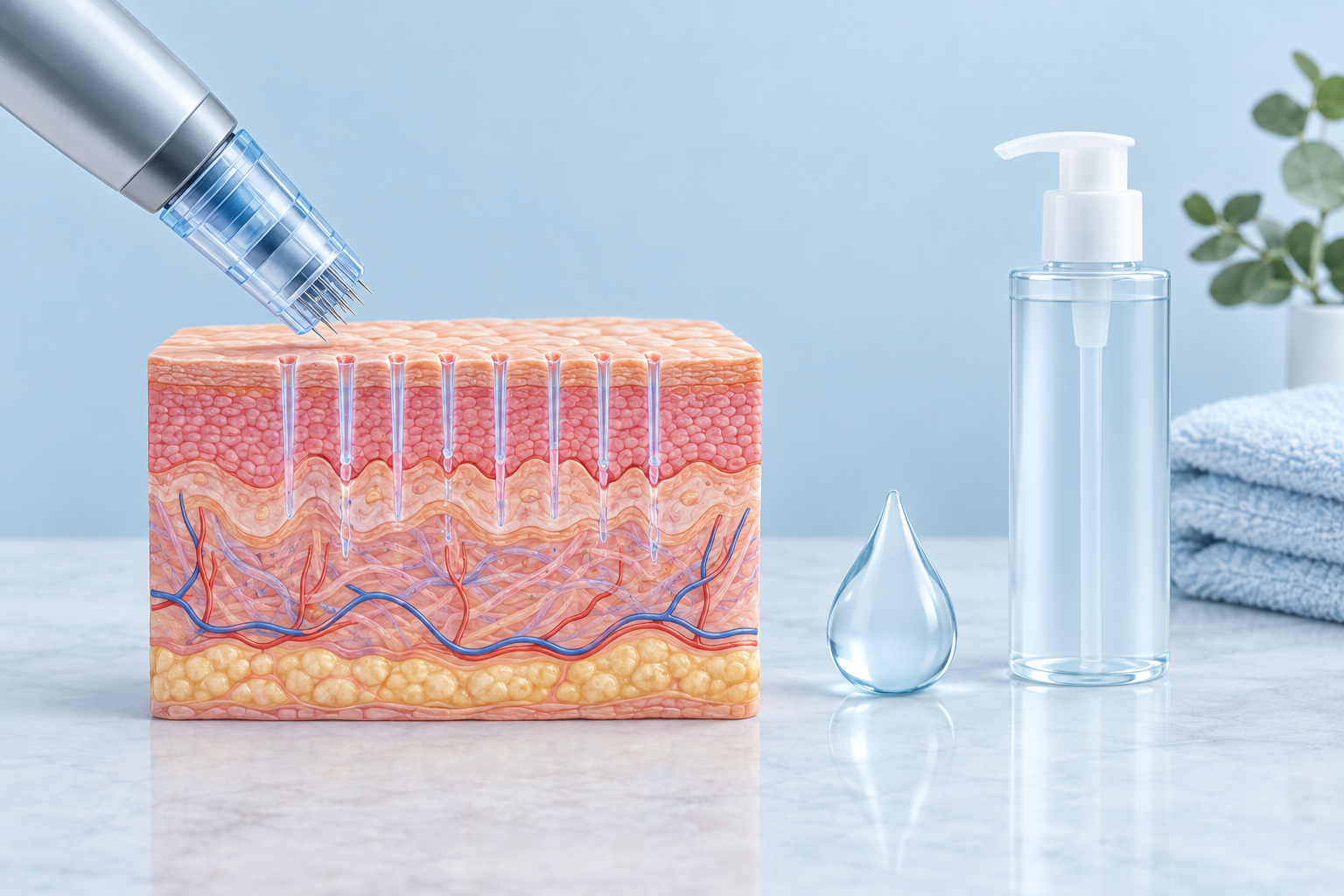

Microneedling creates thousands of microscopic channels in the skin, triggering a controlled wound-healing response that can improve texture, tone, and collagen production over time. Because those channels remain temporarily open after treatment, what you apply to your skin — and when — has a direct effect on how well your skin heals. Washing your face too soon, too vigorously, or with the wrong product can disrupt the healing process, increase the risk of irritation, and reduce the quality of your results. This guide explains the recommended timing for face washing after microneedling, which products are appropriate at each stage, and how to support your skin through the full recovery period.
Key Takeaways
- Most practitioners recommend waiting at least 4 to 6 hours before gently cleansing the skin after microneedling, though some advise waiting until the following morning.
- Only use a gentle, fragrance-free, non-foaming cleanser during the first few days of recovery — avoid active ingredients such as retinoids, AHAs, BHAs, and vitamin C until the skin has fully healed.
- Lukewarm water and light patting motions are essential; hot water, scrubbing, and washcloths can aggravate post-treatment sensitivity and disrupt the skin barrier.
- The skin’s microchannels begin closing within hours of treatment, but the surface barrier typically takes 24 to 72 hours to re-establish, and deeper healing continues for several weeks.
- Your treating practitioner’s specific aftercare instructions should always take priority over general guidance, as protocols may vary depending on needle depth, treatment area, and any serums applied during the session.
What Microneedling Does to Your Skin
Microneedling — also referred to as collagen induction therapy — uses a device fitted with fine needles to create controlled micro-injuries across the skin’s surface. These micro-injuries stimulate the body’s natural repair process, prompting the production of collagen and elastin. The treatment is commonly used to address fine lines, acne scarring, enlarged pores, uneven skin texture, and general skin quality concerns. Needle depths typically range from 0.5 mm for superficial skin quality treatments to 2.5 mm or deeper for more significant scarring, and the depth used directly influences how much post-treatment care the skin requires.
Immediately after microneedling, the skin is in an active inflammatory phase. The treated area will typically appear red, feel warm, and may be mildly swollen — a response that is expected and indicates the healing cascade has begun. The microchannels created during treatment also temporarily increase the skin’s permeability, meaning that substances applied to the skin are absorbed more readily than usual. This is why practitioners sometimes apply growth factor serums or hyaluronic acid immediately after treatment, and it is equally why harsh or active ingredients applied during this window can cause significant irritation or an adverse reaction.
When to Wash Your Face After Microneedling
The most widely recommended guidance is to wait a minimum of 4 to 6 hours before washing the face after microneedling. Many practitioners advise patients to wait until the following morning, particularly after deeper treatments, to give the skin adequate time to begin the initial stages of healing before introducing any water or product contact. If a serum such as hyaluronic acid or a growth factor was applied during the treatment session, leaving it undisturbed for as long as possible allows the skin to absorb it fully through the open microchannels.
During the first wash, use only lukewarm water — never hot — and apply a small amount of a gentle, fragrance-free cleanser using clean fingertips. Avoid washcloths, exfoliating pads, cleansing brushes, or any textured tool that could create friction on the sensitised skin surface. Rinse thoroughly and pat the skin dry with a clean, soft towel rather than rubbing. This approach minimises mechanical disruption to the skin while still removing any residue, dried serum, or surface debris that has accumulated since treatment.
For the first 24 to 48 hours, keep cleansing to once daily if possible, or twice daily using the gentlest possible technique. The goal during this window is to support the skin’s barrier recovery rather than to deep-cleanse. Over-washing during early recovery can strip the skin of the natural lipids it needs to repair itself and may prolong redness or sensitivity.
Which Cleanser Is Safe After Microneedling
Choosing the right cleanser is as important as the timing. In the days following microneedling, the skin’s barrier is compromised and its tolerance for active ingredients is significantly reduced. A cleanser that would normally be well tolerated may cause stinging, redness, or prolonged irritation when used on post-treatment skin.
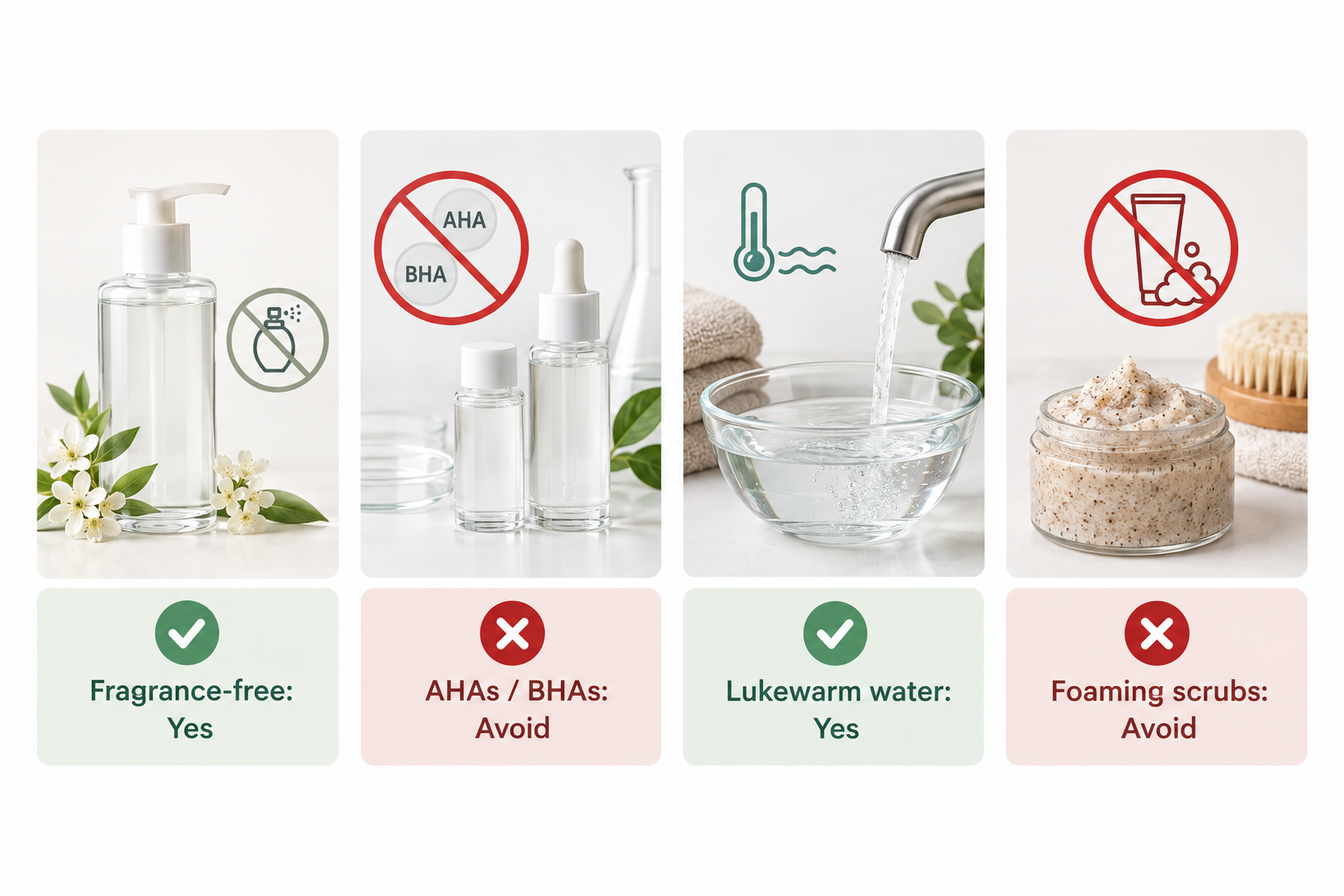
Safe cleanser characteristics during the recovery period include:
- Fragrance-free: Fragrances — both synthetic and natural — are among the most common causes of contact irritation on sensitised skin.
- Non-foaming or low-foam formula: Foaming cleansers often contain surfactants that can disrupt the skin barrier. Micellar water or cream cleansers are generally better tolerated.
- pH-balanced: A cleanser with a pH close to the skin’s natural range (approximately 4.5 to 5.5) supports barrier recovery rather than disrupting it.
- Free from active ingredients: Avoid cleansers containing retinol, glycolic acid, salicylic acid, lactic acid, benzoyl peroxide, vitamin C, or niacinamide during the first few days of recovery.
- Free from physical exfoliants: Scrub particles, microbeads, or any abrasive component should be avoided entirely until the skin has fully healed.
Simple, minimal-ingredient formulas are preferable. If you are unsure whether a specific product is appropriate, ask your practitioner before your appointment so you have a suitable cleanser ready at home before treatment day.
What to Avoid When Washing Your Face After Microneedling
Several common cleansing habits that are harmless on healthy skin can cause problems during the microneedling recovery period. Understanding what to avoid is just as important as knowing what to use.
Hot Water
Hot water increases vasodilation — the widening of blood vessels — which can intensify post-treatment redness and swelling. It can also strip the skin’s natural oils more aggressively than lukewarm water. Always use cool to lukewarm water when cleansing after microneedling, and avoid steam rooms, saunas, and hot showers for at least 48 to 72 hours following treatment.
Scrubbing or Rubbing
Mechanical friction on recently needled skin can reopen microchannels, cause micro-tears in the healing surface, and prolong the inflammatory phase. Use only light, circular fingertip motions when applying cleanser, and always pat — never rub — when drying the skin.
Cleansing Devices
Sonic cleansing brushes, silicone scrubbers, and similar devices create vibration and friction that are inappropriate for post-microneedling skin. These tools should be avoided for at least one to two weeks after treatment, or until the skin has fully recovered and your practitioner confirms it is safe to resume their use.
Active Ingredient Cleansers
Cleansers containing retinoids, alpha-hydroxy acids (AHAs), beta-hydroxy acids (BHAs), or vitamin C derivatives should not be used during the initial healing phase. Even brief contact during rinsing can cause significant irritation when the skin barrier is compromised. Resume these products only when the skin has fully healed and your practitioner advises it is appropriate — typically after five to seven days for superficial treatments, and potentially longer after deeper sessions.
Day-by-Day Aftercare: What to Expect and When
Understanding the typical recovery timeline helps you make appropriate decisions about cleansing and skincare at each stage. Individual recovery varies depending on needle depth, skin sensitivity, the number of passes performed, and whether any additional treatments were combined with microneedling.
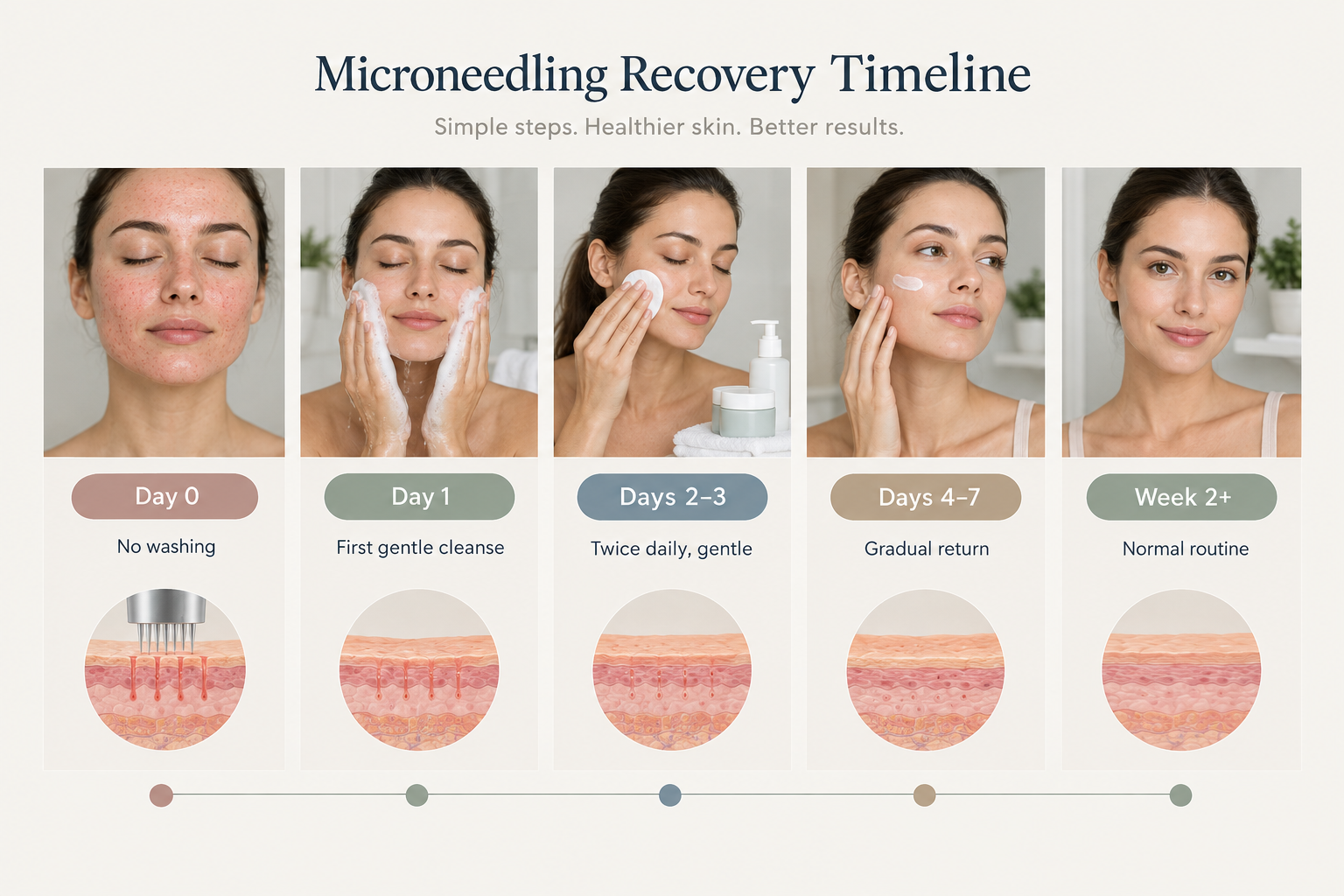
Day of Treatment (Hours 0–6)
Do not wash the face during this period. The skin is in its most vulnerable state immediately after microneedling, and the microchannels are at their most open. If a post-treatment serum was applied in the clinic, allow it to remain on the skin undisturbed. Avoid touching the face unnecessarily, and keep the skin away from potential contaminants such as gym equipment, pillowcases that have not been recently washed, or makeup.
Evening of Treatment or Following Morning (Hours 6–24)
Perform the first gentle cleanse using lukewarm water and a fragrance-free, non-active cleanser. Pat dry with a clean towel. Apply only practitioner-recommended post-treatment products — typically a gentle moisturiser or hyaluronic acid serum — and avoid all makeup. Sun protection is essential if going outdoors, but chemical sunscreens may be irritating at this stage; a mineral sunscreen (zinc oxide or titanium dioxide) is generally better tolerated on compromised skin.
Days 2 to 3
Redness should be reducing, though some patients experience a degree of skin tightness, mild flaking, or dryness as the skin begins to shed the outermost layer of treated cells. Continue gentle cleansing twice daily. Avoid picking, peeling, or exfoliating any flaking skin — this is a normal part of the healing process and should be left to resolve naturally. Hydration is important during this phase; a simple, non-comedogenic moisturiser applied after cleansing helps support barrier recovery.
Days 4 to 7
For most patients who have had a standard superficial to mid-depth microneedling session, the skin surface will feel largely recovered by this point, though some sensitivity may persist. Gentle cleansing can continue, and many practitioners will advise that it is safe to reintroduce a gentle toner or basic skincare routine. Active ingredients such as retinoids and exfoliating acids should still be avoided unless your practitioner has specifically confirmed the skin is ready.
Week 2 and Beyond
By the end of the second week, most patients can return to their normal cleansing and skincare routine. However, deeper microneedling treatments — particularly those targeting significant acne scarring — may require a longer recovery period before active ingredients are reintroduced. Collagen remodelling continues for several months after treatment, and visible improvements in skin texture and tone often become more apparent over six to twelve weeks.
Makeup and Sunscreen After Microneedling
Applying makeup too soon after microneedling introduces pigments, preservatives, and other ingredients directly into open microchannels, which increases the risk of irritation, breakouts, or infection. Most practitioners advise avoiding all makeup for at least 24 hours after treatment, and ideally for 48 to 72 hours. When makeup is reintroduced, use clean brushes or applicators and choose mineral-based, non-comedogenic formulas where possible.
Sun protection is non-negotiable after microneedling. The treated skin is more susceptible to UV-induced damage and post-inflammatory hyperpigmentation — a darkening of the skin that can occur when healing skin is exposed to ultraviolet radiation. A broad-spectrum mineral sunscreen with SPF 30 or higher should be applied every morning from the day after treatment, reapplied throughout the day if outdoors, and continued consistently for several weeks. Physical sun avoidance — hats, shade, and limiting time in direct sunlight — provides additional protection during the recovery period.
Risks of Washing Too Soon or Using the Wrong Products
Cleansing the skin too early or with inappropriate products after microneedling is one of the more common causes of avoidable post-treatment complications. The risks are not severe in most cases, but they can affect both comfort and the quality of results.
- Prolonged redness and irritation: Harsh cleansers or hot water can extend the inflammatory phase beyond what is expected, leading to more noticeable and longer-lasting redness.
- Skin barrier disruption: Over-cleansing or using stripping formulas can impair the skin’s ability to retain moisture and recover efficiently, resulting in dryness, tightness, and sensitivity that persists beyond the normal recovery window.
- Breakouts: Introducing comedogenic products or bacteria through unwashed hands or contaminated tools can trigger post-treatment breakouts, particularly in patients who are already prone to acne.
- Post-inflammatory hyperpigmentation: Irritation from inappropriate products, combined with sun exposure, increases the risk of uneven pigmentation developing in the treated area. This risk is higher in patients with medium to darker skin tones.
- Infection: Although uncommon when treatment is performed in a clinical setting with appropriate aftercare, introducing bacteria through contaminated water, unclean hands, or non-sterile products during the period when microchannels are open carries a small risk of infection. Signs of infection — increasing pain, warmth, swelling, or discharge — should be assessed by a medical professional promptly.
Factors That May Affect Your Aftercare Protocol
Standard aftercare guidance applies to most patients, but individual circumstances can influence what is appropriate for your specific situation. Always follow the personalised instructions provided by your treating practitioner, as these will take into account the specifics of your treatment.
Factors that may affect your aftercare protocol include the needle depth used during treatment, whether radiofrequency energy was combined with microneedling (RF microneedling), whether platelet-rich plasma (PRP) or a specific serum was applied during the session, your skin type and baseline sensitivity, and any medications you are taking that may affect healing. Patients using certain prescription medications — including oral retinoids or immunosuppressants — may require modified aftercare and should discuss this with both their prescribing doctor and their aesthetic practitioner before undergoing microneedling.
Frequently Asked Questions
Can I wash my face with just water after microneedling?
Yes, rinsing with cool to lukewarm water alone is a safe option for the first cleanse after microneedling, particularly if you are unsure whether your cleanser is appropriate. Water alone will remove surface debris without introducing any potentially irritating ingredients. Pat the skin dry gently with a clean towel afterwards.
What happens if I wash my face too soon after microneedling?
Washing the face within the first few hours after microneedling — particularly with a foaming or active-ingredient cleanser — can introduce irritants into open microchannels, disrupt the healing environment, and potentially wash away any post-treatment serum that was applied in the clinic. It may increase redness and sensitivity, though it is unlikely to cause serious harm in most cases. If you accidentally cleansed too early, rinse with cool water, apply a gentle moisturiser, and contact your practitioner if you notice unusual irritation.
Can I use micellar water to cleanse after microneedling?
Micellar water can be a suitable option for gentle cleansing after microneedling, provided it is fragrance-free and does not contain active ingredients. Some micellar waters contain alcohol or fragrance, so check the ingredient list carefully. Apply with clean fingertips rather than a cotton pad to avoid unnecessary friction on the skin.
When can I use my normal cleanser again after microneedling?
For most patients who have had a standard microneedling session, returning to a regular gentle cleanser is appropriate after approximately five to seven days, once the skin surface has healed. If your usual cleanser contains active ingredients such as salicylic acid, glycolic acid, or retinol, wait until your practitioner confirms the skin is ready — typically after seven to fourteen days depending on treatment depth.
Is it normal for my skin to feel tight or dry after washing?
Yes, a degree of tightness and dryness after cleansing is common during the first few days of microneedling recovery. This reflects the temporary disruption to the skin barrier and the active healing process. Applying a gentle, non-comedogenic moisturiser or hyaluronic acid serum immediately after cleansing and patting dry can help manage this. If dryness is severe or accompanied by significant discomfort, contact your practitioner.
Can I shower after microneedling?
Showering is generally acceptable after the initial waiting period, but keep the water temperature lukewarm rather than hot, and avoid directing a strong stream of water directly at the treated area. Steam from a hot shower can increase redness and swelling, so keep shower duration short during the first 48 hours. Avoid swimming pools, hot tubs, and open water for at least 48 to 72 hours after treatment due to the risk of bacterial contamination.
How long does microneedling recovery take overall?
Surface redness and sensitivity typically resolve within 24 to 72 hours for most patients after a standard microneedling session. Deeper treatments may involve a longer visible recovery period of up to five to seven days. Skin texture improvements and collagen remodelling continue for several weeks to months after treatment, with many patients noticing progressive improvements over a six to twelve week period following each session.
Supporting Your Skin Through Microneedling Recovery
Knowing when to wash your face after microneedling — and how to do it correctly — is one of the most practical steps you can take to protect your results and support comfortable healing. The general principle is straightforward: wait at least 4 to 6 hours before the first cleanse, use only a gentle fragrance-free cleanser with lukewarm water and light fingertip pressure, and avoid active ingredients, hot water, and mechanical friction until the skin has fully recovered. Reintroduce your normal skincare routine gradually and only when your practitioner advises it is appropriate.
Post-treatment skin care is not complicated, but it does require a brief period of deliberate simplicity. The skin’s capacity to heal is well established, and providing the right environment — gentle cleansing, adequate hydration, consistent sun protection, and avoidance of unnecessary irritants — gives that process the best possible conditions. If you experience unexpected symptoms such as increasing pain, significant swelling, discharge, or signs of an allergic reaction at any point during recovery, seek assessment from a qualified medical professional rather than waiting for symptoms to resolve on their own.
Before your microneedling appointment, ask your practitioner for written aftercare instructions and clarify which specific products they recommend for your skin type and the treatment planned. Having the right cleanser and moisturiser ready at home before treatment day means you can follow the correct protocol from the moment you leave the clinic.
