
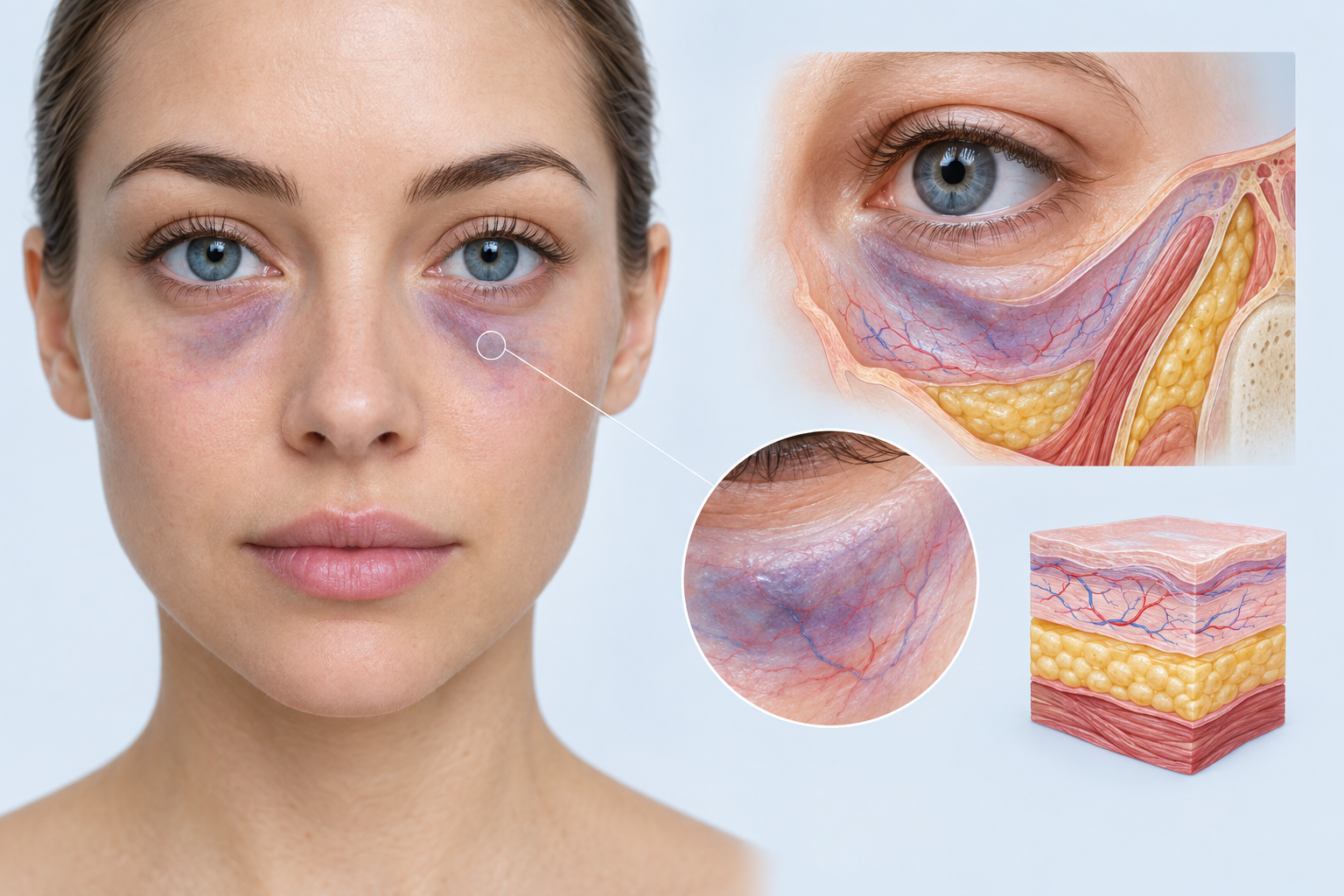

Bruising after tear trough filler is one of the most common concerns patients raise before and after treatment. The under-eye area is particularly prone to bruising because the skin is thin, the tissue is delicate, and the region contains a dense network of small blood vessels. Understanding why bruising happens, how long it typically lasts, and what can be done to minimise it helps patients plan realistically and recover with confidence.
Key Takeaways
- Bruising after tear trough filler is common and usually resolves within seven to fourteen days, though individual timelines vary.
- The under-eye area is especially prone to bruising due to thin skin, delicate tissue, and a rich network of superficial blood vessels.
- Certain medications, supplements, and lifestyle factors can increase bruising risk and are worth discussing with your practitioner before treatment.
- Cannula technique may reduce bruising risk compared with needle injection, though neither method eliminates it entirely.
- Most bruising is a normal part of recovery; however, severe, worsening, or unusually prolonged bruising warrants prompt clinical assessment.
Why the Tear Trough Area Bruises So Easily
The tear trough is the hollow groove that runs from the inner corner of the eye toward the cheek. Anatomically, this region sits directly over the orbital rim and contains very little subcutaneous fat to cushion the underlying structures. The skin here is among the thinnest on the face, often measuring less than one millimetre in depth, which means even minor disruption to a small blood vessel becomes visible almost immediately as a bruise.
When a needle or cannula passes through tissue during filler injection, it may nick or compress a capillary or small vein. Blood leaks into the surrounding tissue and, because the overlying skin is so thin and translucent, the discolouration shows through quickly. The periorbital region also has a relatively high density of small vessels compared with areas such as the cheeks or jawline, which is why bruising rates tend to be higher for tear trough treatments than for many other filler sites.
Gravity also plays a role. Blood that escapes from a vessel in the upper cheek or lower eyelid area can track downward through loose connective tissue, sometimes appearing in a location that seems unrelated to the injection site. This tracking effect can make bruising look more extensive than the actual area of tissue disruption.
How Long Does Bruising Last After Tear Trough Filler?
For most patients, bruising after tear trough filler resolves within seven to fourteen days. This is the range most commonly observed in clinical practice, though individual recovery timelines depend on several factors including the extent of bruising, the patient's skin tone, their general health, and how their body processes haemoglobin breakdown products.
Bruising typically progresses through a predictable colour sequence as the body reabsorbs the leaked blood. In the first one to two days, the bruise may appear red or dark purple. By days three to five, it often shifts toward a deeper blue or violet. From around day five onward, the bruise commonly transitions through green and then yellow as haemoglobin is broken down into biliverdin and bilirubin. The yellow phase can be particularly noticeable under the eyes because the thin skin allows the pigment to show clearly. Most bruises have faded significantly by the end of the second week.
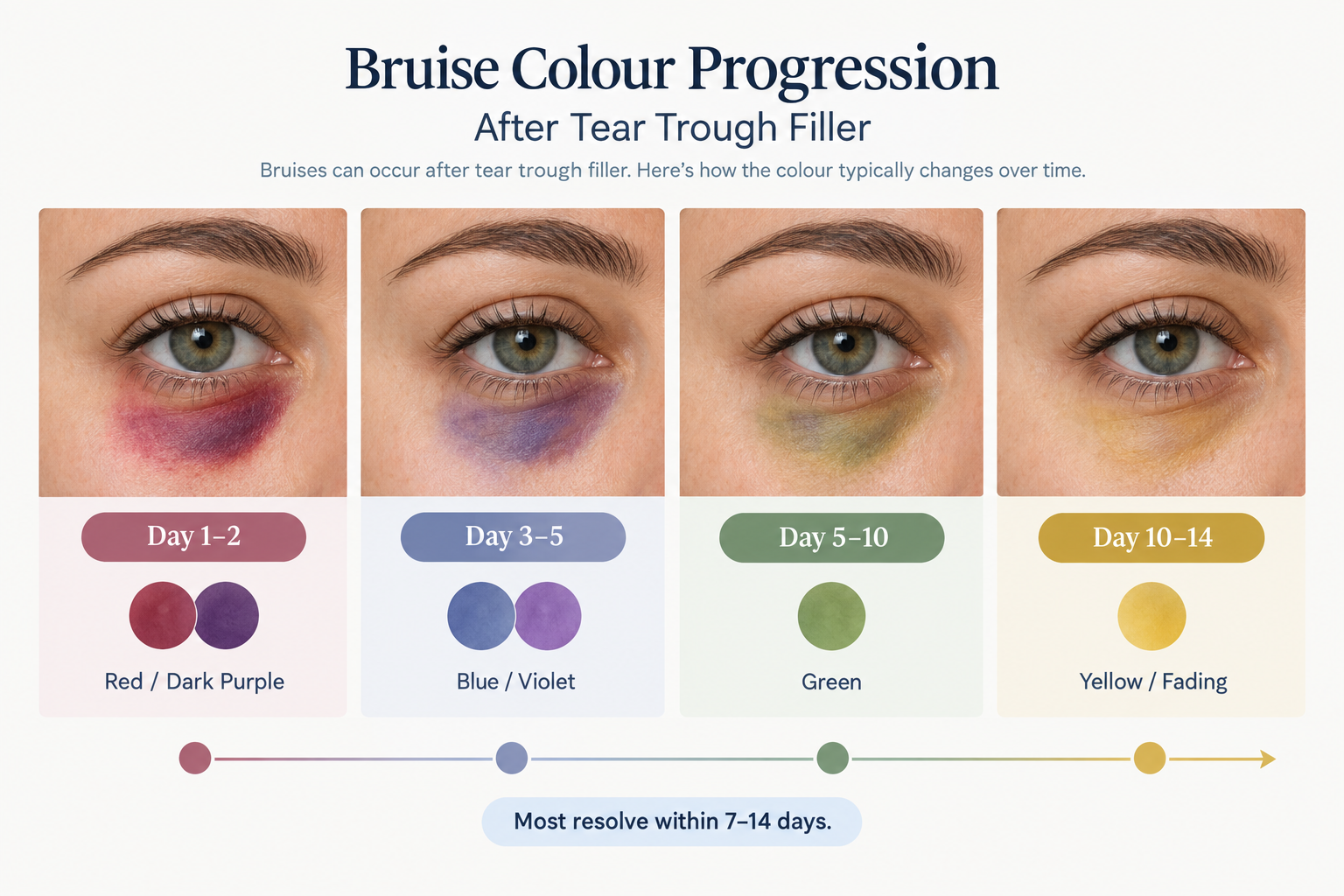
Minor bruising — small patches of discolouration covering only a few millimetres — may resolve within four to seven days. More extensive bruising, particularly if a larger vessel was disrupted, can persist for up to three weeks in some cases. Patients with fair or very thin skin may notice that even small bruises appear more prominent and take slightly longer to fade visually, even when the underlying tissue has healed.
Factors That Affect How Long Bruising Lasts
Several patient-specific and treatment-related factors influence both the likelihood of bruising and how quickly it resolves. Blood-thinning medications such as warfarin, aspirin, and certain antiplatelet drugs impair the normal clotting process, making bruising more likely and potentially more prolonged. Patients taking these medications should discuss their use with their prescribing doctor before making any changes, and should inform their aesthetic practitioner at consultation.
A number of over-the-counter supplements and herbal products are also associated with increased bleeding tendency. These include fish oil, vitamin E, ginkgo biloba, garlic supplements, and St John's Wort, among others. Alcohol consumption in the days before treatment can temporarily impair platelet function and dilate blood vessels, increasing bruising risk. Practitioners typically advise avoiding alcohol for at least twenty-four to forty-eight hours before a filler appointment.
Age is another relevant factor. As skin ages, it becomes thinner and loses some of its structural support, which can make bruising both more likely and more visible. Older patients may also find that bruising takes slightly longer to resolve. Conversely, patients with naturally darker skin tones may find that bruising is less visually apparent, though the underlying tissue process is the same.
Needle vs Cannula: Does Technique Affect Bruising?
The choice between a sharp needle and a blunt-tipped cannula for tear trough filler injection is one of the most clinically relevant factors affecting bruising risk. A sharp needle creates a precise entry point but can more readily pierce small blood vessels as it passes through tissue. A blunt cannula, by contrast, is designed to push vessels aside rather than cut through them, which may reduce the likelihood of vascular disruption.
Many experienced practitioners prefer cannula technique for tear trough treatment specifically because of the reduced bruising risk and the ability to deposit filler more smoothly through a single entry point. However, cannula technique does not eliminate bruising entirely. The entry point itself requires a small needle to create an opening, and the cannula can still compress or displace vessels in ways that cause minor bleeding. Practitioner skill, anatomical knowledge, and patient anatomy all influence the outcome regardless of which instrument is used.
Some practitioners use a combination approach, selecting the technique based on the individual patient's anatomy and the specific area being treated. The most important factor is that the practitioner has appropriate training and experience in periorbital filler placement, as this is considered one of the more technically demanding areas of the face.
What to Do Immediately After Treatment to Reduce Bruising
Applying a cold compress or ice pack wrapped in a clean cloth to the treated area immediately after injection can help constrict blood vessels and limit the extent of any bruising. Cold should be applied gently — the under-eye area is sensitive — and should not be placed directly against the skin. Most practitioners recommend applying cold intermittently for the first few hours after treatment.
Keeping the head elevated, particularly during sleep in the first night or two after treatment, may help reduce fluid accumulation and limit the spread of any leaked blood through tissue. Patients are generally advised to avoid bending forward, heavy lifting, or vigorous exercise for at least twenty-four hours, as these activities increase blood pressure in the head and face and can worsen bruising.
Arnica, available as a topical gel or oral supplement, is widely used in aesthetic practice to help reduce bruising. Some patients and practitioners report that arnica appears to speed up bruising resolution, though the clinical evidence for its effectiveness remains limited and mixed. It is generally considered low-risk when used as directed, but patients should discuss any supplements with their practitioner before use.
Avoiding alcohol, aspirin, ibuprofen, and other non-steroidal anti-inflammatory drugs in the days following treatment is also commonly recommended, as these can impair platelet function and potentially prolong bruising. Paracetamol is generally considered a safer option for pain relief in the immediate post-treatment period, though patients should always follow their practitioner's specific aftercare guidance.
Camouflaging Under-Eye Bruising
Many patients want to know how soon they can use makeup to cover bruising after tear trough filler. Most practitioners advise waiting at least twenty-four hours before applying any products to the treated area, and some recommend waiting forty-eight hours to allow the injection sites to close fully and reduce the risk of introducing bacteria into the skin.
Once makeup is permitted, colour-correcting concealers can be effective at neutralising the discolouration. An orange or peach-toned corrector applied beneath a skin-toned concealer can counteract the blue, purple, or green tones of a bruise. Products should be applied gently using a soft brush or sponge rather than rubbing, which can cause discomfort and potentially displace filler in the early days after treatment.
Patients with important social or professional commitments should plan their tear trough filler appointment with sufficient recovery time in mind. Scheduling treatment at least two weeks before a significant event is a reasonable precaution for most patients, though some may recover more quickly and others may need slightly longer.
Swelling Alongside Bruising: Understanding the Difference
Swelling and bruising often occur together after tear trough filler, and patients sometimes find it difficult to distinguish between them. Swelling in the under-eye area after filler injection is caused by the body's inflammatory response to the injection itself, as well as the volume of product placed in the tissue. Hyaluronic acid fillers, which are the most commonly used type for tear trough treatment, are also hydrophilic — meaning they attract and retain water — which can contribute to puffiness in the days following treatment.
Swelling typically peaks within the first twenty-four to forty-eight hours and then gradually subsides over the following one to two weeks. In some patients, particularly those who are prone to fluid retention or who had a larger volume of filler placed, mild swelling can persist for up to four weeks. Because the tear trough area is already prone to fluid accumulation, swelling here can sometimes be more pronounced and longer-lasting than in other facial areas.
It is important for patients to understand that the final result of tear trough filler may not be fully visible until both bruising and swelling have resolved. Assessing the outcome too early — particularly in the first week — can be misleading, as residual swelling may make the area appear overfilled or uneven.
When to Be Concerned About Bruising After Tear Trough Filler
Most bruising after tear trough filler is a normal and expected part of recovery. However, certain signs warrant prompt contact with the treating practitioner or, in some cases, urgent medical assessment. Bruising that is rapidly expanding, accompanied by significant pain, or associated with changes in vision should be assessed without delay, as these could indicate a more serious complication such as vascular compromise.
Vascular occlusion — where filler inadvertently enters or compresses a blood vessel — is a rare but serious complication of any filler treatment. In the periorbital region, the proximity of vessels that supply the eye makes this a particularly important risk to understand. Signs that may suggest vascular compromise include skin that appears white or mottled immediately after injection, severe pain disproportionate to the procedure, or any change in vision. These are medical emergencies requiring immediate treatment, and they are distinct from ordinary post-treatment bruising.
Bruising that shows no signs of improvement after two to three weeks, or that is accompanied by increasing warmth, redness, or tenderness, should also be reviewed by the treating practitioner to rule out infection or other complications. Persistent discolouration beyond four weeks may occasionally reflect post-inflammatory hyperpigmentation rather than active bruising, which is a separate concern that may benefit from specific skincare or treatment.
Pre-Treatment Steps That May Reduce Bruising Risk
Several practical steps taken before a tear trough filler appointment may help reduce the likelihood and severity of bruising. Patients are commonly advised to avoid aspirin, ibuprofen, and other non-steroidal anti-inflammatory drugs for at least one week before treatment, unless these are prescribed medications that cannot be safely stopped. Blood-thinning supplements such as fish oil, vitamin E, and ginkgo biloba are often recommended to be paused for a similar period, though patients should discuss this with their practitioner.
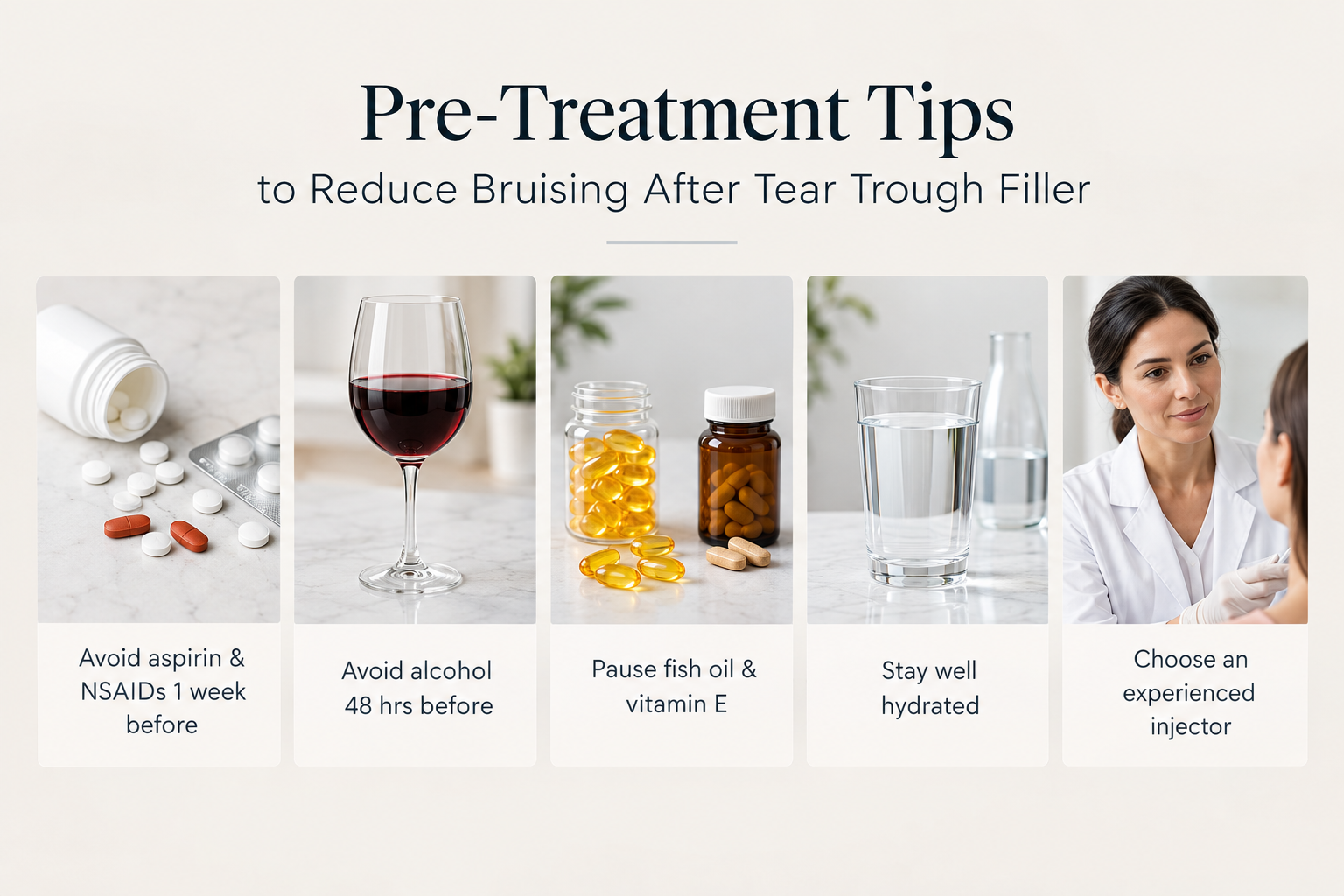
Avoiding alcohol for at least forty-eight hours before treatment is a standard recommendation. Some practitioners also suggest starting oral arnica supplements a few days before the appointment, though as noted earlier, the evidence base for this is limited. Staying well hydrated and arriving at the appointment without active skin irritation or infection in the treatment area are also sensible precautions.
Choosing a practitioner with specific experience in periorbital filler treatment is arguably the most important step a patient can take to minimise risk. An experienced injector will have detailed anatomical knowledge of the under-eye region, will be able to select the most appropriate technique and product for the individual patient, and will be equipped to manage complications if they arise.
Alternatives to Tear Trough Filler for Under-Eye Concerns
Tear trough filler is not the only option for addressing under-eye hollowness or the appearance of dark circles. For patients who are concerned about downtime from bruising, or who may not be suitable candidates for filler in this area, several alternatives are worth discussing with a qualified practitioner.
Polynucleotides — sometimes referred to by brand names such as Lumi Eyes — are injectable treatments derived from purified DNA fragments that aim to improve skin quality, hydration, and tissue regeneration in the under-eye area. Polynucleotide treatments work differently from hyaluronic acid fillers; rather than adding volume, they aim to stimulate the skin's own repair processes. They may be associated with less bruising risk than traditional filler in some patients, though injection-related bruising remains possible with any injectable treatment.
Skin quality treatments such as medical-grade topical retinoids, vitamin C serums, and targeted skincare may help improve the appearance of fine lines and mild pigmentation around the eyes over time, though they do not address volume loss. Radiofrequency or laser treatments may be considered for skin laxity or surface pigmentation in some patients. It is important to recognise that under-eye concerns have multiple possible causes — including pigmentation, vascular visibility, hollowness, skin laxity, and dehydration — and that the most appropriate treatment depends on the underlying cause rather than a one-size-fits-all approach.
Frequently Asked Questions
Is bruising after tear trough filler normal?
Yes, bruising is a common and expected side effect of tear trough filler. The under-eye area has thin skin and a dense network of small blood vessels, making it one of the more bruise-prone areas of the face for injectable treatments. Most bruising resolves within one to two weeks.
Can I speed up the healing of a bruise after filler?
Applying a cold compress in the first few hours after treatment, keeping the head elevated, and avoiding alcohol and anti-inflammatory medications may help limit bruising. Topical arnica is widely used and generally considered low-risk, though clinical evidence for its effectiveness is limited. Avoiding vigorous exercise for at least twenty-four hours is also commonly recommended.
Will the bruise affect my final results?
Bruising itself does not affect the long-term result of tear trough filler. However, swelling that accompanies bruising can make it difficult to assess the outcome accurately in the first one to two weeks. The final result is generally best evaluated once both bruising and swelling have fully resolved.
How soon can I wear makeup after tear trough filler?
Most practitioners advise waiting at least twenty-four to forty-eight hours before applying makeup to the treated area. After this period, colour-correcting concealers can be used to camouflage bruising. Products should be applied gently to avoid discomfort or displacing the filler.
Does cannula technique prevent bruising?
Cannula technique may reduce the risk of bruising compared with sharp needle injection because the blunt tip is designed to push vessels aside rather than pierce them. However, cannula use does not eliminate bruising entirely, and the entry point still requires a small needle. Practitioner experience and patient anatomy also significantly influence bruising outcomes.
When should I contact my practitioner after tear trough filler?
Contact your practitioner promptly if you experience rapidly expanding bruising, severe or worsening pain, any change in vision, skin that appears white or mottled, or bruising that shows no improvement after two to three weeks. These signs may indicate a complication that requires assessment or treatment.
Can I have tear trough filler if I bruise easily?
Patients who bruise easily are not automatically excluded from tear trough filler, but the increased bruising risk should be discussed thoroughly at consultation. A practitioner may recommend additional pre-treatment precautions, adjust technique, or in some cases suggest an alternative treatment depending on the individual's medical history and the underlying reason for easy bruising.
Planning Your Recovery Realistically After Tear Trough Filler
Tear trough filler bruising is a predictable part of the recovery process for many patients, and understanding what to expect makes it considerably easier to manage. For most people, bruising resolves within one to two weeks, progressing through the characteristic colour changes as the body reabsorbs the leaked blood. Swelling may take slightly longer to fully settle, and the final result of treatment is best assessed once both have resolved.
Taking sensible pre-treatment precautions — avoiding blood-thinning medications and supplements where safe to do so, abstaining from alcohol, and scheduling treatment well before any important events — can meaningfully reduce both the likelihood and the duration of bruising. Choosing a practitioner with specific experience in periorbital filler placement is equally important, as technique, anatomical knowledge, and product selection all influence the recovery experience.
If you are considering tear trough filler and have concerns about bruising or downtime, a thorough consultation with a qualified aesthetic practitioner is the appropriate starting point. A practitioner can assess your individual anatomy, review your medical history, discuss realistic expectations, and help you decide whether tear trough filler or an alternative approach is the most suitable option for your concerns.
