
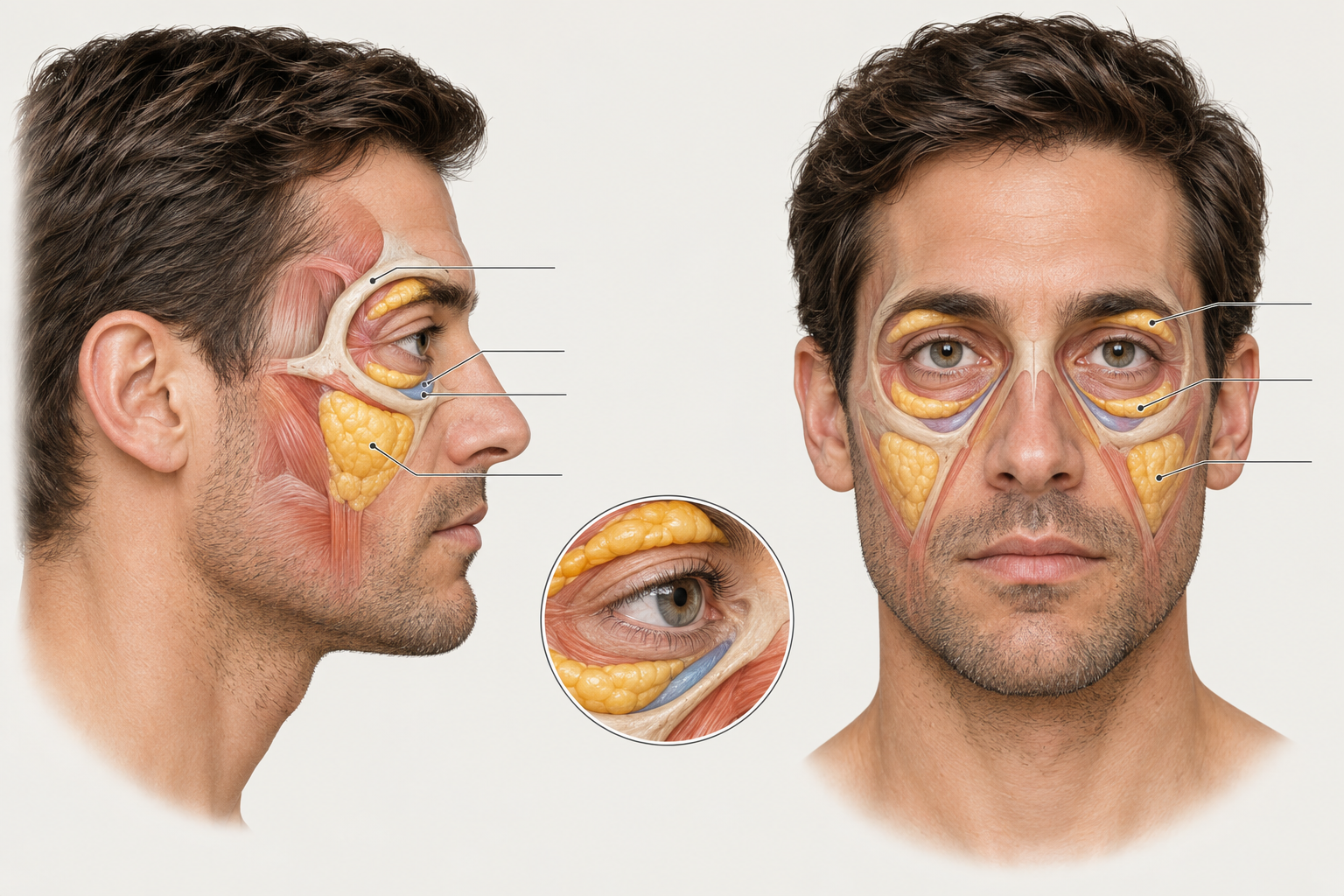

Under-eye hollowness is one of the most common aesthetic concerns among men, yet it remains one of the least discussed. Tear trough filler — a hyaluronic acid-based injectable treatment placed in the groove between the lower eyelid and the cheek — can reduce the appearance of shadowing and volume loss beneath the eyes. For men, however, the anatomy, treatment goals, and approach differ in meaningful ways from those typically described in patient-facing resources. This article explains how tear trough filler works for male patients, what realistic outcomes look like, what the risks involve, and what alternatives may be worth considering before booking a consultation.
Key Takeaways
- Tear trough filler uses hyaluronic acid to address hollowness and shadowing beneath the eyes, but it does not correct all causes of under-eye concerns such as pigmentation, puffiness, or loose skin.
- Male facial anatomy — including thicker skin, stronger musculature, and different fat distribution — influences how the treatment is planned and how results appear.
- Results typically last between nine and eighteen months depending on the product used, the volume placed, and individual metabolism.
- The tear trough is a technically demanding area; practitioner experience and appropriate product selection are particularly important for male patients.
- Alternatives including polynucleotides, skin-quality treatments, and surgical options may be more appropriate depending on the underlying cause of the concern.
What Is Tear Trough Filler and How Does It Work?
The tear trough is the concave groove that runs from the inner corner of the eye diagonally toward the cheek. When this area loses volume — through natural ageing, genetics, or changes in the surrounding fat compartments — it creates a shadow that can make a person appear tired, older, or unwell. Tear trough filler involves injecting a small amount of hyaluronic acid gel into or just beneath this groove to restore volume and reduce the depth of the shadow.
Hyaluronic acid is a naturally occurring substance found in connective tissue throughout the body. In injectable form, it is cross-linked to create a gel with varying degrees of firmness and water-attracting capacity. For the tear trough, practitioners typically select a softer, lower-viscosity hyaluronic acid product to minimise the risk of visible lumps or the Tyndall effect — a bluish discolouration that can occur when filler is placed too superficially in thin-skinned areas. The product integrates with surrounding tissue and can be dissolved with an enzyme called hyaluronidase if complications arise or if the patient is dissatisfied with the result.
The treatment does not address every cause of under-eye concern. Pigmentation caused by melanin or visible blood vessels beneath thin skin, puffiness from fat prolapse or fluid retention, and loose or crepey skin are not corrected by volume replacement alone. Accurate identification of the underlying cause is therefore essential before treatment proceeds.
How Male Anatomy Affects Tear Trough Treatment
Male facial anatomy differs from female anatomy in ways that directly affect how tear trough filler is planned and delivered. Men generally have thicker dermis, stronger orbicularis oculi muscle tone, and a different distribution of periorbital fat compared with women. The brow sits lower and the orbital rim tends to be more prominent, which can influence how volume replacement looks once placed.
Thicker skin in male patients can be an advantage in one respect: it reduces the risk of the Tyndall effect because the filler is less visible through the overlying tissue. However, thicker skin and stronger muscle activity can also mean that the aesthetic improvement is less dramatic than in patients with thinner skin, where even small volumes of filler create a visible change. This means male patients should approach treatment with calibrated expectations rather than assuming that more product will automatically produce a better result.
Male patients also tend to present with different aesthetic goals. Many men seeking tear trough treatment are not looking for a softened or refreshed appearance in the way that is often described in female-focused content. Instead, they typically want to look less fatigued and more alert without any visible sign that a cosmetic procedure has taken place. This places a premium on conservative volume placement and natural-looking outcomes, which requires a practitioner experienced in treating male patients specifically.
The midface relationship is also relevant. In men, the transition between the lower eyelid and the cheek is often more abrupt, and the malar fat pad may sit differently. A practitioner may assess whether addressing the mid-cheek alongside the tear trough produces a more balanced result, since isolated tear trough treatment without considering the surrounding anatomy can occasionally look unnatural.
Who May Be Suitable for Tear Trough Filler
Tear trough filler may be appropriate for men who have a clearly defined hollow or groove beneath the eye that creates shadowing, and where that hollowness is the primary cause of the under-eye concern rather than pigmentation, puffiness, or skin laxity. Suitable candidates typically have good skin quality, adequate skin thickness, and realistic expectations about the degree of improvement achievable.
Men who are generally in good health, are not taking blood-thinning medications, and have no active skin infection or inflammatory condition in the treatment area are generally considered for assessment. A thorough consultation should include a review of medical history, current medications, and any previous procedures in the area, including prior filler treatments that may still be present in the tissue.
Younger men who have inherited a deep tear trough as a genetic feature — rather than one that has developed through volume loss with age — may also be candidates, though the approach and expected outcome may differ from age-related hollowness. In younger patients with good skin quality and minimal fat loss, smaller volumes are typically sufficient.
Who May Not Be Suitable
Tear trough filler is not appropriate for everyone presenting with under-eye concerns. Men whose primary issue is fat prolapse — where the orbital fat pad pushes forward and creates a puffy appearance — are unlikely to benefit from volume replacement and may find that adding filler worsens the appearance. Similarly, men with significant skin laxity, prominent festoons, or malar oedema are generally not good candidates for this treatment.
Patients with a history of severe allergic reactions, known hypersensitivity to hyaluronic acid products, or active autoimmune conditions affecting the skin should discuss these factors carefully with a qualified practitioner. Men who have had previous filler placed in the tear trough area by another provider should disclose this, as residual product can affect placement decisions and increase the risk of complications.
Blood-thinning medications — including aspirin, ibuprofen, and certain supplements such as fish oil and vitamin E — increase the risk of bruising and should be discussed with the treating practitioner before the appointment. Men with a history of cold sores may be advised to take antiviral prophylaxis before treatment, as injections near the periorbital area can occasionally trigger a recurrence.
What Happens During the Appointment
A tear trough filler appointment for a male patient typically begins with a detailed consultation, during which the practitioner assesses the anatomy, identifies the primary cause of the under-eye concern, discusses the patient’s goals, and explains the realistic range of outcomes. Photographs are usually taken before treatment.
The skin is cleaned and a topical anaesthetic cream may be applied to reduce discomfort, though many hyaluronic acid products used in this area contain lidocaine within the formulation itself. The filler is delivered either via a fine needle or a blunt-tipped cannula, depending on the practitioner’s technique and the patient’s anatomy. Cannula-based approaches are often preferred in the tear trough because they may reduce the risk of bruising and allow the product to be distributed more evenly, though both techniques are used by experienced practitioners.
The volume placed is typically small — often less than one millilitre per side — and the practitioner will assess the result during the appointment, making adjustments as needed. The entire procedure usually takes between thirty and sixty minutes including the consultation component. Patients are generally able to leave the clinic immediately after treatment.
Discomfort, Downtime, and Recovery
Most men describe the discomfort associated with tear trough filler as mild to moderate. The periorbital area is sensitive, and some stinging or pressure during injection is common. Topical anaesthetic and lidocaine-containing products reduce but do not eliminate discomfort entirely.
Bruising is the most common side effect and is more likely in the tear trough than in many other treatment areas because of the density of small blood vessels in the periorbital region. Bruising can range from minimal to quite noticeable and may take one to two weeks to resolve fully. Swelling is also common in the first twenty-four to seventy-two hours and can temporarily make the area look fuller than the intended final result. Men who need to return to work or social commitments quickly should factor this into their timing.
Avoiding strenuous exercise, alcohol, and significant heat exposure for twenty-four to forty-eight hours after treatment is generally recommended to reduce swelling and bruising. Sleeping with the head slightly elevated in the first night or two may also help. Most men can return to normal daily activities the same day, though visible bruising or swelling may affect their comfort with doing so.
When Results Appear and How Long They Last
Initial swelling after tear trough filler can temporarily obscure the final result. Most patients see a clearer indication of the outcome after five to seven days, once acute swelling has settled. The full result, including complete integration of the product with surrounding tissue, is typically visible at two to four weeks.
Tear trough filler results in male patients generally last between nine and eighteen months, though this varies depending on the specific hyaluronic acid product used, the volume placed, the individual’s metabolic rate, and lifestyle factors. Some men find that results in the tear trough area last longer than in more mobile areas of the face, because the periorbital region involves less repetitive movement than, for example, the lips or nasolabial folds. However, individual variation is significant and results cannot be guaranteed.
Maintenance treatments are typically required to sustain the result. Some practitioners recommend a review appointment at two to four weeks after the initial treatment to assess whether any minor adjustments are needed, particularly for first-time patients.
Risks and Side Effects Specific to the Tear Trough
The tear trough is considered one of the higher-risk areas for dermal filler treatment because of its proximity to important vascular structures and the thinness of the overlying tissue. Understanding the relevant risks is an important part of making an informed decision.
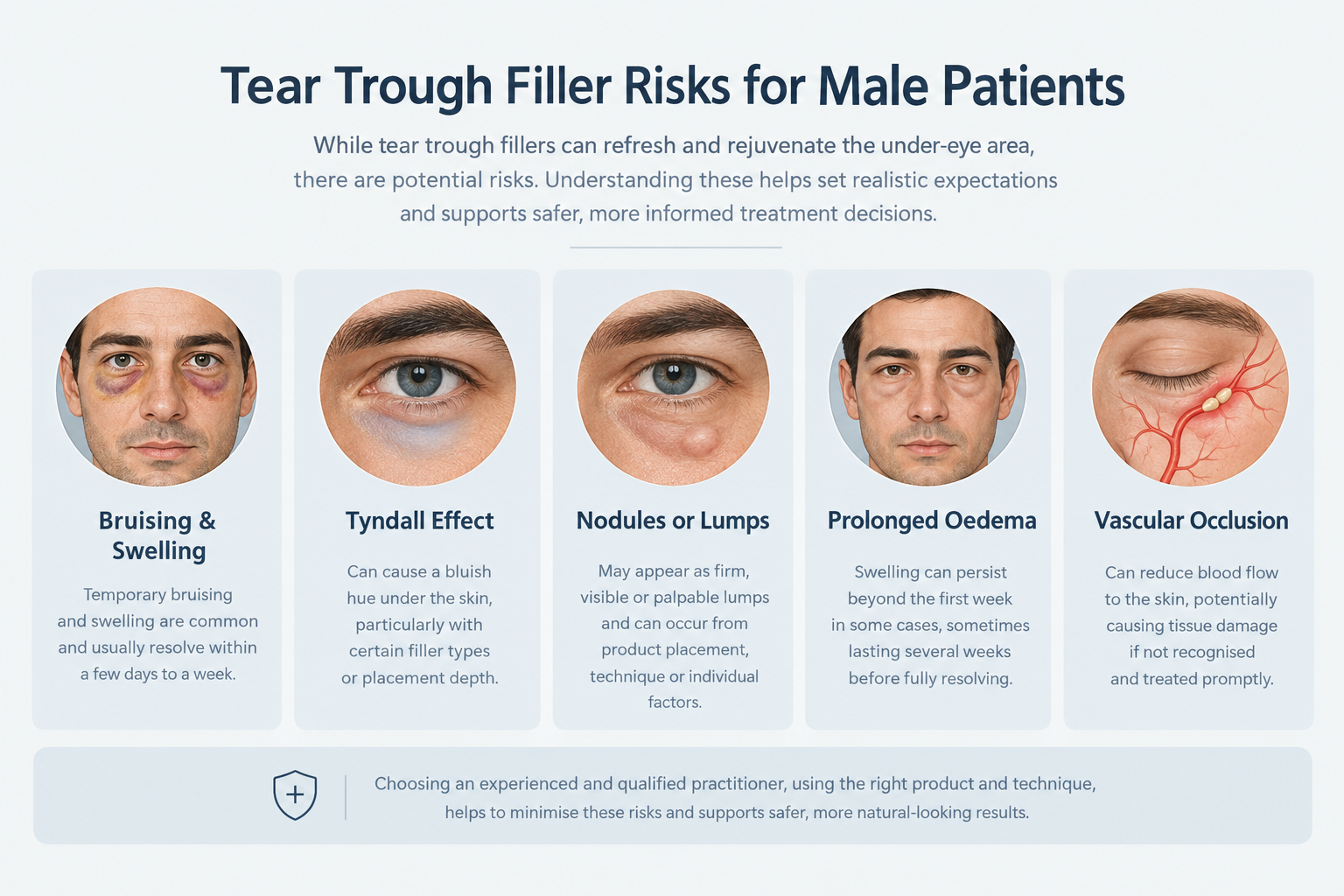
Common side effects include bruising, swelling, tenderness, and temporary asymmetry. These typically resolve within one to two weeks without intervention.
Less common but more significant risks include:
- Tyndall effect: A bluish discolouration visible through the skin if filler is placed too superficially. This can be treated with hyaluronidase dissolution.
- Nodules or lumps: Irregular product distribution can create palpable or visible lumps, which may require massage, dissolution, or time to resolve.
- Prolonged swelling: Some patients experience oedema that persists beyond the expected recovery period, particularly if the product attracts more water than anticipated.
- Vascular occlusion: Inadvertent injection into or compression of a blood vessel is a rare but serious complication that can, in the most severe cases, affect tissue perfusion. Practitioners should be trained to recognise and manage this immediately.
- Infection: Rare but possible with any injectable procedure. Signs of infection should be reported to the treating practitioner promptly.
The risk profile underlines why practitioner selection matters significantly in this area. Tear trough filler should be performed by a qualified medical professional with specific experience in periorbital anatomy and injectable complications management.
Alternatives to Tear Trough Filler for Men
Tear trough filler is not the only option for men concerned about the under-eye area, and for some patients it may not be the most appropriate first step. The right approach depends on the underlying cause of the concern.
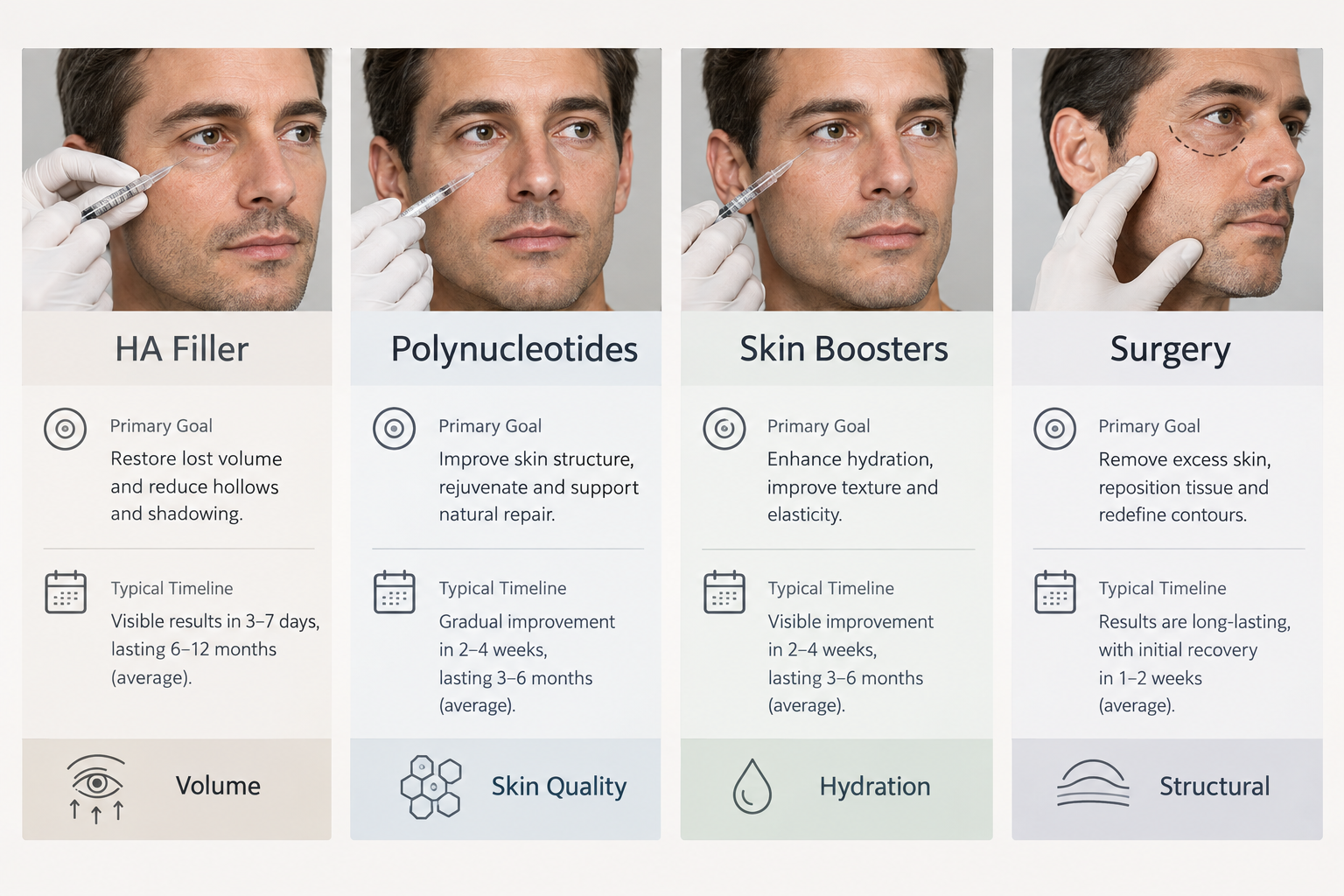
Polynucleotides (also referred to as PDRN or PN treatments) are an emerging injectable option that works differently from hyaluronic acid filler. Rather than adding volume, polynucleotides stimulate tissue regeneration, improve skin hydration, and may improve skin quality over a course of treatments. They may be more appropriate for men whose primary concern is skin quality, fine lines, or mild discolouration rather than significant hollowness. Evidence for polynucleotides in the periorbital area is still developing, and results tend to be more subtle than those achieved with volume replacement.
Skin-quality treatments such as medical-grade topical retinoids, vitamin C serums, and targeted skincare can improve the appearance of the under-eye area over time, particularly where pigmentation or dehydration is a contributing factor. These are not substitutes for volume replacement but may complement injectable treatments or be sufficient for mild concerns.
Profhilo and skin boosters are injectable hydration treatments that may improve skin quality and mild laxity in the periorbital area, though they are not volume-replacement treatments and are not designed to fill a structural hollow.
Surgical options including lower blepharoplasty — a procedure that addresses excess skin, fat redistribution, or fat removal in the lower eyelid — may be more appropriate for men with significant skin laxity, prominent fat prolapse, or concerns that are beyond the scope of non-surgical treatment. A consultation with an oculoplastic or plastic surgeon may be warranted where non-surgical options are unlikely to achieve the patient’s goals.
Lifestyle factors including sleep quality, hydration, alcohol reduction, and sun protection can influence the appearance of the under-eye area and are worth addressing alongside or before any aesthetic treatment.
Choosing a Practitioner for Male Under-Eye Filler
Practitioner selection is particularly important for tear trough filler in male patients. The combination of a technically demanding treatment area and anatomy that differs meaningfully from the female patients who make up the majority of aesthetic clinic caseloads means that experience with male patients specifically is a relevant factor to consider.
When assessing a practitioner, it is reasonable to ask about their medical qualifications, their specific experience with tear trough treatment, the products they use and why, their approach to complications management, and whether they have access to hyaluronidase for dissolution if needed. Reviewing before-and-after photographs of male patients they have treated — with appropriate consent — can also provide useful context.
A practitioner who recommends a conservative initial volume, schedules a review appointment, and takes time to explain realistic outcomes is generally preferable to one who promises dramatic transformation or encourages large volumes at a first appointment.
Frequently Asked Questions
Does tear trough filler look natural on men?
When performed conservatively by an experienced practitioner using an appropriate product, tear trough filler can produce a natural-looking result in male patients. The goal for most men is to appear less fatigued rather than visibly treated. Overfilling or using an inappropriate product is the most common reason results look unnatural, which is why conservative volume placement and product selection matter.
Is the tear trough area more painful for men because of thicker skin?
Skin thickness does not significantly increase pain during tear trough filler. The periorbital area is sensitive regardless of skin thickness, and discomfort is managed with topical anaesthetic and lidocaine-containing filler products. Most men describe the procedure as tolerable.
Can tear trough filler fix dark circles?
Tear trough filler can reduce the shadow caused by hollowness beneath the eye, which is one cause of a dark appearance. However, dark circles caused by pigmentation, visible blood vessels, or thin skin are not corrected by volume replacement. A practitioner should assess the cause before recommending treatment.
How soon can I return to work after tear trough filler?
Most men can return to desk-based work the same day or the following day. Visible bruising or swelling may last up to two weeks in some cases, which is worth considering if work involves client-facing responsibilities or public appearances.
Can previous filler in the tear trough cause problems?
Residual hyaluronic acid filler from previous treatments can accumulate in the tear trough over time, contributing to puffiness or an unnatural appearance. A practitioner may recommend dissolving existing product with hyaluronidase before placing new filler, particularly if the previous treatment was performed elsewhere or the results are unsatisfactory.
Is tear trough filler permanent?
Hyaluronic acid tear trough filler is not permanent. Results typically last between nine and eighteen months, after which the product is gradually broken down by the body. Maintenance treatments are required to sustain the result. The filler can also be dissolved intentionally with hyaluronidase if needed.
At what age do men typically consider tear trough filler?
Men of a wide age range seek tear trough treatment. Younger men may present with a genetically deep tear trough, while older men more commonly experience age-related volume loss. The appropriate approach and expected outcome differ between these presentations, and age alone is not a determining factor for suitability.
Is Tear Trough Filler the Right Choice for Your Under-Eye Concerns?
Tear trough filler can be an effective option for men whose under-eye shadowing is primarily caused by volume loss or a structurally deep groove, and who have realistic expectations about the degree of improvement achievable. The treatment is not a universal solution for all under-eye concerns, and it carries a meaningful risk profile that warrants careful consideration and a qualified practitioner.
Male patients benefit most when the consultation includes a thorough assessment of the underlying cause of the concern, an honest discussion of what filler can and cannot achieve, and a conservative treatment plan that prioritises a natural result over dramatic change. For men whose concerns involve skin quality, pigmentation, fat prolapse, or significant laxity, alternative or complementary approaches may be more appropriate.
If you are considering tear trough filler, a consultation with a qualified medical practitioner experienced in treating male patients and in periorbital anatomy is the appropriate starting point. A good consultation should leave you with a clear understanding of whether the treatment is suitable for your specific anatomy and goals, what realistic results look like, and what the relevant risks involve — before any decision is made.
