

Key Takeaways
- Textured skin is a broad term covering several distinct concerns, including enlarged pores, post-acne scarring, keratosis pilaris, and sun-damaged roughness — each responds to different treatments.
- At-home ingredients such as alpha hydroxy acids (AHAs), retinoids, and niacinamide can meaningfully improve mild to moderate uneven skin texture with consistent, long-term use.
- Professional treatments including microneedling, laser resurfacing, and chemical peels offer more significant results for deeper texture concerns, but require clinical assessment to match the right approach to your skin.
- Skin tone matters: certain procedures carry a higher risk of post-inflammatory hyperpigmentation (PIH) on deeper skin tones, making practitioner experience and treatment selection critical.
- Realistic timelines vary — topical treatments often take 8–12 weeks to show visible change, while procedure-based results may take several weeks to months to fully emerge after tissue remodelling.
What Is Textured Skin?
Textured skin refers to a skin surface that feels or appears rough, bumpy, or uneven rather than smooth and uniform. It is not a single condition but a collective description for several underlying concerns that disrupt the normally flat arrangement of the skin’s outer layer. Most people have some degree of skin texture — completely poreless, perfectly smooth skin exists almost exclusively in filtered photography — but when texture becomes pronounced, it can affect confidence and make makeup application more difficult.
Recognising texture as a category rather than a single diagnosis matters because the right treatment depends entirely on which type of texture is present. Treating keratosis pilaris the same way as post-acne scarring, for example, is unlikely to produce useful results. Understanding your specific concern is the first practical step toward improving it.
Common Signs of Textured Skin
- Rough, bumpy skin that feels uneven when you run a finger across the surface
- Visible or enlarged pores, particularly across the nose, cheeks, and chin
- Small raised bumps on the upper arms, thighs, or cheeks (often keratosis pilaris)
- Pitted or depressed scars left by past acne
- Dry, flaky patches that feel tight or look dull
- Uneven makeup application — foundation sits unevenly or settles into pores and fine lines
- A lackluster or dull complexion that lacks the light-reflective quality of smooth skin
What Causes Textured Skin?
Several distinct processes can disrupt the skin’s surface. Understanding the cause behind your texture is what makes treatment selection meaningful rather than guesswork.
Dead Skin Cell Buildup
The outer layer of the skin, the stratum corneum, naturally sheds dead cells through a process called desquamation. When this process slows — due to age, dehydration, or disrupted skin barrier function — dead skin cell buildup accumulates on the surface, creating a rough, dull texture. This is one of the most common and most correctable causes of uneven skin texture, and it responds well to regular exfoliation.
Sun Damage and Photoaging
Prolonged UV exposure is one of the most significant contributors to textured skin in adults. Photoaging causes the outer skin layer to thicken and toughen over time, damages collagen fibres in the dermis, and reduces the skin’s ability to renew itself efficiently. The result is a rough, leathery surface texture accompanied by fine lines, uneven tone, and dullness. Sun damage accumulates over decades, which is why texture caused by photoaging tends to worsen progressively without protective measures.
Acne and Post-Acne Changes
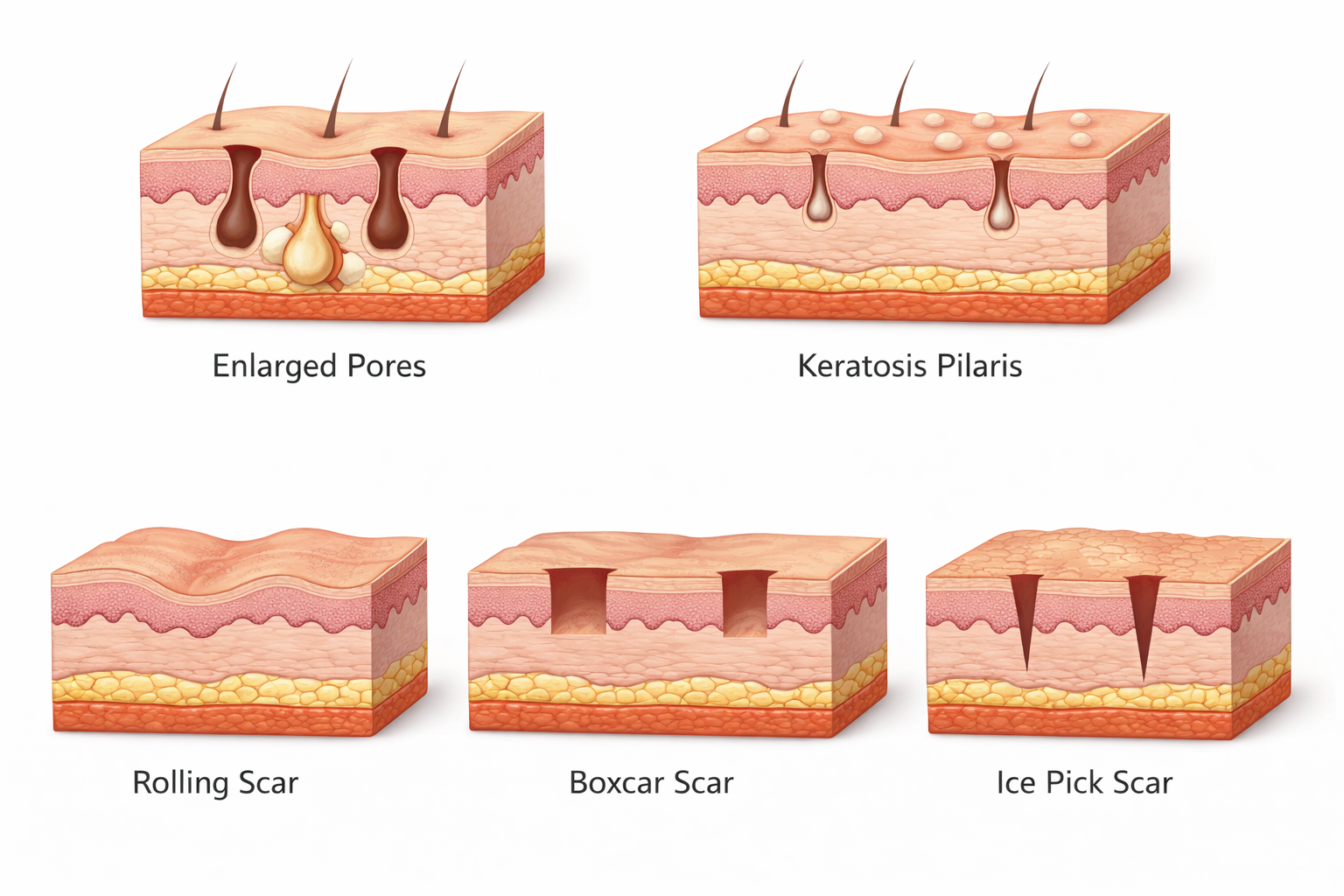
Active acne disrupts the skin’s surface, and the inflammatory process involved in breakouts can permanently alter skin architecture. Post-acne scarring takes several forms: atrophic scars (depressed areas where collagen was lost), rolling scars (broad, shallow depressions with sloped edges), boxcar scars (sharply defined depressions), and ice pick scars (narrow, deep channels). Enlarged pores are also frequently associated with acne-prone skin, as excess sebum production stretches pore walls. Each scar subtype responds differently to treatment, which is why a one-size-fits-all approach rarely delivers satisfying results.
Keratosis Pilaris
Keratosis pilaris (KP) is a common genetic condition in which excess keratin builds up within hair follicles, forming small, rough plugs that create a characteristic bumpy texture — often described as resembling permanent goosebumps. KP most commonly appears on the upper arms, thighs, buttocks, and occasionally the cheeks. It is entirely benign and extremely prevalent, affecting an estimated 40% of adults and up to 80% of adolescents. While KP cannot be permanently eliminated, it can be managed effectively with the right skincare approach. Conventional management focuses on topical exfoliants to dissolve the keratin plugs and emollients to soften the surrounding skin. Physical treatments such as microdermabrasion can also help in more noticeable cases.
Skin Ageing and Collagen Loss
As skin ages, collagen production slows and existing collagen fibres become less organised. The dermis loses its supportive scaffolding, skin elasticity decreases, and the surface becomes less able to maintain a smooth, even contour. Fine lines become more visible, pores may appear larger as surrounding collagen support weakens, and overall firmness declines. These age-related texture changes are gradual and tend to respond best to treatments that stimulate new collagen production rather than surface-level exfoliation alone.
Dehydration and Barrier Disruption
Dehydrated skin — skin that lacks adequate water content rather than oil — often presents with a crepey or fine-lined texture, particularly around the eyes and mouth. When the skin barrier function is compromised, the skin loses moisture more rapidly (a process called transepidermal water loss), becoming tight, flaky, and rough. Barrier disruption can be caused by over-exfoliation, harsh cleansers, low-humidity environments, and certain skincare ingredients used incorrectly.
Lifestyle and Environmental Factors
Dry climates with low ambient humidity accelerate moisture loss from the skin surface, contributing to rough texture. Air pollution deposits particulate matter on the skin that can oxidise lipids and proteins in the outer layers. Hormonal fluctuations — such as those occurring during puberty, pregnancy, or the menstrual cycle — influence sebum production and cell turnover rates, which can affect texture. Diet and sleep quality also play supporting roles, though neither alone is sufficient to correct established texture concerns without appropriate skincare or treatment.
Types of Textured Skin and Matched Treatments
Because textured skin encompasses several distinct presentations, the most useful way to approach treatment is to match the intervention to the specific type. The table below summarises the main texture types, their characteristics, and the treatments most commonly used to address them.
| Texture Type | Characteristics | At-Home Options | Professional Treatments |
|---|---|---|---|
| Dead skin cell buildup / dullness | Rough surface, dull tone, flaking | AHAs (glycolic, lactic acid), gentle physical exfoliation | Chemical peels, microdermabrasion, HydraFacial |
| Enlarged pores | Visible pore openings, oily skin, congestion | BHAs (salicylic acid), niacinamide, retinoid | Chemical peels, laser resurfacing, microneedling |
| Post-acne scarring (rolling/boxcar) | Depressed scars, uneven surface | Retinol, vitamin C serum, AHAs | RF microneedling, fractional laser, chemical peels |
| Post-acne scarring (ice pick) | Deep narrow channels | Limited benefit from topicals alone | TCA Cross technique, fractional CO2 laser |
| Keratosis pilaris | Small rough bumps, upper arms, cheeks | AHAs (lactic acid), urea, gentle exfoliation, ceramide moisturiser | Microdermabrasion, mild chemical peels |
| Sun-damaged / photoaged skin | Thickened, rough surface, fine lines, dullness | Retinoid, vitamin C serum, SPF daily | Laser resurfacing, fractional laser, chemical peels |
| Dehydrated / barrier-compromised skin | Fine lines, tightness, flaking | Hyaluronic acid, ceramides, glycerin, avoid over-exfoliation | Hydrating facials, professional barrier repair treatments |
| Age-related texture (collagen loss) | Loss of firmness, fine lines, larger pores | Retinoid, collagen peptides, SPF | RF microneedling, fractional laser, collagen-stimulating treatments |
At-Home Skincare for Textured Skin
A well-structured at-home routine forms the foundation of texture improvement and can produce meaningful results for mild to moderate concerns when maintained consistently over several months. The key is selecting ingredients suited to your specific texture type and introducing them gradually to avoid barrier disruption.
Exfoliation: Chemical vs Physical
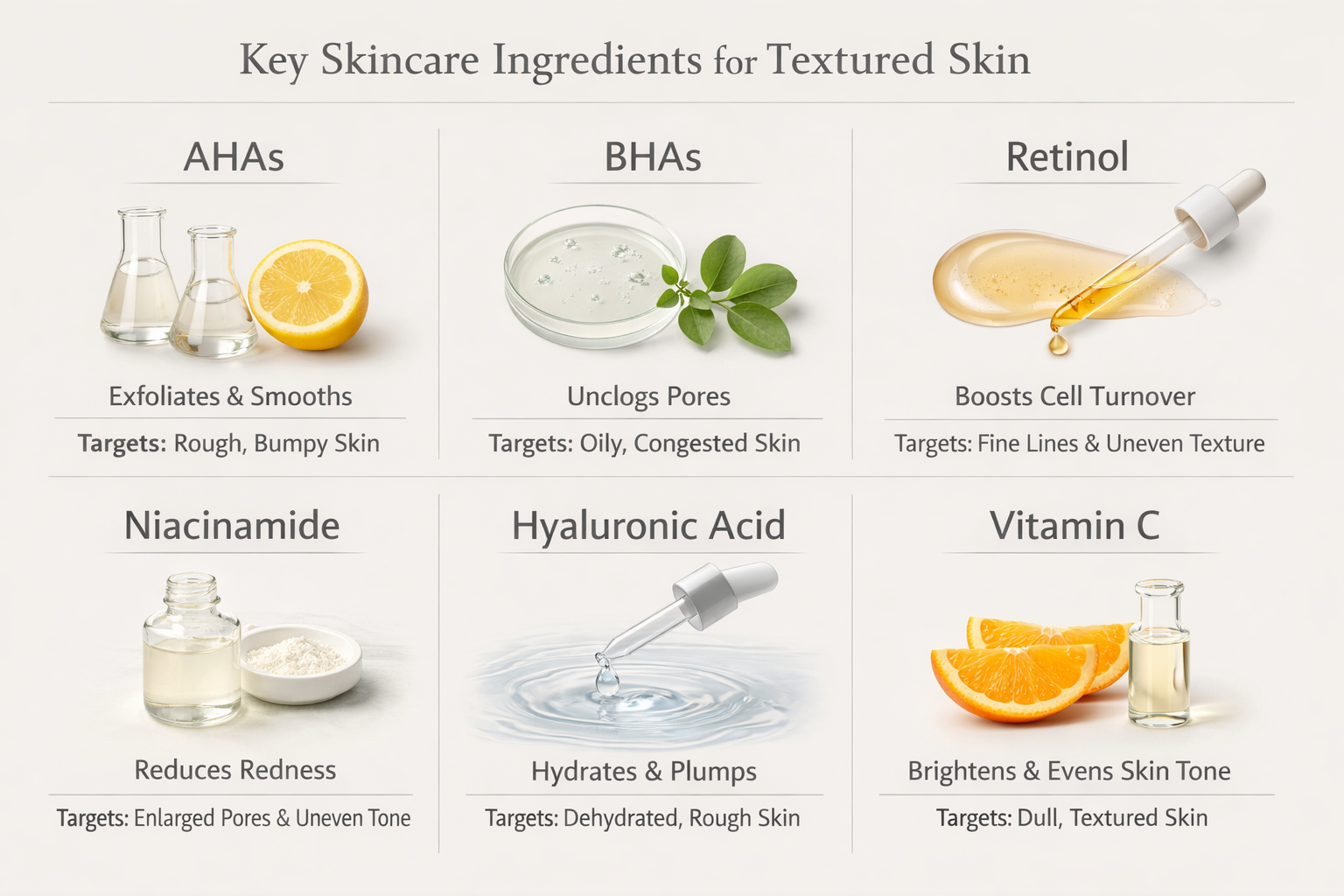
Exfoliation accelerates the removal of dead skin cells and helps keep the skin’s surface smooth. Chemical exfoliants — acids that dissolve the bonds holding dead cells together — are generally better tolerated and more predictable than physical scrubs, which can cause microtears if used aggressively. Alpha hydroxy acids (AHAs) such as glycolic acid and lactic acid work on the skin’s surface and are particularly useful for general roughness, dullness, and keratosis pilaris. Beta hydroxy acids (BHAs), particularly salicylic acid, are oil-soluble and penetrate into pores, making them well suited for acne-prone skin and congested enlarged pores. Most skin types benefit from chemical exfoliation two to three times per week, though frequency should be adjusted based on individual tolerance.
Retinoids and Retinol
Retinoid and retinol products are among the most evidence-supported topical ingredients for improving skin texture. They work by accelerating skin cell turnover, normalising the desquamation process, and stimulating collagen production in the dermis over time. Retinoids are particularly useful for sun-damaged skin, post-acne texture, enlarged pores, and age-related surface irregularities. The main limitations are an initial adjustment period — redness, dryness, and flaking are common in the first four to six weeks — and the need for consistent sun protection, as retinoids increase photosensitivity. Begin with a lower-strength retinol and increase gradually as skin adapts.
Niacinamide
Niacinamide (vitamin B3) is a versatile, well-tolerated active that addresses several texture-related concerns simultaneously. It reduces the appearance of enlarged pores by regulating sebum production through the sebaceous glands, strengthens skin barrier function by supporting ceramide synthesis, and has a mild anti-inflammatory effect useful in acne-prone skin. Niacinamide concentrations of 4–10% are commonly used and are generally suitable for sensitive skin types, making it a practical daily-use ingredient for many people with uneven skin texture.
Hydrating Ingredients: Hyaluronic Acid, Ceramides, and Glycerin
When texture is driven primarily by dehydration or barrier disruption, replenishing moisture is the priority. Hyaluronic acid attracts water to the skin surface, ceramides restore the lipid matrix that seals the barrier, and glycerin draws moisture from the environment into the skin. These ingredients are non-comedogenic and compatible with almost all skin types. For best results, apply hyaluronic acid to damp skin and seal with a ceramide-rich moisturiser to prevent moisture from evaporating.
Vitamin C Serum
Vitamin C is a potent antioxidant that helps protect against further sun damage and supports collagen production. It can improve the appearance of post-inflammatory hyperpigmentation associated with post-acne scarring and contribute to a brighter, more even-toned complexion. Stable vitamin C formulations (typically L-ascorbic acid at 10–20%) are most effective when applied in the morning under SPF. Note that vitamin C can be unstable and is best stored away from heat and light.
A Note on Ingredient Combinations
Combining active ingredients requires care. Using retinoids and AHAs together on the same evening can cause significant irritation and compromise the skin barrier — it is generally safer to alternate them on different nights. Over-exfoliation is a common mistake that worsens texture by stripping the barrier and causing reactive inflammation. If skin becomes persistently red, tight, or sensitised, scaling back frequency is more productive than pushing through. A board-certified dermatologist or trained aesthetic practitioner can help you design a routine that balances efficacy with tolerance.
A Simple Routine Framework
- Cleanse: Gentle, non-stripping cleanser morning and evening.
- Treat: Apply your active (AHA/BHA, retinoid, or vitamin C) according to frequency and tolerance.
- Moisturise: Apply hyaluronic acid followed by a ceramide-containing moisturiser to maintain barrier integrity.
- Protect: Apply broad-spectrum SPF 30–50 every morning without exception — especially important when using retinoids or AHAs.
Professional Treatments for Textured Skin
For moderate to significant texture concerns — particularly deep acne scars, advanced photoaging, or keratosis pilaris resistant to topical care — professional treatments offer more substantial structural change than at-home products can deliver. The most appropriate option depends on your texture type, skin tone, downtime tolerance, and budget.
Chemical Peels
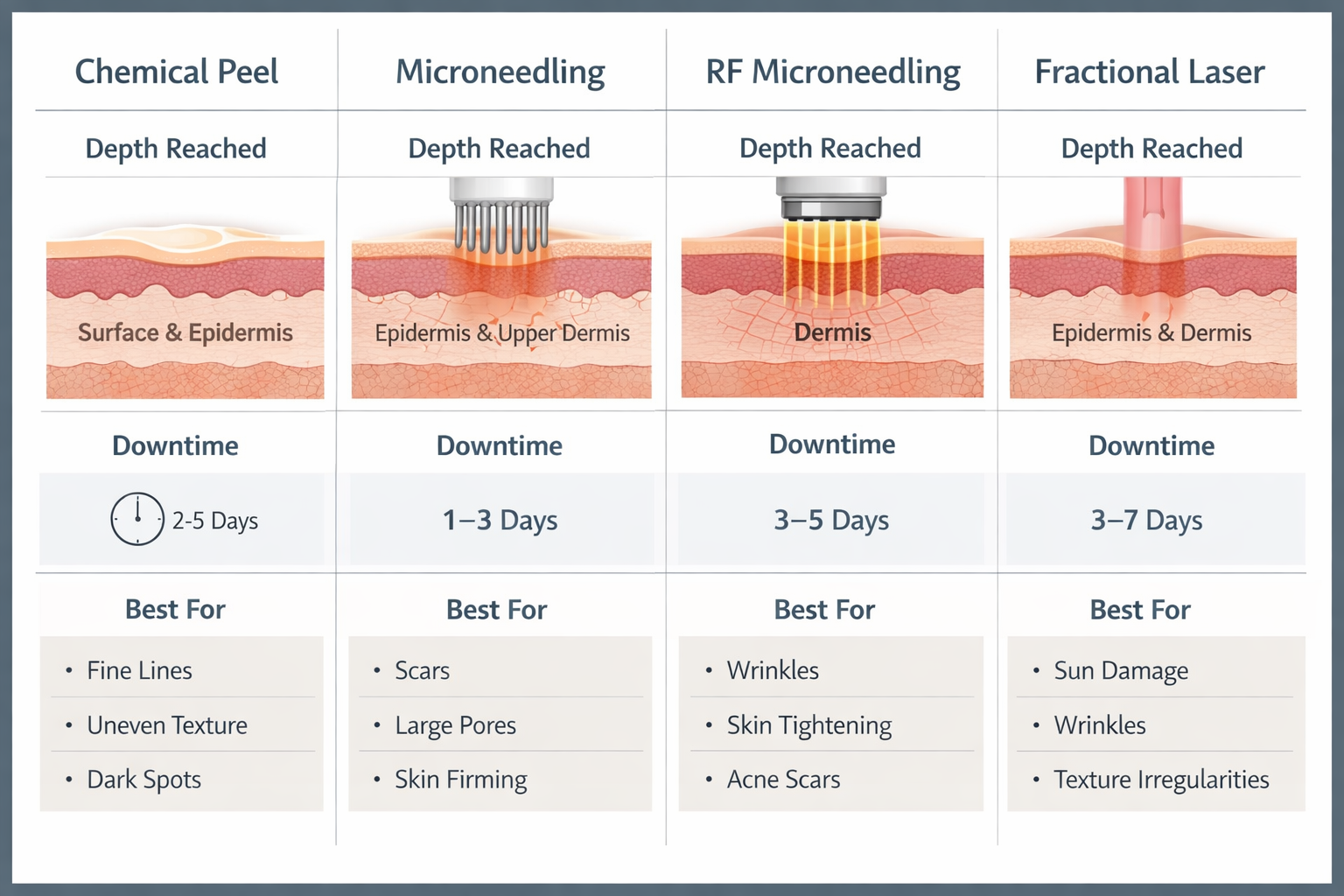
Clinical chemical peels use higher concentrations of exfoliating acids than over-the-counter products, penetrating more deeply into the skin to accelerate cell renewal and, in medium-depth peels, stimulate collagen remodelling. Superficial peels (using glycolic or lactic acid) improve surface roughness and dullness with minimal downtime. Medium-depth peels (trichloroacetic acid, TCA) address more significant texture, post-acne changes, and sun damage, with a recovery period of five to ten days involving peeling and redness. Deep peels provide the most dramatic resurfacing but require longer recovery and carry a higher risk of PIH, particularly on darker skin tones. A series of superficial peels is a common starting point for general uneven skin texture.
Microneedling
Microneedling uses a device containing fine needles to create controlled micro-injuries in the skin, triggering a wound-healing response that stimulates new collagen production. It is particularly effective for post-acne scarring, enlarged pores, and age-related texture loss. Microneedling is generally considered suitable across a wider range of skin tones than some laser options, as it does not directly target pigment and carries a lower risk of PIH. Results develop gradually over several weeks as new collagen matures, and a course of three to six sessions spaced four to six weeks apart is typically recommended for meaningful scar improvement.
RF Microneedling (Radiofrequency Microneedling)
RF microneedling combines the collagen-stimulating effects of microneedling with the addition of radiofrequency energy delivered directly into the dermis through the needle tips. This dual mechanism can produce greater skin tightening and remodelling compared to standard microneedling, making it particularly useful for significant acne scarring, enlarged pores, and laxity-related texture changes. RF microneedling can be used across different skin types, skin tones, and ethnicities, which broadens its clinical applicability. Treatments typically involve mild to moderate redness and swelling for two to four days, with progressive results visible over three to six months.
Laser Resurfacing
Laser resurfacing uses focused light energy to remove or remodel the outer layers of the skin, stimulating collagen production and dramatically smoothing the surface. Ablative lasers — such as fractional CO2 laser — remove the outer skin layer and deliver intense collagen stimulation, with results that can be long-lasting but require a meaningful recovery period (one to two weeks of significant redness and peeling). Non-ablative fractional lasers (such as Fraxel 1550) work beneath the surface without removing it, offering a more gradual improvement with less downtime. Laser resurfacing is highly effective for sun-damaged skin, moderate to severe post-acne scarring, and age-related texture, but requires careful skin tone assessment — higher-energy ablative lasers carry an increased risk of PIH and pigmentary changes on Fitzpatrick skin types IV–VI.
Microdermabrasion
Microdermabrasion is a mechanical exfoliation procedure that uses either a diamond-tipped wand or fine crystals to buff away the outer dead skin layer. It improves surface roughness, mild dullness, and fine lines, and is a reasonable option for keratosis pilaris when combined with appropriate moisturisers. Microdermabrasion is one of the gentler professional options with essentially no downtime, but it does not penetrate deeply enough to address significant scarring or advanced photoaging.
Skin Tone Considerations
Skin tone inclusivity is a clinically important consideration that is often underemphasised. Certain professional treatments — particularly high-energy ablative lasers and aggressive chemical peels — carry a meaningful risk of post-inflammatory hyperpigmentation on deeper skin tones (Fitzpatrick types IV–VI). This does not mean professional treatment is unavailable for these patients; it means that treatment selection, energy settings, and pre-treatment preparation protocols must be tailored accordingly. RF microneedling and non-ablative fractional devices are frequently preferred options in these cases. Always ensure your practitioner has demonstrable experience treating your skin tone.
Treatment Timeline Expectations
| Treatment | When Change May First Appear | Optimal Results | Sessions Typically Needed |
|---|---|---|---|
| Topical AHAs / BHAs (at-home) | 4–6 weeks | 8–12 weeks of consistent use | Daily / ongoing |
| Retinoid (at-home) | 8–12 weeks | 6–12 months | Daily / ongoing |
| Superficial chemical peel | 1–2 weeks post-peel | After a course of 3–6 peels | 3–6 peels, 4 weeks apart |
| Microneedling | 4–6 weeks post-treatment | 3–6 months | 3–6 sessions |
| RF microneedling | 4–8 weeks post-treatment | 3–6 months | 3–4 sessions |
| Fractional laser resurfacing | 2–4 weeks post-treatment | 3–6 months | 1–3 sessions |
| Microdermabrasion | Immediately / 1 week | After a course | 4–6 sessions |
Makeup Tips for Textured Skin
While skincare and professional treatments address texture at a structural level, makeup application technique can meaningfully improve how textured skin looks day to day. Silicone-based primers can temporarily fill enlarged pores and minor surface irregularities before foundation. Lightweight, buildable foundations tend to sit better on textured skin than heavy full-coverage formulas, which can settle into pores and accentuate imperfections. Setting sprays rather than powder can help prevent dry, flaky areas from looking more pronounced. Hydrating the skin thoroughly before makeup application — allowing moisturiser to fully absorb — is one of the simplest steps that improves the result. These are temporary cosmetic measures; they do not alter underlying texture and are best used alongside an effective skincare or treatment plan.
Frequently Asked Questions
Is textured skin normal?
Yes. Some degree of skin texture is entirely normal and present in virtually every person. Skin has natural pores, fine lines, and surface variation that are part of its function. Concerns arise when texture becomes pronounced enough to cause self-consciousness or affect makeup wear. The goal of treatment is improvement rather than the pursuit of an unrealistic, filter-like perfection.
Can textured skin be permanently reversed?
This depends on the cause. Texture caused by dead skin cell buildup and dehydration can be significantly and sustainably improved with consistent skincare. Acne scars and photoaging can be substantially reduced with professional treatment, but some degree of change may persist. Keratosis pilaris typically returns without ongoing maintenance. In most cases, improvement is realistic; complete elimination is not guaranteed.
How long does it take to see results from at-home skincare?
Topical treatments require consistent, long-term use to produce meaningful change. AHAs and BHAs may show surface improvement within four to six weeks, while retinoids typically take three to six months to deliver visible texture improvement. Patience and consistency are more important than product quantity.
Are pores able to shrink permanently?
Pores do not open and close, and their size is largely determined by genetics and sebum production. However, pore appearance can be significantly reduced by keeping them clear of sebum and debris with regular BHA use, reducing excess oil production with niacinamide, and supporting the surrounding collagen with retinoids or professional treatments. Laser resurfacing and RF microneedling can deliver more lasting pore refinement.
Is microneedling or laser better for acne scars?
Both are effective, and the choice depends on scar type, skin tone, downtime tolerance, and clinical assessment. RF microneedling is widely applicable across skin tones with a lower PIH risk, making it a commonly recommended first-line professional option for acne scarring. Fractional CO2 laser can deliver more dramatic results for certain scar types but requires more recovery time and is used with more caution on deeper skin tones. A consultation with a board-certified dermatologist or experienced aesthetic practitioner is the appropriate way to determine which suits your specific situation.
When should I see a professional about textured skin?
Consider a professional consultation if your texture concern is moderate to severe, has not responded to several months of consistent at-home care, involves pronounced acne scarring, or if you are considering clinical treatment. A board-certified dermatologist can confirm whether an underlying skin condition is contributing and recommend an appropriate treatment pathway. Seeking professional guidance before attempting aggressive at-home regimens also reduces the risk of inadvertently worsening skin barrier function.
Making the Right Choice for Your Skin Texture
Textured skin covers a wide spectrum of presentations — from the mild bumpiness of keratosis pilaris to deep post-acne scarring and advanced photoaging — and no single treatment addresses all of them. The most effective approach begins with identifying which type of texture you are dealing with, then matching the intervention to that specific concern rather than applying generic solutions.
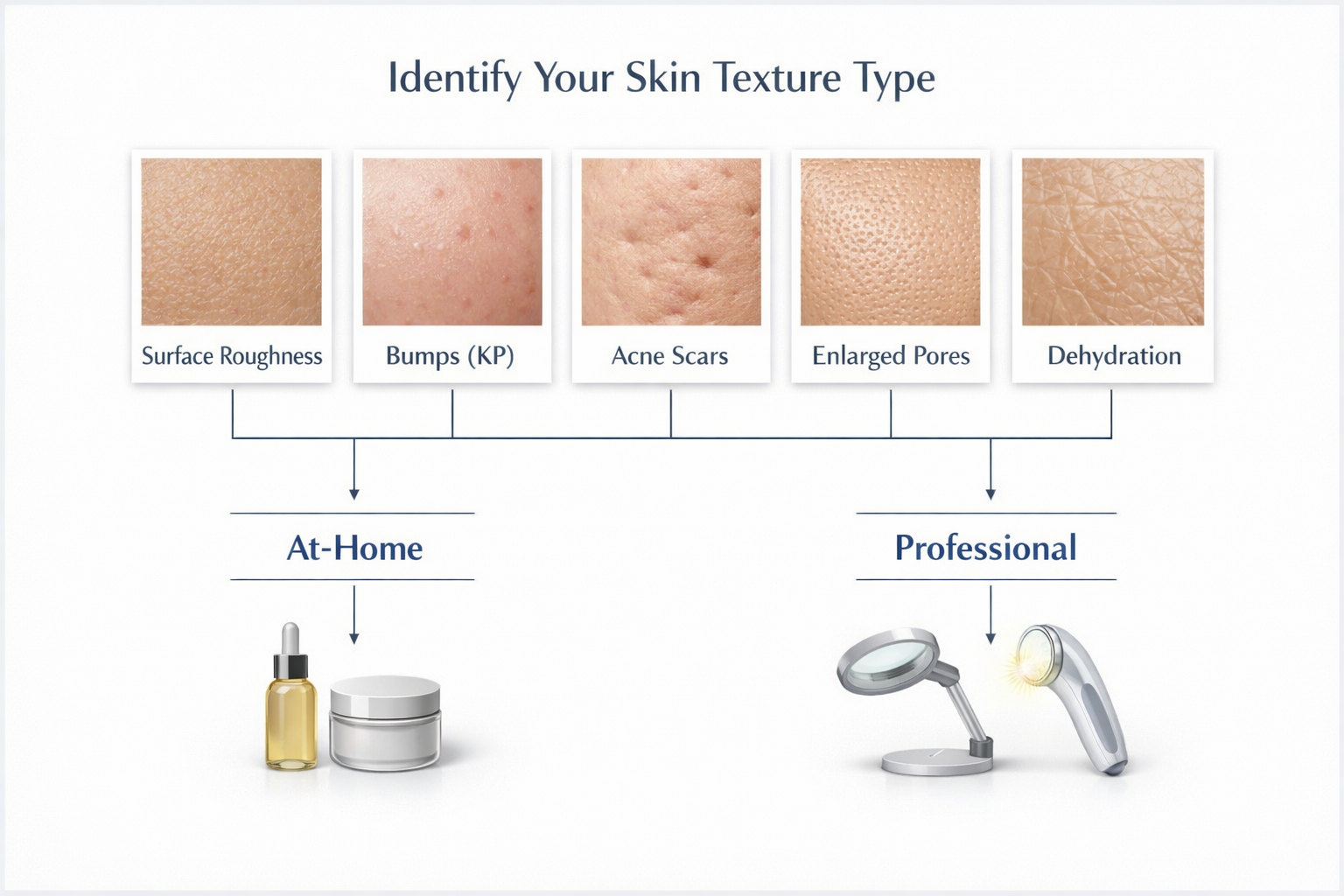
At-home skincare using chemical exfoliants, retinoids, niacinamide, and barrier-supportive moisturisers can produce meaningful improvement for surface-level and mild texture concerns, provided ingredients are introduced correctly and used consistently over several months. For moderate to significant structural changes — particularly acne scars, pronounced photoaging, or persistent enlarged pores — professional treatments such as microneedling, RF microneedling, laser resurfacing, or chemical peels offer more substantial remodelling that topicals cannot replicate.
Realistic expectations matter. Improvement is achievable for most texture types, but the degree and permanence of results vary with the underlying cause, treatment chosen, skin tone, and individual biology. If you are unsure where to start, a consultation with a qualified aesthetic practitioner or board-certified dermatologist is a practical first step — both to confirm the cause and to receive a treatment plan tailored to your skin rather than a general category of concern.
