


Crow’s feet are the fine lines and deeper creases that radiate from the outer corners of the eyes. They develop gradually through a combination of repeated facial movement, natural skin ageing, and environmental factors such as sun exposure. For many people, these lines become more noticeable in their thirties and forties, though the timing varies considerably between individuals. Several treatment approaches can help soften crow’s feet, ranging from injectable muscle relaxants to skin-resurfacing procedures, and understanding how each works — and what it can realistically achieve — is an important first step before booking a consultation.
Key Takeaways
- Crow’s feet form through a combination of repeated muscle movement around the eye and progressive loss of skin elasticity and collagen — different treatments address different parts of this process.
- Botulinum toxin injections are the most widely used treatment for dynamic crow’s feet (lines that appear with expression) and typically produce visible results within one to two weeks.
- Skin-quality treatments such as skin boosters, polynucleotides, and laser resurfacing may help with fine surface lines and skin texture, but are less effective at addressing deeper movement-related creases on their own.
- Results from any crow’s feet treatment are temporary and require maintenance; realistic expectations and a thorough consultation are essential before proceeding.
- Suitability depends on individual anatomy, skin condition, medical history, and treatment goals — a qualified practitioner should assess these factors before recommending any approach.
Why Crow’s Feet Form
The skin around the outer eye is among the thinnest on the face, with fewer sebaceous glands and less structural support than skin elsewhere. The orbicularis oculi — the ring-shaped muscle that controls eye closure, blinking, and squinting — contracts hundreds of times each day. Over time, these repeated contractions crease the overlying skin, and as collagen and elastin fibres gradually break down with age, those creases become increasingly permanent rather than disappearing when the face is at rest.
Sun exposure accelerates this process by degrading collagen and elastin through ultraviolet radiation, which is why crow’s feet often appear earlier and more prominently in people with significant cumulative sun exposure. Smoking, dehydration, and poor sleep quality can also contribute to reduced skin resilience around the eye area. Understanding the underlying cause of your own crow’s feet — whether they are primarily movement-related, skin-quality-related, or a combination of both — helps determine which treatment approach is most likely to be useful.
Clinicians often distinguish between dynamic lines, which appear or deepen during expression such as smiling or squinting, and static lines, which are visible even when the face is completely relaxed. Dynamic crow’s feet tend to respond well to muscle-relaxing treatments, while static lines may require a broader approach that also addresses skin quality and volume.
Botulinum Toxin Injections for Crow’s Feet
Botulinum toxin injections are the most established and widely used crow’s feet treatment for dynamic lines. The treatment works by temporarily blocking the nerve signals that cause the orbicularis oculi muscle to contract, reducing the intensity of the squinting and smiling movements that create lateral eye-corner creases. The effect is not permanent — the nerve-muscle connection gradually recovers — but results typically last between three and five months, after which the treatment can be repeated.
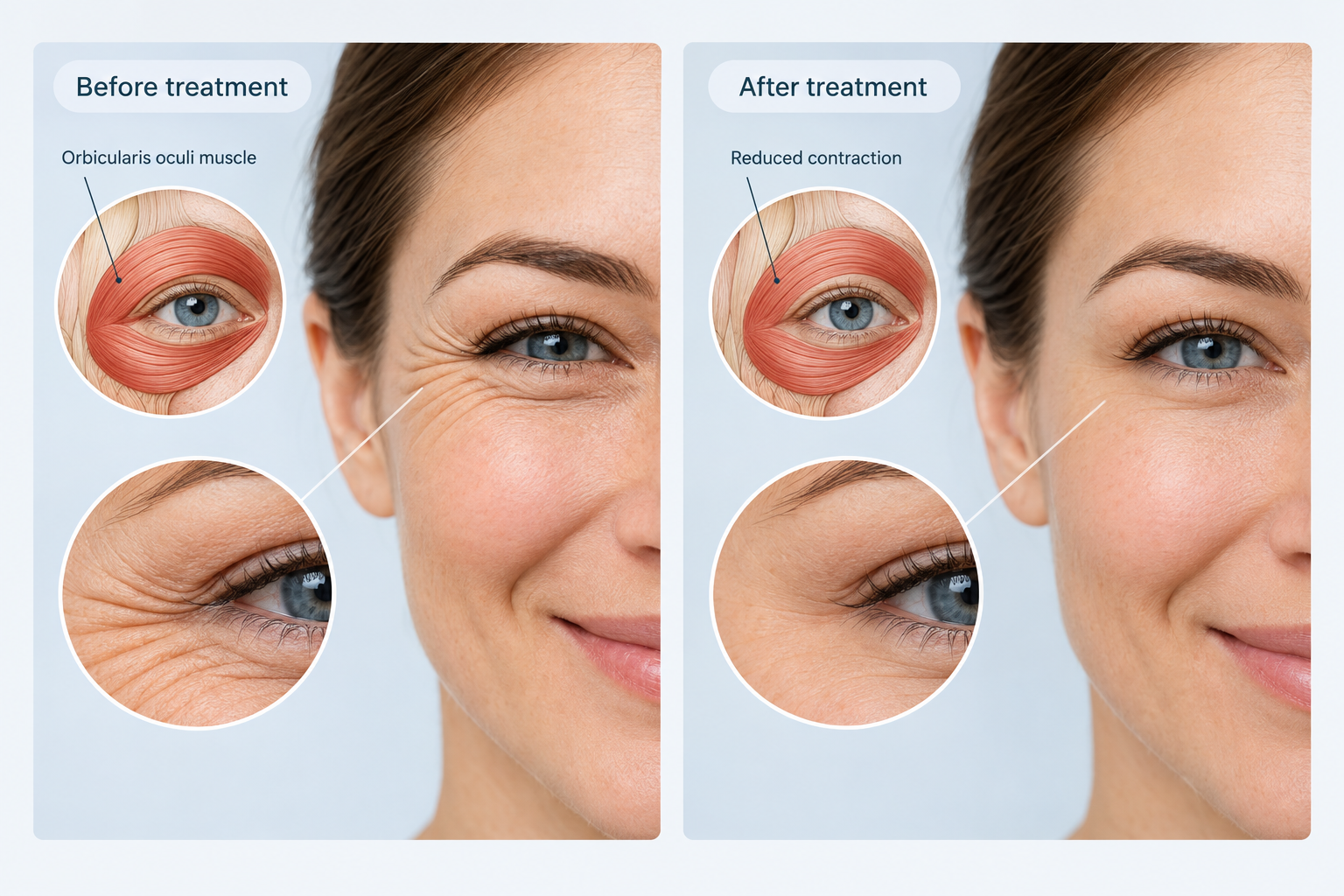
Several botulinum toxin formulations are used in aesthetic practice, including products marketed under brand names such as Botox, Dysport, and Azzalure. These products share the same active ingredient — botulinum toxin type A — but differ in their formulation, unit measurement systems, and diffusion characteristics. Units are not interchangeable between brands, and the appropriate product and dose for a given patient depends on the practitioner’s assessment of muscle strength, facial anatomy, and treatment goals. Patients should not attempt to compare doses between brands without guidance from a qualified practitioner.
Most people find the injections mildly uncomfortable rather than painful. A fine needle is used, and the appointment itself is typically brief. Some practitioners apply a topical numbing cream beforehand, though this is not always necessary for the lateral eye area. Results generally become visible within five to fourteen days as the muscle activity gradually reduces.
What Results to Expect from Botulinum Toxin
When performed by an experienced practitioner, botulinum toxin treatment for crow’s feet can produce a meaningful reduction in the depth and visibility of dynamic lines. Smiling lines may still appear to some degree — complete elimination of all movement is neither the goal nor the typical outcome — but the creases are generally shallower and recover more quickly after expression. Static lines that were already established before treatment may improve partially but are unlikely to disappear entirely with muscle relaxation alone.
Individual response varies. Factors including muscle strength, skin thickness, the depth of existing lines, and the patient’s natural facial movement all influence the outcome. Some patients notice a significant softening after a single treatment; others find that results improve progressively over several treatment cycles as the skin has more opportunity to recover between periods of repeated creasing.
Risks and Side Effects
Botulinum toxin treatment for the lateral eye area carries a generally well-documented safety profile when performed by a qualified practitioner, but side effects and complications are possible. Common temporary effects include mild redness, swelling, or bruising at the injection sites, which typically resolve within a few days. Headache is occasionally reported after treatment.
More significant but less common risks include asymmetry, an unintended change in brow position if the injected product affects nearby muscles, and — rarely — temporary drooping of the upper eyelid (ptosis). The risk of these complications is influenced by practitioner technique, product selection, and individual anatomy. Choosing a practitioner with specific training and experience in periorbital injections is an important safety consideration. Botulinum toxin is generally not recommended during pregnancy or breastfeeding, and certain neuromuscular conditions may be contraindications — a full medical history should be taken before treatment.
Skin Booster Injections and Polynucleotides
Skin booster treatments involve injecting hydrating or regenerative substances into the superficial layers of the skin to improve texture, hydration, and fine-line appearance. Hyaluronic acid-based skin boosters — such as Profhilo or Restylane Skinboosters — work primarily by attracting and retaining water within the dermis, improving skin plumpness and surface quality. Polynucleotide treatments, derived from purified DNA fragments, are thought to support skin cell regeneration and collagen synthesis, though the evidence base for polynucleotides in the periorbital area is still developing.
These treatments are generally more useful for fine surface lines and overall skin quality than for deeper dynamic crow’s feet. They do not relax muscle activity, so they are unlikely to produce the same degree of line reduction as botulinum toxin for movement-related creases. However, they may complement muscle-relaxing treatments by improving the skin’s underlying quality and resilience, and some practitioners use them in combination for patients with both dynamic lines and skin-quality concerns.
The periorbital skin is delicate, and injecting close to the eye requires careful technique. Patients should ensure that any practitioner treating this area has appropriate training and experience with periorbital skin booster or polynucleotide injections specifically.
Dermal Fillers Near the Outer Eye
Hyaluronic acid dermal fillers are sometimes used in the temple or lateral cheek area to address volume loss that contributes to the appearance of crow’s feet and skin laxity around the eye. Volume depletion in the mid-face and temples can cause the overlying skin to lose support, making surface lines appear more prominent. Restoring volume in these areas may indirectly improve the appearance of the outer eye region.
Dermal fillers are not typically injected directly into the crow’s feet lines themselves, as the skin in this area is very thin and the risk of complications — including vascular events — is a significant consideration. Any filler treatment near the eye should only be performed by a practitioner with advanced training in facial anatomy and vascular safety. Patients should discuss the specific risks of periorbital filler treatment thoroughly before proceeding.
Laser Resurfacing and Energy-Based Treatments
Laser resurfacing treatments use controlled light energy to remove or remodel the outer layers of the skin, stimulating collagen production and improving surface texture. Ablative lasers — such as CO2 and erbium lasers — remove the outer skin layer and produce more significant resurfacing with a longer recovery period. Non-ablative and fractional laser treatments work at a lower intensity, creating microscopic treatment zones while leaving surrounding tissue intact, which reduces downtime but may require multiple sessions to achieve comparable improvement.
Laser resurfacing can be effective for fine static lines around the eye, skin texture irregularities, and mild skin laxity. It does not address the underlying muscle activity that causes dynamic crow’s feet, so it is often considered alongside rather than instead of botulinum toxin for patients with both concerns. Recovery from ablative laser treatment around the eye can involve redness, swelling, and peeling for one to two weeks or longer, and sun protection is essential during the healing period.
Radiofrequency and ultrasound-based devices — such as those using microneedling radiofrequency or focused ultrasound technology — are also used to stimulate collagen and improve skin tightening in the periorbital area. These treatments are generally better suited to mild-to-moderate skin laxity and fine lines rather than deep established creases, and results develop gradually over several weeks to months as new collagen forms.
Topical Treatments and Their Role
Topical skincare cannot replicate the results of injectable or energy-based treatments, but certain ingredients have meaningful supporting evidence for improving skin quality and reducing the appearance of fine lines over time. Retinoids — including prescription tretinoin and over-the-counter retinol — stimulate collagen synthesis and accelerate skin cell turnover, and are among the most evidence-supported topical ingredients for fine lines. Vitamin C, niacinamide, and peptides may also support skin resilience and hydration.
Daily broad-spectrum sun protection is arguably the most important topical measure for preventing further crow’s feet development and protecting the results of any treatment. UV exposure is a primary driver of collagen degradation around the eye, and consistent SPF use can meaningfully slow the progression of lateral eye-corner lines over time. Topical treatments work best as part of a broader skincare routine and as a complement to, rather than a replacement for, clinical treatments when significant improvement is the goal.
Combining Treatments
Many patients with crow’s feet benefit from a combination approach rather than a single treatment. A common example is botulinum toxin to address dynamic muscle-related lines alongside a skin booster or polynucleotide treatment to improve skin hydration and texture. Laser resurfacing or radiofrequency microneedling may be added for patients with more significant static lines or skin laxity. Temple or cheek volume restoration with dermal filler may also be considered where volume loss is contributing to the overall appearance.
Combination planning requires a thorough assessment of the individual patient’s concerns, anatomy, and priorities. Not every patient needs or is suitable for multiple treatments, and a good practitioner will recommend only what is clinically appropriate rather than a comprehensive package by default. The sequencing of treatments also matters — some combinations work better when performed in a specific order or with appropriate intervals between sessions.
Who May Be Suitable for Crow’s Feet Treatment
Most adults who are bothered by the appearance of lateral eye-corner lines and are in generally good health may be suitable candidates for at least one form of crow’s feet treatment. The most appropriate option depends on the type and severity of the lines, the patient’s skin condition, their medical history, and their goals and expectations.
Patients with predominantly dynamic crow’s feet — lines that are most visible during expression — are typically the best candidates for botulinum toxin treatment. Those with fine surface lines and skin-quality concerns may benefit from skin boosters, polynucleotides, or resurfacing treatments. Patients with deeper static lines or significant skin laxity may require a more comprehensive approach.
Certain factors may affect suitability for specific treatments. These include:
- Pregnancy or breastfeeding — most injectable and energy-based treatments are not recommended during this period.
- Neuromuscular conditions such as myasthenia gravis — botulinum toxin is generally contraindicated.
- Active skin infection, inflammation, or cold sores in the treatment area.
- Certain medications, including blood thinners, which may increase bruising risk.
- Previous procedures in the area, including surgery, that may affect anatomy or tissue response.
- Allergy to any component of the proposed treatment.
A thorough consultation with a qualified practitioner is essential to assess individual suitability and to discuss realistic expectations before any treatment is undertaken.
How Long Results Last and Maintenance
No currently available crow’s feet treatment produces permanent results. Botulinum toxin effects typically last three to five months, after which muscle activity gradually returns and lines may reappear. Regular maintenance treatments — usually two to four times per year depending on individual response — are required to sustain the improvement. Some patients find that with consistent treatment over several years, the lines become somewhat less deep at rest, possibly because the skin has had extended periods of reduced creasing, though this varies between individuals.
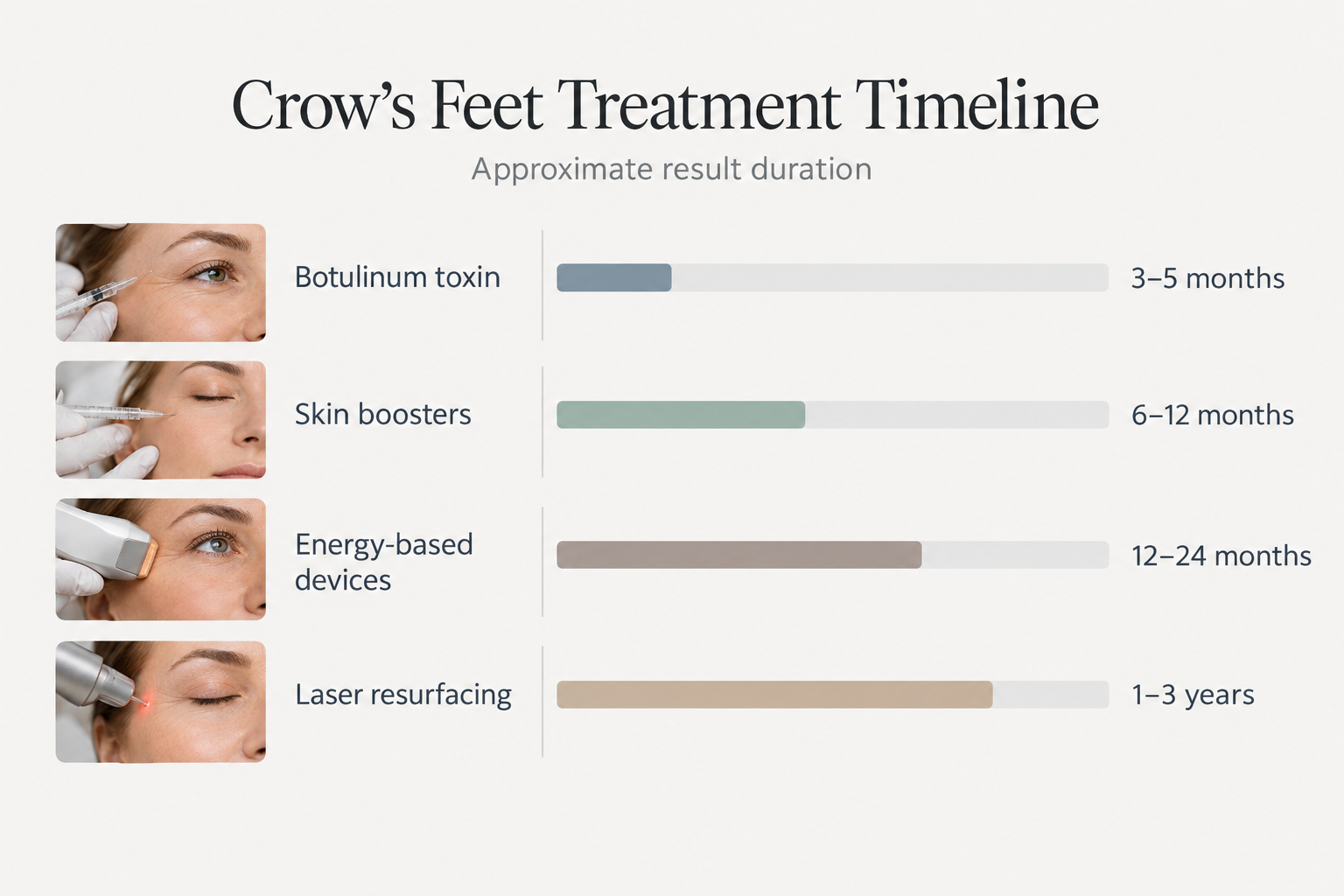
Skin booster and polynucleotide treatments generally require an initial course of two to three sessions spaced several weeks apart, followed by maintenance treatments every six to twelve months. Laser resurfacing results may last one to several years depending on the treatment intensity and the patient’s ongoing sun protection and skincare habits. Energy-based collagen-stimulating treatments typically produce results that develop over three to six months and may last one to two years before maintenance is considered.
Ongoing sun protection and a consistent skincare routine meaningfully influence how long any treatment result is maintained. Patients who continue to have significant UV exposure without adequate protection are likely to see faster recurrence of lines regardless of the treatment used.
Frequently Asked Questions
At what age should I consider crow’s feet treatment?
There is no fixed age at which treatment becomes appropriate. Some people develop noticeable dynamic crow’s feet in their late twenties or early thirties, while others may not be concerned until their forties or fifties. The decision depends on individual concern, the severity of the lines, and personal preference rather than age alone. A consultation with a qualified practitioner can help determine whether treatment is appropriate and which approach may be most suitable.
Will botulinum toxin make me look frozen or unnatural around the eyes?
When performed by an experienced practitioner with an appropriate dose and technique, botulinum toxin treatment for crow’s feet should reduce line depth without eliminating all natural expression. The goal is softening rather than complete immobility. Unnatural results are more likely when excessive product is used or when the treatment is not tailored to the individual’s anatomy and movement patterns. Discussing your preferences and concerns clearly with your practitioner before treatment is important.
Can I treat crow’s feet without injections?
Non-injectable options include laser resurfacing, radiofrequency or ultrasound-based skin tightening, and topical treatments such as retinoids. These approaches can improve skin quality and fine surface lines but are generally less effective than botulinum toxin for reducing dynamic movement-related creases. They may be appropriate for patients who prefer to avoid injections or who have mild concerns, and can also complement injectable treatments.
How much downtime should I expect?
Botulinum toxin injections for crow’s feet typically involve minimal downtime — most patients return to normal activities the same day, with possible mild redness or bruising for a day or two. Skin booster injections may cause temporary swelling or small injection marks that settle within a few days. Ablative laser resurfacing involves the most significant recovery, with redness, swelling, and peeling that can last one to two weeks or longer. Non-ablative and energy-based treatments generally involve less downtime, though some redness or mild swelling is common for a day or two.
Is crow’s feet treatment safe near the eyes?
Treatments in the periorbital area carry specific considerations because of the proximity to the eye itself and the delicate surrounding structures. Botulinum toxin injections for crow’s feet have a well-established safety record when performed by trained practitioners, though risks such as bruising, asymmetry, and — rarely — temporary eyelid drooping exist. Filler treatments near the eye carry more significant vascular risks and require advanced expertise. Laser and energy-based treatments near the eye require appropriate eye protection. Choosing a practitioner with specific training and experience in periorbital treatments is an important safety measure.
Can crow’s feet come back after treatment?
Yes. All currently available treatments for crow’s feet are temporary. Muscle activity returns after botulinum toxin wears off, and skin ageing continues regardless of treatment. Maintenance treatments and consistent sun protection can help sustain results, but patients should expect that ongoing treatment will be needed to maintain improvement over time.
Deciding on the Right Crow’s Feet Treatment for You
Crow’s feet are a normal part of facial ageing, and treatment is a personal choice rather than a clinical necessity. For those who wish to soften lateral eye-corner lines, the most appropriate approach depends on whether the lines are primarily dynamic or static, the current condition of the skin, and what level of intervention feels right for the individual.
Botulinum toxin remains the most evidence-supported option for dynamic crow’s feet and is likely to produce the most noticeable improvement for movement-related lines. Skin-quality treatments such as skin boosters, polynucleotides, and resurfacing procedures address different aspects of the concern and may be valuable either alongside or instead of muscle-relaxing injections depending on the patient’s specific presentation. Topical skincare and sun protection play a meaningful supporting role regardless of which clinical treatment is chosen.
Realistic expectations are essential. No treatment eliminates crow’s feet permanently, and results vary between individuals. A thorough consultation with a qualified and experienced practitioner — one who takes a full medical history, assesses your anatomy and skin condition, and explains the realistic benefits and limitations of each option — is the most important step before committing to any treatment. If you are considering crow’s feet treatment, seeking a consultation with a practitioner who specialises in facial aesthetics and periorbital treatments is a sensible starting point.
