
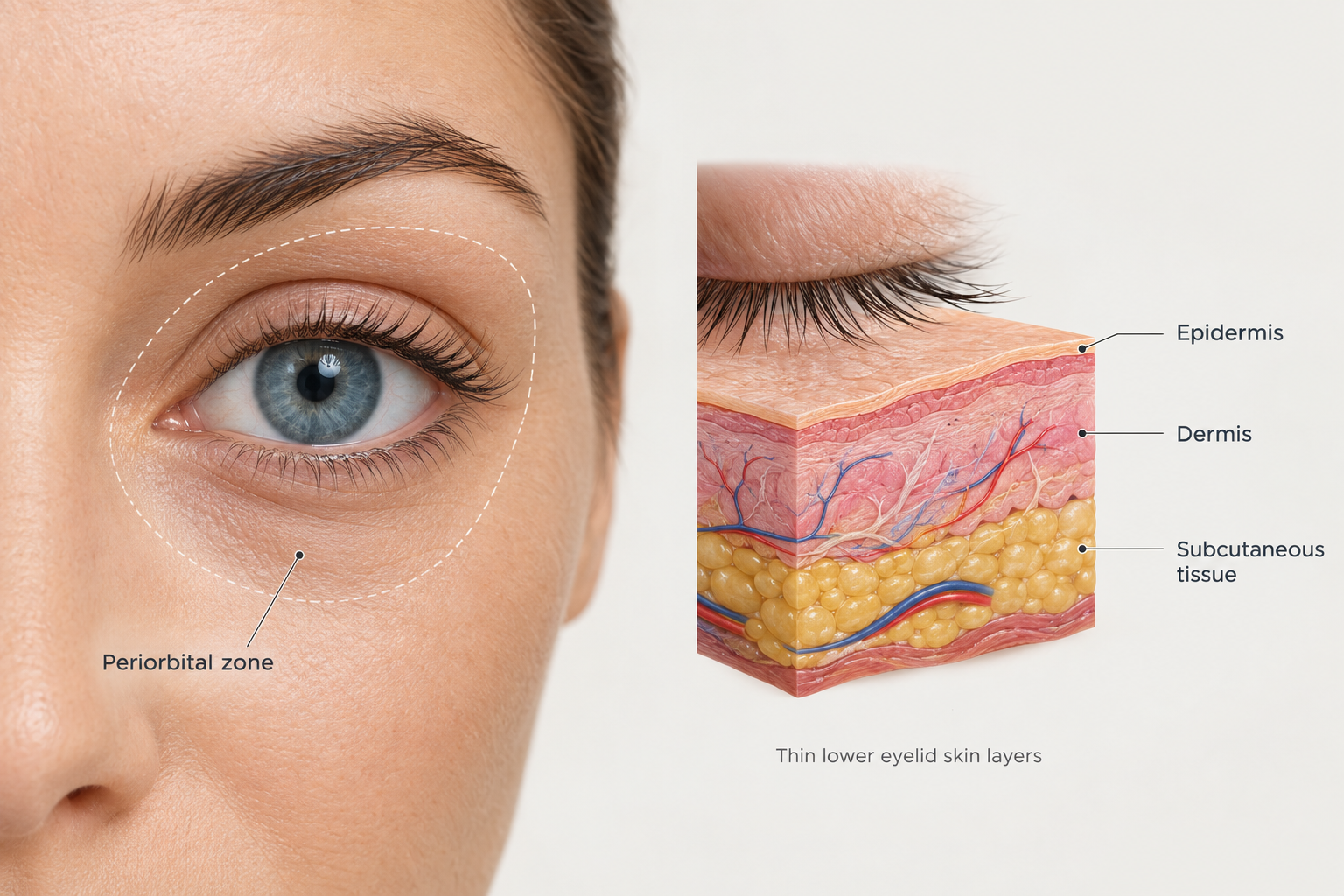

The skin around the eyes is among the thinnest and most delicate on the face, which makes it particularly prone to fine lines, crepiness, pigmentation changes, and a loss of firmness over time. Under eye laser treatment has become one of the more established options for addressing these concerns, but the periorbital area also demands careful patient selection and precise technique. This article explains how different laser technologies work on the skin beneath and around the eyes, what results may realistically be achieved, what the recovery involves, and how laser treatment compares with other approaches.
Key Takeaways
- Several laser types can be used around the eyes, including ablative, non-ablative, and fractional devices, each with different mechanisms, downtime profiles, and suitable concerns.
- Laser treatment may improve fine lines, skin texture, mild laxity, and certain types of pigmentation in the periorbital area, but results vary considerably between individuals.
- The under-eye zone carries specific risks including prolonged redness, pigmentation changes, and, with ablative lasers, a small risk of scarring if treatment parameters are not carefully managed.
- Multiple sessions are often required with non-ablative or fractional approaches, while a single ablative treatment may produce more significant change but with greater downtime.
- Dark circles caused by hollowness, vascular visibility, or volume loss are generally not well addressed by laser alone; a thorough assessment is essential before choosing any treatment.
Why the Periorbital Area Requires a Specialist Approach
The periorbital skin — the zone encircling the eyes — is structurally different from skin elsewhere on the face. It is significantly thinner, contains fewer sebaceous glands, and has less underlying subcutaneous fat to buffer it from the effects of energy-based treatments. These anatomical characteristics mean that the margin between an effective treatment and an adverse outcome is narrower here than in most other facial zones. Practitioners working in this area typically use lower energy settings, modified treatment patterns, and protective eye shields to reduce the risk of complications.
Understanding what is actually causing a patient’s under-eye concern is also critical before any laser treatment is considered. Common periorbital concerns include fine lines and crepey skin texture, mild skin laxity, superficial pigmentation such as post-inflammatory hyperpigmentation or solar lentigines, and overall skin quality changes associated with photoageing. However, dark circles specifically can arise from several distinct causes — including melanin-based pigmentation, the visibility of underlying blood vessels through thin skin, volume loss creating a shadowed hollow, or a combination of these factors. Laser treatment is more likely to be useful for pigmentation and skin texture concerns than for vascular or structural causes of darkness, which is why a careful clinical assessment matters before any treatment decision is made.
Types of Laser Used Around the Eyes
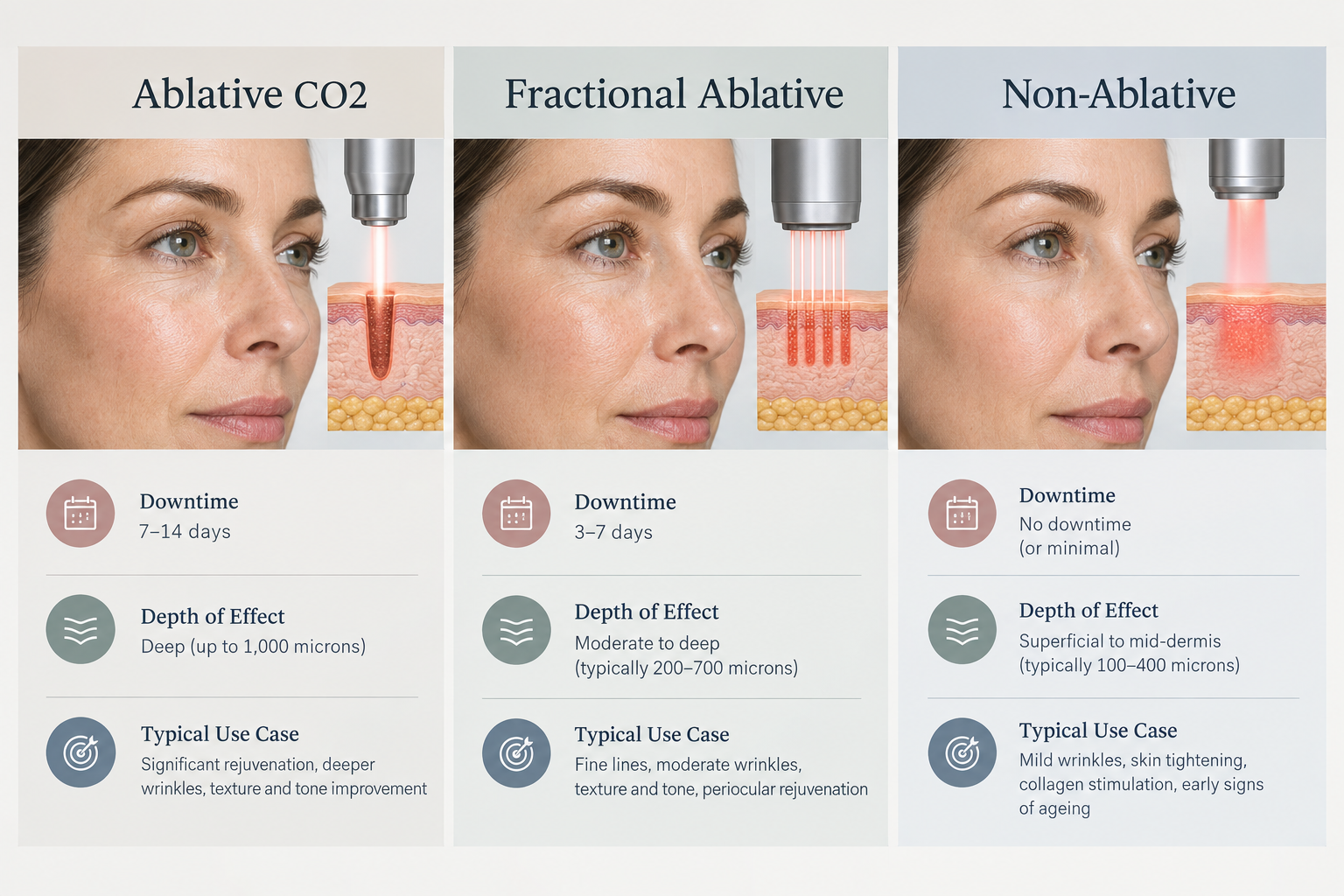
Not all lasers are the same, and the choice of device significantly influences what can be treated, how much downtime is involved, and what risks apply. The main categories used in periorbital rejuvenation are ablative lasers, non-ablative lasers, and fractional lasers — a delivery method that can apply to both ablative and non-ablative wavelengths.
Ablative Lasers
Ablative lasers, most commonly carbon dioxide (CO2) lasers and erbium:YAG (Er:YAG) lasers, work by removing the outer layers of skin. The CO2 laser operates at a wavelength of 10,600 nm and vaporises tissue while simultaneously delivering thermal energy to the deeper dermis, stimulating collagen remodelling. The Er:YAG laser at 2,940 nm is more precisely absorbed by water in tissue, producing less thermal spread and a somewhat more controlled ablation with reduced downtime compared with CO2. Both can produce meaningful improvements in periorbital fine lines, skin texture, and mild laxity, but they require significant recovery time — typically one to three weeks of visible healing — and carry a higher risk profile in darker skin tones due to the potential for post-inflammatory hyperpigmentation or hypopigmentation.
Non-Ablative Lasers
Non-ablative lasers deliver energy to the dermis without removing the surface skin. Devices such as the 1,064 nm Nd:YAG laser and 1,320 nm or 1,450 nm diode lasers stimulate collagen production and may improve skin quality over a series of treatments, with minimal downtime — usually redness lasting hours rather than days. The trade-off is that the degree of visible improvement per session is more modest than with ablative approaches, and several treatments spaced weeks apart are typically needed to accumulate a meaningful result. Non-ablative lasers are often considered for patients who cannot accommodate significant recovery time or who have concerns about the risks associated with ablative treatment.
Fractional Lasers
Fractional laser technology, introduced to clinical practice in the mid-2000s, delivers energy in a pattern of microscopic treatment columns separated by untreated skin. This approach accelerates healing because the surrounding intact tissue supports rapid recovery of the treated zones. Fractional delivery can be applied to both ablative wavelengths — fractional CO2 and fractional Er:YAG — and non-ablative wavelengths such as the 1,550 nm erbium fibre laser (commonly associated with the Fraxel brand). Fractional ablative lasers offer a middle ground: more significant collagen remodelling and skin resurfacing than non-ablative options, with somewhat less downtime and a marginally lower risk profile than fully ablative treatment. In the periorbital area, fractional approaches have become widely used precisely because they allow effective treatment while preserving enough intact skin to support healing in this sensitive zone.
What Under Eye Laser Treatment May Address
Laser treatment around the eyes is most likely to produce a meaningful improvement in the following concerns, though the degree of response varies between individuals and depends on the laser type selected.
- Fine lines and wrinkles: Periorbital rhytids — particularly the fine crepey lines on the lower eyelid skin and the lateral crow’s feet — are among the most common reasons patients seek laser treatment in this area. Ablative and fractional ablative lasers can produce visible smoothing by resurfacing the skin surface and stimulating new collagen formation in the dermis.
- Skin texture and crepiness: Thinning, crepey skin texture on the lower eyelid is a common sign of photoageing and intrinsic ageing. Laser resurfacing may improve the overall quality and smoothness of the skin in this zone.
- Superficial pigmentation: Certain types of periorbital pigmentation, including solar lentigines (sun spots) and some forms of superficial melanin-based hyperpigmentation, may respond to laser treatment. Q-switched lasers and picosecond lasers are sometimes used specifically for pigmentation concerns, while resurfacing lasers address pigmentation as part of a broader skin quality improvement.
- Mild skin laxity: The thermal component of ablative and some fractional lasers can stimulate dermal collagen and elastin remodelling, which may produce a modest tightening effect in the periorbital skin. This is generally a subtle improvement rather than a dramatic lift.
- Overall periorbital skin quality: Patients seeking a general improvement in the appearance of ageing skin around the eyes — rather than a single specific concern — may benefit from the combined resurfacing and collagen-stimulating effects of laser treatment.
It is important to note that laser treatment is unlikely to significantly improve dark circles caused by vascular visibility, hollowness, or structural volume loss. These concerns are generally better addressed through other approaches such as dermal filler, polynucleotide injections, or, in appropriate cases, surgical intervention.
What Happens During a Periorbital Laser Treatment
Before any laser session, a qualified practitioner will conduct a thorough consultation to assess the patient’s skin type, the nature of their concerns, relevant medical history, and any medications or supplements that could affect treatment safety or healing. Photographs are typically taken for comparison. Patients are usually advised to avoid sun exposure, self-tanning products, and certain skincare actives such as retinoids in the weeks before treatment.
On the day of treatment, the skin is cleansed and a topical anaesthetic cream is applied to the periorbital area and left for a period — commonly 30 to 60 minutes — to reduce discomfort during the procedure. Protective eye shields are placed directly on the eyes before any laser energy is delivered; this is a non-negotiable safety step when treating the periorbital zone. The practitioner then delivers the laser energy according to the planned parameters, which will have been selected based on the patient’s skin type, the concern being treated, and the device being used. The sensation during treatment varies by laser type: ablative treatments may feel like a snapping or burning sensation despite topical anaesthesia, while non-ablative sessions are often described as a mild warming or stinging. Treatment time for the periorbital area alone is typically short — often 15 to 30 minutes — though the full appointment including preparation is longer.
Recovery and Downtime
Recovery after under eye laser treatment depends heavily on the type of laser used and the treatment parameters applied. Understanding what to expect during healing helps patients plan appropriately and reduces the likelihood of concern about normal post-treatment changes.
Ablative Laser Recovery
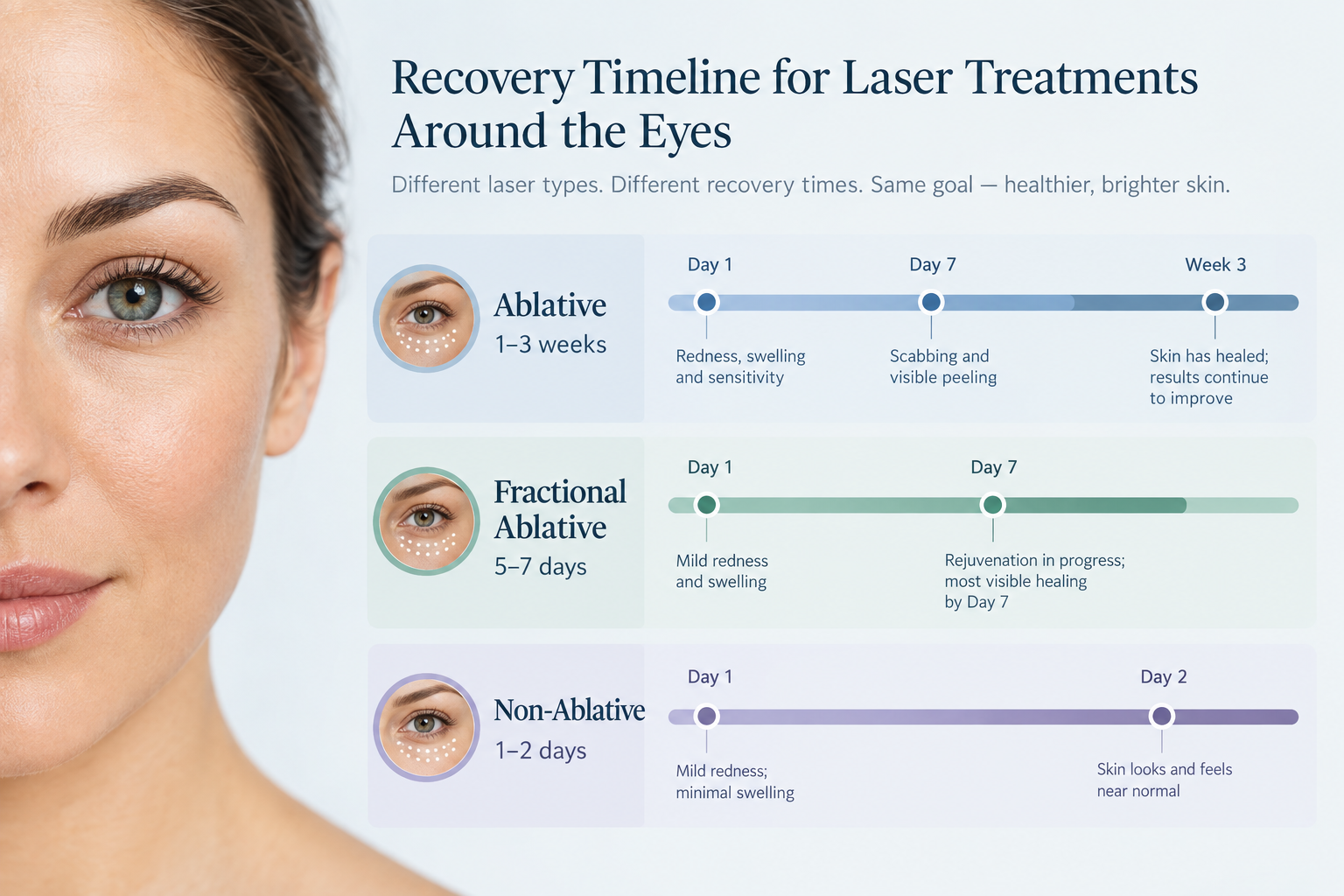
After fully ablative CO2 or Er:YAG laser treatment to the periorbital area, patients should expect a meaningful recovery period. The treated skin will be raw, weeping, and crusting in the first several days, transitioning to a pink or red appearance as the new skin surface forms. This redness can persist for several weeks to months, particularly with CO2 laser treatment. Swelling around the eyes is common and can be pronounced in the first 48 to 72 hours. Most patients require at least one to two weeks away from work and social commitments, and sun protection is essential throughout the healing phase and beyond. Strict aftercare — including prescribed ointments, gentle cleansing, and avoidance of picking or rubbing — is critical to minimise the risk of infection and scarring.
Fractional Laser Recovery
Fractional ablative laser treatment typically produces redness, swelling, and a sandpaper-like skin texture in the treated area for approximately five to seven days, after which the skin surface normalises. Residual pinkness may persist for a further one to three weeks. Fractional non-ablative treatments generally involve less visible recovery — redness and mild swelling that resolves within one to three days — though the improvement per session is correspondingly more gradual. Patients undergoing a course of fractional non-ablative treatments may notice progressive improvement over several months as collagen remodelling continues after each session.
When Results May Appear and How Long They May Last
The timeline for visible results after periorbital laser treatment reflects the underlying biology of skin healing and collagen remodelling. Immediately after ablative or fractional ablative treatment, the skin will look worse before it looks better as healing progresses. Once the surface has healed — typically within one to two weeks for fractional ablative and two to three weeks for fully ablative treatment — an initial improvement in skin texture and tone may be visible. However, the deeper collagen remodelling that produces the most significant improvements in fine lines and skin quality continues for three to six months after treatment. This means that the final result of a single ablative or fractional ablative session may not be fully apparent until several months have passed.
For non-ablative laser courses, improvement tends to accumulate gradually across a series of sessions, with patients often noticing progressive changes over the months of treatment and continuing collagen stimulation in the period following the final session. The longevity of results varies between individuals and depends on factors including the patient’s age, skin type, degree of sun exposure, and lifestyle. Laser treatment does not halt the ageing process, and maintenance sessions may be recommended — typically annually or every one to two years — to sustain the improvement achieved.
Risks and Side Effects
The periorbital area carries specific risks with laser treatment that patients should understand before proceeding. A thorough discussion of potential adverse effects is an essential part of the pre-treatment consultation.
- Prolonged redness (erythema): Particularly after ablative CO2 laser treatment, redness can persist for several months. This is a normal part of healing but can be socially inconvenient and distressing if not anticipated.
- Pigmentation changes: Post-inflammatory hyperpigmentation — darkening of the treated skin — is a recognised risk, particularly in patients with Fitzpatrick skin types III to VI (medium to darker skin tones). Hypopigmentation (lightening) is less common but can occur, particularly with aggressive ablative treatment, and may be permanent.
- Swelling: Periorbital oedema (swelling) is common after laser treatment in this area and can be significant in the first few days. Sleeping with the head elevated and applying cold compresses as directed can help manage this.
- Infection: Disruption of the skin barrier after ablative treatment creates a temporary vulnerability to bacterial, viral (particularly herpes simplex reactivation), and fungal infection. Prophylactic antiviral medication is commonly prescribed before ablative periorbital laser treatment for patients with a history of cold sores.
- Scarring: Scarring is uncommon when treatment is performed by an experienced practitioner using appropriate parameters, but it remains a recognised risk, particularly with aggressive ablative treatment or if post-treatment wound care is inadequate.
- Eye injury: Laser energy poses a direct risk to the eyes. The use of appropriate protective eye shields throughout treatment is mandatory and non-negotiable.
- Ectropion: In rare cases, particularly with aggressive ablative resurfacing of the lower eyelid, contraction of the healing skin can cause the lower eyelid to turn outward (ectropion). This risk underscores the importance of conservative treatment parameters in the periorbital zone.
Who May Be Suitable for Under Eye Laser Treatment
Laser treatment around the eyes may be appropriate for adults who have realistic expectations and whose primary concerns relate to skin texture, fine lines, crepiness, or superficial pigmentation in the periorbital area. Patients with lighter skin tones (Fitzpatrick types I to III) generally carry a lower risk of pigmentation complications with ablative and fractional ablative lasers, though non-ablative and certain pigment-specific lasers can be used more safely across a broader range of skin tones when selected and calibrated appropriately.
Suitability also depends on medical history. Patients who are pregnant or breastfeeding are not candidates for elective laser treatment. Active skin infections, inflammatory skin conditions such as eczema or rosacea affecting the treatment area, a history of keloid scarring, recent use of isotretinoin (a medication for acne that affects skin healing), and certain autoimmune conditions may all affect whether laser treatment is appropriate. A history of herpes simplex infection around the mouth or eyes is relevant because laser treatment can trigger reactivation; prophylactic antiviral treatment is typically prescribed in these cases. A thorough medical history and clinical assessment by a qualified practitioner is essential before any treatment proceeds.
Alternatives to Laser for Periorbital Concerns
Laser treatment is one option within a broader range of approaches for periorbital skin concerns. Understanding the alternatives helps patients and practitioners make informed decisions about which treatment — or combination of treatments — is most likely to address the specific concern effectively.
- Botulinum toxin injections: Botulinum toxin (such as Botox or Dysport) is widely used to reduce the appearance of dynamic crow’s feet lines — wrinkles that form with facial expression. It does not resurface the skin or address static fine lines at rest, but it can meaningfully reduce expression-related wrinkling and is often used alongside laser treatment rather than as a direct alternative.
- Dermal fillers: Hyaluronic acid fillers placed in the tear trough area can address hollowness and volume loss that contributes to a shadowed or tired appearance under the eyes. Filler does not improve skin texture or pigmentation but can be highly effective for the structural causes of under-eye concerns.
- Polynucleotide injections: Polynucleotides (such as those used in products like Lumi Eyes) are injected into the periorbital skin to support hydration, skin quality, and tissue regeneration. Evidence for their use in this area is still developing, but they are increasingly used as a skin quality treatment that may complement or serve as an alternative to laser in appropriate patients.
- Chemical peels: Superficial and medium-depth chemical peels using agents such as glycolic acid or trichloroacetic acid (TCA) can improve periorbital skin texture and mild pigmentation. They carry their own risk profile and are generally less precise than laser treatment in terms of depth control.
- Radiofrequency and microneedling: Radiofrequency devices — including microneedling radiofrequency — deliver thermal energy to the dermis to stimulate collagen and may improve skin laxity and texture around the eyes with a lower risk of pigmentation changes than ablative lasers, making them a consideration for patients with medium to darker skin tones.
- Topical skincare: Consistent use of evidence-supported topical ingredients — including retinoids, vitamin C, and broad-spectrum sun protection — can improve periorbital skin quality over time and is an important adjunct to any in-clinic treatment.
Frequently Asked Questions
How many laser sessions will I need around the eyes?
The number of sessions depends on the laser type and the concern being treated. A single ablative CO2 or Er:YAG laser session may produce significant improvement, though some patients choose a follow-up treatment after full healing. Fractional ablative treatments are often performed as a course of two to four sessions. Non-ablative laser courses typically involve four to six sessions or more, spaced several weeks apart. Your practitioner will recommend a treatment plan based on your individual assessment.
Is under eye laser treatment painful?
Topical anaesthetic cream is applied before treatment to reduce discomfort. Most patients describe ablative laser treatment as producing a noticeable heat or stinging sensation despite anaesthesia, while non-ablative and fractional non-ablative treatments are generally more comfortable. Discomfort during the procedure is usually brief, and post-treatment soreness is typically manageable with simple measures such as cool compresses.
Can laser treatment remove dark circles under the eyes?
Laser treatment may improve dark circles caused by superficial melanin-based pigmentation, but it is unlikely to significantly address darkness caused by vascular visibility, hollowness, or volume loss. Because dark circles often have multiple contributing causes, a clinical assessment is needed to determine which factor is dominant and which treatment approach is most appropriate.
Is laser treatment safe for darker skin tones around the eyes?
Ablative and fractional ablative lasers carry a higher risk of post-inflammatory hyperpigmentation in medium to darker skin tones (Fitzpatrick types III to VI). Non-ablative lasers, certain pigment-specific devices, and radiofrequency-based treatments may be safer options for these patients. Careful device selection, appropriate settings, and pre-treatment skin preparation are essential. A practitioner experienced in treating diverse skin tones should be consulted.
How long does redness last after periorbital laser treatment?
After non-ablative laser treatment, redness typically resolves within hours to a couple of days. Fractional ablative treatment may produce redness lasting five to ten days, with residual pinkness for a few weeks. Fully ablative CO2 laser treatment can result in persistent redness for several weeks to months. The duration varies between individuals and depends on treatment parameters.
Can I wear makeup after under eye laser treatment?
After ablative or fractional ablative treatment, makeup should be avoided until the skin surface has fully healed — typically at least one week, and sometimes longer. Your practitioner will advise on when it is safe to resume cosmetics. After non-ablative treatment, makeup can usually be applied within a day or two once any immediate redness has settled.
Will I need to repeat laser treatment to maintain results?
Laser treatment stimulates collagen remodelling and improves skin quality, but it does not stop the ageing process. Most patients find that maintenance treatments — typically once every one to two years for ablative or fractional ablative approaches — help to sustain the improvement achieved. Consistent sun protection and a good skincare routine are important for prolonging results.
Is Under Eye Laser Treatment the Right Choice for Your Concerns?
Under eye laser treatment can be a genuinely effective option for improving periorbital fine lines, crepey skin texture, and certain types of superficial pigmentation, but it is not a universal solution for every concern in this area. The choice of laser type matters considerably: ablative lasers offer more significant resurfacing with greater downtime and a higher risk profile, while non-ablative and fractional approaches offer a more gradual improvement with less recovery. Neither approach is appropriate for dark circles caused by hollowness or vascular visibility, and neither replaces the structural correction that fillers or other volume-based treatments can provide.
The periorbital area demands careful patient selection, appropriate device choice, and precise technique. Outcomes depend on the individual’s skin type, the nature of their concerns, and the experience of the practitioner performing the treatment. If you are considering laser treatment around the eyes, a consultation with a qualified medical practitioner who can assess your specific concerns, discuss realistic expectations, and explain the risks relevant to your skin type is the essential first step. Laser treatment in this area is not without risk, but when performed appropriately on a well-selected patient, it can produce meaningful and lasting improvements in periorbital skin quality.
