

Understanding your skin type is the foundation of any effective skincare or aesthetic treatment plan. Without an accurate assessment, products and procedures may deliver disappointing results or, in some cases, worsen existing concerns. Professional skin analysis in London offers a structured, clinically informed way to evaluate your skin’s condition, identify underlying issues, and guide treatment decisions that are genuinely matched to your needs.
Key Takeaways
- Professional skin analysis goes beyond identifying whether skin is oily or dry — it evaluates texture, hydration, pigmentation, sensitivity, and structural integrity using clinical tools and trained assessment.
- Skin type is not fixed; it can change with age, hormones, environment, diet, and skincare habits, which is why periodic reassessment is valuable.
- An accurate skin analysis helps practitioners recommend treatments and products that are appropriate for your specific concerns rather than generic skin categories.
- Advanced imaging technology used in many London clinics can reveal subsurface concerns — such as sun damage or early pigmentation — that are not yet visible to the naked eye.
- Skin analysis is typically a consultation tool, not a treatment in itself, and its value depends on the expertise of the practitioner interpreting the results.
What Is Professional Skin Analysis?
Professional skin analysis is a structured clinical assessment of the skin’s condition, carried out by a trained practitioner — typically a dermatologist, aesthetic nurse, or qualified skin therapist. The process involves evaluating multiple skin characteristics simultaneously, rather than simply placing skin into a broad category such as “oily” or “sensitive”. In a clinical setting, skin analysis considers hydration levels, sebum production, pore size, pigmentation distribution, skin tone evenness, elasticity, fine lines, and signs of photodamage or inflammation.
The distinction between a professional skin analysis and a self-assessment or in-store consultation is significant. Trained practitioners use a combination of visual examination, tactile assessment, and — in many London clinics — advanced imaging devices that capture data beyond what the naked eye can detect. This level of detail allows for a more precise understanding of what is happening at and beneath the skin’s surface, which directly informs treatment planning.
Skin analysis is most commonly offered as part of a broader aesthetic consultation, though some clinics provide it as a standalone appointment. It is relevant for patients considering treatments such as chemical peels, laser resurfacing, microneedling, injectable skin boosters, or medical-grade skincare programmes.
The Main Skin Types and What They Mean Clinically
The Fitzpatrick scale and the traditional oily-dry-combination-normal-sensitive classification are both used in clinical practice, though for different purposes. The Fitzpatrick phototype scale — which classifies skin from Type I (very fair, always burns) to Type VI (deeply pigmented, never burns) — is particularly important when assessing suitability for laser treatments, intense pulsed light (IPL), and certain chemical peels, as these carry different risk profiles depending on melanin content.
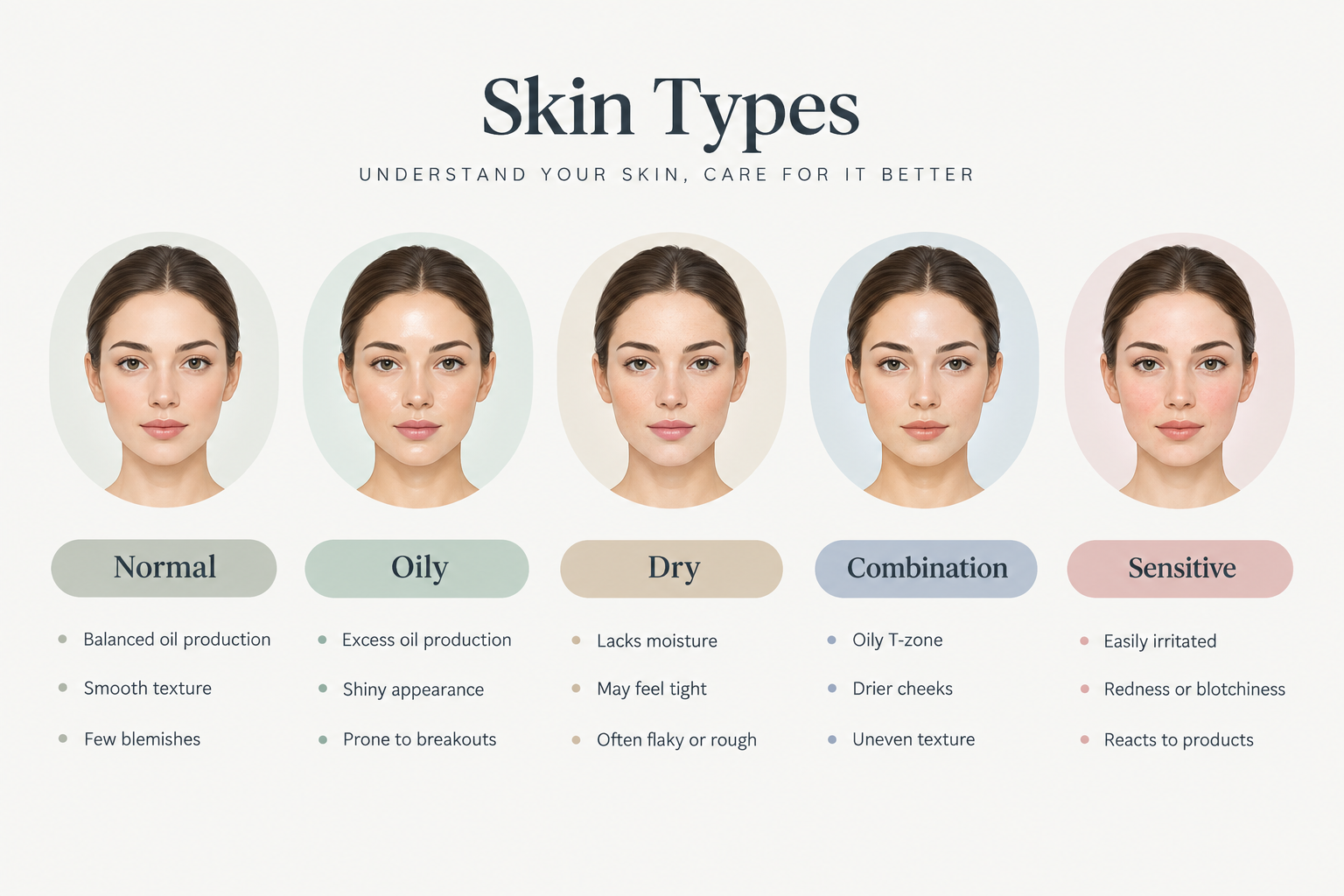
The more familiar skin type categories describe the skin’s behaviour and sebaceous activity:
- Normal skin has balanced sebum production, minimal sensitivity, and a relatively even tone and texture. It is the least common skin type in adults.
- Oily skin produces excess sebum, often leading to enlarged pores, shine, and a higher tendency toward comedones and acne. Oily skin can still be dehydrated, which is a common source of confusion.
- Dry skin produces insufficient sebum and may feel tight, rough, or flaky. It is more prone to fine lines and sensitivity. Dry skin and dehydrated skin are not the same — dryness relates to oil production, while dehydration relates to water content.
- Combination skin features an oily T-zone (forehead, nose, and chin) alongside drier cheeks. It is one of the most common skin types and often requires a nuanced approach to treatment.
- Sensitive skin is characterised by a tendency to react to products, environmental triggers, or treatments. It may overlap with conditions such as rosacea, eczema, or contact dermatitis, which require specific clinical consideration.
A professional skin analysis clarifies which category or combination of categories applies to a patient, and — crucially — identifies whether any underlying skin conditions are present that would affect treatment suitability.
How Skin Analysis Is Performed in London Clinics
The specific methods used during a skin analysis appointment vary between clinics, but most professional assessments in London combine several approaches to build a complete picture of the skin’s condition.
Visual and Tactile Examination
A trained practitioner will examine the skin under good lighting, assessing tone, texture, pore size, visible capillaries, pigmentation irregularities, and signs of inflammation or scarring. Tactile assessment — gently pressing or stretching the skin — provides information about elasticity, hydration, and thickness. This hands-on component remains clinically valuable even when technology is also used.
Advanced Skin Imaging Technology
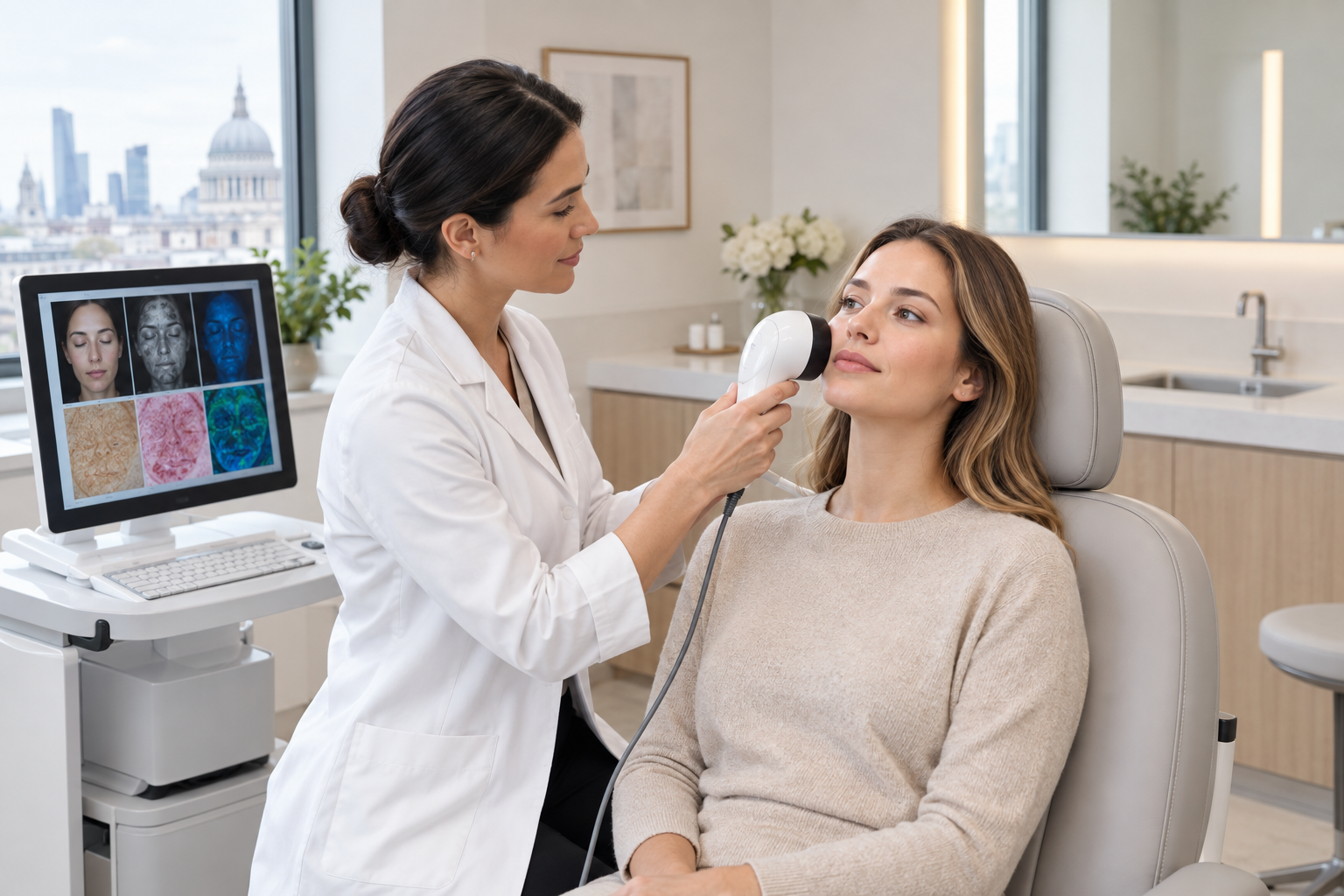
Many London aesthetic clinics use digital skin analysis devices to capture detailed images of the skin’s surface and subsurface layers. Devices such as the VISIA Complexion Analysis System use multi-spectral imaging to measure and map features including UV damage, porphyrins (associated with bacterial activity in pores), red areas, brown spots, wrinkles, texture irregularities, and pore distribution. Importantly, UV photography can reveal sun damage and early pigmentation changes that are not yet visible under normal lighting — information that is clinically relevant when planning treatments such as laser therapy or broad-spectrum photoprotection.
Other devices measure skin hydration using corneometry, sebum levels using sebummetry, and transepidermal water loss (TEWL), which reflects the integrity of the skin barrier. These objective measurements reduce reliance on subjective assessment alone and allow practitioners to track changes over time.
Skin Barrier and Sensitivity Assessment
Assessing the skin barrier is particularly relevant for patients with reactive or sensitive skin, or those who have experienced adverse reactions to previous treatments or products. A compromised skin barrier — indicated by elevated TEWL, redness, or a history of irritation — may affect which treatments are appropriate and in what order they should be introduced. Practitioners may also take a detailed history of current skincare products, medications, and any known allergies or sensitivities as part of this assessment.
What a Skin Analysis Can and Cannot Tell You
A professional skin analysis provides clinically useful information, but it is important to understand its scope and limitations. Skin analysis is a diagnostic and planning tool — it identifies characteristics and concerns, but it does not replace a medical diagnosis for skin conditions such as acne vulgaris, rosacea, psoriasis, or eczema, which may require assessment by a dermatologist.
What a thorough skin analysis can reasonably identify includes: current hydration and sebum levels, visible and subsurface pigmentation, signs of photodamage, skin texture and pore characteristics, early signs of collagen loss or laxity, and areas of sensitivity or barrier compromise. This information directly informs decisions about which treatments may be appropriate, which ingredients to prioritise or avoid, and what realistic outcomes might look like.
What skin analysis cannot do is predict with certainty how an individual will respond to a specific treatment, diagnose medical skin conditions, or replace a full dermatological consultation where one is clinically indicated. If a practitioner identifies features that suggest a medical skin condition during an aesthetic skin analysis, they should refer the patient to an appropriate medical professional rather than proceeding with cosmetic treatment.
Why Skin Type Matters for Aesthetic Treatments
Skin type and skin condition directly influence which aesthetic treatments are appropriate, at what intensity, and with what expected outcomes. This is one of the most clinically important reasons to undergo a professional skin analysis before beginning any treatment programme.
For laser and light-based treatments, Fitzpatrick skin type is a primary safety consideration. Patients with darker skin tones (Fitzpatrick Types IV–VI) face a higher risk of post-inflammatory hyperpigmentation (PIH) with certain laser wavelengths, and treatment parameters must be carefully adjusted. Choosing a laser treatment without this assessment increases the risk of adverse outcomes including pigmentation changes and scarring.
For chemical peels, the depth and formulation of the peel should be matched to the patient’s skin type, current condition, and treatment goal. A superficial glycolic acid peel may be appropriate for mild texture concerns in most skin types, while a deeper trichloroacetic acid (TCA) peel requires careful patient selection and is not suitable for all skin types or conditions.
For injectable skin boosters, polynucleotides, or mesotherapy treatments, skin hydration levels and barrier integrity identified during analysis help practitioners determine whether the skin is in a suitable condition to receive treatment and what preparation may be needed beforehand.
For medical-grade skincare programmes, knowing the precise skin type, hydration status, and any areas of sensitivity allows a practitioner to build a regimen that addresses actual concerns rather than applying a generic routine that may be ineffective or counterproductive.
Skin Type Changes Over Time
One of the most clinically important points about skin type is that it is not static. Skin characteristics change throughout life in response to hormonal shifts, ageing, environmental exposure, medication, diet, stress, and changes in skincare habits. A person who had oily skin in their twenties may find their skin becomes drier and more sensitive in their forties as sebaceous activity decreases and the skin barrier becomes less efficient with age.
Seasonal variation also affects skin behaviour. Many patients notice their skin becomes drier and more reactive in winter due to cold temperatures, low humidity, and central heating, while summer heat and humidity may increase oiliness and pore visibility. A skin analysis performed at one point in time reflects the skin’s condition at that moment, which is why periodic reassessment — typically every six to twelve months, or when skin behaviour changes noticeably — is clinically sensible.
Hormonal changes associated with pregnancy, the menopause, or starting or stopping hormonal contraception can significantly alter skin type and condition. These transitions are particularly relevant when planning aesthetic treatments, as they may affect both suitability and expected outcomes.
What to Expect During a Skin Analysis Appointment in London
A professional skin analysis appointment in a London clinic typically lasts between 30 and 60 minutes, depending on whether it is combined with a broader aesthetic consultation. Patients are usually asked to arrive with clean skin, free from makeup, to allow accurate assessment. Some clinics provide cleansing as part of the appointment.
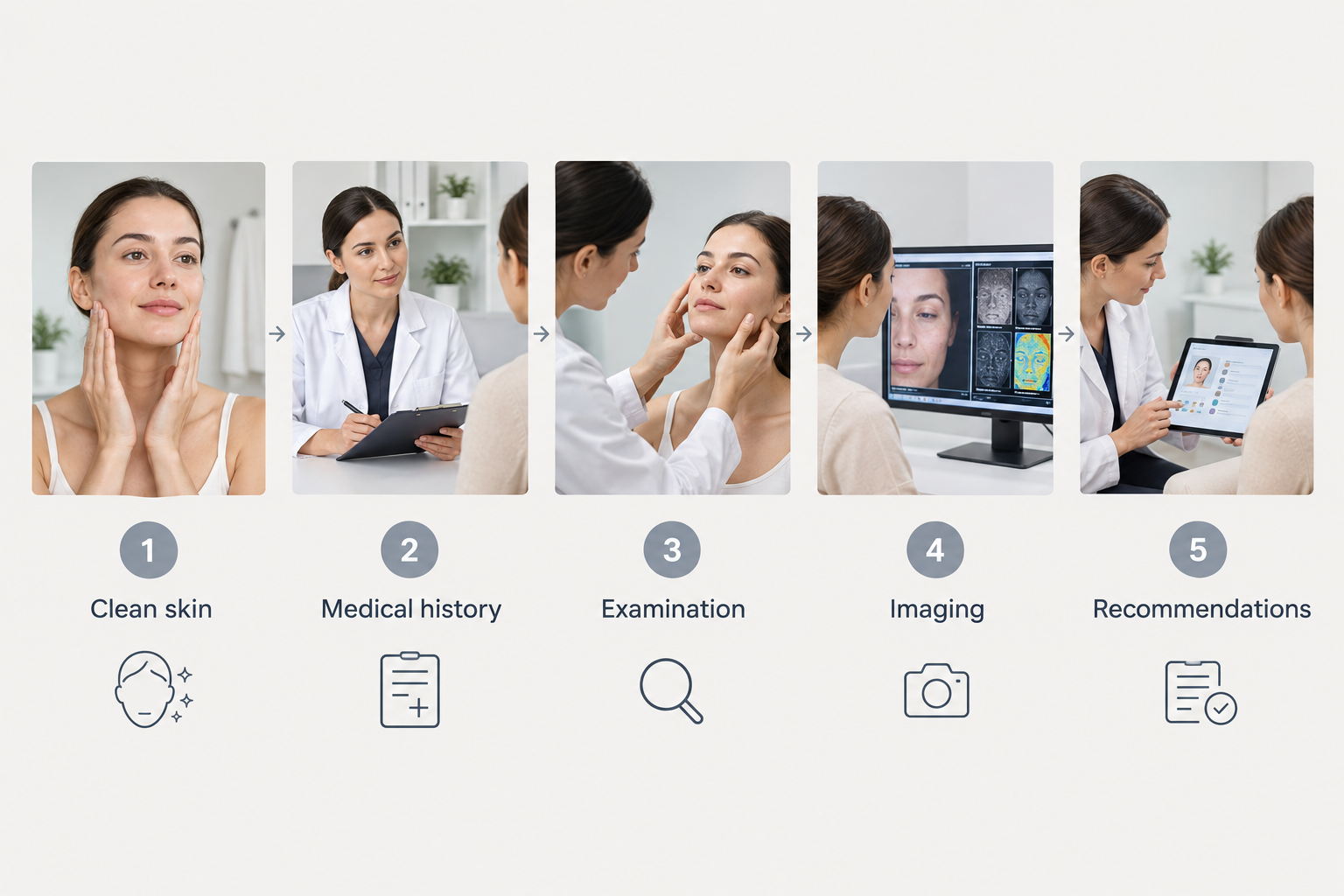
The practitioner will take a detailed history covering current skincare products, any medications or supplements, known allergies, previous aesthetic treatments, and relevant medical history. This information contextualises the physical findings from the analysis. The skin examination itself — whether visual, tactile, or technology-assisted — is non-invasive and painless. If imaging devices are used, the patient typically sits in front of the device while photographs are taken under different lighting conditions; the process takes only a few minutes.
Following the assessment, the practitioner should explain their findings clearly, including which skin type or types apply, any specific concerns identified, and how these findings relate to treatment options. A responsible practitioner will also explain what cannot be determined from the analysis alone and when further assessment might be appropriate. The outcome of a skin analysis should be a personalised treatment or skincare recommendation — not a generic protocol applied to every patient with a similar skin type.
Choosing a Skin Analysis Provider in London
London has a large number of aesthetic clinics, skin clinics, and medical spas offering skin analysis services, and the quality of assessment varies considerably. When choosing a provider, several factors are worth considering.
- Practitioner qualifications: Skin analysis should be performed or supervised by a qualified practitioner — ideally a dermatologist, aesthetic doctor, aesthetic nurse prescriber, or a skin therapist with recognised clinical training. Ask about qualifications and experience before booking.
- Technology used: Clinics using validated imaging technology alongside clinical assessment generally provide more objective and reproducible results than those relying on visual assessment alone. However, technology is a tool — its value depends on the expertise of the person interpreting the data.
- Independence of advice: A skin analysis should result in genuinely personalised recommendations. Be cautious of assessments that consistently recommend the same treatments or products regardless of individual findings, or that are primarily designed to sell a specific product range.
- Follow-up and monitoring: A good skin analysis provider will offer the ability to track changes over time, particularly if you are undergoing a treatment programme. Comparative imaging at follow-up appointments allows both the practitioner and patient to assess progress objectively.
- CQC registration: For clinics offering medical treatments alongside skin analysis, Care Quality Commission (CQC) registration is a relevant quality indicator in England.
Skin Analysis and Common Skin Concerns
Skin analysis is particularly useful for patients presenting with specific concerns that may have multiple contributing causes. Understanding the underlying drivers of a concern — rather than treating the surface presentation alone — generally leads to better outcomes.
Hyperpigmentation, for example, can result from post-inflammatory changes, sun damage, melasma, or hormonal influences, and each cause responds differently to treatment. A skin analysis that includes UV imaging and a detailed history can help distinguish between these causes and guide appropriate treatment selection, whether that involves topical agents, chemical peels, laser treatment, or a combination approach.
Acne-prone skin requires assessment of sebum production, pore characteristics, bacterial activity, and the presence of active inflammation or scarring. Treatment decisions — including whether prescription-strength topical or oral medications are appropriate — depend on this clinical picture, and some patients may benefit from referral to a dermatologist rather than aesthetic treatment alone.
Concerns related to skin ageing, such as fine lines, loss of firmness, and uneven texture, benefit from an assessment that considers collagen density, skin thickness, and the distribution of volume loss. This informs decisions about whether topical treatments, energy-based devices, injectable treatments, or a combination approach is most likely to address the patient’s specific presentation.
Frequently Asked Questions
Is skin analysis in London suitable for all skin types?
Professional skin analysis is appropriate for virtually all skin types and tones. In fact, patients with darker skin tones particularly benefit from a thorough analysis before undergoing treatments such as laser or IPL, as accurate Fitzpatrick typing is essential for safe treatment parameter selection. Patients with active skin conditions such as severe acne, eczema flares, or suspected skin infections should discuss these with the practitioner before their appointment, as some assessment methods may need to be adapted.
How often should I have a professional skin analysis?
For most patients, a skin analysis every six to twelve months provides a useful baseline and allows meaningful comparison over time. More frequent reassessment may be appropriate if you are undergoing an active treatment programme, if your skin behaviour changes noticeably, or if you experience a significant hormonal change such as pregnancy or the menopause.
Can skin analysis diagnose skin conditions like rosacea or eczema?
Aesthetic skin analysis can identify features consistent with conditions such as rosacea or eczema — such as persistent redness, visible capillaries, or signs of barrier compromise — but it does not constitute a medical diagnosis. If a practitioner identifies features that suggest a medical skin condition, they should refer you to a dermatologist for formal assessment and diagnosis before proceeding with aesthetic treatment.
What is the difference between skin type and skin condition?
Skin type refers to your skin’s inherent characteristics — primarily determined by genetics and sebaceous activity — such as oily, dry, or combination. Skin condition refers to the current state of your skin, which can change over time and in response to external factors. For example, someone with an oily skin type may currently have a dehydrated skin condition due to over-cleansing or environmental factors. A professional skin analysis assesses both, which is important for accurate treatment planning.
Will a skin analysis tell me exactly which products to use?
A thorough skin analysis should result in personalised product recommendations based on your specific findings. However, the quality of these recommendations depends on the practitioner’s expertise and independence. Be cautious if recommendations are limited to a single brand or if the analysis appears designed primarily to sell a product range rather than address your individual skin needs.
Is skin analysis painful or invasive?
Professional skin analysis is non-invasive and painless. Visual and tactile examination involves no discomfort, and imaging devices simply photograph the skin under different lighting conditions. No needles, chemicals, or energy-based devices are used during the analysis itself.
How does skin analysis differ from a standard facial consultation?
A professional clinical skin analysis is more structured and objective than a typical facial consultation. It uses validated assessment methods — including technology where available — to measure specific skin characteristics, and it is performed by a clinically trained practitioner rather than a beauty therapist. The outcome is a clinical assessment that informs medical-grade treatment decisions, not simply a recommendation for a facial treatment menu.
Making the Most of Your Skin Analysis Consultation
A professional skin analysis in London is most valuable when approached as the starting point of a considered treatment plan rather than a one-off event. Arriving with clean skin, a clear account of your current skincare routine, any medications you are taking, and a realistic sense of your primary concerns allows the practitioner to conduct the most accurate assessment possible.
It is worth asking the practitioner to explain their findings in plain language, including what the results mean for your treatment options, what realistic outcomes might look like, and what the limitations of any recommended approach are. A practitioner who takes time to explain the reasoning behind their recommendations — and who acknowledges uncertainty where it exists — is generally a more reliable guide than one who offers immediate, unqualified treatment recommendations without thorough assessment.
Skin analysis is not a guarantee of perfect results from subsequent treatment, but it meaningfully reduces the risk of mismatched treatments and wasted investment. For patients considering aesthetic procedures in London, it represents a clinically sensible first step — one that places individual skin health at the centre of the decision-making process rather than applying a one-size-fits-all approach.
