
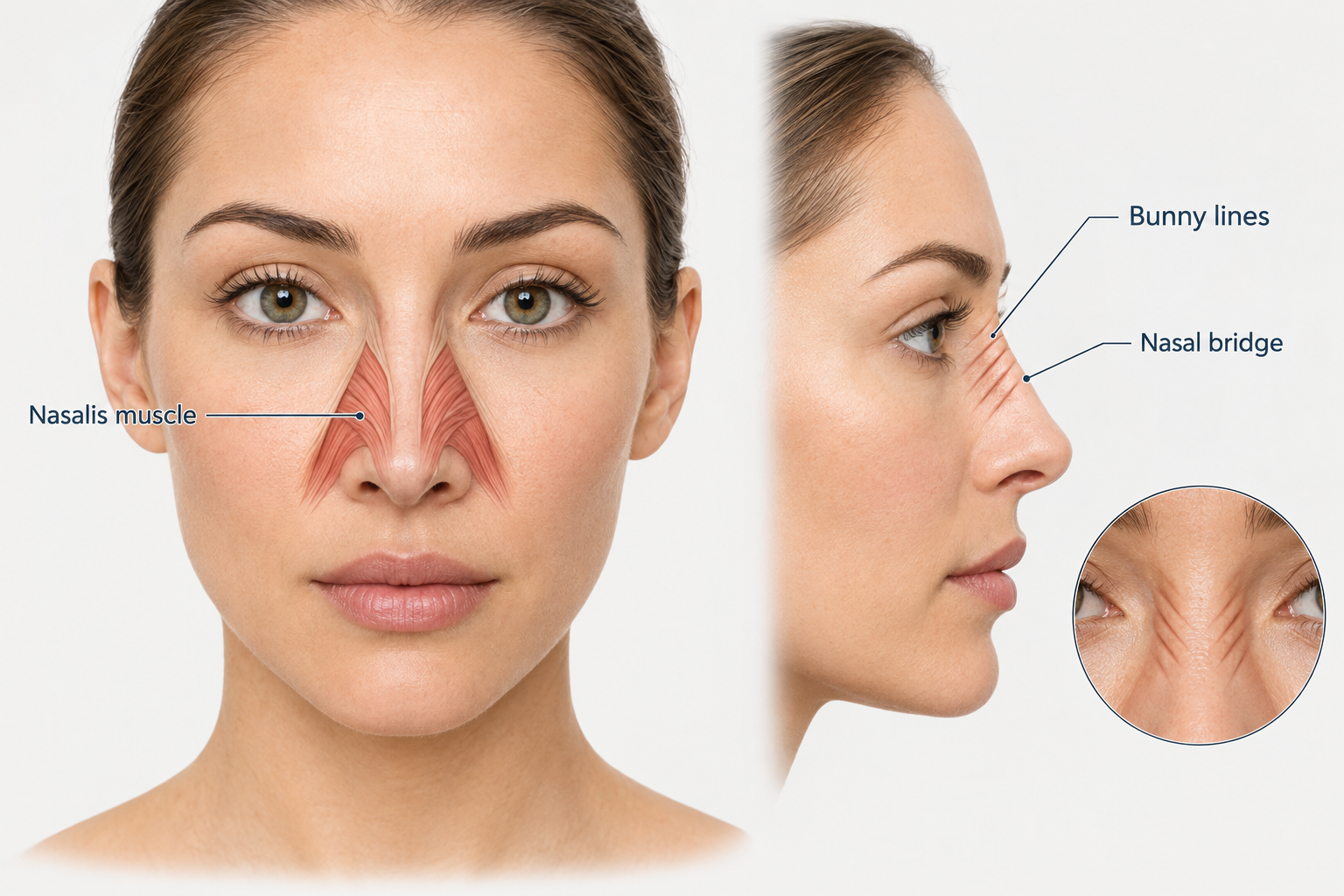

Bunny lines are the diagonal or horizontal creases that appear on either side of the nose when you scrunch your face, laugh, or squint. For many people they are barely noticeable, but for others they become a persistent feature even at rest, and that is when patients begin exploring nasal lines filler as a potential solution. This guide explains what bunny line filler treatment involves, who may be a suitable candidate, what realistic outcomes look like, and what limitations and risks you should understand before booking a consultation.
Key Takeaways
- Bunny lines are wrinkles on the sides of the nose caused by repeated contraction of the nasalis muscle; they can be addressed with botulinum toxin injections or, in some cases, dermal filler.
- Nasal lines filler using hyaluronic acid may help soften static creases that remain visible at rest, but botulinum toxin is usually the first-line approach for dynamic bunny lines.
- Suitability depends on the type and depth of the lines, your facial anatomy, your injection history, and your overall aesthetic goals.
- Results are temporary and individual response varies; a thorough consultation with a qualified practitioner is essential before treatment.
- Bunny lines sometimes develop or worsen after glabellar or forehead botulinum toxin treatment, which is an important factor in treatment planning.
What Are Bunny Lines?
Bunny lines are fine to moderate wrinkles that form on the lateral sides of the nasal bridge, typically running diagonally downward from the bridge toward the cheek or horizontally across the nose. The name comes from the scrunching expression that rabbits make, which closely resembles the facial movement that creates these lines in humans. They are classified as dynamic wrinkles when they appear only during facial movement, and as static wrinkles when they are visible even when the face is completely relaxed.
The primary muscle responsible for bunny lines is the nasalis muscle, which compresses the nasal bridge during expressions such as laughing, squinting, or wrinkling the nose. Over time, repeated contraction of the nasalis causes the overlying skin to crease, and those creases gradually become etched into the skin as static lines. Skin laxity, reduced collagen production with age, and sun damage can all accelerate this process.
It is worth noting that bunny lines are a normal facial feature and are not a medical concern. Treatment is entirely elective and is appropriate only when the lines cause genuine aesthetic distress to the patient.
Botulinum Toxin vs Dermal Filler for Bunny Lines
Understanding the difference between botulinum toxin and dermal filler is essential when considering nasal lines treatment, because the two approaches work through entirely different mechanisms and suit different presentations.
Botulinum toxin (commonly known by brand names such as Botox, Dysport, or Azzalure) works by temporarily blocking the nerve signals that cause the nasalis muscle to contract. When the muscle cannot contract as forcefully, the skin above it stops creasing with the same intensity, and dynamic bunny lines become less visible or disappear during expression. Botulinum toxin is generally considered the primary treatment for dynamic bunny lines because it addresses the underlying muscular cause. Results typically become visible within a few days to two weeks and may last approximately three to four months, though individual duration varies.
Dermal filler, most commonly a hyaluronic acid gel, works differently. Rather than relaxing the muscle, filler adds volume beneath the skin to physically smooth out a crease. Nasal lines filler may be appropriate when bunny lines have become static, meaning they are visible at rest and are not primarily driven by active muscle movement. In these cases, relaxing the muscle alone may not fully resolve the appearance of the lines, and a small amount of filler placed carefully along the nasal sidewall may help soften the remaining crease.
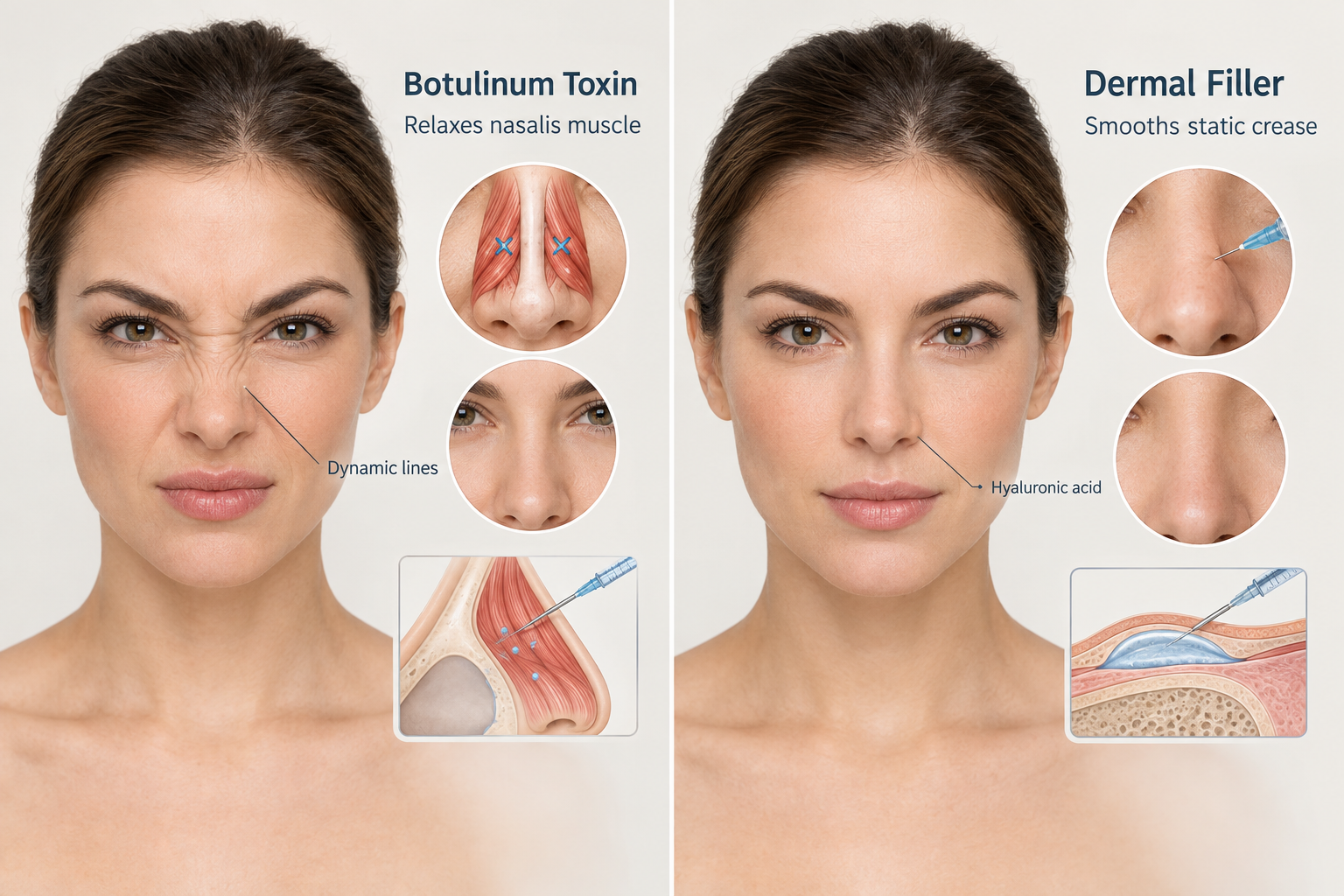
In practice, many practitioners use a combination approach: botulinum toxin to address the dynamic component and a small volume of hyaluronic acid filler to smooth any residual static crease. The decision between these options, or a combination, depends on a clinical assessment of the individual patient.
Who May Be Suitable for Bunny Line Filler?
Not every patient with bunny lines is an ideal candidate for nasal lines filler specifically. Suitability depends on several factors that a qualified practitioner will assess during a consultation.
Static Lines at Rest
Nasal lines filler is most likely to be considered when bunny lines are visible at rest, not only during facial movement. If the lines are purely dynamic and disappear completely when the face is relaxed, botulinum toxin alone is usually the more appropriate and lower-risk option. Filler is generally reserved for cases where a crease persists even without muscular activity.
Depth and Severity of the Lines
Shallow or superficial bunny lines may respond well to botulinum toxin alone or to skin quality treatments such as skin boosters or topical retinoids. Moderate to deeper static creases may benefit from the additional volume that a small amount of hyaluronic acid filler can provide. Very deep or complex nasal creases may have limited improvement with either approach, and a practitioner should give an honest assessment of what is realistically achievable.
Previous Botulinum Toxin Treatment
Bunny lines frequently develop or become more prominent after botulinum toxin treatment in adjacent areas, particularly the glabella (the area between the eyebrows) or the forehead. When the muscles in those areas are relaxed, the nasalis muscle may compensate by contracting more strongly, creating or worsening bunny lines. Patients who have noticed their nasal lines appearing or worsening after previous botulinum toxin treatment should discuss this pattern with their practitioner, as it affects the overall treatment plan.
Facial Anatomy
The nose is a complex anatomical area with a rich blood supply, including branches of the facial artery and angular artery that run close to the nasal sidewall. Injecting filler in this region carries specific vascular risks that are discussed in more detail in the risks section below. A practitioner will assess your individual anatomy, including the position of relevant blood vessels, before recommending nasal lines filler. Patients with certain anatomical variations may not be suitable candidates for filler in this area.
Skin Quality and Thickness
Patients with thinner skin may show filler placement more visibly, and there is a greater risk of surface irregularities. Skin quality, hydration, and overall skin health are relevant factors in determining whether filler is likely to produce a smooth, natural-looking result in the nasal area.
General Suitability Factors
As with any injectable treatment, patients who are pregnant or breastfeeding are not suitable candidates. Active skin infections, inflammatory skin conditions, or open wounds near the treatment area are contraindications. Patients taking blood-thinning medications may have an increased risk of bruising. A full medical history review is a standard part of any responsible pre-treatment consultation.
Who May Not Be Suitable
Nasal lines filler may not be appropriate for patients whose bunny lines are entirely dynamic and disappear at rest, as botulinum toxin is the more targeted option in those cases. Patients with a history of vascular complications from previous nasal or perinasal filler injections should discuss this history carefully with any new practitioner. Those with unrealistic expectations about the degree of improvement achievable, or who are seeking a permanent solution, should understand that hyaluronic acid filler results are temporary and require maintenance.
Patients who have had previous permanent filler or unknown filler substances injected in or near the nasal area present additional complexity, as the interaction between existing filler and new product can be unpredictable. Disclosure of all previous cosmetic procedures is essential during consultation.
What Does the Treatment Involve?
A nasal lines filler appointment typically begins with a detailed consultation, during which the practitioner assesses the lines at rest and during movement, reviews your medical history, discusses your goals, and explains the realistic outcomes and risks. Photographs are usually taken for clinical records.
Before the injections, the skin is cleansed and a topical anaesthetic cream may be applied to reduce discomfort, though many hyaluronic acid fillers also contain lidocaine, a local anaesthetic, within the gel itself. The practitioner will use a fine needle or, in some cases, a blunt-tipped cannula to place a small volume of filler along the nasal sidewall crease. The amount of filler used in this area is typically very small, often less than half a millilitre, because the nasal area has limited tissue space and overfilling can create an unnatural appearance or increase vascular risk.
The appointment itself is usually brief, often completed within thirty minutes including consultation time. Patients can generally return to normal activities the same day, though some temporary swelling, redness, or bruising at the injection site is common.
Risks and Side Effects
Injectable treatments in the nasal area carry specific risks that patients should understand clearly before proceeding. The nose and surrounding structures have a complex vascular anatomy, and filler injected in this region carries a risk of vascular occlusion, which occurs when filler material enters or compresses a blood vessel, potentially restricting blood flow to the skin or, in rare but serious cases, to the eye. Vascular occlusion is a rare but recognised complication of facial filler injections and is considered a medical emergency requiring immediate treatment with hyaluronidase, an enzyme that dissolves hyaluronic acid filler.
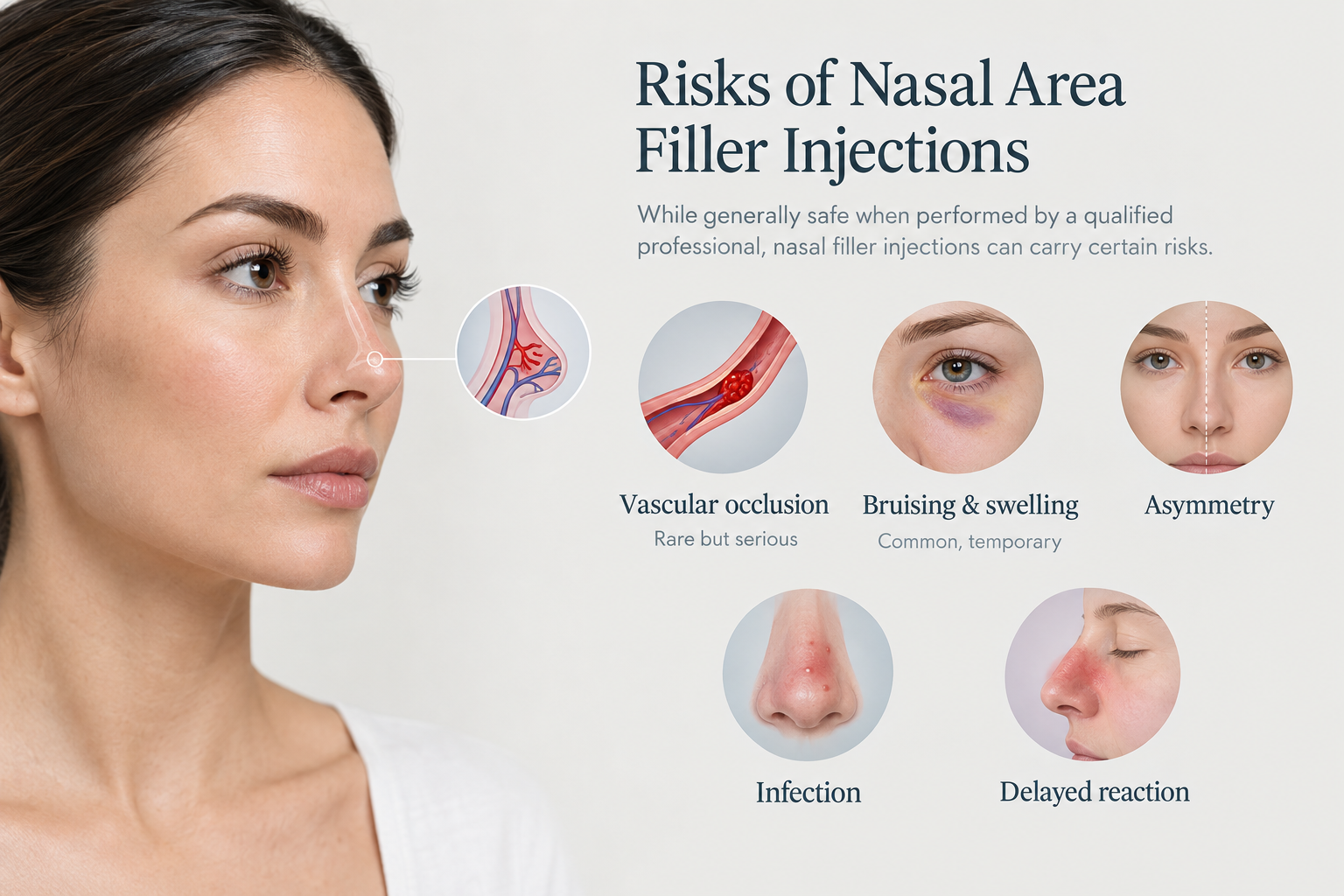
More common and less serious side effects include temporary swelling, bruising, redness, and tenderness at the injection site. These typically resolve within a few days to one week. Asymmetry, surface irregularities, or visible filler are possible if placement is not precise or if too much product is used. Infection is a rare but possible complication with any injectable procedure.
Delayed inflammatory reactions, sometimes called delayed hypersensitivity reactions or biofilm-related reactions, can occur weeks to months after hyaluronic acid filler injections. These present as swelling, redness, or nodules and require assessment and treatment by a qualified practitioner.
Choosing a practitioner with specific training and experience in nasal anatomy and facial filler injections is one of the most important factors in reducing the risk of serious complications. Patients should ask about the practitioner’s training, their protocol for managing vascular complications, and whether hyaluronidase is available on-site.
Realistic Results and Longevity
Nasal lines filler can soften the appearance of static bunny line creases, but it is unlikely to eliminate them completely, particularly if the lines are deep or if the underlying nasalis muscle remains active. Patients should expect an improvement in the depth and visibility of the crease rather than a complete erasure of the line.
Hyaluronic acid filler in the nasal area typically lasts between six and twelve months, though this varies depending on the specific product used, the volume placed, the individual’s metabolism, and the degree of muscle movement in the area. Areas of high muscle activity tend to break down filler more quickly. Maintenance treatments are required to sustain results over time.
When botulinum toxin is used alongside filler, the toxin component will wear off first, usually within three to four months, and the dynamic lines may return to some degree before the filler component has fully degraded. This is an important consideration when planning a combination treatment approach.
Alternatives to Nasal Lines Filler
Several alternatives to nasal lines filler may be worth discussing with a practitioner, depending on the nature of the bunny lines and the patient’s goals.
Botulinum Toxin Alone
For dynamic bunny lines that are not yet static, botulinum toxin injected into the nasalis muscle is generally the first-line treatment. It is less invasive than filler in this area, carries a lower vascular risk profile, and is reversible in the sense that the effect wears off naturally. Many patients find that botulinum toxin alone provides satisfactory improvement without the need for filler.
Skin Quality Treatments
For very fine or superficial nasal lines, treatments that improve overall skin quality may be helpful. These include polynucleotide skin boosters, which stimulate collagen production and improve skin hydration and elasticity, as well as profhilo or similar injectable moisturisers. Topical treatments containing retinoids, vitamin C, or peptides may also contribute to gradual improvement in fine line appearance over time, though they are unlikely to address moderate or deep static creases significantly.
Microneedling and Radiofrequency
Microneedling and radiofrequency-based treatments stimulate collagen remodelling in the skin and may improve the texture and depth of fine lines over a course of treatments. These approaches are generally lower risk in the nasal area than injectable filler, though they are unlikely to produce the same degree of immediate volumising effect.
Addressing the Root Cause
If bunny lines have developed or worsened as a result of compensatory muscle activity following botulinum toxin treatment in adjacent areas, adjusting the overall botulinum toxin treatment plan may be the most effective approach. A practitioner experienced in full-face assessment can evaluate whether modifying the dose or placement of toxin in the glabella or forehead might reduce the compensatory nasalis contraction that is driving the bunny lines.
Questions to Ask Your Practitioner
- Are my bunny lines primarily dynamic or static, and which treatment approach is most appropriate for my presentation?
- What volume of filler would you use, and which product would you recommend for this area?
- What is your experience with nasal and perinasal filler injections, and how do you manage vascular complications?
- Is hyaluronidase available on-site in case of a vascular emergency?
- Would botulinum toxin alone, or a combination approach, be more suitable for my goals?
- Could my existing botulinum toxin treatment plan be contributing to my bunny lines, and should that be adjusted?
- What results can I realistically expect, and what are the limitations in my specific case?
Frequently Asked Questions
Can bunny lines be treated with filler alone, without botulinum toxin?
In some cases, yes. If bunny lines are primarily static, meaning they are visible at rest rather than only during movement, hyaluronic acid filler may be used to soften the crease without botulinum toxin. However, if there is a significant dynamic component, filler alone may not provide satisfactory results because the underlying muscle activity will continue to crease the skin. A practitioner will assess which approach, or combination, is most appropriate for your individual presentation.
Will nasal lines filler change the shape of my nose?
When used specifically for bunny lines, filler is placed along the lateral nasal sidewall in very small volumes to soften a crease. It is not the same as non-surgical rhinoplasty, which uses larger volumes of filler to reshape the nasal bridge, tip, or profile. A small amount of filler placed precisely for bunny lines should not significantly alter the overall shape of the nose, though any injection in this area has the potential to affect the appearance of the nasal contour if not placed carefully.
How soon will I see results after nasal lines filler?
The volumising effect of hyaluronic acid filler is generally visible immediately after injection, though initial swelling may temporarily make the area look fuller than the final result. Once swelling subsides, usually within a few days to one week, the settled result becomes apparent. If botulinum toxin is also used, its effect on muscle activity typically becomes visible within five to fourteen days.
Is nasal lines filler painful?
Most patients describe the injections as mildly uncomfortable rather than significantly painful. Topical anaesthetic cream applied before treatment, combined with the lidocaine often present in hyaluronic acid filler products, helps to reduce discomfort during the procedure. The nasal area can be more sensitive than some other facial areas, so individual experience varies.
How long does nasal lines filler last?
Hyaluronic acid filler in the nasal sidewall area typically lasts between six and twelve months, though individual results vary based on the product used, the volume placed, and how quickly the individual metabolises the filler. Areas with active muscle movement tend to break down filler more quickly than areas with less movement.
Can bunny lines come back after treatment?
Yes. Both botulinum toxin and hyaluronic acid filler produce temporary results. Once the effects wear off, the underlying muscle activity resumes and the skin crease may return. Regular maintenance treatments are required to sustain improvement over time. Some patients find that consistent treatment over several years leads to a gradual softening of static lines as the skin is repeatedly prevented from deep creasing, though this is not guaranteed.
Are there any long-term risks of repeated nasal filler injections?
Repeated filler injections in any area carry a risk of filler accumulation over time if product is not fully metabolised between treatments. In the nasal area, accumulated filler can potentially affect tissue health and vascular dynamics. This is one reason why practitioners typically use conservative volumes in this region and why a thorough assessment of previous filler history is important before each treatment session.
Is Bunny Line Filler the Right Choice for Your Nasal Lines?
Nasal lines filler can be a useful option for patients with static bunny line creases that persist at rest and have not been adequately addressed by botulinum toxin alone. When performed by a practitioner with specific training in nasal anatomy and injectable techniques, and using conservative volumes of hyaluronic acid filler, the treatment may soften the appearance of these lines and contribute to a smoother nasal profile. However, it is not a universal solution, and it is not the appropriate first choice for every patient with bunny lines.
The most important step is an honest, thorough consultation with a qualified aesthetic practitioner who can assess whether your bunny lines are dynamic, static, or a combination of both, and who can recommend the most appropriate treatment approach for your specific anatomy and goals. For many patients, botulinum toxin alone or a carefully planned combination approach will provide the best balance of effectiveness, safety, and longevity. For others, addressing the root cause in their existing botulinum toxin treatment plan may be more beneficial than adding filler to the nasal area.
If you are considering treatment for nasal lines, seek a consultation with a practitioner who has demonstrable experience with facial injectables, who takes a full medical history, and who can clearly explain the realistic outcomes, limitations, and risks specific to your case before any treatment is agreed upon.
