

Dermal fillers remain one of the most requested aesthetic treatments in London, yet the gap between a natural, refreshed appearance and an overdone result often comes down to product choice, placement technique, and the clinical judgment of the practitioner administering the treatment. This article explains how different filler types work, which areas they are commonly used for, what realistic outcomes look like, and what to consider when choosing a clinic for fillers in London.
Key Takeaways
- Most dermal fillers used in aesthetic practice today are based on hyaluronic acid, a substance naturally present in the skin, though other formulations exist for specific purposes.
- Natural-looking results depend as much on the practitioner’s technique and aesthetic judgment as on the product itself.
- Fillers carry real risks, including bruising, swelling, asymmetry, and in rare but serious cases, vascular complications; these should be discussed at consultation.
- Reversibility is an important safety consideration: hyaluronic acid fillers can be dissolved with an enzyme called hyaluronidase, while some other filler types cannot.
- A thorough consultation, including a review of your medical history and facial anatomy, is an essential first step before any filler treatment.
What Are Dermal Fillers and How Do They Work?
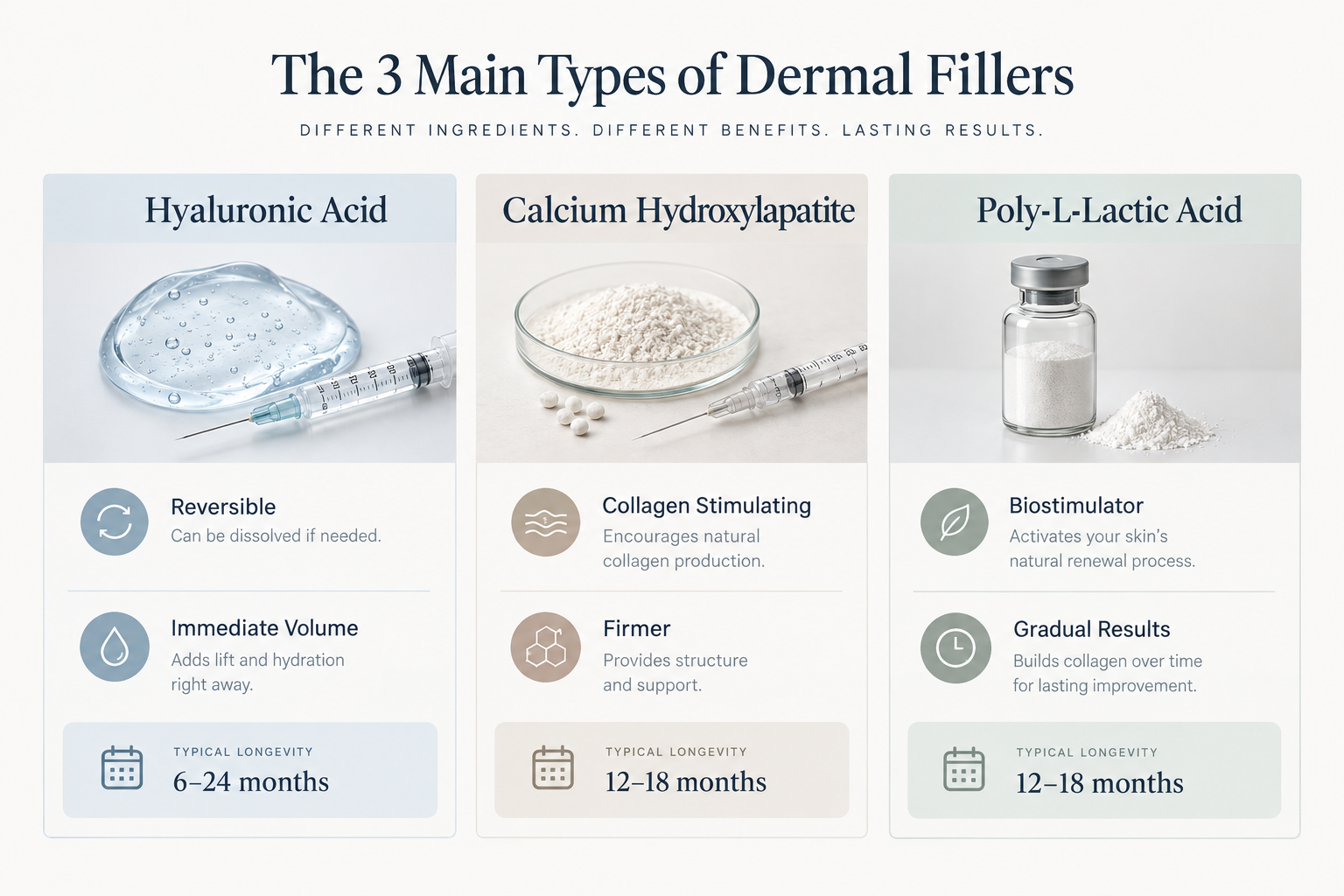
Dermal fillers are injectable substances placed beneath the skin to restore volume, smooth lines, or reshape facial contours. The majority of fillers used in reputable London clinics today are based on hyaluronic acid (HA), a naturally occurring polysaccharide found in connective tissue and skin. Hyaluronic acid attracts and retains water molecules, which gives it the ability to add volume and hydration when injected into targeted areas. Different HA fillers are manufactured with varying degrees of cross-linking — a process that determines how firm, flexible, or long-lasting the gel will be — making some products better suited to fine surface lines and others more appropriate for deep structural support.
Non-hyaluronic acid fillers also exist. Calcium hydroxylapatite (CaHA) stimulates collagen production in addition to providing immediate volume and tends to produce a firmer result. Poly-L-lactic acid (PLLA) works primarily as a biostimulator, gradually encouraging the skin to produce its own collagen over several months rather than delivering instant volume. These products are used in specific clinical contexts and are generally not reversible in the same way that HA fillers are. Understanding which category of filler is being proposed — and why — is a reasonable question to raise at any consultation.
Common Treatment Areas for Fillers
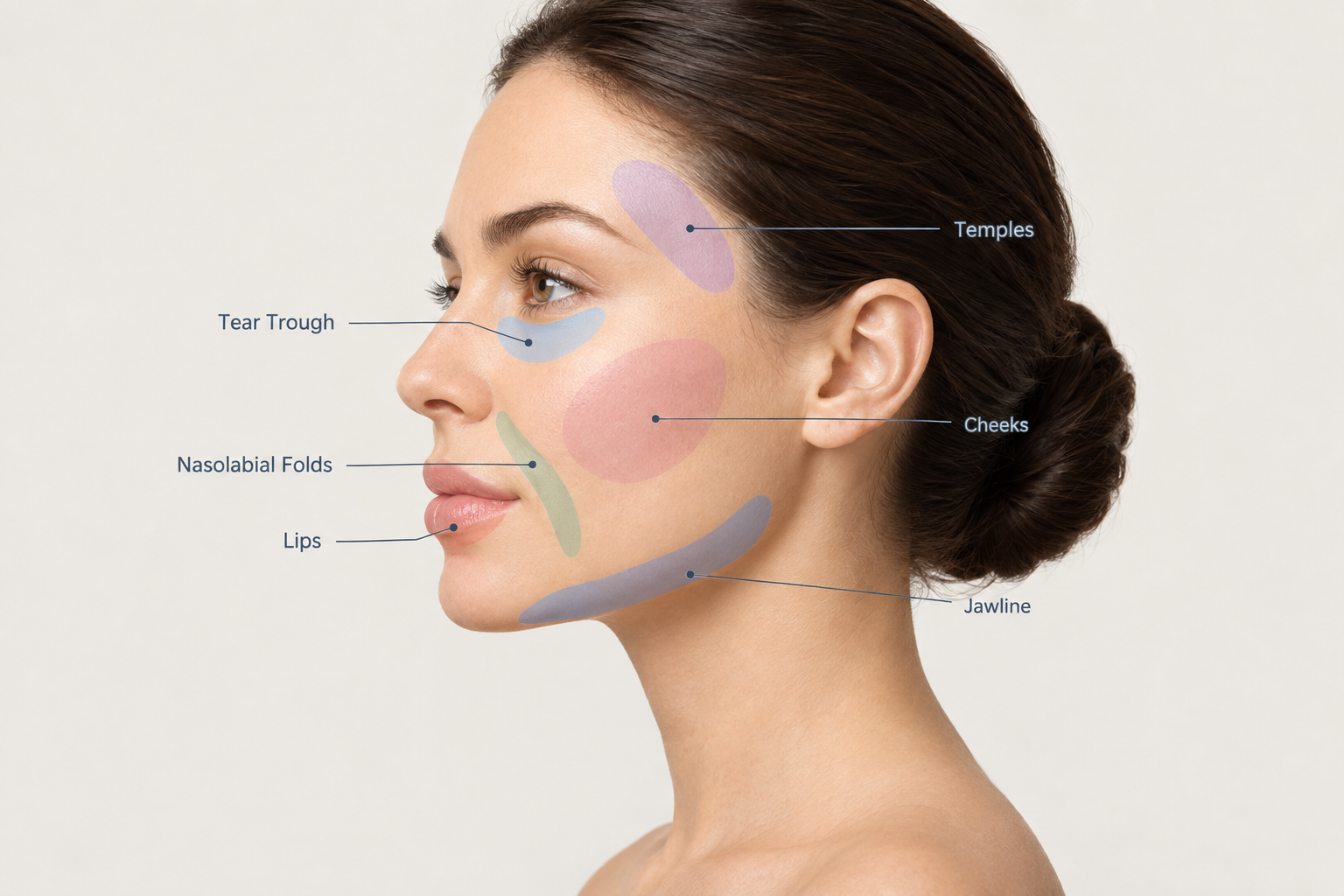
Fillers are used across a wide range of facial areas, and the choice of product and technique varies considerably depending on the anatomy involved. The lips are among the most frequently treated areas in London clinics, with HA fillers used to add definition, subtle volume, or to address asymmetry. The nasolabial folds — the lines running from the nose to the corners of the mouth — are another common target, as is the tear trough area beneath the eyes, which can appear hollow or shadowed with age or due to natural anatomy.
Cheek augmentation with fillers can restore mid-face volume that diminishes with age, while jawline and chin treatments are increasingly requested for structural definition. The temples, which often hollow noticeably in the mid-thirties and beyond, can also be treated to restore a more balanced facial appearance. Each of these areas requires a different filler consistency and injection depth; a product appropriate for lip enhancement, for example, would not be suitable for deep structural cheek support. This is one reason why practitioner knowledge of facial anatomy is so important when selecting where to receive treatment.
What Makes Filler Results Look Natural?
The concept of natural-looking filler results is frequently discussed but less frequently defined. In clinical terms, a natural outcome generally means that the treated area looks refreshed or balanced without appearing artificially augmented, overfilled, or inconsistent with the patient’s overall facial proportions. Several factors influence whether this is achieved.
Product selection plays a role: softer, more flexible HA gels tend to integrate more naturally into mobile areas such as the lips, while firmer products may be appropriate for areas requiring structural lift. However, product choice alone does not determine the outcome. The volume injected, the depth of placement, the injection technique, and the practitioner’s understanding of facial anatomy and ageing patterns all contribute significantly. Overfilling — placing more product than the tissue can accommodate naturally — is one of the most common reasons results appear unnatural, and it is not always immediately obvious at the time of treatment.
Facial proportions and individual anatomy also matter. A treatment plan that works well for one patient may not translate to another with different bone structure, skin thickness, or soft tissue distribution. This is why a thorough pre-treatment assessment, including a discussion of your goals and an honest evaluation of what is achievable, is a more reliable indicator of likely results than before-and-after photographs alone.
Hyaluronic Acid Fillers: Brands and Differences
Several established brands of hyaluronic acid filler are used in London aesthetic clinics, including Juvederm, Restylane, Belotero, and Teosyal, among others. Each brand offers a range of products with different gel consistencies, cross-linking densities, and intended applications. Juvederm Voluma, for example, is formulated for deeper structural placement in areas such as the cheeks, while Juvederm Volbella is designed for more superficial use in the lips and fine lines. Restylane Lyft and Restylane Defyne serve different purposes within the same brand family.
These distinctions matter clinically, but from a patient perspective, the more important question is whether the practitioner is selecting the appropriate product for the specific area and goal, rather than applying a single product universally. Reputable practitioners will typically explain which product they are recommending and why, and will be able to discuss the expected longevity and reversibility of the chosen filler.
It is worth noting that filler brands and formulations are not all equivalent, and marketing claims from manufacturers should not be treated as independent clinical evidence. The evidence base for individual filler products varies, and results depend heavily on how and where the product is used rather than on brand name alone.
How Long Do Fillers Last?
The longevity of dermal filler results varies depending on the product used, the area treated, the volume injected, and individual factors such as metabolism and lifestyle. As a general guide, HA fillers in the lips tend to last between six and twelve months, while those placed in deeper structural areas such as the cheeks or jawline may last twelve to twenty-four months in some patients. These are approximate ranges; individual results vary and some patients metabolise filler more quickly than others.
Biostimulatory fillers such as poly-L-lactic acid work differently: the product itself is gradually absorbed, but the collagen it stimulates may persist for longer. Calcium hydroxylapatite fillers typically last twelve to eighteen months in most patients, though again this varies. Maintenance treatments are generally required to sustain results over time, and the frequency of these will depend on the area treated and how the individual patient responds.
It is important to understand that filler is not permanent in most cases, and that the gradual breakdown of the product means results will diminish over time without repeat treatment. Some patients find this reassuring; others prefer longer-lasting options. Discussing longevity expectations at consultation helps avoid disappointment and allows for realistic treatment planning.
Risks and Side Effects of Dermal Fillers
Dermal fillers are not without risk, and any clinic or practitioner that presents them as entirely safe or risk-free should be approached with caution. Common side effects include bruising, swelling, redness, and tenderness at the injection site, most of which resolve within a few days to two weeks depending on the area and individual response. Asymmetry, lumpiness, or migration of product are less common but do occur, particularly when treatment is performed by less experienced practitioners or when excessive volumes are used.

More serious complications, while rare, include vascular occlusion — a situation in which filler is inadvertently injected into or compresses a blood vessel, potentially restricting blood supply to surrounding tissue. This is a medical emergency requiring immediate treatment, typically with hyaluronidase if an HA filler is involved. The risk of vascular complications is higher in certain anatomical areas, including the nose, glabella (between the eyebrows), and nasolabial folds, where blood vessels follow predictable but variable paths. Practitioners with a thorough understanding of facial vascular anatomy and access to emergency hyaluronidase are better placed to manage such events if they occur.
Infection, granuloma formation (a delayed inflammatory reaction), and biofilm-related complications are also recognised risks, though they are uncommon when treatment is performed under appropriate conditions. Patients with a history of cold sores should inform their practitioner before lip filler treatment, as the procedure can trigger a recurrence. A full medical history review before treatment is not a formality — it is a meaningful safety step.
Who May Be Suitable for Filler Treatment?
Most healthy adults seeking to address volume loss, facial asymmetry, or the visible signs of ageing may be considered for filler treatment, subject to a clinical assessment. Fillers are generally not recommended during pregnancy or breastfeeding, and certain medical conditions or medications — including blood thinners, which increase bruising risk — may affect suitability or timing. Patients with active skin infections, inflammatory skin conditions, or a history of severe allergic reactions should discuss these factors with their practitioner before proceeding.
Age is not a strict barrier in either direction, but the clinical rationale for treatment should be appropriate. Younger patients seeking preventative or subtle enhancement have different needs from older patients addressing significant volume loss, and the treatment approach should reflect this. A practitioner who applies the same technique and volume regardless of patient age or anatomy is unlikely to achieve consistently natural results.
Choosing a Filler Practitioner in London
London has a large number of clinics and practitioners offering filler treatments, which makes the selection process both easier and more complex. Regulatory requirements for who can legally administer fillers in the UK have been a subject of ongoing discussion, and patients should be aware that standards vary. Seeking treatment from a qualified medical professional — such as a doctor, dentist, or nurse prescriber with specific training in aesthetic medicine — provides a meaningful baseline of clinical accountability.
Beyond qualifications, relevant factors include the practitioner’s experience with the specific area you wish to treat, their approach to consultation, and whether they hold emergency hyaluronidase on site. A practitioner who takes time to assess your facial anatomy, discuss realistic outcomes, and explain the risks is demonstrating the kind of clinical judgment that tends to correlate with safer, more natural results. Conversely, a consultation that focuses primarily on upselling additional treatments or that dismisses your questions about risks should be treated as a warning sign.
Before-and-after photographs can provide some indication of a practitioner’s aesthetic style, but they should not be the primary basis for your decision. Photographs are selected by the clinic, may not represent typical outcomes, and cannot convey the full range of a practitioner’s work. A face-to-face consultation remains the most reliable way to assess whether a practitioner’s approach aligns with your goals.
What to Expect at a Filler Consultation and Appointment
A responsible filler consultation should include a review of your medical history, a discussion of your aesthetic goals, an assessment of your facial anatomy, and an honest explanation of what treatment can and cannot achieve. The practitioner should explain which product they are recommending, why, and what the expected longevity and risks are. You should have the opportunity to ask questions and to decline treatment without pressure.
On the day of treatment, the area is typically cleaned and a topical anaesthetic cream may be applied to reduce discomfort. Many HA fillers also contain lidocaine, a local anaesthetic, within the gel itself, which helps manage discomfort during injection. The treatment itself usually takes between fifteen and forty-five minutes depending on the areas being treated. Some swelling and bruising is normal immediately afterwards and may take several days to settle, meaning the final result is not always visible straight away.
Most patients return to normal daily activities the same day or the following day, though strenuous exercise, alcohol, and excessive heat are generally advised against for the first twenty-four to forty-eight hours. A follow-up appointment two to four weeks after treatment allows the practitioner to assess the result and address any concerns, and is a standard part of responsible filler practice.
Alternatives to Dermal Fillers
Dermal fillers are one option among several for addressing volume loss, facial contour, and skin quality concerns. Botulinum toxin injections (commonly known by brand names such as Botox or Dysport) work differently — they temporarily relax specific muscles to reduce dynamic lines rather than adding volume — and are often used alongside fillers as part of a broader treatment plan. The two approaches address different concerns and are not interchangeable.
Skin biostimulators such as polynucleotides or Profhilo work by improving skin quality, hydration, and elasticity rather than adding structural volume, and may be appropriate for patients whose primary concern is skin texture or laxity rather than volume loss. Surgical options such as fat transfer or facelift procedures offer more significant and longer-lasting structural changes for patients with more advanced volume loss or skin laxity, though they carry greater procedural complexity and recovery time. Thread lifts are another non-surgical option that some patients consider for mild to moderate skin laxity. The most appropriate approach depends on the individual patient’s anatomy, concerns, and goals, and is best determined through a thorough clinical assessment.
Frequently Asked Questions
Can filler be dissolved if I am unhappy with the result?
Hyaluronic acid fillers can be dissolved using an enzyme called hyaluronidase, which breaks down the HA gel relatively quickly. This is one of the reasons HA fillers are generally considered the safer starting point for most patients. Non-HA fillers such as calcium hydroxylapatite or poly-L-lactic acid cannot be dissolved in the same way, which is an important consideration when choosing a product. Dissolution is not always straightforward and may require more than one session, but it does provide a meaningful safety option if results are unsatisfactory or a complication occurs.
How much do fillers cost in London?
Filler pricing in London varies considerably depending on the clinic, the practitioner’s qualifications and experience, the product used, and the area being treated. Prices for a single syringe of HA filler typically range from several hundred pounds upwards. Choosing a practitioner based primarily on the lowest available price carries risk, as cost often reflects the level of training, the quality of products used, and the safety infrastructure in place. A transparent pricing structure and a clear explanation of what is included — such as a follow-up appointment — are reasonable expectations.
Will fillers make me look different rather than better?
This is a concern many patients raise, and it is a valid one. The risk of looking noticeably different rather than naturally refreshed is real, particularly when excessive volumes are used or when treatment is not tailored to individual facial proportions. Communicating your goals clearly at consultation, asking to see examples of the practitioner’s work in similar areas, and starting conservatively — with the option to add more at a follow-up — can all help manage this risk. A practitioner who encourages a gradual approach is generally demonstrating good clinical judgment.
Is there a minimum age for filler treatment in the UK?
In the UK, it is illegal to administer cosmetic filler treatments to anyone under the age of eighteen. This applies regardless of parental consent. Reputable clinics will not treat patients below this age threshold.
How soon can I see results after filler treatment?
Results from HA filler treatment are generally visible immediately, though initial swelling can make the treated area appear more pronounced than the final outcome. Once swelling subsides — typically within one to two weeks — the result becomes clearer. Biostimulatory treatments such as poly-L-lactic acid work gradually over several months as collagen production is stimulated, so immediate visible change is not expected with these products.
Can I combine fillers with other treatments?
Fillers are frequently combined with other aesthetic treatments, including botulinum toxin, skin boosters, and energy-based treatments. However, the timing and sequencing of combined treatments matters, and not all combinations are appropriate for every patient. A practitioner who takes a holistic view of your facial concerns and plans treatments accordingly is more likely to achieve a balanced, natural outcome than one who treats each area in isolation.
Making an Informed Decision About Fillers in London
Choosing to have filler treatment in London is a decision that benefits from careful consideration rather than impulse. The range of clinics, practitioners, and products available in the city is broad, and the quality of care varies significantly. Natural-looking results are achievable, but they depend on the right product being used in the right area by a practitioner with the clinical knowledge to assess your anatomy and the aesthetic judgment to match treatment to your individual goals.
Understanding the realistic benefits and limitations of filler treatment — including the temporary nature of results, the need for maintenance, and the genuine risks involved — puts you in a stronger position to have a productive consultation and to make a decision that aligns with your expectations. If a consultation does not include a thorough discussion of risks, a review of your medical history, and an honest assessment of what is achievable, it may be worth seeking a second opinion before proceeding. The best filler outcome is one that looks like you — only rested, balanced, and refreshed.
