

Chemical peel treatment uses carefully selected acids or other exfoliating agents to remove damaged outer layers of skin, encouraging cell renewal and improving the appearance of a range of skin concerns. Choosing the right type of peel depends on your skin concern, skin tone, tolerance for downtime, and the depth of change you are hoping to achieve. This guide explains how each category of chemical peel works, what results may be realistic, and what to consider before booking a consultation.
Key Takeaways
- Chemical peels are broadly divided into three depths: superficial, medium, and deep, each targeting different layers of the skin and carrying different recovery times.
- Superficial peels require little to no downtime and are suitable for mild skin texture concerns, while medium and deep peels address more significant pigmentation, scarring, or ageing changes but involve more recovery.
- Skin tone, medical history, and current skincare routine all influence which peel type may be appropriate — a thorough consultation is essential before treatment.
- Results from chemical peels vary between individuals; multiple sessions may be needed for superficial peels, while a single deep peel may produce longer-lasting change.
- Risks including post-inflammatory hyperpigmentation, prolonged redness, and scarring are real considerations, particularly for medium and deep peels.
What Is a Chemical Peel?
A chemical peel is a skin resurfacing procedure in which a chemical solution is applied to the skin surface to cause controlled exfoliation of the epidermis, and in some cases the upper dermis. As the treated skin sheds, newer skin cells replace the surface, which can improve texture, tone, and the appearance of certain skin concerns. The depth of the peel — determined by the type of acid, its concentration, the number of layers applied, and the contact time — governs both the potential benefit and the recovery involved.
Chemical peels have been used in dermatology and aesthetic medicine for decades. They are not a single treatment but a broad category encompassing many different formulations, from mild lactic acid solutions used in a lunchtime appointment to trichloroacetic acid (TCA) combinations and phenol-based peels that require careful medical supervision and significant recovery time. Understanding these distinctions helps prospective patients set realistic expectations and ask informed questions during a consultation.
The Three Depths of Chemical Peel Treatment
Classifying chemical peels by depth is the most clinically useful framework for understanding what each type can and cannot achieve. Depth is not simply a matter of strength; it reflects how far into the skin the chemical agent penetrates and which structures are affected.
Superficial Peels
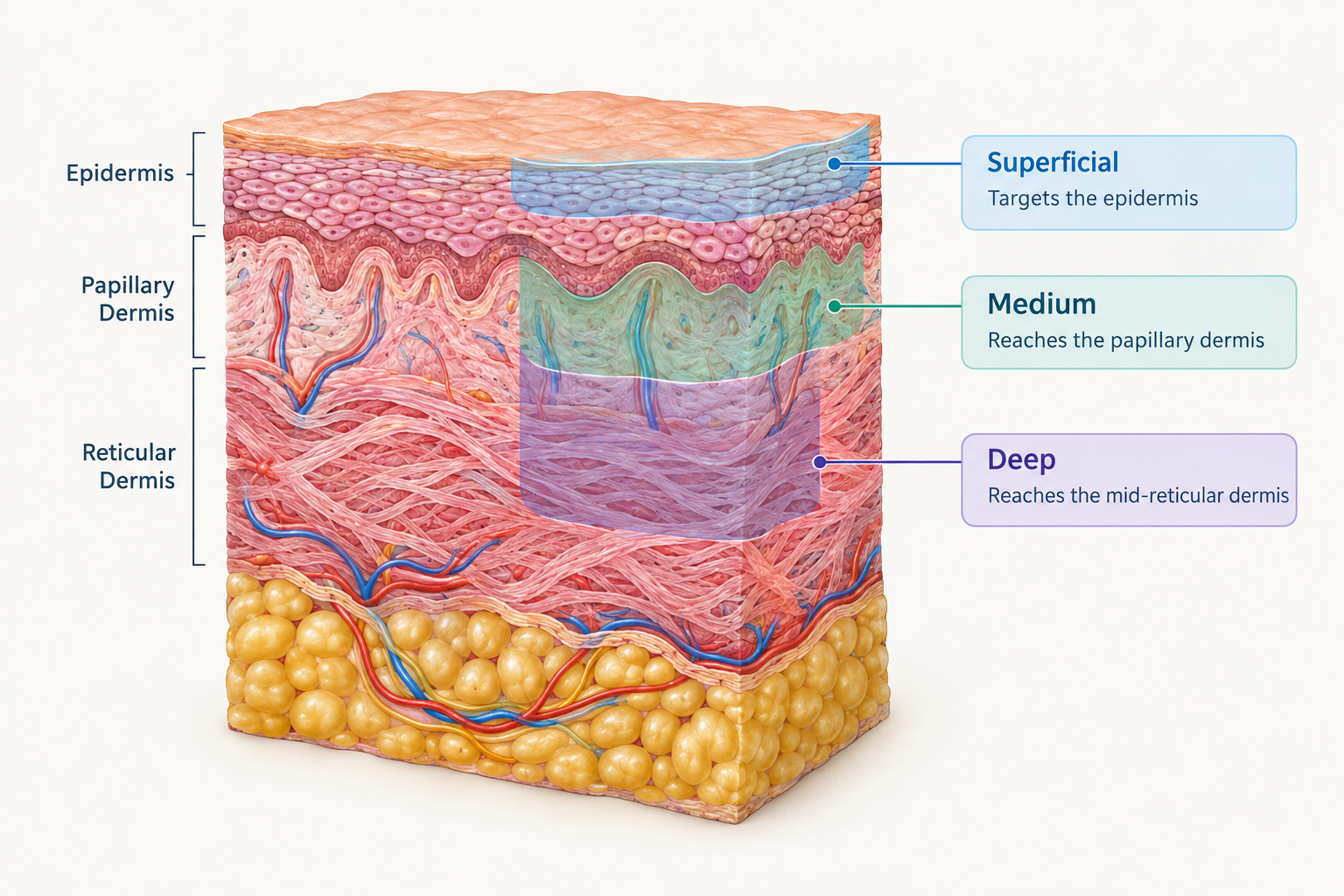
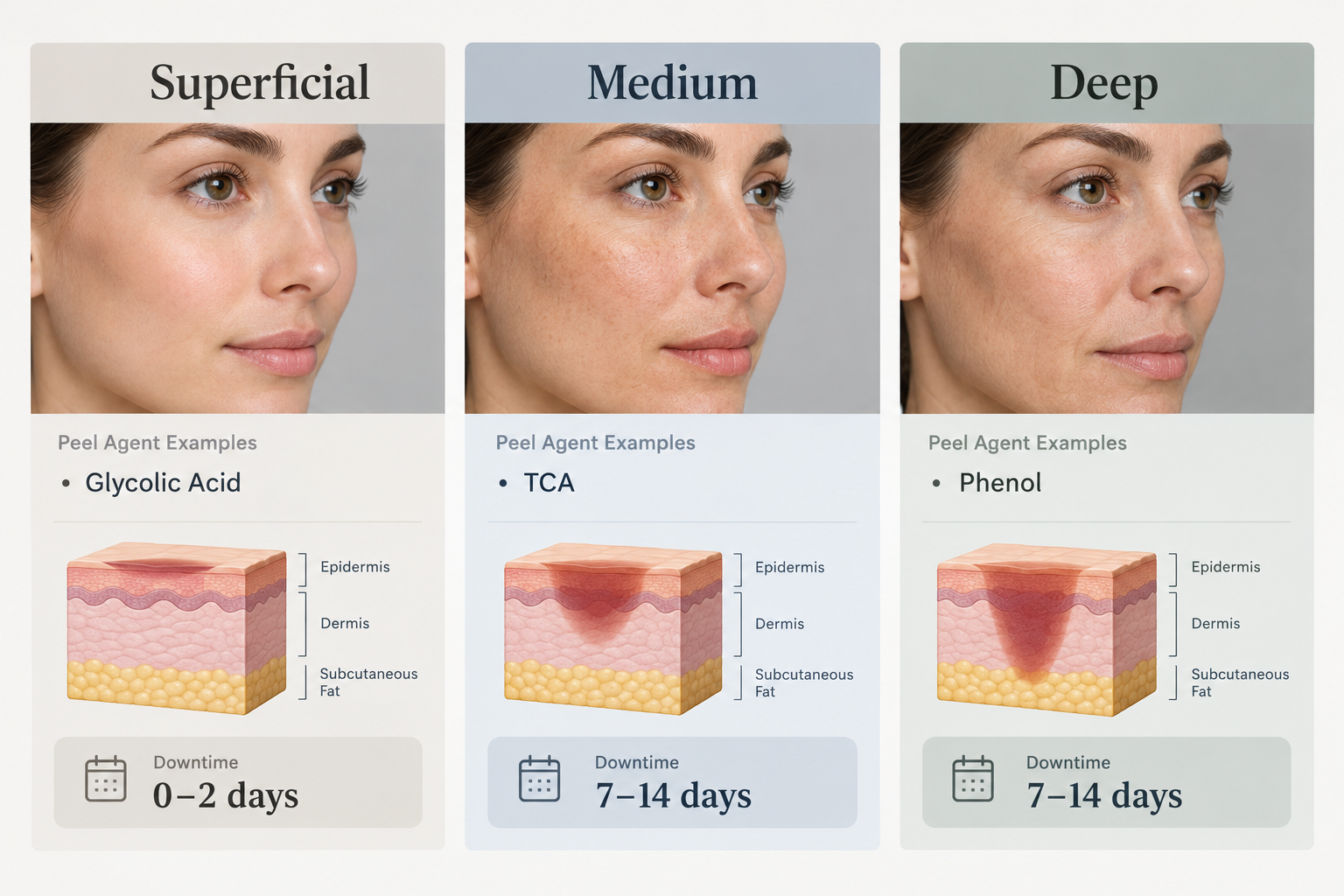
Superficial chemical peels target only the outermost layer of the skin, the epidermis. They are the mildest category and are sometimes called lunchtime peels because most patients can return to normal activities the same day or within twenty-four hours. Common agents used in superficial peels include alpha-hydroxy acids (AHAs) such as glycolic acid and lactic acid, beta-hydroxy acids (BHAs) such as salicylic acid, and low-concentration TCA solutions. Mandelic acid is another AHA sometimes used in superficial formulations, particularly for patients with sensitive or darker skin tones because of its larger molecular size and slower penetration rate.
Superficial peels may help improve mild uneven skin tone, dullness, rough texture, and early signs of sun damage. Salicylic acid peels are frequently used for acne-prone skin because salicylic acid is oil-soluble and can penetrate the pore lining, helping to reduce congestion and mild inflammatory acne. Glycolic acid peels are among the most widely studied AHAs and may support collagen synthesis with repeated use, though the evidence for significant structural change from superficial peels alone is more limited than for deeper treatments.
Because superficial peels work at a shallow level, a course of treatments — typically four to six sessions spaced two to four weeks apart — is usually recommended to achieve a noticeable cumulative improvement. Maintenance sessions are often needed to sustain results. Downtime is minimal; patients may experience mild redness and some flaking for a day or two, but visible peeling is not always present.
Medium-Depth Peels
Medium-depth chemical peels penetrate through the full epidermis and into the upper portion of the dermis, known as the papillary dermis. This deeper reach allows medium peels to address more significant concerns than superficial treatments, including moderate sun damage, uneven pigmentation, actinic keratoses (pre-cancerous rough patches caused by UV exposure), mild to moderate acne scarring, and fine to moderate lines and wrinkles.
The most commonly used agents for medium-depth peeling include TCA at concentrations typically between 20% and 35%, and the Jessner's solution combined with TCA, which was popularized in clinical literature as a way to achieve more even penetration. The combination of Jessner's solution — itself a blend of salicylic acid, lactic acid, and resorcinol — with TCA is one well-documented approach for medium-depth resurfacing. Some practitioners use glycolic acid at higher concentrations in combination with TCA for a similar effect.
Recovery from a medium-depth peel is more involved than from a superficial peel. Patients typically experience significant redness, swelling, and visible peeling or crusting that may last seven to fourteen days. Sun avoidance and careful wound care are essential during this period. The risk of post-inflammatory hyperpigmentation (PIH) — darkening of the skin in response to inflammation — is a meaningful consideration, particularly for patients with Fitzpatrick skin types IV through VI. Pre-treatment with a topical retinoid or hydroquinone for several weeks is often recommended to reduce this risk, though individual protocols vary between practitioners.
A single medium-depth peel can produce a more noticeable improvement than a course of superficial peels for the right candidate, but it carries greater risk and requires more preparation and aftercare. Results may last one to two years or longer depending on the patient's skin type, sun exposure habits, and ongoing skincare routine.
Deep Peels
Deep chemical peels penetrate into the mid-reticular dermis, the deeper structural layer of the skin. Phenol-based formulations, most notably the Baker-Gordon phenol peel, are the primary agents used for deep peeling. Deep peels can produce significant improvement in severe photoageing, deep wrinkles, coarse skin texture, and certain types of scarring, but they carry the most substantial risks and the longest recovery of any chemical peel type.
Because phenol is absorbed systemically, deep peels carry cardiac risks and are typically performed under sedation or anaesthesia with cardiac monitoring in a clinical or surgical setting. Recovery involves intense redness, swelling, crusting, and oozing for the first week, followed by weeks of pink or red skin that gradually fades over several months. Full recovery can take three to six months, and patients must commit to strict sun avoidance during this period. Permanent hypopigmentation — lightening of the skin — is a known risk of deep phenol peels, which means they are generally not appropriate for patients with darker skin tones.
Deep peels are less commonly performed today than in previous decades, partly because laser resurfacing technologies such as ablative fractional CO2 and erbium lasers can achieve comparable results with more controllable depth and, in some cases, a more predictable recovery profile. However, deep chemical peels remain a legitimate option for carefully selected patients when performed by an experienced practitioner in an appropriate clinical environment.
Common Skin Concerns Treated with Chemical Peels
Chemical peel treatment is used across a range of skin concerns, though the appropriate peel depth depends on the severity of the concern and the patient's skin characteristics.
- Acne and acne-prone skin: Salicylic acid and certain AHA peels may help reduce active breakouts, unclog pores, and improve post-acne marks. They are generally used at superficial depth for this indication.
- Hyperpigmentation and melasma: Superficial and medium peels may help reduce uneven pigmentation, though melasma in particular can be difficult to treat and may recur. Careful peel selection and pre-treatment preparation are important to avoid worsening pigmentation.
- Sun damage and photoageing: Medium-depth peels are often used for moderate sun damage, including fine lines, rough texture, and pigmented lesions caused by cumulative UV exposure.
- Acne scarring: Superficial peels may improve mild post-inflammatory marks, while medium-depth peels may address more textured scarring. Deeper atrophic scars often require additional or alternative treatments.
- Fine lines and skin laxity: Superficial peels offer modest improvement in fine surface lines. Medium and deep peels can address more significant lines, particularly around the mouth and eyes, by stimulating dermal remodelling.
- Dull or uneven skin texture: Regular superficial peels can improve overall skin radiance and smoothness by accelerating cell turnover.
What Happens During a Chemical Peel Appointment
The experience of a chemical peel appointment varies considerably depending on the depth of the peel being performed. For a superficial peel, the skin is first cleansed and degreased. The chemical solution is then applied evenly using a brush, gauze, or cotton applicator and left on the skin for a controlled period before being neutralised or removed. Patients typically feel a mild tingling or stinging sensation during application. The appointment usually takes between thirty and sixty minutes in total, including preparation and aftercare advice.
Medium-depth peels involve a similar preparation process but produce a more intense sensation during application, often described as a burning or stinging feeling that subsides once the solution is removed or neutralised. Frosting — a white or grey discolouration of the skin surface — is a visible indicator of penetration depth that practitioners use to assess the peel's progress. Patients are usually advised to arrange transport home and to take at least a week away from work or social commitments.
Deep phenol peels require a clinical or surgical environment, pre-operative assessment including cardiac evaluation, sedation or anaesthesia, and a structured post-operative care plan. These are not day-spa treatments and should only be performed by practitioners with appropriate training and facilities.
Recovery and Downtime by Peel Type
Understanding the realistic recovery timeline for each peel depth is one of the most important factors in choosing the right treatment. The table below summarises typical recovery expectations, though individual experience can vary.
| Peel Depth | Common Agents | Typical Downtime | Visible Peeling | Full Recovery |
|---|---|---|---|---|
| Superficial | Glycolic acid, lactic acid, salicylic acid, low-concentration TCA | 0–2 days | Mild flaking possible | 2–5 days |
| Medium | TCA 20–35%, Jessner's + TCA, higher-concentration glycolic acid | 7–14 days | Significant peeling and crusting | 2–4 weeks |
| Deep | Phenol (Baker-Gordon formula) | 2–4 weeks initial | Intense crusting and oozing | 3–6 months (redness) |
Risks and Side Effects of Chemical Peels
All chemical peel treatments carry potential risks, and these increase with peel depth. Prospective patients should understand these risks before proceeding, not to be discouraged, but to make an informed decision and ensure appropriate aftercare.
Post-inflammatory hyperpigmentation is one of the most common complications, particularly in patients with medium to darker skin tones. It occurs when the skin's inflammatory response triggers excess melanin production, resulting in darkened patches that can persist for months. Pre-treatment with topical agents such as retinoids, hydroquinone, or azelaic acid, combined with diligent sun protection, is often recommended to reduce this risk, though it cannot be eliminated entirely.
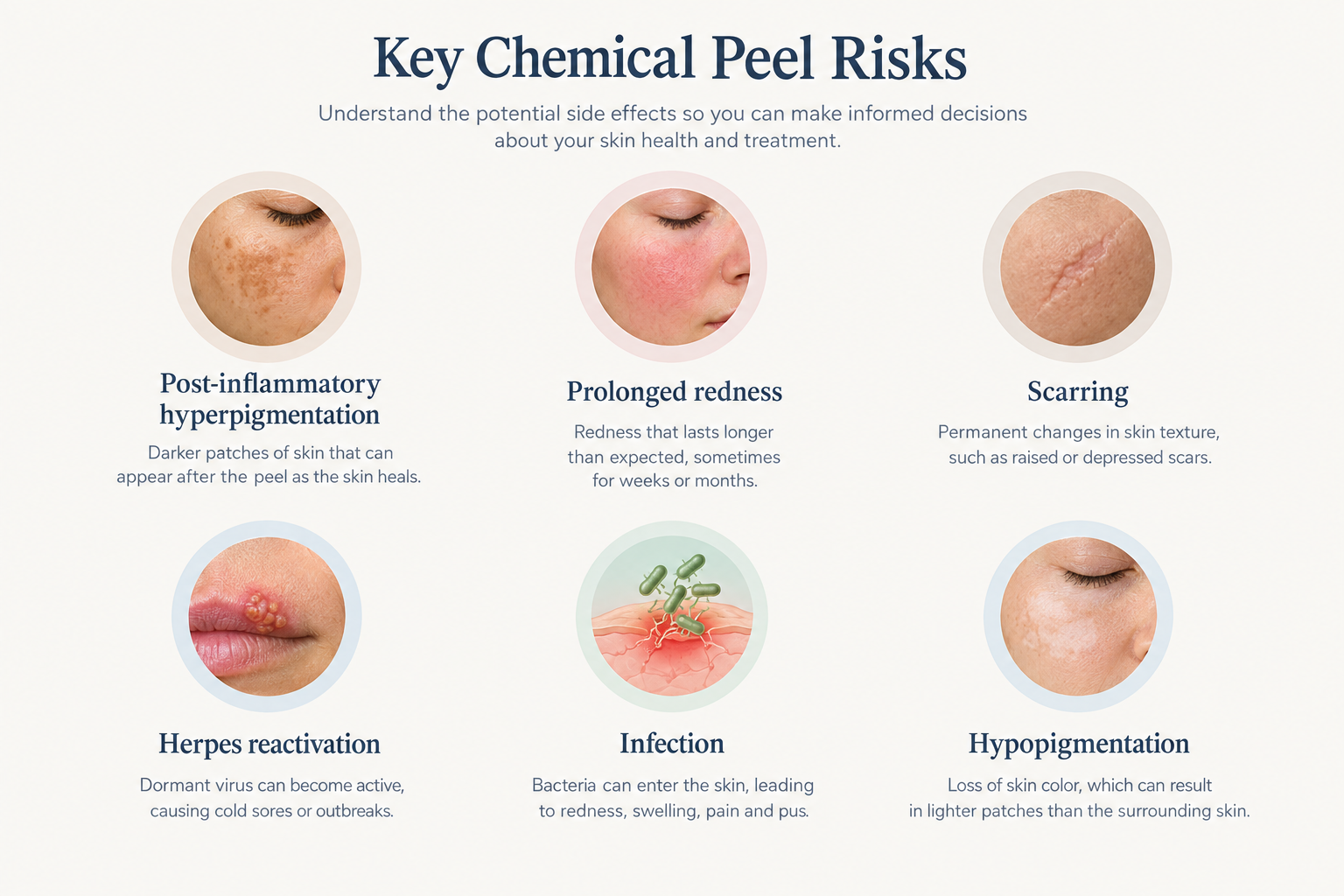
Prolonged redness or erythema is expected after medium and deep peels and is part of the normal healing process. In some patients, redness may persist for several months after a deep peel. Scarring is a less common but serious risk, more likely if aftercare instructions are not followed, if the skin is picked or rubbed during healing, or if the peel is applied too aggressively for the patient's skin type. Reactivation of the herpes simplex virus (cold sores) is a known risk for patients with a history of oral herpes; antiviral prophylaxis is typically prescribed before medium and deep peels. Infection is another potential complication if wound care is inadequate during recovery.
Permanent hypopigmentation — loss of skin pigment — is a specific risk of deep phenol peels and is more likely in patients with naturally darker skin. This is one reason deep peels are generally reserved for patients with lighter skin tones. Systemic toxicity from phenol absorption is a risk unique to deep peels and underscores the need for cardiac monitoring during the procedure.
Who May Be Suitable for Chemical Peel Treatment
Suitability for a chemical peel depends on several individual factors that a qualified practitioner will assess during a consultation. Patients with mild to moderate skin concerns, realistic expectations, and the ability to commit to aftercare and sun protection are generally the most appropriate candidates. Superficial peels are broadly suitable for most skin types when performed at appropriate concentrations, though patients with very sensitive skin or active inflammatory skin conditions may need a modified approach.
Medium and deep peels require more careful patient selection. Patients with darker skin tones face a higher risk of post-inflammatory hyperpigmentation and permanent pigment changes, and many practitioners prefer to use superficial peels, topical treatments, or alternative resurfacing technologies for these patients. A thorough skin assessment using the Fitzpatrick scale or similar classification helps guide this decision.
Chemical peels are generally not appropriate during pregnancy or breastfeeding, for patients with active skin infections, open wounds, or certain inflammatory skin conditions such as eczema or rosacea in the treatment area, or for those who have used oral isotretinoin (a medication for severe acne) within the preceding six to twelve months, as this can impair wound healing. Patients with a history of keloid scarring should discuss this with their practitioner before proceeding with any resurfacing treatment.
Alternatives to Chemical Peels
Chemical peels are one of several approaches to skin resurfacing and rejuvenation. Understanding the alternatives helps patients and practitioners choose the most appropriate treatment for a given concern.
Laser resurfacing — including ablative fractional CO2 lasers and erbium lasers — can achieve similar or greater depth of resurfacing with more precise control than chemical peels. Fractional laser treatments, which treat a fraction of the skin surface at a time, generally offer a better balance between efficacy and recovery for many patients compared with fully ablative approaches. Intense pulsed light (IPL) is useful for pigmentation and vascular concerns but does not resurface the skin in the same way as a peel or ablative laser.
Microneedling, with or without radiofrequency energy, stimulates collagen production through controlled micro-injury and may be suitable for patients who are not candidates for chemical peels, including some patients with darker skin tones. Dermabrasion is a mechanical resurfacing technique that has largely been replaced by laser and chemical peel options in most clinical settings. Topical prescription treatments such as retinoids, hydroquinone, and azelaic acid address some of the same concerns as superficial peels and may be used alongside or instead of in-clinic treatments depending on the patient's goals and circumstances.
Preparing for a Chemical Peel and Aftercare
Preparation before a chemical peel can influence both the outcome and the risk of complications. For medium and deep peels in particular, practitioners often recommend a pre-treatment skincare regimen lasting four to six weeks that may include topical retinoids to accelerate cell turnover, a skin-lightening agent to reduce the risk of post-inflammatory hyperpigmentation, and broad-spectrum sun protection used consistently every day.
After a superficial peel, aftercare is relatively straightforward: gentle cleansing, a simple moisturiser, and daily SPF 30 or higher sunscreen are the main requirements. Patients should avoid active skincare ingredients such as retinoids, AHAs, and BHAs for several days after treatment and should not pick or rub any flaking skin.
After a medium or deep peel, aftercare is more intensive and typically involves specific wound care instructions provided by the treating practitioner. Keeping the skin moist, avoiding sun exposure entirely during the healing phase, and attending follow-up appointments are all important. Strict sun protection must be maintained for several months after any medium or deep peel to protect the newly formed skin and reduce the risk of pigmentation changes.
Frequently Asked Questions
How many chemical peel sessions will I need?
The number of sessions depends on the peel depth and the concern being treated. Superficial peels are typically performed as a course of four to six treatments spaced two to four weeks apart, with maintenance sessions thereafter. A single medium-depth peel may produce meaningful improvement for moderate concerns. Deep peels are usually a one-time treatment, though individual outcomes vary.
Can chemical peels be used on darker skin tones?
Superficial peels using agents such as lactic acid, mandelic acid, or low-concentration salicylic acid can be used on darker skin tones with appropriate care and monitoring. Medium and deep peels carry a significantly higher risk of post-inflammatory hyperpigmentation and permanent pigment changes in patients with Fitzpatrick skin types IV through VI, and many practitioners prefer alternative approaches for these patients. A thorough consultation with a practitioner experienced in treating diverse skin tones is essential.
Will a chemical peel remove my acne scars?
Chemical peels may improve the appearance of certain types of acne scarring, particularly superficial post-inflammatory marks and mild textural irregularities. Deeper atrophic scars — such as ice-pick or boxcar scars — typically require additional treatments such as microneedling, subcision, or laser resurfacing for meaningful improvement. A practitioner can assess your specific scarring pattern and recommend the most appropriate approach.
Is a chemical peel painful?
Superficial peels typically cause mild tingling or stinging during application that resolves quickly. Medium-depth peels produce a more intense burning sensation during the procedure, which subsides once the solution is removed. Deep phenol peels are performed under sedation or anaesthesia, so the procedure itself is not painful, though recovery involves significant discomfort.
How long do the results of a chemical peel last?
Results from superficial peels are cumulative and require maintenance sessions to sustain. Medium-depth peel results may last one to two years or longer with good sun protection and skincare. Deep peel results can be long-lasting, but the skin continues to age naturally and ongoing sun protection is essential to preserve the outcome.
Can I wear makeup after a chemical peel?
After a superficial peel, most patients can apply mineral makeup within twenty-four to forty-eight hours once any redness has settled. After a medium or deep peel, makeup should be avoided until the skin has fully re-epithelialised — typically at least one to two weeks — and only when the practitioner confirms it is safe to do so.
Choosing the Right Chemical Peel for Your Skin Concerns
Selecting the most appropriate chemical peel type is not simply a matter of choosing the strongest option available. The right peel is the one that addresses your specific skin concern at an appropriate depth, with a recovery period you can realistically manage, and a risk profile that is acceptable given your skin type and medical history. Superficial peels offer a low-risk entry point for improving skin texture and tone with minimal disruption to daily life, while medium-depth peels may be worth considering for more significant pigmentation or photoageing concerns in suitable candidates. Deep peels remain an option for carefully selected patients with severe photoageing, but they require a high level of commitment to preparation, recovery, and aftercare.
No chemical peel can guarantee a specific outcome, and results depend on individual skin characteristics, the skill and experience of the practitioner, the quality of aftercare, and ongoing sun protection habits. If you are considering chemical peel treatment, a consultation with a qualified aesthetic practitioner or dermatologist who can assess your skin in person, discuss your goals, and recommend a treatment plan tailored to your needs is the most important first step.
