
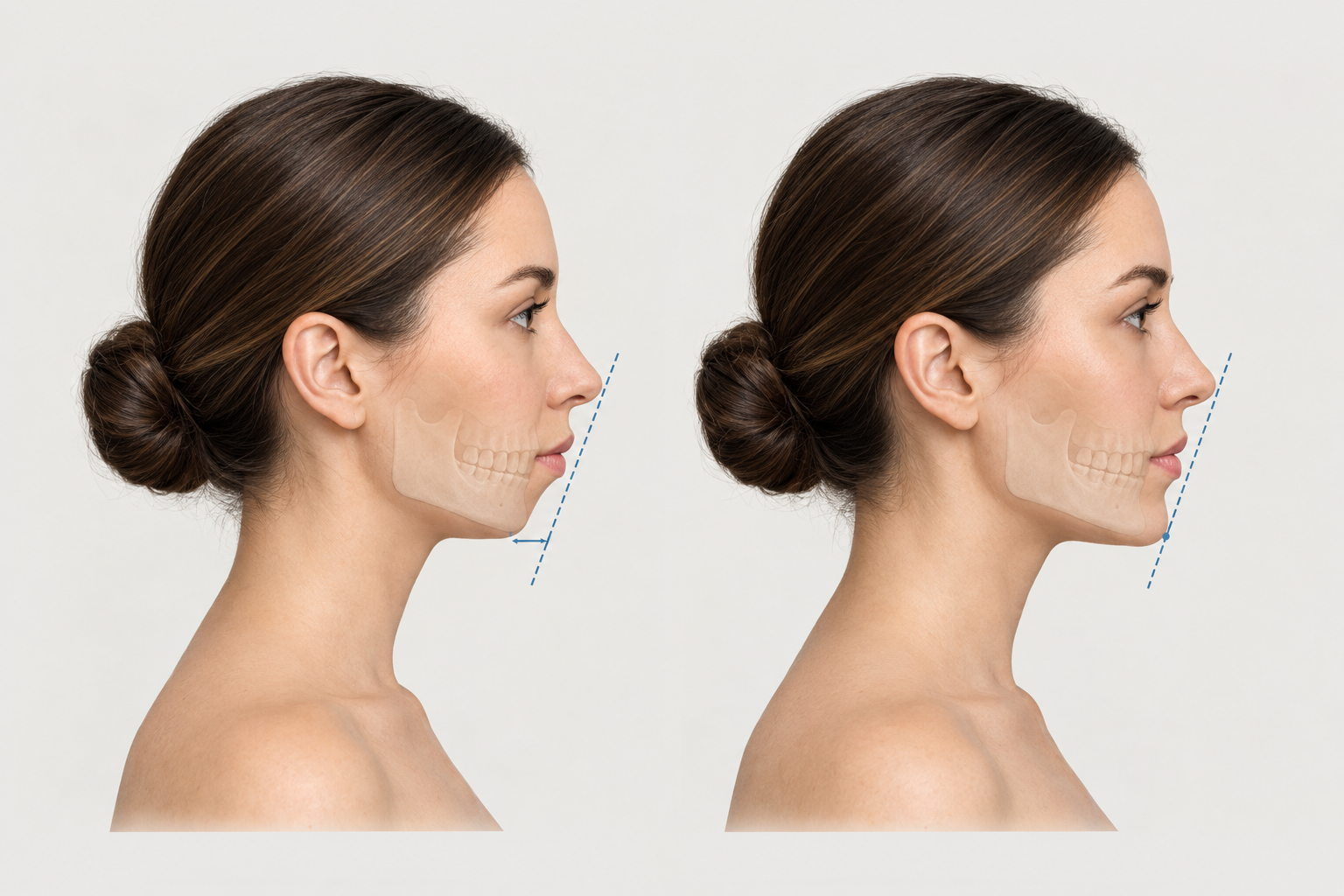

Chin filler is a non-surgical injectable treatment that uses hyaluronic acid gel to add projection, definition, or length to the chin, with the goal of improving overall facial balance. For patients who feel their chin is recessed, asymmetrical, or poorly proportioned relative to the nose and midface, dermal filler placed in the chin area can create a more harmonious profile without the recovery associated with surgical genioplasty. This article explains how chin filler works, what it can and cannot achieve, who may be a suitable candidate, what the treatment involves, and what realistic results look like.
Key Takeaways
- Chin filler uses hyaluronic acid to add projection or definition to the chin, improving the relationship between the chin, jawline, and nose in profile view.
- Results are temporary, typically lasting between 12 and 24 months depending on the product used, the volume placed, and individual metabolism.
- Chin filler cannot correct significant skeletal discrepancies, dental malocclusion, or severe chin retrusion — surgical options may be more appropriate in those cases.
- Risks include bruising, swelling, asymmetry, and rare but serious vascular complications; treatment should only be performed by a qualified, experienced practitioner.
- A thorough facial assessment is essential before treatment to determine whether chin filler is appropriate for your specific anatomy and goals.
What Is Chin Filler and How Does It Work?
Chin filler refers to the injection of a dermal filler product — most commonly a hyaluronic acid-based gel — into the soft tissue overlying the chin bone (the mental region). Hyaluronic acid is a naturally occurring substance found in connective tissue, and when formulated as a cross-linked gel, it provides structural support and volume that can reshape the visible contour of the chin. Practitioners typically use a thicker, more cohesive filler formulation for the chin compared with products used in the lips or tear troughs, because the chin requires structural lift and projection rather than superficial hydration.
The filler is injected either via a fine needle or a blunt-tipped cannula, depending on the practitioner's technique and the specific area being treated. Cannulas are often preferred in the chin region because they reduce the risk of inadvertent vascular injury, though both approaches are used clinically. The product integrates with the surrounding tissue and physically displaces the overlying skin forward or downward, creating the appearance of a more projected or elongated chin. Because hyaluronic acid filler is reversible using an enzyme called hyaluronidase, the treatment carries an additional safety advantage over permanent or semi-permanent fillers.
The Role of the Chin in Facial Profile Balance
Facial proportion and profile balance are assessed using several anatomical reference points. In profile view, the relationship between the forehead, nose, lips, and chin determines whether a face appears harmonious or whether one feature appears disproportionately prominent or recessed. A chin that sits significantly behind the vertical line drawn from the base of the nose to the most anterior point of the lower lip — a reference sometimes called the Ricketts E-line — can make the nose appear larger than it is, the neck appear shorter, and the lower face appear weak or undefined.
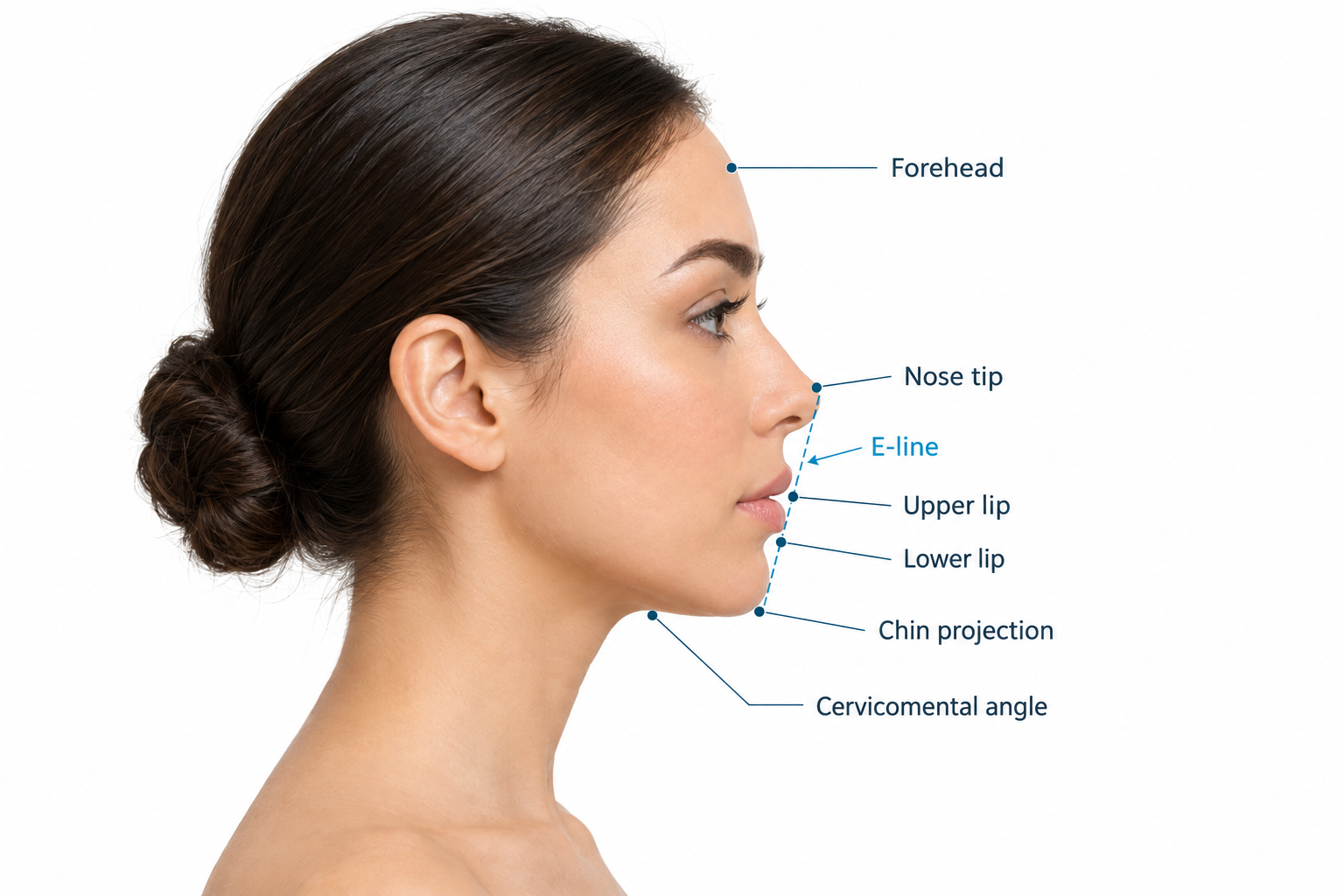
Chin projection also influences the perceived definition of the jawline and the cervicomental angle, which is the angle between the neck and the underside of the chin. A well-projected chin tends to create a cleaner jaw-to-neck transition, which many patients associate with a more defined or youthful lower face. Conversely, a retruded chin can make submental fullness (sometimes called a double chin) appear more pronounced, even when the actual volume of fat in that area is modest. Chin filler addresses these proportional concerns by adding anterior projection, vertical length, or lateral width to the chin, depending on the patient's specific anatomy and goals.
What Chin Filler Can and Cannot Achieve
Understanding the realistic scope of chin filler is important before deciding whether to pursue treatment. Chin filler can meaningfully improve the projection and definition of a mildly to moderately recessed chin, refine the shape of a chin that is slightly asymmetrical, add vertical length to a chin that appears short relative to the rest of the lower face, and improve the overall profile relationship between the chin, lips, and nose. These changes can be visible in both profile and frontal views, and many patients report that improving chin projection also makes their nose appear more proportionate without any treatment to the nose itself.
However, chin filler has clear limitations. It cannot correct significant skeletal retrusion caused by jaw structure or dental malocclusion — conditions that may require orthodontic treatment or orthognathic surgery for meaningful correction. It cannot permanently alter bone structure, and results will diminish as the filler is gradually metabolised. Chin filler also cannot address excess submental fat or skin laxity in the neck, which may require separate treatments such as fat-dissolving injections, radiofrequency skin tightening, or surgical intervention. Patients with very pronounced chin retrusion or those seeking a dramatic structural change may find that non-surgical filler provides insufficient correction and that a surgical implant or genioplasty is a more appropriate option.
Who May Be a Suitable Candidate
Chin filler may be worth discussing with a qualified practitioner if you have a mildly to moderately recessed or underprojected chin, notice that your profile appears unbalanced relative to your nose or midface, or feel that your jawline lacks definition. Patients who are considering rhinoplasty sometimes find that chin filler alone improves their profile balance sufficiently to defer or avoid nasal surgery, though this depends entirely on individual anatomy and should be assessed by an experienced clinician.
Suitable candidates are generally adults in good general health who have realistic expectations about what a non-surgical treatment can achieve. Chin filler is not appropriate during pregnancy or breastfeeding. It should be avoided in patients with active skin infection, inflammation, or autoimmune conditions affecting the treatment area. Patients with a history of severe allergic reactions, bleeding disorders, or those taking anticoagulant medications should discuss these factors with their practitioner before proceeding. Previous chin implants or surgical procedures in the area are also relevant to disclose, as they may affect the anatomy and the approach to treatment.
The Treatment Experience
A chin filler appointment typically begins with a detailed facial assessment. A skilled practitioner will evaluate your facial proportions in both frontal and profile views, discuss your specific concerns and goals, and explain what filler placement can realistically achieve for your anatomy. Photographs are usually taken before treatment for reference and comparison.
A topical anaesthetic cream is commonly applied to the chin area before injection to reduce discomfort. Many filler products used in the chin also contain lidocaine, a local anaesthetic, within the gel itself, which further reduces sensation during the procedure. The injection process typically takes between 15 and 30 minutes. Patients may feel pressure or mild discomfort during injection, but significant pain is not typical when appropriate anaesthesia is used.
Immediately after treatment, the chin area may appear slightly swollen or feel firm. The practitioner will usually mould the filler gently to ensure even distribution and the desired shape. Patients are generally able to return to normal daily activities the same day, though strenuous exercise and significant pressure on the treated area are usually advised against for 24 to 48 hours. Dental procedures that require significant manipulation of the lower face are typically recommended to be avoided for a short period after treatment.
Results: What to Expect and When
Some improvement in chin projection and profile balance is visible immediately after chin filler treatment, though initial swelling means the final result is not fully apparent straight away. Most patients see the settled result within one to two weeks, once swelling has resolved. Bruising, if it occurs, typically fades within seven to ten days.
The degree of improvement depends on the volume of filler used, the specific product chosen, the practitioner's technique, and the patient's starting anatomy. A subtle refinement in profile balance can often be achieved with a relatively small volume of filler, while more significant projection changes may require a larger volume or a staged approach across more than one appointment. Practitioners often recommend a conservative initial treatment followed by a review appointment, allowing for additional product to be added if needed rather than overcorrecting at the first session.
Results from hyaluronic acid chin filler are temporary. Most patients find that results last between 12 and 24 months, though this varies depending on the specific product used, the volume placed, the depth of injection, and individual factors such as metabolism and lifestyle. Maintenance treatments are required to sustain the result over time. Some practitioners note that repeated treatments over time may have a cumulative effect on the overlying tissue, though this is not guaranteed and individual responses vary.
Risks and Side Effects
Chin filler carries risks that every prospective patient should understand before consenting to treatment. Common and expected side effects include temporary swelling, bruising, redness, and tenderness at the injection site. These typically resolve within one to two weeks and do not usually require medical intervention.
Less common but more significant risks include asymmetry, lumpiness or irregularity in the filler distribution, and prolonged swelling. Infection is rare but possible and requires prompt medical assessment if signs such as increasing redness, warmth, or pain develop after the initial recovery period. Filler migration — where the product moves slightly from the intended placement — can alter the result and may require correction with hyaluronidase.
The most serious risk associated with any facial filler treatment is vascular occlusion, where filler is inadvertently injected into or compresses a blood vessel, potentially restricting blood flow to the surrounding tissue. In the chin and jaw region, the relevant vascular anatomy includes branches of the facial artery and the mental artery. Vascular complications can cause tissue damage and, in rare cases, more serious consequences. This risk underscores the importance of choosing a practitioner with thorough knowledge of facial anatomy, appropriate training in managing complications, and access to hyaluronidase for emergency reversal. Patients should ask their practitioner about their training, experience, and complication management protocols before proceeding.
Chin Filler Versus Surgical Alternatives
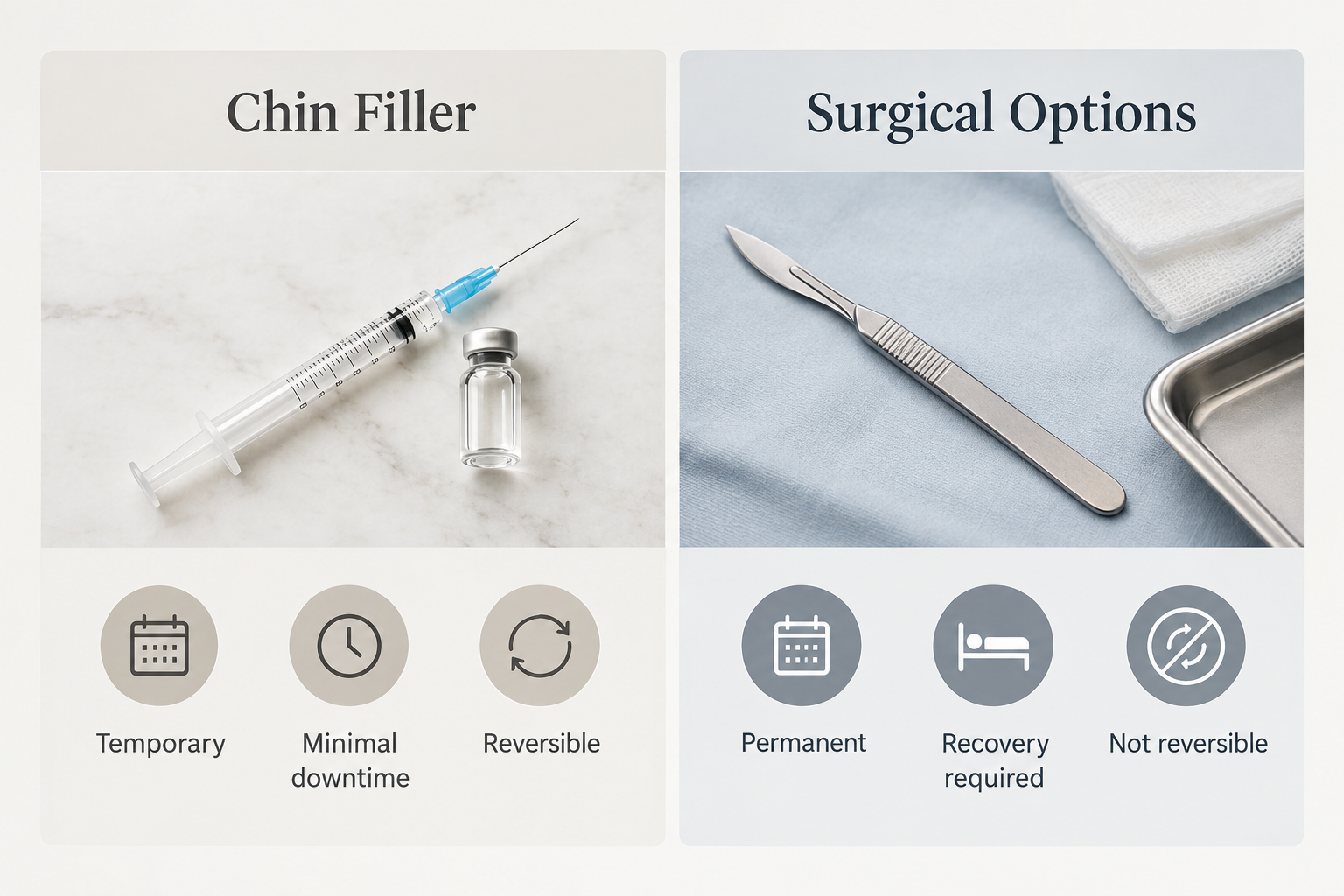
For patients with mild to moderate chin retrusion and realistic expectations, chin filler offers a meaningful non-surgical option with no significant downtime and reversible results. The ability to dissolve hyaluronic acid filler with hyaluronidase is a practical safety advantage, and the treatment can be adjusted or refined over time as facial anatomy changes with age.
Surgical alternatives include chin implants (alloplastic augmentation) and sliding genioplasty, which involves repositioning the chin bone itself. Surgical options generally provide more durable and structurally significant correction, and may be more appropriate for patients with pronounced skeletal retrusion, those seeking permanent results, or those who have found that non-surgical filler provides insufficient improvement. Surgical procedures carry their own risks, including anaesthesia, infection, implant-related complications, and longer recovery periods, and require consultation with a maxillofacial or plastic surgeon.
Some patients also consider chin filler alongside other non-surgical treatments such as jawline filler, botulinum toxin to the masseter or mentalis muscle, or skin-tightening treatments, as part of a broader approach to lower face contouring. Whether a combined approach is appropriate depends on individual anatomy and goals and should be discussed during a thorough consultation.
Questions to Ask Before Your Appointment
- What qualifications and training do you have in facial anatomy and injectable treatments?
- Which filler product do you recommend for my chin, and why?
- How much volume do you anticipate using, and will you take a staged approach?
- What results are realistic for my specific anatomy?
- Do you have hyaluronidase available on-site in case of a vascular complication?
- What should I do if I experience unusual symptoms after treatment?
- Are there any aspects of my medical history or anatomy that might make me less suitable for this treatment?
- Would a surgical option be more appropriate for my level of chin retrusion?
Frequently Asked Questions
How much chin filler is typically needed for profile balance?
The volume required varies considerably between patients depending on the degree of chin retrusion, the desired outcome, and the specific filler product used. Many practitioners start conservatively — often with 1 to 2 ml — and review the result before adding more. A staged approach reduces the risk of overcorrection and allows the result to be tailored to the individual. Your practitioner should discuss the anticipated volume during your consultation based on your specific anatomy.
Will chin filler make my nose look smaller?
Improving chin projection can change the perceived balance between the chin and the nose in profile view, sometimes making the nose appear more proportionate relative to the rest of the face. This is a well-recognised optical effect related to facial proportion rather than any physical change to the nose itself. However, the degree of this effect varies between individuals and depends on the starting anatomy. Chin filler is not a substitute for rhinoplasty when nasal structure itself is the primary concern.
Is chin filler painful?
Most patients describe the procedure as mildly uncomfortable rather than significantly painful. Topical anaesthetic cream applied before treatment and lidocaine contained within many filler products help to reduce discomfort during injection. Individual pain tolerance varies, and some patients find certain injection points more sensitive than others. Discussing pain management options with your practitioner beforehand is reasonable.
Can chin filler be dissolved if I am unhappy with the result?
Hyaluronic acid chin filler can be dissolved using hyaluronidase, an enzyme that breaks down hyaluronic acid. This is one of the practical advantages of hyaluronic acid-based products over permanent or semi-permanent fillers. Dissolution is not always immediate or complete in a single session, and the process itself carries a small risk of swelling and bruising. It is important to confirm that your practitioner has hyaluronidase available before treatment.
How long does chin filler last?
Results from hyaluronic acid chin filler typically last between 12 and 24 months, though individual variation is significant. Factors that influence longevity include the specific product used, the volume placed, the depth of injection, and individual metabolism. Some patients metabolise filler more quickly than others. Maintenance treatments are needed to sustain the result over time.
Can chin filler help with a double chin?
Chin filler improves the projection and definition of the chin itself, which can make the jaw-to-neck transition appear cleaner and may reduce the visual prominence of submental fullness in some patients. However, chin filler does not reduce submental fat or address skin laxity directly. If excess fat under the chin is a primary concern, treatments such as fat-dissolving injections or other body contouring approaches may be more relevant, and a practitioner can advise on the most appropriate option for your anatomy.
Is there any downtime after chin filler?
Most patients return to normal daily activities on the same day as treatment. Swelling and bruising are the most common reasons for social downtime, and these typically resolve within one to two weeks. Strenuous exercise, significant pressure on the chin, and dental procedures are generally advised against for a short period after treatment. Your practitioner will provide specific aftercare guidance based on the product used and the volume placed.
Is Chin Filler the Right Approach for Your Profile Concerns?
Chin filler is a well-established non-surgical option for patients who want to improve profile balance, add chin projection, or refine the lower face without surgery or significant downtime. For patients with mild to moderate chin retrusion and realistic expectations, it can produce a meaningful and visible improvement in facial proportion, particularly in profile view. The reversibility of hyaluronic acid filler and the absence of surgical recovery make it an accessible starting point for many patients exploring lower face contouring.
The treatment is not suitable for everyone. Patients with significant skeletal discrepancies, dental malocclusion, or those seeking permanent structural change are likely to find that surgical options provide more appropriate correction. Chin filler also requires a skilled, anatomically knowledgeable practitioner to minimise the risk of complications, particularly vascular injury, and to achieve a natural-looking result that complements the rest of the face rather than appearing isolated or disproportionate.
If you are considering chin filler for profile balance, a thorough in-person consultation with a qualified aesthetic practitioner is the essential first step. A practitioner who assesses your full facial anatomy, discusses your goals honestly, and explains both the realistic benefits and the limitations of treatment is best placed to help you decide whether chin filler, a surgical alternative, or a combination approach is the most appropriate path for your individual concerns.
