
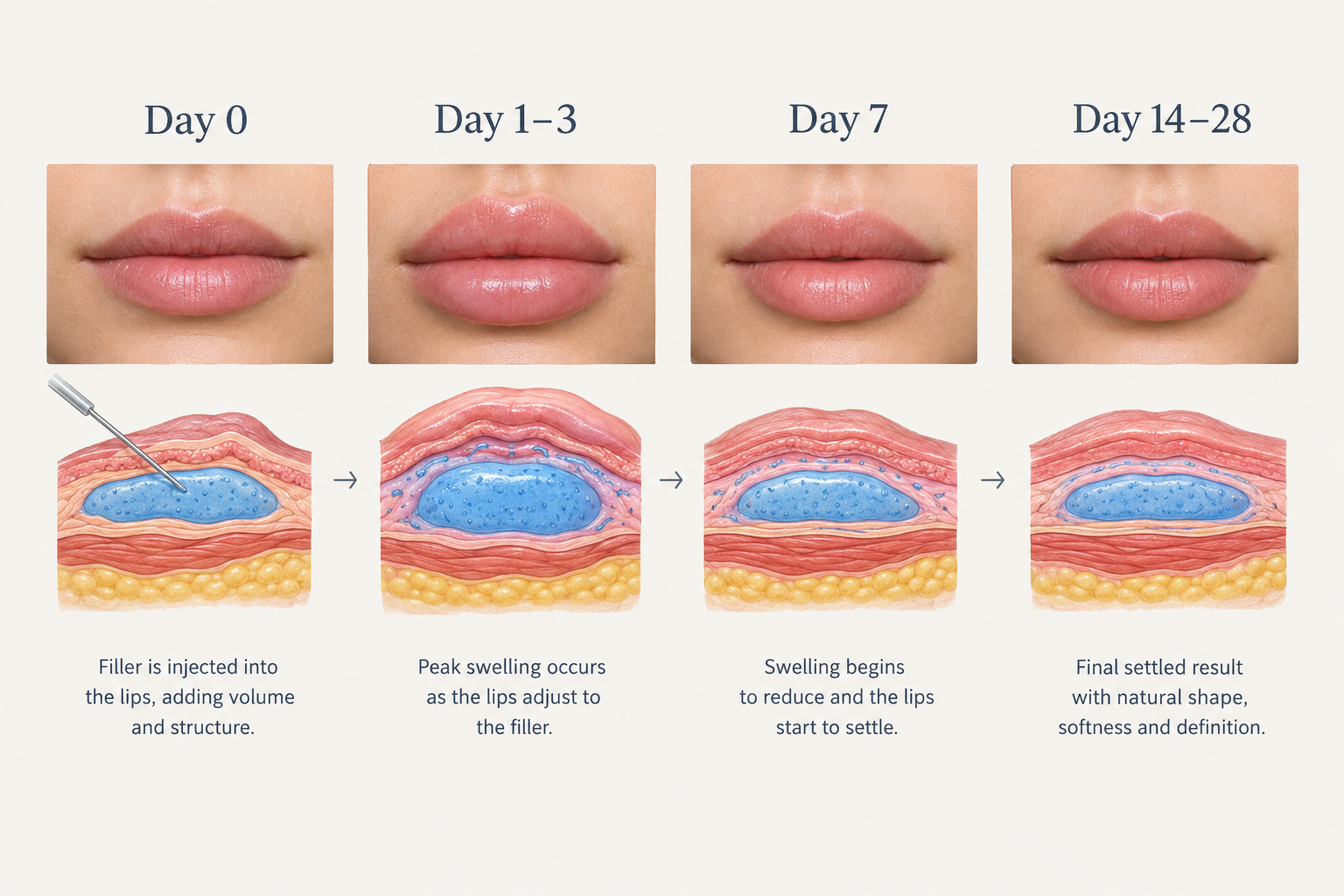

The lip filler healing process is often misunderstood, and many patients are surprised by how their lips look in the first few days after treatment. Swelling, asymmetry, and firmness are all normal parts of early recovery, yet they can cause unnecessary concern when patients are not prepared for them. This article explains each stage of lip filler recovery in detail, from the first hours after injection through to the point when final results become visible, so you know what to expect and when to contact your practitioner.
Key Takeaways
- Swelling and bruising after lip filler are expected and typically peak within 24 to 72 hours before gradually resolving over one to two weeks.
- Final lip filler results are generally not visible until around two to four weeks after treatment, once swelling has fully settled.
- Lumps, firmness, and mild asymmetry in the first week are usually temporary and part of normal healing, not signs of a complication.
- Certain aftercare steps, such as avoiding heat, strenuous exercise, and pressure on the lips, may help support a smoother recovery.
- Persistent pain, significant asymmetry after two weeks, skin colour changes, or signs of infection require prompt assessment by a qualified practitioner.
What Happens to the Lips Immediately After Filler Injection
Hyaluronic acid dermal filler is injected into the lip tissue using a fine needle or cannula. The injection process itself causes a degree of physical trauma to the delicate lip tissue, which triggers an immediate localised inflammatory response. This is the body's normal reaction to any minor tissue disruption, and it is responsible for most of the early changes patients notice in the first hours after treatment.
Within minutes of the procedure, the lips typically appear larger than the intended final result. This early enlargement is caused by a combination of the filler volume itself and the onset of acute swelling. Some patients also notice redness, tenderness, and a feeling of tightness or firmness in the lip tissue. Small raised areas or lumps may be visible or palpable immediately after injection, particularly at entry points. These are not a cause for concern at this stage, as the filler has not yet had time to integrate with the surrounding tissue.
Bruising may begin to appear within the first hour, particularly if a small blood vessel was disrupted during injection. The degree of bruising varies considerably between patients and depends on factors including individual skin fragility, the technique used, whether a needle or cannula was employed, and whether the patient was taking any medications or supplements that affect blood clotting, such as aspirin, ibuprofen, or fish oil. Patients who bruise easily in general are more likely to experience visible bruising after lip filler.
Days One to Three: Peak Swelling and Bruising
The first 24 to 72 hours represent the most visually dramatic phase of the lip filler healing process. Swelling typically reaches its peak during this window, and the lips may look significantly larger, uneven, or disproportionate compared to the face. This can be alarming for patients who were expecting a subtle enhancement, but it is an expected part of the inflammatory healing response rather than an indication that too much filler was used.
Bruising, if present, is usually most visible between days one and three. It may appear as purple, blue, or greenish discolouration around the injection sites or spreading into the surrounding skin. Applying a cold compress gently to the area during the first 24 hours may help reduce swelling and limit bruising, though it should not be pressed firmly against the lips. Arnica gel or oral arnica supplements are sometimes recommended by practitioners to support bruise resolution, though clinical evidence for their effectiveness in this context remains limited.
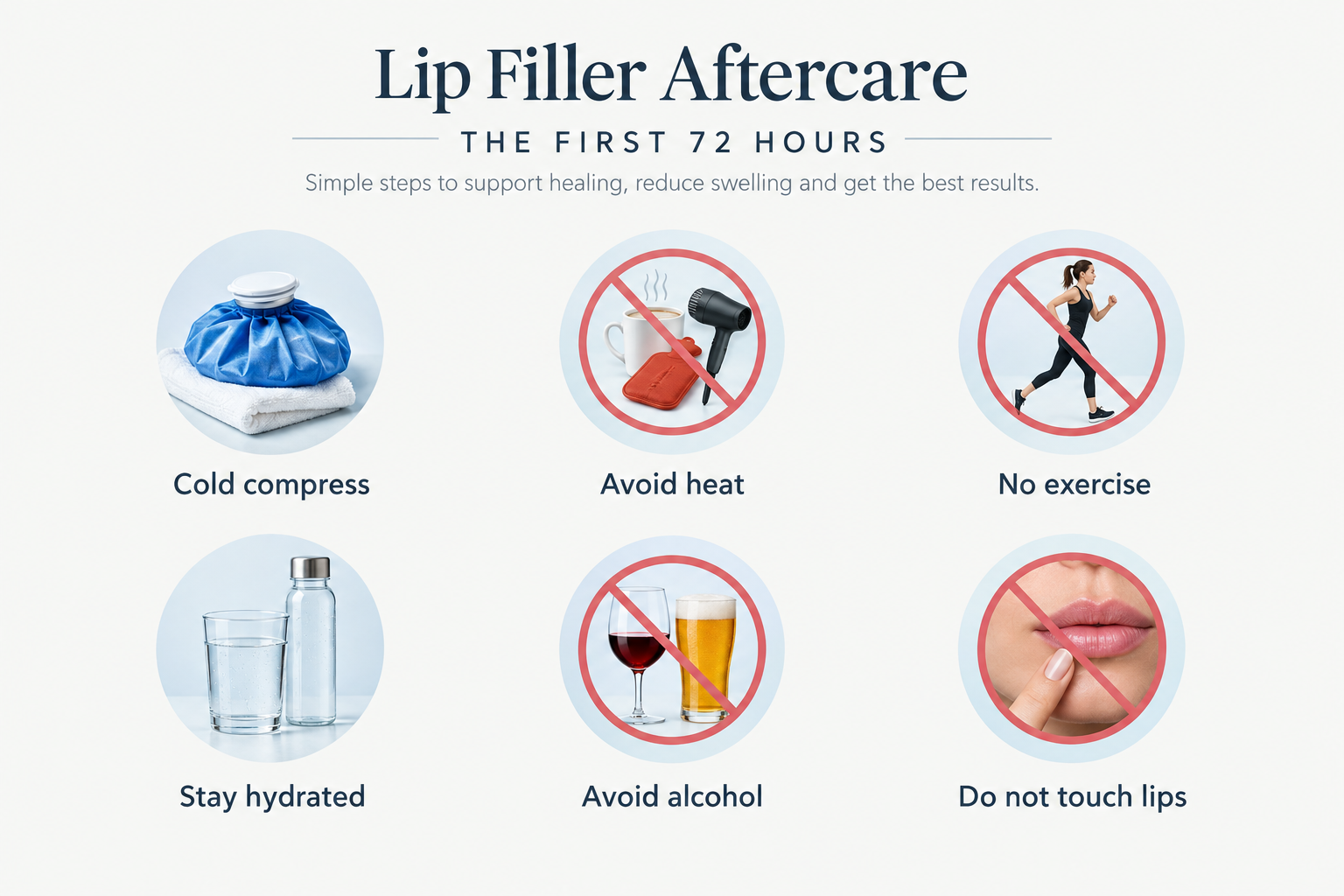
Tenderness and sensitivity are common during this phase. The lips may feel sore to touch, and eating, drinking, and speaking may feel slightly uncomfortable. Patients are generally advised to eat soft foods, avoid very hot or very cold beverages, and refrain from touching or massaging the lips unless specifically instructed to do so by their practitioner. Sleeping with the head slightly elevated during the first night may help reduce overnight swelling accumulation.
Strenuous physical exercise is typically discouraged for at least 24 to 48 hours after lip filler treatment. Increased blood flow from exercise can worsen swelling and bruising and may theoretically affect filler placement in the very early stages before the product has stabilised. Similarly, exposure to significant heat sources such as saunas, steam rooms, sunbeds, and very hot showers is usually advised against during this period.
Days Three to Seven: Swelling Begins to Subside
From around day three onwards, most patients notice a gradual reduction in swelling. The lips begin to look less exaggerated, and the initial firmness starts to soften as the hyaluronic acid filler integrates with the surrounding tissue and begins to attract and bind water molecules, which is a characteristic property of hyaluronic acid. This hydration process contributes to the natural feel and appearance of the lips as healing progresses.
Bruising typically begins to fade during this phase, progressing through yellow and green tones before resolving. Colour-correcting makeup can be used to conceal bruising once any open injection points have fully closed, which usually occurs within the first day or two. Patients should avoid applying makeup directly to any areas that are still broken or crusted.
Some patients notice that their lips feel lumpy or uneven during this stage. Small nodules or areas of firmness are common as the filler settles, and they often resolve on their own within one to two weeks. Gentle massage may be recommended by some practitioners to help smooth out minor irregularities, but patients should not attempt this without specific guidance, as unsupervised massage in the early healing phase can potentially displace filler.
Asymmetry is also frequently noticed during this phase. Because swelling does not always resolve at the same rate on both sides of the lip, one side may appear fuller or higher than the other for several days. In most cases, this resolves as healing continues and does not reflect the final outcome. Patients are generally advised to wait until at least two weeks after treatment before assessing whether any correction is needed.
Days Seven to Fourteen: Continued Settling and Softening
By the end of the first week, the majority of swelling has usually resolved for most patients, though some residual puffiness may persist into the second week, particularly in patients who swell more readily or who received a larger volume of filler. The lips begin to look and feel noticeably more natural during this phase, and the results start to more closely resemble the intended outcome.
The filler continues to integrate with the lip tissue and soften during this period. Any remaining firmness or lumpiness typically diminishes, and the lips take on a more pliable, natural texture. Patients who were concerned about the appearance of their lips in the first week often find that their concerns resolve significantly by day ten to fourteen.
Residual bruising, if any remains, is usually faint and easily concealed with makeup by this stage. Tenderness should have largely resolved, and normal activities including exercise can generally be resumed, though patients should confirm this with their own practitioner based on their individual recovery.
It is worth noting that individual healing timelines vary. Factors such as the volume of filler injected, the specific product used, the patient's age, skin quality, immune response, and lifestyle habits can all influence how quickly the lip filler healing process progresses. Patients who smoke, for example, may experience slower tissue healing. Those who are very physically active may notice that swelling fluctuates more in the early days.
Two to Four Weeks: Final Results Become Visible
Most practitioners consider the two to four week mark to be the point at which lip filler results can be accurately assessed. By this stage, swelling has fully resolved, the filler has integrated with the surrounding tissue, and the lips have settled into their new shape and volume. The results visible at this point represent the true outcome of the treatment rather than an inflated or distorted version caused by post-procedural swelling.
Many patients find that their lips look more natural and proportionate at this stage than they did in the first week. The volume enhancement is present but no longer exaggerated by swelling, and the texture of the lips feels soft and similar to natural lip tissue. Hyaluronic acid fillers are designed to mimic the properties of naturally occurring hyaluronic acid in the body, which contributes to this natural feel once healing is complete.
If a patient has concerns about the results at this stage, such as persistent asymmetry, insufficient volume, or areas that feel uneven, this is the appropriate time to return to their practitioner for a review appointment. Many clinics offer a follow-up assessment at two to four weeks as a standard part of the treatment process. Minor adjustments, if needed, can be made at this point. In cases where a patient is unhappy with the result, hyaluronic acid filler can be dissolved using an enzyme called hyaluronidase, which breaks down the filler and allows the lips to return toward their pre-treatment appearance.
How Long Do Lip Fillers Last Before the Healing Cycle Repeats
Lip filler results are temporary. Hyaluronic acid is gradually broken down by the body's natural enzymatic processes over time, and the duration of results varies depending on the specific product used, the volume injected, the patient's metabolism, and lifestyle factors. Most hyaluronic acid lip fillers last between six and twelve months, though some patients find results persist longer and others notice fading sooner.
Patients who choose to maintain their results with repeat treatments will go through a similar healing process each time. With subsequent treatments, some patients find that swelling is less pronounced, possibly because the tissue has already been conditioned by previous filler. However, this is not universal, and each treatment session carries the same potential for swelling, bruising, and the associated recovery period.
It is important to allow adequate time between treatments. Injecting additional filler before the previous treatment has fully settled and before the two to four week review period has passed can make it difficult to assess the true result and may increase the risk of overfilling. Practitioners generally advise waiting at least four weeks between lip filler sessions.
Aftercare Steps That May Support Recovery
Following practitioner-specific aftercare guidance is an important part of supporting the lip filler healing process. While individual recommendations may vary depending on the product used and the technique employed, several general principles are widely advised.
- Avoid touching or pressing the lips in the first 24 to 48 hours to reduce the risk of displacing filler or introducing bacteria to injection sites.
- Apply a cold compress gently during the first 24 hours to help manage swelling, but avoid applying direct pressure.
- Stay hydrated, as hyaluronic acid binds water and adequate hydration supports the filler's integration with the tissue.
- Avoid alcohol for at least 24 hours before and after treatment, as alcohol can increase bruising and swelling by dilating blood vessels.
- Avoid blood-thinning medications and supplements such as aspirin, ibuprofen, and high-dose fish oil in the days before treatment, unless medically necessary, and discuss this with your practitioner in advance.
- Avoid strenuous exercise for 24 to 48 hours after treatment to minimise increased blood flow to the area.
- Avoid significant heat exposure, including saunas, steam rooms, and sunbeds, for at least 48 hours.
- Avoid dental procedures that require significant lip manipulation for at least two weeks after lip filler, and inform your dentist that you have had recent lip filler treatment.
- Use SPF lip protection once healing is complete, as UV exposure can accelerate the breakdown of hyaluronic acid filler over time.
Risks, Side Effects, and When to Seek Advice
Most side effects associated with lip filler are mild, temporary, and resolve as part of the normal healing process. These include swelling, bruising, tenderness, redness, and temporary firmness or lumpiness. However, there are certain signs that warrant prompt contact with a qualified practitioner rather than a wait-and-see approach.
Vascular occlusion is a rare but serious complication in which filler is inadvertently injected into or compresses a blood vessel, restricting blood flow to the surrounding tissue. Signs that may indicate vascular compromise include sudden severe pain during or shortly after injection, blanching or whitening of the skin around the lips, a dusky or mottled skin colour, or the development of blisters or skin breakdown. This is a medical emergency that requires immediate treatment, and patients should contact their practitioner or seek urgent medical attention without delay if these signs occur.
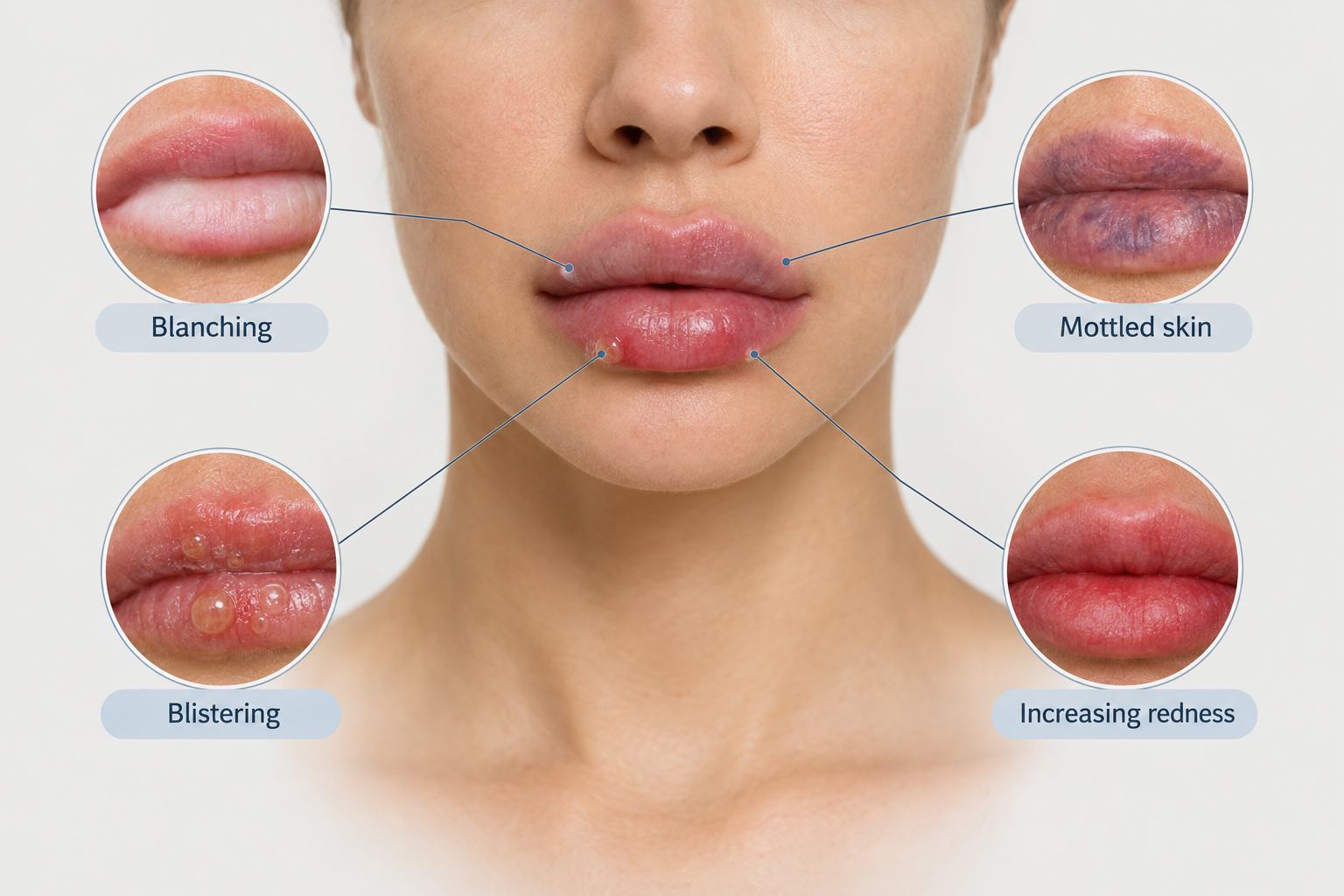
Infection is another potential complication, though it is uncommon when treatment is performed in a clinical setting with appropriate hygiene standards. Signs of infection include increasing redness, warmth, swelling that worsens rather than improves after the first few days, pus or discharge, and fever. These symptoms require prompt medical assessment.
Delayed hypersensitivity reactions to hyaluronic acid filler are rare but can occur. They may present as persistent swelling, firmness, or nodule formation weeks or months after treatment. These reactions require assessment by a practitioner experienced in managing filler complications.
Patients should also be aware that cold sore outbreaks can be triggered by lip filler treatment in individuals who carry the herpes simplex virus. Those with a history of cold sores are often advised to discuss antiviral prophylaxis with their practitioner before undergoing lip filler treatment.
Who May Not Be Suitable for Lip Filler Treatment
Lip filler treatment is not appropriate for everyone, and a thorough consultation with a qualified practitioner is essential before proceeding. Factors that may affect suitability include pregnancy and breastfeeding, active infection or inflammation in or around the lips, a history of severe allergic reactions, certain autoimmune conditions, and the use of blood-thinning medications that cannot be safely paused. Patients with unrealistic expectations about the degree of change achievable or the permanence of results may also benefit from further discussion before treatment.
Lip anatomy varies considerably between individuals, and the achievable result depends on the patient's natural lip shape, volume, and tissue characteristics. A practitioner experienced in lip filler treatment will assess these factors during consultation and advise on what is realistically achievable for each individual patient.
Frequently Asked Questions
How long does swelling last after lip filler?
Swelling typically peaks within the first 24 to 72 hours and then gradually reduces over the following one to two weeks. Most patients find that the majority of swelling has resolved by day seven, though some residual puffiness may persist into the second week. Final results are generally visible at two to four weeks.
Is it normal for lips to feel hard after filler?
Yes, firmness or hardness in the lips during the first one to two weeks after treatment is common and usually temporary. It occurs as the filler settles and integrates with the surrounding tissue. The lips typically soften significantly as healing progresses. If firmness persists beyond two to three weeks, a review with your practitioner is advisable.
Can I wear lipstick after lip filler?
Most practitioners advise avoiding lipstick and lip products for at least 24 hours after treatment to reduce the risk of introducing bacteria to injection sites. Once the injection points have fully closed and any tenderness has resolved, lip products can generally be used. Confirm the specific timeline with your own practitioner.
Why do my lips look uneven after filler?
Asymmetry in the first one to two weeks after lip filler is very common and is usually caused by uneven swelling rather than uneven filler placement. Because swelling does not always resolve at the same rate on both sides, one side may temporarily appear fuller or higher. In most cases, this resolves as healing progresses. If asymmetry persists at the two to four week review, discuss it with your practitioner.
When can I exercise after lip filler?
Most practitioners recommend avoiding strenuous exercise for at least 24 to 48 hours after lip filler treatment. Increased blood flow from exercise can worsen swelling and bruising in the early healing phase. Light activity is generally acceptable sooner, but confirm the specific guidance with your practitioner based on your individual treatment.
Can lip filler be dissolved if I am unhappy with the result?
Hyaluronic acid lip filler can be dissolved using an enzyme called hyaluronidase. This breaks down the hyaluronic acid and allows the lips to return toward their pre-treatment appearance. Dissolution is also used in the management of certain complications. It is important to wait until the two to four week mark before assessing the final result and deciding whether dissolution or adjustment is needed.
How soon can I have more lip filler added?
Practitioners generally advise waiting at least four weeks between lip filler sessions. This allows swelling to fully resolve and the true result to be assessed before any additional volume is considered. Adding filler before the previous treatment has settled makes it difficult to judge the outcome accurately and may increase the risk of overfilling.
Planning Your Lip Filler Recovery Realistically
Understanding the lip filler healing process in advance makes a meaningful difference to the patient experience. Patients who know that significant swelling in the first 72 hours is expected, that asymmetry during the first week is usually temporary, and that final results take two to four weeks to appear are far better placed to manage the recovery period calmly and make informed decisions about whether any follow-up is needed.
If you are considering lip filler treatment, timing your appointment with the recovery period in mind is practical. Scheduling treatment at least two weeks before an important event allows time for swelling and bruising to resolve. Discussing your goals, medical history, and any concerns thoroughly with a qualified and experienced practitioner before treatment is the most important step in achieving a result you are satisfied with and a recovery that proceeds as smoothly as possible. A practitioner who takes time to explain the healing stages, provide written aftercare guidance, and offer a follow-up review appointment is demonstrating the standard of care that responsible lip filler treatment requires.
