
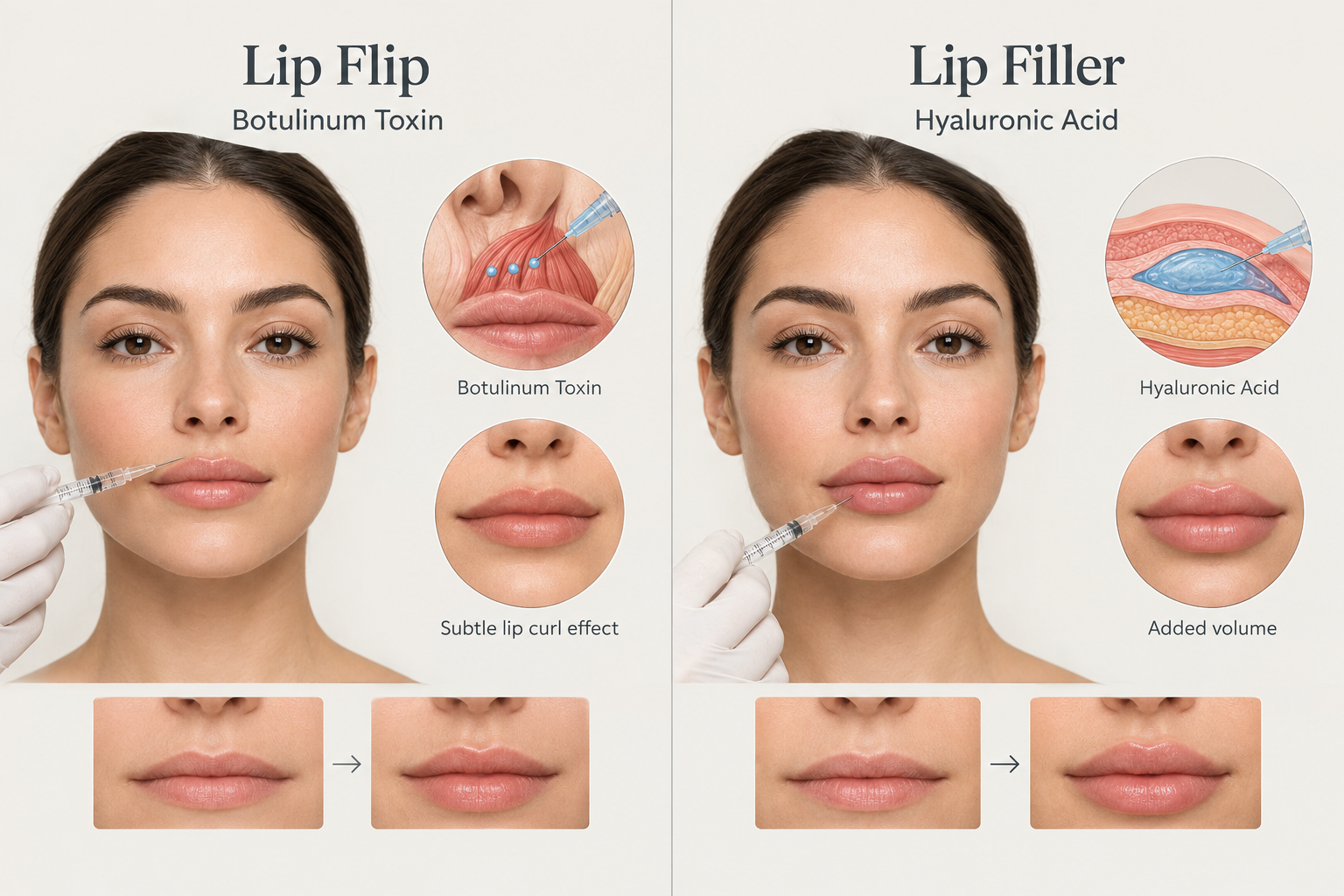

Lip flip and lip filler are two of the most commonly requested lip treatments, yet they work in entirely different ways and suit different goals. Understanding the distinction before your consultation can help you ask better questions, set realistic expectations, and avoid choosing a treatment based on a misunderstanding of what it actually does.
Quick Comparison
| Characteristic | Lip Flip | Lip Filler |
|---|---|---|
| Treatment type | Botulinum toxin injection | Dermal filler injection |
| Active ingredient | Botulinum toxin type A (e.g. Botox, Dysport) | Hyaluronic acid (most commonly) |
| Mechanism | Relaxes the orbicularis oris muscle to allow the upper lip to roll outward | Adds physical volume and shape to the lips |
| Primary goal | Subtle definition, reduced gummy smile, natural-looking upper lip curl | Increased volume, improved shape, enhanced border definition |
| Volume added | None — appearance of fullness only | Yes — measurable volume increase |
| Onset | 3–7 days, full effect at approximately 2 weeks | Immediate, with final result visible after swelling settles (1–2 weeks) |
| Duration | Approximately 2–4 months | Approximately 6–12 months (varies by product and individual) |
| Downtime | Minimal; small injection marks may be visible briefly | Mild to moderate swelling and bruising for several days |
| Reversibility | Wears off naturally; not reversible with an antidote | Hyaluronic acid filler can be dissolved with hyaluronidase |
| Suitable for | Patients wanting subtle enhancement, gummy smile reduction, or natural definition | Patients wanting noticeable volume, shape correction, or border definition |
| Not suitable for | Those wanting significant volume; pregnancy; certain neuromuscular conditions | Active infection; certain autoimmune conditions; unrealistic volume expectations |
| Can be combined? | Yes — often used alongside lip filler | Yes — often used alongside a lip flip |
What Is a Lip Flip?
A lip flip is a botulinum toxin treatment that targets the orbicularis oris, the circular muscle that surrounds the mouth. A small amount of botulinum toxin — the same active ingredient found in brands such as Botox or Dysport — is injected into the upper lip border, typically at the cupid's bow and the corners of the mouth. By partially relaxing the muscle fibres that pull the upper lip inward and downward, the treatment allows the lip to roll slightly outward, creating the appearance of a fuller, more defined upper lip without adding any physical volume.
The lip flip does not enlarge the lip. Instead, it changes the resting position of the upper lip so that more of the pink lip tissue (the vermilion) is visible. This can make the upper lip appear more prominent, particularly when the patient is smiling or speaking. The effect is subtle by design, and patients who want a dramatic change in lip size are unlikely to achieve that goal with a lip flip alone.
Because botulinum toxin temporarily reduces muscle activity, the lip flip effect gradually wears off as the toxin is metabolised. Most patients find the result lasts approximately two to four months, though individual response varies. Repeat treatment is required to maintain the effect.
What Is Lip Filler?
Lip filler refers to the injection of a dermal filler substance directly into the lip tissue to add volume, reshape the lip border, or improve symmetry. The majority of lip fillers used in aesthetic practice today contain hyaluronic acid, a naturally occurring substance found in connective tissue and skin. Hyaluronic acid fillers attract and retain water molecules, which is what creates the volumising effect. Common hyaluronic acid filler brands used for lips include Juvederm, Restylane, and Belotero, among others, though product availability varies by country and clinic.
Lip filler can be used to increase the overall size of the lips, define the vermilion border, enhance the cupid's bow, add projection to the body of the lip, or improve asymmetry between the upper and lower lip. The degree of change depends on the volume of filler used, the product chosen, the injection technique, and the patient's existing lip anatomy. Results are visible almost immediately, though swelling in the first few days can make the lips appear larger than the final outcome. Most patients see their settled result within one to two weeks.
Hyaluronic acid lip filler is reversible. If a patient is unhappy with the result, or if a complication occurs, an enzyme called hyaluronidase can be injected to dissolve the filler. This is an important safety consideration and one reason hyaluronic acid fillers remain the most widely used option for lip augmentation in aesthetic medicine.
How the Two Treatments Differ in Practice
The most important practical difference between a lip flip and lip filler is what each treatment actually changes. A lip flip alters muscle behaviour to reposition the lip; lip filler physically adds substance to the lip tissue. This distinction matters when setting expectations.
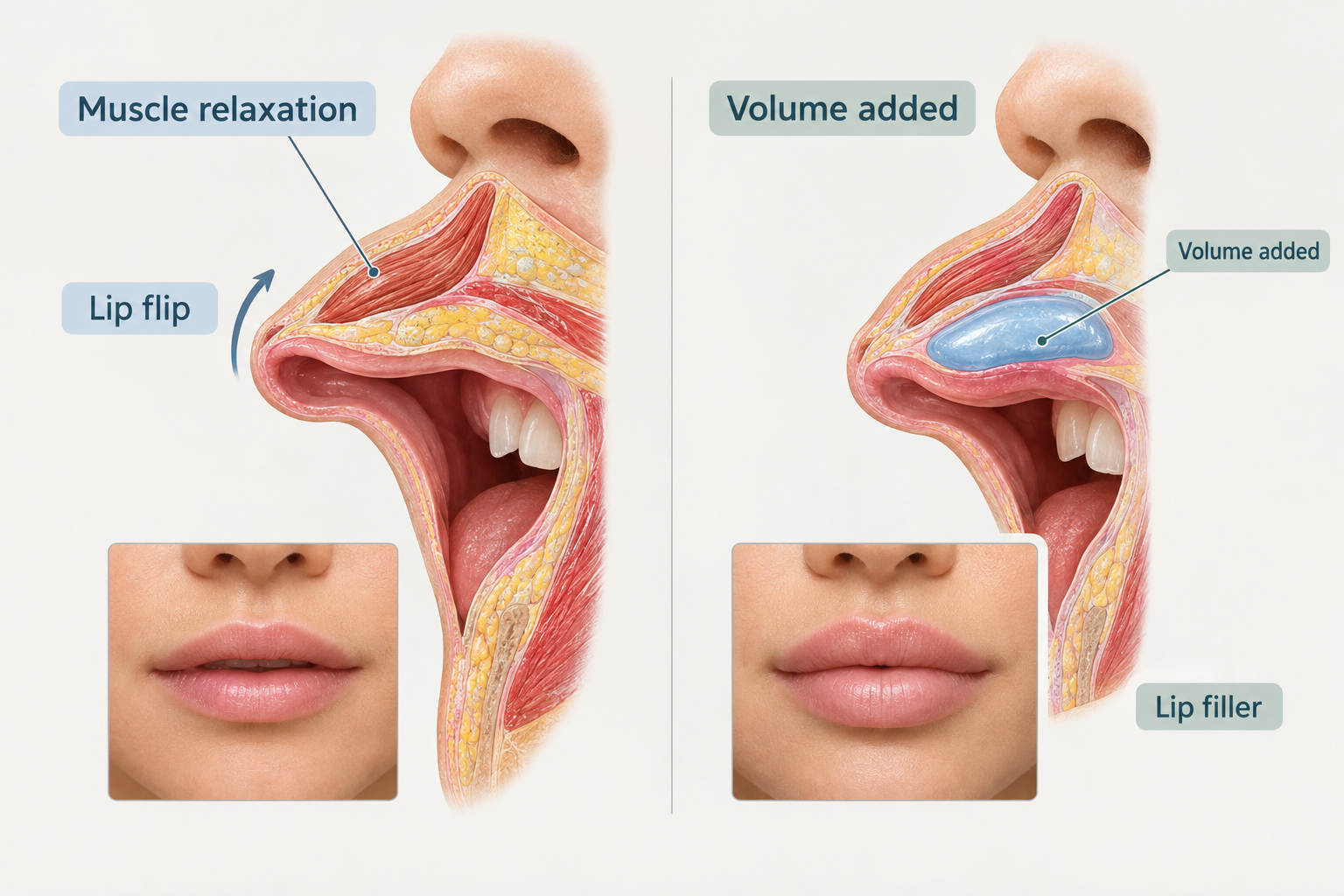
A patient with thin lips who wants noticeably fuller lips will not achieve that result with a lip flip. The lip flip may make the upper lip appear slightly more prominent, but it will not increase the overall size of the lips in a way that is visible at rest or in photographs. Lip filler, by contrast, can produce a measurable and visible increase in lip volume that is apparent in photographs and at conversational distance.
Conversely, a patient who wants a very natural, subtle change — or who is concerned about looking overdone — may find that lip filler, even in a conservative amount, produces more change than they wanted. In this situation, a lip flip may be a more appropriate starting point, particularly for patients who have never had a lip treatment before.
The two treatments are not mutually exclusive. Many practitioners combine a lip flip with a small amount of lip filler to achieve both definition and volume simultaneously. The lip flip can help the filler appear more natural by softening the upper lip border, and the filler provides the volume that the lip flip alone cannot deliver.
Treatment Experience and Downtime
What to Expect During a Lip Flip Appointment
A lip flip appointment is typically brief. After a consultation to confirm suitability and discuss the patient's goals, a topical numbing cream may be applied to the upper lip area. The botulinum toxin is then injected at several points along the upper lip border using a fine needle. The injection process itself usually takes only a few minutes. Patients may notice small marks or minor swelling at the injection sites immediately afterwards, but these generally resolve within a few hours. Most people return to normal activities the same day.
The lip flip result does not appear immediately. Botulinum toxin takes several days to begin relaxing the targeted muscle, and the full effect is usually visible at approximately two weeks. Patients should be aware that during the first week or two, they may notice some temporary functional changes, such as slight difficulty forming certain sounds or using a straw, as the upper lip muscle adjusts. These effects are temporary and resolve as the muscle adapts or as the toxin wears off.
What to Expect During a Lip Filler Appointment
Lip filler appointments typically begin with a consultation to discuss the patient's goals, review their medical history, and assess their lip anatomy. A topical anaesthetic cream is usually applied before treatment, and many hyaluronic acid lip fillers also contain lidocaine, a local anaesthetic, within the formulation to improve comfort during injection. The filler is injected using a fine needle or a blunt-tipped cannula, depending on the practitioner's technique and the areas being treated.
Swelling after lip filler is common and expected. The lips may appear significantly swollen in the first 24 to 48 hours, which can be alarming for patients who are not prepared for it. Bruising is also possible, particularly around the injection sites. Most swelling resolves within three to five days, though some residual swelling may persist for up to two weeks. Patients are generally advised to avoid strenuous exercise, alcohol, and excessive heat for 24 to 48 hours after treatment.
How Long Results Last
Lip flip results typically last between two and four months. Because botulinum toxin is metabolised by the body over time, the muscle gradually regains its normal activity and the lip returns to its pre-treatment position. Patients who want to maintain the effect will need repeat treatment at regular intervals. Some patients find that with consistent treatment over time, they may be able to extend the interval between appointments slightly, though this varies between individuals.
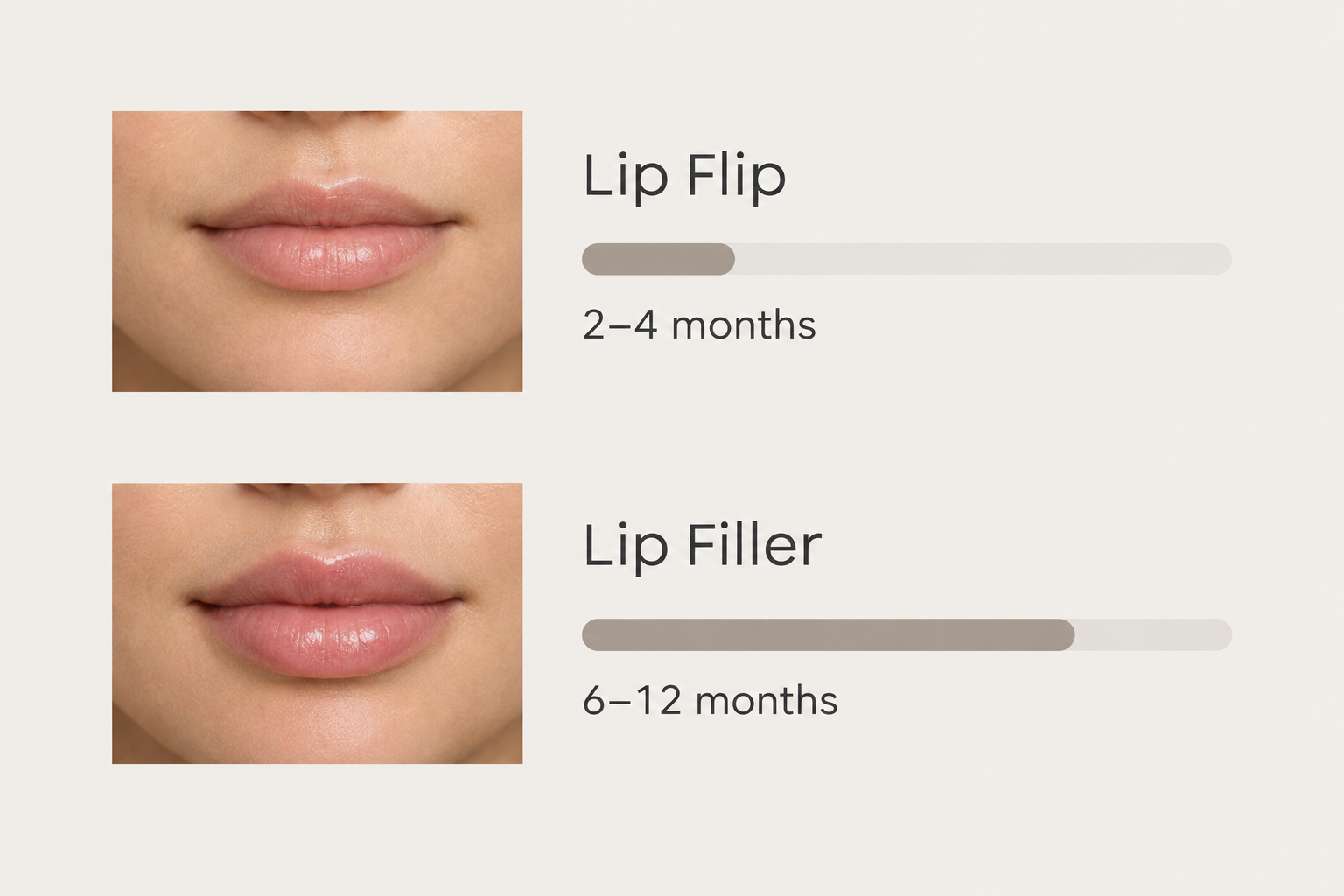
Lip filler longevity depends on several factors, including the specific product used, the volume injected, the patient's metabolism, and the area treated. Most hyaluronic acid lip fillers last approximately six to twelve months in the lips, though some patients metabolise filler more quickly and may notice the result fading sooner. The lips are a high-movement area, which means filler tends to break down faster there than in less mobile areas of the face. Patients should discuss realistic longevity expectations with their practitioner before treatment.
Risks and Side Effects
Lip Flip Risks
The lip flip carries the general risks associated with botulinum toxin injections. Common side effects include temporary redness, swelling, or bruising at the injection sites. Because the orbicularis oris muscle is involved in many fine motor functions of the mouth, temporary functional changes are possible, including difficulty with certain speech sounds, using a straw, or playing a wind instrument. These effects are temporary and resolve as the toxin wears off, but patients should be aware of them before treatment, particularly if their work or lifestyle involves precise lip movements.
Botulinum toxin injections around the mouth require precise placement. If the toxin spreads beyond the intended area, it may cause asymmetry or unintended muscle relaxation. Choosing a qualified and experienced practitioner significantly reduces this risk. Botulinum toxin is not suitable during pregnancy or breastfeeding, and patients with certain neuromuscular conditions should discuss their medical history carefully before treatment.
Lip Filler Risks
Lip filler carries a broader range of potential risks than a lip flip, reflecting the fact that a physical substance is being introduced into the tissue. Common side effects include swelling, bruising, tenderness, and temporary asymmetry. Less common but more serious risks include infection, nodule formation, and filler migration, where the product moves away from the intended area over time.
The most serious risk associated with any dermal filler injection is vascular occlusion, where filler inadvertently enters or compresses a blood vessel, potentially compromising blood supply to the surrounding tissue. Although rare, this complication can have significant consequences if not recognised and treated promptly. This is one of the most important reasons to choose a practitioner with appropriate medical training, a thorough understanding of facial anatomy, and access to hyaluronidase for emergency use. Patients should ask their practitioner about their training, their complication management protocol, and whether hyaluronidase is available at the clinic before proceeding with lip filler treatment.
Overfilling is another consideration. Repeated lip filler treatments over time, or the use of excessive volumes in a single session, can lead to an unnatural appearance or changes in lip tissue texture. A conservative, staged approach is generally considered safer and more aesthetically predictable than attempting to achieve a dramatic result in a single session.
Who May Be Suitable for Each Treatment
A lip flip may be worth discussing with a practitioner if you want a subtle, natural-looking enhancement to the upper lip, if you are concerned about a gummy smile (where a significant amount of gum is visible when smiling), if you have never had a lip treatment before and want to start conservatively, or if you want to complement an existing lip filler result with additional definition. It may also appeal to patients who prefer a treatment with a shorter duration, as the temporary nature of botulinum toxin means any result — or any unwanted effect — will resolve within a few months.
Lip filler may be more appropriate if you want a visible increase in lip volume, if you want to improve the shape or symmetry of your lips, if you want to define the vermilion border or enhance the cupid's bow, or if you want a result that lasts longer than a botulinum toxin treatment. Lip filler is also the more established option for patients who want a result that is clearly visible in photographs or at a distance.
Neither treatment is suitable for everyone. Patients who are pregnant or breastfeeding should avoid both treatments. Active infection in or around the treatment area is a contraindication for both. Patients with a history of cold sores (herpes simplex) should inform their practitioner before lip filler treatment, as the procedure can trigger an outbreak; antiviral prophylaxis may be recommended. Patients with certain autoimmune conditions, bleeding disorders, or who are taking blood-thinning medications should discuss their medical history in detail before any injectable treatment.
Cost Considerations
Lip flip treatment generally costs less than lip filler, reflecting the smaller amount of product used and the shorter appointment time. However, because the lip flip requires more frequent repeat treatments to maintain the result, the cumulative cost over twelve months may be comparable to or greater than a single lip filler treatment. Patients should consider the total cost of maintenance, not just the upfront price of a single session, when comparing the two options financially.
Lip filler pricing varies depending on the volume of product used, the brand of filler, the practitioner's experience, and the clinic's location. Patients should be cautious of unusually low prices for either treatment, as these may reflect the use of lower-quality products, inadequately trained practitioners, or compromised safety standards. The cost of managing a complication is always greater than the cost of choosing a qualified practitioner from the outset.
Alternatives to Consider
For patients who are uncertain about injectables, or who want to explore non-injectable options, there are alternatives worth discussing with a practitioner. Lip liner and overlining techniques can create the appearance of a fuller lip without any treatment. Certain skincare ingredients, such as peptides, may support lip hydration and texture over time, though they will not produce the structural changes that injectables can achieve.
For patients interested in longer-lasting lip augmentation, surgical options such as a lip lift procedure exist, though these involve a different risk profile, recovery period, and cost. A lip lift surgically shortens the distance between the nose and the upper lip, increasing the visible height of the upper lip in a way that is permanent. This is a surgical procedure and is not comparable to either a lip flip or lip filler in terms of commitment or recovery.
Patients who are primarily concerned about lip lines or perioral wrinkles rather than lip volume may find that skin resurfacing treatments, such as laser resurfacing or chemical peels, or botulinum toxin treatment for perioral lines, are more relevant to their concern than lip augmentation.
Frequently Asked Questions
Can I have a lip flip and lip filler at the same time?
Yes, many practitioners offer both treatments in the same appointment. A lip flip can complement lip filler by softening the upper lip border and helping the filler result appear more natural. Whether combining both is appropriate for you depends on your goals and anatomy, which your practitioner can assess during a consultation.
Will a lip flip make my lips look bigger?
A lip flip does not add volume to the lips. It changes the resting position of the upper lip so that more of the pink lip tissue is visible, which can create the appearance of a slightly fuller upper lip. If you want a noticeable increase in lip size, lip filler is the more appropriate treatment.
Does a lip flip affect how I speak or eat?
Some patients notice temporary changes in their ability to form certain sounds, use a straw, or make precise lip movements after a lip flip. These effects are temporary and typically resolve within a few weeks as the muscle adapts. They are more likely to be noticeable in patients whose work or activities involve precise lip movements, such as musicians who play wind instruments.
How soon can I wear lipstick after lip filler?
Most practitioners advise waiting at least 24 hours before applying makeup to the lips after filler treatment, to reduce the risk of introducing bacteria to the injection sites. Your practitioner will give you specific aftercare instructions based on your treatment.
Can lip filler be dissolved if I don't like the result?
Hyaluronic acid lip filler can be dissolved using an enzyme called hyaluronidase. This is one of the key safety advantages of hyaluronic acid fillers over non-reversible alternatives. Dissolution is not always complete in a single session, and the process should be carried out by a qualified practitioner.
Is a lip flip painful?
Most patients describe the lip flip as mildly uncomfortable rather than painful. A topical numbing cream is usually applied beforehand to reduce discomfort. The injections are made with a very fine needle and the procedure is brief.
How do I know which treatment is right for me?
The right treatment depends on your specific goals, your existing lip anatomy, your medical history, and your tolerance for downtime and risk. A qualified aesthetic practitioner can assess your lips, discuss your expectations, and recommend the most appropriate option — or a combination — based on your individual circumstances.
Lip Flip or Lip Filler: Matching the Treatment to Your Goal
The choice between a lip flip and lip filler is not a question of which treatment is universally better — it is a question of which treatment is better matched to what you actually want to achieve. A lip flip is a subtle, lower-commitment option that works by repositioning the upper lip rather than adding volume. It suits patients who want a natural-looking enhancement, a reduction in gummy smile appearance, or a conservative starting point. Lip filler is the appropriate choice when visible volume, shape correction, or border definition is the goal, and it offers longer-lasting results with the added reassurance of reversibility when hyaluronic acid products are used.
Both treatments carry risks that should be discussed openly with a qualified practitioner before proceeding. Neither is suitable for every patient, and neither guarantees a specific outcome. If you are considering either treatment, a thorough consultation with an experienced aesthetic practitioner — one who can assess your anatomy, understand your goals, and explain the realistic range of outcomes — is the most important step you can take before making a decision.
