

One of the most common concerns among people considering a brachioplasty is the scar. An arm lift can dramatically improve the contour of the upper arm by removing excess skin and underlying tissue, but it does leave a permanent mark. Understanding where that scar sits, how it evolves over time, and what you can do to support the best possible outcome is essential before making a surgical decision. This guide walks through scar placement options, the full healing timeline, risk factors for abnormal scarring, and the treatments available if a scar does not mature as hoped.
Key Takeaways
- A brachioplasty scar is permanent, but it typically fades from a raised, red line to a flatter, paler mark over 12 to 24 months as scar maturation progresses.
- Scar placement — most commonly along the medial bicipital groove on the inner arm — significantly affects how visible the scar is in everyday positions.
- Factors such as skin tone, genetics, wound tension, and smoking can influence whether a scar heals smoothly or develops into a hypertrophic or keloid scar.
- Silicone scar sheets, consistent sun protection, compression garment use, and scar massage are the most evidence-supported self-care strategies during healing.
- Advanced treatments including steroid injections, fractional laser, and scar revision surgery are available if a scar does not respond to conservative care, though revision is generally not considered until at least 12 months post-operatively.
Where Is the Arm Lift Scar Placed?
Scar placement is one of the most consequential decisions in brachioplasty planning, and it is worth understanding the options before your consultation. The goal is to position the incision where it will be least visible during normal daily activities while still allowing the surgeon to remove the necessary amount of skin laxity.
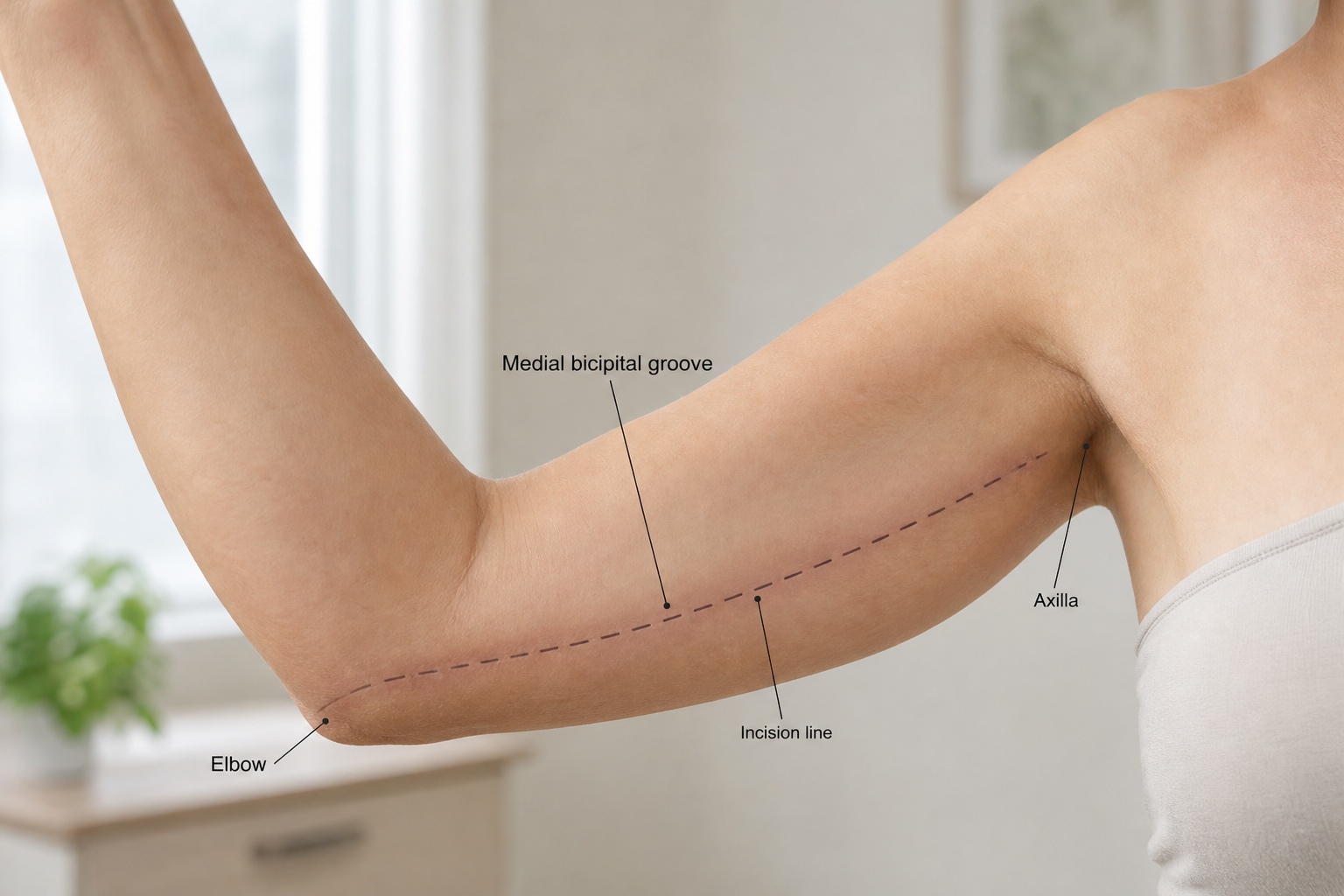
The most widely used approach places the inner arm incision along the medial bicipital groove — a natural anatomical channel that runs along the underside of the upper arm from the armpit toward the elbow. When the arm rests at the side of the body, this groove faces inward and downward, making the resulting scar relatively concealed in most social situations. The scar typically runs from the axilla (armpit) to near the elbow, though its exact length depends on how much excess skin needs to be addressed.
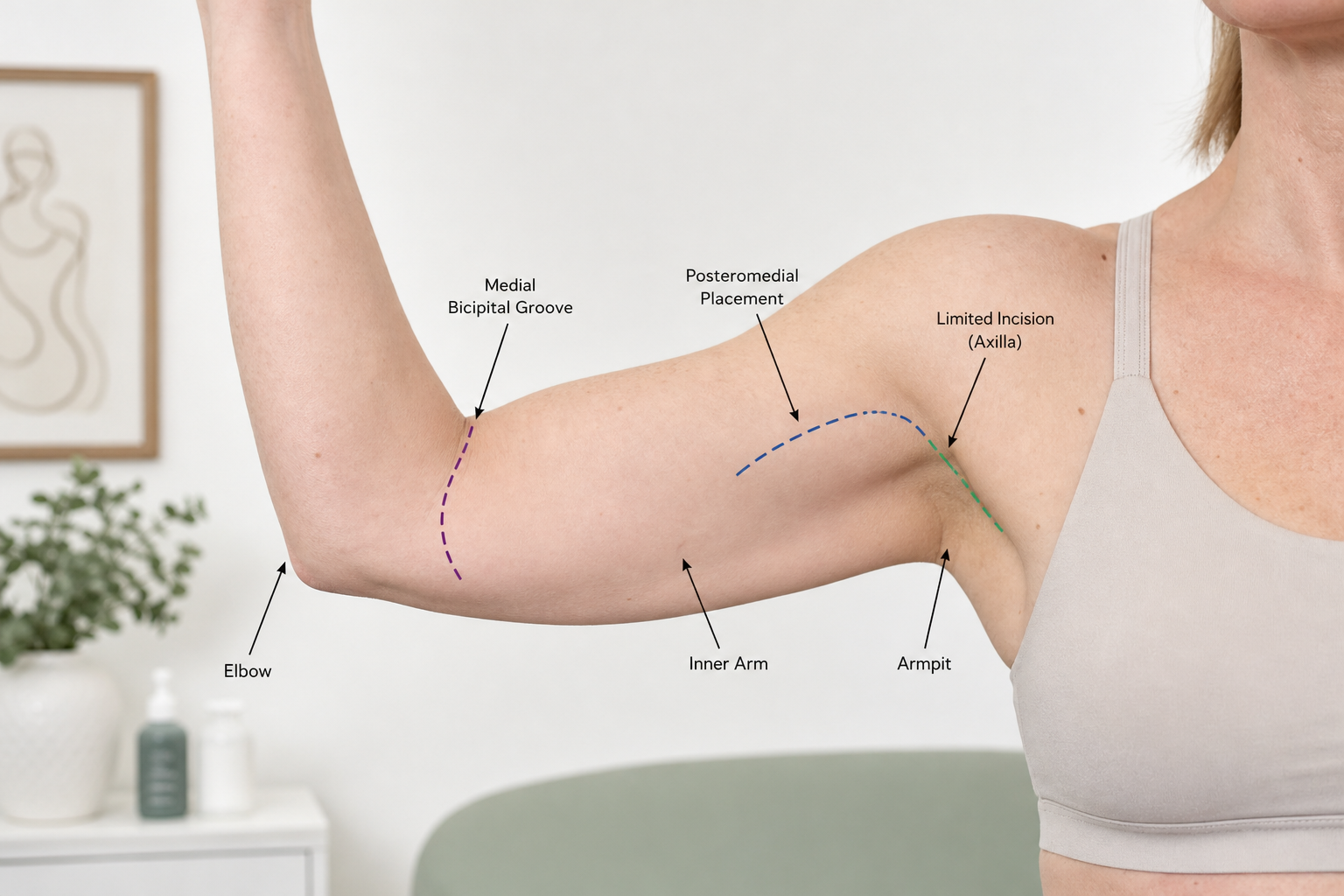
An alternative is posteromedial scar placement, sometimes called the brachial sulcus or posterior approach. Here the incision is shifted slightly toward the back of the arm. Proponents argue this position hides the scar more effectively when the arm is raised — for example, when wearing sleeveless clothing — because the scar falls behind the arm rather than along its visible inner surface. However, some surgeons note that the posterior position can be more visible when the arm hangs naturally. Survey data published in the Annals of Plastic Surgery found that plastic surgeons are divided on the optimal placement, reflecting the fact that no single position is universally superior; the best choice depends on the individual patient’s anatomy, the degree of skin laxity, and how they typically hold and use their arms.
For patients with only mild to moderate skin laxity, a limited-incision brachioplasty (sometimes called a mini arm lift) may be appropriate. This technique uses a shorter incision confined largely to the armpit crease, resulting in a less extensive scar. The trade-off is that it addresses a smaller area of excess skin, so it is not suitable for patients with significant loose skin extending toward the elbow. An extended brachioplasty, by contrast, carries the incision onto the lateral chest wall to address skin laxity that extends beyond the upper arm, producing a longer scar but a more comprehensive contour improvement.
What Does an Arm Lift Scar Look Like? A Healing Timeline
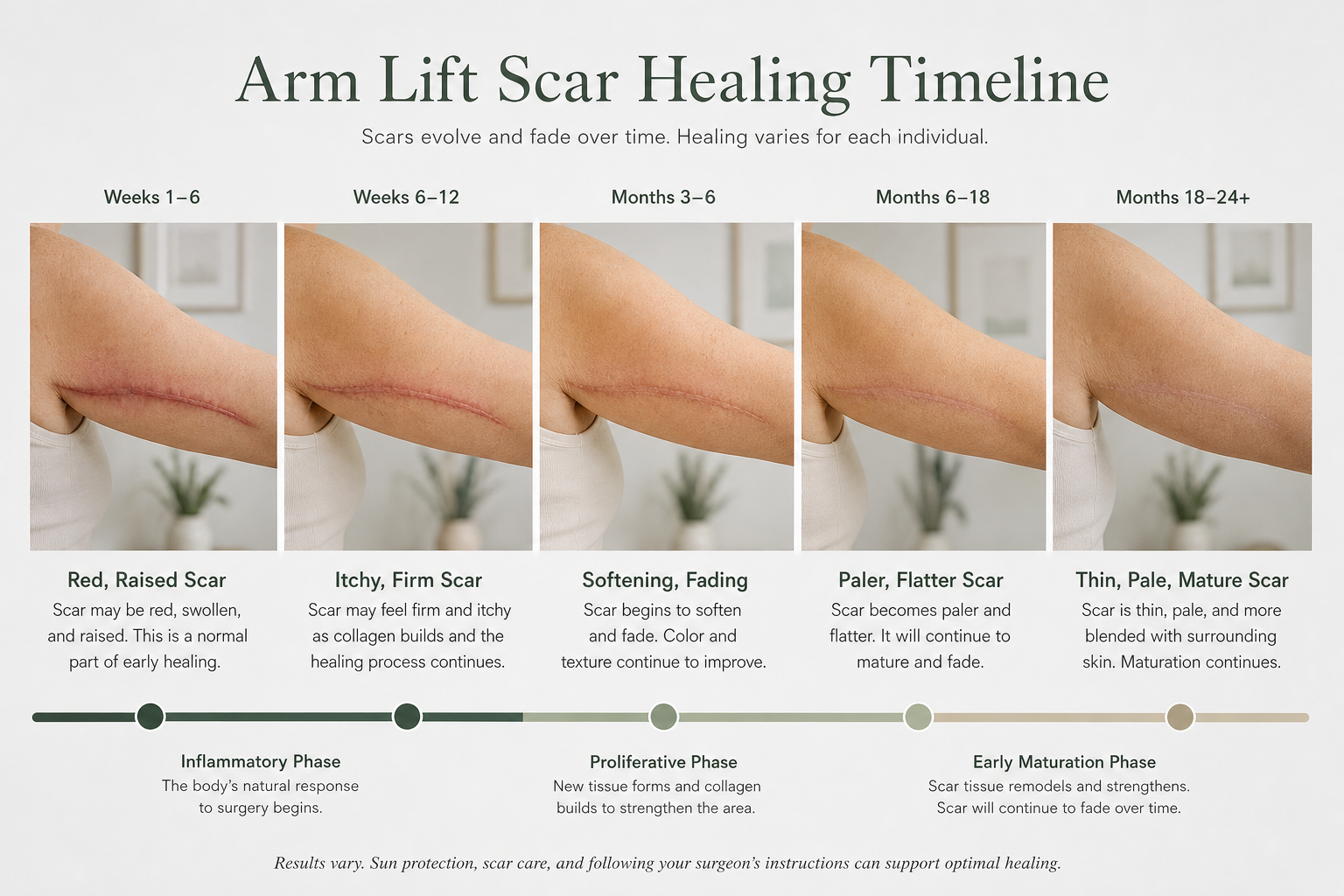
The appearance of a brachioplasty scar changes substantially over the first one to two years. Most patients are surprised by how different the scar looks at six weeks compared to twelve months. Understanding this progression helps set realistic expectations and reduces anxiety during the early stages when the scar may look its most prominent.
Weeks 1–6: The Inflammatory Phase
Immediately after surgery, the incision is closed with sutures and covered with dressings. During the first two weeks, the wound is actively healing and the scar line will appear red, slightly raised, and firm. Some swelling and bruising around the incision is normal. The arm lift scar at this stage often looks more dramatic than it will at any later point, which can be alarming for patients who have not been prepared for it. Numbness or a tingling sensation along the inner arm is also common during this phase, reflecting temporary disruption to small sensory nerves near the incision; this usually resolves gradually over several months as nerve regeneration occurs.
Weeks 6–12: The Proliferative Phase
Between six and twelve weeks, the body is actively producing collagen to reinforce the healing tissue. The scar may feel itchy, tight, or slightly hard during this period — sensations that reflect the underlying collagen remodeling process rather than a sign that something is wrong. The scar line often appears at its most raised and darkest pink or red during this phase. Patients sometimes become concerned at the six-week mark when the scar looks worse than they expected, but this is a normal part of the healing trajectory.
Months 3–6: Early Maturation
From around three months onward, the scar typically begins to soften and flatten as collagen fibers reorganize into a more structured pattern. The redness starts to fade, and the scar becomes less raised. This is usually when scar care interventions such as silicone gel or silicone scar sheets have the greatest impact, as the tissue is still actively remodeling and more responsive to external support.
Months 6–18: Progressive Fading
The scar fading timeline accelerates between six and eighteen months. Most patients notice a significant improvement in color — from pink or red toward a paler, skin-toned appearance — and the scar continues to flatten and soften. By twelve months, many patients describe the scar as a thin, pale line that is visible on close inspection but not immediately obvious at a normal conversational distance. Before and after photos taken at the one-year mark typically show a much more favorable result than photos taken at six weeks.
Months 18–24 and Beyond: Mature Scar
A mature scar is generally considered to be one that has completed the remodeling process, usually between 18 and 24 months after surgery. At this stage, the scar should be flat, pale, and stable. For most patients, the final appearance is a fine line along the inner arm that is easily concealed by clothing and not visible when the arm hangs naturally. It is important to understand that the scar does not disappear — it becomes less noticeable, but it remains a permanent feature of the arm’s appearance.
| Stage | Approximate Timeframe | Typical Scar Appearance |
|---|---|---|
| Inflammatory | Weeks 1–6 | Red, raised, firm, swollen |
| Proliferative | Weeks 6–12 | Itchy, tight, darkest pink/red, most raised |
| Early maturation | Months 3–6 | Softening, beginning to flatten, fading |
| Progressive fading | Months 6–18 | Paler, flatter, less noticeable |
| Mature scar | Months 18–24+ | Thin, pale, stable line |
Factors That Affect Arm Lift Scar Outcomes
Not every patient heals the same way, and several factors influence whether a brachioplasty scar matures into a fine pale line or develops complications such as widening, thickening, or abnormal pigmentation.
Skin Tone and Genetic Predisposition
Patients with darker skin tones — including those of African, Asian, Hispanic, or Middle Eastern heritage — have a statistically higher risk of developing a hypertrophic scar (a raised, firm scar that stays within the boundaries of the original incision) or a keloid scar (a scar that grows beyond the incision margins). This is not a reason to avoid surgery, but it is an important factor to discuss honestly with your surgeon during the consultation. A personal or family history of keloid scarring is one of the strongest predictors of keloid formation after any surgical procedure. Clinical estimates suggest hypertrophic scars occur in approximately 5 to 15 percent of brachioplasty cases, while true keloids are less common, occurring in fewer than 5 percent of patients — though rates vary depending on the population studied and the surgical technique used.
Wound Tension
The amount of tension placed on the incision during closure is a significant determinant of scar quality. When a large volume of skin is removed, the wound edges are brought together under greater tension, which increases the risk of scar widening over time. Experienced surgeons use layered closure techniques and place sutures at deeper tissue levels to reduce surface tension, but some degree of tension is unavoidable in a full arm lift. This is one reason why patients with very significant skin laxity may have wider or more visible scars than those who undergo a limited-incision brachioplasty.
Smoking and Nicotine
Nicotine impairs blood flow to healing tissue by causing vasoconstriction, which reduces the oxygen and nutrients available to the wound. Smoking is associated with delayed wound healing, a higher risk of wound dehiscence (the wound edges separating), and poorer scar outcomes. Most surgeons require patients to stop smoking for a minimum of four to six weeks before and after surgery. This is not a precautionary formality — it has a meaningful impact on how well the incision heals.
Nutrition and General Health
Adequate nutrition supports tissue repair. Vitamin C is required for collagen synthesis, and zinc plays a role in wound healing and immune function. Patients who are nutritionally depleted — which can be relevant in the post-bariatric or massive weight loss context, where brachioplasty is commonly performed — may benefit from nutritional assessment before surgery. Staying well hydrated and getting sufficient sleep during recovery also supports the healing process, though these factors are rarely discussed in patient-facing resources.
Infection and Wound Complications
Any wound infection or episode of wound dehiscence disrupts the normal healing sequence and significantly increases the risk of a poor scar outcome. Patients should follow their surgeon’s wound care instructions carefully and contact their surgical team promptly if they notice increasing redness, warmth, discharge, or separation of the wound edges.
How to Support the Best Possible Scar Outcome
While no intervention can guarantee a perfect scar, several evidence-supported strategies can meaningfully improve the final appearance of a brachioplasty scar when used consistently during the healing period.
Silicone Therapy
Silicone is the most evidence-supported non-surgical intervention for scar management. Both silicone scar sheets (thin adhesive strips worn over the scar) and silicone gel (applied topically and allowed to dry) have been shown in clinical studies to reduce scar thickness, redness, and firmness when used consistently. Silicone therapy is generally started once the wound is fully closed — typically around four to six weeks post-operatively — and should be continued for at least three to six months for meaningful benefit. Consistency is key; wearing silicone sheets for only a few hours a day is unlikely to produce the same results as the recommended eight or more hours of daily use.
Sun Protection
Immature scars are highly susceptible to hyperpigmentation when exposed to ultraviolet light. Applying a broad-spectrum sunscreen of SPF 30 or higher to the scar — or keeping it covered with clothing — is important for at least 12 months after surgery. Sun exposure during the early healing phase can cause the scar to darken permanently, making it more visible in the long term. This is particularly relevant for patients with darker skin tones, who are already at higher risk of pigmentation changes.
Compression Garment Use
Most surgeons recommend wearing a compression garment or compression sleeve over the upper arms for several weeks after brachioplasty. Compression helps reduce swelling, supports the healing tissue, and may help flatten the scar during the early proliferative phase. Follow your surgeon’s specific guidance on how long to wear the garment and when it can be removed.
Scar Massage
Gentle massage of the healed scar — using a moisturizer or oil — can help soften the underlying tissue and improve scar pliability over time. Scar massage is generally introduced once the wound is fully closed and any surface crusting has resolved, usually from around six weeks onward. The technique involves applying firm but gentle circular or linear pressure along the scar for several minutes each day. It should not be painful; if it is, the tissue may not yet be ready.
Avoiding Overhead Lifting and Excessive Arm Movement
During the early weeks of recovery, activities that stretch the inner arm — such as reaching overhead or lifting heavy objects — place tension on the healing incision and can contribute to scar widening. Your surgeon will provide specific activity restrictions; following these carefully during the first six to eight weeks is important for both wound integrity and scar quality.
When Scars Do Not Heal as Expected
Even with careful surgical technique and diligent aftercare, some patients develop scars that are wider, thicker, or more pigmented than anticipated. Understanding the options available — and when to seek them — is an important part of realistic expectations.
Hypertrophic and Keloid Scars
A hypertrophic scar remains within the boundaries of the original incision but is raised, firm, and often red or pink for longer than a typical scar. Keloid scars extend beyond the incision margins and can continue to grow over time. Both types are more common in patients with the keloid risk factors described above. First-line treatment for hypertrophic scars typically involves intralesional corticosteroid injections, which can flatten and soften the scar over a series of treatments. Keloid scars may require a combination of steroid injections, silicone therapy, and in some cases laser treatment or surgical excision followed by adjuvant therapy to reduce the risk of recurrence.
Advanced Scar Treatments
For scars that do not respond adequately to conservative management, several clinic-based treatments may help. Fractional CO₂ laser resurfacing and other forms of laser therapy can improve scar texture, color, and surface irregularity by stimulating controlled collagen remodeling in the scar tissue. Microneedling (skin needling) works through a similar mechanism and may be a useful option for patients who are not suitable candidates for laser treatment. Broadband light (BBL) therapy can address persistent redness in a maturing scar. Emerging research, including ongoing clinical trials examining laser-based scar remodeling using validated outcome tools such as the SCAR-Q and POSAS scales, continues to refine our understanding of which interventions work best for which scar types.
Scar Revision Surgery
In cases where a scar is significantly wide, raised, or poorly positioned despite conservative and clinic-based treatment, scar revision surgery may be considered. This involves surgically excising the problematic scar and re-closing the wound under optimized conditions. It is important to understand that scar revision is not typically offered until the scar has fully matured — generally at least 12 months after the original surgery, and often longer. Attempting revision too early, while the scar is still actively remodeling, is unlikely to produce a better result and may make the outcome worse. Your surgeon will advise on the appropriate timing based on your individual scar’s behavior.
When to Contact Your Surgeon
Most arm lift scars follow a predictable trajectory, but certain signs warrant prompt contact with your surgical team rather than a wait-and-see approach. These include increasing redness, warmth, or swelling around the incision beyond the first two weeks; any discharge that is cloudy, yellow, or foul-smelling; separation of the wound edges; a scar that continues to grow beyond the incision margins after three months; or severe itching or pain that is not improving. Distinguishing normal healing from early complications allows for timely intervention and the best possible outcome.
Mini Arm Lift vs. Full Arm Lift vs. Extended Brachioplasty: Scar Comparison
| Procedure | Scar Length | Scar Location | Best For |
|---|---|---|---|
| Limited-incision brachioplasty (mini arm lift) | Short — confined largely to armpit crease | Axilla / armpit | Mild skin laxity near the armpit |
| Standard brachioplasty (full arm lift) | Armpit to elbow along inner arm | Medial bicipital groove or posteromedial | Moderate to significant skin laxity along full upper arm |
| Extended brachioplasty | Armpit to elbow plus lateral chest wall | Inner arm extending onto chest | Significant laxity extending beyond upper arm, common after massive weight loss |
How to Interpret Before and After Photos Critically
Before and after photos are a valuable resource when researching arm lift scar outcomes, but they require careful interpretation. A photo taken at six weeks post-operatively will look very different from one taken at eighteen months, and not all galleries specify the time elapsed since surgery. Lighting conditions, arm position, and camera angle can all affect how visible a scar appears in a photograph. A scar that looks invisible in a photo taken with the arm hanging at the side may be more visible when the arm is raised. When reviewing a surgeon’s gallery, look for photos that specify the time since surgery, show multiple arm positions, and include a range of skin tones and procedure types. If a gallery shows only the most favorable results without context, it may not give an accurate picture of typical outcomes.
Frequently Asked Questions
Will my arm lift scar go away completely?
No. A brachioplasty scar is permanent, but it typically becomes significantly less noticeable over 18 to 24 months as scar maturation progresses. Most patients describe the final result as a thin, pale line that is not immediately visible at a normal distance and is easily concealed by clothing.
When can I start using silicone sheets on my scar?
Silicone scar sheets are generally introduced once the wound is fully closed and there is no open skin or crusting — typically around four to six weeks after surgery. Your surgeon will confirm the appropriate timing for your specific healing progress.
Is there any way to avoid a scar with an arm lift?
No arm lift technique is scar-free. A limited-incision brachioplasty produces a shorter scar confined to the armpit area, but it is only appropriate for patients with mild skin laxity. For patients with significant excess skin along the upper arm, a longer incision is necessary to achieve a meaningful contour improvement.
My scar looks worse at six weeks than it did at two weeks. Is this normal?
Yes. The proliferative phase of healing, which peaks around six to twelve weeks, is when the scar is typically at its most raised and red. This is a normal part of the healing process and does not indicate a complication. The scar should begin to soften and fade from around three months onward.
I have a history of keloid scarring. Can I still have a brachioplasty?
A personal history of keloid scarring is an important risk factor that should be discussed thoroughly with your surgeon before proceeding. It does not automatically exclude you from surgery, but it does mean you have a higher risk of developing a keloid after brachioplasty. Your surgeon may recommend preventive measures such as early steroid injections or silicone therapy, and will help you weigh the potential benefits of the procedure against the increased scarring risk.
How long should I wait before considering scar revision?
Surgeons generally recommend waiting at least 12 months — and often 18 to 24 months — before considering scar revision, to allow the scar to fully mature. Revising a scar before it has stabilized is unlikely to produce a better outcome and may interfere with the natural remodeling process.
Does the arm lift scar affect sensation in the arm?
Numbness, tingling, or altered sensation along the inner arm is common in the months following brachioplasty, as small sensory nerves near the incision are disrupted during surgery. In most patients, sensation gradually returns over several months as nerve regeneration occurs, though some degree of altered sensation may persist longer in some cases.
Making an Informed Decision About Arm Lift Scars
The scar is the central trade-off of brachioplasty: a permanent mark in exchange for a significantly improved arm contour. For most patients who undergo the procedure, the improvement in how their arms look and feel — and the confidence to wear sleeveless clothing — outweighs the presence of a scar that, with time and appropriate care, becomes much less prominent. However, this is a deeply personal calculation, and it is one that deserves careful consideration rather than a rushed decision.
Before proceeding, it is worth having an honest conversation with a qualified plastic surgeon about your individual scar risk factors, the specific technique and incision placement they would recommend for your anatomy, and what realistic expectations look like for your skin type and degree of skin laxity. Reviewing before and after photos at multiple time points — not just the most favorable results — gives a more accurate picture of what the healing journey involves. If you have concerns about your risk of hypertrophic or keloid scarring, ask specifically about preventive strategies and what the plan would be if your scar does not mature as hoped. A thorough consultation is the most important step toward an outcome you can feel confident about.
